Art Madrid'26 – RODRIGO JUARRANZ: A COMMITMENT TO INNOVATION AND CONTEMPORARY PRESENT

Rodrigo Juarranz, founded in Aranda de Duero in 2006 under the slogan "Art within everyone's reach", has focused its exhibition activity on supporting the most recent art, promoting exhibition projects by artists with innovative trends belonging to both the national and international sphere. Juarranz is committed to both established and emerging artists, as long as their work pursues innovation within contemporary art, both from a thematic and technical point of view.

In this edition of Art Madrid, the gallery presents the work of six contemporary artists who stand out for their multi-disciplinary nature. Amélie Ducommun, Beatriz Díaz Ceballos, Diego Benéitez, Jaime Sicilia, Jorge Marín and Marcos Tamargo, are the artists who will be exhibiting at Rodrigo Juarranz's booth.
Marcos Tamargo

De la tierra al cielo, 2019

Oil on board

180 x 180cm

Marcos Tamargo (Gijón, Asturias, 1982), the flagship artist of Rodrigo Juarranz Gallery, develops his artistic activity between the United States and Europe. A great connoisseur of conventional techniques, he has been the creator of an innovative procedure, which the author himself has designated as "Move-Art". It consists of generating on the same support two different works, one will be perceived by the spectator in a conventional way, while the other will be visible only with black light. His recent series of portraits dedicated to women who have been awarded the Nobel Prize throughout history and those who will receive it in the future have been developed with this technique. Marie Sklodowska-Curie was the first woman portrayed in this series.

The Asturian artist had already experimented with this technique in his series of portraits of the Princess of Asturias Awards, which he began in 2011, portraying among others Leonard Cohen or Haile Gebrselaise. In 2012 he portrayed architect Rafael Moneo and footballers Iker Casillas and Xabi Hernández.

Rodrigo Juarranz is the only gallery that represents in Spain the Mexican Jorge Marín, an artist that during his career has developed a figurative work that is catalogued among the most important of the contemporary art in Mexico. In his search for identity, and after experimenting with multiple disciplines and materials, Jorge Marín opts for bronze and from there on, all his work is configured under this noble and traditional material that allows him to generate in his pieces an extremely mimetic appearance to the elements of the living matter he represents. His formats oscillate between miniature and monumentality, the latter taking over public spaces, in which he establishes a conversation with the spectator which art, as he himself confesses, "is an indispensable tool for generating more reflexive and peaceful societies".
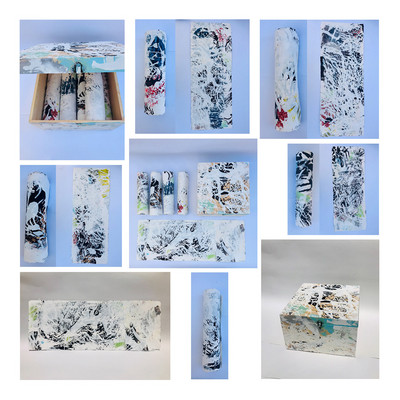
Amélie Ducommun

Caja 1, 2019

Mixta sobre papel

26 x 26cm

Amélie Ducommun (Barcelona, 1983) presents her delicate art boxes. Amélie represents nature in her works by means of a textured line of colour where she composes the landscape and the natural elements that are interrelated in it. All this from the questionable perspective of memory. Some representations are placed on the surface of the boxes, which in turn serve as a monstrance, in the manner of archives that endure.

Beatriz Díaz Ceballos (Oviedo, 1971), delights us in this fair with a proposal in which literature materialises in three-dimensional plastic works, where the book goes from being the literary support to becoming a material component of merely plastic art. The books vomit words and are transformed into sculptural forms of great beauty or generate forests that emerge from their imaginary interior. The letters are materialized by means of copper micro-fusions in which they acquire the nature of original sculptures that generate beautiful visual poems.
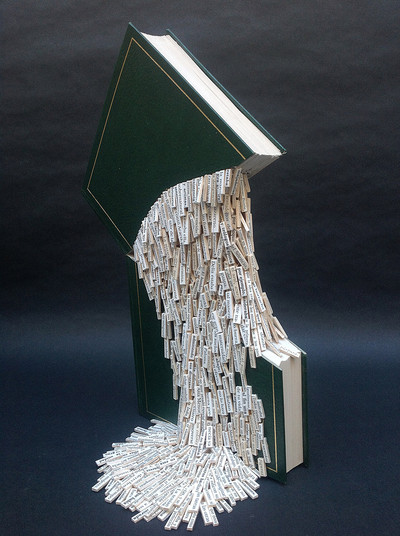
Beatriz Díaz Ceballos

Torre I, 2015

Mixed media

15 x 26cm

Diego Benéitez (Zamora, 1986), began his exhibition career a decade ago and is one of the artists that Rodrigo has trusted, since years ago, to present his latest creations in Art Madrid. The artist from Zamora, executes in his works a compendium between the figuration and the abstraction, capturing in his tables covered by one of the most traditional techniques of the painting, the oil, some subtle landscapes in which the simplicity of the symbols that form it, being reduced sometimes to the horizontality of the application of the colour, manage to contribute to the work a solemnity so vehement that it makes us submerge in them.

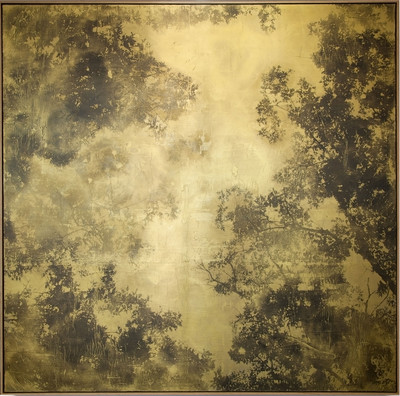
The interdisciplinary artist Jaime sicilia (Madrid, 1970), works between media as varied as painting, sculpture, photography or video. Sicily participates with his series "Waldweben", where we can see the variety and confluence of materials and techniques that he uses in his works. Acrylics, pigments and photographic emulsions are displayed on wooden, metal or plastic supports to create a subtle reality that takes us into the mysterious Wagner forest.
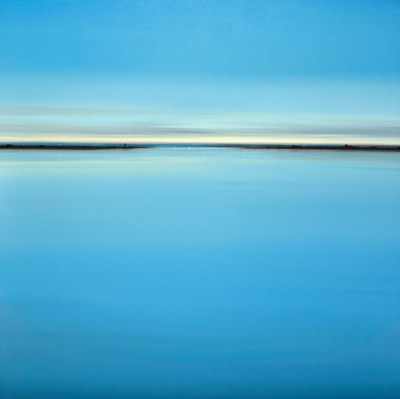
Diego Benéitez

El recuerdo que despierta, 2019

Oil on board

120 x 120cm

Jaime Sicilia

Waldweben 09, 2019

13 Broken Blatt and metal and plastic support

140 x 140cm


ART MADRID’26 INTERVIEW PROGRAM. CONVERSATIONS WITH ADONAY BERMÚDEZ


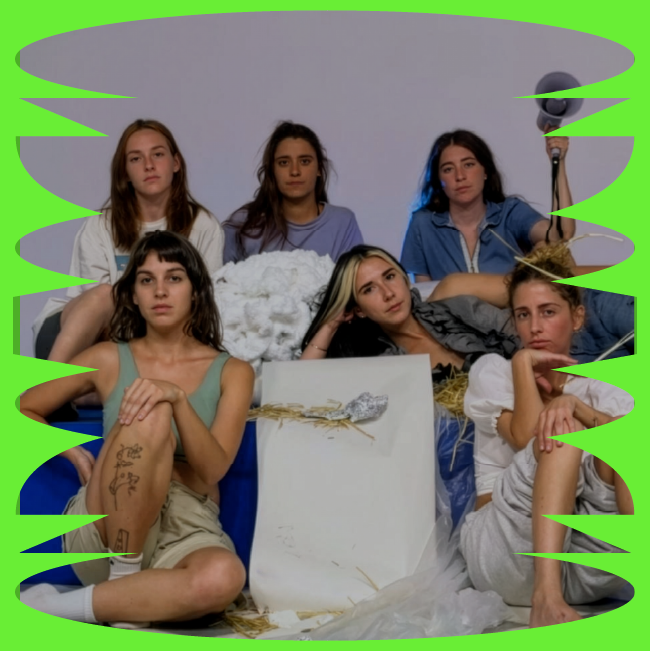
The practice of the collective DIMASLA (Diana + Álvaro) is situated at a fertile intersection between contemporary art, ecological thinking, and a philosophy of experience that shifts the emphasis from production to attention. Faced with the visual and material acceleration of the present, their work does not propose a head-on opposition, but rather a sensitive reconciliation with time, understood as lived duration rather than as a measure. The work thus emerges as an exercise in slowing down, a pedagogy of perception where contemplating and listening become modes of knowledge.

In the work of DIMASLA (Diana + Álvaro), the territory does not function as a framework but rather as an agent. The landscape actively participates in the process, establishing a dialogical relationship reminiscent of certain eco-critical currents, in which subjectivity is decentralized and recognized as part of a broader framework. This openness implies an ethic of exposure, which is defined as the act of exposing oneself to the climate, the elements, and the unpredictable, and this means accepting vulnerability as an epistemological condition.

The materials—fabrics, pigments, and footprints—serve as surfaces for temporary inscriptions and memories, bearing the marks of time. The initial planning is conceived as an open hypothesis, allowing chance and error to act as productive forces. In this way, the artistic practice of DIMASLA (Diana + Álvaro) articulates a poetics of care and being-with, where creating is, above all, a profound way of feeling and understanding nature.


In a historical moment marked by speed and the overproduction of images, your work seems to champion slowness and listening as forms of resistance. Could it be said that your practice proposes a way of relearning time through aesthetic experience?

Diana: Yes, but more than resistance or vindication, I would speak of reconciliation—of love. It may appear slow, but it is deliberation; it is reflection. Filling time with contemplation or listening is a way of feeling. Aesthetic experience leads us along a path of reflection on what lies outside us and what lies within.


The territory does not appear in your work as a backdrop or a setting, but as an interlocutor. How do you negotiate that conversation between the artist’s will and the voice of the place, when the landscape itself participates in the creative process?

Álvaro: For us, the landscape is like a life partner or a close friend, and naturally this intimate relationship extends into our practice. We go to visit it, to be with it, to co-create together. We engage in a dialogue that goes beyond aesthetics—conversations filled with action, contemplation, understanding, and respect.

Ultimately, in a way, the landscape expresses itself through the material. We respect all the questions it poses, while at the same time valuing what unsettles us, what shapes us, and what stimulates us within this relationship.


The Conquest of the Rabbits I & II. 2021. Process.


In your approach, one senses an ethic of exposure: exposing oneself to the environment, to the weather, to others, to the unpredictable. To what extent is this vulnerability also a form of knowledge?

Diana: For us, this vulnerability teaches us a great deal—above all, humility. When we are out there and feel the cold, the rain, or the sun, we become aware of how small and insignificant we are in comparison to the grandeur and power of nature.

So yes, we understand vulnerability as a profound source of knowledge—one that helps us, among many other things, to let go of our ego and to understand that we are only a small part of a far more complex web.


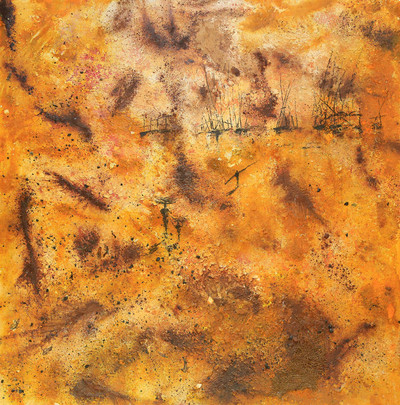
Sometimes mountains cry too. 2021. Limestone rockfall, sun, rain, wind, pine resin on acrylic on natural cotton canvas, exposed on a blanket of esparto grass and limestone for two months.. 195 cm x 130 cm x 3 cm.


Your works often emerge from prolonged processes of exposure to the environment. Could it be said that the material—the fabrics, the pigments, the traces of the environment—acts as a memory that time writes on you as much as you write on it?

Álvaro: This is a topic for a long conversation, sitting on a rock—it would be very stimulating. But if experiences shape people’s inner lives and define who we are in the present moment, then I would say yes, especially in that sense.

Leaving our comfort zone has led us to learn from the perseverance of plants and the geological calm of mountains. Through this process, we have reconciled ourselves with time, with the environment, with nature, with ourselves, and even with our own practice. Just as fabrics hold the memory of a place, we have relearned how to pay attention and how to understand. Ultimately, it is a way of deepening our capacity to feel.


The fox and his tricks. 2022. Detail.


To what extent do you plan your work, and how much space do you leave for the unexpected—or even for mistakes?

Diana: Our planning is limited to an initial hypothesis. We choose the materials, colours, places, and sometimes even the specific location, but we leave as much room as possible for the unexpected to occur. In the end, that is what it is really about: allowing nature to speak and life to unfold. For us, both the unexpected and mistakes are part of the world’s complexity, and within that complexity we find a form of natural beauty.