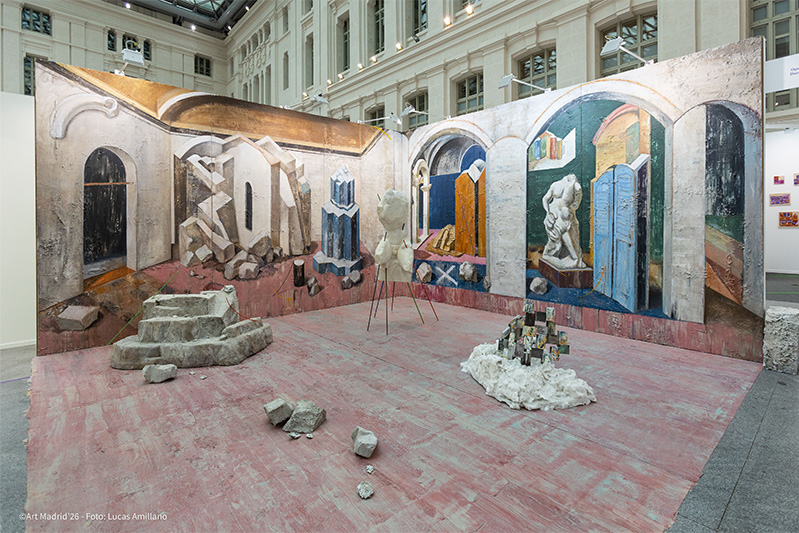
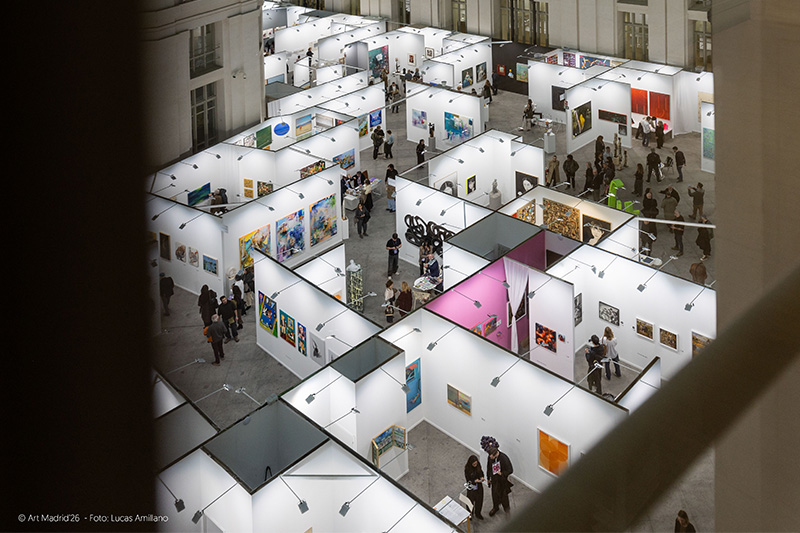
Art Madrid'26 – ART MADRID PATRONAGE PROGRAM: LUIS OLASO, RESIDENT ARTIST AT DOM ART RESIDENCE.

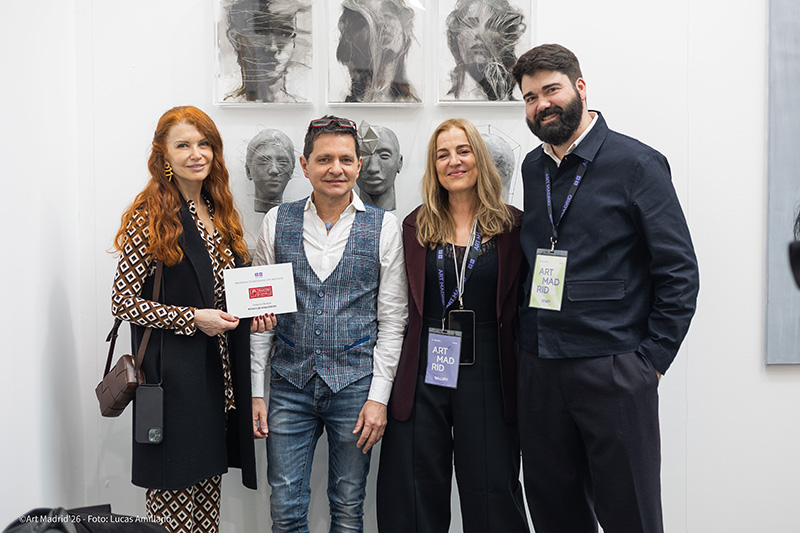
At the most recent edition of Art Madrid, artist Luis Olaso (Bilbao, 1986), represented by Kur Art Gallery (San Sebastián), received the Residency Prize of the Art Madrid Patronage Program. This award, the result of a collaboration between Art Madrid, DOM Art Residence, and the Italian association ExtrArtis, enabled him to undertake an artistic residency in Sorrento (Italy) in August 2025.

Through initiatives like this, the fair reaffirms its support for contemporary creation—a commitment aimed at increasing artists’ visibility and strengthening art collecting through concrete actions such as acquisition prizes, recognition of emerging talents, and international residencies.
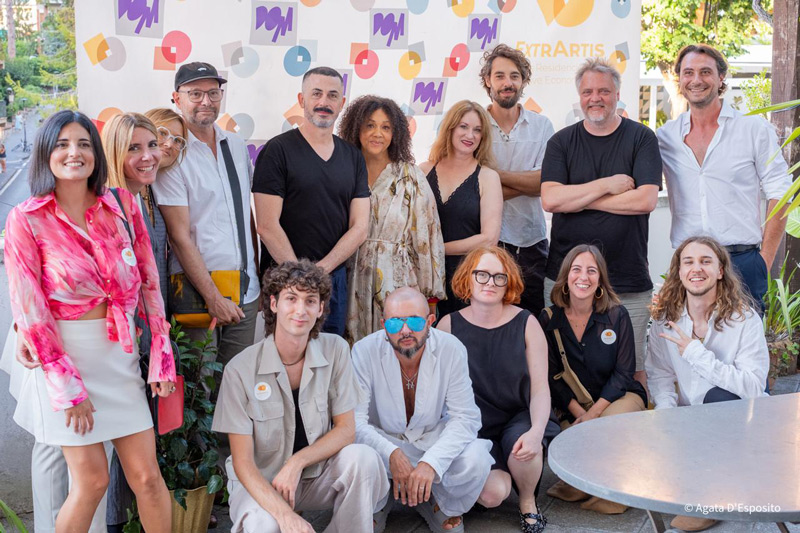

Artists in Residence. DOM & ExtrArtis. Image courtesy of Agata D’Esposito.


The DOM & ExtrArtis 2025 Residency Program took place in Sorrento from August 1 to 31, 2025. The artists lived together at Relais La Rupe, a 16th-century villa surrounded by cliffs and centuries-old gardens, which became an ideal setting for experimentation and exchange.

In this edition, residents worked around the theme “Reimagining Genius Loci”, an invitation to reflect on how the movement of people and traditions transforms the “spirit of place.” During the residency, DOM organized two public group exhibitions: the first to present the artists’ previous work, and the second to showcase the projects developed in Sorrento.
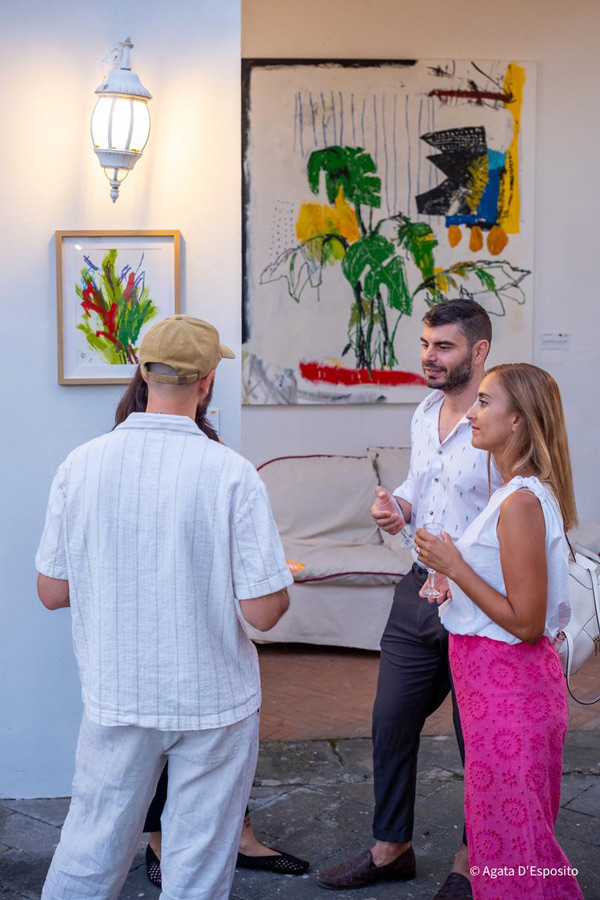

Work by Luis Olaso. DOM & ExtrArtis. Image courtesy of Agata D’Esposito.


Luis Olaso’s work moves between expressionist figuration and abstraction, always employing a pictorial language charged with strength and emotion. Initially self-taught, he later graduated in Fine Arts and has developed a solid international career, with exhibitions at venues including JD Malat (London) and Makasiini Contemporary (Turku, Finland), and participation in fairs such as Untitled Miami, Estampa, and Art Madrid itself.

His work is part of prestigious collections, including the Tokyo Contemporary Art Foundation, Fundación SIMCO, and the Provincial Council of Bizkaia, and has been recognized in competitions such as the Reina Sofía Prize for Painting and Sculpture and the Ibercaja Young Painting Prize.

In Sorrento, Olaso found a unique context to expand his pictorial research, engaging in dialogue with the Mediterranean landscape and the region’s historical heritage. The residency provided him with time, resources, and a framework for exchange with other international artists, fostering the production of new works that were later presented in the group exhibitions organized by DOM.
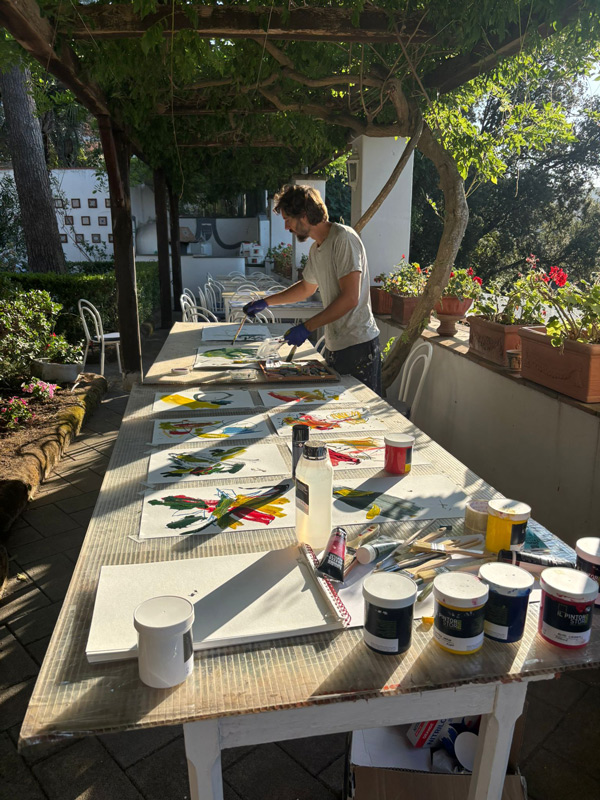

Luis Olaso working on his project. DOM & ExtrArtis. Image courtesy of DOM.

Luis Olaso’s experience at DOM Art Residence concluded with a public showcase of the works produced, reinforcing his presence on the international circuit and consolidating his position as one of the most prominent Basque artists on the contemporary scene.


Through initiatives such as this, Art Madrid demonstrates its active role as a platform for direct support of contemporary creation, creating opportunities for research, production, and intercultural dialogue that extend beyond the fair itself and accompany artists in their professional development.

ART MADRID’26 INTERVIEW PROGRAM. CONVERSATIONS WITH ADONAY BERMÚDEZ


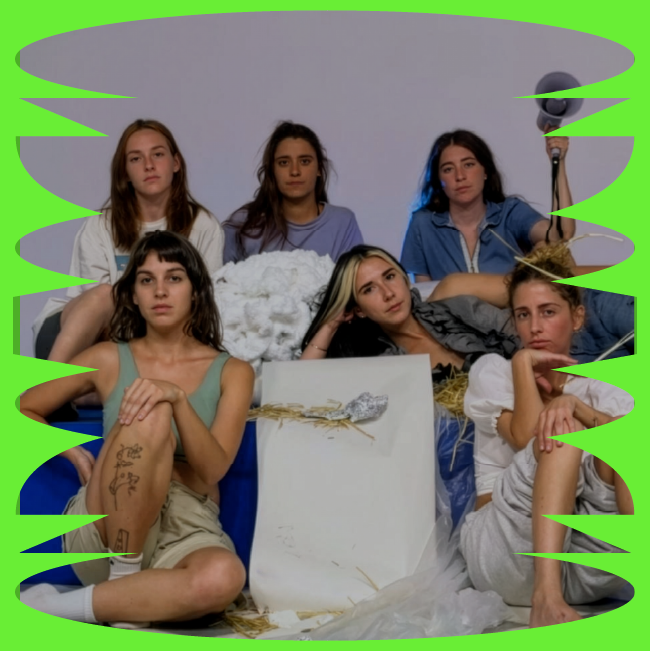
The practice of the collective DIMASLA (Diana + Álvaro) is situated at a fertile intersection between contemporary art, ecological thinking, and a philosophy of experience that shifts the emphasis from production to attention. Faced with the visual and material acceleration of the present, their work does not propose a head-on opposition, but rather a sensitive reconciliation with time, understood as lived duration rather than as a measure. The work thus emerges as an exercise in slowing down, a pedagogy of perception where contemplating and listening become modes of knowledge.

In the work of DIMASLA (Diana + Álvaro), the territory does not function as a framework but rather as an agent. The landscape actively participates in the process, establishing a dialogical relationship reminiscent of certain eco-critical currents, in which subjectivity is decentralized and recognized as part of a broader framework. This openness implies an ethic of exposure, which is defined as the act of exposing oneself to the climate, the elements, and the unpredictable, and this means accepting vulnerability as an epistemological condition.

The materials—fabrics, pigments, and footprints—serve as surfaces for temporary inscriptions and memories, bearing the marks of time. The initial planning is conceived as an open hypothesis, allowing chance and error to act as productive forces. In this way, the artistic practice of DIMASLA (Diana + Álvaro) articulates a poetics of care and being-with, where creating is, above all, a profound way of feeling and understanding nature.


In a historical moment marked by speed and the overproduction of images, your work seems to champion slowness and listening as forms of resistance. Could it be said that your practice proposes a way of relearning time through aesthetic experience?

Diana: Yes, but more than resistance or vindication, I would speak of reconciliation—of love. It may appear slow, but it is deliberation; it is reflection. Filling time with contemplation or listening is a way of feeling. Aesthetic experience leads us along a path of reflection on what lies outside us and what lies within.


The territory does not appear in your work as a backdrop or a setting, but as an interlocutor. How do you negotiate that conversation between the artist’s will and the voice of the place, when the landscape itself participates in the creative process?

Álvaro: For us, the landscape is like a life partner or a close friend, and naturally this intimate relationship extends into our practice. We go to visit it, to be with it, to co-create together. We engage in a dialogue that goes beyond aesthetics—conversations filled with action, contemplation, understanding, and respect.

Ultimately, in a way, the landscape expresses itself through the material. We respect all the questions it poses, while at the same time valuing what unsettles us, what shapes us, and what stimulates us within this relationship.


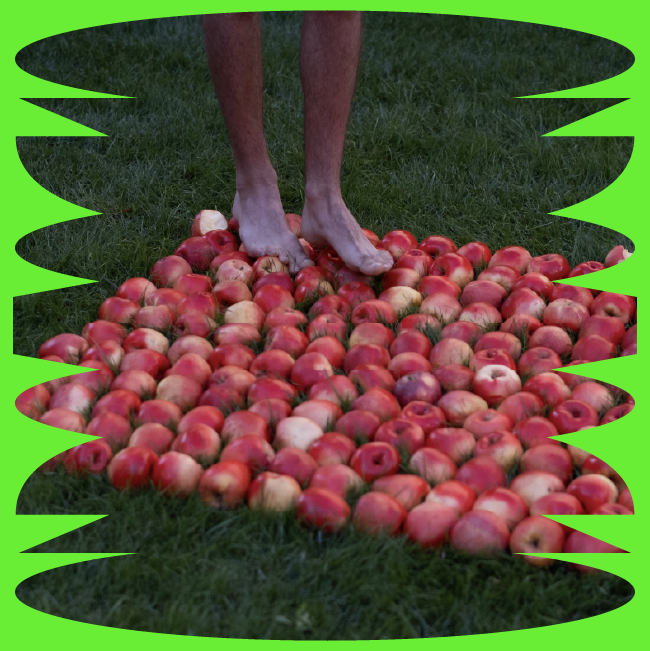
The Conquest of the Rabbits I & II. 2021. Process.


In your approach, one senses an ethic of exposure: exposing oneself to the environment, to the weather, to others, to the unpredictable. To what extent is this vulnerability also a form of knowledge?

Diana: For us, this vulnerability teaches us a great deal—above all, humility. When we are out there and feel the cold, the rain, or the sun, we become aware of how small and insignificant we are in comparison to the grandeur and power of nature.

So yes, we understand vulnerability as a profound source of knowledge—one that helps us, among many other things, to let go of our ego and to understand that we are only a small part of a far more complex web.


Sometimes mountains cry too. 2021. Limestone rockfall, sun, rain, wind, pine resin on acrylic on natural cotton canvas, exposed on a blanket of esparto grass and limestone for two months.. 195 cm x 130 cm x 3 cm.


Your works often emerge from prolonged processes of exposure to the environment. Could it be said that the material—the fabrics, the pigments, the traces of the environment—acts as a memory that time writes on you as much as you write on it?

Álvaro: This is a topic for a long conversation, sitting on a rock—it would be very stimulating. But if experiences shape people’s inner lives and define who we are in the present moment, then I would say yes, especially in that sense.

Leaving our comfort zone has led us to learn from the perseverance of plants and the geological calm of mountains. Through this process, we have reconciled ourselves with time, with the environment, with nature, with ourselves, and even with our own practice. Just as fabrics hold the memory of a place, we have relearned how to pay attention and how to understand. Ultimately, it is a way of deepening our capacity to feel.


The fox and his tricks. 2022. Detail.


To what extent do you plan your work, and how much space do you leave for the unexpected—or even for mistakes?

Diana: Our planning is limited to an initial hypothesis. We choose the materials, colours, places, and sometimes even the specific location, but we leave as much room as possible for the unexpected to occur. In the end, that is what it is really about: allowing nature to speak and life to unfold. For us, both the unexpected and mistakes are part of the world’s complexity, and within that complexity we find a form of natural beauty.