Art Madrid'26 – CHAMO SAN: THE POETICS OF EVERYDAY LIFE


ART MADRID’26 INTERVIEW PROGRAM. CONVERSATIONS WITH ADONAY BERMÚDEZ


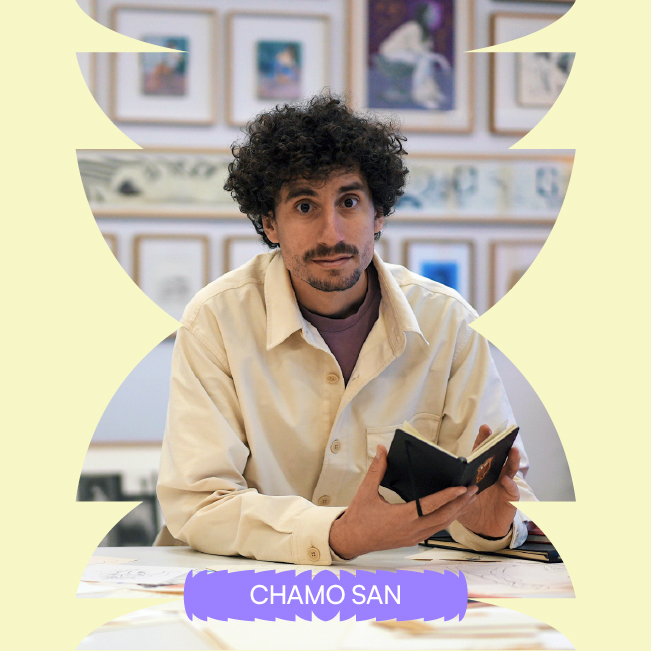
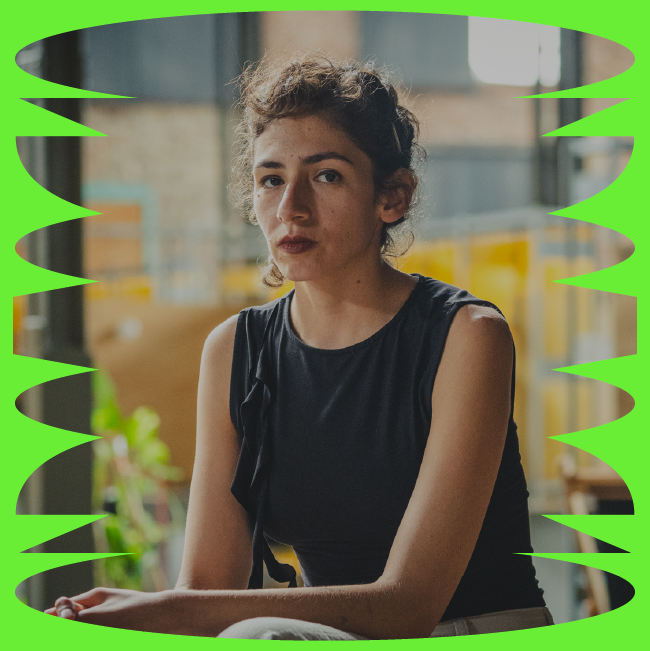
The artistic practice of Chamo San (Barcelona, 1987) revolves around a poetics of attention, in which the seemingly insignificant acquires a singular reflective intensity. His works emerge from a persistent observation of everyday life, understood not as a narrative repertoire but as a field of shared experience. Within this framework, the minimal gesture becomes a form of sensitive knowledge, placing the viewer before scenes that are both recognizable and, at the same time, estranged by their temporal suspension.

The progressive shift toward a more atmospheric painting has allowed the environment to cease functioning as a mere support and become an active agent of meaning. Restrained color ranges and carefully constructed spaces generate a sense of stillness that evokes a pictorial tradition attentive to duration and waiting. The human figure—a constant presence in his work—is presented immersed in contexts that amplify its affective and existential dimension.

The silence permeating these images is not absence but condition; it constitutes a space of resonance in which the time of doing and the time of looking converge. Situated between compositional control and openness to the contingent, Chamo San’s work affirms painting as a territory where planning and accident coexist.


Bathtub. 2018. Ballpoint pen on notebook. 14 x 18 cm.


Many of your works show meticulous attention to the smallest gestures and seemingly trivial moments. What interests you about these micro-choreographies of everyday life?

The seed of my work always comes from the sketches I make from life in small notebooks that I can carry with me at all times. Later, I either transfer them to another format so I can work on them more calmly, or they become the final piece in themselves.

Composition, staging, and perhaps those micro-choreographies are what I allow myself to bring to the scene as an artist. For me, these everyday moments are the most direct and honest way to connect with the audience because—even though they are intimate—they reflect universal experiences.


Feet. 2023. Oil pastel on paper mounted on board. 30 x 30 cm.


In your pieces, the presence of sober tones seems to generate a particular type of atmosphere. How would you describe the way that atmosphere emerges during your work, and what role does it play in the overall construction of the image?

Atmosphere and colour are relatively recent additions to my work. Previously, I focused exclusively on the figures as the central element, and they were often left floating in a kind of void. It was when I realised the need to provide context—especially as I began working more closely from the notes in my notebooks—that I came to understand the importance of the environment for the character.

The human figure will always remain the main element for me, as it is through its representation that I find the greatest enjoyment. However, little by little, I have become interested in exploring what surrounds it. I see the creation of an environment and an atmosphere as essential in order to situate the figures within a more complete and fully constructed scene.


Mamant. 2025. Colored pencils on notebook. 14 x 18 cm.


Are the silences in your works inherited from real experiences, or do they emerge during the painting process?

The silences in my work are inherited from real experiences. When I capture those small moments of everyday life—which is essential for me—I tend to be focused and quiet. At the same time, I also believe that the contemplation of artworks naturally invites this kind of calm. In that sense, for a brief moment, both the artist—throughout the entire creative process—and the viewer, when engaging with the work, can meet in the same state of tranquillity and silence.


The Kiss. 2024. Oil pastel on notebook. 14 x 18 cm.


To what extent do you plan your work, and how much space do you leave for the unexpected—or even for mistakes?

Some of my works are very planned, even excessively so, with lots of sketches. On the other hand, I always have that starting point that appears in my notebooks, and I leave experimentation and the unexpected for the end. Although it's also true that when I've thrown myself into improvisation from the beginning, wonderful things have happened, so now I try to combine those two worlds as organically as possible.


Cinema. 2025. Ballpoint pen and oil pastel on notebook. 14 x 18 cm.


Although your work has shifted towards the pictorial—with an aesthetic closely linked to cinema—echoes of illustration can still be seen in your visual language. Which elements would you say remain, and which have undergone a radical transformation?

For me, illustration has been an intense learning process. I deeply admire artists who have combined commissioned illustration with studio work for galleries, such as Ramón Casas and James Jean. I believe these two worlds can connect on a technical level, but their language and purpose are fundamentally different.

The existence of a unique, original work allows for accidents to occur—things that are very unlikely to happen in illustration. It is this condition of uniqueness, and above all the intention behind it, that makes the two practices radically different.

ART MADRID CLOSES ITS 21ST EDITION AS A KEY EVENT OF MADRID ART WEEK


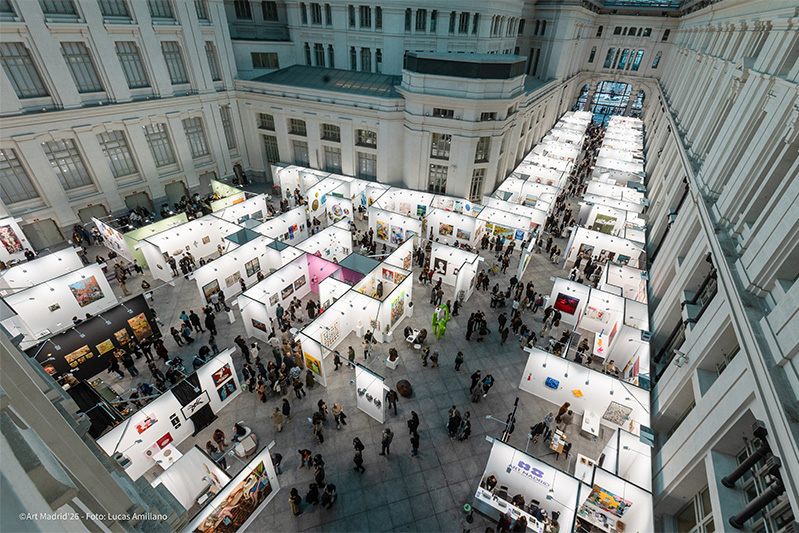
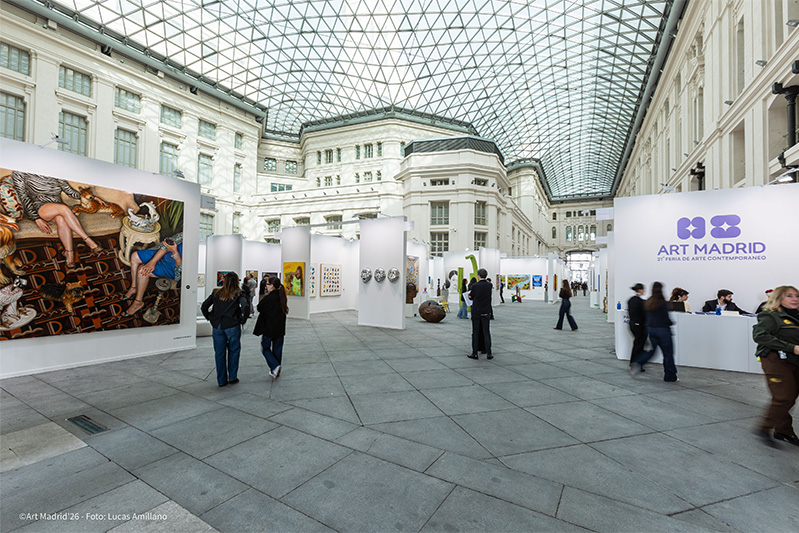
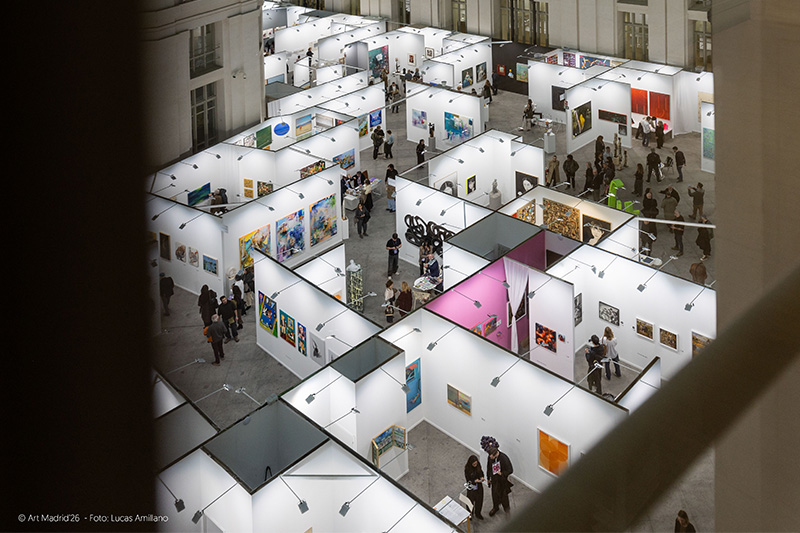
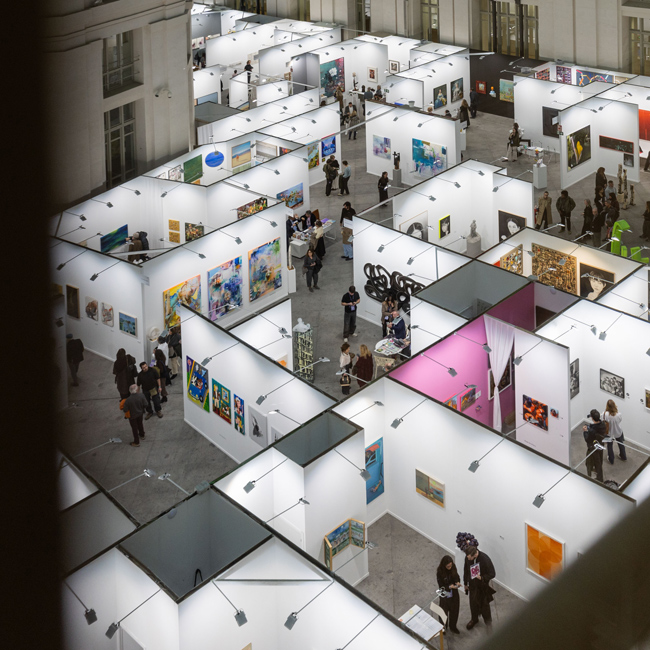
The Galería de Cristal of the Palacio de Cibeles hosted the 21st edition of Art Madrid from March 4 to 8, once again consolidating its role as one of the must-see events of Madrid Art Week. Over the course of five days, the fair brought together 35 national and international galleries and more than 200 artists, turning the venue into a meeting point for gallerists, collectors, professionals, and lovers of contemporary art.

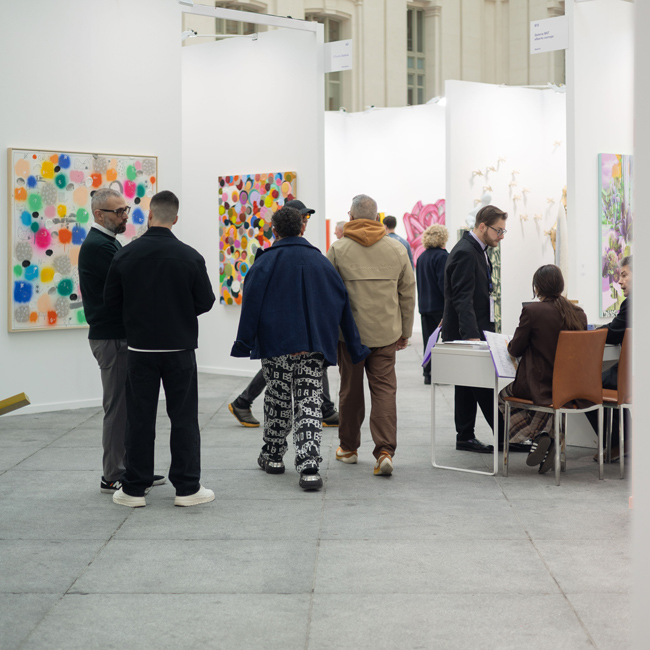
Throughout its trajectory, Art Madrid has built a distinct identity, with a constant focus on giving visibility to both emerging and established galleries and on opening contemporary art to diverse audiences. Rather than being structured around a single curatorial line, the fair embraced a plural proposal, respecting the unique DNA of each exhibitor.


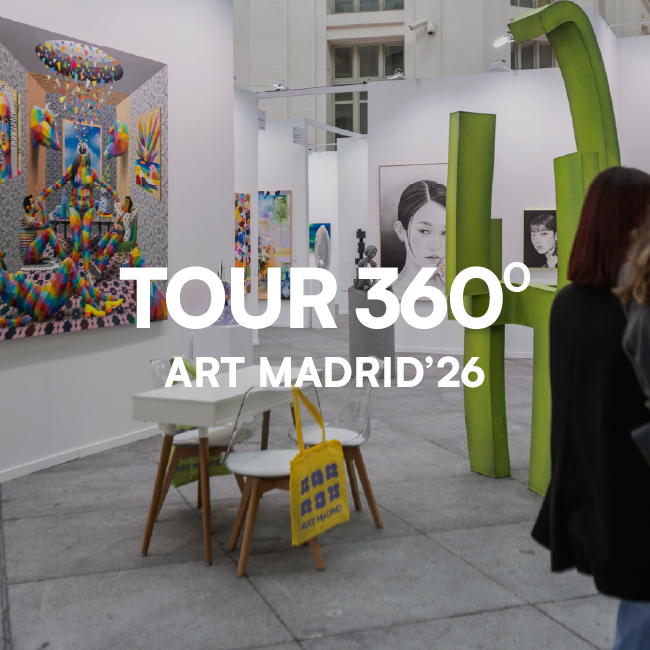
Art Madrid’26 presented a Gallery Program distinguished by the diversity of artistic proposals and languages, encouraging dialogue between different generations and contemporary practices. Painting, sculpture, photography, drawing, installation, and new hybrid forms coexisted in an edition that once again confirmed the dynamism of today’s art scene

During the days of the fair, nearly 20,000 visitors explored the booths of the participating galleries and enjoyed a parallel program that expanded the experience beyond the traditional exhibition format.


The Parallel Program: An Expanded Art Fair

The Parallel Program once again took center stage in the Art Madrid experience, activating the fair space through projects that explored new forms of interaction between artworks, artists, and the public.

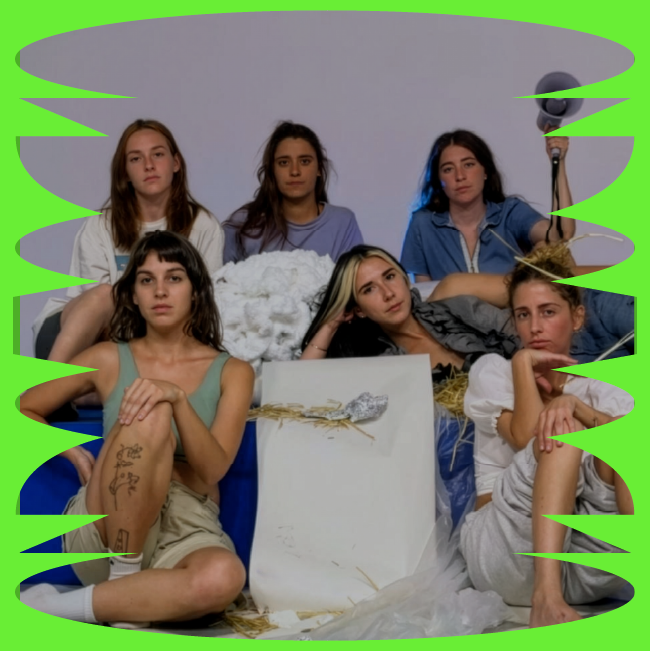
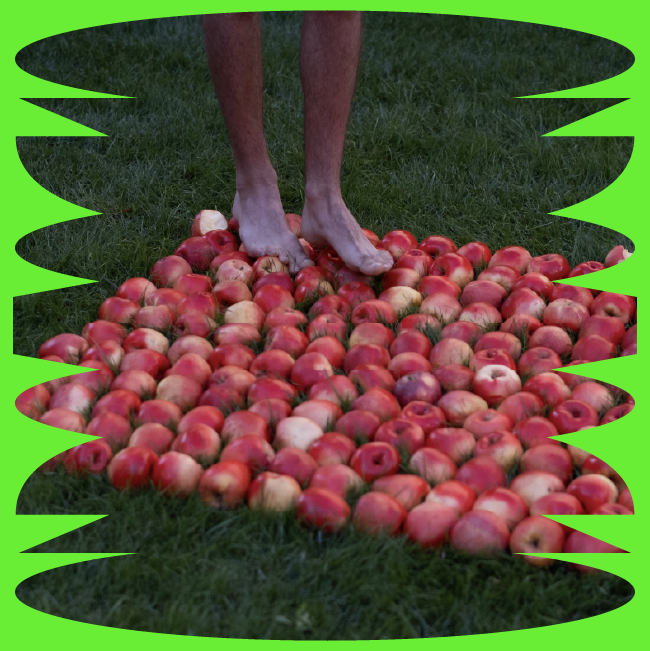
Among the most notable initiatives was the performance series Open Infinite: What the Body Remembers, which presented a daily performative action at the fair featuring works by Colectivo La Burra Negra, Rocío Valdivieso, Amanda Gatti, and Jimena Tercero. The pieces incorporated the body as a critical device and a space of memory, reinforcing the presence of performance within Art Madrid’s programming.

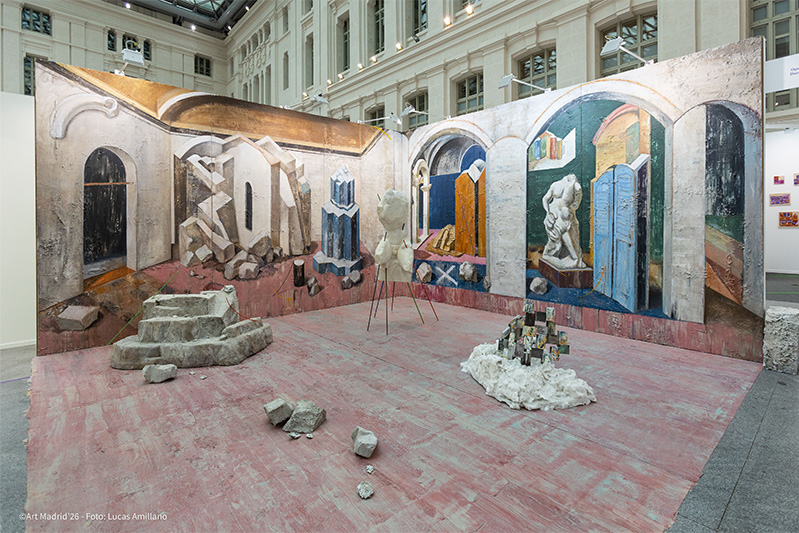
The third edition of Open Booth presented Despiece. Protocolo de mutación, by Daniel Barrio, a site-specific project that transformed the booth into a landscape constructed from urban remnants and industrial materials. The installation invited visitors to physically engage with the work, creating an immersive experience within the exhibition space.

Meanwhile, Espacio Nebrija hosted the project Estancias transitorias (NotanIA SipedagogIE), a proposal by Nebrija University that reflected on Aesthetic Intelligence in the face of the growing dominance of algorithmic logic. The installation proposed a reclamation of gesture, materiality, and the time inherent to the creative process as dimensions that cannot be reduced to automation.

Lecturas. Curated Walkthroughs also returned, with itineraries designed by Zuriñe Lafón and Marisol Salanova that offered curatorial insights for exploring the fair from specific critical perspectives and expanding the visitor experience.


Patronage, Awards, and Acquisitions

Support for contemporary creation once again stood as one of the fair’s central pillars through the second edition of the Art Madrid Patronage Program, which recognizes the work of artists and strengthens the connections between galleries, collectors, and private entities.

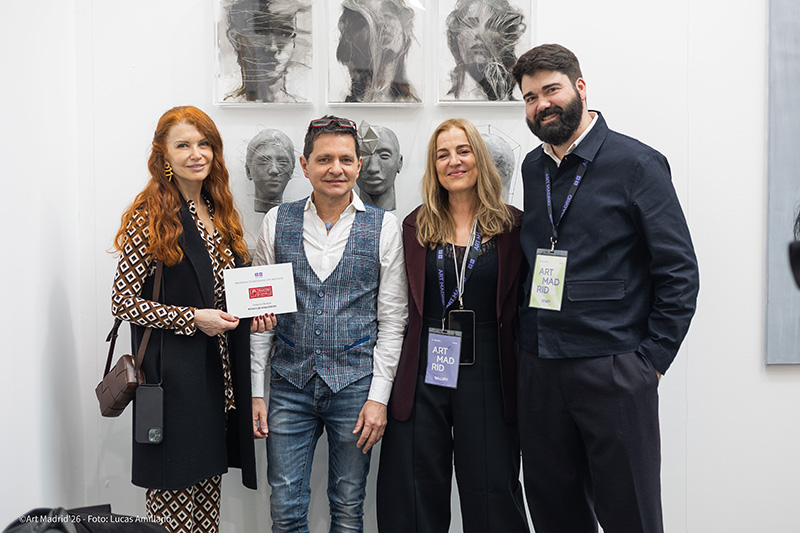
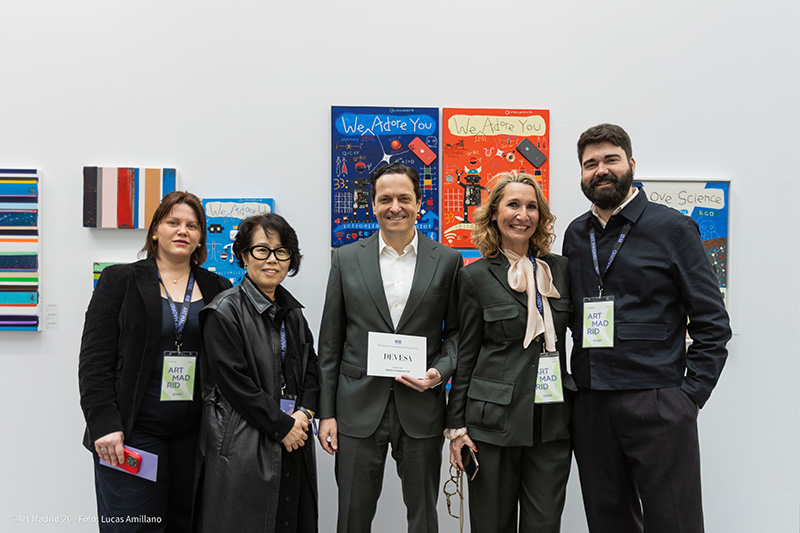
On this occasion, the following awards were presented:

Cervezas Alhambra Emerging Artist Award Iyán Castaño, represented by Galería Arancha Osoro


One Shot Hotels Breakthrough Artist Award Joost Vandebrug, represented by KANT Gallery


In the Acquisition Awards category, several private collections incorporated works presented at the fair into their collections.


Studiolo Collection Roger Sanguino — DDR Art Gallery


Devesa Law Kim Han Ki — Banditrazos Gallery


E2IN2 Collection Albert Bonet — Inéditad Gallery


dn2 Collection Iván Baizán — Galería Arancha Osoro

These acquisitions reflect the private sector’s commitment to the development of contemporary art and contribute to advancing the professional trajectories of emerging and mid-career artists.


Collecting and Support for the Artistic Ecosystem

The promotion of collecting once again played a prominent role in this edition thanks to the One Shot Collectors program, which offered personalized advice to both new buyers and more experienced collectors, facilitating access to the contemporary art market and fostering direct relationships between artists, galleries, buyers, and collectors.


This program, together with the Patronage Program, continues to strengthen the professional ecosystem surrounding the fair and reinforce Art Madrid’s commitment to supporting contemporary creation.

Among the most notable sales were works by Antonio Ovejero, represented by CLC ARTE; Leticia Feduchi and Ángela Mena, represented by Galería Sigüenza; Idoia Cuesta and Iyán Castaño, represented by Galería Arancha Osoro; and Yasiel Elizagaray, represented by Nuno Sacramento Arte Contemporânea. Likewise, the proposals presented by Inéditad Gallery were very well received, with notable sales of works by artists Albert Bonet and Eduardo Urdiales, as well as Carmen Mansilla, who debuted at Art Madrid'26 and achieved a sold out.


The overall balance of the edition has been particularly positive, with sales reported by all 35 participating galleries, confirming the strong interest from collectors and the dynamism of the market throughout the fair. Among the galleries that recorded notable commercial activity are La Mercería (Valencia), LAVIO (Murcia–Shanghai), 3 Punts Galería (Barcelona), Galerie One (Paris), Shiras Galería (Valencia), Galería Rodrigo Juarranz (Aranda de Duero), Galería São Mamede (Lisbon), Yiri Arts (Taiwan), and Trema Arte Contemporânea (Lisbon), among others.


A Fair made possible thanks to Its network of Partners

The success of Art Madrid’26 has been made possible thanks to the support of its official sponsors: Cervezas Alhambra, One Shot Hotels, Liquitex, Universidad Nebrija, and Posca, as well as the trust of its collaborators: Asociación 9915, Colección Studiolo, E2IN2, Colección dn2, Devesa Law, Enviarte, Cova 13, and Vanille Bakery Lab & Café. The fair also benefits from the involvement of its media partners and the support of various cultural organizations, private collections, and institutions that contribute to strengthening the contemporary art ecosystem.


Art Madrid: A Future Full of Possibilities

After 21 years of history, Art Madrid continues to consolidate its position as a key event in the contemporary art calendar, both nationally and internationally. Its ability to bring together galleries, artists, collectors, and institutions reinforces its role as a space for encounter, exchange, and discovery. The fair maintains a steadily growing outlook, driven by a program that evolves each year and increasingly opens up to more innovative proposals.

Thank you for being part of the 21st edition of Art Madrid. Your support is essential for continuing to promote art and culture.


SEE YOU AT ART MADRID'27!