Art Madrid'26 – IYÁN CASTAÑO: THE SEA AS AN ARCHIVE


ART MADRID’26 INTERVIEW PROGRAM. CONVERSATIONS WITH ADONAY BERMÚDEZ


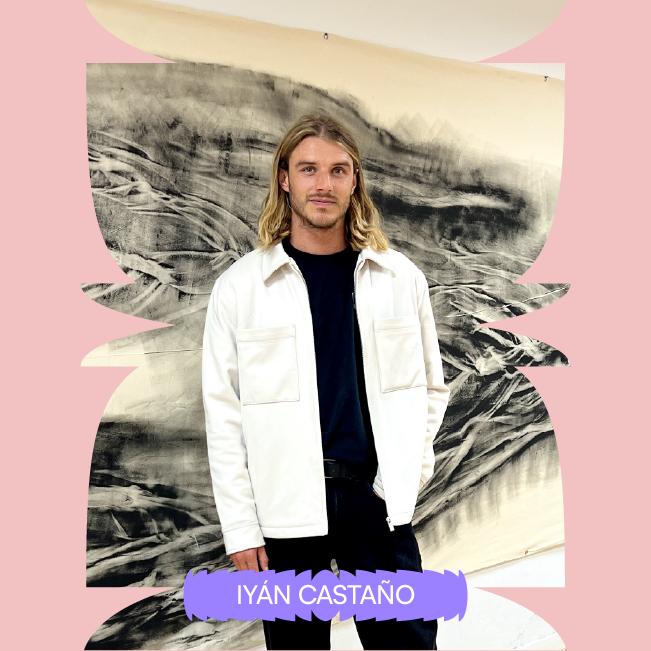
The work of Iyán Castaño (Oviedo, 1996) is situated within a genealogy of contemporary art that interrogates the tension between the ephemeral and the permanent, placing artistic practice on a threshold where nature, time, and perception converge. His research begins with an apparently minor geomorphological phenomenon—the traces left in the sand by the action of the tides—and transforms it into a poetic device for sensitive observation of the landscape. The temporal restriction imposed by low tide functions not only as a technical constraint but also as a conceptual structure that organizes the creative process and aligns it with an ethic of radical attention and presence.

Far from approaching the landscape as a mere backdrop or stage, Castaño recognizes in the maritime environment a generative system that precedes all human intervention. The sea, wind, and light produce autonomous records that he translates pictorially, shifting authorship toward a practice of listening and mediation.

The territory—initially asturian and progressively extended to other geographical contexts—functions as a material archive and situated memory. Each work becomes an unrepeatable index of a specific place and moment, revealing the fragility of natural cycles without resorting to explicit rhetoric of denunciation. In this way, Iyán Castaño’s painting operates as an active pause, a gesture of suspension that allows us to experience the world’s constant transformation from a sensitive and reflective proximity.
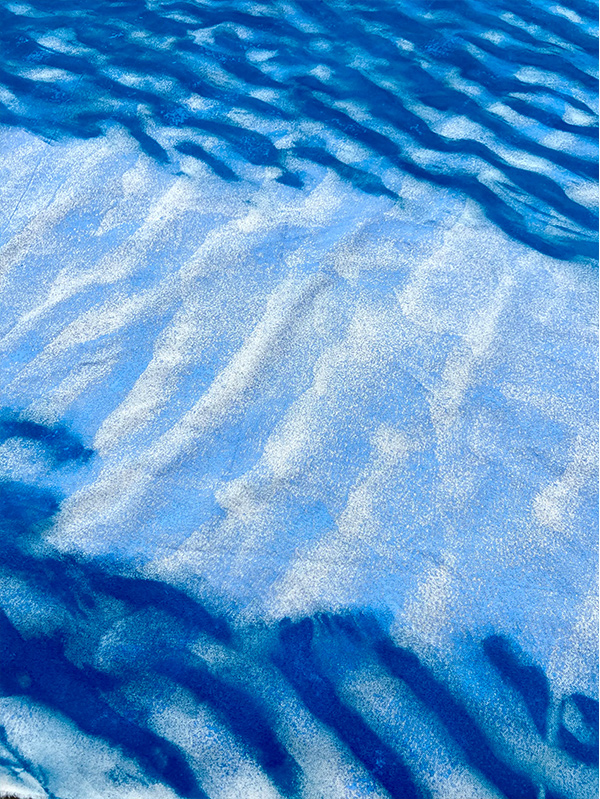

Open waters. 14-04-24. Expanded graphic on canvas. 2024. Detail.


In your practice, you work under the time constraint imposed by low tide. How does this temporal limit shape your creative process?

Low tide profoundly conditions my working method, but it does not function merely as a time limit; rather, it is the axis around which the entire project is structured. There is a prior phase in which I study meteorological conditions and the possible climatic variations of a specific day; based on this, I know whether I will be able to work and with which materials.

Once on the beach, during low tide, I have a very limited window—sometimes barely two hours or even less—in which I must move through the space searching for existing traces. If I find one, I intervene in it; if not, I must move on to another beach. After the intervention, I have to remove it quickly before the sea returns and erases every trace. In a way, these works transform the ripples of sand—those forms that are essentially ephemeral—into something permanent.
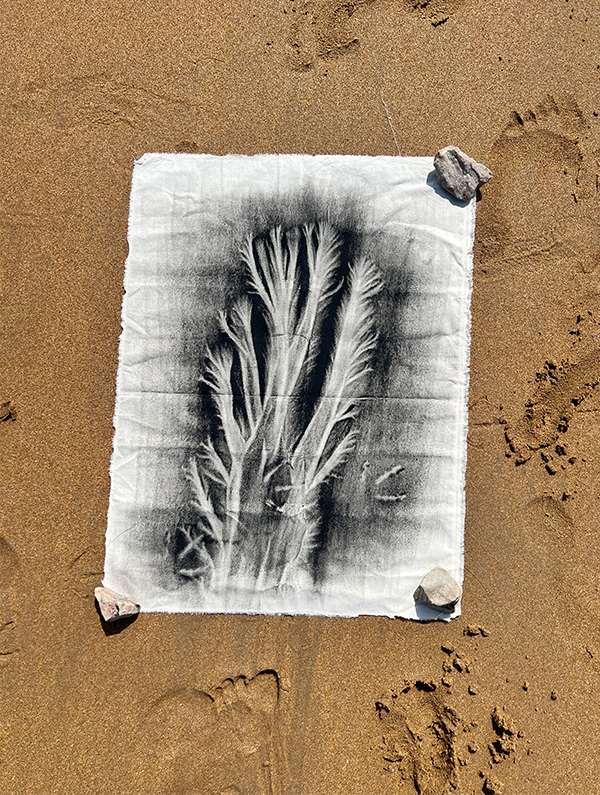

Where the sea is born. 15-09-25. Expanded graphic on canvas. 40 x 60 cm. Rodiles Beach, Asturias. 2025.


How does the meteorological and maritime environment—the unpredictability of the sea, wind, light, and tide—become a co-author of your pieces?

I do not consider the environment a co-author in the traditional sense, but rather the true author of the traces I work with. I am interested in understanding nature as a great creator: through tides, waves, wind, and light, the sand generates forms that are in constant regeneration. In order to create my works, the sea must first have created its own.

From there, using acrylics, oils, waxes, or sprays, I attempt to translate into the work my sensations and emotions in front of the sea at that specific moment. Whether it is winter or summer, cloudy or sunny, a small cove or an expansive beach, all of these context conditions result and become imprinted in the work.
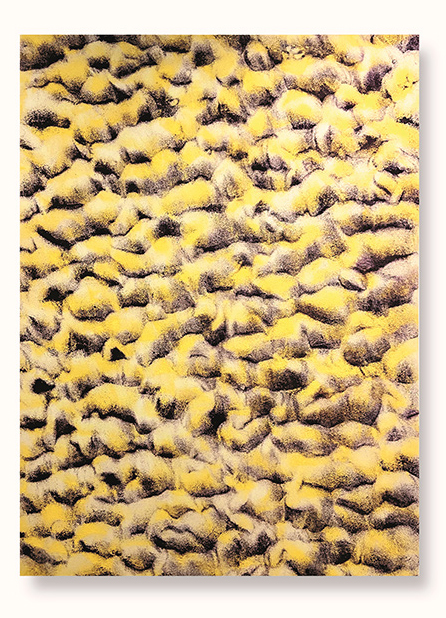

Sand Ripples. 07-04-21. Expanded graphic on canvas. 189 x 140 cm. Niembro Estuary. Asturias. 2021.


Your work is closely tied to the Asturian territory—beaches, coastal forests, the cove of La Cóndia. What role do place, topography, local identity, and geographic memory play in your practice?

Place is everything in my project. Asturias was the point of departure and the territory where my gaze was formed. I have been working along this line for seven years, and over time I have come to understand that each trace is inseparable from the specific site and the exact day on which it is produced.

From there, I felt the need to expand the map and begin working in other territories. So far, I have developed works in Senegal, Ecuador, the Galápagos Islands, Indonesia, and elsewhere—and in each case, the result is completely different. The sea that bathes those coasts, the arrangement of the rocks, the morphology of the beach, or even the animals that inhabit it generate unique traces, impossible to reproduce elsewhere. This specificity of territory—its topography and geographic memory—is inscribed in each work in a singular, inseparable, and unrepeatable way.
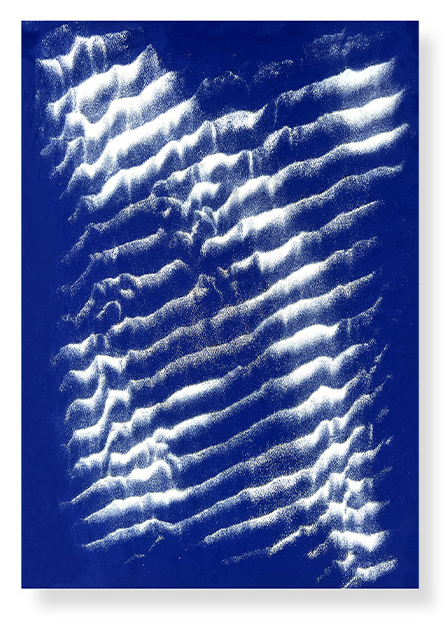

Mangata. 05-11-25. Expanded graphic on canvas. 190 x 130 cm. Sorraos Beach. Llanes. 2025.


To what extent are climate change, rising sea levels, altered tidal cycles, or coastal erosion present—or potentially present—as an underlying reflection in your work?

My work does not originate from an ecological intention or a direct form of protest. If there is a reflection on the environment, it emerges indirectly, by bringing people closer to the landscape, inviting them to observe attentively and to develop a more empathetic relationship with the environment they inhabit. Beaches are in constant transformation, but I do not seek to fix the landscape; rather, I attempt to convey the experience of being in front of it. In this sense, each work is like a small sea that one can take home.
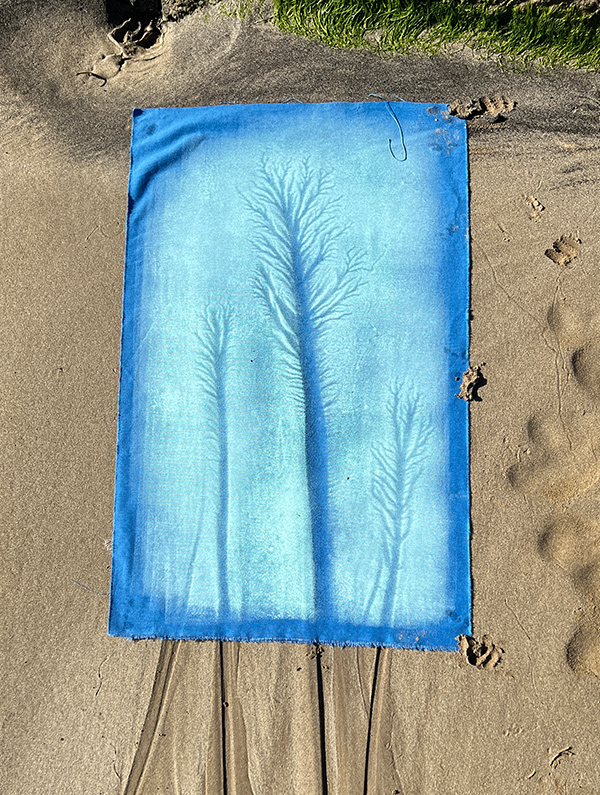

Tree of Life. 19-02-25. Expanded graphic on canvas. 50 x 70 cm. El Puntal Beach. Asturias. 2025.


To what extent do you plan your work, and how much space do you leave for the unexpected—or even for mistakes?

In my work there is very little planning in terms of the final result, but there is a very precise preliminary planning. Before going to the beach, I monitor the time of low tide, wave height, wind, and weather conditions; based on this, I decide which beach to go to. Even so, when I arrive, I still do not know what work I am going to make. It is there that I determine which material to use, which color to apply, and where the intervention will take place. Many times, the environment simply does not allow work on that day, and chance becomes an essential element of these works. Error, in turn, becomes a new possibility if one learns how to work with it.

ART MADRID CLOSES ITS 21ST EDITION AS A KEY EVENT OF MADRID ART WEEK


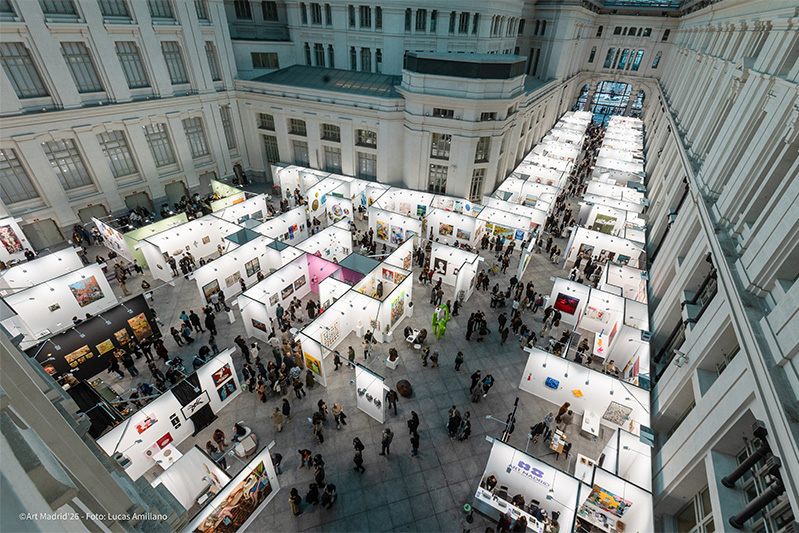
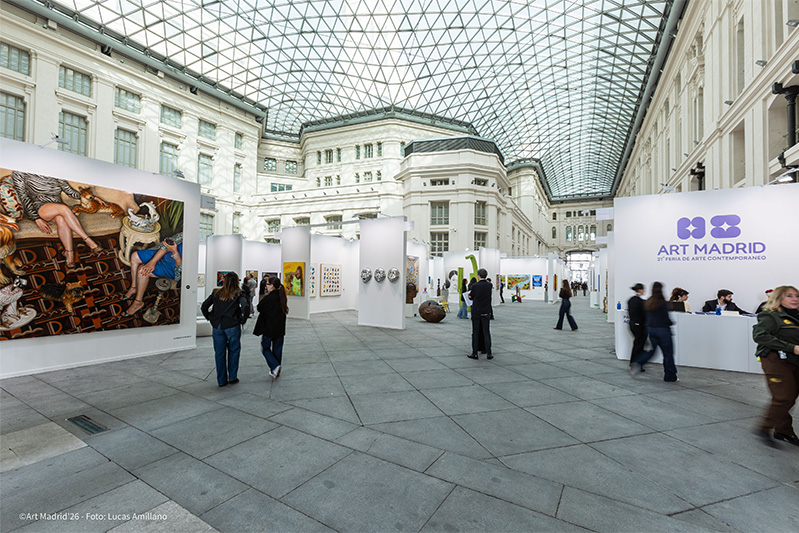
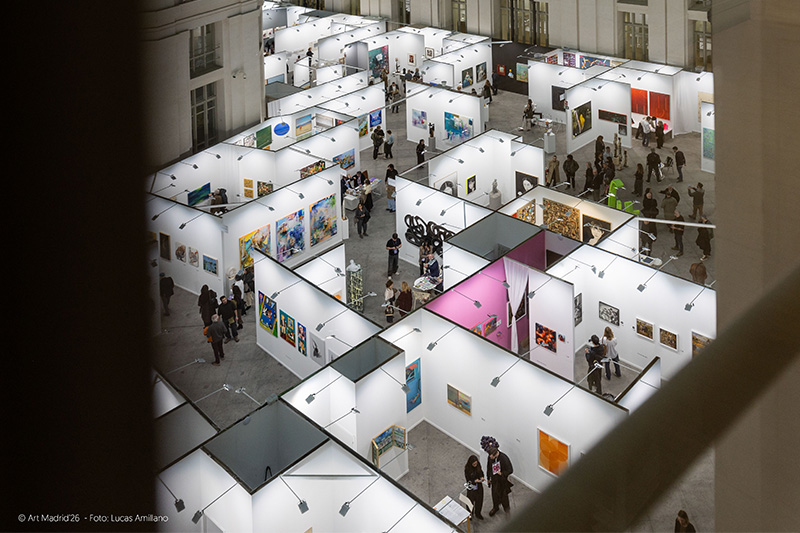
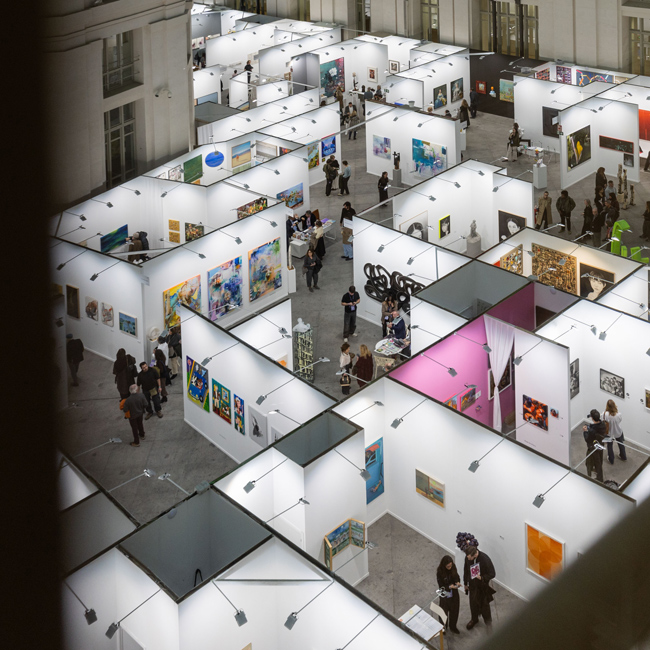
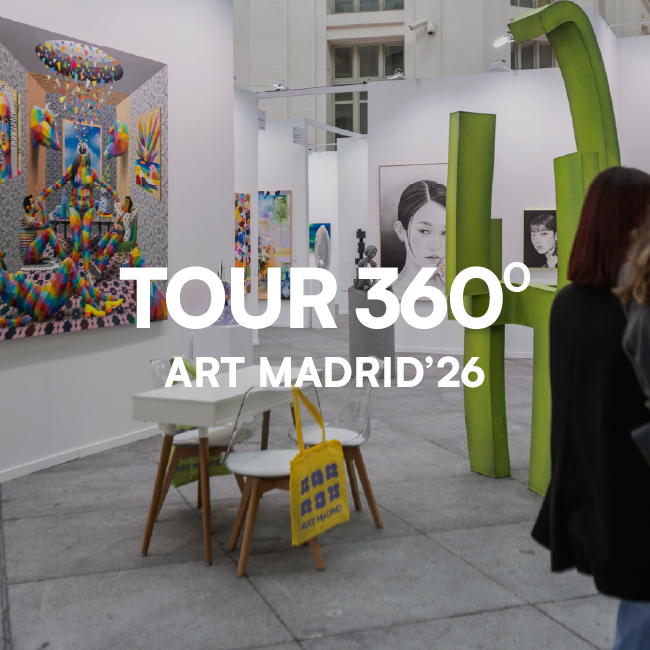
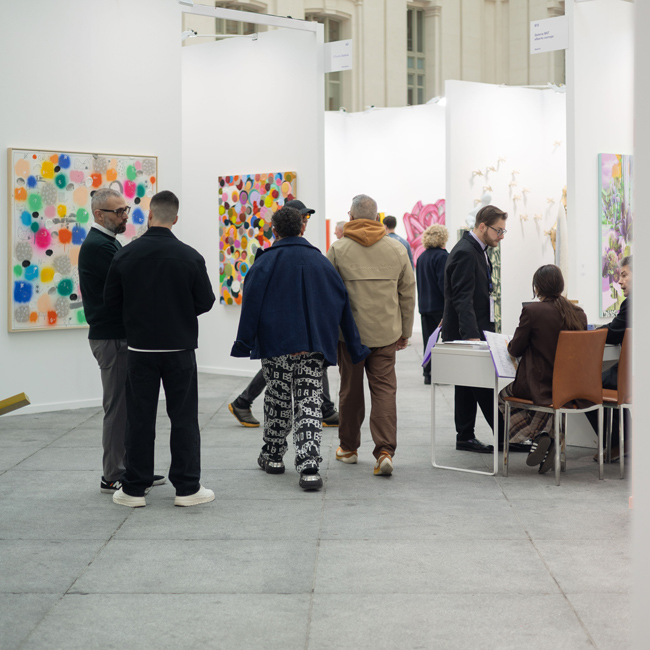
The Galería de Cristal of the Palacio de Cibeles hosted the 21st edition of Art Madrid from March 4 to 8, once again consolidating its role as one of the must-see events of Madrid Art Week. Over the course of five days, the fair brought together 35 national and international galleries and more than 200 artists, turning the venue into a meeting point for gallerists, collectors, professionals, and lovers of contemporary art.

Throughout its trajectory, Art Madrid has built a distinct identity, with a constant focus on giving visibility to both emerging and established galleries and on opening contemporary art to diverse audiences. Rather than being structured around a single curatorial line, the fair embraced a plural proposal, respecting the unique DNA of each exhibitor.


Art Madrid’26 presented a Gallery Program distinguished by the diversity of artistic proposals and languages, encouraging dialogue between different generations and contemporary practices. Painting, sculpture, photography, drawing, installation, and new hybrid forms coexisted in an edition that once again confirmed the dynamism of today’s art scene

During the days of the fair, nearly 20,000 visitors explored the booths of the participating galleries and enjoyed a parallel program that expanded the experience beyond the traditional exhibition format.


The Parallel Program: An Expanded Art Fair

The Parallel Program once again took center stage in the Art Madrid experience, activating the fair space through projects that explored new forms of interaction between artworks, artists, and the public.

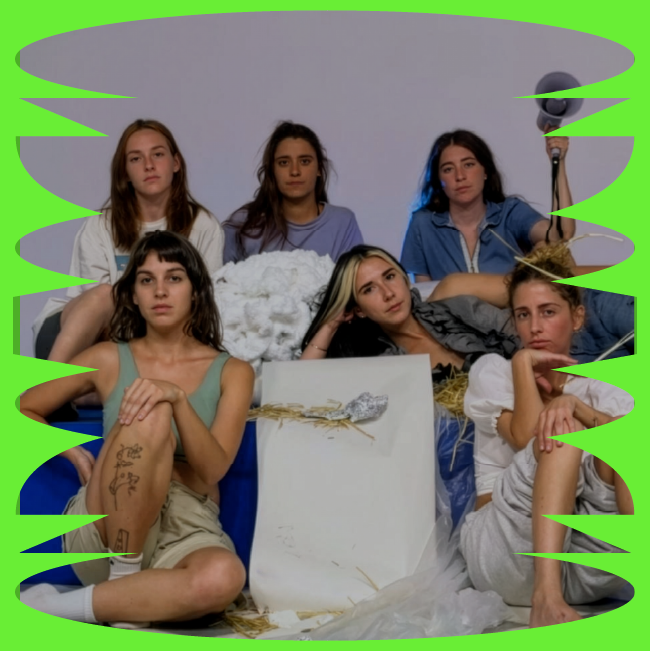
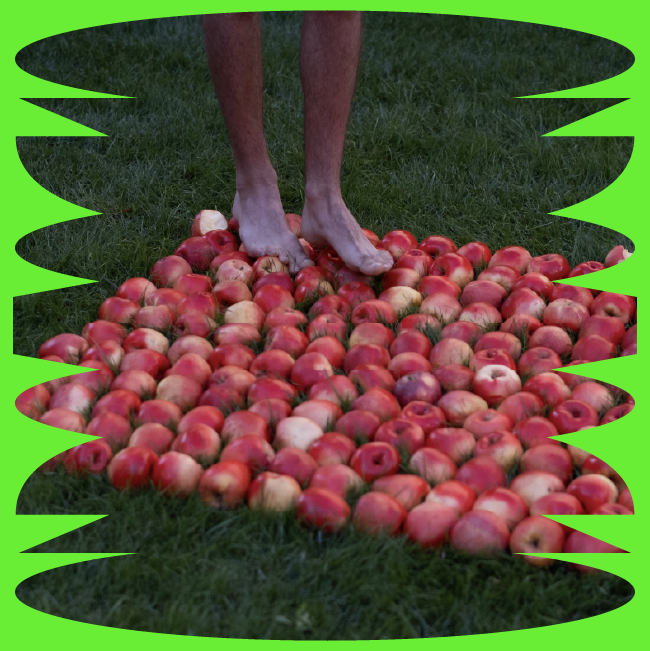
Among the most notable initiatives was the performance series Open Infinite: What the Body Remembers, which presented a daily performative action at the fair featuring works by Colectivo La Burra Negra, Rocío Valdivieso, Amanda Gatti, and Jimena Tercero. The pieces incorporated the body as a critical device and a space of memory, reinforcing the presence of performance within Art Madrid’s programming.

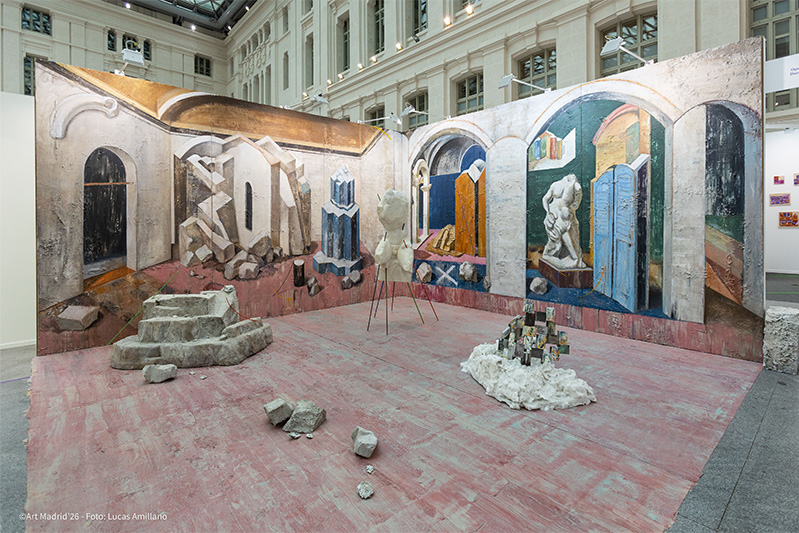
The third edition of Open Booth presented Despiece. Protocolo de mutación, by Daniel Barrio, a site-specific project that transformed the booth into a landscape constructed from urban remnants and industrial materials. The installation invited visitors to physically engage with the work, creating an immersive experience within the exhibition space.

Meanwhile, Espacio Nebrija hosted the project Estancias transitorias (NotanIA SipedagogIE), a proposal by Nebrija University that reflected on Aesthetic Intelligence in the face of the growing dominance of algorithmic logic. The installation proposed a reclamation of gesture, materiality, and the time inherent to the creative process as dimensions that cannot be reduced to automation.

Lecturas. Curated Walkthroughs also returned, with itineraries designed by Zuriñe Lafón and Marisol Salanova that offered curatorial insights for exploring the fair from specific critical perspectives and expanding the visitor experience.


Patronage, Awards, and Acquisitions

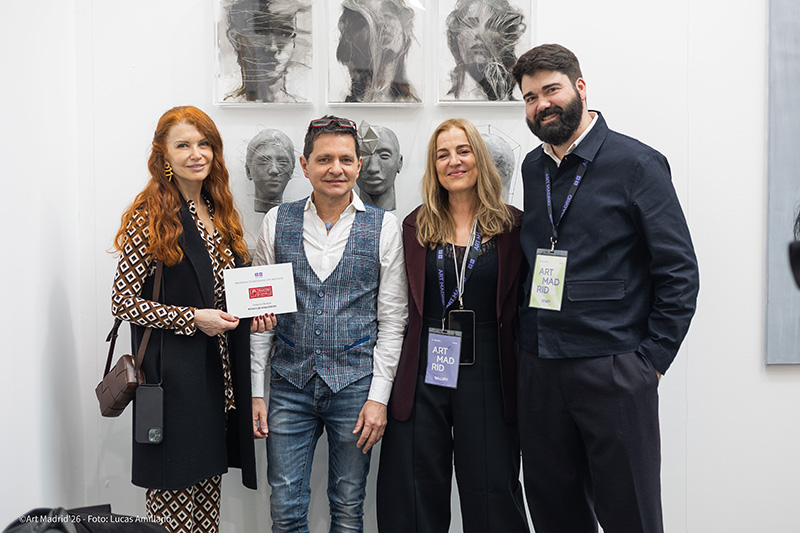
Support for contemporary creation once again stood as one of the fair’s central pillars through the second edition of the Art Madrid Patronage Program, which recognizes the work of artists and strengthens the connections between galleries, collectors, and private entities.

On this occasion, the following awards were presented:

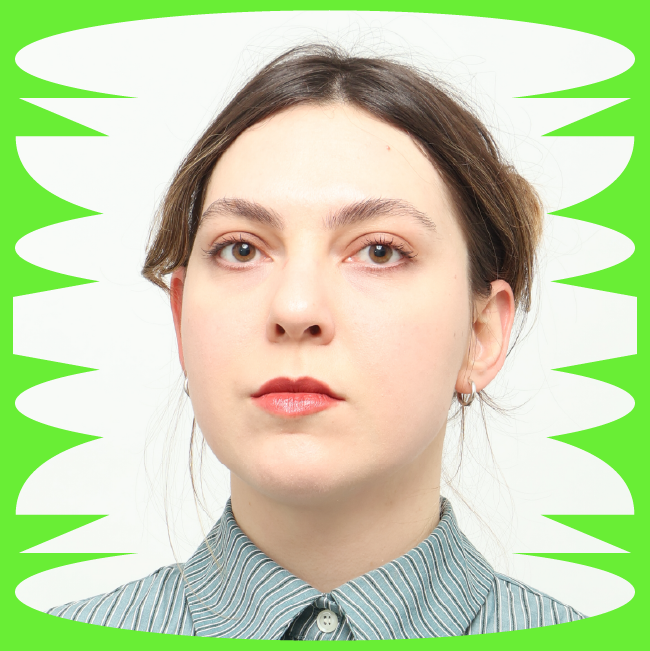
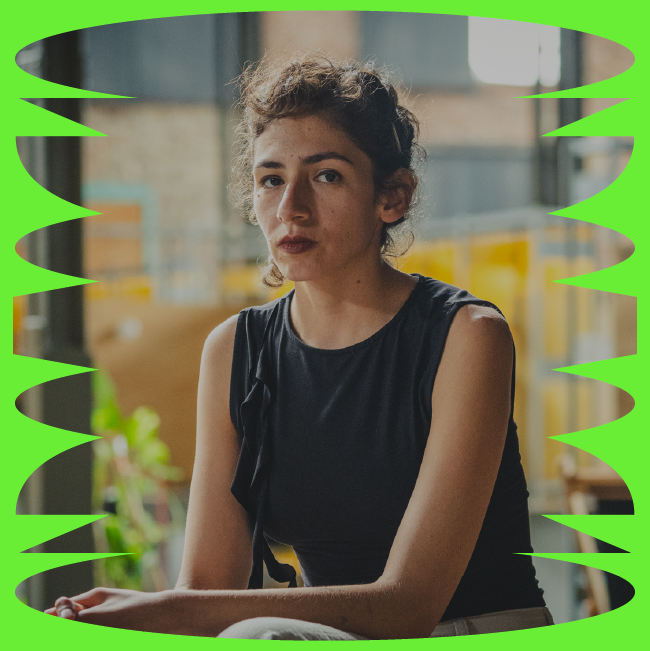
Cervezas Alhambra Emerging Artist Award Iyán Castaño, represented by Galería Arancha Osoro


One Shot Hotels Breakthrough Artist Award Joost Vandebrug, represented by KANT Gallery


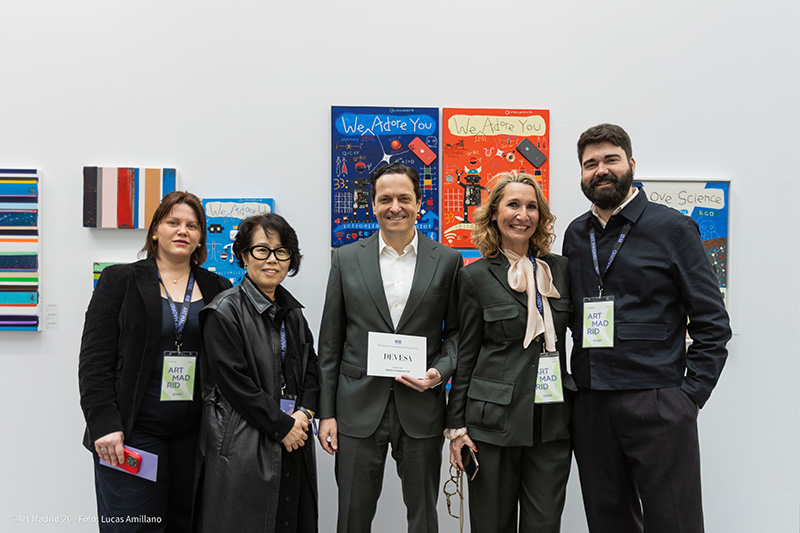
In the Acquisition Awards category, several private collections incorporated works presented at the fair into their collections.


Studiolo Collection Roger Sanguino — DDR Art Gallery


Devesa Law Kim Han Ki — Banditrazos Gallery


E2IN2 Collection Albert Bonet — Inéditad Gallery


dn2 Collection Iván Baizán — Galería Arancha Osoro

These acquisitions reflect the private sector’s commitment to the development of contemporary art and contribute to advancing the professional trajectories of emerging and mid-career artists.


Collecting and Support for the Artistic Ecosystem

The promotion of collecting once again played a prominent role in this edition thanks to the One Shot Collectors program, which offered personalized advice to both new buyers and more experienced collectors, facilitating access to the contemporary art market and fostering direct relationships between artists, galleries, buyers, and collectors.


This program, together with the Patronage Program, continues to strengthen the professional ecosystem surrounding the fair and reinforce Art Madrid’s commitment to supporting contemporary creation.

Among the most notable sales were works by Antonio Ovejero, represented by CLC ARTE; Leticia Feduchi and Ángela Mena, represented by Galería Sigüenza; Idoia Cuesta and Iyán Castaño, represented by Galería Arancha Osoro; and Yasiel Elizagaray, represented by Nuno Sacramento Arte Contemporânea. Likewise, the proposals presented by Inéditad Gallery were very well received, with notable sales of works by artists Albert Bonet and Eduardo UrdIales, as well as Carmen Mansilla, who debuted at Art Madrid'26 and achieved a sold out.


The overall balance of the edition has been particularly positive, with sales reported by all 35 participating galleries, confirming the strong interest from collectors and the dynamism of the market throughout the fair. Among the galleries that recorded notable commercial activity are La Mercería (Valencia), LAVIO (Murcia–Shanghai), 3 Punts Galería (Barcelona), Galerie One (Paris), Shiras Galería (Valencia), Galería Rodrigo Juarranz (Aranda de Duero), Galería São Mamede (Lisbon), Yiri Arts (Taiwan), and Trema Arte Contemporânea (Lisbon), among others.


A Fair made possible thanks to Its network of Partners

The success of Art Madrid’26 has been made possible thanks to the support of its official sponsors: Cervezas Alhambra, One Shot Hotels, Liquitex, Universidad Nebrija, and Posca, as well as the trust of its collaborators: Asociación 9915, Colección Studiolo, E2IN2, Colección dn2, Devesa Law, Enviarte, Cova 13, and Vanille Bakery Lab & Café. The fair also benefits from the involvement of its media partners and the support of various cultural organizations, private collections, and institutions that contribute to strengthening the contemporary art ecosystem.


Art Madrid: A Future Full of Possibilities

After 21 years of history, Art Madrid continues to consolidate its position as a key event in the contemporary art calendar, both nationally and internationally. Its ability to bring together galleries, artists, collectors, and institutions reinforces its role as a space for encounter, exchange, and discovery. The fair maintains a steadily growing outlook, driven by a program that evolves each year and increasingly opens up to more innovative proposals.

Thank you for being part of the 21st edition of Art Madrid. Your support is essential for continuing to promote art and culture.

See You at Art Madrid’27!