Art Madrid'26 – POSCA X THE ROLLING COLLECTION


The circle as critical device and the marker as contemporary catalyst


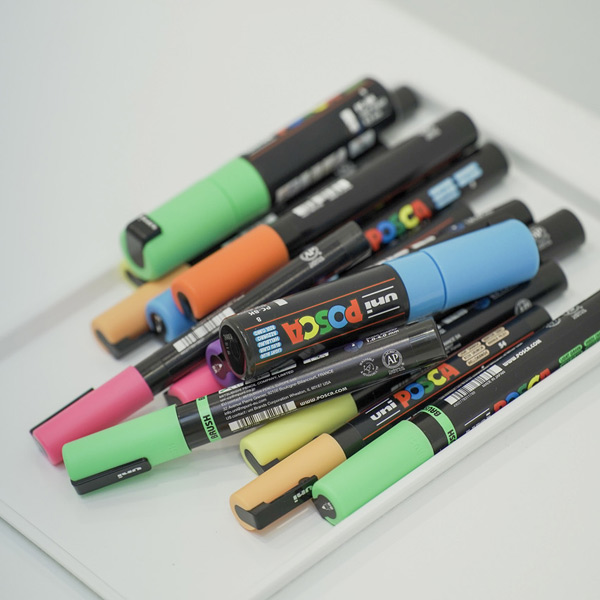
POSCA, the Japanese brand of water-based paint markers, has established itself since the 1980s as a central instrument within contemporary artistic practices associated with urban art, illustration, graphic design, and interdisciplinary experimentation. Its opaque, highly pigmented, fast-drying formula—compatible with surfaces as diverse as paper, wood, metal, glass, and textiles—has enabled a technical expansion that extends beyond the traditional studio, engaging public space, objects, and installation practices alike.
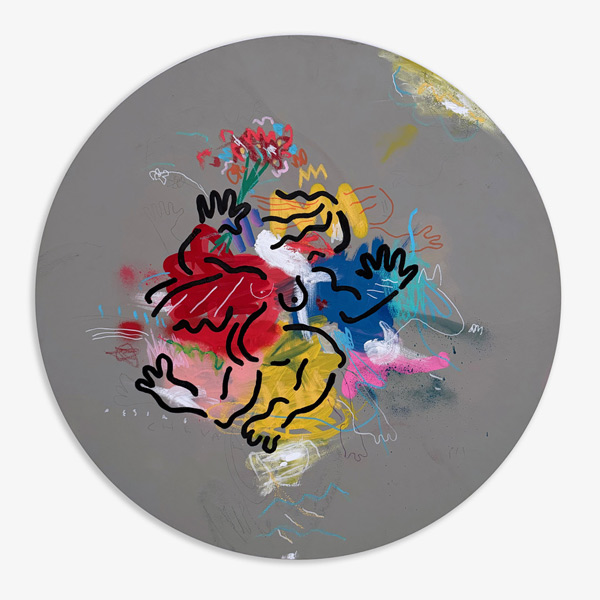


In this context, POSCA operates as more than a working tool; it functions as a material infrastructure for contemporary creation. It is a technical device that enables immediacy of gesture without sacrificing chromatic density or formal precision. Its versatility has contributed to the democratization of languages historically associated with painting, fostering a more horizontal circulation between professional and amateur practices.

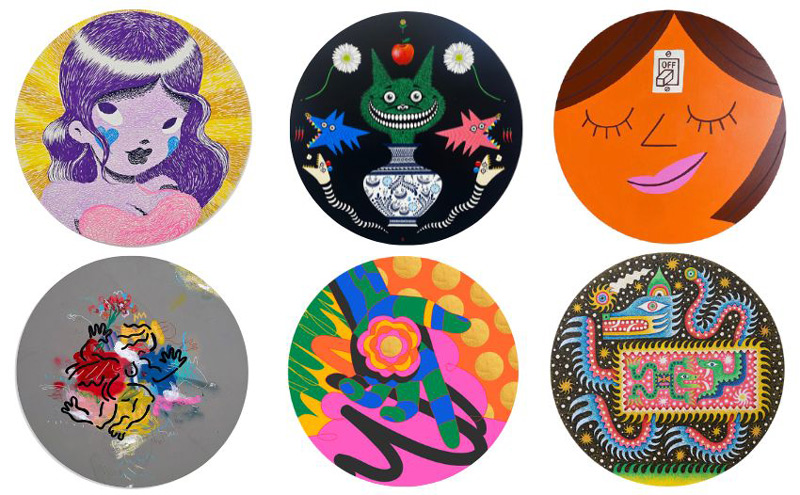
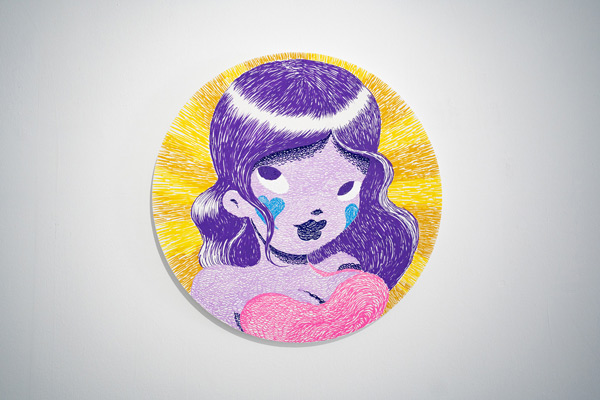
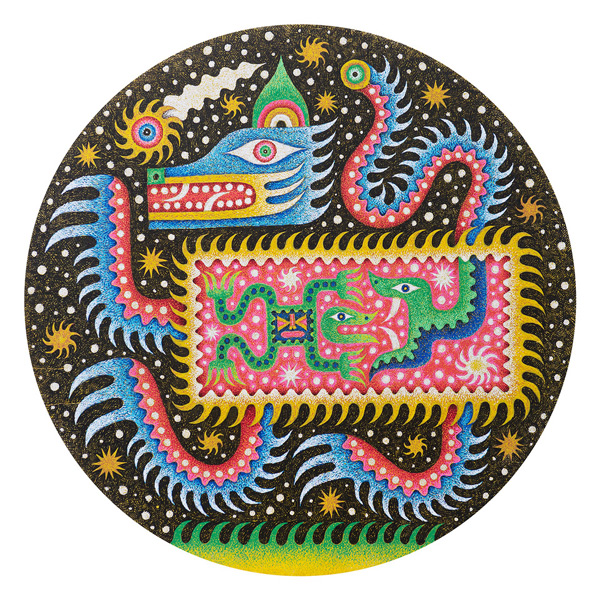
This expanded dimension of the medium finds a particularly compelling conceptual framework in The Rolling Collection, a traveling exhibition curated by ADDA Gallery. The project proposes a collective investigation of the circular format, understood not merely as a formal container but as a symbolic structure and a field of spatial tension.


Historically, the circle has operated as a figure of totality, continuity, and return. Within the framework of The Rolling Collection, the circular format shifts away from its classical symbolic charge toward an experimental dimension, becoming a support that challenges the hegemonic rectangular frontality of the Western pictorial tradition. The absence of angles demands a reconsideration of composition, balance, and directional flow.

Rather than functioning as a simple formal constraint, this condition generates a specific economy of visual decisions. The curved edge intensifies the relationship between center and periphery, dissolves internal hierarchies, and activates both centrifugal and centripetal dynamics. The resulting body of work interrogates the very processes through which images are constructed.
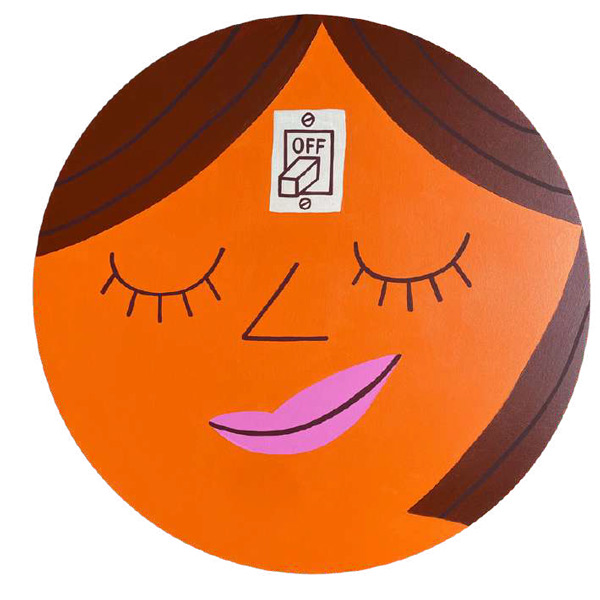


Following its 2025 tour through Barcelona, Ibiza, Paris, London, and Tokyo, a selection of the exhibition is presented at Art Madrid, reinforcing its international scope and its adaptability to diverse cultural contexts. The proposal for Art Madrid’26 brings together artists whose practices unfold at the intersection of urban art, contemporary illustration, and hybrid methodologies: Honet, Yu Maeda, Nicolas Villamizar, Fafi, Yoshi, and Cachetejack.

While their visual languages vary—ranging from graphic and narrative approaches to chromatic explorations charged with gestural intensity—the curatorial framework establishes a shared axis: a free, experimental, and distinctly color-driven attitude. In this sense, color functions as a conceptual structure that articulates the works while simultaneously connecting them to the specific materiality of POSCA.
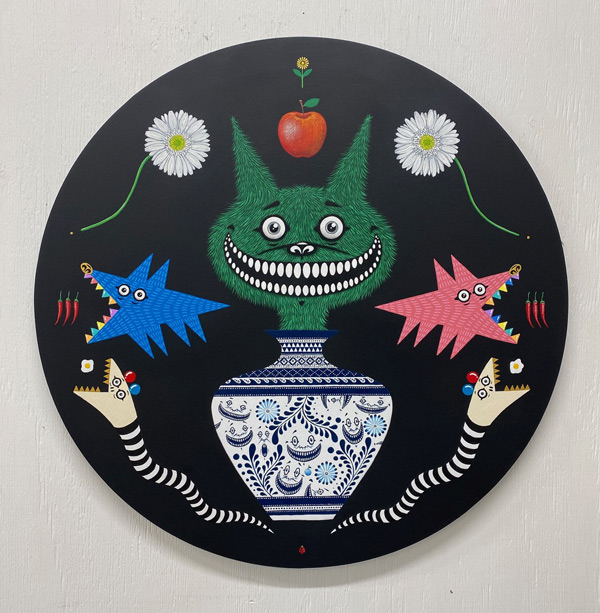


The marker’s inherent chromatic vibrancy engages in dialogue with the formal assertiveness of the circle, generating surfaces in which saturation and contrast take center stage. The tool thus becomes embedded within the exhibition discourse, operating as a coherent extension of the participating artists’ aesthetic vocabularies.

One of the project’s most significant dimensions is the active incorporation of the public. Within the exhibition space—activated by POSCA during Art Madrid’26—visitors will be invited to intervene on circular supports installed on the wall using POSCA markers, thereby symbolically integrating themselves into The Rolling Collection during its presentation in Madrid.


This strategy introduces a relational dimension that destabilizes the notion of the closed artwork. Authorship becomes decentralized, and the exhibition space transforms into a dynamic surface for the accumulation of gestures. From a theoretical standpoint, the project may be understood as aligning with participatory practices that, without compromising formal coherence, open the artistic dispositif to contingency and multiplicity.

The selection of POSCA as the instrument for this collective intervention is deliberate. Its ease of use, line control, and compatibility with multiple surfaces ensure an accessible experience without diminishing the visual potency of the outcome. In this way, the marker operates as a mediator between professional practice and spontaneous experimentation, dissolving technical hierarchies.


The title itself, The Rolling Collection, suggests a collection in motion—unfixed to a single space or definitive configuration. Its itinerant nature, combined with the incorporation of local interventions, transforms the project into an organism in continuous evolution. Within this framework, POSCA positions itself as a material catalyst for a transnational creative community. Long associated with urban scenes and emerging practices, the brand reinforces its identity as an ally of open, experimental, and collaborative processes.

POSCA x The Rolling Collection should not be understood merely as a collaboration between a company and a curatorial initiative; rather, it constitutes a strategic convergence of tool, discourse, and community. The project proposes a reflection on format, the global circulation of contemporary art, and the expansion of authorship, while POSCA provides the technical infrastructure that makes both individual works and collective experience possible.
ART MADRID CLOSES ITS 21ST EDITION AS A KEY EVENT OF MADRID ART WEEK


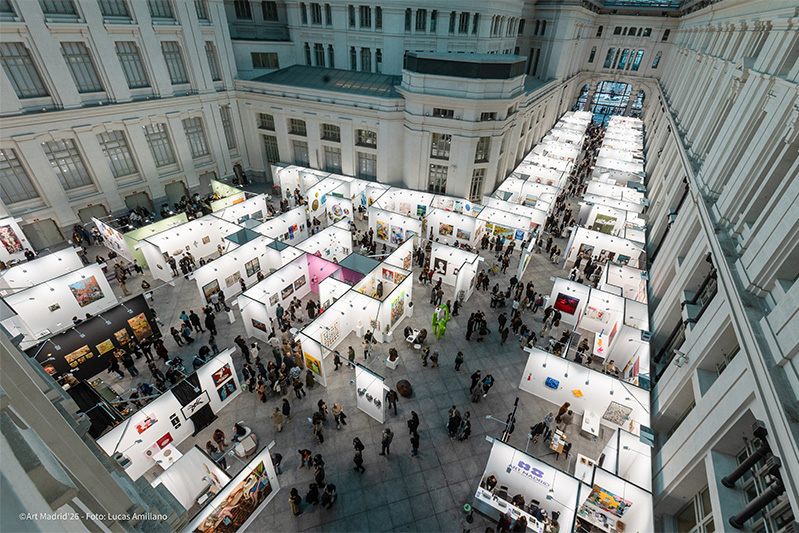
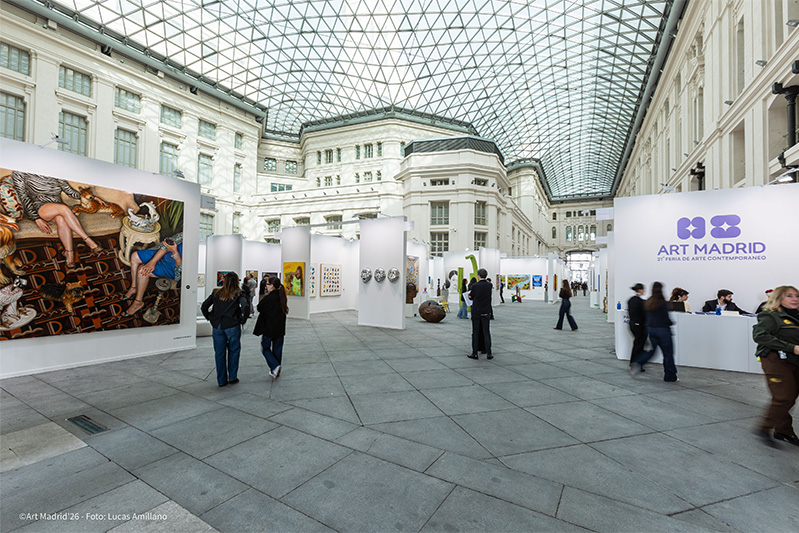
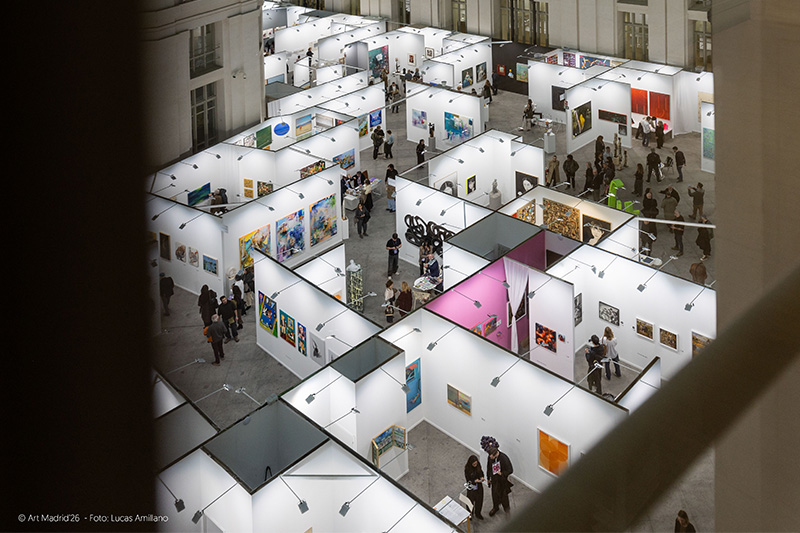
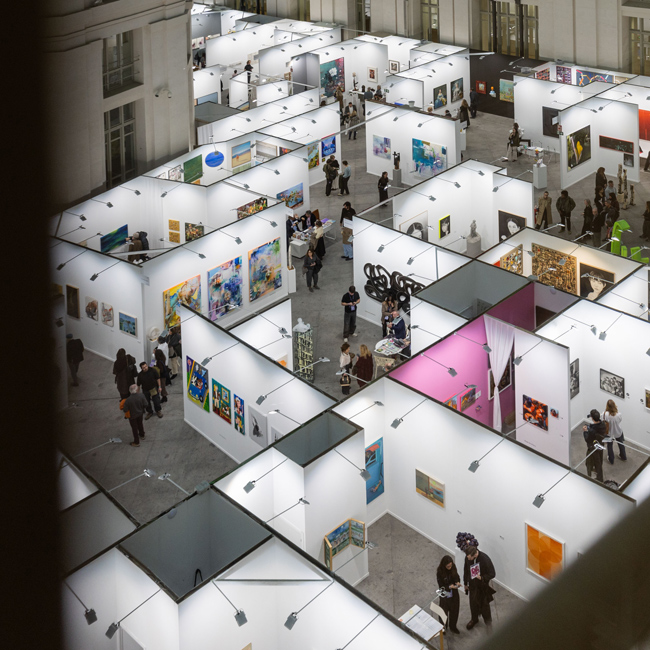
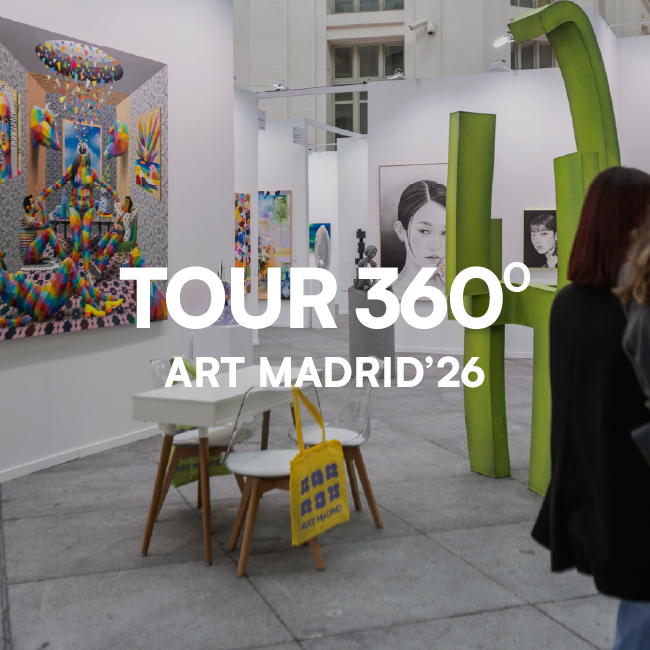
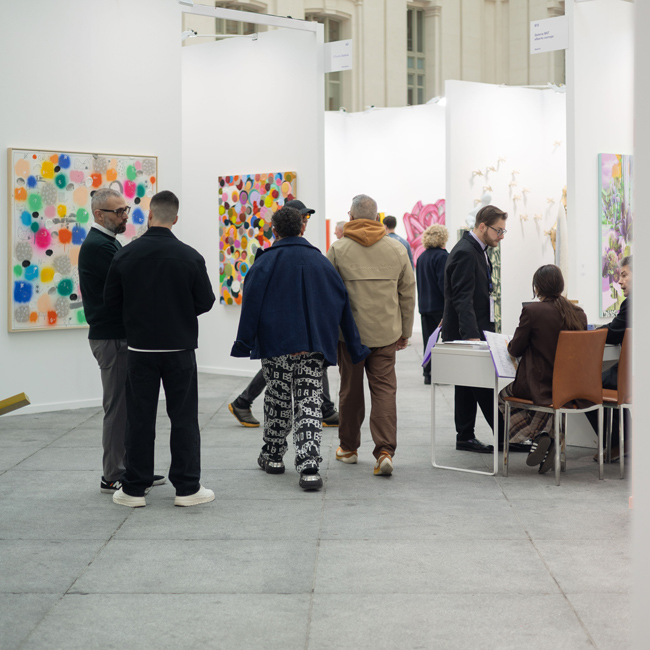
The Galería de Cristal of the Palacio de Cibeles hosted the 21st edition of Art Madrid from March 4 to 8, once again consolidating its role as one of the must-see events of Madrid Art Week. Over the course of five days, the fair brought together 35 national and international galleries and more than 200 artists, turning the venue into a meeting point for gallerists, collectors, professionals, and lovers of contemporary art.

Throughout its trajectory, Art Madrid has built a distinct identity, with a constant focus on giving visibility to both emerging and established galleries and on opening contemporary art to diverse audiences. Rather than being structured around a single curatorial line, the fair embraced a plural proposal, respecting the unique DNA of each exhibitor.


Art Madrid’26 presented a Gallery Program distinguished by the diversity of artistic proposals and languages, encouraging dialogue between different generations and contemporary practices. Painting, sculpture, photography, drawing, installation, and new hybrid forms coexisted in an edition that once again confirmed the dynamism of today’s art scene

During the days of the fair, nearly 20,000 visitors explored the booths of the participating galleries and enjoyed a parallel program that expanded the experience beyond the traditional exhibition format.


The Parallel Program: An Expanded Art Fair

The Parallel Program once again took center stage in the Art Madrid experience, activating the fair space through projects that explored new forms of interaction between artworks, artists, and the public.

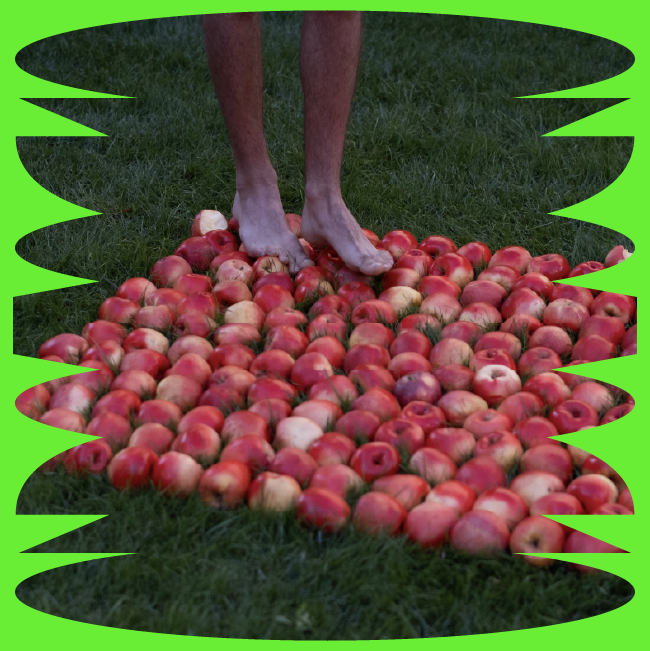
Among the most notable initiatives was the performance series Open Infinite: What the Body Remembers, which presented a daily performative action at the fair featuring works by Colectivo La Burra Negra, Rocío Valdivieso, Amanda Gatti, and Jimena Tercero. The pieces incorporated the body as a critical device and a space of memory, reinforcing the presence of performance within Art Madrid’s programming.

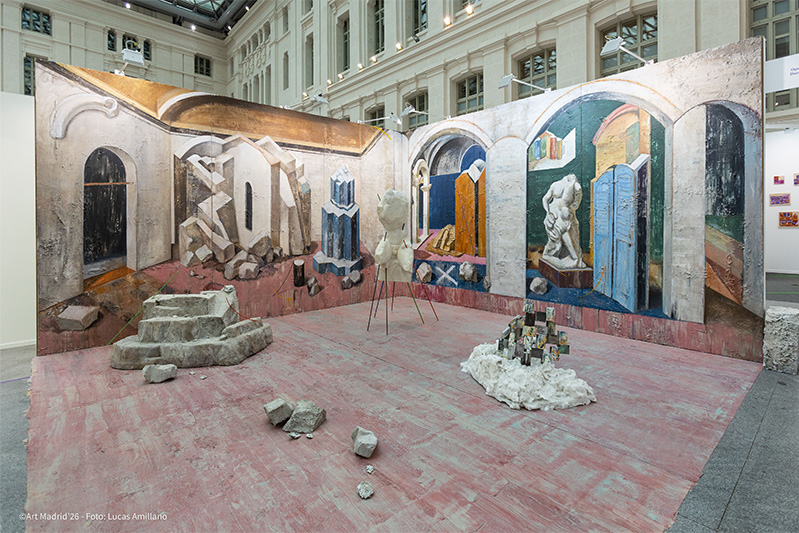
The third edition of Open Booth presented Despiece. Protocolo de mutación, by Daniel Barrio, a site-specific project that transformed the booth into a landscape constructed from urban remnants and industrial materials. The installation invited visitors to physically engage with the work, creating an immersive experience within the exhibition space.

Meanwhile, Espacio Nebrija hosted the project Estancias transitorias (NotanIA SipedagogIE), a proposal by Nebrija University that reflected on Aesthetic Intelligence in the face of the growing dominance of algorithmic logic. The installation proposed a reclamation of gesture, materiality, and the time inherent to the creative process as dimensions that cannot be reduced to automation.

Lecturas. Curated Walkthroughs also returned, with itineraries designed by Zuriñe Lafón and Marisol Salanova that offered curatorial insights for exploring the fair from specific critical perspectives and expanding the visitor experience.


Patronage, Awards, and Acquisitions

Support for contemporary creation once again stood as one of the fair’s central pillars through the second edition of the Art Madrid Patronage Program, which recognizes the work of artists and strengthens the connections between galleries, collectors, and private entities.

On this occasion, the following awards were presented:

Cervezas Alhambra Emerging Artist Award Iyán Castaño, represented by Galería Arancha Osoro


One Shot Hotels Breakthrough Artist Award Joost Vandebrug, represented by KANT Gallery


In the Acquisition Awards category, several private collections incorporated works presented at the fair into their collections.


Studiolo Collection Roger Sanguino — DDR Art Gallery


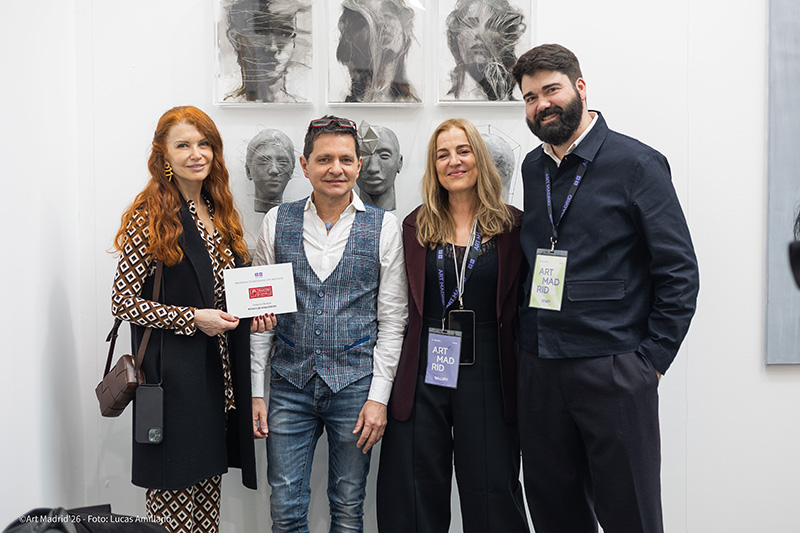
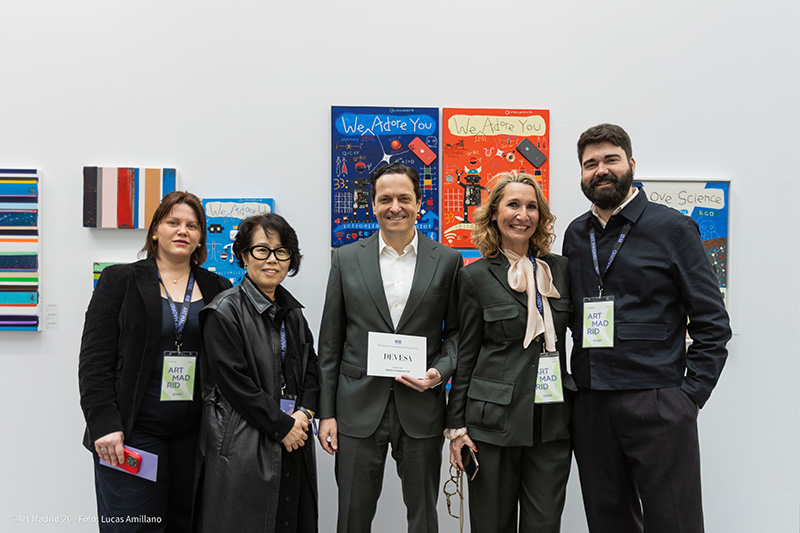
Devesa Law Kim Han Ki — Banditrazos Gallery


E2IN2 Collection Albert Bonet — Inéditad Gallery


dn2 Collection Iván Baizán — Galería Arancha Osoro

These acquisitions reflect the private sector’s commitment to the development of contemporary art and contribute to advancing the professional trajectories of emerging and mid-career artists.


Collecting and Support for the Artistic Ecosystem

The promotion of collecting once again played a prominent role in this edition thanks to the One Shot Collectors program, which offered personalized advice to both new buyers and more experienced collectors, facilitating access to the contemporary art market and fostering direct relationships between artists, galleries, buyers, and collectors.


This program, together with the Patronage Program, continues to strengthen the professional ecosystem surrounding the fair and reinforce Art Madrid’s commitment to supporting contemporary creation.

Among the most notable sales were works by Antonio Ovejero, represented by CLC ARTE; Leticia Feduchi and Ángela Mena, represented by Galería Sigüenza; Idoia Cuesta and Iyán Castaño, represented by Galería Arancha Osoro; and Yasiel Elizagaray, represented by Nuno Sacramento Arte Contemporânea. Likewise, the proposals presented by Inéditad Gallery were very well received, with notable sales of works by artists Albert Bonet and Eduardo UrdIales, as well as Carmen Mansilla, who debuted at Art Madrid'26 and achieved a sold out.


The overall balance of the edition has been particularly positive, with sales reported by all 35 participating galleries, confirming the strong interest from collectors and the dynamism of the market throughout the fair. Among the galleries that recorded notable commercial activity are La Mercería (Valencia), LAVIO (Murcia–Shanghai), 3 Punts Galería (Barcelona), Galerie One (Paris), Shiras Galería (Valencia), Galería Rodrigo Juarranz (Aranda de Duero), Galería São Mamede (Lisbon), Yiri Arts (Taiwan), and Trema Arte Contemporânea (Lisbon), among others.


A Fair made possible thanks to Its network of Partners

The success of Art Madrid’26 has been made possible thanks to the support of its official sponsors: Cervezas Alhambra, One Shot Hotels, Liquitex, Universidad Nebrija, and Posca, as well as the trust of its collaborators: Asociación 9915, Colección Studiolo, E2IN2, Colección dn2, Devesa Law, Enviarte, Cova 13, and Vanille Bakery Lab & Café. The fair also benefits from the involvement of its media partners and the support of various cultural organizations, private collections, and institutions that contribute to strengthening the contemporary art ecosystem.


Art Madrid: A Future Full of Possibilities

After 21 years of history, Art Madrid continues to consolidate its position as a key event in the contemporary art calendar, both nationally and internationally. Its ability to bring together galleries, artists, collectors, and institutions reinforces its role as a space for encounter, exchange, and discovery. The fair maintains a steadily growing outlook, driven by a program that evolves each year and increasingly opens up to more innovative proposals.

Thank you for being part of the 21st edition of Art Madrid. Your support is essential for continuing to promote art and culture.

See You at Art Madrid’27!