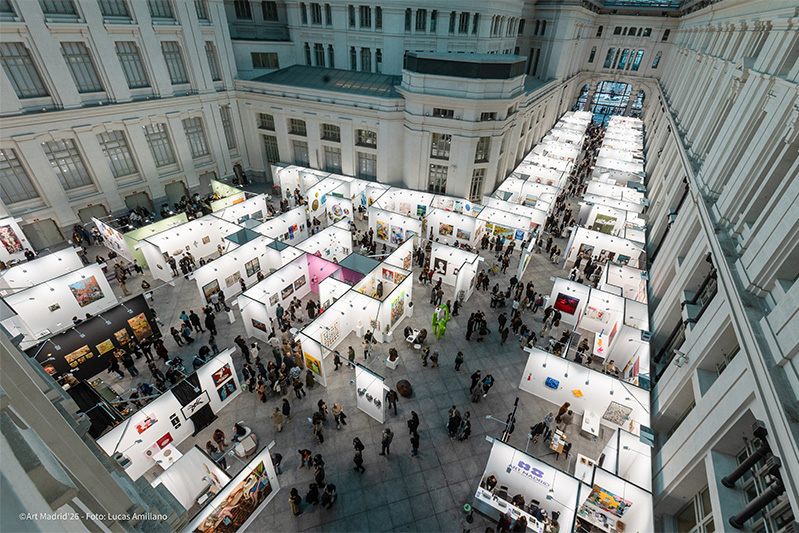
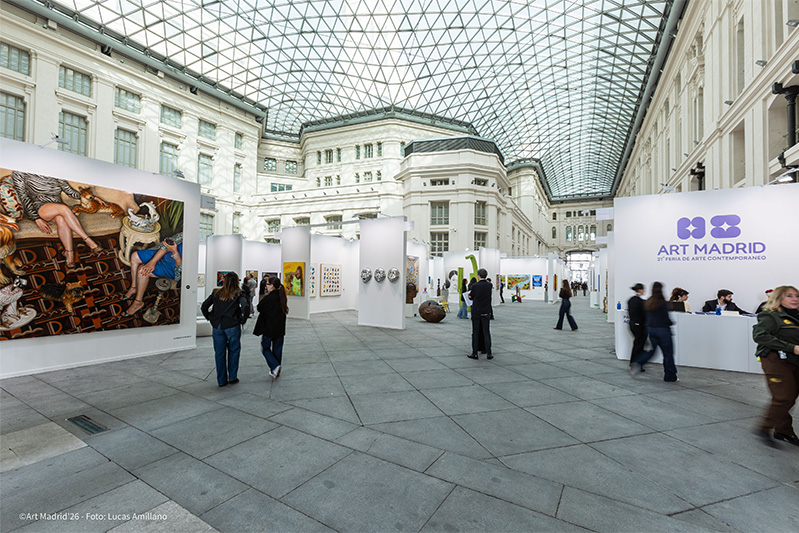
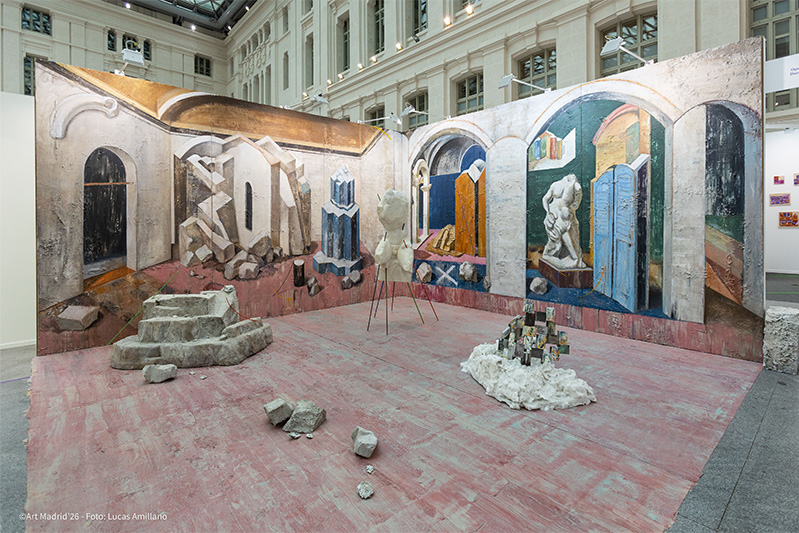
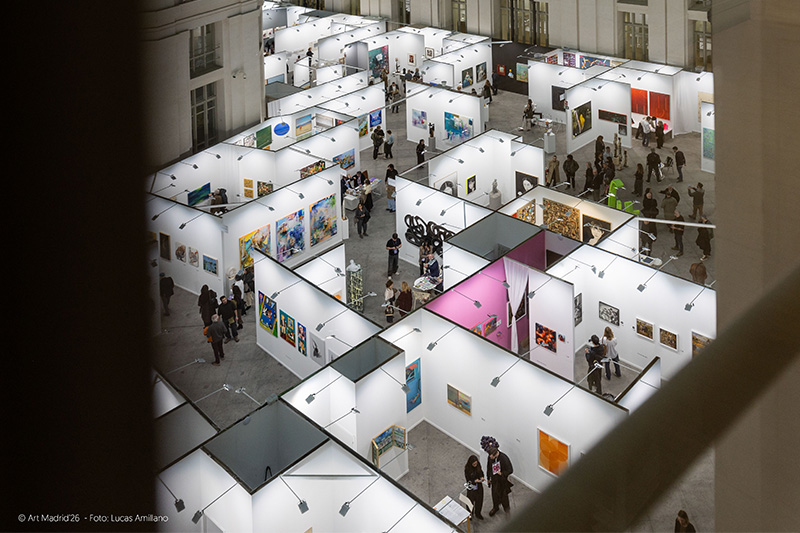
The 22nd edition of Art Madrid opens its application period. From 3 to 7 March 2027, the Galería de Cristal del Palacio de Cibeles will once again become the meeting point for national and international contemporary art. Galleries interested in taking part can submit their application until 20 October 2026.
The Art Madrid contemporary art fair
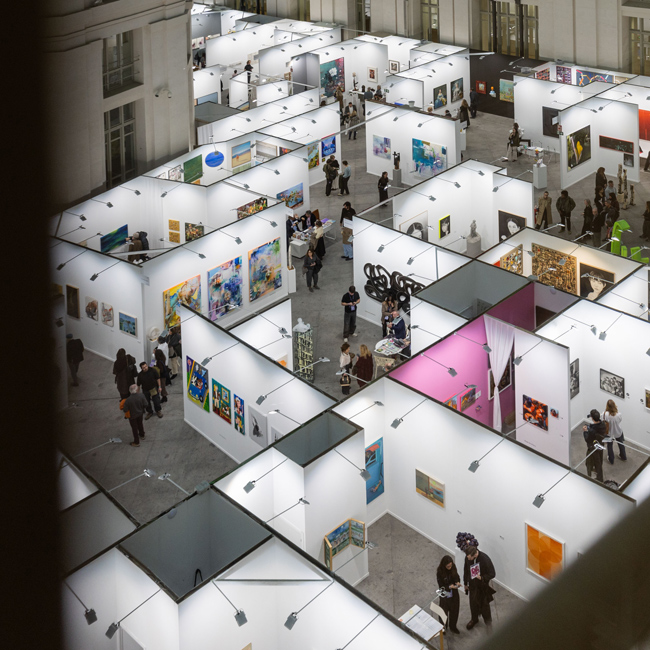
Art Madrid takes place each year as part of Madrid Art Week, the moment in the Spanish art calendar with the highest concentration of collectors, institutions and specialist press. With 22 years of history, the fair brings together national and international galleries with a programme focused on recently produced contemporary work.
Located at the Galería de Cristal del Palacio de Cibeles, in the cultural heart of the city and steps away from the Triángulo del Arte and the Paseo del Prado, Art Madrid offers participating galleries a distinctive and recognisable setting within the Spanish art fair landscape.
Art Madrid'26 in figures
The previous edition closed with 35 galleries from 7 countries (Spain, Portugal, France, Denmark, Taiwan, South Korea and Cuba), over 200 artists and around 20,000 visitors. 35% of the audience were new collectors, with an age range between 35 and 60 and a gender split of 55% women and 45% men.
The fair welcomed representatives from more than 30 foundations, museums and collections, including Fundación Mapfre, Fundación BBVA, Fundación Telefónica, Fundación Banco Santander, Fundación Bertelsmann, Fundación María Cristina Masaveu Peterson, Fundación Carmen y Lluís Bassat, Fundación Studiolo, Fundació Lluís Coromina, IVAM, MARCO, CAAM, MEIAC and the Museo del Romanticismo. Delegations from Madrid City Council, the Community of Madrid, the Ministry of Culture and ambassadors from several countries also attended.
PROGRAMMES
GALLERIES PROGRAMME
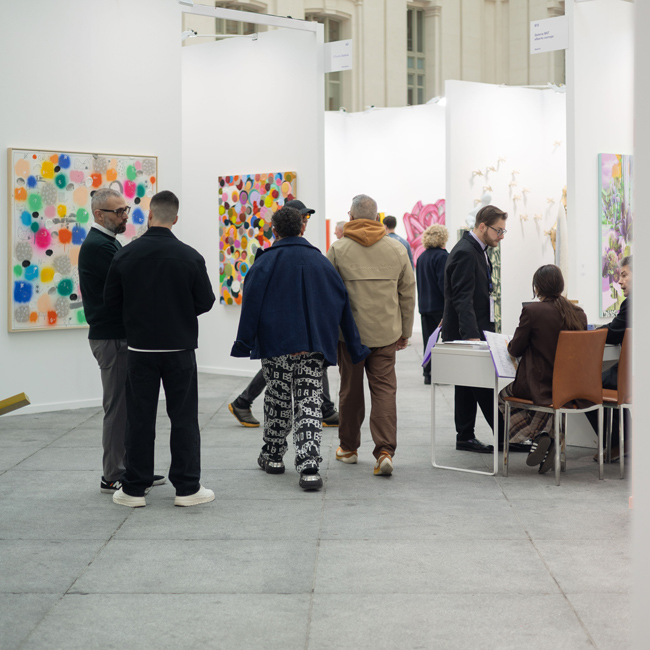
In each edition, Art Madrid brings together a carefully curated selection of around 35 national and international galleries with proposals focused on recently produced contemporary work.
ONE SHOT COLLECTORS PROGRAMME
Sponsored by One Shot Hotels and led by Ana Suárez Gisbert (art advisor specialising in international law and the art trade, art appraiser and court expert), the Collectors Programme connects new and experienced buyers with the participating works and galleries through a personalised advisory service throughout the five days of the fair.
For galleries, it operates as an additional channel for engaging active buyers, running in parallel to their own commercial activity.
PATRONAGE PROGRAMME
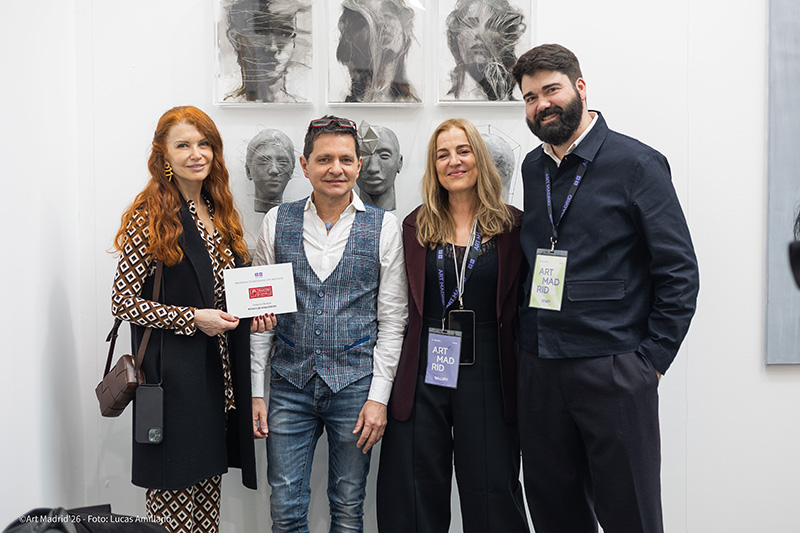
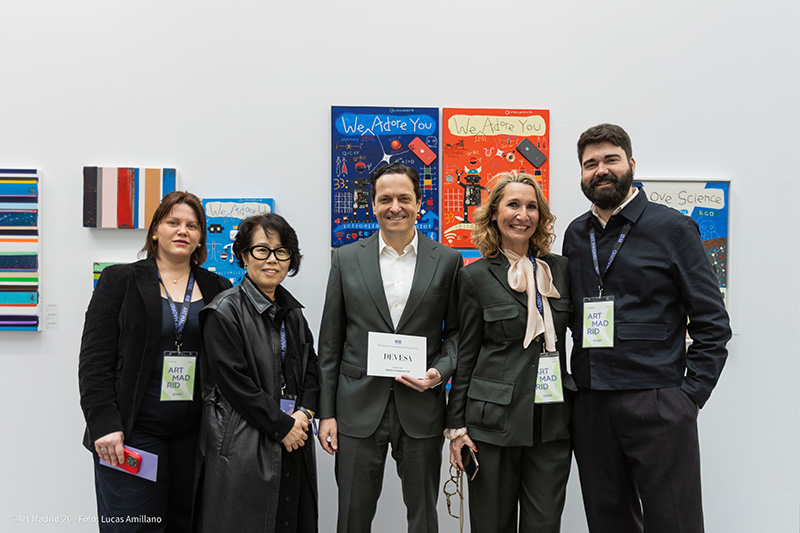
Art Madrid partners with institutions, collectors and private companies to directly support artists and galleries through awards and acquisitions. At the 2026 edition:
- One Shot Hotels Breakthrough Artist Award (€1,000): Joost Vandebrug · KANT Gallery (Copenhagen–Palma)
- Cervezas Alhambra Emerging Artist Award (€1,000): Iyán Castaño · Galería Arancha Osoro (Oviedo)
- Colección Studiolo Acquisition: Roger Sanguino · DDR Art Gallery (Madrid)
- Colección E2IN2 Acquisition: Albert Bonet · Inéditad Gallery (Barcelona)
- Devesa Law Acquisition: Kim Han Ki · Banditrazos Gallery (Seoul)
- Colección dn2 Acquisition: Iván Baizán · Galería Arancha Osoro (Oviedo)
PARALLEL PROGRAMME AND ON-SITE ACTIVITIES
Throughout February, Art Madrid runs a Parallel Programme of series, talks and projects that extend the dialogue beyond the fair venue.
During the five days of the fair, alongside the galleries' exhibition programme, on-site activities include the Open Booth, the Performance Series and Readings: Curated Tours.
Communication and reach
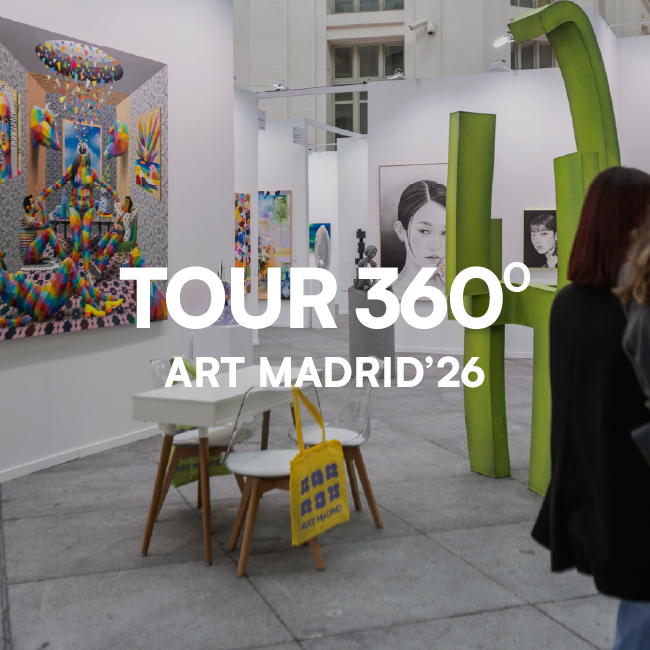
The Art Madrid'26 communications campaign reached 17 million people across online and offline media: print press, radio, exclusive catalogue, web, newsletter, social media and virtual 360° tour. Coverage included general and specialist national and international media, with appearances on RTVE, TeleMadrid, Onda Madrid, Onda Cero, COPE, El Mundo, ABC, Vogue, TimeOut and Elle, among others.
All participating galleries and artists feature on the Art Madrid website during and after the fair, with their own profile, images of works and contact details.
KEY INFORMATION:
Galleries interested in taking part in the 22nd edition of Art Madrid can submit their application through the online registration form available on the website until 20 October 2026.
For any queries, please write to info@art-madrid.com or call +34 91 535 87 11.