ART MADRID’18 CLOSES ITS MOST SUCCESSFUL EDITION
Mar 8, 2018
art madrid
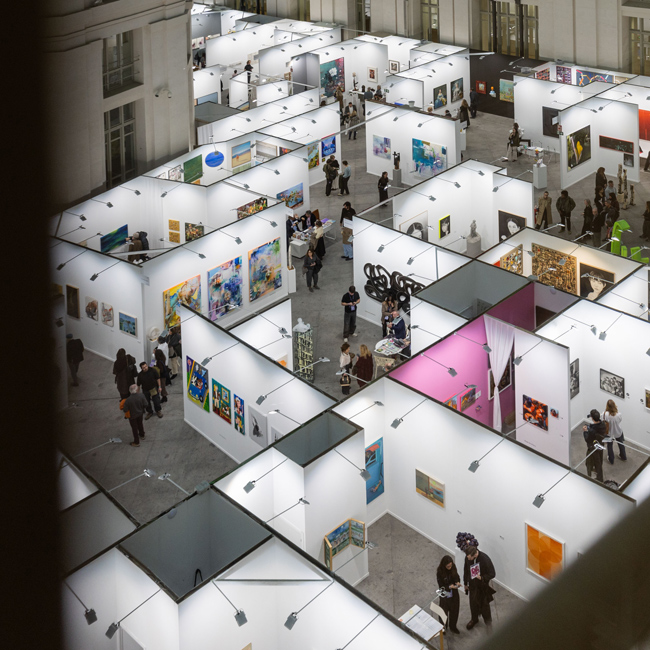
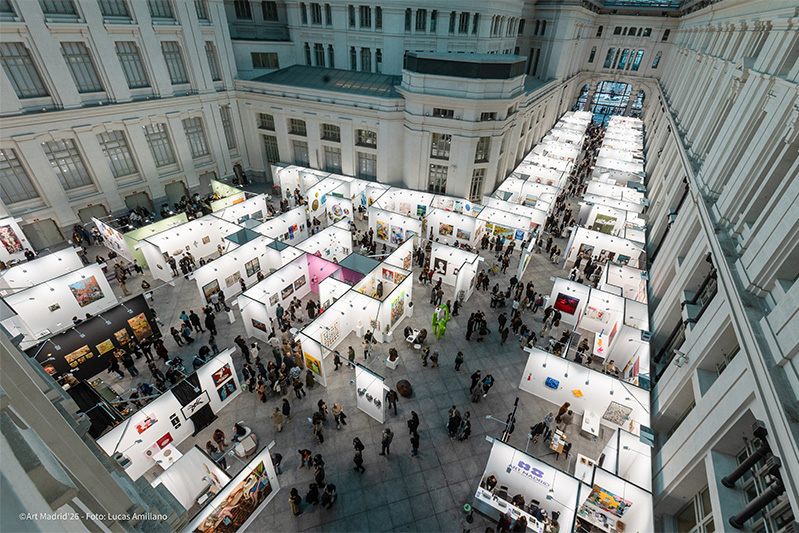
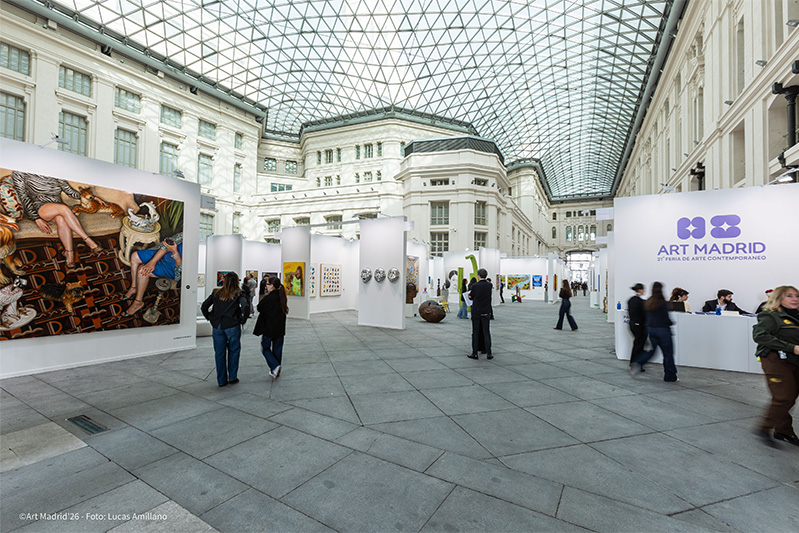
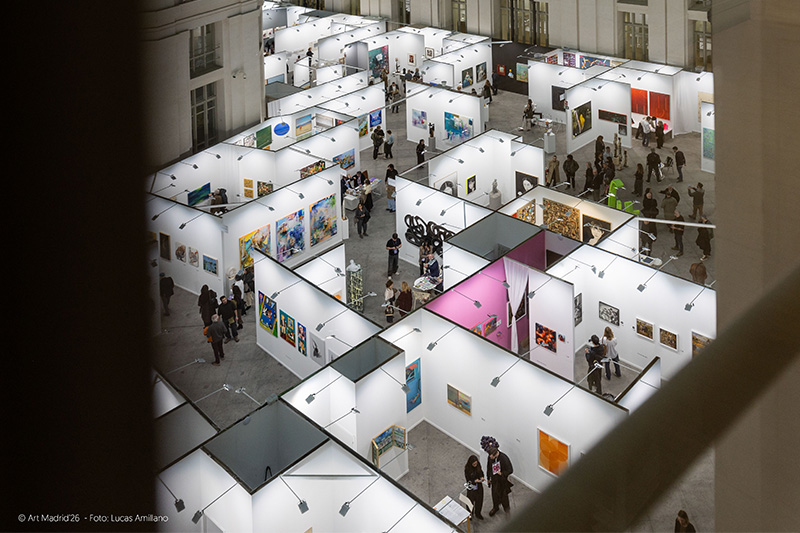
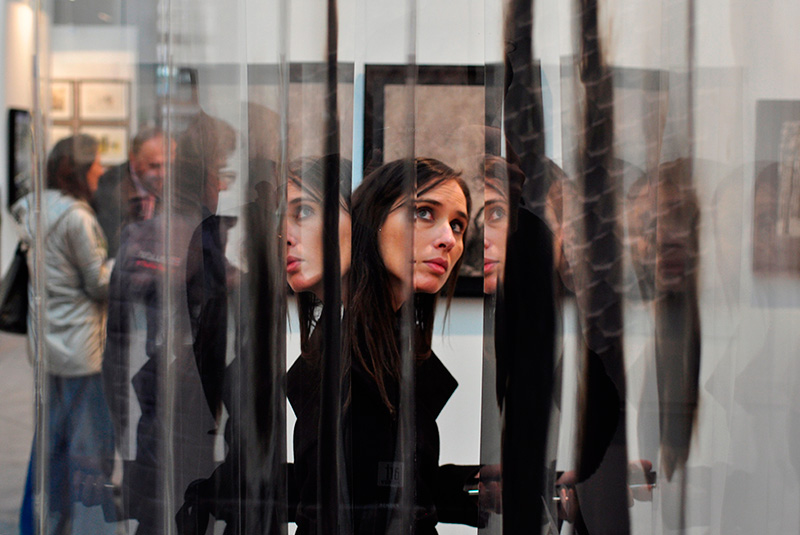
The Crystal Gallery of CentroCentro Cibeles, a space in which the Art Madrid Contemporary Art Fair has been held for the fifth consecutive year, has received more than 20,000 visitors, between Wednesday, February 21 and Sunday, February 25, among which it has increased up to a 20% the percentage of professional public and collectors, both private and institutional.
For this 13th edition, the selection committee of Art Madrid’18, formed by the international art market specialist Ángel Samblancat; the theorist and art critic Alfonso de la Torre, the gallery owner Javier López Vélez, from 3 Punts (Barcelona) and, the independent curator Carlos Delgado Mayordomo, assessed more than a hundred proposals to give shape to a program with quality and potential of sales, demanding to the galleries coherent and avant-garde proposals.
“I liked the hyperactivity of the fair and the ambient of permanent enthusiasm and, of course, the meeting space that is created between established artists and new emerging voices. Art Madrid has become a very different proposal, in the sense of distinguished, in the hectic artistic February”, says Alfonso de la Torre. On the other hand, Samblancat highlights “the best selection of proposals by exhibitors at the fair and greater openness to international galleries, for example in Latin America with magnificent representations such as Collage Havana of Cuba, Italy with Casa Falconieri of Cagliari, Asia with Yiri Arts of Taipei and his new contributions, from Germany with Schmalfuss and Robert Drees, from Ukraine with Nebo Art Gallery from Kiev and his exciting fabrics of exquisite talent”.
ENTHUSIASM AMONG COLLECTORS AND FEATURED ARTISTS
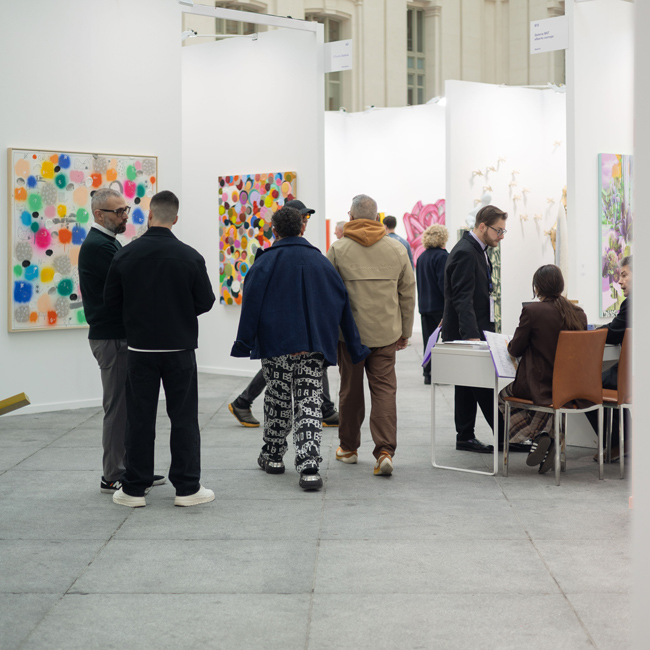
Frasco Pinto and Pedro Pinto, directors of the Artizar de Tenerife Gallery, highlight the variety of the public in “a very visited fair, with art lovers of all kinds. Veteran collectors, young collectors, visitors with no more aim than to see and enjoy art and curious". In terms of sales, his proposal, a ONE PROJECT by Carlos Nicanor “has covered and exceeded expectations. The truth is that it has worked very well”, they say. Jaime Sordo, president of the Association of Collectors 9915 was one of the collectors who chose a piece of Nicanor for his collection “Los Bragales”. For the gallerist Arancha Osoro from Oviedo, the balance has been very positive and “adespite bringing a new and personal choice, difficult in some case to defend in such a large market, we are happy because we have sold work of all our artists, highlighting especially the pieces of artists that have gone to private collections, such as an acrylic by Jezabel Rodríguez, a large-scale work by Nuria Formenti and a piece by the sculptor Kiko Miyares ”.
Along with the artists already mentioned, there are other artists appreciated by the collectors and buyers of this edition, such as the painter Lino Lago (with several pieces sold with the Moret Art gallery in A Coruña), Taiwanese Lai Wei-Yu drom the Yiri Arts gallery (the youngest painter in the collection of the Taiwan Museum of Fine Arts), the sculptor Candela Muniozguren who sold several pieces of her ONE PROJECT with the gallery Bea Villamarín, the Korean Joo Eun Bae, an authentic revelation from the MH Art Gallery in Bilbao, Carmen Calvo, National Fine Arts Prize, from which several collages were sold in the Art Lounge gallery in Lisbon, or Roldán Lauzán from the Cuban gallery Collage Habana, one of whose portraits is already part of the Colección Bassat.
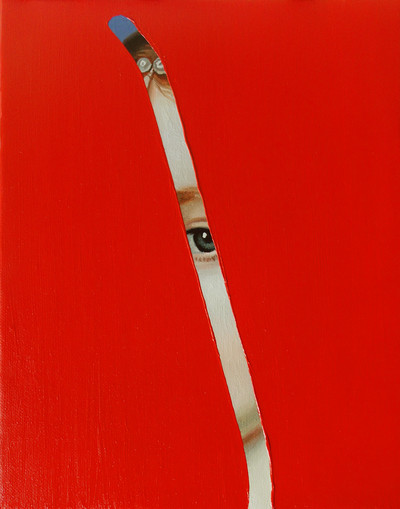
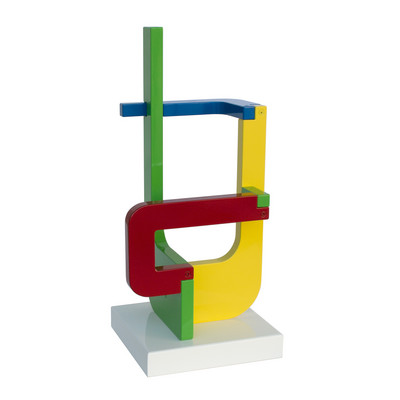
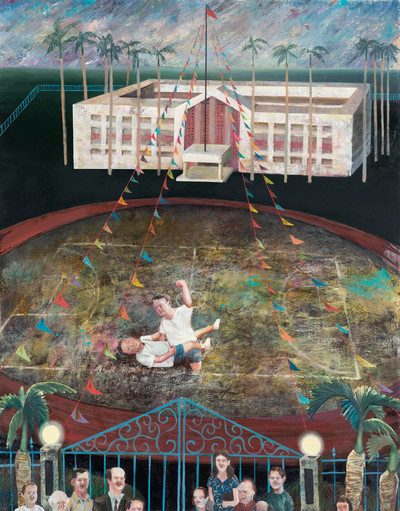
For Sara Joudi, from the Galería Shiras Valencia) for the first time in Art Madrid, “there was a profile of new collectors and occasional buyers who were very interested in our proposal and acquired work. There was a favorable environment for the sale and very positive comments on the general proposal of the fair. We sold works of all the artists we carry. “ From another of the new galleries, Diwap Gallery (Sevilla), his co-director Juan Cruz says that his time at Art Madrid has been "a rewarding experience seeing how the work of urban artists and environments different from the usual one is being introduced, it’s a slow road but you have to do it and be patient and Art Madrid has made a very good bet “.
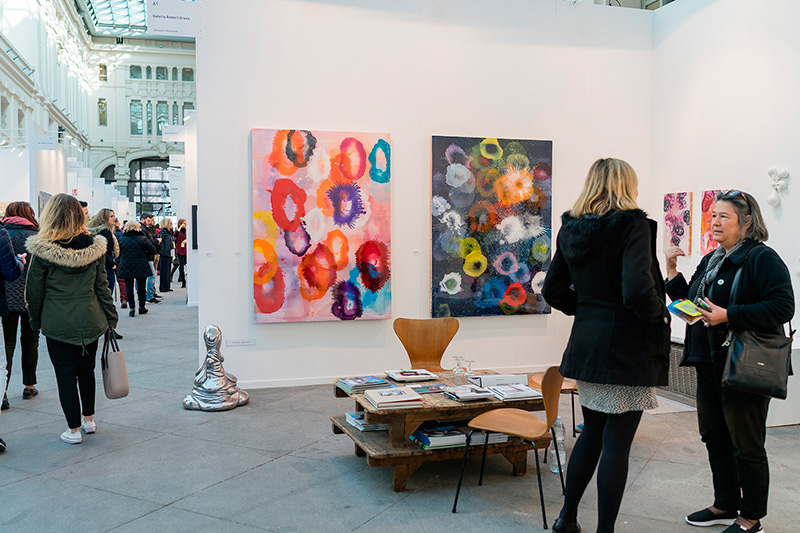
Javier López, from Galeria 3 Punts highlights an “increasingly interesting and younger audience” that surprised them as potential buyers because in this edition they have “exceeded sales expectations”. The 3 Punts proposal included, among others, Okuda San Miguel, Samuel Salcedo, Gerard Mas, Mark Jenkins and Ramon Surinyac. In this sense, the German gallery Robert Drees, reference space for contemporary art in Hannover, highlights “the energy and enthusiasm of buyers and art lovers among the public of Art Madrid” without forgetting “the space, an unparalleled location to show art”.
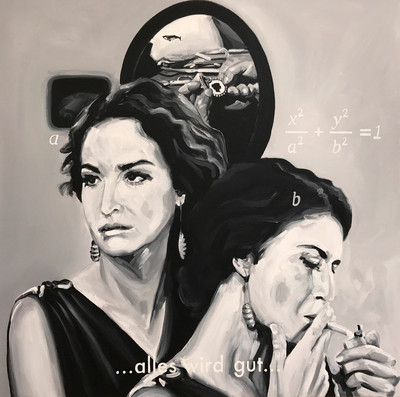
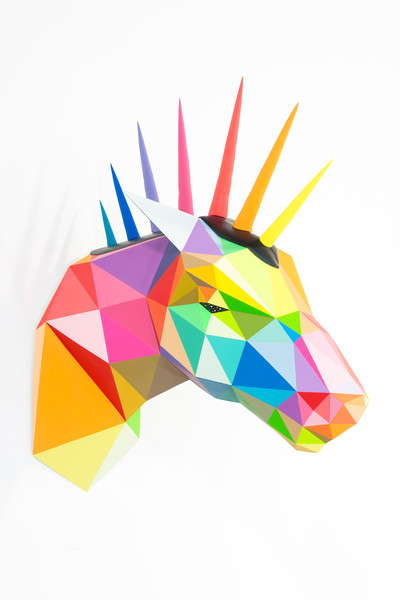
The proposal of the galería Luisa Pita, according to the gallerist, “has captured the attention of collectors and entities such as the Caja Burgos Foundation with whom I have closed an exhibition project for Christian Villamide, or collaborations with two architectural studios to integrate works by Pierre Louis Geldenhuys in his next projects”, says the gallerist.
This possibility of new projects, the meeting with other professionals, is one of the experiences the artists most appreciate. “EIt is the perfect link to contact other galleries, private collectors, share experiences with other artists... Participate in Art Madrid opens a range of possibilities for any artist, motivating him to continue creating with the spirit and perspective of being able to live of art”, explains the Spanish Pepa Salas, represented by the Robert Drees gallery.
For Rubén Martín de Lucas, one of the most valued artists in the latest editions of Art Madrid with the BAT alberto cornejo gallery, the fairs “are a great energizer, especially at the art market level (necessary to support the entire structure). It serves very well as a complement to the more leisurely and profound work carried out by the artists in the galleries and institutions. In addition, being able to meet the public, have their opinion, have their opinion firsthand... shortens the distance between artist and audience. The image of the deified artist in his pulpit is deceptive and unreal. “
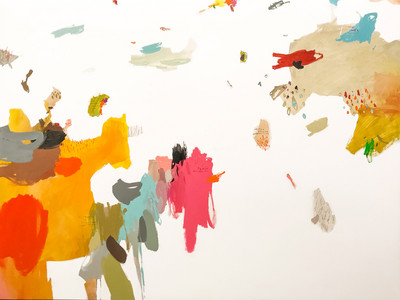
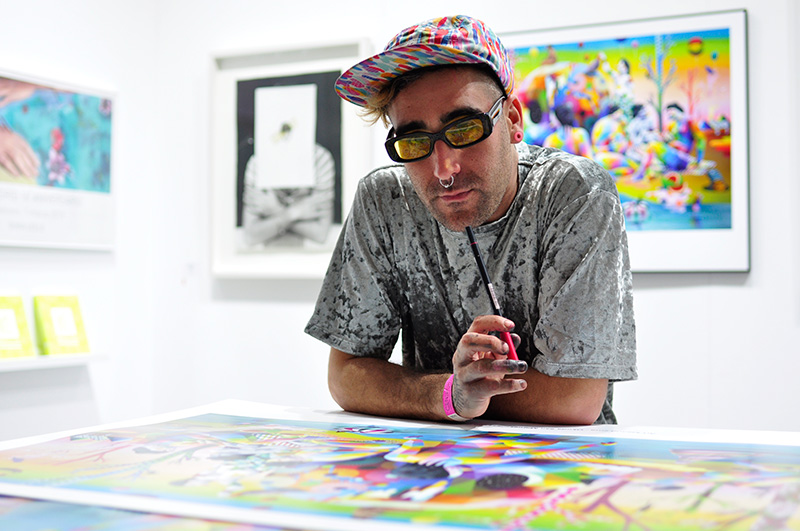
“It’s one of the fairs where I’ve most socialized and I’ve felt very comfortable in contact with the public, I’ve felt very loved. I really liked participating in one of the best fairs in my country, championing a series of artists that symbolize certain changes in the art market, “ adds Okuda San Miguel, Guest Artist at Art Madrid’18.
GUESTS AND PERSONALITIES
The official inauguration of Art Madrid’18 was attended by, among other personalities, the ambassadors of Germany, Brazil, Ukraine, France, Switzerland, Sweden, Italy, Chile, Russia, the ambassador of Costa Rica, Mexico, as well as Mr. Pedro Berhan da Costa, Culture Counselor of the Embassy of Portugal, Mrs. Natasha Díaz, First Secretary of the Embassy of Cuba, Mr. Antonio Lee, Cultural Attaché of the Economic and Cultural Office of Taipei, Mr. Ryan Matheny Garrido, Deputy Cultural Attaché of the United States Embassy, a good example of the importance that the fair already has among collectors and foreign professionals.
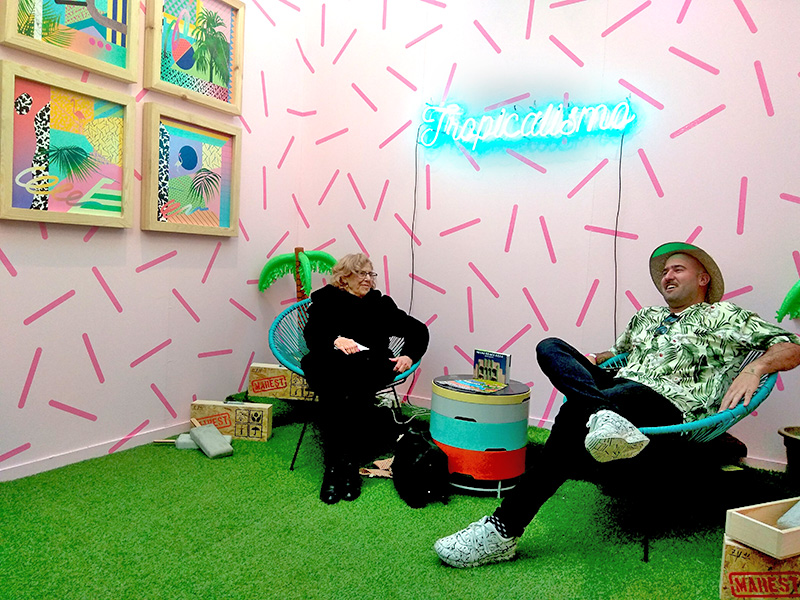
On the part of the local institutions have visited the fair Dª. Manuela Carmena, Mayor of Madrid, D. Óscar Sáenz de Santa María, Director of Cultural Industries and the Book of MECD, Mr. Luis Serrano, of the General Directorate of Cultural Heritage of the Community of Madrid, as well as Dª. Elisa de Cabo de la Vega Deputy Director General for the Protection of the Historical Heritage of the Ministry of Culture MECD.
As a representative of cultural institutions and foundations: Luis Lafuente Batanero, General Director of Fine Arts and Cultural Heritage, Javier del Campo of Fundación Caja de Burgos, Dª. Leticia Martín, Manager Atlantic Center of Modern Art-CAAM, Mr. D. Santiago Miralles, General Director of the Casa de América, Dª. María Brancós Barti, Head of Exhibitions of the Fundación Telefónica and Ms. Rosario López Director of Cultural Projects of the Banco de Santander Foundation.