ARQUITECTURAS IMAGINADAS. PARALLEL PROGRAM TERRITORY CITY. ART MADRID'25
Feb 25, 2025
art madrid
!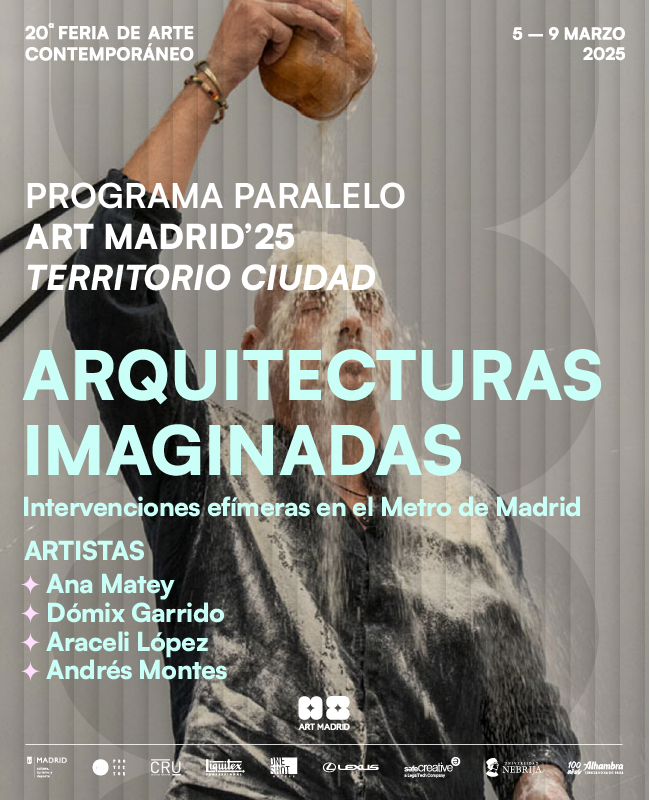
ARQUITECTURAS IMAGINADAS. PARALLEL PROGRAM TERRITORY CITY. ART MADRID'25
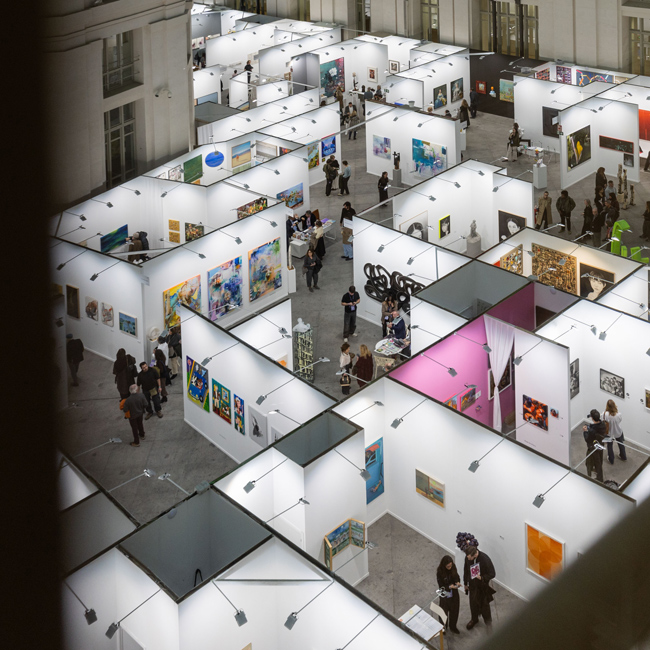
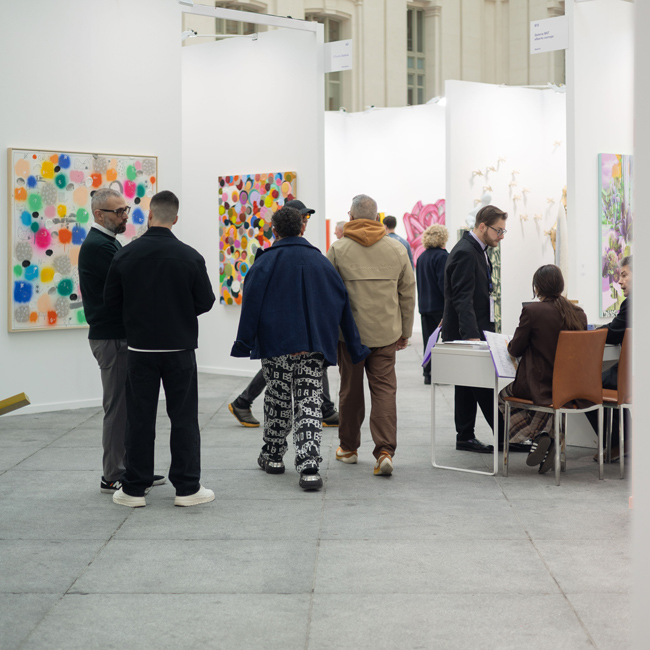
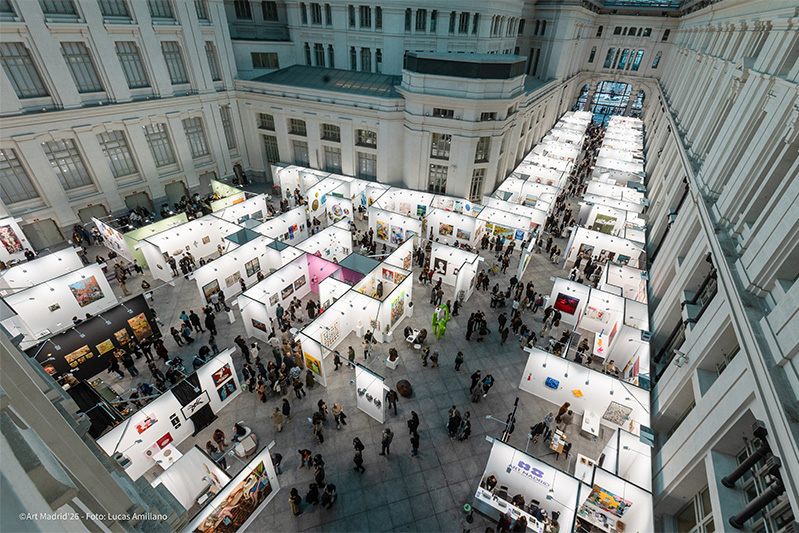
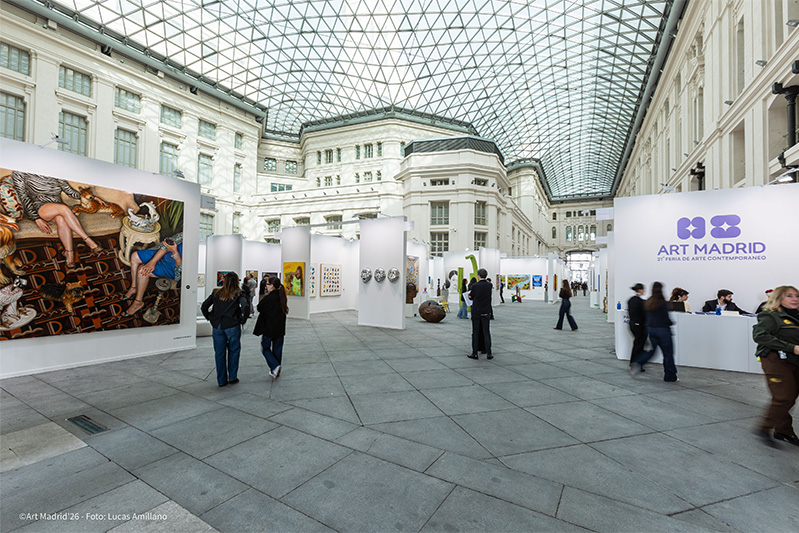
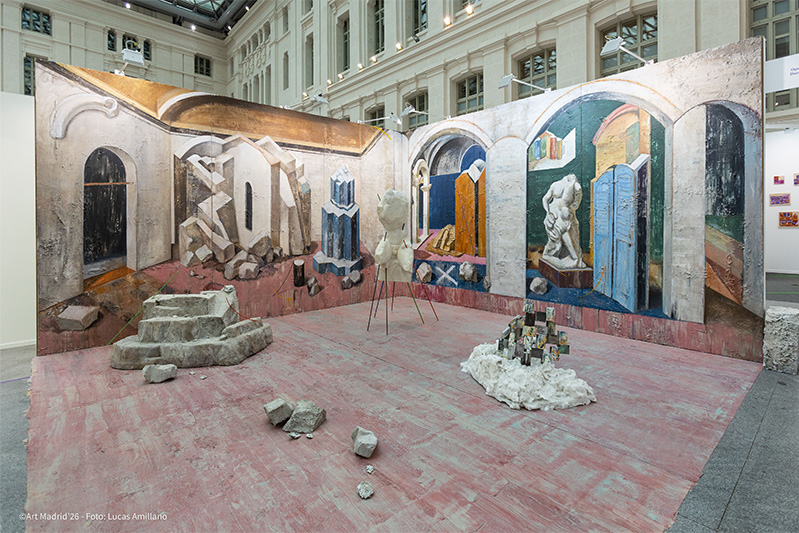
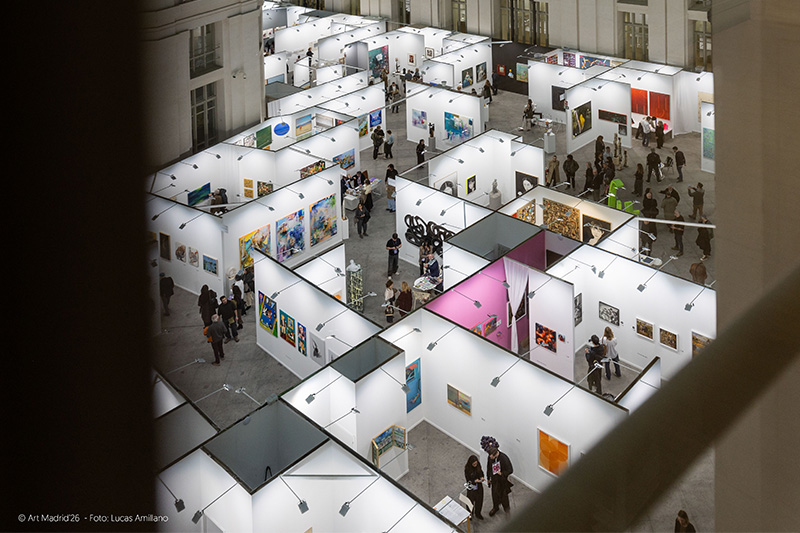
Art Madrid celebrates its twentieth anniversary in 2025 as a well-established event within contemporary art in Spain. From March 5 to 9, the Galeria de cristal of the Palacio de Cibeles will once again bring together national and international galleries during Madrid Art Week.
In its 20th edition, the fair presents a Gallery Program featuring thirty-four national and international exhibitors, around two hundred artists, and an extensive Parallel Program focused on the conceptual axis: Territory City.
Public space, the city, and the territory will be the central themes explored by industry specialists, analyzing the impact of artistic practices on the urban environment. Sensory experience will play a key role in investigating the connections between art, territory, and the city as a social agora. The Parallel Program activities will engage with artistic practices emerging from shifting identities and spatial imaginaries that revitalize Madrid’s cultural geography—conceived as a permeable organism and a topography of shared meanings.
The Parallel Program offers tours through artistically intervened spaces, inviting reflection on the ever-changing identities of the urban fabric. Performances and exhibitions will revitalize spatial imaginaries and raise essential questions: What does it mean to inhabit a space? How do we reimagine common spaces?
This year, part of the Parallel Program is curated in collaboration with CRU. Among the actions spread across the territorial landscape of Madrid, we present to you: ARQUITECTURAS IMAGINADAS.
Ana Matey, Dómix Garrido, Araceli López y Andrés Montes have been invited to intervene in various stations of two of the busiest subway lines in Madrid, with the aim of transforming these subway spaces through different aesthetic languages. The main challenge will be to develop projects that connect in a meaningful way with travelers, turning these stations into inspiring places full of beauty.
This program highlights how art has the power to sensitize and change our perception of our surroundings. The proposal not only seeks to enrich the experience of those who use public transport, but also to promote a reflection on the importance of public space. In particular, the Madrid Metro is presented as a key space for urban mobility and social interaction, and this project aims to foster a greater appreciation for it without falling into a paternalistic approach, but through an educational proposal that invites collective reflection.
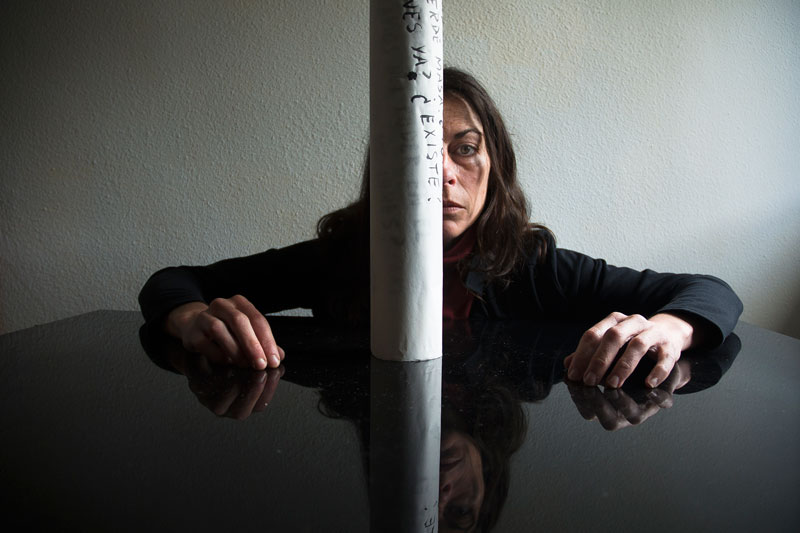
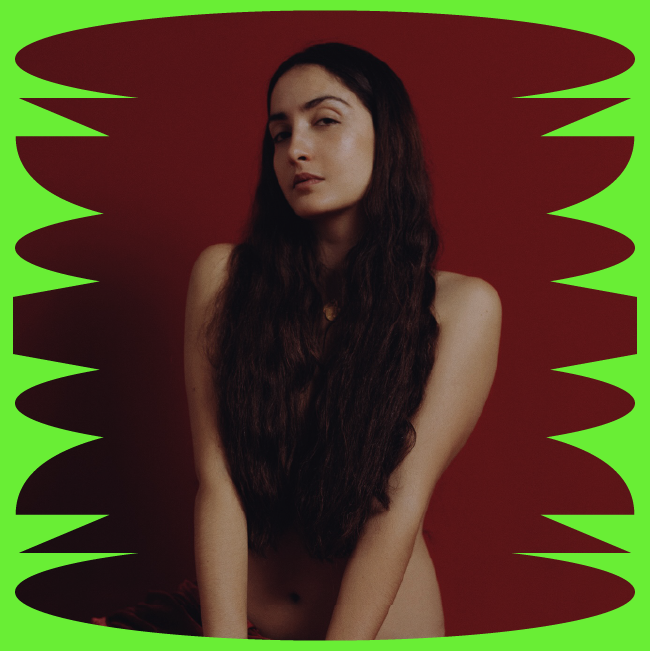
ANA MATEY
¿Puede el arte dar respuestas?
Location: LINE 1 (route between CUATRO CAMINOS and PACIFICO) and LINE 2 (route between CUATRO CAMINOS TO VENTAS). Metro Madrid.
Time: 10:00-12:00h
¿Puede el arte dar respuestas? is a durational and intermittent action initiated in 2021. Each year, Ana Matey presents a new performance whose objective is to collect questions, becoming an archive and memory of an era. Throughout this process, each intervention becomes a call for participation, adding up to four actions, with durations ranging from 51 days to 4 hours.
The new proposal consists of reading the 929 questions collected so far in the carriages of lines 1 and 2 of the Madrid Metro, inviting passengers to be part of the action by formulating their own questions. In addition, during that day and throughout the art week, the public will have the opportunity to participate by sending their questions to the e-mail address accionmetanoia@gmail.com. Through this action, we seek to generate a space for collective reflection, where art becomes a means to question and, perhaps, find answers to the big questions of our society.
ABOUT THE ARTIST
Ana Matey Marañón is an artist from Madrid whose work moves between the visual arts and performance. She studied audiovisual communication, image, photography and Butoh dance. Her professional career began in 2001, and since 2006 she has been deeply involved in live action art, as well as in the field of dynamisation, research and training. Co-founder of the collective El Carromato (2006-2010), a multidisciplinary space in Madrid where ARTóN (2009-2014), a monthly meeting dedicated to the practice, promotion, research and documentation of action art, is born. In 2012 she co-founded EXCHANGE Live Art, a collective research and creation project, and MATSUcreación, a home workshop and meeting place between art and nature through laboratories and different activities (currently on hiatus). Her work is nourished by walking, collecting and moving. She is interested in processes and experimentation through repetitive and prolonged actions in which she exercises observation, transformation and patience to reflect on how time and space affect us in the way we relate to each other. She has participated in action art festivals around the world and her work has been exhibited in museums, galleries, theatres and alternative spaces both nationally and internationally and has been recognised with various awards and grants.
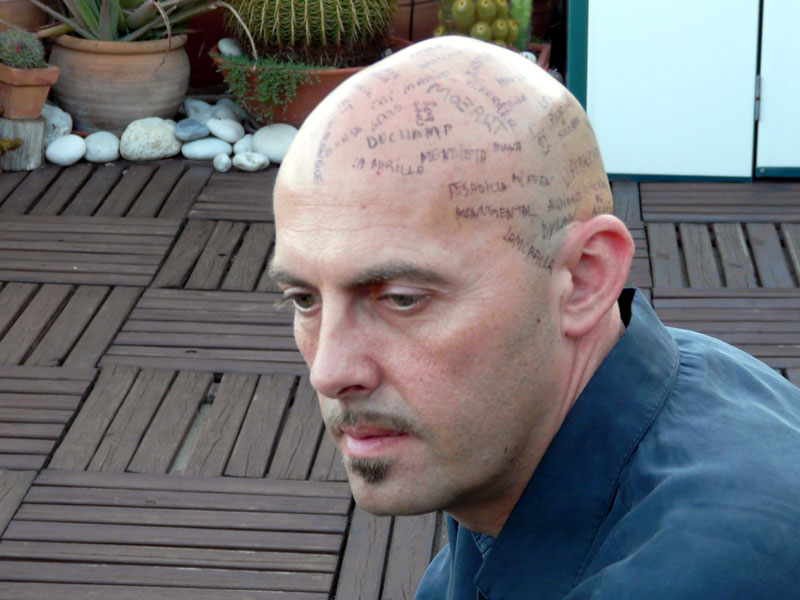
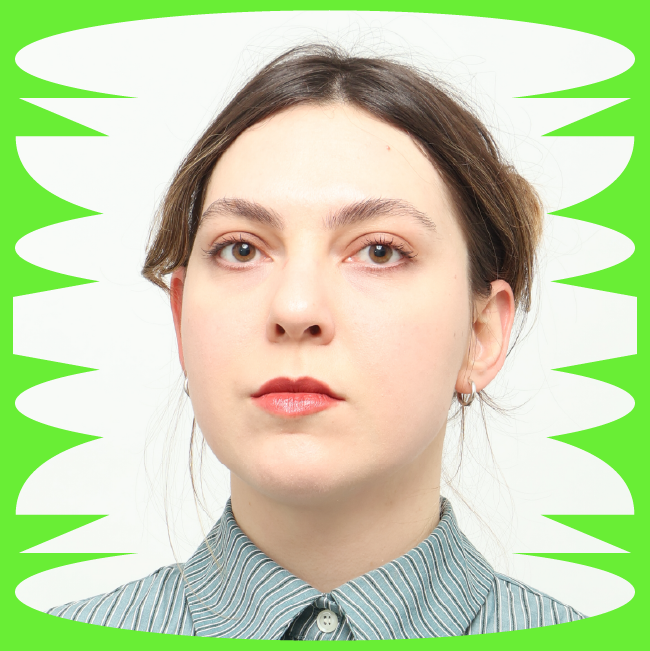
DÓMIX GARRIDO
Reflexión en un vagón de metror
Location: LÍNEA 1 (route between CUATRO CAMINOS and PACÍFICO) and LÍNEA 2 (route between CUATRO CAMINOS A VENTAS)
Time: 10:00-12:00h
Reflection in a Subway Car is a proposal that delves into the realm of public introspection. It is a performative reflection spoken aloud about contemporary art, with a particular focus on events related to its exhibition, dissemination, and commercialization. In this work, the artist carries out a direct reflection on the process they experience as a creator, from the moment they receive the invitation to participate in an event to the precise instant when they present the performance.
The main objective of this proposal is to share the artist’s reflections with the people sharing the subway ride. Through this action, the internal process an artist goes through when preparing an intervention is brought to light. By not inviting the audience beforehand, the notion of a predisposed audience fades away, and the people present at that moment become ordinary citizens, involuntary spectators of an artistic event. The reactions of the public can be varied and are an integral part of the proposal, which seeks to establish communication—whether direct or indirect—with people in the surrounding environment. This displacement, which the artist has infiltrated with their intervention, has no fixed destination and leads nowhere in particular. The people traveling, absorbed in their thoughts and daily activities, are transformed into involuntary observers of a work of art.
The artist will likely enter the subway car with a recorder or mobile phone in hand. They begin a reflection or conversation aloud, possibly carrying a notebook or some object to read the text. During the performance, the artist interacts with those who show interest or ask questions. Once the intervention ends, they exit the car, carrying in their mind a series of words related to the proposal: “Art Madrid. Performance. Imagined Architectures. City Territory. Action Art. Reflections...”
This process aims not only to generate an artistic reflection in the public but also to raise a question about art itself, its relationship with public space, and the interaction between the creator and the spectator.
ABOUT THE ARTIST
Dómix Garrido Abenza (Archena, Murcia, 1963) is a performer, scenic researcher, educator, and cultural manager, holding a degree in Performing Arts and specializing in Museology and Contemporary Art. Since 2004, his work as a performance artist has taken him across Spain, participating in festivals, museums, and art centers. Internationally, his work has been presented in cities in France, Portugal, Italy, Belgium, Greece, Morocco, Norway, Colombia, and the United States, among others.
In 2020, Dómix published the book "Creative Freedom in My Actions: On the Art of Performance." He is a member of 1668, a collective that has been developing artistic projects advocating for human rights since 2014, with a particular focus on migration and borders.
His work has been recognized in various biennials, including the Bronx Latin American Art Biennial (New York) and the International PERFOARTNET Art Biennials in Bogotá. He has received scholarships from the EEA Grants from the Norwegian Embassy and the Research for Art and Social Improvement Projects Grant from the CEPAIM Foundation, in addition to being selected for several international calls. He was also chosen by the Program for the Promotion of Contemporary Spanish Art and recently by the Community of Madrid for the RED ITINER exhibition “1,2... acción!” of Exchange Live Art.
Since 2009, he has directed the International Performance Festival ABIERTO DE ACCIÓN in various Spanish cities, as well as the Solo_Performance cycle at the Centro Párraga in Murcia, the Miradas de Mujeres Festival at the MURAM in Cartagena, and has coordinated public space interventions with institutions like ARTJAEN, KREÆ, and other public and private entities. Furthermore, he has taught workshops on performance and poetic action. In 2018, his project was selected as one of the “Best Valued by the Ministry of Education and Culture.”
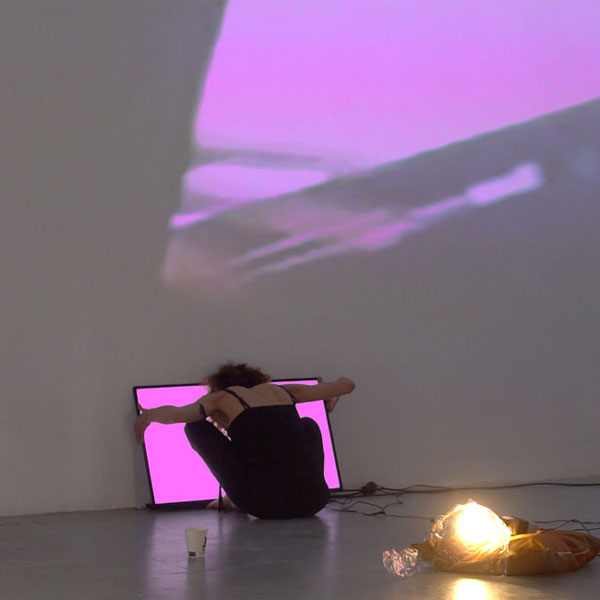
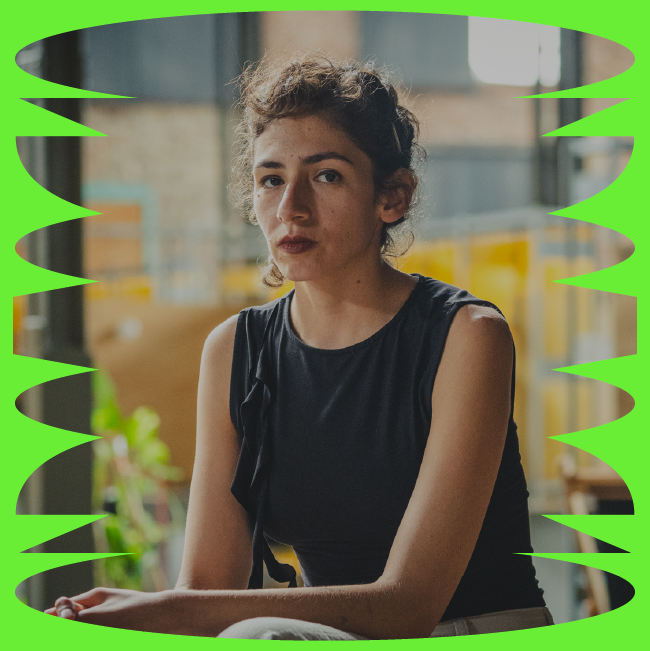
ARACELI LÓPEZ
Entre ser y estar hemos construido un muro
Location: LÍNEA 1 (route between CUATRO CAMINOS and PACÍFICO)
Time: 18:00 - 20:00h
Entre ser y estar hemos construido un muro is an action that analyzes how, in each generation, the boundaries between the individual and the collective are altered, transformed, and redrawn according to the circumstances. Between these two poles, contradiction becomes our constant companion. We are beings capable of distancing ourselves from ourselves, of getting lost in the space between what we are and what we show the world.
The performative action stands as the bridge that crosses this contradiction, a space where opposites are not antagonistic but elements that coexist and feed into each other. The action seeks to unify being and being, merging these two dimensions into an experience that goes beyond the verbal and the tangible.
The Spanish language, with its distinction between ‘ser’ and ‘estar,’ turns this duality into a powerful tool for exploring human nature. The ‘ser,’ intangible, elusive, unreachable, cannot be defined with precision. It is something that transcends the limits of words, something that resists being trapped in a fixed concept. Being is the truth that is never fully grasped; it is the ungraspable that dwells deep within our being.
On the other hand, ‘estar’ is something more tangible, a state that can be located in time and space. ‘Estar’ is presence, action, rest; it is what we see, what manifests in an instant. It is a continuous dialogue with the environment, the language shared by a culture, by a generation. ‘Estar’ is the visible, the present, what can be touched and understood within its limits.
The performative action seeks to unravel and make visible that dissociation, turning it into a palpable space. In this realm, ‘estar’ becomes a stage, the space where ‘ser’ can manifest freely, without the limits of what can be named, labeled, or immediately understood. In this space, what is seen is not a faithful representation of what we are, but a distorted reflection, a personal interpretation of being through the eyes of the other.
The performative act, by staging this contradiction, invites the spectator to inhabit that ambiguity and question the borders between what is and what is, between what we are and what we show.
ABOUT THE ARTIST
Araceli López is a multidisciplinary artist, writer, and cultural manager born in Madrid, with a background in audiovisual language and contemporary dance. She began her studies in Pre-Press and continued with Communication Technologies, specializing in the Expert Degree in 3D Studio Max. She has trained in contemporary dance at schools in Madrid such as Descalzinha Danza, Amor de Dios, and Bambú Danza. Her work explores the understanding and deconstruction of reality, reinterpreting it through various expressive languages. She seeks to combine these languages to foster communication and synergies between them. Focused on the coding, conversion, and translation of ideas, her main approach is to transfer concepts from one language to another. As expressive media, she uses the body, words, drawing, painting, and audiovisual language.
She has collaborated in various radio programs, collectives, festivals, and artistic projects such as the James Joyce Lacanian Circle, CRUCE Contemporary Art and Thought, Ésta es una PLAZA!, PEPA Performance, PROYECTOR/Plataforma de Videoart, OMCRadio, and the radio station of the National University of Colombia (UNIMEDIOS), contributing dance-performance pieces, visual art, poetry, photography, and audiovisual works, as well as serving as a coordinator and part of the curatorial team. After writing for several blogs, she published the poetry collections Mirar o parecido (2018) and El agua y el cuello – Poesía de emergencia (2022). In 2023, she was included in the book El Escorial: Antología Lírica desde el siglo XVI al año 2023. She is a co-founder and active member of the artistic collectives CONJUNTAS P-r-y-c-t-s, alongside Denisse Nadeau, and LAC, a group dedicated to interdisciplinary improvisation formed in 2020, along with artists such as Wade Mathews, Blanca Regina, Mario G. Cru, Gary Hill, and Proyecto Chilco.
ANDRÉS MONTES
En tránsito
Location: LÍNEA 2 (route between CUATRO CAMINOS and VENTAS)
Time: 18:00 - 20:00h
In Transit
is a travelling narrative device,
It is an archive of memory,
it is an action as a gaze,
It is a question.
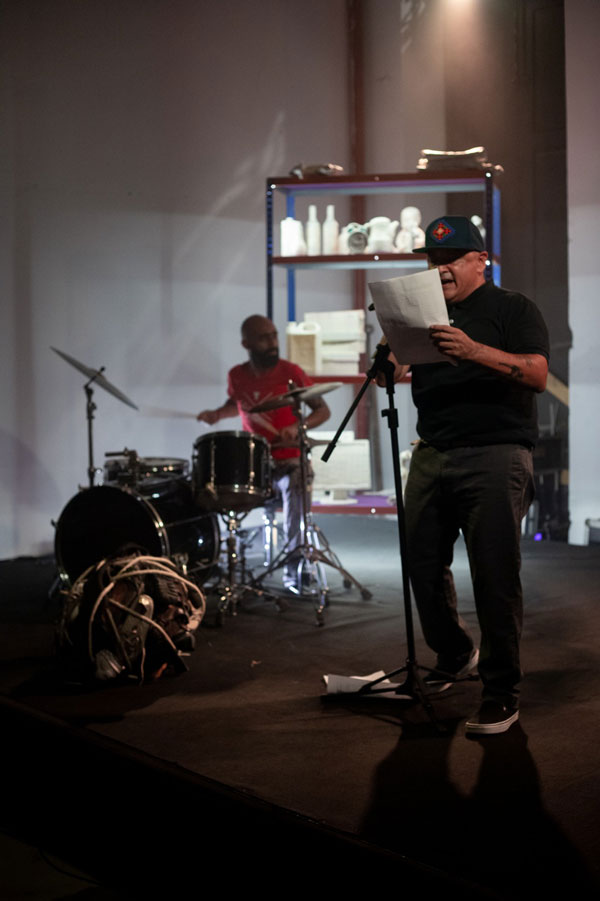
The action consists of taking people's stories for a walk in the subway through loudspeakers.
ABOUT THE ARTIST
"I am a visual artist and I like words. In Berlin I realised that there was something mysterious hidden in the newspapers. I remember the Libertad neighbourhood in Tijuana at night (it was cold). I also walked along the Bay of Biscay for 17 days. And another time I walked from El Limón to Guamúchil (that was much earlier). My name is Andrés Montes and I am one of those people who believe that we are the story we tell ourselves, ergo we are fiction. I play with land. I have a son. It's five in the morning".