Art Madrid'26 – COLLECTING CODES: A GUIDE FOR NEW BUYERS

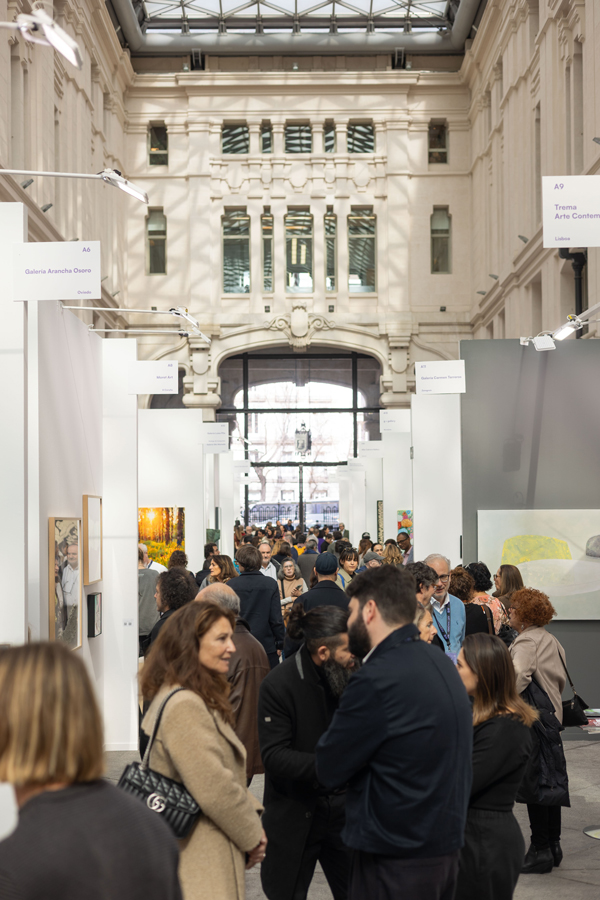
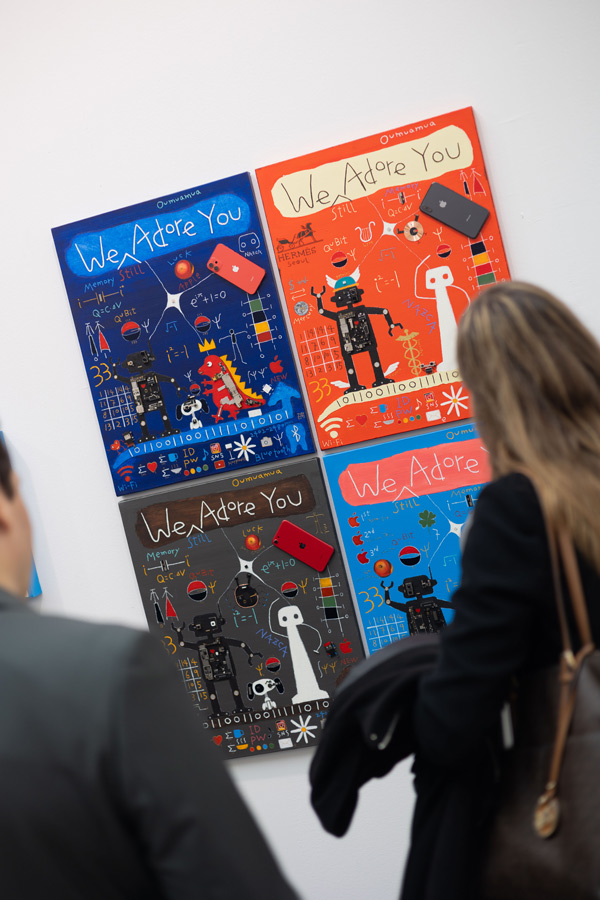
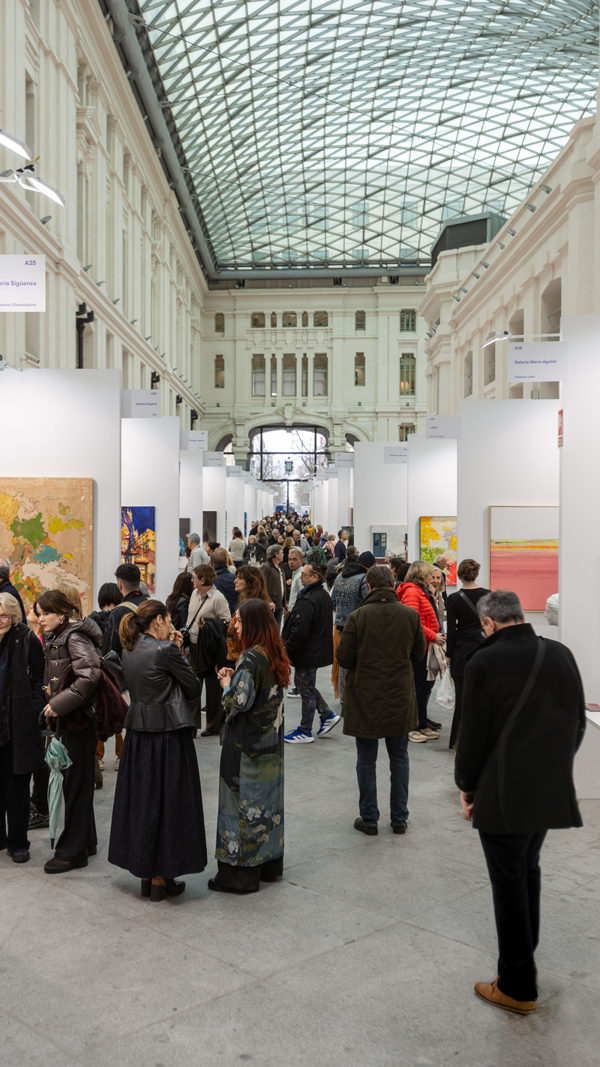
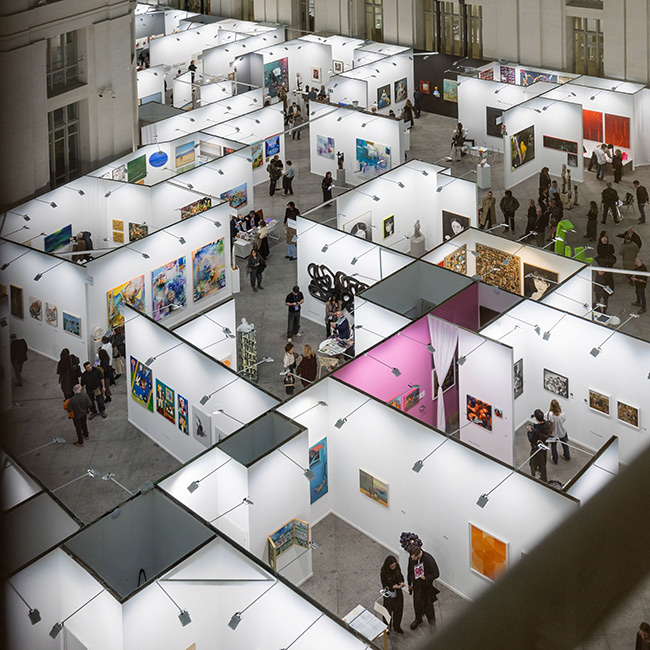
Contemporary art has ceased to be an exclusive territory reserved for elites and has become an increasingly democratic and accessible space. In the context of fairs such as Art Madrid, which in 2026 brings together more than 200 artists from five continents, a new generation of collectors is emerging—one that challenges the traditional codes of the art market. But how do you make the leap from admirer to collector? What do you need to know before acquiring your first artwork?

The image of the art collector has historically been associated with great fortunes, multimillion-euro auctions, and inaccessible masterpieces. However, this perception is changing radically. Today’s contemporary art market offers a wide range of proposals that suit virtually any budget, from works by emerging artists to limited editions by established creators. .


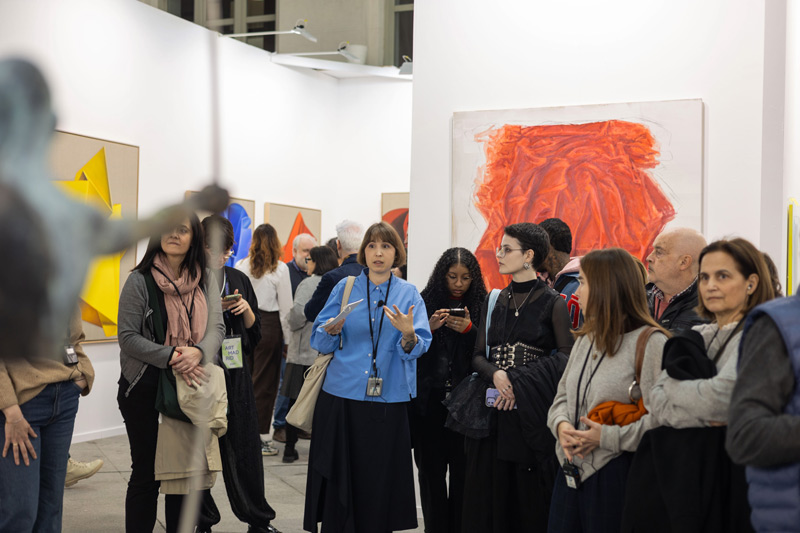
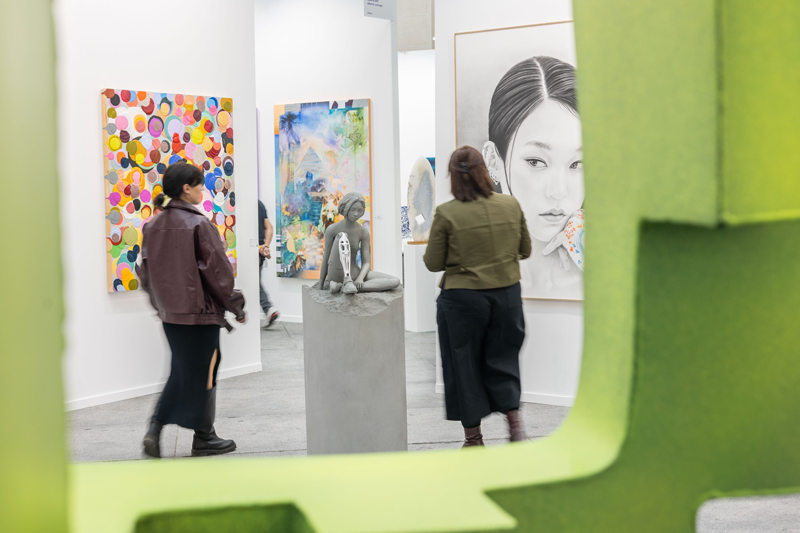
At Art Madrid, for example, galleries presenting young talents coexist with those representing artists with consolidated careers. This diversity allows first-time buyers to find meaningful works without needing unlimited capital. What matters is not how much you invest, but why you do it, and how that piece resonates with your life, your space, and your concerns.

Experience in the art world shows that a collection is not defined by the monetary value of the works it contains, but by the coherence and strength of the narrative they build together. Understanding this frees emerging collectors from the pressure to succeed according to investment logic and encourages them to rely on their own aesthetic judgment and the emotional connection they establish with the works.


HOW TO START A COLLECTION

Define Your Orientation: Passion vs. Investment

Before acquiring your first work, it is essential to ask yourself what you are looking for in collecting. There are two main approaches which, although they can coexist, lead down different paths:

Collecting driven by passion is guided by emotional connection, aesthetic pleasure, and the desire to live surrounded by works that speak to you. This approach is more intuitive and personal and, paradoxically, often proves to be more successful economically in the long term because it is rooted in genuine conviction.

Collecting as an investment requires more technical knowledge of the market, monitoring trends, understanding artists’ and galleries’ trajectories, and having a strategic vision. Although art has proven to be an interesting alternative investment—especially in times of economic uncertainty—it requires patience and a tolerance for risk.

Most successful collectors combine both dimensions: they buy what moves them, while also developing a critical eye to identify works with potential for appreciation. The key is not to be driven solely by market opportunism, because art that does not move you is unlikely to hold your interest when trends change.


EDUCATE YOURSELF BEFORE BUYING

Knowledge is your best tool. Before acquiring works, take time to:

Visit exhibitions regularly. Not only in commercial galleries, but also in museums, independent spaces, and art centers. This will help you develop your own aesthetic criteria and understand which proposals truly resonate with you.

Research artists. Read about their careers, influences, and creative processes. In the digital age, most artists are present on social media, where they share daily work, sketches, and reflections. This transparency makes it easier to connect more deeply with their practice.

Understand the market. Observe prices in different galleries, learn what factors influence valuation (artist’s career, technique, dimensions, limited edition versus unique piece), and become familiar with how galleries and fairs operate.

Talk to gallerists. Gallerists are essential allies. Their job is not only to sell, but to educate, connect, and build long-term relationships. A good gallerist will guide you toward works that match your interests and accompany you in the development of your collection.


EVALUATING A WORK: BEYOND “I LIKE IT”

When a work captures your attention, it is important to go beyond the initial emotional impression and ask yourself some key questions:

Coherence in the Artist’s Trajectory

Is this work part of a sustained line of research, or is it an isolated experiment? Artists with coherent proposals over time tend to have greater projection. Look for a logical evolution in their work, participation in relevant exhibitions, awards or grants, and representation by established galleries.

This does not mean you should reject the work of very young or highly experimental artists. On the contrary, some of the greatest successes in collecting come from early support of emerging talents. However, such a bet should be based on informed intuition, not mere novelty.

Technical and Conceptual Quality

Contemporary art has greatly expanded the boundaries of what we consider “technique,” incorporating everything from installation to digital art. Nevertheless, each discipline has its own standards of excellence. A painting should demonstrate mastery of color, composition, and material; a sculpture, an understanding of space and materials; a photograph, control of light and framing; a conceptual work, rigor in the development of the idea.

Beyond technique, ask yourself: What is this work saying? Does it offer an original perspective on something that interests me? Is there conceptual depth, or is it purely decorative? There are no absolute right answers, but asking these questions will help you make more conscious decisions.

Suitability for the Space

A practical but fundamental consideration: where will this work live? Art needs room to breathe, appropriate light, and a context that enhances it. A monumental work can feel overwhelming in a small apartment, while an intimate piece may get lost in a large space. Many galleries offer virtual visualization services or even temporary loans so you can experience the work in your space before committing.


Practical Aspects of Collecting

When you acquire a work, you should receive:

Certificate of authenticity: A document signed by the artist or gallery that certifies the authorship of the piece, its dimensions, technique, year of creation, and, in the case of editions, its number within the edition.

Invoice: Legally required and essential for proving ownership and purchase value, particularly relevant for insurance and potential resale.

Conservation information: Each technique and material requires specific care. Ask how the work should be preserved (light, humidity, temperature conditions) and whether it needs periodic maintenance.

Insurance and Protection: Even if your collection is just beginning, it is advisable to take out specific insurance for artworks. Most home insurance policies do not adequately cover this type of asset. There are specialized policies that protect against theft, accidental damage, fire, and other risks, with reasonable premiums for modest collections.

In addition to insurance, consider basic conservation measures: avoid hanging works in areas with excessive humidity, direct sunlight, or sudden temperature changes. For works on paper (photographs, prints, drawings), framing with UV-protective glass and acid-free matting is essential.


Legal and Tax Advice

In Spain, artworks have a specific tax treatment. The applicable VAT rate is 21%, although there are exemptions in certain cases. If your collection grows and you eventually decide to sell pieces, you will need to consider the tax implications of capital gains. For larger collections, it can be useful to consult advisors specialized in artistic heritage, who can guide you on tax benefits (donations to museums, long-term loans), inheritance planning, and asset protection structures.


Building Relationships Within the Art Ecosystem

Collecting is not a solitary activity, but a deeply social one. Some tips for integrating into the community:

Attend openings and events. Exhibition openings are opportunities to meet artists, other collectors, critics, and curators. Don’t be afraid to ask questions or express genuine interest.

Join collectors’ associations. Many cities have organized groups that arrange studio visits, talks with experts, and trips to international fairs. These spaces facilitate learning and networking.

Be loyal to your galleries. If a gallery has advised you well and you feel comfortable with its program, maintain the relationship long-term. Gallerists tend to reserve the best pieces or opportunities for their regular collectors.


Value Beyond Price

Finally, it is important to remember that the true value of collecting goes beyond economics. Living with art transforms everyday spaces into places of reflection and beauty. A work on your wall is a daily reminder of an emotion, an idea, a vision of the world that once moved you enough to want to live with it.

Collecting is also a way of actively participating in the cultural ecosystem. When you buy the work of an emerging artist, you help them continue creating. When you support an independent gallery, you help sustain spaces of experimentation. When you lend your works for an exhibition or eventually donate them to a public institution, you contribute to the collective heritage


At fairs like Art Madrid, where proposals from different generations, geographies, and artistic languages coexist, you have the opportunity to explore, compare, and discover. There is no rush. Collecting is a long-term journey in which each acquisition is a chapter in a personal story you are building. The key is to begin with curiosity, humility, and the certainty that art, more than a luxury, is a necessity that profoundly enriches life.

NEBRIJA UNIVERSITY ASSERTS AESTHETIC INTELLIGENCE IN THE FACE OF THE ALGORITHMIC ERA AT ART MADRID’26


The Nebrija Space hosts a curatorial project that proposes a critical alternative to the automation of creative thought.

Nebrija University is participating in the 21st edition of Art Madrid with a curatorial project that offers a critical reflection on the relationship between art education, the market, and technology. Under the concept of Aesthetic Intelligence, the proposal positions itself as an alternative to the algorithmic logic of Artificial Intelligence, prioritizing sensitivity, gesture, materiality, and experience as forms of knowledge that cannot be automated.

At a historic moment in which Artificial Intelligence is bursting onto the scene in all areas of cultural production, generating both fascination and concern, Nebrija University is committed to defending those dimensions of the artistic experience that remain irreducible to algorithmic logic. This is not a question of denying the impact of technology or adopting a technophobic stance, but rather of identifying and defending those areas of knowledge that require the presence of the body, sensitivity, gesture, and lived experience.


Álvaro Fernández. Remember/Forget. Mixed media on canvas. 40 x 60 cm. 2026.


The central concept of the proposal is that of Aesthetic Intelligence, understood as a form of knowledge that integrates the sensory, the affective, the intuitive, and the cultural. In contrast to the logic of Artificial Intelligence, based on algorithms, recognition patterns, and the capacity for mass replication, Aesthetic Intelligence prioritizes dimensions that remain anchored in the unique human experience: the unique and unrepeatable gesture, the physical presence of the body in the creative act, the material texture of the supports and pigments, and the temporality of the creative process.

This claim takes on special importance in a context in which generative AI is capable of producing images in a matter of seconds, processing millions of previous visual references to synthesize new compositions. However, what the machine cannot replicate is precisely what constitutes the core of the aesthetic experience. The affective resonance of a specific color applied with a certain pressure on a specific surface, the intuitive decision that arises from the dialogue between the artist and the material, or the productive error that opens up unexpected paths.

Aesthetic Intelligence is thus understood as a form of epistemic resistance, a defense of those ways of knowing the world that cannot be automated because they are constitutively linked to the embodied, situated, and temporal experience of creative subjects.


Pablo Padilla Sadurni. ST. Repaired passe-partout and acrylic. 18 x 18 x 48 cm. 2026.


Under the provocative neologism NotanIA SipedagogIE, which encapsulates the conceptual proposal in its very formulation: “Not so much AI, more pedagogy.” This linguistic construction, which plays with the presence and absence of fragments of the words “Artificial Intelligence” and “pedagogy,” signals a clear stance on the role of artistic training in today's technological context.

It proposes a critical pedagogy that does not reject technology but refuses to subordinate artistic learning processes to the logic of efficiency, optimization, and reproduction that characterize algorithmic systems. Faced with the temptation to use AI as a shortcut or substitute for the creative process, this pedagogy vindicates the formative value of trial and error, material experimentation, and time devoted to exploration without a predetermined goal.

A pedagogy that is also defined as empathetic, in the sense that it recognizes and values the affective and relational dimension of artistic learning, which does not understand creation as an isolated individual act but as a process that involves emotional resonances, symbolic exchanges, and collective construction of meaning. The stand itself, conceived as a choral work, embodies this understanding of creation as a shared experience.


Verónica Bergua Tabuyo. Cartography of Uncle Pablo. Digital video. Edition: 1/5. 2:40 min. 2026.


The methodology proposed for the project is as rigorous as it is open to experimentation. Each participating student begins their creative process by poetically appropriating a verse, a stanza that will serve as the conceptual and emotional seed of the work. The choice of poetry, as a form of language that condenses multiple and ambiguous meanings, that works with sonic and visual resonances, that suggests rather than describes, constitutes an ideal starting point for a project that champions the ineffable, that which cannot be fully translated into code.

Starting with the selection of a verse, each artist has developed a mood board conceived as a board of atmospheres and, at the same time, as a sensitive cartography of the process. This resource allows the imagery of the verse to be expanded through objects, images, textures, materials, and other elements that resonate with the initial poetic experience. It is a tool that makes the process of intersemiotic translation visible: the transition from verbal to visual language, from textual to material, highlighting the transformations and shifts that occur along the way.

The next step involves developing a two-dimensional work that deliberately avoids written language. This restriction seeks to prioritize visual and material exploration over textual narrative, relying on the communicative power of form, color, texture, and composition. The work must speak for itself, without the need for verbal explanations to mediate between the piece and the viewer.

The creative process is conceived from an experimental logic similar to that of a laboratory, where trial, error, correction, and rehearsal are an integral part of the method. No predetermined result is sought; rather, the work is allowed to emerge from the dialogue between the initial intention and the possibilities (and resistances) of the materials.


Blanca Lanaspa. Witness 176.8. Mixed media ceramics. 40.8 x 176.8 cm. 2026.


The booth that houses the Nebrija Space is conceived as a work of art in itself, with a choral and transitory character. Inspired by Madrid's SER Zones, those areas of regulated temporary parking, the exhibition space is designed as a territory of symbolic transit, a place of ephemeral occupation that invites reflection on presence, desire, and temporality.

This metaphor of SER Zones is particularly powerful, because just as these urban spaces allow for the temporary occupation of public space under certain conditions, the stand is presented as a territory that artists temporarily occupy during the fair, establishing a dialogue between permanence (the works as physical objects that will remain after the event) and transience (the specific spatial configuration that exists only during the days of the fair).

The choral nature of the project underscores the collective dimension of artistic creation. It is not a sum of individualities but a polyphony of voices that intertwine, resonate, and dialogue with each other. Each individual work maintains its autonomy but takes on new meanings in relation to the others, generating a fabric of visual, conceptual, and affective correspondences.


Marialex Arcaya. The wine cellar. Acrylic on wood. 80 x 160 cm. 2026.


The project brings together the work of seven students from the Fine Arts Degree program at Nebrija University: Marialex Arcaya develops “La bodega” (The Cellar), a reflection on everyday objects as containers of memory and identity. Based on the verse: "And at the bottom of my favorite beach bag there is sand, rusty coins, and a receipt for ice cream that no longer exists. Summer can be preserved in layers", the artist explores Venezuelan bodegas as spaces of nostalgia and belonging. Through a series of acrylic paintings on canvas depicting products and packaging, she investigates how the most mundane objects can function as repositories of memories and markers of cultural identity. Her work raises questions about what we erase and what we preserve, about how the passage of time transforms both objects and ourselves, celebrating the capacity for rebirth and transformation that characterizes the human experience.


Laura Nogales. Another Spring. Acrylic and embroidery on canvas. 94.5 x 38.6 inches. 2026.


Laura Nogales participates with “Another Spring,” a textile installation that explores the decomposition and deconstruction of the concept of femininity in a transitory environment: the shower. Her work, constructed from scraps, recycled clothing remnants, stockings, and various types of fillings, forms an abstract mass that represents decomposed femininity in constant mutation. The drain functions as a symbolic element that swallows everything, witnessing intimate transformations. Nogales addresses how femininity as a shared experience suffers great ups and downs in the current context, where machismo is making a strong comeback in the media and social networks. Her textile proposal generates emotional ambiguity in the viewer, who may feel attracted or repelled by the figure, reflecting the contradictions inherent in the experience of constructing and defending female identity in an adverse context. Her work takes as its reference the fragment of the poem: “Above the shower, the steam draws maps that fade away".


Inés López. Sedentary. Digital photography. 30 x 40 cm. 2026.


Inés López presents Sedentario, a work inspired by the verse: “There, dust particles are an archive in suspension.” The project reflects on the capacity of domestic spaces to preserve what the body forgets when they cease to be inhabited. The photographic series is set inside a house under construction, in rooms suspended between use and abandonment, where absence manifests itself as a silent accumulation of matter, traces, and time. Architectural plans and projections in an unfinished building expand the proposal, establishing a dialogue between the projected space and the lived space, between what was once inhabited and what has not yet begun to be inhabited. The work thus proposes a meditation on the transience of the body in the face of the silent persistence of architecture.


Verónica Bergua Tabuyo. Cartography of Uncle Pablo. Digital video. Edition: 1/5. 2:40 min. 2026.


Verónica Bergua presents “Cartografía del tío Pablo” (Uncle Pablo's Cartography), a deeply personal project that explores the relationship between compulsive hoarding, mental health, and emotional territory. Through a video installation that combines minimalist photography of objects taken from the room of her uncle, who was diagnosed with schizophrenia, Diogenes syndrome, and kleptomania, Bergua constructs a visual map of mental chaos materialized in physical space. The sequence of images, presented at varying speeds, generates an experience of anxiety in the viewer that reflects the nature of compulsive hoarding. Her work invites us to reflect on our own relationship with objects, on the boundaries between need and attachment, and on how the territory we inhabit can become a mirror of our mental territory. His proposal is inspired by the verses: “Under the bed... objects accumulate that we don't remember losing.” “A museum without texts or labels: the drawer of cables from broken devices.” “The box of expired medicines holds the history of ailments that no longer hurt.”


Blanca Lanaspa. Witness 176.8. Mixed media ceramics. 40.8 x 176.8 cm. 2026.


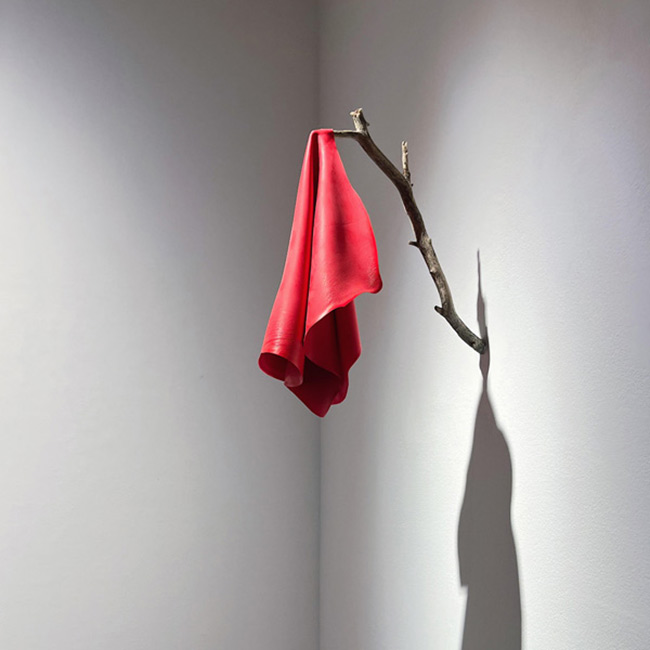
Blanca Lanaspa presents “Testigo 176.8,” a work based on the verse: "The coat rack in the entrance holds what we are before we enter and after we leave. A vertical threshold where transitions hang.“ Her proposal takes the form of a ceramic pegboard, a combinatorial board with removable pieces of different surfaces, glazes, and textures. Each element functions as a ”sensitive accident," the result of processes involving both aesthetic planning and material chance. The pieces explore states of matter: sprouts, leaks, overflows, erosions, cracked surfaces, contractions, and expansions. The tactile and interactive nature of the work invites the viewer to engage with it directly through their body. Accompanied by a mood board documenting the ceramic research process, the piece celebrates the unpredictability of materials and the beauty of the unsystematic.


Pablo Padilla Sadurni. ST. Detail. Repaired mat and acrylic. 7.1 x 7.1 x 18.7 inches. 2026.


Pablo Padilla presents “Untitled,” an architectural sculpture inspired by the verse: “The mismatched sock is not lost: it inhabits a place that does not exist.” Conceived as a spatial analogy for the search for fulfillment, the piece proposes an architectural archetype that refers to the world of ideas; an imagined place, necessary and yet unattainable. Constructed from thin cardboard, the work takes the form of impossible, labyrinthine structures inhabited by scale figures that wander through corridors, staircases, and dead-end rooms. These spaces, simultaneously tense and contemplative, combine the romanticism of introspection with the inhospitable coldness of brutalism. The work creates a surreal atmosphere that oscillates between peaceful and tense, inviting a sensory and emotional experience of shared loneliness, isolation, and the search for mental refuges that do not exist in the physical world.


Álvaro Fernández. Remember/Forget. Detail. Mixed media on canvas. 40 x 60 cm. 2026.


Álvaro Fernández presents “Remember/Forget,” a work inspired by the verse: "In the elevator mirror, two people are reflected without touching each other. What separates them is not air: it is the possibility of saying nothing." Through hybrid works that combine manual transfers on fabric with digitally altered photographs, Fernández explores silence, shared presence, and the coexistence of intimate worlds that do not touch. His transfers, made using gel plates or lavender oil, generate unstable and deteriorated images, like memories in the process of fading. The fragmentation and displacement of photographic elements multiply the scenes, creating layers of overlapping temporality. His work materializes the fragility of memories and the power of silence as a space for nonverbal intimacy.


Blanca Lanaspa. Witness 176.8. Mixed media ceramics. 40.8 x 176.8 cm. 2026.


At a time when the debate on Artificial Intelligence and artistic creation is intensifying, with positions ranging from uncritical enthusiasm to outright rejection, Nebrija University's proposal for Art Madrid'26 offers a third way, a critical stance that does not deny technological reality but clearly defends those dimensions of the artistic experience that remain irreducible to automation.

The concept of Aesthetic Intelligence proposes an epistemological alternative that recognizes the validity of forms of knowledge based on sensitivity, intuition, bodily experience, and affective resonance. These are not “minor” or subsidiary forms of knowledge with respect to rational or algorithmic knowledge, but equally valid modalities that are absolutely fundamental in the field of artistic creation.

This curatorial project thus represents a valuable contribution to the contemporary debate on technology and culture, proposing that university art education should not be limited to preparing students to adapt to the market or the tools available, but should equip them with critical skills, material sensitivity, and awareness of the specificity of their practice.

Art Madrid'26 will thus host a proposal that, beyond its individual aesthetic quality, constitutes a collective reflection on the present and future of artistic creation, on the role of educational institutions in training new generations of artists, and on the need to defend spaces for experimentation, slowness, and materiality in an accelerated and increasingly virtualized world. Through this project, Nebrija University reaffirms the irreplaceable value of Aesthetic Intelligence as a form of knowledge and as a practice of resistance against algorithmic homogenization, committing to a pedagogy that places sensory experience, bodily gesture, and affective resonance at the center as fundamental dimensions of the human condition.