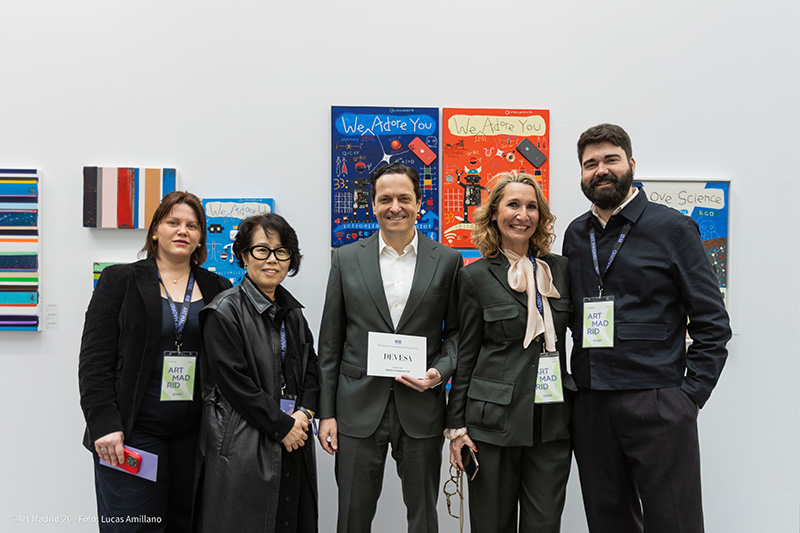
Art Madrid'26 – CONVERSATIONS WITH ADONAY BERMÚDEZ

At Art Madrid, we are delighted to present the fifth edition of our Curated Interview Program. On this occasion, independent curator and art critic Adonay Bermúdez (Lanzarote, Spain, 1985) takes the helm of the program, bringing his extensive international experience and sensitivity to contemporary artistic practices.

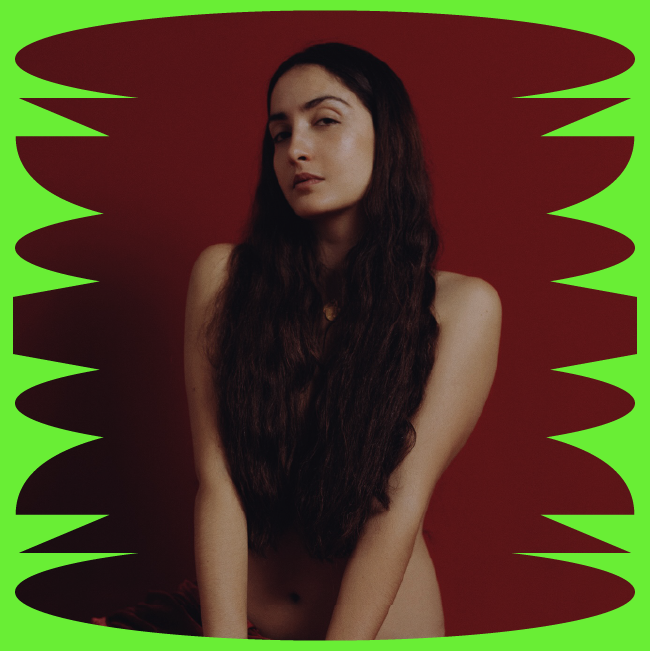
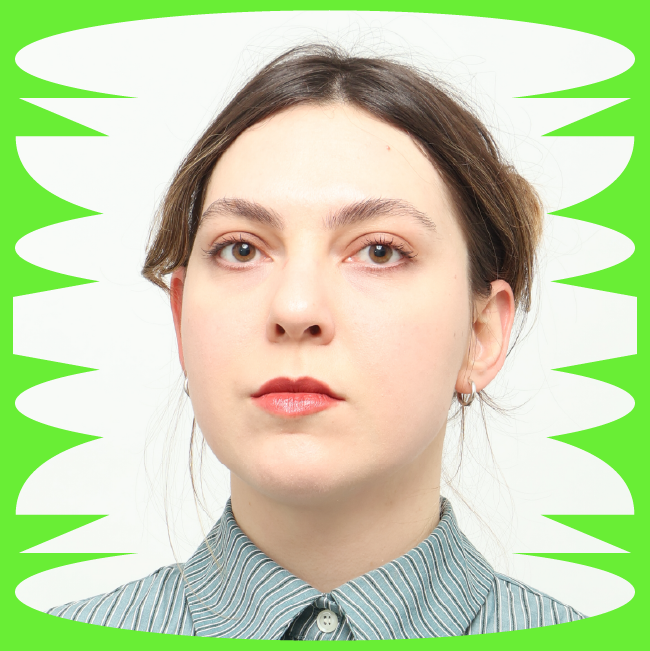
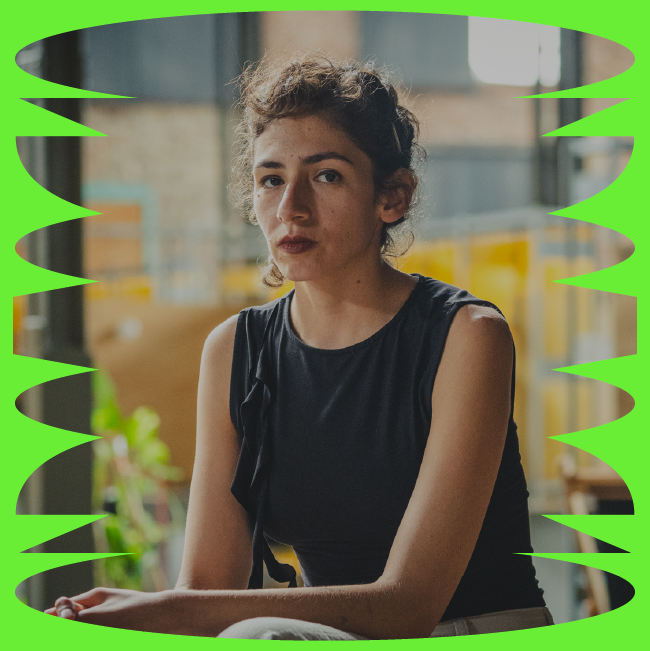
Under the title “Conversations with Adonay Bermúdez”, we will explore the work of eight artists featured in the 21st edition of the fair. This program offers the opportunity to engage with their creative processes, understand their sources of inspiration, and learn about their perspectives on contemporary art. In doing so, we reaffirm our commitment to facilitating encounters between the public and artistic practice, providing a space for reflection and dialogue during Art Week.


INVITED ARTISTS

Carmen Baena (Galería BAT Alberto Cornejo), Sergio Rocafort (Shiras Galería), Chamo San (Inéditad Gallery), Cedric Le Corf (Loo & Lou Gallery), Daniel Bum (CLC ARTE), Iyán Castaño (Galería Arancha Osoro), Julián Manzelli (Chu) (g · gallery), and DIMASLA (Diana + Álvaro) (Galería La Mercería)


DIALOGUE AS A CURATORIAL PRACTICE

The interviews included in this selection from Art Madrid’26 form a coherent map of shared concerns embedded in diverse practices, languages, and trajectories. Far from offering a homogeneous narrative, the voices of the eight artists reveal deep affinities around experience, time, and the relationship between artistic making and knowledge. In all cases, art is conceived less as the production of finished objects than as a situated process: a practice of attentiveness that unfolds in dialogue with territory, memory, and the artist’s own vulnerability..


One of the most significant recurring themes is the understanding of territory as an active agent. Whether it is the landscape of southern Spain, sand shaped by the tide, the everyday environment, or the exhibition space, the place ceases to function as a mere backdrop and becomes an interlocutor. This shift entails an ethics of listening: artists do not impose a predetermined form, but work from traces, marks, and temporal sedimentation. Territory thus appears as a living archive, carrying affective, geological, or cultural memories that the artistic gesture activates without closing them off.


Most of the practices presented here are grounded in open methodologies, where initial planning operates as a hypothesis rather than a fixed program. Chance, error, and the unexpected are not mistakes to be corrected, but productive forces that directly contribute to meaning-making. This openness does not imply a lack of rigor but represents a different mode of thought: an embodied knowledge that emerges from doing, repetition, and direct engagement with materials.


In this context, materiality becomes a form of knowledge. Marble and embroidery, pigments exposed to the elements, unstable geometries, silent pictorial surfaces, or repeated figures function as devices for sensitive knowledge. Materials do not illustrate concepts—they produce them. Through them, a constant tension is articulated between control and intuition, formal restraint and affective charge, which underpins both pictorial practices and research closer to performance or ecological concerns.


In response to contemporary acceleration, these works propose active pauses: spaces of duration, waiting, and suspension where the gaze can linger. Silence, stillness, and repetition operate as conditions for expanded perception, where the minimal and seemingly insignificant acquire existential density. In many cases, this slow temporality is connected to autobiographical processes or complex emotional states, making artistic practice a tool for subjective processing and care.


The interviews conducted for Art Madrid’26 highlight the importance of direct dialogue with the artist as a critical tool. This interview model does not seek to illustrate the work from the outside but accompanies its internal logic, allowing the thought sustaining it to emerge in the first person. Delving into the processes, doubts, and decisions that structure artistic practice not only enriches the understanding of the works but also activates a shared space for reflection, where art asserts itself as a form of living, situated, and constantly evolving knowledge.


Adonay Bermúdez. Critic and curator of the Art Madrid’26 Interview Program.


ABOUT THE ARTISTS

Carmen Baena (Benalúa de Guadix, Granada, 1967) is a multidisciplinary Spanish artist based in Murcia, where she has developed most of her career. A graduate in Fine Arts from the Polytechnic University of Valencia, Baena works with diverse techniques such as marble sculpture, embroidery on paper and canvas, and photographic experimentation, combining them in a profound investigation into the habitability of the body, time, and space.

Her work draws inspiration from nature and the landscapes of her childhood in Granada, creating spiritual and sensory landscapes that invite viewers into intimate, poetic, and enigmatic spaces. In recent series, color, circles, and stitched thread sutures combine to convey sensations of movement, memory, and emotion, generating immersive visual experiences. Carmen Baena has participated in numerous solo and group exhibitions in Spain and abroad, and her work is included in public and private collections, including institutions in Murcia and Valencia, local town halls, and museums such as the Postal Museum of Madrid.


Sergio Rocafort (Valencia, 1995) holds a degree in Fine Arts and a Master’s in Artistic Production from the Universitat Politècnica de València. He has exhibited his work at Shiras Galería, the Centro Cultural La Nau, Centro del Carmen de Cultura Contemporánea, Galería 9, Las Naves, and Palacio Marqués del Campo, all in Valencia. He has also participated in art fairs such as the X Feria Marte in Castellón and the XXXII Estampa Fair in Madrid.

Rocafort has been a finalist in prominent competitions, including the III María Isabel Comengé Painting Biennial and the XX Painting Prize of the Royal Academy of Fine Arts of San Carlos. He has received honorable mentions in the XXV National Painting Prize Fundación Mainel and the LXXX Premi Centelles, as well as awards such as the XXVII Ciutat d’Algemesí Painting Prize and the XIII Manolo Valdés Visual Arts Competition, among many others.


Chamo San (Barcelona, 1987) studied Fine Arts at the University of Barcelona and the École Nationale Supérieure des Beaux-Arts in Paris, but it was only after his formal training that he began to develop his own artistic language. As an illustrator, he has collaborated with numerous prestigious clients and brands over 15 years, and as an artist, he has published books and exhibited his work in solo and group exhibitions across Europe and North America.

His work moves between drawing and painting, often exploring self-publishing and graphic work. His production is characterized by a strong figurative style combined with technical and narrative explorations that originate in line and texture and gradually evolve toward brushwork and staining. His universe is nourished by notes made in small sketchbooks from direct observation of his surroundings and personal experiences.


Cedric Le Corf (Bühl, Germany, 1985) graduated with honors in 2009 from the École Européenne Supérieure d’Art de Lorient (France). He lives and works between Brittany and other European contexts, developing an artistic practice deeply connected to sculpture and reflections on the body, landscape, and memory. His work engages in constant research on materiality and image, where the anatomical and the territorial intertwine as metaphors for the human condition. Influenced by the Rhenish and Armorican legacy and confronted with the pathos of Grünewald (Baldung Grien), the hanged figures from Jacques Callot’s Les Misères de la Guerre, Ankou, and the dance macabre of Kernascléden, as well as the horrors of the Sobibor mass graves, Le Corf seeks, through adherence to a motif, to mitigate the weight of the subjects addressed in sculpture, painting, or printmaking.

He has undertaken several artist residencies, including the Fondation Dufraine in Chars, the Académie des Beaux-Arts (2016–2018), the Spitzberg Expedition Residency (2017), and was a resident at the Casa de Velázquez in Madrid (2018–2019) and the Miró Foundation in Palma de Mallorca (2019). In 2017, he was awarded the Georges Coulon Prize (Sculpture) by the Institut de France – Académie des Beaux-Arts. He has taken part in numerous solo and group exhibitions in France, Germany, Spain, and Belgium.


Daniel Bum (Villena, 1994) holds a degree in Fine Arts from the Polytechnic University of Valencia (UPV) and develops his pictorial practice within the contemporary framework of new figuration, drawing on influences from art brut, naïve aesthetics, manga, and urban art. His work creates a hybrid territory where disparate visual references coexist under a deeply personal and subjective narrative logic.

Far from mimetic representation, his canvases do not depict real scenes but reconfigure fragments of memory, emotional states, and thoughts through a direct and deliberately schematic visual language. In this symbolic construction, lived experience intertwines with fiction, generating images full of ambiguity and affective resonance. His compositions are inhabited by solitary figures, depicted frontally, with absent gazes and minimal gestures emphasizing vulnerability. These seemingly approachable characters reveal, however, an enigmatic dimension marked by latent tension. This ambivalence—between tenderness and unease, the familiar and the inexplicable—is a key expressive feature of his work.

He has participated in exhibitions and art fairs such as Obertura Carabanchel 2025 and Apertura Madrid 2025 alongside the Valencian gallery CLC Arte, and in Zokei with CLC Arte. In 2024, he held his first solo exhibition, Mamá, estoy bien, in Valencia, and participated in Detrás de la Piel at the FIC Contemporary Art Festival in Villena.


Iyán Castaño (Oviedo, 1996) graduated in Fine Arts from UPV/EHU (2022) and is a master printmaker in engraving and printmaking techniques from EAO (2018). His practice explores the relationship between nature, sea, and territory, primarily through painting and installation. He has received the Asturias Joven Prize in Visual Arts, Second Prize in the XX Casimiro Baragaña National Contemporary Art Competition, and production grants from Caja Rural and the Gijón City Council, among others. His work is part of the Artistic Heritage of the Spanish Royal Family and the collection of the Museo de Bellas Artes de Asturias, as well as other institutional collections in Europe and the Americas. He has been a finalist in competitions such as the LVI International Art Competition of Luarca, Nicanor Piñole, and Acor Castilla y León.

He has held solo exhibitions at spaces including Sala Borrón, Casa de Cultura de Llanes, Espacio Cultural El Liceo, Galería Arancha Osoro, Kultur Leioa, and Sala Lai..., and has participated in fairs such as Estampa and Art Madrid. His work has been curated by Natalia Alonso, Luis Feas, Santiago Martínez, Ainhoa Janices, and Eliza Southwood, and he has undertaken artistic residencies in Spain and Ecuador.


Julián Manzelli (Chu) (Buenos Aires, Argentina, 1974) is a multidisciplinary visual artist whose practice explores the intersection of urban life, science, and nature through geometric-expressionist constructions oscillating between figurative and abstract. He conceived the studio as an experimental laboratory, developing work in painting, sculpture, object-making, printmaking, and public space through muralism and interventions. He currently lives in Barcelona.

He studied at the Faculty of Architecture, Design, and Urbanism at the University of Buenos Aires (UBA), where he taught for over twelve years. Since 1998, he has been part of the DOMA collective, pioneers of conceptual urban art in Latin America, with works included in international collections and museums such as MoMA (New York), MALBA (Buenos Aires), MAR (Rio de Janeiro), and MARCO (Rosario).

In his independent career, he has exhibited at institutions such as MASP (São Paulo), MARCO (Monterrey), La Casa Encendida (Madrid), and CEART Fuenlabrada (Madrid), establishing himself as a key figure in contemporary art combining conceptual rigor and aesthetic exploration across multiple media and spaces.


DIMASLA (Valencia, 2018), the collective formed by Diana Lozano and Álvaro Jaén, develops its practice around reflections on inhabiting the world more harmoniously, understanding reality as an interconnected network of beings, spaces, and objects. Inspired by authors such as Nancy, Bachelard, and Dewey, their work is based on co-creation with the environment, where elements such as atmosphere, flora, fauna, and seasonal change act as active agents. Projects like Mono are not aware of this direct relationship between painting and landscape.

Trained in Fine Arts with a Master’s in Artistic Production from UPV, complemented by residencies in Italy and Chile, their trajectory has been recognized with awards such as the 1st Painting Prize from the University of Murcia (2025), the Arte en la Casa Bardín Prize (2023), and grants from the Spanish Ministry of Culture (2020). They have held solo exhibitions in Valencia and Alicante, participated in fairs such as Art Basel Miami Beach and Untitled Miami, and were part of the RinkoKaku Project in Japan. Their work is included in collections such as the Generalitat Valenciana, DKV, Banc Sabadell, Fundación Gabarrón, and the University of Murcia.


Adonay Bermúdez. Independent curator and art critic.

ABOUT ADONAY BERMÚDEZ

Adonay Bermúdez (Lanzarote, Spain, 1985) has curated exhibitions for MEIAC (Spain), Centre del Carme (Spain), Casa África (Spain), Centro Cultural de España en México, Museo Barjola (Spain), the National Museum of Costa Rica, Sala Díaz (USA), CAAM (Spain), the Museum of Contemporary Art and Design of Costa Rica, Centro de Cultura Contemporánea Condeduque (Spain), the Instituto Cervantes in Rome (Italy), Bòlit Centre d’Art Contemporani (Spain), DA2 (Spain), the X Biennale di Soncino (Italy), Artpace San Antonio (USA), MUDAS – Museu de Arte Contemporânea da Madeira (Portugal), Centro de Cultura Digital (Mexico), TEA Tenerife Espacio de las Artes (Spain), the Centro de Arte Contemporáneo de Quito (Ecuador), and ExTeresa Arte Actual (Mexico), among others.

He served as Director of the International Video Art Festival Entre Islas (2014–2017), was a guest curator of PlanoLisboa 2016 (Portugal), a member of the Scientific Committee of Over The Real International Videoart Festival (Italy, 2016, 2017, and 2018), curator of Contemporary Art Month San Antonio (Texas, USA) in 2018, collaborating curator at the César Manrique Foundation (Spain, 2019–2024), curator of INJUVE 2022 (Spanish Government), and Artistic Director of the 11th Lanzarote Art Biennial 2022/2023.

More recently, he has been awarded the Line 2 Curatorial Competition of Casal Solleric, Palma de Mallorca (Spain, 2020), the Cultural Projects Competition Gran Canaria Espacio Digital (Spain, 2020), the Artistic Research Grant from CAAM – Centro Atlántico de Arte Moderno (Spain, 2020), Komisario Berriak at Tabakalera (Spain, 2021), the 5th Curatorial Competition of the Valencian Community (Spain, 2023), and the 4th Curatorial Open Call of Nebrija University (Spain, 2025).

He is currently an art critic for ABC Cultural and Revista Segno. He has given lectures and workshops at the Universidad del Atlántico (Colombia), MACRO Museo d’Arte Contemporanea di Roma (Italy), Complutense University of Madrid (Spain), and the Universidade da Madeira (Portugal), among others. He has also received artist-in-residence grants from The Window Paris (France), Foksal Gallery (Poland), Les Abattoirs (France), SOMA (Mexico), The Casa Chuck Residency (USA), Plataforma Caníbal (Colombia), and No Lugar (Ecuador), among others.
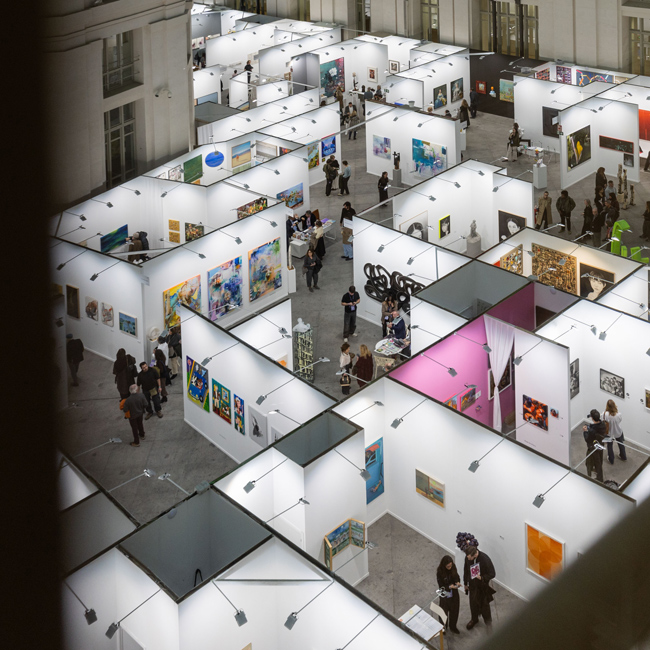
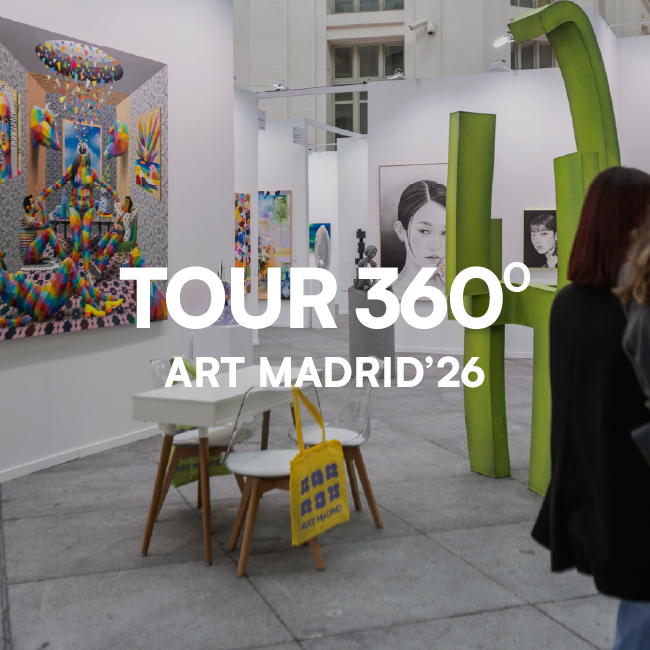
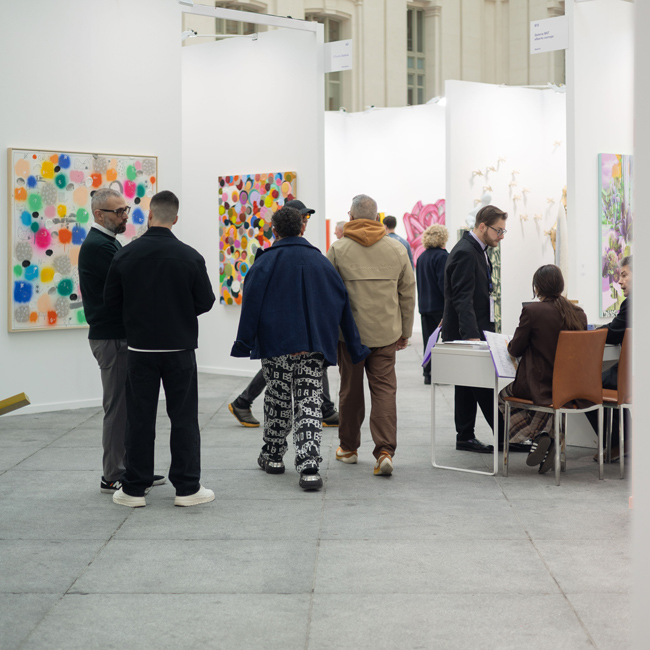
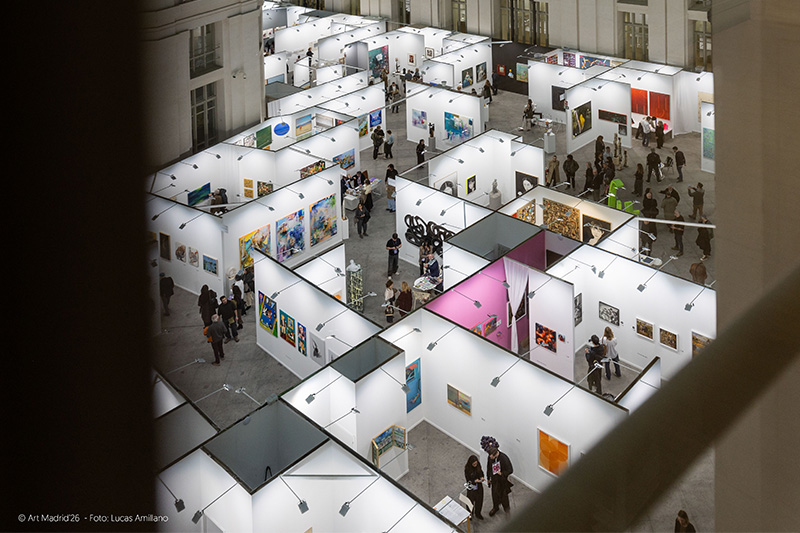
The Parallel Program of the 21st edition of Art Madrid shapes a conceptual ecosystem where theory, artistic practice, and shared experience converge, transforming the exhibition space into a territory for critical reflection and symbolic production. This initiative establishes the fair as an ephemeral organism capable of hosting multiple layers of meaning, where every architectural element, every artwork, and every movement of the public takes part in the collective construction of sense.

The theoretical foundation of this edition rests on two complementary conceptual pillars: the attention to the infra-ordinary proposed by Georges Perec in Species of Spaces and Édouard Glissant’s Poetics of Relation . On the one hand, the reflection follows Perec’s invitation to pause and focus on what usually goes unnoticed: the everyday details that shape the deep texture of our experience. Applied to the context of an art fair, this fragmented gaze reveals every wall, corridor, and booth as a micro-space of meaning, a narrative unit within a constantly evolving choral story. The fair thus emerges as a temporary archive that only reaches its full potential through the interaction of those who inhabit it, transforming the ordinary into the extraordinary through the very act of attention.


Francisco Pereira Coutinho. Prism. 2024. Photograph. Galeria Sâo Mamede.


Glissant, for his part, contributes an ethics of diversity and interdependence that is especially relevant in the contemporary context. His Poetics of Relation proposes that each element maintains its irreducible singularity without demanding complete understanding or reduction to known categories, while at the same time being transformed through its relations with others. This relational conception underpins the curatorial structure of the program, fostering encounters, frictions, and dialogues that expand our understanding of contemporary art as a shared, non-linear experience. The fair ceases to be a homogeneous whole and becomes instead a space of coexistence, where the opacity of the other is respected and valued as a condition for the possibility of genuine encounter.

The articulating concept of “imaginary distances” synthesizes both theoretical frameworks, referring not only to physical distance but also to intervals of attention, subjective paths, and affective micro-cartographies that visitors trace as they move through the space. These invisible distances, absent from architectural plans, form an emotional and sensory cartography that the fair constantly records and reconfigures. Each visitor generates their own map, their own narrative, their particular way of temporarily inhabiting this species of space.

From this perspective, the fair is understood as a surface of multiple inscriptions, where each edition leaves traces, erasures, and new marks. Every fragment, every gesture, every passage creates a layer of memory that turns experience into an act of relation and knowledge. To inhabit the fair, then, is to learn to look at what seems evident, to recognize in the minimal the possibility of the extraordinary, and to accept that every cultural experience is simultaneously archive and relation. The viewer thus adopts an active stance, transforming contemplation into an act of questioning and cohabitation, where artwork and public coexist within the same poetics of attention.

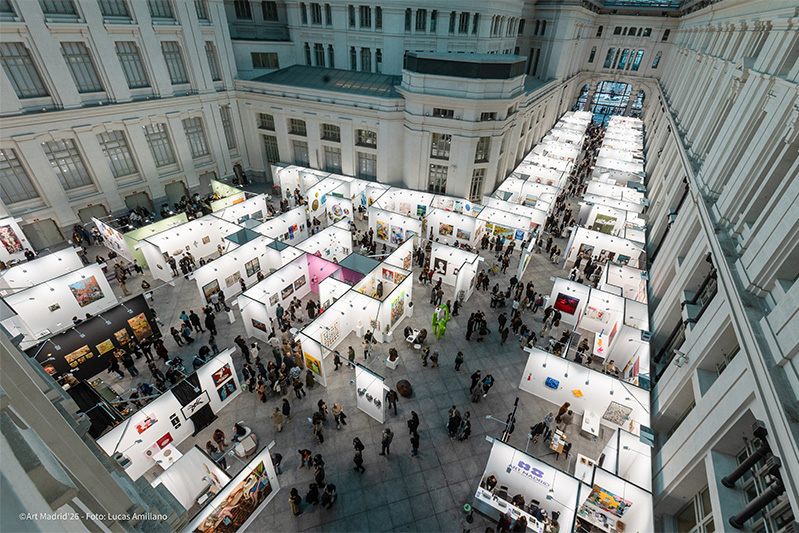
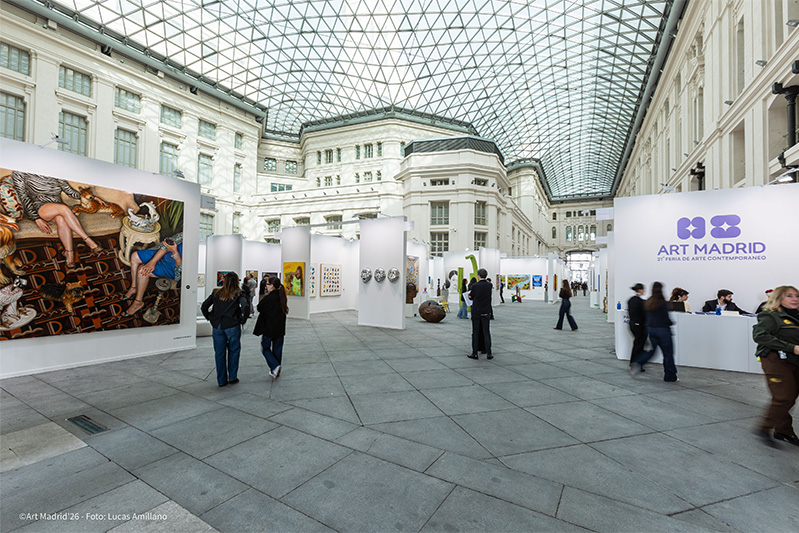
The Art Madrid’26 Parallel Program unfolds through a series of initiatives that will take place both prior to the fair and during the event itself, from March 4 to 8 at its venue in the Galería de Cristal of the Palacio de Cibeles:


Yoon Weedong. The Sacred 62. Acrylic on canvas. 2025. Banditrazos Gallery.


Interview Program. Conversations with Adonay Bermúdez: dialogue as curatorial practice


The curated interview program returns for its fifth consecutive edition, reaffirming itself as one of the defining features of Art Madrid’s Parallel Program. This year, independent curator and art critic Adonay Bermúdez (Lanzarote, Spain, 1985) takes on the direction of the program, bringing his extensive international experience and his sensitivity toward contemporary artistic practices from Ibero-America.

Conversations with Adonay Bermúdez opens a space to delve deeper into the experiences and creative processes of the artists, highlighting the diversity of perspectives that shape the contemporary landscape. Through dialogue, the motivations, concerns, and dynamics that inform each creator’s work are explored, emphasizing the importance of meeting points such as galleries and art fairs in the dissemination and understanding of current art. This initiative reinforces Art Madrid’s commitment to contemporary creation, offering the public a direct and human way to engage with some of the voices that shape the exhibition proposal of this edition.

The participating artists represent a wide spectrum of practices, languages, and sensibilities within contemporary art. They include: Carmen Baena, represented by Galería BAT alberto cornejo; Sergio Rocafort, represented by Shiras Galería; Chamo San, represented by Inéditad Gallery; Cedric Le Corf, represented by Loo & Lou Gallery; Daniel Bum, represented by CLC ARTE; Iyán Castaño, represented by Galería Arancha Osoro; Julian Manzelli (Chu), represented by g•gallery; and the duo DIMASLA (Diana + Álvaro), represented by Galería La Mercería. Each proposal offers a singular perspective on materials, formats, and concepts, creating a polyphony of voices that enriches the audience’s experience and invites them to explore new ways of approaching the creative universes of those who shape the fair.


Alex Voinea. AVP 1377, Acrylic on paper. 2025. Galería Rodrigo Juarranz.


Open Booth: A space for emerging creation

The third edition of the Open Booth reaffirms Art Madrid’s commitment to emerging creation, allocating a physical space of twenty-two square meters to be intervened by an artist at the beginning of their professional career. On this occasion, the invited artist is Daniel Barrio (Cienfuegos, Cuba, 1988), who will develop a site-specific project titled “Despiece”.

The Open Booth project functions as a platform for visibility and experimentation, allowing emerging artists to engage on equal terms with participating galleries. This space is conceived as an exhibition platform where ideas can materialize without the usual market constraints, encouraging risk-taking proposals and works-in-progress. In this way, the initiative exemplifies Art Madrid’s commitment to supporting new voices, recognizing that the contemporary art ecosystem requires transitional spaces where artists can professionalize and gain visibility among collectors, institutions, and other agents in the field. The Open Booth thus fits within the relational logic that underpins the entire fair program, understood as a territory of possible encounters where the emerging and the established coexist and mutually enrich one another.

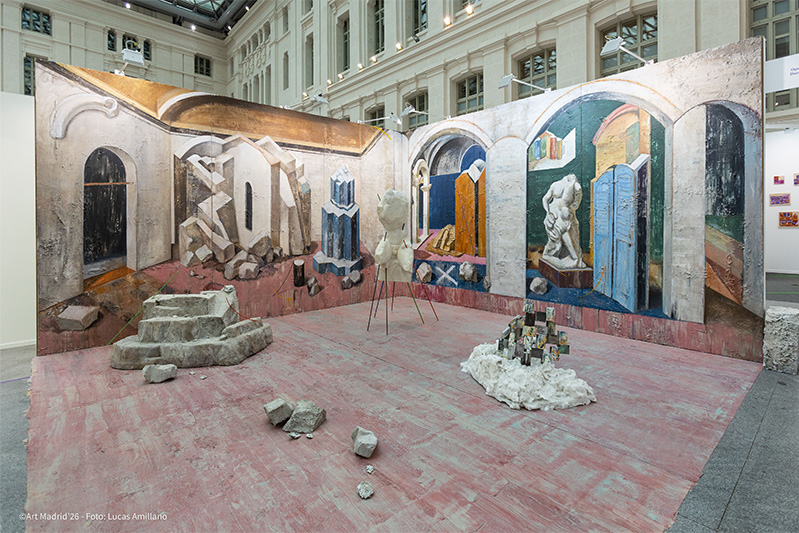
Daniel Barrio’s proposal is a site-specific project that puts history, urban memory, and the materiality of space into tension. The work unfolds as a reconstructed archive, where each element—from the iconic Belvedere torso to the wax table and pigmented canvases—articulates a dialogue between the classical and the contemporary, the sacred and the everyday. In this work, the artist explores the fragility of materials, the viewer’s perception, and the sensory experience: through handmade pigments, mortar, lime, and wax—elements that activate the viewer’s corporeality, placing them in a state of vulnerability and heightened attention. The canvases, intervened upon printed supports featuring fragments of the city, function as a poetic record of culture and consumption transformed into ruin, evoking a space that is simultaneously interior and exterior.


Marcos Juncal. After Party II. 2025. Instalation. Galería La Mercería.


Nebrija Space: NotanIA SipedagogIE

Universidad Nebrija and Art Madrid join forces for the second time to present a curatorial project resulting from the work of students in the Fine Arts degree program. Nebrija Space has been conceived to support visual artists in training during their first incursion into Madrid’s contemporary art circuit. Sponsored by Liquitex, a global reference brand in professional acrylics, this initiative represents a unique opportunity for emerging artists to integrate into and actively participate in an event of national and international relevance.

The curatorial proposal is articulated under the title "NotanIA SipedagogIE", a neologism that condenses a critical reflection on the relationship between art pedagogy, the market, and technology. In contrast to the algorithmic logic of Artificial Intelligence, this project proposes the notion of Aesthetic Intelligence: a form of knowledge that integrates the sensory, the affective, the intuitive, and the cultural. It thus advances a critical and empathetic pedagogy that opposes the automation of creative thinking and promotes a situated yet nomadic aesthetic experience.

The methodology is based on the poetic appropriation of verses as a starting point for the creation of untitled works, accompanied by a mood board that documents the sensitive process. The booth is conceived as a choral and transitory work, inspired by Madrid’s SER zones, where art becomes a space of symbolic transit, resistance, and reflection on being, desire, the presence of the other, and the temporary occupation of artistic space. This proposal directly connects with the fair’s theoretical foundations, understanding the exhibition space as a site of constant negotiation between the individual and the collective.


Fabian Treiber. Strayed.Acrylic, ink, oil pastel, pastel, and paper on canvas. 2025. KANT Gallery.


Performance Cycle. Open Infinite: What the Body Remembers


The Performance Cycle presents its fourth edition under the title "Open Infinite: What the Body Remembers", an initiative aimed at strengthening the presence of women artists within the Parallel Program. This open call is directed at creators whose performative work explores the tensions between body, memory, space, and time, transforming the fair into a welcoming space for ephemeral, fragmentary, and relational experiences that expand the viewer’s perceptual and symbolic boundaries.

The project is grounded in Erving Goffman’s theory of everyday life as a stage of modulated performances, proposing that the artists’ bodies function as performative “fronts” that shape the framework of interpretation for the public. The performances dramatize the everyday, exposing tensions between the visible and the hidden, the idealized and the effort required, while articulating strategies of presence that reveal or conceal power, vulnerability, and intimacy.

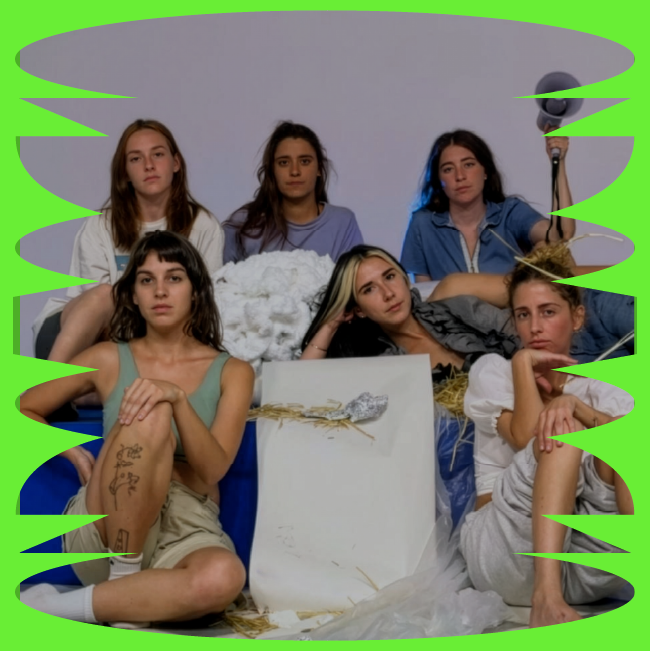
Building on these notions, the cycle broadens its scope toward posthuman, decolonial, queer, ritual, and ecological perspectives, conceiving performance as an act capable of making visible the invisible connections and tensions that traverse bodies, objects, and contexts. The invited artists are Jimena Tercero (Madrid, 1998), Amanda Gatti (Porto Alegre, Brazil, 1996), La Burra Negra Collective (made up of: Sara Gema, Sasha Falcke, Ascen Soto, Gaby Feldman, Regina Carolina, and Sofía Barco), and Rocío Valdivieso (Tucumán, Argentina, 1994)., whose proposals will transform the fair into a space of welcome for ephemeral and relational experiences that expand the viewer’s perceptual and symbolic limits.

"Open Infinite…" frames the body as a site of constant negotiation between the individual and the collective, where ephemerality acquires symbolic density and the fragility of identity and the power of encounter with others are simultaneously manifested. The series proposes an inquiry into the connections between body, memory, space, and time, understanding performance as a practice that activates critical and sensitive readings of the symbolic layers that constitute us. In this sense, the body is revealed as a living archive, a territory where the marks of personal and collective history are inscribed, and where belongings and resistances are negotiated.


Eli Craven. Soap Opera 1. 2023.Inkjet print and hand-painted frame. KANT Gallery.


Lecturas: Curated Walkthroughs

The project Lecturas: Curated Walkthroughs is a cultural mediation activity designed to bring visiting audiences closer to the works exhibited in the General Galleries Program. Art historians and cultural communicators Marisol Salanova and Zuriñe Lafón invite us to discover new perspectives on contemporary art through itineraries designed to guide us through the exhibition proposals of the edition.

These thematic walkthroughsfunction as opening devices, as tools that facilitate understanding without imposing closed readings. The curators will trace four itineraries that reveal unexpected dialogues between works from different galleries, offering interpretive keys that enrich the gaze without exhausting it.

This initiative is part of the conception of the fair as a space for collective learning, fostering access to contemporary art and creating the conditions for a broad and diverse audience to fully enjoy the experience. At the same time, the walkthroughs materialize the “imaginary distances” that conceptually articulate the edition, demonstrating that each curatorial discourse constructs a particular narrative, a specific way of inhabiting the exhibition space.


Dave Cooper. Arriving at Frederic's. Oil on canvas. 2024. Est_ArtSpace.


La Quedada. Studio visit to Daniel Barrio. Guest artist at the Art Madrid’26 Open Booth


As a prelude to the fair days, Art Madrid’26 organizes several activities designed to bring the public closer to the creative process and to the participating artists. One of these is a studio visit to Daniel Barrio, invited artist for the Open Booth project. This activity will offer first-hand insight into the context, methodology, and research behind his work, providing an intimate and direct experience that enriches the relationship between the public and contemporary creation. Attendees will have the opportunity to enjoy this visit as a preview, prior to the artist’s participation in the fair.

“Despiece” is Daniel Barrio’s proposal for the Open Booth at Art Madrid’26. The work functions as a reconstructed archive, where each element—from the iconic Belvedere Torso to the wax table and pigmented canvases—articulates a dialogue between tradition and contemporaneity, history and the present.

Daniel Barrio (Cienfuegos, Cuba, 1988) has lived and worked in Madrid since 2014. Trained in painting at the Academy of Visual Arts in Cienfuegos and in Art Direction at the Madrid School of Cinematography, he develops a practice in which image and space are conceived as constructs of meaning. His work employs proprietary techniques reminiscent of fresco, using handmade pigments and supports, linking each piece to the time and environment in which it is created. He explores urban memory, migration, and the construction of identity through what has been abandoned, re-signifying press and media images as a way of resisting commodification and contemporary surveillance. His practice is a slow, reflective gesture—an act of preservation and dialogue with the ephemeral and the intimate.


Jordi Larroch. Pide un deseo. 2025. Photograph. CLC ARTE.


The Parallel Program of Art Madrid’26 is an extensive initiative within a fair model that understands contemporary art as a shared experience where multiple agents, perspectives, and temporalities converge. From curated interviews to the performance series, from the Open Booth to the Nebrija Space, each initiative contributes to creating an experience in which the audience becomes an active participant in a temporary community. The fair thus reveals itself as a living organism, another kind of space in constant reconfiguration.

Art Madrid, aware of its cultural responsibility beyond its commercial dimension, seeks to generate spaces for reflection, learning, and encounter without renouncing the art market. The challenge lies in maintaining a delicate balance between the ephemeral nature of the fair and the density of the aesthetic experience, consolidating a context in which art is perceived as an object of appreciation, debate, and knowledge.