Art Madrid'26 – THE ABSOLUTE JOB OF JUAN LUIS MORAZA

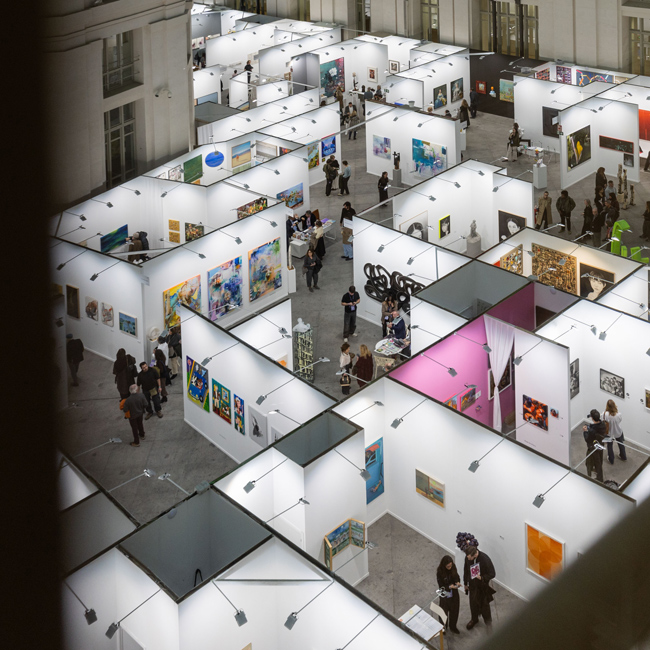
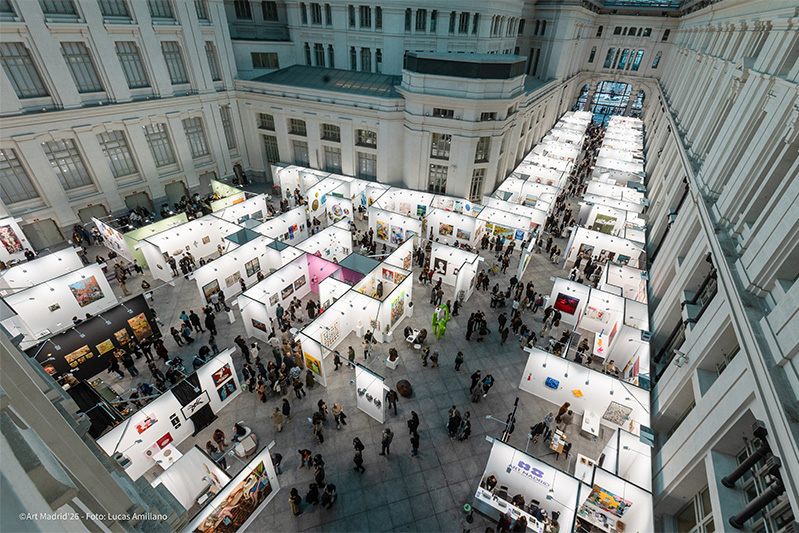
View of the exhibition


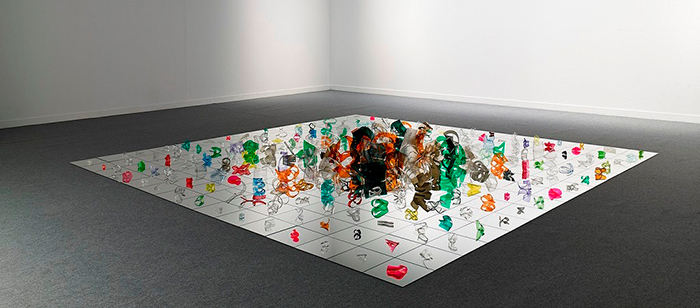
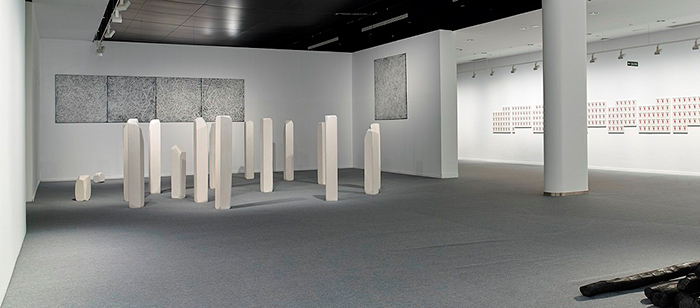
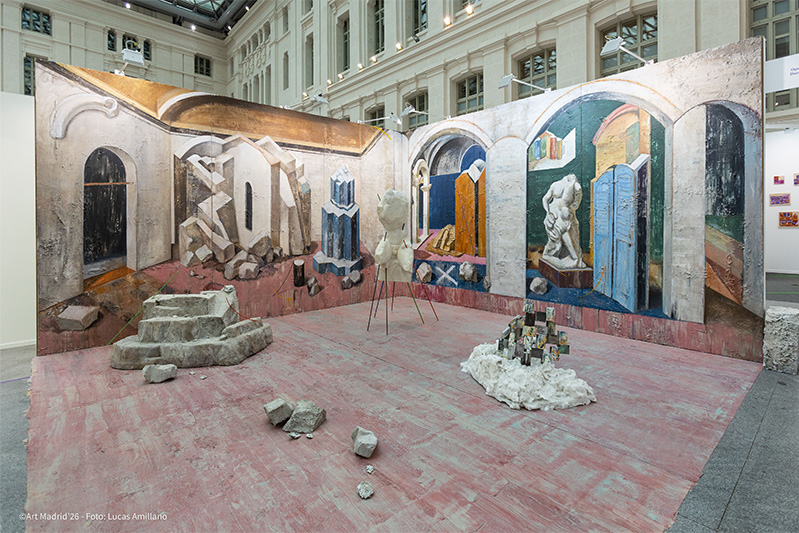
Juan Luis Moraza, Vitoria 1960. He is already a renowned artist, in the most contemporary artistic panorama. The work of Moraza, has been developed basically in the field of sculpture, not removing protagonism to the different disciplines, with the integration of these to their facilities. The painting, the implantation of objects or the audiovisual material, make that the work of Moraza expands in different registers, techniques and contexts. These practices have positioned him as a reference when it comes to influencing an entire generation.


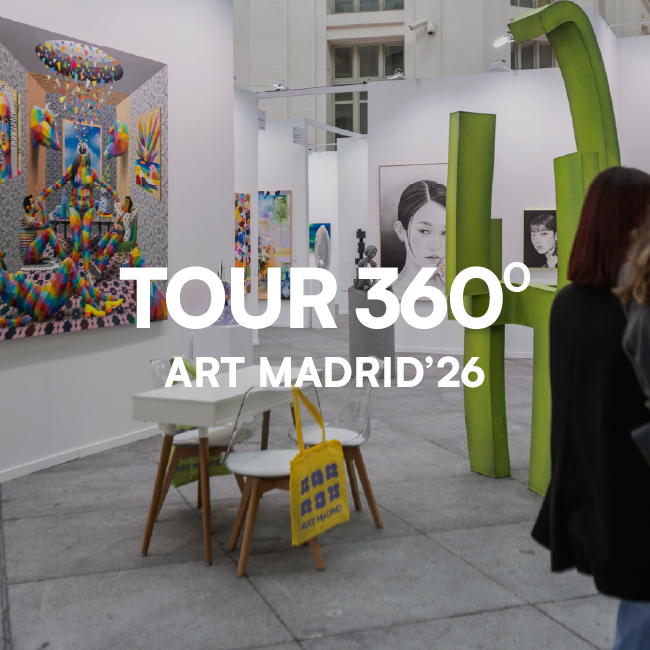
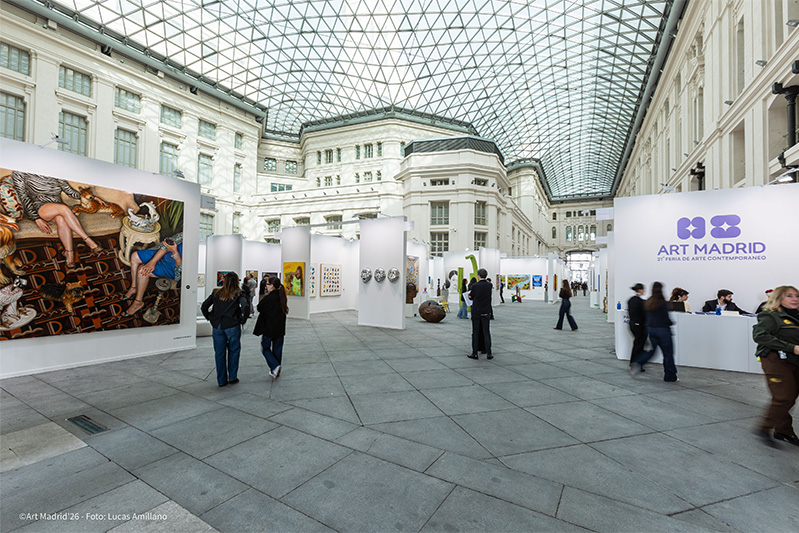
View of the exhibition


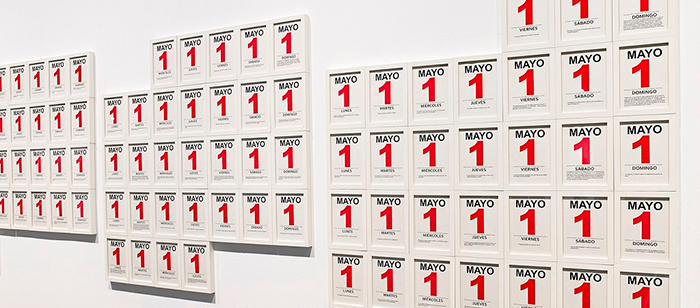
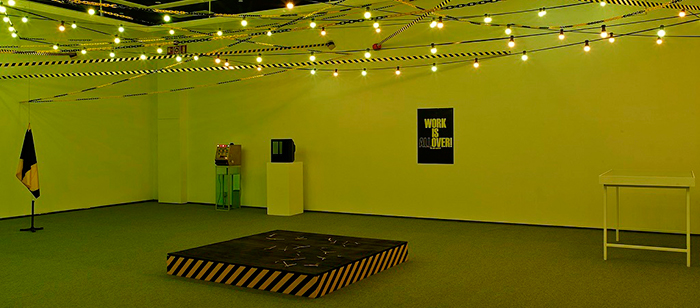
He has done more than 20 exhibitions, both collective and individual in recent years, in cities such as Madrid, Barcelona, ??New York, Venice, Buenos Aires or Chile, and his work is already part of certain public and private collections. For this particular show, the artist explains the concept of work based on different scenarios of the most current society, ug of Work, Erosis, Calendar of labor holidays, Republic, Software, Anormatividad and The party as office.


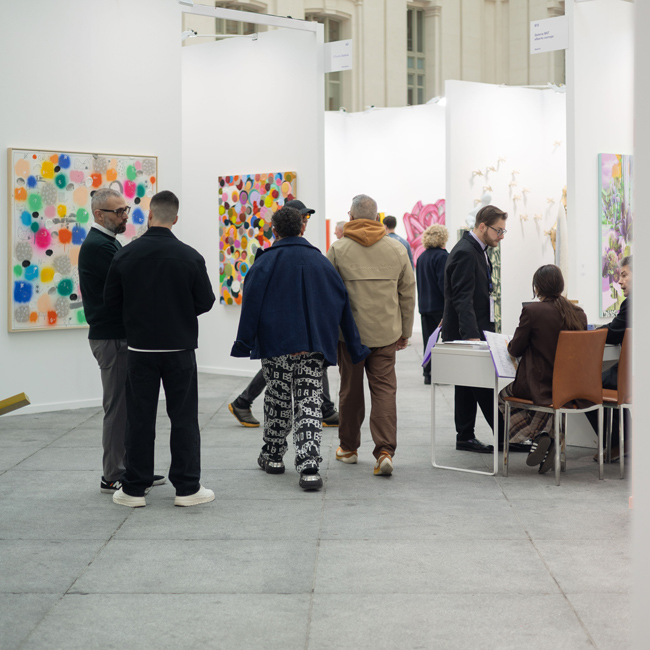
View of the exhibition


The curator Antón Castro has carried out a tour in which we can appreciate the distrust of the artist before said society, which encourages us to be competitive and to develop as automatons, being thus laziness punished by collective thinking. As "reward" sacrifice and effort, reward the individual with values ??that give meaning to the constant work of our minds. It is a valuable social critic, to the routine that we develop day by day. A sample that you can not miss.


View of the exhibition


The curator Antón Castro has carried out a tour in which we can appreciate the distrust of the artist before said society, which encourages us to be competitive and to develop as automatons, being thus laziness punished by collective thinking. As "reward" sacrifice and effort, reward the individual with values ??that give meaning to the constant work of our minds. It is a valuable social critic, to the routine that we develop day by day. A sample that you can not miss.


LECTURAS. CURATED WALKTHROUGHS BY ART MADRID'26


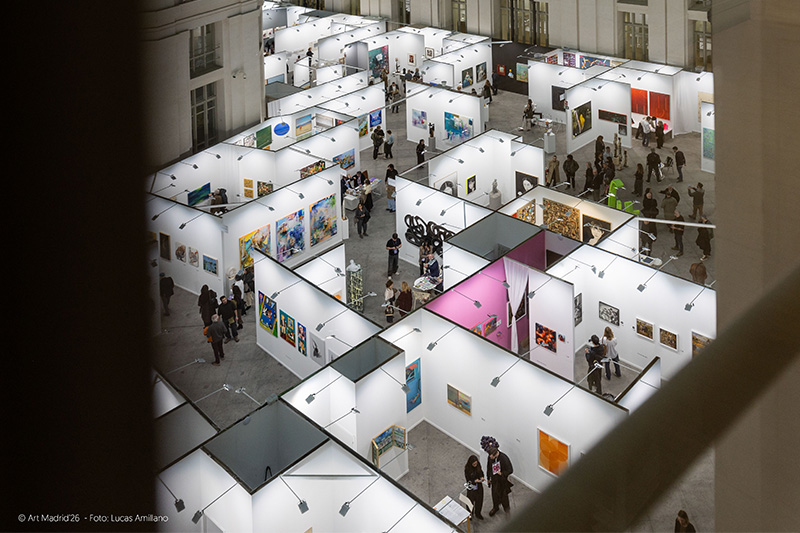
Lecturas: Curated Walkthroughs by Art Madrid’26 is a cultural mediation initiative designed to bring audiences closer to the exhibitions presented by the participating galleries in this edition. Its aim is to transform the experience of the fair into an opportunity to reflect on the work of the artists featured, to analyze contemporary issues through their works, and to awaken new perspectives in society—thus fostering a critical and contextualized understanding of contemporary art as an instrument for cultural and social dialogue.

In this edition, art historians and cultural communicators Zuriñe Lafón and Marisol Salanova will address, from complementary approaches, diverse perspectives on contemporary creation and its impact within today’s social context.

Each thematic walkthrough will be structured around a carefully curated selection of ten works, accompanied by a solid curatorial discourse aimed at deepening their analysis, context, and significance. Beyond aesthetic contemplation, these guided visits will promote a critical understanding of contemporary art, facilitating direct dialogue between the audience and the curators, and encouraging a participatory and enriching experience.

With this third edition, Lecturas: Curated Walkthroughs x Art Madrid consolidates Art Madrid’s commitment to cultural mediation and the dissemination of contemporary art, offering an immersive proposal that expands interpretative frameworks and fosters the inclusion of new audiences within today’s artistic landscape.


CONSTRUCTIONS OF THE VISIBLE. CURATED WALKTHROUGH BY ZURIÑE LAFÓN

Constructions of the Visible proposes a journey shaped by one central idea: every image is a way of organizing the visible. Rather than understanding abstraction as a withdrawal from the world and figuration as fidelity to reality, this itinerary presents both as perceptual strategies. They are not opposing styles, but different ways of ordering experience. Each artist deploys a distinct strategy that affects our way of looking. Through framing, color, repetition, geometry, or fragmentation, the works do not merely show something; they position us within a particular mode of relating to the visible. They do not simply represent the world—they construct an experience from it.

As the viewer moves through the selection, they encounter different intensities of mediation. Some pieces begin with recognizable images—bodies, spaces, scenes—that appear to offer a direct relationship with reality. Yet as the gaze lingers, it becomes evident that this familiarity is carefully articulated. The rhythm of forms, the distribution of color, the organization of space, or the repetition of certain elements reveal that even the most seemingly transparent image is sustained by an underlying structure.

Other works, by contrast, reduce or transform figurative reference almost to the point of dissolution. Where the recognizable world appears to disappear, the constructive dimension of the image emerges forcefully. Geometry, gesture, or chromatic vibration do not function as an escape from reality, but as intensified forms of the world’s own appearance. Abstraction ceases to be perceived as distance and instead manifests as another way of sustaining reality—of making it appear under different conditions.

The walkthrough adopts a circular structure: it begins and concludes with the same work. This gesture does not seek repetition, but transformation. After passing through different works, different configurations of the visible—from the recognizable to the apparently abstract—the initial image can no longer be read as a faithful representation of reality. It is revealed as yet another construction within a broad field of perceptual possibilities. What changes is not the work itself, but our position before it. Looking ceases to be a passive act and becomes an active practice, an exercise in relation.

As Andrea Soto Calderón suggests, images do not merely reflect the world: they make it appear. From this perspective, the fair may be understood as a micro-cartography of ways of seeing, a space in which each work proposes a singular form of perceptual experience. The visible is not a stable datum or a neutral surface, but a process in constant elaboration, renewed in the encounter between artwork and viewer.

Constructions of the Visible does not propose a closed classification, but an invitation: to pause, to question appearances, and at the same time to allow oneself to be affected by the creative power of forms. In the movement between figuration and abstraction, we discover that every image is an operation—a way of ordering experience. The walkthrough invites us to assume this perceptual responsibility and to recognize that reality is not simply there: it is constructed in every act of creation.


SELECTION OF GALLERIES AND ARTISTS:

Ana Cardoso — Galeria São Mamede. Antonio Barahona — Galería María Aguilar. Leticia Feduchi — Galería Sigüenza. Joost Vandebrug — Kant Gallery. Beatriz Castela —Galería Beatriz Pereira. Fernando Mikelarena— Kur Art Gallery. Camil Giralt — Pigment Gallery. Virginia Rivas — Galería Beatriz Pereira. Miguel Piñeiro — Moret Art. Maria Svarbova — Galería BAT alberto cornejo.


ABOUT ZURIÑE LAFÓN

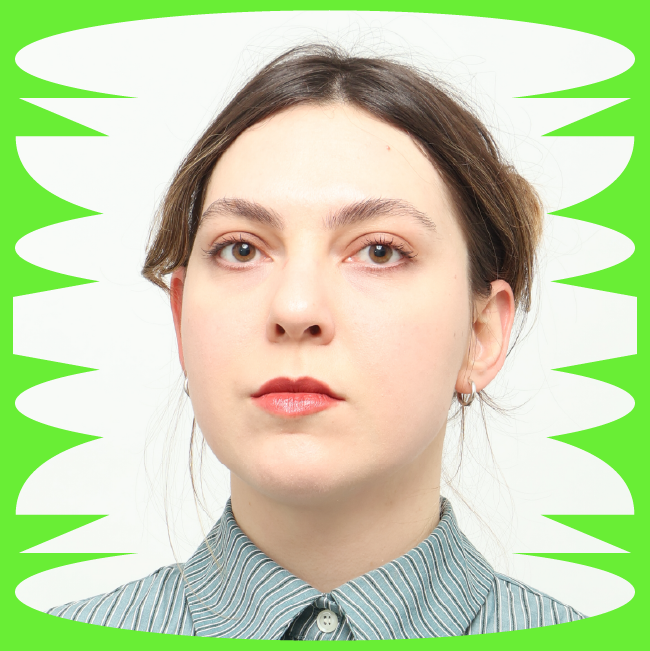
Zuriñe Lafón. Courtesy of the curator.


Zuriñe Lafón (1987) holds a PhD in Audiovisual Communication from the University of Navarra with the dissertation Francisco Calvo Serraller, Art Critic. Since 2015 she has devoted herself to research and teaching in Visual Culture, delivering courses such as Visual Culture, Photojournalism, Editorial Design, Foundational Texts on Photography, Digital Media Editing, and Fashion and Artistic Movements. She has taught at the University of Navarra, Universitat Internacional de Catalunya, UNIR, and the University of Montevideo. She has also worked in cultural departments of institutions such as El Correo Bilbao and the Museo Thyssen-Bornemisza in Madrid.

Through her project Atelier de imágenes, she shares research and outreach on contemporary images, creating a space dedicated to reflecting on painting, photography, and cinema. She is currently writing the book Uninhabiting the Frame, a research project on the ontology of photography through selected photographic archives of women in Spain.


“THE PREDOMINANCE OF BRILLIANT AESTHETICS”. CURATED WALKTHROUGH BY MARISOL SALANOVA

Framed by the theme “The Predominance of Brilliant Aesthetics”, this selection brings together works that understand brilliance not as superficiality, but rather as visual strategy, as contemporary seduction, as a symptom of an era that requires impact, color, polish, and perhaps at times certain excesses in order to think (itself).

This proposal, in which works of different formats and techniques coexist and are created by artists from various generations, opens a debate aimed at better understanding our present aesthetic condition—one in which the public is invited to participate.

Marisol Salanova approaches brilliant aesthetics as a tension rather than a closed solution. In the works of Urdiales and Celada, brilliance appears as an internal conflict within pictorial language; in Monge and Okuda, so different from one another, as a direct spectacularization of space and the urban imaginary; in Juncal, Rivas, and Alpuente, as a fragile balance between material and perception; and in Palito Dominguín, as an iconographic and symbolic affirmation, almost performative in nature. What particularly interests the curator and critic about this group is that brilliant aesthetics is not perceived as unified, but fragmented—at times ironic, at times ornamental, at times almost violent; elsewhere softened or symbolic. It is not an innocent brilliance: it seduces, imposes, distracts, and orders the gaze, much like the visual ecosystem in which we live today.


SELECTION OF ARTISTS AND GALLERIES:

Eduardo Urdiales — Inéditad Gallery. Arol — Est_ArtSpace. Perrilla — Est_ArtSpace. Ángel Celada — Galería BAT alberto cornejo. Antonio Ovejero — CLC Arte. Alejandro Monge — 3 Punts Galería. Okuda San Miguel — 3 Punts Galería. Steen Ipsen — Kant Gallery. Marina Puche — Galería Alba Cabrera. Marcos Juncal— Galería La Mercería. Gemma Alpuente — LAVIO. Palito Dominguín — DDR Art Gallery.


ABOUT MARISOL SALANOVA


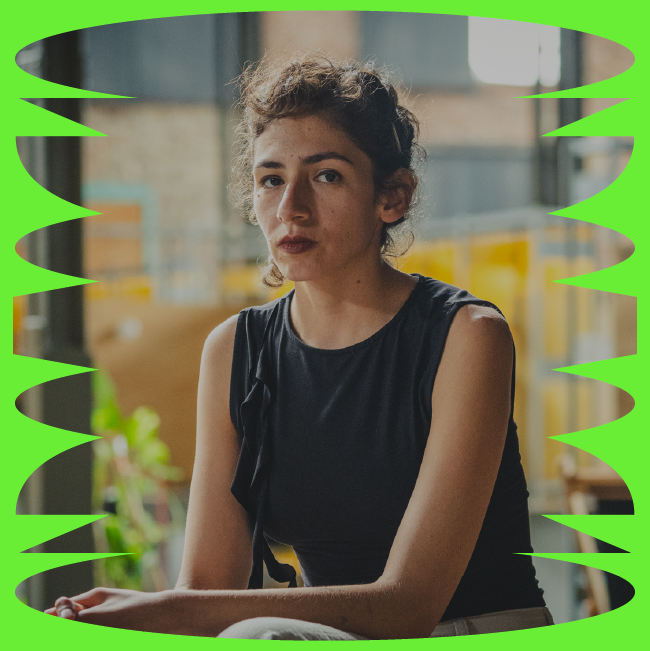
Marisol Salanova. Foto de Bertha Delgado.


Marisol Salanova is an art critic, exhibition curator, and director of the platform Arteinformado. She is a regular contributor to ABC and Cadena Ser. She holds a degree in Philosophy and a Master’s degree in Artistic Production. She has taught at university level and has published essays such as Art Criticism Today (Akal, 2024).


Patrocinador de ART MADRID'26

One Shot Hotels