10 ARTISTS UNDER 35 AT ART MADRID’22
Feb 21, 2022
art madrid
Selection by Natalia Alonso Arduengo Guest curator of Art Madrid 2022
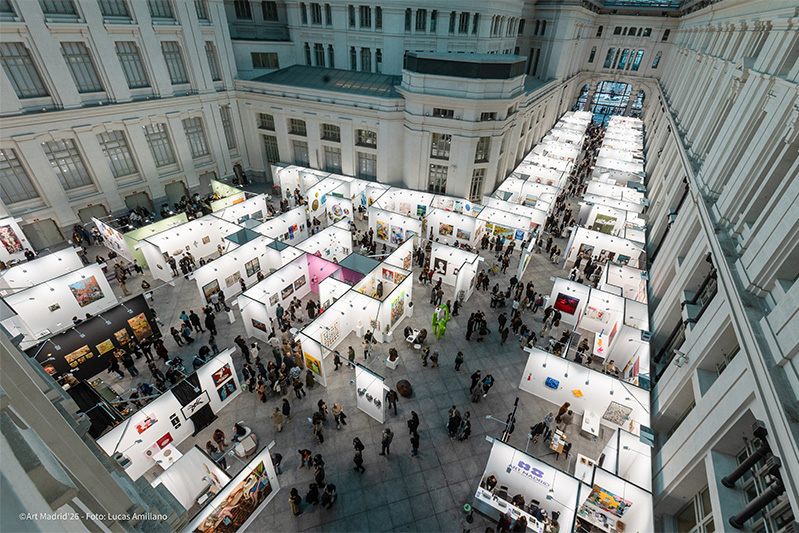
Art Madrid is committed to young art and proof of this is the selection that we present here and in which 10 names of artists born in the 80s and 90s of the last century are compiled. An equal selection of creators from countries such as Spain, Portugal, Russia, Cuba, Venezuela. In it, we can find painting, sculpture, textile art... Many different disciplines and styles (figuration, geometric abstraction, realism, the heritage of graffiti...) but with something in common: the freshness of the beginnings of careers in full swing, not yet mediated by the art market and who create from absolute parameters of freedom. These artists will integrate the next generation and will become consolidated. Putting them in the spotlight is a good option for that collector looking to discover new promises.
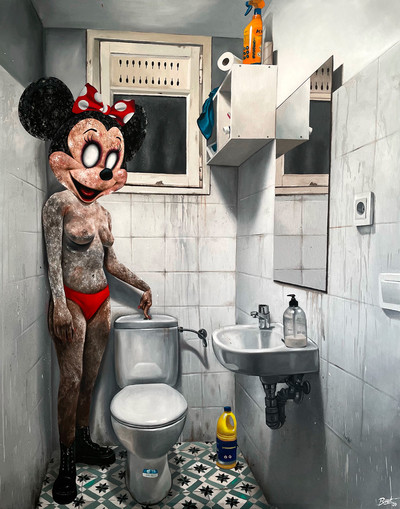
ALBERT BONET (INÉDITAD) Riba-roja d'Ebre (Tarragona), 1996
Winner of the International Painting Prize in the Realism category at the latest edition of FIABCN (Barcelona International Art Fair), Albert Bonet's work is characterized by an acid social criticism inspired by his closest surroundings. Through this interpretation of the world around him, this young artist shows both conceptual and technical maturity, which interferes with his work by playing with POP themes and with a markedly realistic style. Artistically, he has been trained at the Barcelona Academy of Art. He has been selected in the DKV Young Art Contest ''Fresh Art'', where he was awarded an honorable mention at the Polytechnic University of Valencia (2015). This promising artist has two individual exhibitions to his credit, the last one last November at the Mutuo Gallery in Barcelona. He now exhibits for the first time in Art Madrid at Inéditad Galería (Barcelona).
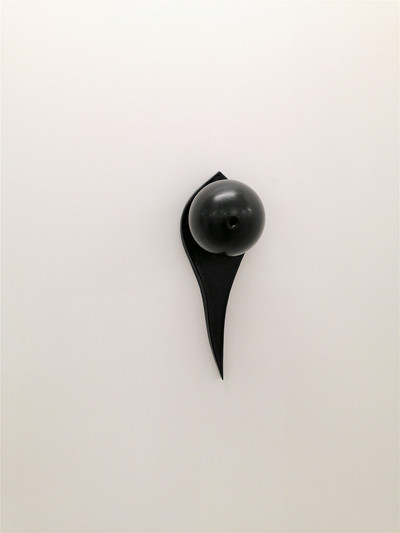
CAROLINA SERRANO (GALERIE ALEX SERRA) Funchal (Portugal), 1994
Carolina Serrano (Portugal, 1994) lives and works between Cologne and Lisbon. Serrano's work and research revolve around the temporal dimension of sculpture. The sculptural thought of the artist collapses, in a recurring way, with the notions of light and shadow; with the ideas of destruction and appearance; and with the duality between interior and exterior and between full and empty space. Serrano is interested in the concept of a restricted, inaccessible, and therefore unknown "place" and the uncertainty of its extension. In recent years Carolina Serrano has worked almost exclusively with paraffin for its plastic possibilities, such as the reflection of light, but above all for the theoretical and conceptual possibilities that this material can originate in the field of the observer's imagination. Serrano is also interested in the idea of a potential transmutation and spiritual transubstantiation of the sculptural object.
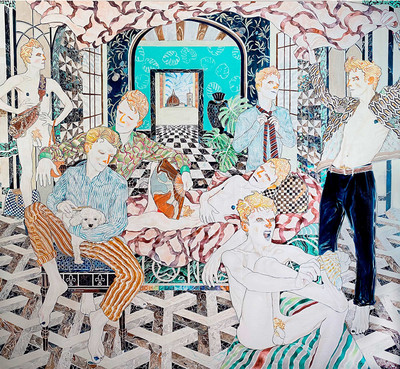
COSTA GORELOV (DR.ROBOT GALLERY) Moscú (Rusia), 1993
Costa Gorelov was born in Moscow in 1993 and continues to live and work in Moscow. He studied at the Moscow Institute of Television and Radio Broadcasting, where he graduated in Film Directing. In her work, Costa explores people's emotional and psychological states, often depicting them through a figure's interactions with different spaces, objects, and fashion items. Fashion, in particular, is paramount to her self-expression. It is also a symbol that unites eras, times, and traditions. Gorelov grew up in the North German Renaissance tradition. German music, literature, painting, culture, and language have greatly influenced him and have played a major role in shaping his style. The basic principles that he uses when creating his paintings are those of the Baroque, the Renaissance, and interior design. Architecture plays a major role in his art, particularly his foundation in stone and the golden ratio. Gorelov strives to incorporate elements of Gothic and Baroque architecture into the daily lives of his characters through bags and accessories that carry the DNA of this architectural heritage. He wants to show that, despite the changes in trends and the different times, what is fundamental is immovable and immutable.
ELENA GUAL (ARENA MARTÍNEZ PROJECTS) Mallorca, 1994
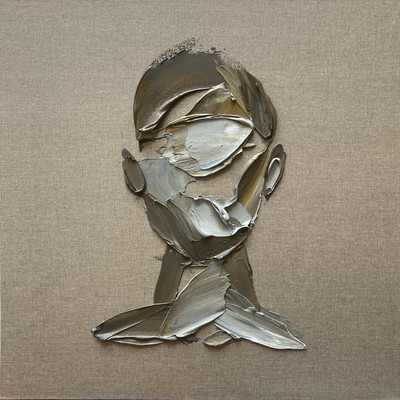
Elena Gual has a marked and recognizable technique inspired by the image of interracial women despite continuing to open new lines of work and even venturing into abstraction. Her work is characterized by the use of the palette knife and her knowledge of the techniques of Renaissance painters and classical sculpture. All this, thanks to the three years of training at the art academy in Florence. Later he moved back to London, where she lived from the age of 16 to continue her training at the Royal College of Art and Central Saint Martins. She has exhibited in Monaco, Paris, Venice and London. Back in Spain, Arena Martínez projects presents her work for the first time in her country at the Estampa 2021 fair, on the occasion of the Art Madrid fair her work can be seen for the second time in Spain.
FRANCISCO MAYOR MAESTRE (AURORA VIGIL-ESCALERA) Madrid, 1990
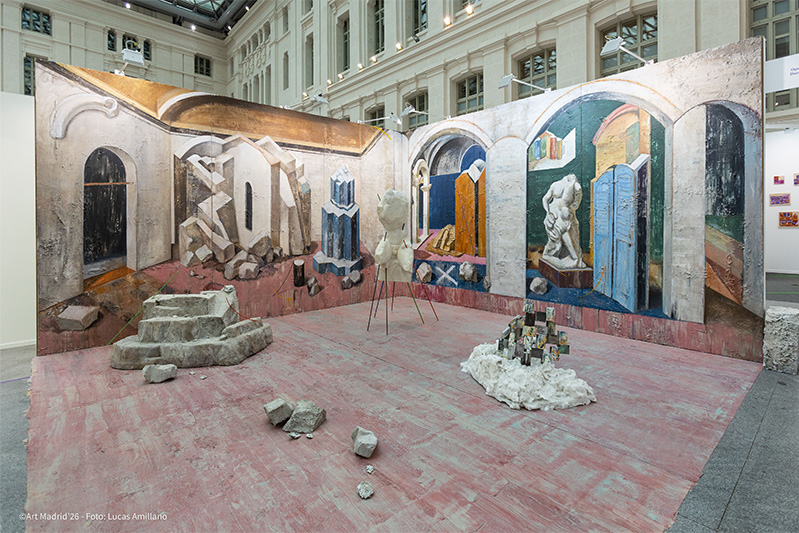
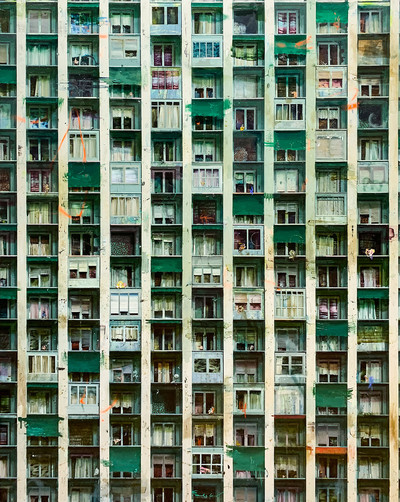
The childhood and adolescence of Francisco Mayor Maestre in Rivas-Vaciamadrid was marked by daily trips to the capital in which he observed the changes in the landscape and the identical gray buildings on the outskirts of the city. The contrast between these indifferent working class architectures and the small touches of color and personality that can be glimpsed as manifestations of the people who live inside, lead him to dedicate his production to the transformation of these cold facades. His oil paintings flood the whole with color, excessive vegetation, impossible planes that break the figuration of the work. It highlights curtains, awnings, laundry, air conditioners... in an investigation around the freedom of painting, the exploration of spaces and the vindication of individuality.
GABRIEL RAÚL CISNEROS (COLLAGE HABANA) Las Tunas (Cuba), 1990
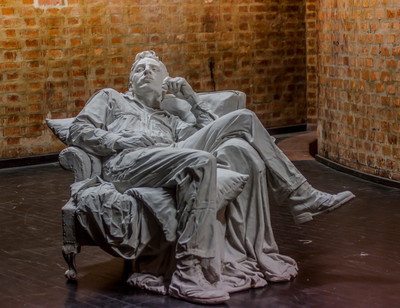
Graduated from Intermediate Level in Visual Arts (2009) in his native province and from the Higher Institute of Art of Havana (2015), where he also served as a sculpture teacher. He is always interested in the game, the apparently unreal or uncertain, that which in its ambiguity we cannot assume as true or as false. For this reason, it covers everything from the nature of the material used - resin mixed with plaster to simulate a stony, marble surface - to the words themselves. All of which explains the sarcastic, inquisitive, provocative gesture of his sculptural representation. He has been a disciple of the Cuban sculptor, José Villa Soberón, for more than five years, with whom he has made a considerable number of commemorative sculptures. He has participated in dissimilar collective and personal exhibitions, in Cuba and abroad. His work has collected in Panama, Mexico, United States and Lebanon. He won the Second Prize in Post-it 6, a Cuban art contest for emerging artists. He lives and works in Havana.
ISABELA PUGA (GALERÍA BAT ALBERTO CORNEJO) Caracas, 1997
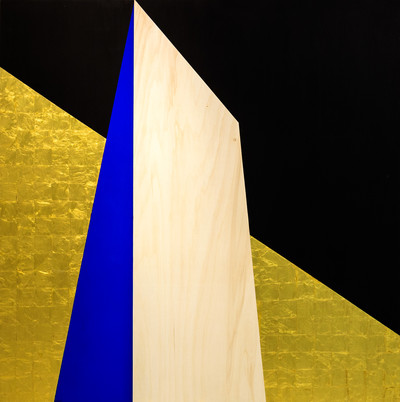
Isabela Puga lives and works in Madrid. Graduated in Fine Arts from the University of Barcelona with honorable mention in the Final Degree Project: Cracks in space; starts her process of pictorial research through the material and its perception. The color black and gold leaf are established as the main and recognizable materials of her work. Later she moved to Madrid, where she studied a master's degree in Art Market and Management and continued the development of her artistic work. During this last stage, her interest in architecture and urbanism increased, both disciplines being an important part of her creative process and adopting a geometric style. Starting from opposites: the brightness of gold and the darkness of black, the artist questions and investigates basic elements in her works such as depth, color, light and space, her intention being to promote the relationship between subject-object-space. In other words, the work necessarily requires a viewer to observe it and explore its perspectives and superpositions of planes, taking up a more elemental/minimalist language. Thus, Isabela Puga's pieces result in an analytical and "presentative" work, where the concepts of spatiality and contemplation are simultaneously considered.
ISABELLA DESPUJOLS (JACKIE SHOR ARTE) Varquisemeto (Venezuela), 1994
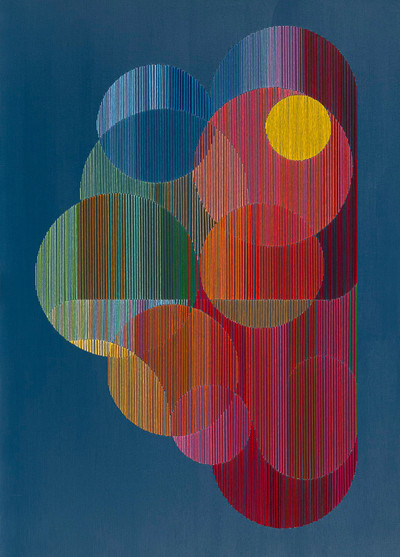
Visual artist focused on textile art, specifically manual embroidery. She graduated with a Bachelor in Fine Arts from the Miami International University of Art and Design, United States (2014) and a Bachelor of Art History from the University of Palermo, Buenos Aires, Argentina (2020). She has participated in different collective exhibitions such as: "Juried Show" at Curator's Voice Art Projects Gallery, Miami, USA (2014); “Young Art Show” at Espacio Cabrera, Buenos Aires, Argentina (2017); "1st Exhibition of Painting with Textile Intervention" at the Argentine Center for Textile Art, Buenos Aires, Argentina (2018); worked on a textile art installation at Casa FOA, Buenos Aires, Argentina (2019); participated in the collective exhibition “Artistas da Galeria” at the Periscópios Arte contemporânea gallery, Belo Horizonte, Brazil (2020) and in the SP-Arte fair together with the Jackie Shor Project (2020). Among his individual exhibitions are “Multiple Forms of continuity in space” in the Periscope Contemporary Art gallery in Belo Horizonte, Brazil (2021) and “Embroidered Geometry” in the Garaje Lola space, Madrid, Spain (2021). Her work is currently part of the collection of the Inhotim Institute Museum (2021).
LARA PADILLA (3 PUNTS GALERIA) Madrid, 1988
The work of Sra. D, a.k.a Lara Padilla, encompasses disciplines such as painting, sculpture, dance, performance and fashion design. Her mostly figurative pieces draw attention to the power of female representation through the deformation of the body and the use of color and textures. A vindication of gender exhibited through large hands as powerful instruments of battle or heavy feet, an image of the perseverance of women in their struggle. Mrs D. understands art, not as a silent showcase, but as a path of political action and intervention. Her aesthetic is an ode to diversity, portraying all types of bodies in order to promote a look of equality and authenticity.
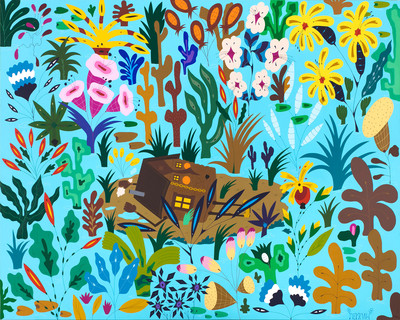
VOVA PERKIN (DR.ROBOT GALLERY) Moscú (Rusia), 1995
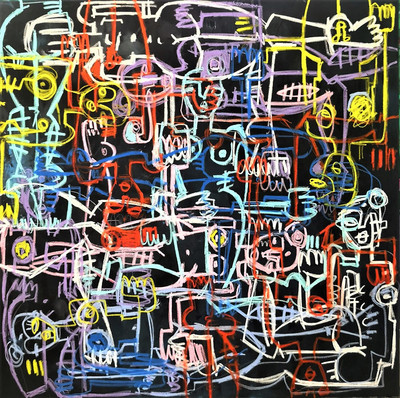
The world the artist creates is full of bright, positive, contrasting colors. All of his works are connected, with places and characters moving from one work to another. Its plots unfold as stories that tell of the ancient and wonderful world of Ugar. Vova Perkin is the founder of the movement called Perkinism, leader of the artist group Nasha Utopia (Our Utopia), and founder of the Perkinnale for Contemporary Art. His development as an artist was shaped through significant experience in the art of graffiti.