Art Madrid'26 – Art Madrid and FiArt Foundation will be partners in the next edition of the fair, february 2015

Create links that make possible a symbolic space for exchange, creation and reflection on the art world. With this aim, the contemporary art fair Art Madrid seeks cultural agents to develop their activities and complete their program as a main fair in Spain. This year, as we made last year with CASA AMÉRCIA and Korean Cultural Center, the International Fund Endowment for the Arts / FiArt, with over 15 years experience, will be one of our main partners.

 
FiArt aims to contribute to the development and strengthening of the Spanish cultural enviroment abroad, as an interactive platform that provides support to institutions and cultural professionals. Thus, creators and managers can have information, documentation and spaces (physical and virtual) for the development of their activities. Its main purpose would be to "develop artistic creativity in its various manifestations, through its exhibition, research and dissemination".
 
Leading fiart is a passionate art lover, the director Alma Ramas, who is working in perfect tandem with Alma Noblía, head of International Projects. Beside them, a cast of professionals in the field of cultural management, curating exhibitions and art criticism that have managed to expand the activities of the Foundation beyond our borders and have exported their exhibitions and courses to major museums Latin America.

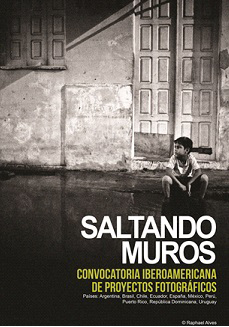
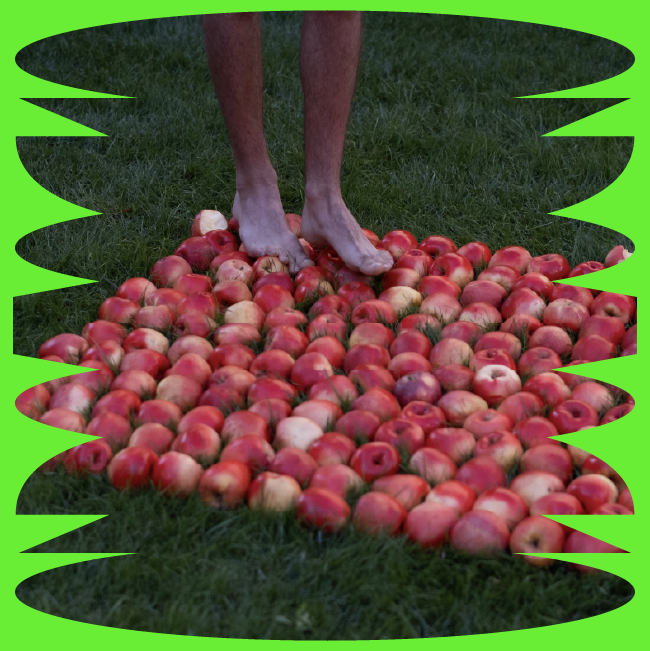
Fotografía perteneciente al proyecto "Saltando Muros"

Among the highlights Foundation projects it is "Saltando Muros", organized in collaboration with the General Secretariat (SEGIB), which has received the III Iberoamerican Award for Education and Museums. 

The Foundation has its facilities in the center of Madrid, at Infantas St, next to the Plaza de Cibeles, a prime location that connects directly to the headquarters of Art Madrid'15 - Galería de Cristal of Cibeles CentroCentro -  So the fair will held part of its parallel activities there: roundtables, presentations, workshops,... Also, FiArt, through its information platform Xtrart, "the website of the Spanish culture abroad" will be a major media-partner of the art fair, devoting special attention to the celebration of the 10th Anniversary of Art Madrid.


Xtrart covers various cultural areas (performing arts, visual arts, film, literature, etc.)with the recognized excellence of the artist, writer, actor, director, or agent that promotes and proposes editorials, specialized reports, interviews and other content signed by writers such as Simona Rota, Medina and Carlos Delgado Gemma Butler (curator of ONE PROJECT Art Program Madrid'15) responsible for the content related to Europe, Carlos de las Heras and Javier Iturralde de Bracamonte responsible for editing linked to US and Mercedes Ramas, Pina López Arias and Maria Veronica Perez, responsible for the contents of Latin America.


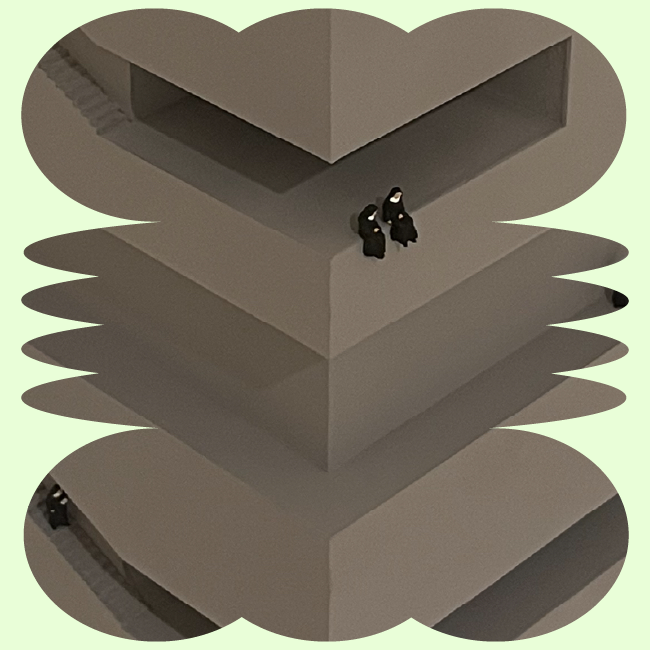
Imagen de Julia Juniz, en La Neomudejar.


Currently, fiart Foundation, in collaboration with the Arts Center La Neomudejar prepares the exhibition '‘Palabras que matan- Palabras que dan miedo’. A sample of three different proposals from artists in residence. The artists in the exhibition are Julia Juniz, Jean Gabriel Periot and Carlos Mate, who accompanied his speech to artists Urucatu Elena and Manuel Toro.
 
In February 2015, FiArt and Art Foundation Madrid'15 will bring you many surprises.


ART MADRID’26 INTERVIEW PROGRAM. CONVERSATIONS WITH ADONAY BERMÚDEZ


The work of Cedric Le Corf (Bühl, Germany, 1985) is situated in a territory of friction, where the archaic impulse of the sacred coexists with a critical sensibility characteristic of contemporary times. His practice is grounded in an anthropological understanding of the origin of art as a foundational gesture: the trace, the mark, the need to inscribe life in the face of the awareness of death.

The artist establishes a complex dialogue with the Spanish Baroque tradition, not through stylistic mimicry, but through the emotional and material intensity that permeates that aesthetic. The theatricality of light, the embodiment of tragedy, and the hybridity of the spiritual and the carnal are translated in his work into a formal exploration, where underlying geometry and embedded matter generate perceptual tension.

In Le Corf’s practice, the threshold between abstraction and figuration is not an opposition but a site of displacement. Spatial construction and color function as emotional tools that destabilize the familiar. An open methodology permeates this process, in which planning coexists with a deliberate loss of control. This allows the work to emerge as a space of silence, withdrawal, and return, where the artist confronts his own interiority.


The Fall. 2025. Oil on canvas.195 × 150 cm.


In your work, a tension can be perceived between devotion and dissidence. How do you negotiate the boundary between the sacred and the profane?

In my work, I feel the need to return to rock art, to the images I carry with me. From the moment prehistoric humans became aware of death, they felt the need to leave a trace—marking a red hand on the cave wall using a stencil, a symbol of vital blood. Paleolithic man, a hunter-gatherer, experienced a mystical feeling in the presence of the animal—a form of spiritual magic and rituals linked to creation. In this way, the cave becomes sacred through the abstract representation of death and life, procreation, the Venus figures… Thus, art is born. In my interpretation, art is sacred by essence, because it reveals humankind as a creator.


Between Dog and Wolf II. 2025. Oil on canvas. 97 × 70 cm.


Traces of the Spanish Baroque tradition can be seen in your work. What do you find in it that remains contemporary today?

Yes, elements of the Spanish Baroque tradition are present in my work. In the history of art, for example, I think of Arab-Andalusian mosaics, in which I find a geometry of forms that feels profoundly contemporary. In Spanish Baroque painting and sculpture, one recurring theme is tragedy: death and the sacred are intensely embodied, whether in religious or profane subjects, in artists such as Zurbarán, Ribera, El Greco, and also Velázquez. I am thinking, for example, of the remarkable equestrian painting of Isabel of France, with its geometry and nuanced portrait that illuminates the painting.

When I think about sculpture, the marvelous polychrome sculptures of Alonso Cano, Juan de Juni, or Pedro de Mena come to mind—works in which green eyes are inlaid, along with ivory teeth, horn fingernails, and eyelashes made of hair. All of this has undoubtedly influenced my sculptural practice, both in its morphological and equestrian dimensions. Personally, in my work I inlay porcelain elements into carved or painted wood.


Between Dog and Wolf I. 2025. Oil on canvas. 97 × 70 cm.


What interests you about that threshold between the recognizable and the abstract?

For me, any representation in painting or sculpture is abstract. What imposes itself is the architectural construction of space, its secret geometry, and the emotion produced by color. It is, in a way, a displacement of the real in order to reach that sensation.


The Anatomical Angel. 2013. Ash wood and porcelain. 90 × 15 × 160 cm.


Your work seems to move between silence, abandonment, and return. What draws you toward these intermediate spaces?

I believe it is by renouncing the imitation of external truth, by refusing to copy it, that I reach truth—whether in painting or in sculpture. It is as if I were looking at myself within my own subject in order to better discover my secret, perhaps.


Justa. 2019. Polychrome oak wood. 240 × 190 × 140 cm.


To what extent do you plan your work, and how much space do you leave for the unexpected—or even for mistakes?

It is true that, on occasions, I completely forget the main idea behind my painting and sculpture. Although I begin a work with very clear ideas—preliminary drawings and sketches, preparatory engravings, and a well-defined intention—I realize that, sometimes, that initial idea gets lost. It is not an accident. In some cases, it has to do with technical difficulties, but nowadays I also accept starting from a very specific idea and, when faced with sculpture, wood, or ceramics, having to work in a different way. I accept that.