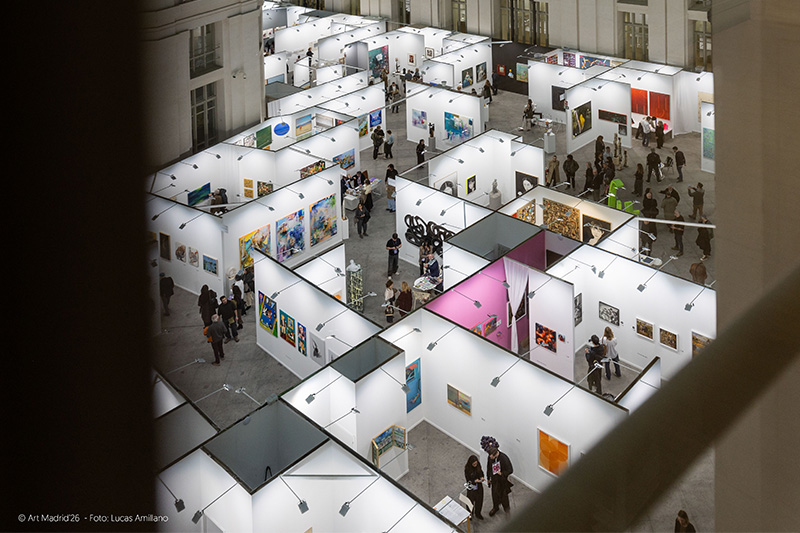
Art Madrid'26 – Great retrospective of Kandinsky in CentroCentro Cibeles


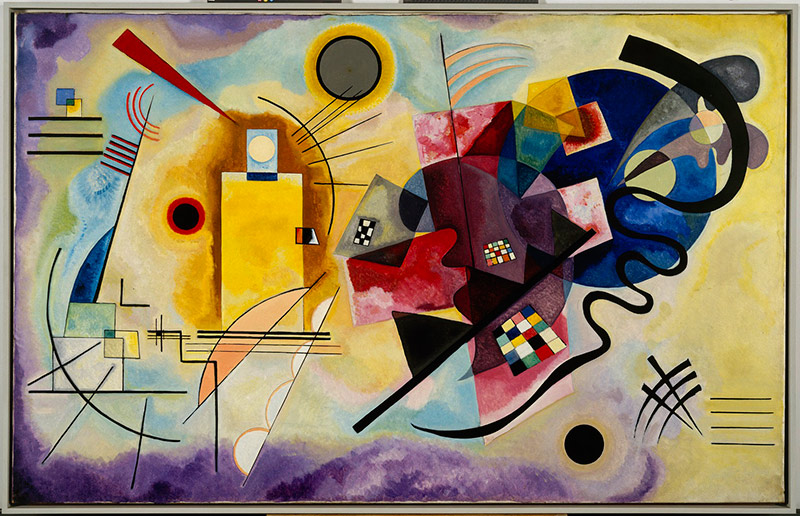
From October 20 to February 28 in CentroCentro Cibeles we can enjoy "Kandinsky. A Retrospective" a great exhibition dedicated to the Russian artist Vassily Kandinsky (1866-1944) that has been organized in collaboration with the Centre Pompidou in Paris and Arthemisia Group, organizer of roaming, and it is curated by Angela Lampe, Curator of Modern Art at the National Museum of Modern Art at the Pompidou Centre.
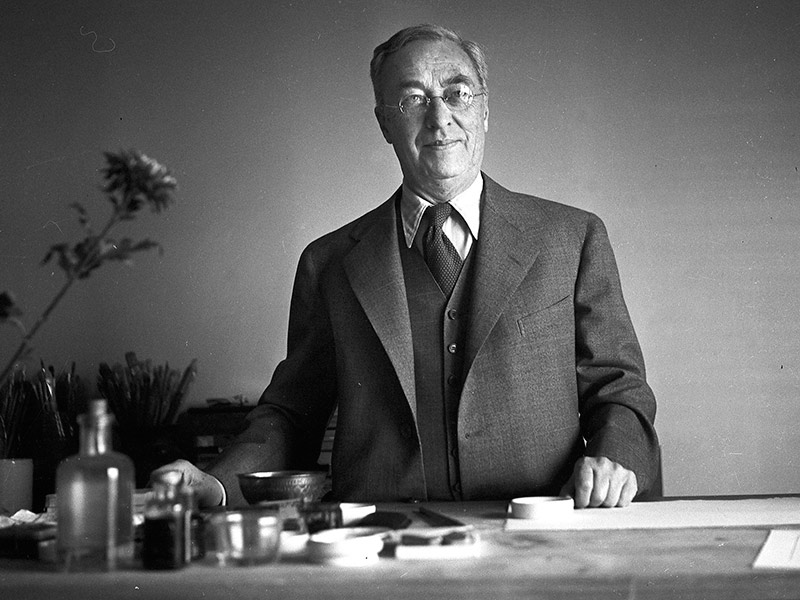


Organized into four major sections in chronological order: 1896-1914 Munich, Russia, from 1914 to 1921, Bauhaus, 1921-33 and Paris from 1933 to 1944, the exhibition covers the first figurations of the pioneer painter of abstract art and one of the most influential painters of all time, also their stays and experiences in Germany and Russia, his years at the Bauhaus, his research on line and color, abstraction and his last years in France.
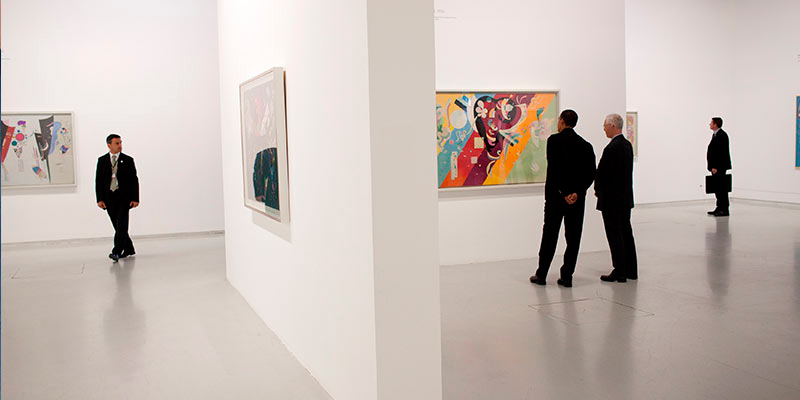


The works belong to the personal collection of Vassily Kandinsky which was donated by his widow, Nina Kandinsky, to the Pompidou Center and is a live collection that continues to grow. In 1937 and 1939, the National Museum of Modern Art acquired two early works of the artist, still alive at that time. After an initial gift in 1966, the Centre Pompidou received in 1976 the donation of fifteen paintings and fifteen watercolors from painter's widow. Four years later, in 1980, the museum received all the paintings and the material that was in the painter's studio in Neuilly (drawings, watercolors, prints and files), forming the largest part of his legacy. Since 1988, the Kandinsky Society is in charge of enhancing and ensuring the integrity of the artist's work. The collection now has over 100 paintings, 900 drawings and nearly 500 etchings.


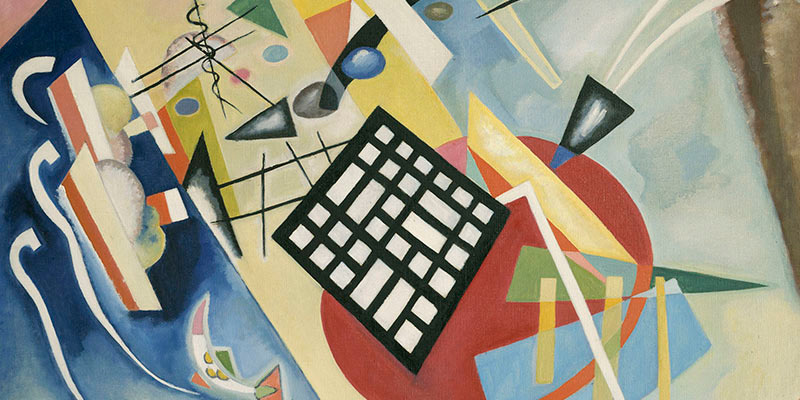
Among the 100 pieces on display in CentroCentro there are fundamental works as Alte Stadt II / Old Town, 1902; Lied / Song, 1906; Improvisation III (1909); Im Grau / En Grey (1919); Rot-Blau-Gelb / Yellow, Red and Blue (1925), and Bleu Ciel / Sky Blue (1940).


This traveling exhibition has passed through the Palazzo Reale in Milan, where more than 200,000 people visited it before traveling to Milwaukee and Nashville, United States.


During the exhibition, there will be free tours with groups of primary and secondary schools. Workshops will also be conducted. These guided tours, conducted by staff CentroCentro, are free, but it is necessary to purchase a ticket to enter the exhibition.


ABIERTO INFINITO. LO QUE EL CUERPO RECUERDA. PERFORMANCE CYCLE X ART MADRID'26


Art Madrid, committed to creating a discursive platform for artists working within the field of performance and action art, presents Abierto Infinito: lo que el cuerpo recuerda, a proposal inspired by Erving Goffman’s ideas in The Presentation of Self in Everyday Life (Amorrortu Editores, Buenos Aires, 1997).

The project unfolds within a theoretical framework that directly engages with these premises, conceiving social interaction as a stage of carefully modulated performances designed to influence others’ perceptions. Goffman argues that individuals deploy both verbal and involuntary expressions to guide the interpretation of their behavior, sustaining roles and façades that define the situation for those who observe.

The body — the first territory of all representation — precedes both word and learned gesture. Human experience, conscious and unconscious alike, is inscribed within it. Abierto Infinito: lo que el cuerpo recuerda departs from this premise: representation inhabits existence itself, and life, understood as a succession of representations, transforms the body into a space of constant negotiation over who we are. In this passage, boundaries blur; the individual opens toward the collective, and the ephemeral acquires symbolic dimension. By inhabiting this interstice, performance simultaneously reveals the fragility of identity and the strength that emerges from encounter with others.


PERFORMANCE: ALTA FACTURA. BY COLECTIVO LA BURRA NEGRA

March 4 | 7:00 PM. Galería de Cristal of the Palacio de Cibeles.


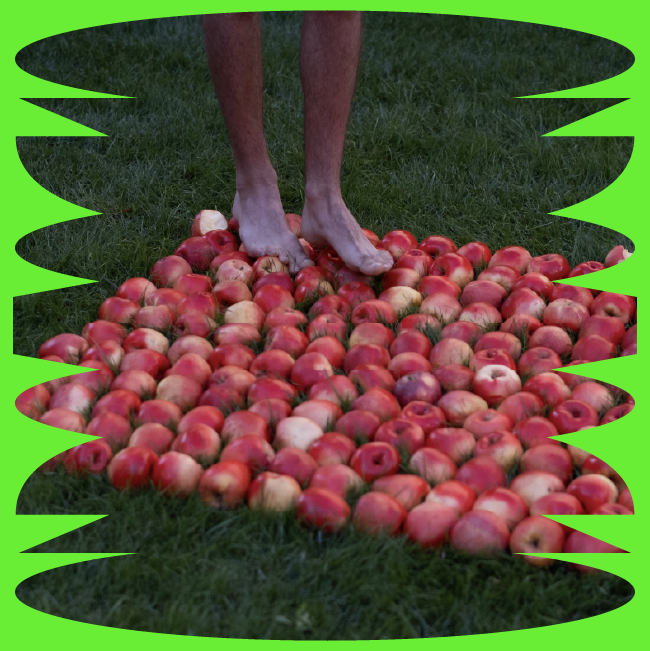
"Discipline for Power.” Performance by La Burra Negra for Displacement of the Congress of Deputies by Roger Bernat. 2025.


Alta Factura subverts the conventional structure of the fashion runway to foreground the often-invisible processes that underpin artistic production. Through a series of conceptual textile works, the performance draws attention to the discipline of craft and the artist’s vulnerability, ultimately revealing those seams typically consigned to the margins, behind the scenes.


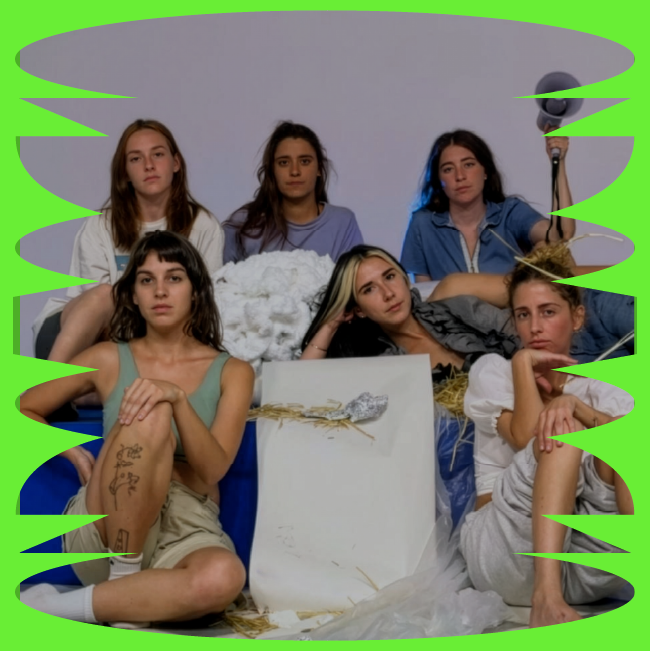
Colectivo La Burra Negra.


ABOUT EL COLECTIVO LA BURRA NEGRA

La Burra Negra is a nomadic performance art collective based in Málaga, founded in 2024 following its first residency in Totalán. The group is self-managed by Ascensión Soto Fernández, Gabriela Feldman de la Rocha, Sasha Camila Falcke, Sara Gema Domínguez Castillo, Sofía Barco Sánchez, and Regina Lagos González—six artists from diverse backgrounds and trajectories who met at the Hospital de Artistas at La Juan Gallery.

The collective brings together practitioners working across jewelry, painting, the performing arts, music, dance, cultural mediation, and arts management. Its activities include an annual residency in Totalán, the production of performative works, cultural mediation initiatives, and site-responsive interventions.

Since its inception, the collective has participated in the Periscopio series at La Térmica; presented A granel at the MVA in Málaga; carried out a number of actions in Totalán—the most recent during its second annual residency—and contributed its own proposals to the performance Displacement of the Congress of Deputies by Roger Bernat in Madrid.

At the core of La Burra Negra lies a commitment to collective creation and the exchange of knowledge. United in their effort to experiment with and disseminate performance art, the group explores the invisible dimensions of artistic labor—its temporalities, efforts, and relational dynamics, which so often remain unseen—as a form of critical affirmation.

Their practice emerges from dialogue and shared reflection, in the pursuit of decentralized spaces where art can be experienced and its processes made visible. Each residency and each action becomes an attempt to inhabit creation collectively, challenging conditions of precarity while fostering networks of care and collaboration that sustain both their own practice and that of those around them.