Art Madrid'26 – Klimt/Schiele/Kokoschka and their women at the Belvedere Vienna

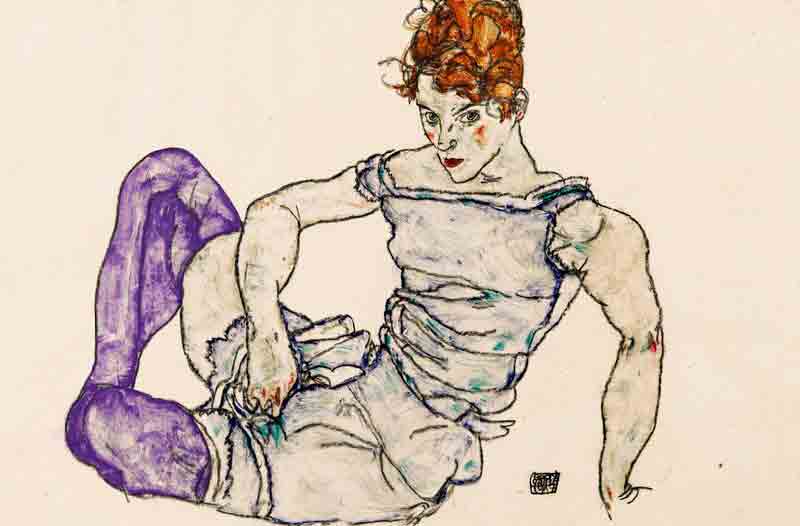
Mujer sentada con medias violeta, de Egon Schiele.


In the early years of the twentieth century, sexuality and their roles they changed forever. Equality between men and women, sexual openness, family relationships, reproductive issues... the moral imperatives of the nineteenth century entered were questioned, and new models transforming female identity were borned.
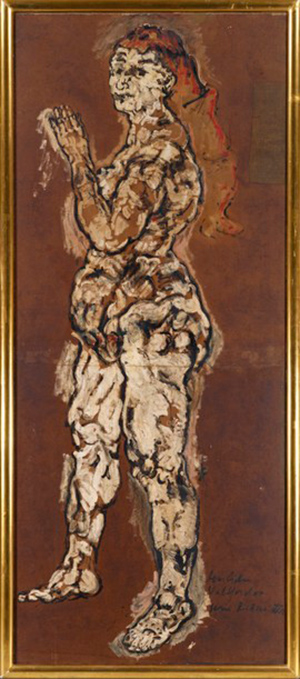
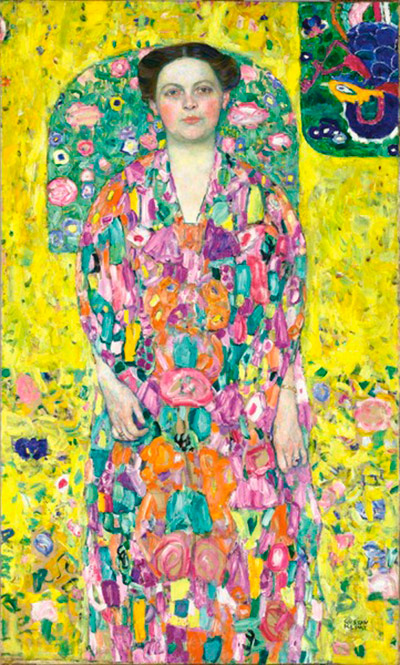


Desnudo, de Oscar Kokoschka y Eugenia (Mada) Primavesi, de Klimt.


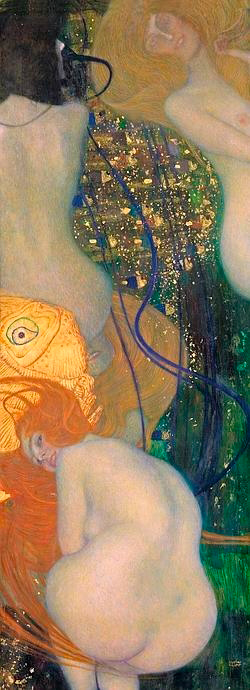
At that time, in Vienna, the bourgeoisie opened to sexuality, they read Freud and Otto Weininger and discovered in art a channel for the representation of female sexuality. Now, the Belvedere Museum in Vienna looks back to that revolution through the eyes of three revolutionary artists: Gustav Klimt (1862-1918), Egon Schiele (1890-1918) and Oskar Kokoschka (1886-1980), three masters who contributed their fantasies and portraits to the consolidation and assumption of new female roles, ladies, villains, nymphs, sexual and sensual women, mothers, daughters, maids, libertines ...
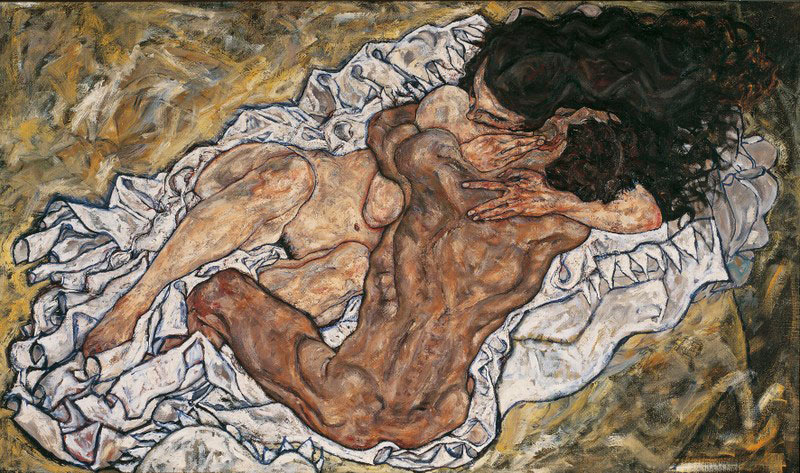


El Abrazo (Pareja de enamorados II), de Egon Schiele.


"The imprint of Klimt as man and artist has its origin at this time," the curator and deputy director of the Viennese museum Alfred Weidinger  "Klimt moved between these areas and his art reacted to the discussion at that time about "the mystery of the woman. '" For the exhibition, which brings together more than 150 pieces (50 of each author coming from collections worldwide), the curator and New York gallerist Jane Kallir, has established four themes: the portrait, the couple (romantic), mother and the child, and the nude. The flashy, bright and golden Klimt portraits they contrast with the lonely expression, and the abandoned and silent faces and bodies from Kokoschka, but especially with the raw, naked skinny, women from Schiele, more provocative and exhibitionistic. But what also shines through this exhibition, it is the commonalities of the three, and the most obvious: the three believed in romantic love.


Retrato de Elisabeth Reitler, de Kokoschka.


Klimt/Schiele/Kokoschka y las mujeres.
Del 22/10/2015-28/02/2016
Belvedere Inferior, Orangerie (Belvedere - Unteres Belvedere & Orangerie)


ART MADRID’26 INTERVIEW PROGRAM. CONVERSATIONS WITH ADONAY BERMÚDEZ


The practice of the collective DIMASLA (Diana + Álvaro) is situated at a fertile intersection between contemporary art, ecological thinking, and a philosophy of experience that shifts the emphasis from production to attention. Faced with the visual and material acceleration of the present, their work does not propose a head-on opposition, but rather a sensitive reconciliation with time, understood as lived duration rather than as a measure. The work thus emerges as an exercise in slowing down, a pedagogy of perception where contemplating and listening become modes of knowledge.

In the work of DIMASLA (Diana + Álvaro), the territory does not function as a framework but rather as an agent. The landscape actively participates in the process, establishing a dialogical relationship reminiscent of certain eco-critical currents, in which subjectivity is decentralized and recognized as part of a broader framework. This openness implies an ethic of exposure, which is defined as the act of exposing oneself to the climate, the elements, and the unpredictable, and this means accepting vulnerability as an epistemological condition.

The materials—fabrics, pigments, and footprints—serve as surfaces for temporary inscriptions and memories, bearing the marks of time. The initial planning is conceived as an open hypothesis, allowing chance and error to act as productive forces. In this way, the artistic practice of DIMASLA (Diana + Álvaro) articulates a poetics of care and being-with, where creating is, above all, a profound way of feeling and understanding nature.


In a historical moment marked by speed and the overproduction of images, your work seems to champion slowness and listening as forms of resistance. Could it be said that your practice proposes a way of relearning time through aesthetic experience?

Diana: Yes, but more than resistance or vindication, I would speak of reconciliation—of love. It may appear slow, but it is deliberation; it is reflection. Filling time with contemplation or listening is a way of feeling. Aesthetic experience leads us along a path of reflection on what lies outside us and what lies within.


The territory does not appear in your work as a backdrop or a setting, but as an interlocutor. How do you negotiate that conversation between the artist’s will and the voice of the place, when the landscape itself participates in the creative process?

Álvaro: For us, the landscape is like a life partner or a close friend, and naturally this intimate relationship extends into our practice. We go to visit it, to be with it, to co-create together. We engage in a dialogue that goes beyond aesthetics—conversations filled with action, contemplation, understanding, and respect.

Ultimately, in a way, the landscape expresses itself through the material. We respect all the questions it poses, while at the same time valuing what unsettles us, what shapes us, and what stimulates us within this relationship.


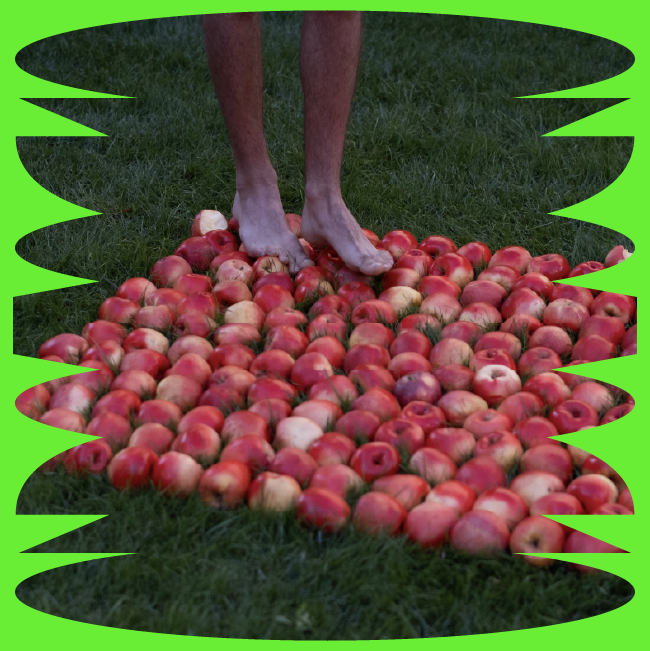
The Conquest of the Rabbits I & II. 2021. Process.


In your approach, one senses an ethic of exposure: exposing oneself to the environment, to the weather, to others, to the unpredictable. To what extent is this vulnerability also a form of knowledge?

Diana: For us, this vulnerability teaches us a great deal—above all, humility. When we are out there and feel the cold, the rain, or the sun, we become aware of how small and insignificant we are in comparison to the grandeur and power of nature.

So yes, we understand vulnerability as a profound source of knowledge—one that helps us, among many other things, to let go of our ego and to understand that we are only a small part of a far more complex web.


Sometimes mountains cry too. 2021. Limestone rockfall, sun, rain, wind, pine resin on acrylic on natural cotton canvas, exposed on a blanket of esparto grass and limestone for two months.. 195 cm x 130 cm x 3 cm.


Your works often emerge from prolonged processes of exposure to the environment. Could it be said that the material—the fabrics, the pigments, the traces of the environment—acts as a memory that time writes on you as much as you write on it?

Álvaro: This is a topic for a long conversation, sitting on a rock—it would be very stimulating. But if experiences shape people’s inner lives and define who we are in the present moment, then I would say yes, especially in that sense.

Leaving our comfort zone has led us to learn from the perseverance of plants and the geological calm of mountains. Through this process, we have reconciled ourselves with time, with the environment, with nature, with ourselves, and even with our own practice. Just as fabrics hold the memory of a place, we have relearned how to pay attention and how to understand. Ultimately, it is a way of deepening our capacity to feel.


The fox and his tricks. 2022. Detail.


To what extent do you plan your work, and how much space do you leave for the unexpected—or even for mistakes?

Diana: Our planning is limited to an initial hypothesis. We choose the materials, colours, places, and sometimes even the specific location, but we leave as much room as possible for the unexpected to occur. In the end, that is what it is really about: allowing nature to speak and life to unfold. For us, both the unexpected and mistakes are part of the world’s complexity, and within that complexity we find a form of natural beauty.