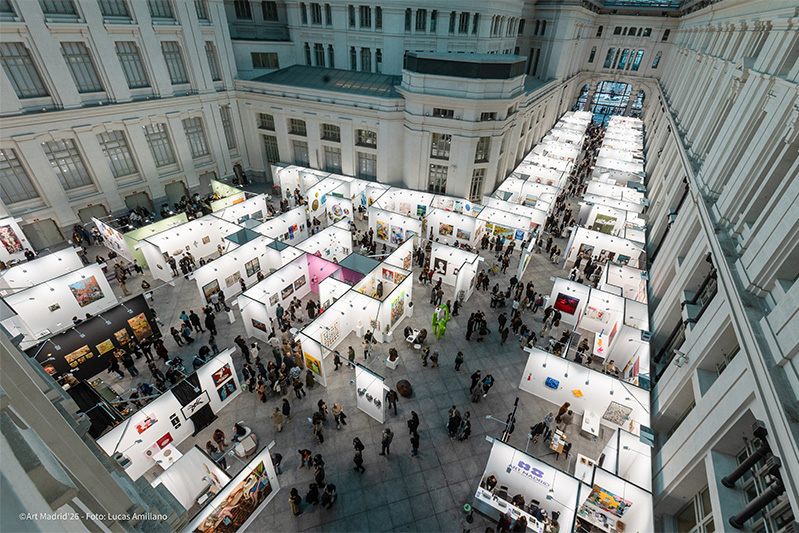
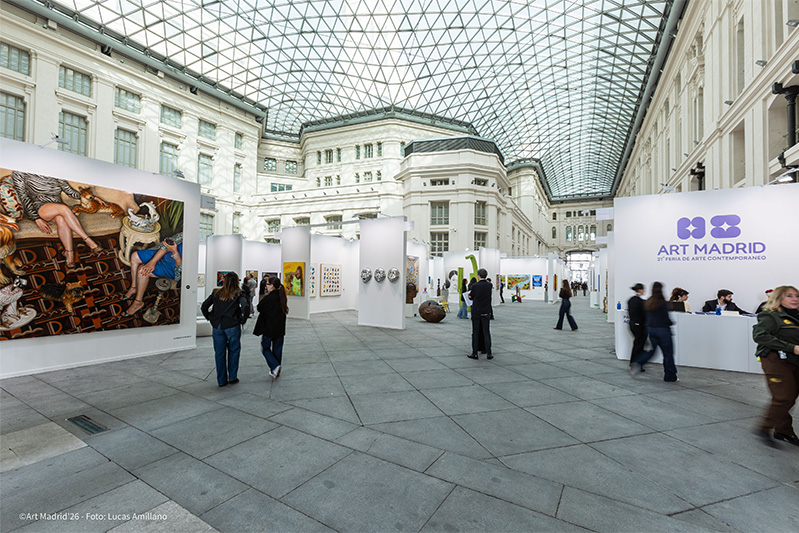
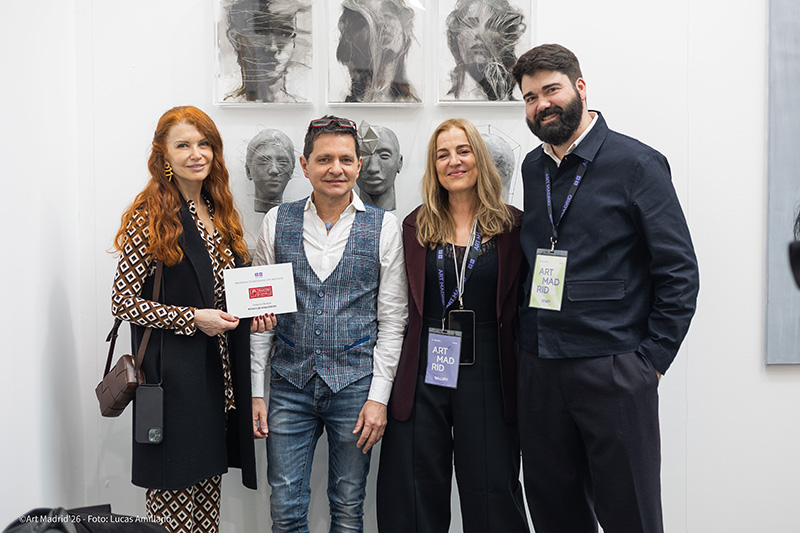
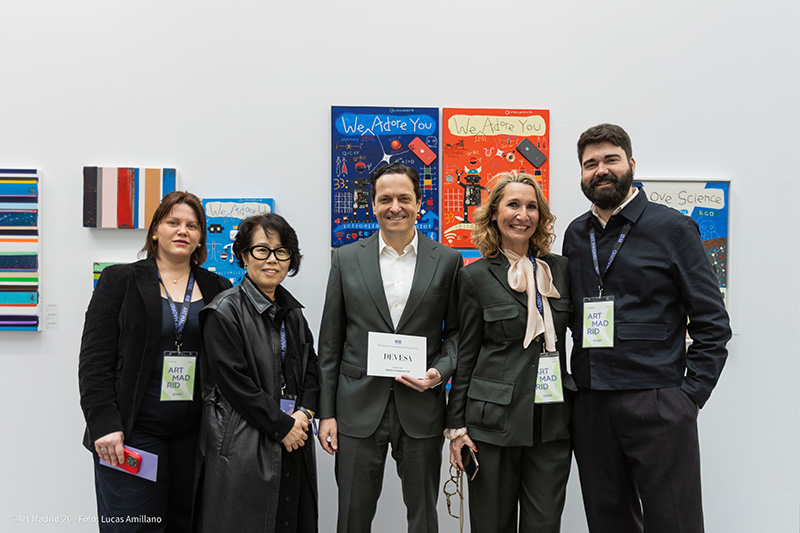
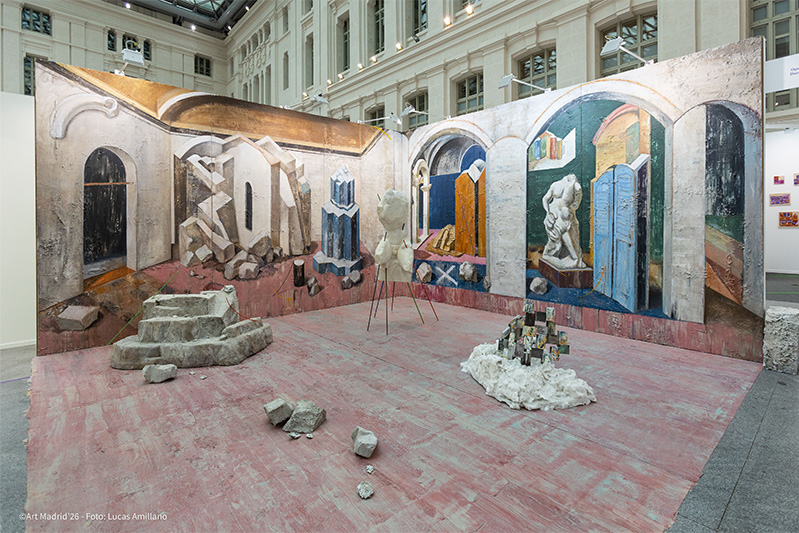
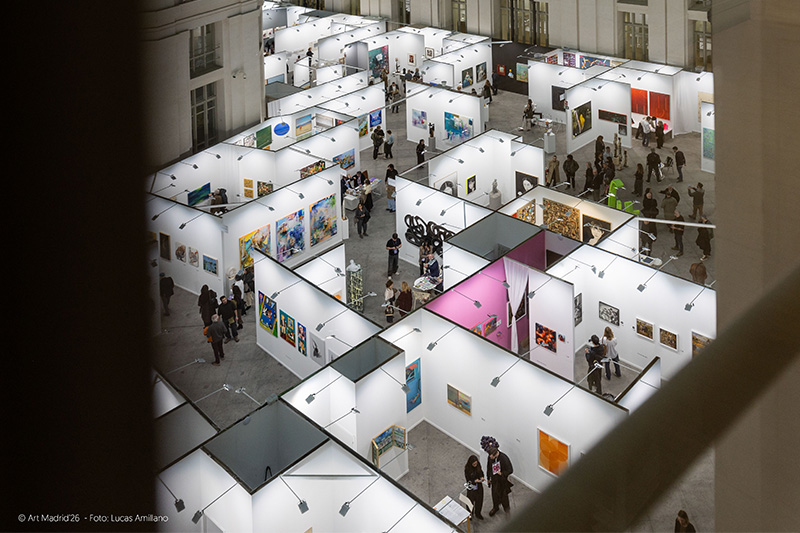
Art Madrid'26 – La New Fair launches it\'s second edition for emerging artists

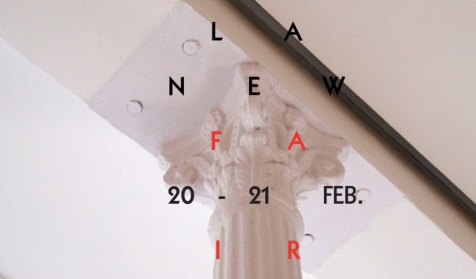
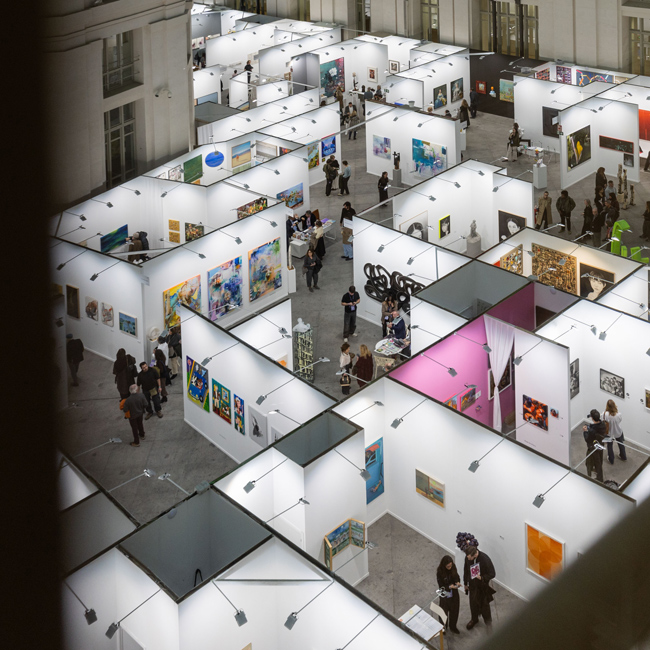
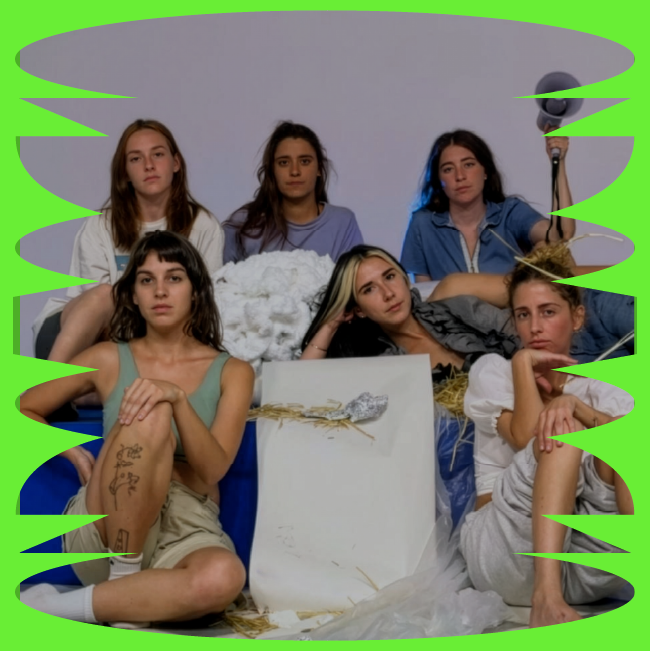
La New Gallery, Madrid gallery, hand in hand with the curator and blogger Semiramis Gonzalez has announced the second edition of La New Fair, an event to publicize and promote the work of younger artists, many of them recent graduates and have not yet entered the commercial circuit and are not represented by any gallery. Fresh Alternatives to the coolest art.
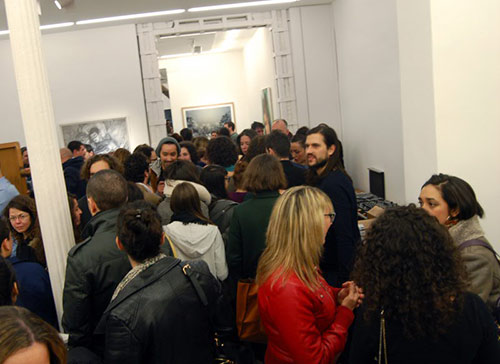
Taking advantage of the pull for the general public and collectors that represents the Madrid Art Week, with all the art galleries showing their best ideas and a trail of curious art aficionados and touring the various districts and various art fairs in the capital (Arch, Art Madrid, Justman,...) born - a year ago- La New Fair, a proposal which, according to the words of his coordinator and curator Semiramis González, "follows the line of Only opening. Noticias, eventos y amigos, a project curated by Tania Pardo and Guillermo Espinosa in La New Gallery, where for a few hours paid tribute to Walter Hopps through an exhibition open to those who wanted to participate. "In the end, it was an exhibition, but also a party and lA New Fair reflects this spirit to promote the talent of emerging artists who have not yet joined the gallery circuit, trade shows, market ...
The first call was a success, with over 300 applications or Spanish artists living in Spain, as individuals or as groups, with photography, mixed media, site-specifics, ... and so repeated the call for the second edition to be held during 19 and 20 February 2015. La New Fair provides an opportunity for artists to present their proposals in a professional environment, so they can contact the main cultural actors, audiences, critics, curators, press, collectors, galleries, museums, art centers,...
 
As explained on its website, the program is aimed at artists who are not in the commercial circuit's galleries and have no representation but yet have high-quality projects that deserve to be exposed, giving the opportunity to experience participation in this particular contemporary art fair. To Semiramis, "is a young generation but is leaving the skin in a very interesting and profound projects. They deserve our respect and desire to learn more. "
Basic information about the current call:
 
- It is essential that the artist is not represented by any gallery.
- All media and artistic disciplines are allowed provided that they can adapt to the gallery space.
- The prices of the works shall be solely determined by the artist.
- The project will be received until the day January 16, 2015.
 
The full announcement can be downloaded at the following link:
http://meetinarts.com/call/13858
 
Adriana M. Berges, Alberto Marcos Barbados, David Gonzalez-Carpio, David Ortega, Edurne Herran, Felix Coll, Joo Eun Bae: Among the 300 dossiers received in the last edition, 25, 25 artists who continue to take their first big break was selected Jorge Flores, Jorge Manes, José Carlos Naranjo Coto Kela, Martín Blázquez, Miren Pastor, Nauzet Mayor, Baena Nuria Oliver Behmann, Plastic Guajiras, Pol parrhesia Rigoberto Camacho, Rocio Guerrero, Santi Xander, Santiago Gómez Racing, Sebas Cabero Simon Arrebola and Xavi Garcia.


ART MADRID’26 INTERVIEW PROGRAM. CONVERSATIONS WITH ADONAY BERMÚDEZ


The painting of Daniel Bum (Villena, Alicante, 1994) takes shape as a space for subjective elaboration, where the figure emerges not so much as a representational motif but as a vital necessity. The repetition of this frontal, silent character responds to an intimate process: painting becomes a strategy for navigating difficult emotional experiences—an insistent gesture that accompanies and alleviates feelings of loneliness. In this sense, the figure acts as a mediator between the artist and a complex emotional state, linking the practice of painting to a reconnection with childhood and to a vulnerable dimension of the self.

The strong autobiographical dimension of his work coexists with a formal distance that is not the result of conscious planning, but rather functions as a protective mechanism. Visual restraint, an apparent compositional coolness, and an economy of means do not neutralize emotion; instead, they contain it, avoiding the direct exposure of the traumatic. In this way, the tension between affect and restraint becomes a structural feature of his artistic language. Likewise, the naïve and the disturbing coexist in his painting as inseparable poles, reflecting a subjectivity permeated by mystery and unconscious processes. Many images emerge without a clearly defined prior meaning and only reveal themselves over time, when temporal distance allows for the recognition of the emotional states from which they arose.


The Long Night. Oil, acrylic, and charcoal on canvas. 160 × 200 cm. 2024.


The human figure appears frequently in your work: frontal, silent, suspended. What interests you about this presence that seems both affirmative and absent?

I wouldn’t say that anything in particular interests me. I began painting this figure because there were emotions I couldn’t understand and a feeling that was very difficult for me to process. This character emerged during a very complicated moment in my life, and the act of making it—and remaking it, repeating it again and again—meant that, during the process, I didn’t feel quite so alone. At the same time, it kept me fresh and connected me to an inner child who was broken at that moment, helping me get through the experience in a slightly less bitter way.


Santito. Acrylic and oil on canvas. 81 × 65 cm. 2025.


There is a strong affective dimension in your work, but also a calculated distance, a kind of formal coldness. What role does this tension between emotion and restraint play?

I couldn’t say exactly what role that tension plays. My painting is rooted in the autobiographical, in memory, and in situations I have lived through that were quite traumatic for me. Perhaps, as a protective mechanism—to prevent direct access to that vulnerability, or to keep it from becoming harmful—that distance appears unconsciously. It is not something planned or controlled; it simply emerges and remains there.


Night Painter. Acrylic on canvas. 35 × 27 cm. 2025.


Your visual language oscillates between the naïve and the unsettling, the familiar and the strange. How do these tensions coexist for you, and what function do they serve in your visual exploration?

I think it reflects who I am. One could not exist without the other. The naïve could not exist without the unsettling; for me, they necessarily go hand in hand. I am deeply drawn to mystery and to the act of painting things that even I do not fully understand. Many of the expressions or portraits I create emerge from the unconscious; they are not planned. It is only afterwards that I begin to understand them—and almost never immediately. A considerable amount of time always passes before I can recognize how I was feeling at the moment I made them.


Qi. Acrylic on canvas. 81 × 65 cm. 2025.


The formal simplicity of your images does not seem to be a matter of economy, but of concentration. What kind of aesthetic truth do you believe painting can reach when it strips itself of everything superfluous?

I couldn’t say what aesthetic truth lies behind that simplicity. What I do know is that it is something I need in order to feel calm. I feel overwhelmed when there are too many elements in a painting, and I have always been drawn to the minimal—to moments when there is little, when there is almost nothing. I believe that this stripping away allows me to approach painting from a different state: more focused, more silent. I can’t fully explain it, but it is there that I feel able to work with greater clarity.


Crucifixion. Acrylic on canvas. 41 × 33 cm. 2025.


To what extent do you plan your work, and how much space do you leave for the unexpected—or even for mistakes?

I usually feel more comfortable leaving space for the unexpected. I am interested in uncertainty; having everything under control strikes me as rather boring. I have tried it on some occasions, especially when I set out to work on a highly planned series, with fixed sketches that I then wanted to translate into painting, but it was not something I identified with. I felt that a fundamental part of the process disappeared: play—that space in which painting can surprise even myself. For that reason, I do not tend to plan too much, and when I do, it is in a very simple way: a few lines, a plane of color. I prefer everything to happen within the painting itself.