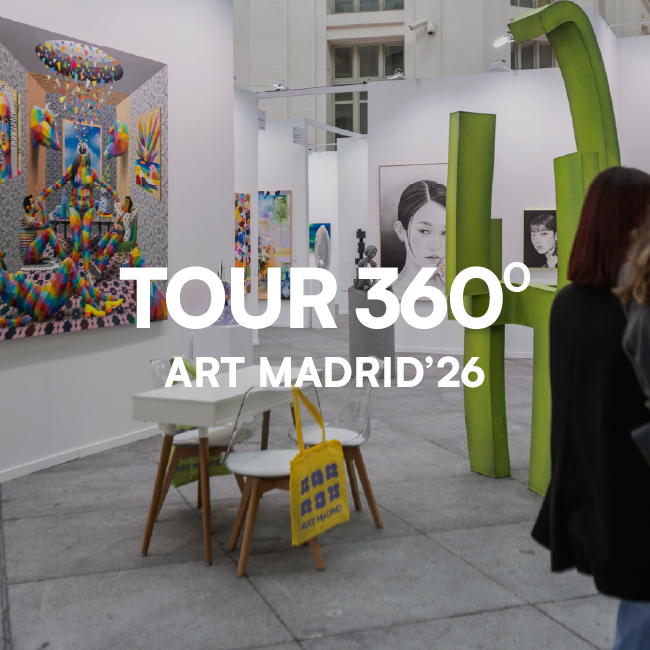
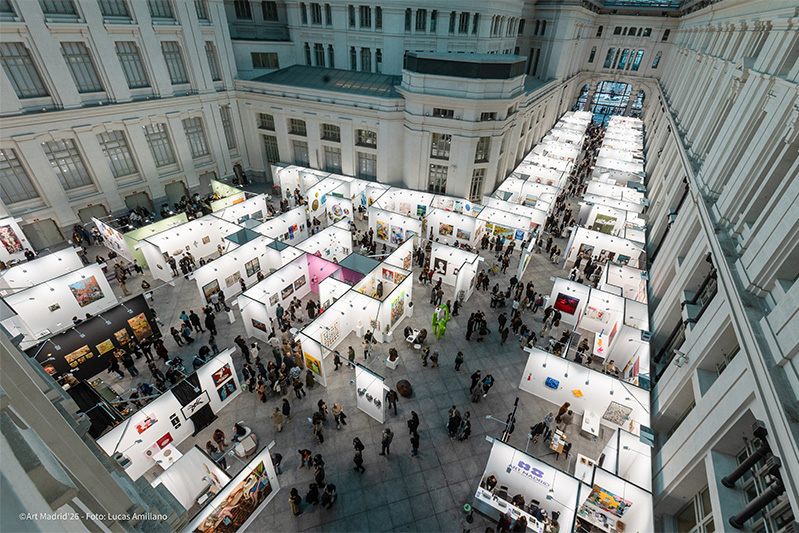
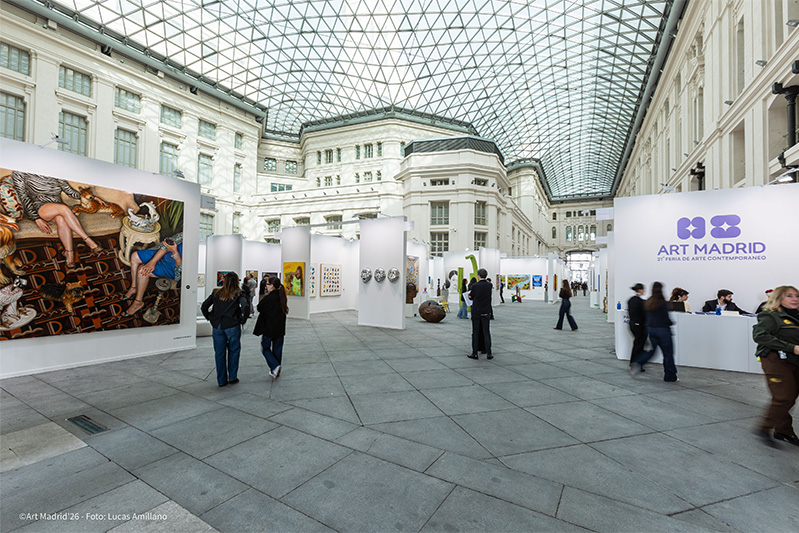
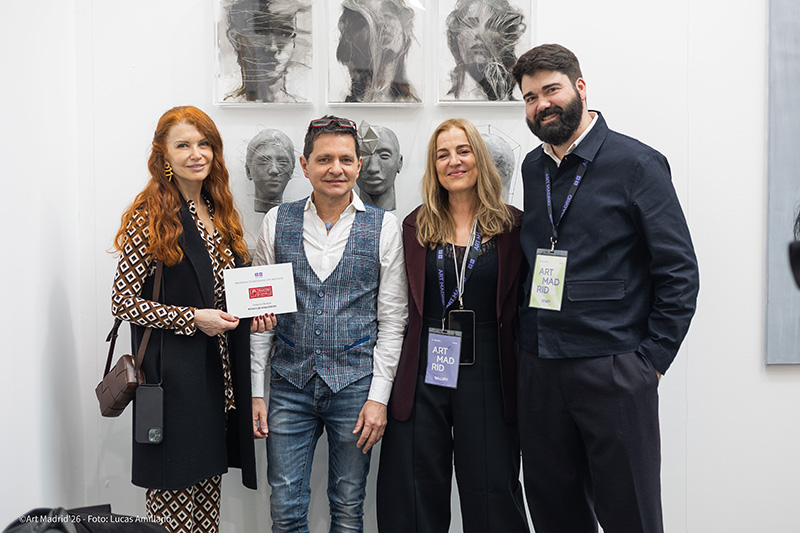
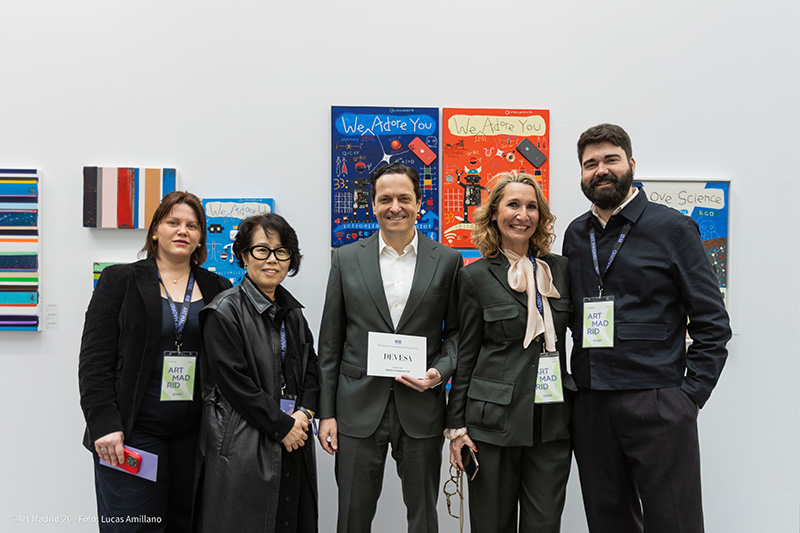
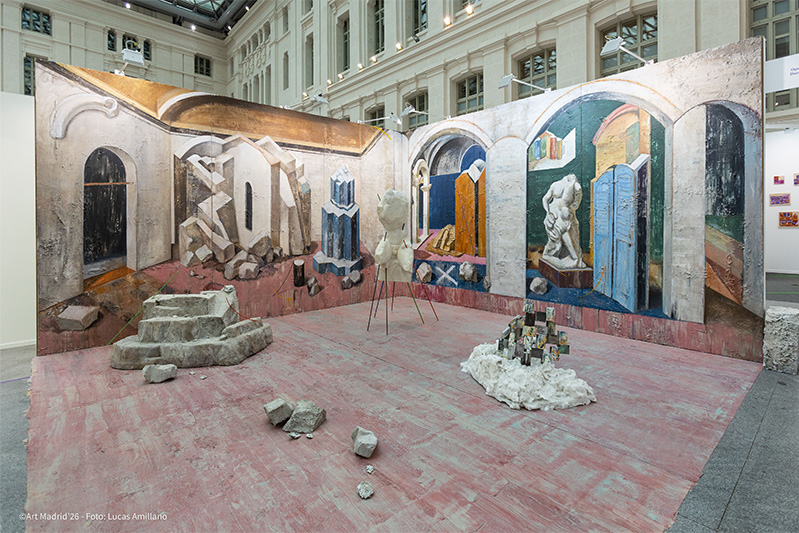
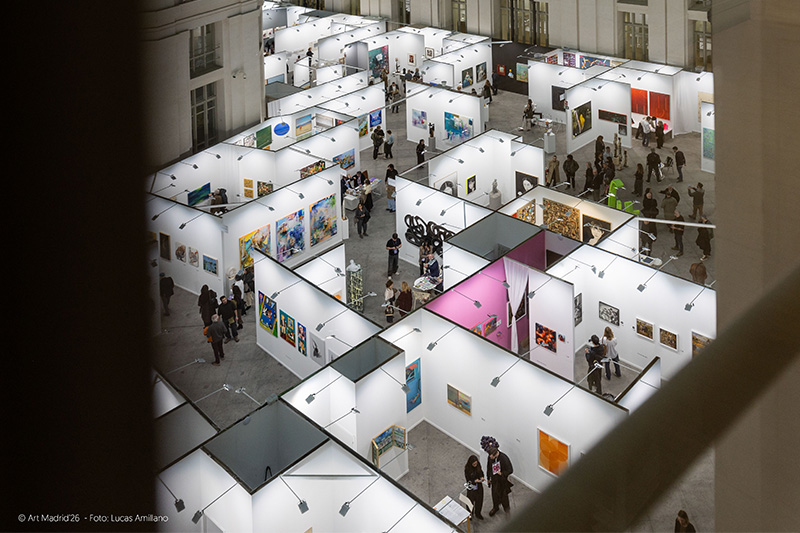
Art Madrid'26 – Marketing para empresas del sector del arte


Seminario Marketing para empresas del sector del arte
MADRID – 10 de Septiembre de 2015
de 09 a 14 horas
A las 11.00 habrá coffee break y networking
 

Lugar: Jardines de Sabatini(Apartamentos)

9.00 · Start me up Coffee PROGRAMA

9.20 · Apertura por The Art Market – Agency

Bloque 1: Estado del Arte Online y herramientas para adaptarse a él.

9.30 · “El Arte online en números”
por Andrew Mitchell del Fine Art Team de Hiscox
Andrew Mitchell se unió al Art and Private Client Team de Hiscox en 2010. Antes de unirse a Hiscox, Andrew trabajó para un banco de inversión internacional en moneda extranjera después de graduarse en el Mansfield College de Oxford. En diciembre 2013 Andrew fue nombrado Asegurador del Fine Art team.

10.00 · “Mejorar rendimiento y ventas: programas de gestión y páginas web”
por Josep Maria Vidaña de Label Grup
Fundador y CEO de LabelGrup, empresa creada en el año 1985 con el objetivo de dar cobertura a las distintas necesidades en tecnologías de la información a pequeñas y medianas empresas. LabelGrup integra todas esas capacidades en una plataforma diseñada para dar respuesta a las necesidades emergentes en el ámbito de la computación en la nube (Cloud Computing).

10.30 · Networking Coffee gracias a “Tendencias del Mercado del Arte”

Bloque 2: Marketing web y promoción internacional de catálogos

11.00 · “Entendiendo el SEO y el Pay Per Click”
por Abrahám Villar, Consultor de marketing online
Abrahám Villar es consultor de marketing online con especialidad en posicionamiento en buscadores SEO/SEM, analítica web y estrategia en redes sociales. Tiene certificaciones de Google Adwords Search & Display Certified Google Analytics Individual Qualification.

11.30 · “Conoce a tus competidores y sus armas online”
por The Art Market Agency
The Art Market Agency es la primera agencia de marketing especializada en empresas del sector arte. Ofrece servicios de comercialización internacional para mejorar la recepción de ofertas para sus lotes desde mercados internacionales, a través de la implantación de pujas “real time”, la promoción de catálogos en plataformas globales y el desarrollo de auditorías de negocio y de estrategias web.

Bloque 3: Presente y futuro del Arte Online

12.00 · “Promociona tu catálogo en plataformas internacionales”
por Juan A. Rodríguez
Head of Sales Spain Barnebys.com y fundador de The Art Market – Agency
Más de 10 años de experiencia en marketing digital en los sectores de Turismo y Arte, a finales de 2014 creó The Art Market – Agency para ayudar a las empresas del sector arte a posicionarse en el sector del #arte #online. En 2015 fue elegido por Barnebys.com para dirigir las ventas del primer buscador de subastas del mundo.

12.30 · “Del catálogo y la nota de prensa a la web y las redes sociales”
por Angélica Millán, Enrique del Río y Bárbara Vidal

Procedente del mundo de la museología, Angélica Millán es una apasionada del arte, experta en su versión contemporánea e interesada en las nuevas manifestaciones artísticas. Conocedora de la escena artística contemporánea y del mercado del arte, estudia los beneficios de la web 2.0 y las nuevas tecnologías.

Enrique del Río es Historiador del arte y MBA Entrepreneurship por la UCM. Fundador y CEO de WeCollect Club. Cofundador de hoyesarte.com, primer diario de arte en español y consultor en diferentes proyectos online. Antes fue fotógrafo publicitario para agencias como McCann-Erickson y Young & Rubicam.

Bárbara Vidal es socióloga y periodista cultural. Diplomada en Curaduría de Arte y Directora de comunicación de ArtMadrid Feria de Arte Contemporáneo. Gestora cultural y comisaria independiente, cofundadora del colectivo ElPezGlobo/Industria Cultural para la promoción de artistas contemporáneos.

14.00 · Visita opcional al museo de coches de Jardines Sabatini
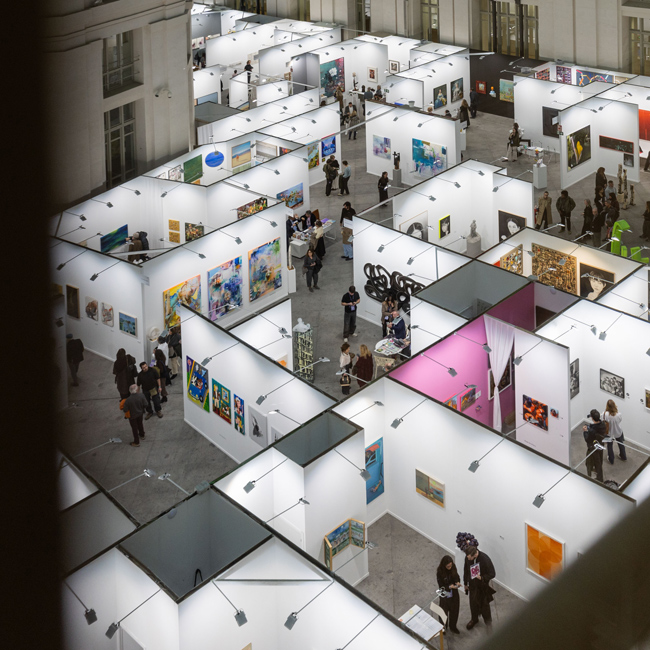

ART MADRID’26 INTERVIEW PROGRAM. CONVERSATIONS WITH ADONAY BERMÚDEZ


The work of Cedric Le Corf (Bühl, Germany, 1985) is situated in a territory of friction, where the archaic impulse of the sacred coexists with a critical sensibility characteristic of contemporary times. His practice is grounded in an anthropological understanding of the origin of art as a foundational gesture: the trace, the mark, the need to inscribe life in the face of the awareness of death.

The artist establishes a complex dialogue with the Spanish Baroque tradition, not through stylistic mimicry, but through the emotional and material intensity that permeates that aesthetic. The theatricality of light, the embodiment of tragedy, and the hybridity of the spiritual and the carnal are translated in his work into a formal exploration, where underlying geometry and embedded matter generate perceptual tension.

In Le Corf’s practice, the threshold between abstraction and figuration is not an opposition but a site of displacement. Spatial construction and color function as emotional tools that destabilize the familiar. An open methodology permeates this process, in which planning coexists with a deliberate loss of control. This allows the work to emerge as a space of silence, withdrawal, and return, where the artist confronts his own interiority.


The Fall. 2025. Oil on canvas.195 × 150 cm.


In your work, a tension can be perceived between devotion and dissidence. How do you negotiate the boundary between the sacred and the profane?

In my work, I feel the need to return to rock art, to the images I carry with me. From the moment prehistoric humans became aware of death, they felt the need to leave a trace—marking a red hand on the cave wall using a stencil, a symbol of vital blood. Paleolithic man, a hunter-gatherer, experienced a mystical feeling in the presence of the animal—a form of spiritual magic and rituals linked to creation. In this way, the cave becomes sacred through the abstract representation of death and life, procreation, the Venus figures… Thus, art is born. In my interpretation, art is sacred by essence, because it reveals humankind as a creator.


Between Dog and Wolf II. 2025. Oil on canvas. 97 × 70 cm.


Traces of the Spanish Baroque tradition can be seen in your work. What do you find in it that remains contemporary today?

Yes, elements of the Spanish Baroque tradition are present in my work. In the history of art, for example, I think of Arab-Andalusian mosaics, in which I find a geometry of forms that feels profoundly contemporary. In Spanish Baroque painting and sculpture, one recurring theme is tragedy: death and the sacred are intensely embodied, whether in religious or profane subjects, in artists such as Zurbarán, Ribera, El Greco, and also Velázquez. I am thinking, for example, of the remarkable equestrian painting of Isabel of France, with its geometry and nuanced portrait that illuminates the painting.

When I think about sculpture, the marvelous polychrome sculptures of Alonso Cano, Juan de Juni, or Pedro de Mena come to mind—works in which green eyes are inlaid, along with ivory teeth, horn fingernails, and eyelashes made of hair. All of this has undoubtedly influenced my sculptural practice, both in its morphological and equestrian dimensions. Personally, in my work I inlay porcelain elements into carved or painted wood.


Between Dog and Wolf I. 2025. Oil on canvas. 97 × 70 cm.


What interests you about that threshold between the recognizable and the abstract?

For me, any representation in painting or sculpture is abstract. What imposes itself is the architectural construction of space, its secret geometry, and the emotion produced by color. It is, in a way, a displacement of the real in order to reach that sensation.


The Anatomical Angel. 2013. Ash wood and porcelain. 90 × 15 × 160 cm.


Your work seems to move between silence, abandonment, and return. What draws you toward these intermediate spaces?

I believe it is by renouncing the imitation of external truth, by refusing to copy it, that I reach truth—whether in painting or in sculpture. It is as if I were looking at myself within my own subject in order to better discover my secret, perhaps.


Justa. 2019. Polychrome oak wood. 240 × 190 × 140 cm.


To what extent do you plan your work, and how much space do you leave for the unexpected—or even for mistakes?

It is true that, on occasions, I completely forget the main idea behind my painting and sculpture. Although I begin a work with very clear ideas—preliminary drawings and sketches, preparatory engravings, and a well-defined intention—I realize that, sometimes, that initial idea gets lost. It is not an accident. In some cases, it has to do with technical difficulties, but nowadays I also accept starting from a very specific idea and, when faced with sculpture, wood, or ceramics, having to work in a different way. I accept that.