Art Madrid'26 – Santiago Ydáñez and the heartbreaking beauty


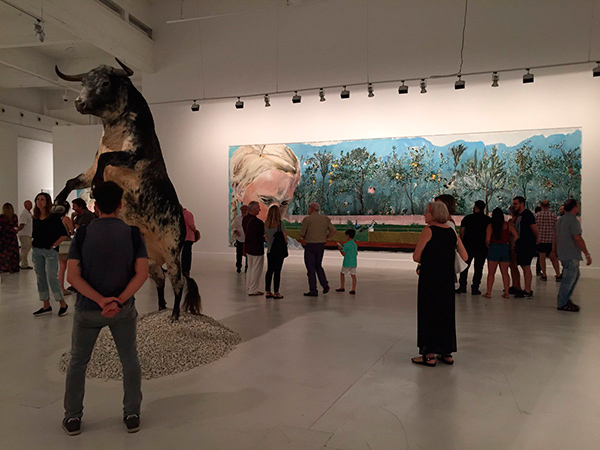
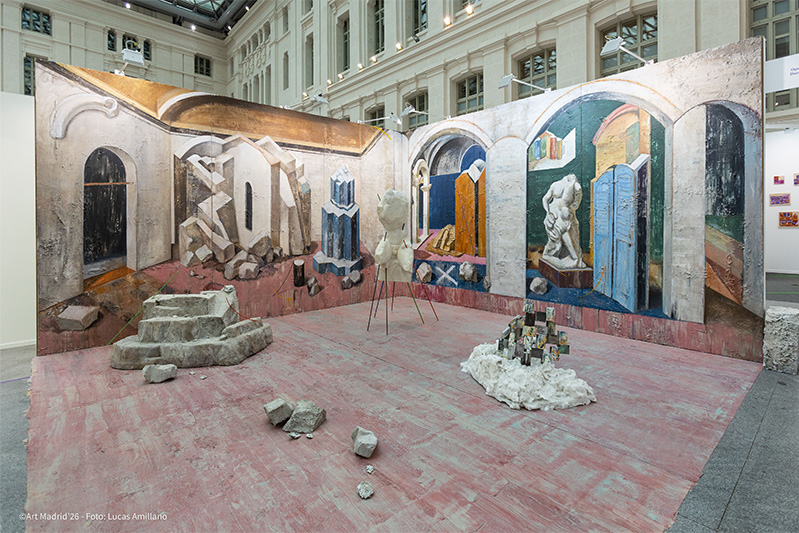
El Jardín de las Delicias, 2017 (Al fondo)


Santiago Ydáñez studied Fine Art in Granada and for the last 14 years he has divided his time between Jaén and Berlin. He was born in 1969, in the town of Puente de Génave, Jaén. He was influenced by the contact with earth and the countryside, animals and hunting. These features will create his symbolic world: erothic or forbiden sensuality, huge and strident portraits, “dismemberments” as a type of vanitas, defiant animals close-ups, art history reinterpretation, etc. The axial line of his work rests on the basic, primitive feelings shared by both humans and animals.
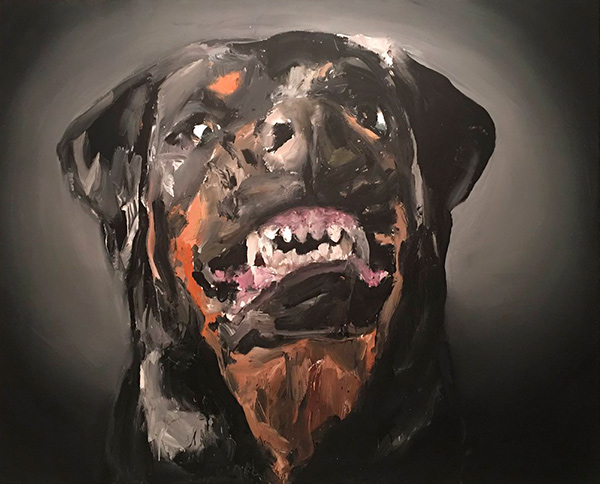


Sin título 2014


The artist uses photography as source material. Taking it as an starting point, he firstly makes a quick charcoal sketch and then picks up his brushes. He paints swiftly and impulsively, applying energetic, grey and black strokes in a rapid brushwork. These pieces cause different emotions in viewers: pain, pleasure, ecstasy and nostalgia. The artist use different support surfaces: canvases, books or objects he picks up at markets.
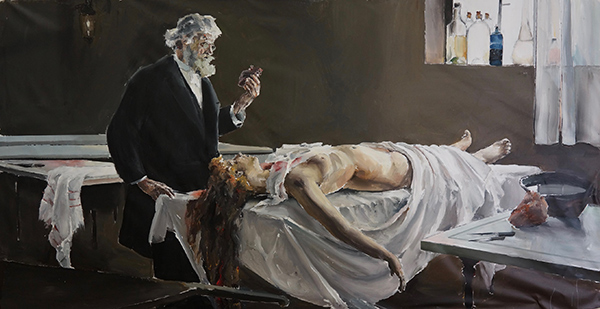


Versión de la obra ¡…Y tenía corazón! / Anatomía del corazón de de Enrique Simonet


The exhibition features selected paintings from the last decade of his career. Among them, `El Jardín de las Delicias (2017)´, an enormous 315 x 1000 cm canvas, shows the face of a blonde girl whose melancholy gaze speaks of absence, versus the tranquil beauty of a lost paradise. It is a criticism of cultural and ethical decadence that brought Germany to Nazism.
His exploration of the philosophical links between original and copy can be seen in a version painted specifically for CAC Málaga of Enrique Simonet's work ¡… Y tenía corazón! / Anatomía del corazón (1890), now exhibited in the Museo de Málaga, that renders a doctor making an autopsy to a prostitute. Apart from these pieces, we can also find objects such as cutlery boxes, frames, a mirror and jewellery cases, on which he paints or draws the same motifs and characters that appear in his paintings.
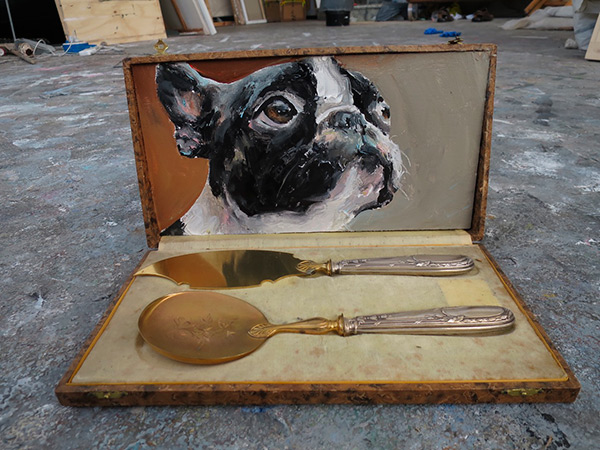


Objeto intervenido


Ydáñez’s artwork can be admired until the 24th of September in Contemporary Art Centre Málaga, where can be also visited the permanent collection, several summer workshops or Danielle Van Zadelhoff exhibition, dutch photographer.


The circle as critical device and the marker as contemporary catalyst


POSCA, the Japanese brand of water-based paint markers, has established itself since the 1980s as a central instrument within contemporary artistic practices associated with urban art, illustration, graphic design, and interdisciplinary experimentation. Its opaque, highly pigmented, fast-drying formula—compatible with surfaces as diverse as paper, wood, metal, glass, and textiles—has enabled a technical expansion that extends beyond the traditional studio, engaging public space, objects, and installation practices alike.


In this context, POSCA operates as more than a working tool; it functions as a material infrastructure for contemporary creation. It is a technical device that enables immediacy of gesture without sacrificing chromatic density or formal precision. Its versatility has contributed to the democratization of languages historically associated with painting, fostering a more horizontal circulation between professional and amateur practices.

This expanded dimension of the medium finds a particularly compelling conceptual framework in The Rolling Collection, a traveling exhibition curated by ADDA Gallery. The project proposes a collective investigation of the circular format, understood not merely as a formal container but as a symbolic structure and a field of spatial tension.


Historically, the circle has operated as a figure of totality, continuity, and return. Within the framework of The Rolling Collection, the circular format shifts away from its classical symbolic charge toward an experimental dimension, becoming a support that challenges the hegemonic rectangular frontality of the Western pictorial tradition. The absence of angles demands a reconsideration of composition, balance, and directional flow.

Rather than functioning as a simple formal constraint, this condition generates a specific economy of visual decisions. The curved edge intensifies the relationship between center and periphery, dissolves internal hierarchies, and activates both centrifugal and centripetal dynamics. The resulting body of work interrogates the very processes through which images are constructed.


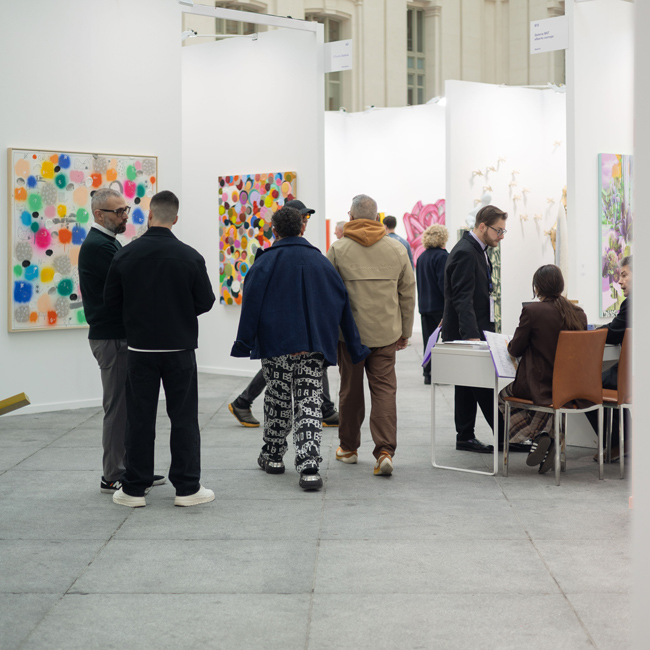
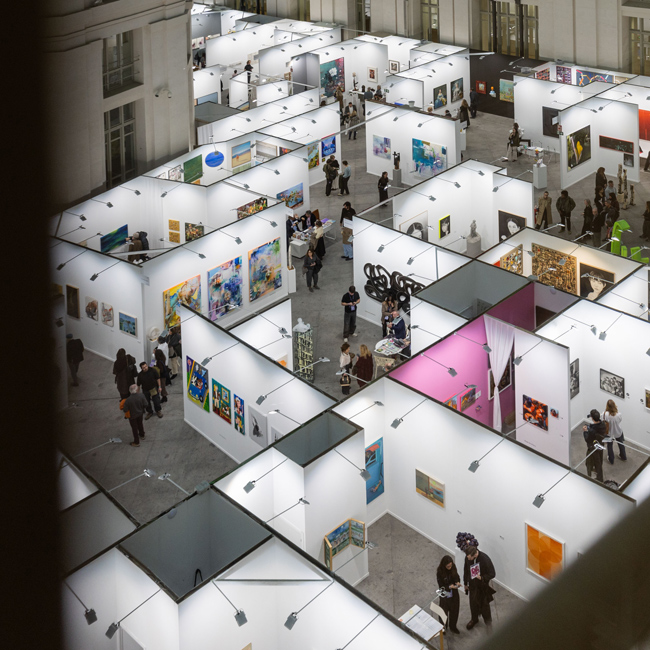
Following its 2025 tour through Barcelona, Ibiza, Paris, London, and Tokyo, a selection of the exhibition is presented at Art Madrid, reinforcing its international scope and its adaptability to diverse cultural contexts. The proposal for Art Madrid’26 brings together artists whose practices unfold at the intersection of urban art, contemporary illustration, and hybrid methodologies: Honet, Yu Maeda, Nicolas Villamizar, Fafi, Yoshi, and Cachetejack.

While their visual languages vary—ranging from graphic and narrative approaches to chromatic explorations charged with gestural intensity—the curatorial framework establishes a shared axis: a free, experimental, and distinctly color-driven attitude. In this sense, color functions as a conceptual structure that articulates the works while simultaneously connecting them to the specific materiality of POSCA.


The marker’s inherent chromatic vibrancy engages in dialogue with the formal assertiveness of the circle, generating surfaces in which saturation and contrast take center stage. The tool thus becomes embedded within the exhibition discourse, operating as a coherent extension of the participating artists’ aesthetic vocabularies.

One of the project’s most significant dimensions is the active incorporation of the public. Within the exhibition space—activated by POSCA during Art Madrid’26—visitors will be invited to intervene on circular supports installed on the wall using POSCA markers, thereby symbolically integrating themselves into The Rolling Collection during its presentation in Madrid.


This strategy introduces a relational dimension that destabilizes the notion of the closed artwork. Authorship becomes decentralized, and the exhibition space transforms into a dynamic surface for the accumulation of gestures. From a theoretical standpoint, the project may be understood as aligning with participatory practices that, without compromising formal coherence, open the artistic dispositif to contingency and multiplicity.

The selection of POSCA as the instrument for this collective intervention is deliberate. Its ease of use, line control, and compatibility with multiple surfaces ensure an accessible experience without diminishing the visual potency of the outcome. In this way, the marker operates as a mediator between professional practice and spontaneous experimentation, dissolving technical hierarchies.


The title itself, The Rolling Collection, suggests a collection in motion—unfixed to a single space or definitive configuration. Its itinerant nature, combined with the incorporation of local interventions, transforms the project into an organism in continuous evolution. Within this framework, POSCA positions itself as a material catalyst for a transnational creative community. Long associated with urban scenes and emerging practices, the brand reinforces its identity as an ally of open, experimental, and collaborative processes.

POSCA x The Rolling Collection should not be understood merely as a collaboration between a company and a curatorial initiative; rather, it constitutes a strategic convergence of tool, discourse, and community. The project proposes a reflection on format, the global circulation of contemporary art, and the expansion of authorship, while POSCA provides the technical infrastructure that makes both individual works and collective experience possible.