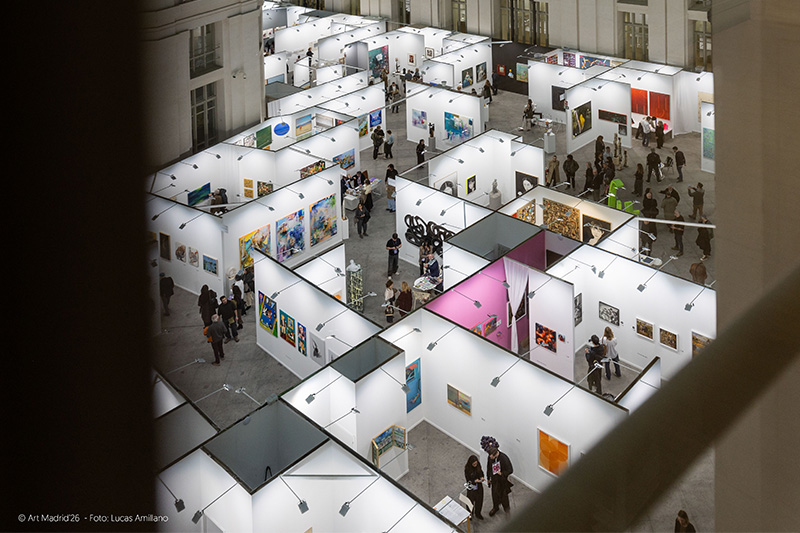
Art Madrid'26 – The Great depression documentary and photography at IVAM Valencia


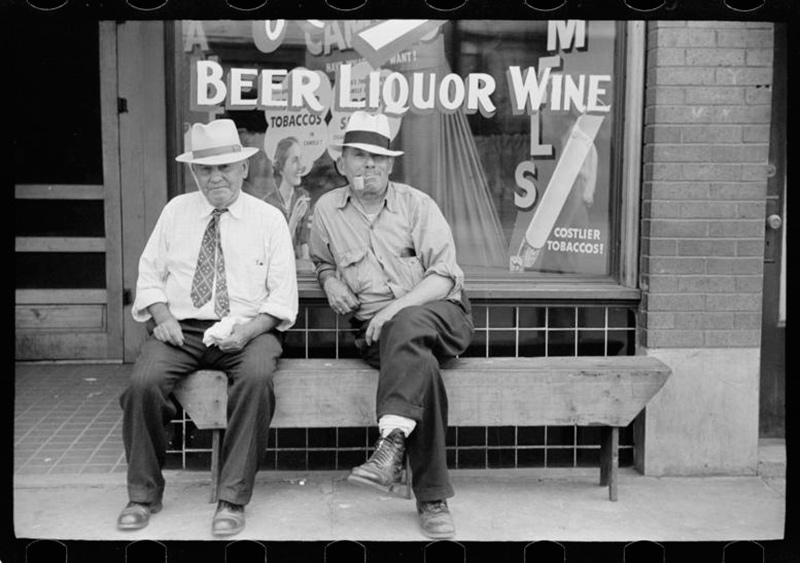
The financial meltdown after the crash of the US stock market in 1929 starts one of the saddest periods in our recent history, in contrast to the so-called "happy 20s", full of optimism of the middle classes in the welfare state. The Great Depression, however, was time of hunger, forced migration, of unemployment rates never seen before, the American dream vanished... and there was a new style of photography, "Photography of the truth" .


Before, photography had sought pictorialism and the formal complexity of Soviet avant-garde (photomontage, new vision, ...). Now, photographers portrayed the changes in American popular culture with simplicity and sharpness, checking reality without additives.
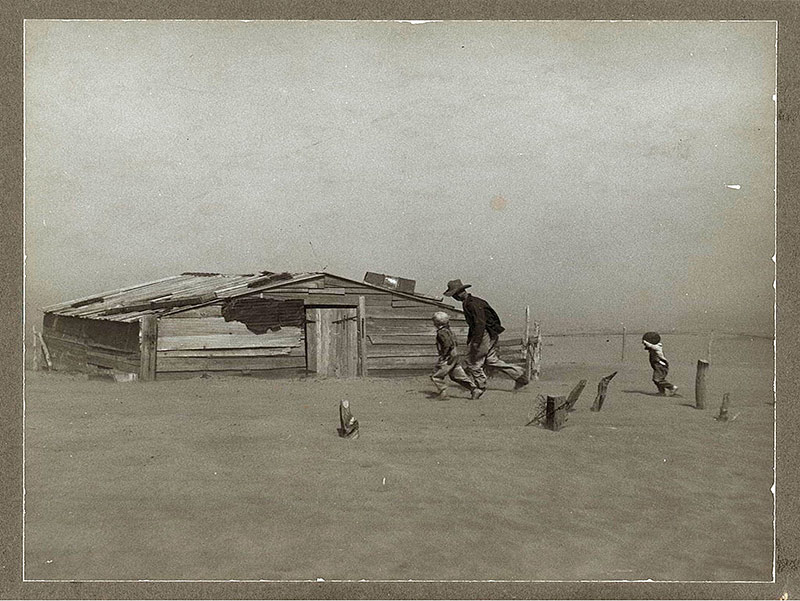


Now, the IVAM of Valencia collects these portraits and life stories, these landscapes that allowed us - the future generations- to know the depth of the US economic crisis of the 30s in an exhibition entitled "Documentary Photography in America. 30s".
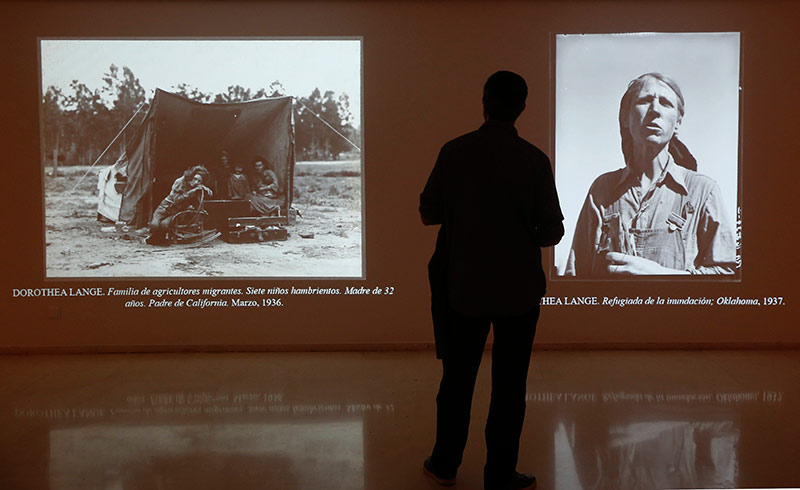


A selection of 200 photos of some of the most important photographers of the time as Walker Evans, Dorothea Lange, Carl Mydans, Arthur Rothstein, Jack Delano, Marion Post, Gordon Parks and Russell Lee, all members of the program of the Farm Security Administration (FSA. 1935-1944), developed within the Roosevelts's New Deal to "demonstrate graphically how his people rose from poverty", explains Ramón Escrivá IVAM conservative, but, in contrast, was the largest coral portrait of desolation, misery and the emancipation of the American farmer with clean portraits of the first immigrants arrived at Ellis Island, working children, starving mothers, evicted families...



Escriva emphasizes that "it is the first time that someone carries out such a study of documentation like this in Spain". A project - the FSA - that recorded more than 270,000 images (nowadays, 170,000 of these photographs are preserved by the American Congress), of the rural farmers and peasants of the United States, plus the identity of a country that had broken its pattern of life.
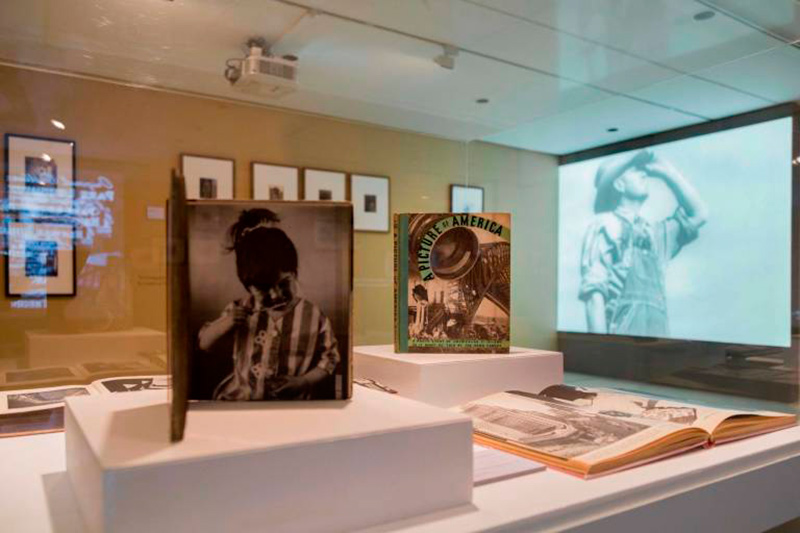


To contextualize the works on display, the exhibition includes documentary films, illustrated magazines of the time like Life, Look, or Fortune and photo books, as the first made by the MOMA in New York in 1938. These media were instrumental in spreading the project FSA and an essential documentation to understanding the political propaganda of the time.
The circle as critical device and the marker as contemporary catalyst


POSCA, the Japanese brand of water-based paint markers, has established itself since the 1980s as a central instrument within contemporary artistic practices associated with urban art, illustration, graphic design, and interdisciplinary experimentation. Its opaque, highly pigmented, fast-drying formula—compatible with surfaces as diverse as paper, wood, metal, glass, and textiles—has enabled a technical expansion that extends beyond the traditional studio, engaging public space, objects, and installation practices alike.


In this context, POSCA operates as more than a working tool; it functions as a material infrastructure for contemporary creation. It is a technical device that enables immediacy of gesture without sacrificing chromatic density or formal precision. Its versatility has contributed to the democratization of languages historically associated with painting, fostering a more horizontal circulation between professional and amateur practices.

This expanded dimension of the medium finds a particularly compelling conceptual framework in The Rolling Collection, a traveling exhibition curated by ADDA Gallery. The project proposes a collective investigation of the circular format, understood not merely as a formal container but as a symbolic structure and a field of spatial tension.


Historically, the circle has operated as a figure of totality, continuity, and return. Within the framework of The Rolling Collection, the circular format shifts away from its classical symbolic charge toward an experimental dimension, becoming a support that challenges the hegemonic rectangular frontality of the Western pictorial tradition. The absence of angles demands a reconsideration of composition, balance, and directional flow.

Rather than functioning as a simple formal constraint, this condition generates a specific economy of visual decisions. The curved edge intensifies the relationship between center and periphery, dissolves internal hierarchies, and activates both centrifugal and centripetal dynamics. The resulting body of work interrogates the very processes through which images are constructed.


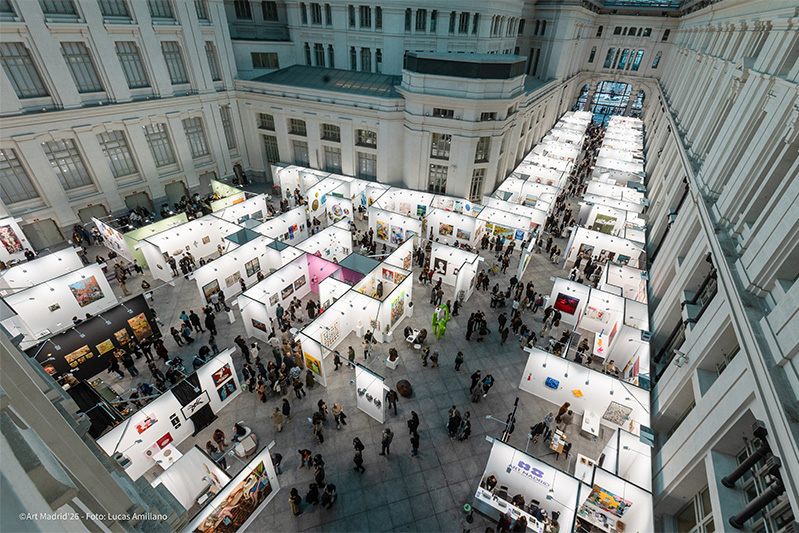
Following its 2025 tour through Barcelona, Ibiza, Paris, London, and Tokyo, a selection of the exhibition is presented at Art Madrid, reinforcing its international scope and its adaptability to diverse cultural contexts. The proposal for Art Madrid’26 brings together artists whose practices unfold at the intersection of urban art, contemporary illustration, and hybrid methodologies: Honet, Yu Maeda, Nicolas Villamizar, Fafi, Yoshi, and Cachetejack.

While their visual languages vary—ranging from graphic and narrative approaches to chromatic explorations charged with gestural intensity—the curatorial framework establishes a shared axis: a free, experimental, and distinctly color-driven attitude. In this sense, color functions as a conceptual structure that articulates the works while simultaneously connecting them to the specific materiality of POSCA.


The marker’s inherent chromatic vibrancy engages in dialogue with the formal assertiveness of the circle, generating surfaces in which saturation and contrast take center stage. The tool thus becomes embedded within the exhibition discourse, operating as a coherent extension of the participating artists’ aesthetic vocabularies.

One of the project’s most significant dimensions is the active incorporation of the public. Within the exhibition space—activated by POSCA during Art Madrid’26—visitors will be invited to intervene on circular supports installed on the wall using POSCA markers, thereby symbolically integrating themselves into The Rolling Collection during its presentation in Madrid.


This strategy introduces a relational dimension that destabilizes the notion of the closed artwork. Authorship becomes decentralized, and the exhibition space transforms into a dynamic surface for the accumulation of gestures. From a theoretical standpoint, the project may be understood as aligning with participatory practices that, without compromising formal coherence, open the artistic dispositif to contingency and multiplicity.

The selection of POSCA as the instrument for this collective intervention is deliberate. Its ease of use, line control, and compatibility with multiple surfaces ensure an accessible experience without diminishing the visual potency of the outcome. In this way, the marker operates as a mediator between professional practice and spontaneous experimentation, dissolving technical hierarchies.


The title itself, The Rolling Collection, suggests a collection in motion—unfixed to a single space or definitive configuration. Its itinerant nature, combined with the incorporation of local interventions, transforms the project into an organism in continuous evolution. Within this framework, POSCA positions itself as a material catalyst for a transnational creative community. Long associated with urban scenes and emerging practices, the brand reinforces its identity as an ally of open, experimental, and collaborative processes.

POSCA x The Rolling Collection should not be understood merely as a collaboration between a company and a curatorial initiative; rather, it constitutes a strategic convergence of tool, discourse, and community. The project proposes a reflection on format, the global circulation of contemporary art, and the expansion of authorship, while POSCA provides the technical infrastructure that makes both individual works and collective experience possible.