Art Madrid'26 – quien es Ana Mendieta

Dedicamos en su día nuestra noticia a la exposición de Carl André en la Casa Velazquez de Madrid y, en justicia, tenemos que dedicar otro día a la que fue su esposa Ana Mendieta, una artista rodeada de espíritus, de sombras y de misterio hasta su muerte. Miles de voces en todo el mundo reclaman desde hace tiempo: ¿Dónde está Ana Mendieta?
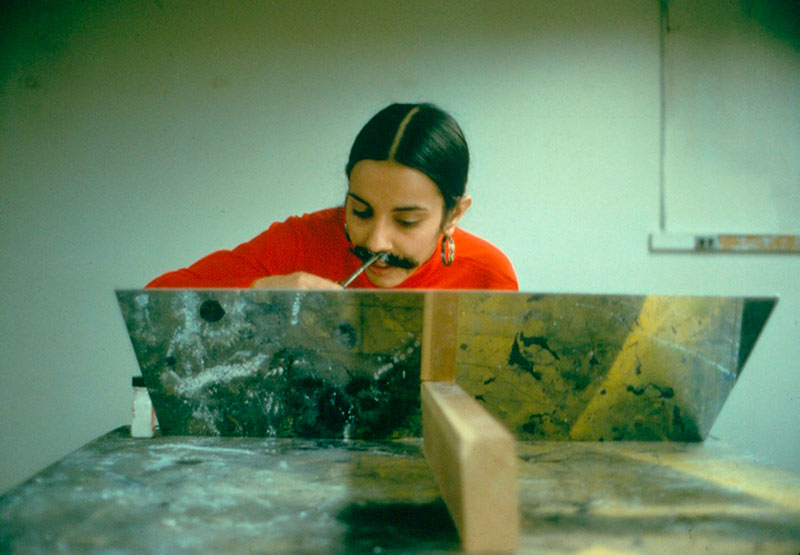


“Silenciada”, si hubiera que encontrar un adjetivo para describir la obra de la artista cubana Ana Mendieta (La Habana, 1948 - Nueva York, 1985) ése sería “silenciada”, un adjetivo sangrante en medio de otros muchos como reivindicativa, espiritual, eco-feminista, incómoda, filosófica, profunda, desgarradora, personal… pero silenciada al fin y al cabo.


La vida de Ana Mendieta acabó de manera precipitada un 8 de septiembre de 1985 cuando su cuerpo cayó a plomo desde la terraza de su apartamento, en en el piso 34 de de un edificio en el Greenwich Village neoyorkino. No hubo un solo testigo de cómo pudo suceder el “accidente”. Bueno, sólo uno, el que era su marido desde hacía 8 meses, el escultor Carl André.


Según los testimonios de los vecinos, se oyó una fuerte discusión entre la pareja, se oyeron golpes, muebles movidos, llantos y gritos, el último un largo y descarnado “¡Noooo!” de la mujer que caía al vacío, de Ana Mendieta. Las pruebas, los arañazos en la cara y en los brazos, las contradicciones y la frialdad en la narración de los hechos apuntaban a André, pero la justicia lo absolvió 3 años después, tras una campaña de apoyo de todo el mundo del arte que resolvió que se trató de un accidente doméstico en el que fué determinante la salud mental de Ana Mendieta, según alegó el abogado, de su marido, una salud mental debilitada, extrema y con tendencias suicidas.
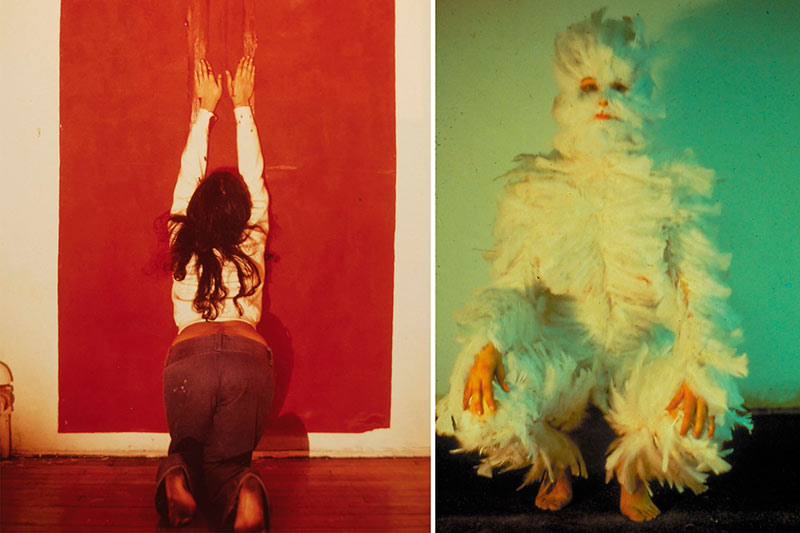


Nada más lejos de la realidad. Ana Mendieta era una superviviente, una nómada, una exiliada de Cuba, criada junto a sus hermanas entre el trabajo y los estudios universitarios, y el trabajo y sus investigaciones personales acerca de conceptos universales como la libertad, los derechos civiles, lo fronterizo, el género, la ecología, la espiritualidad, el imperialismo,... Mendieta usaba su propio cuerpo como territorio de experimentación, su propia “identidad fronteriza” - como la han llamado sus estudiosos - como canal de expresión artística y relacionaba ambos con la naturaleza salvaje como seña de identidad de su obra.


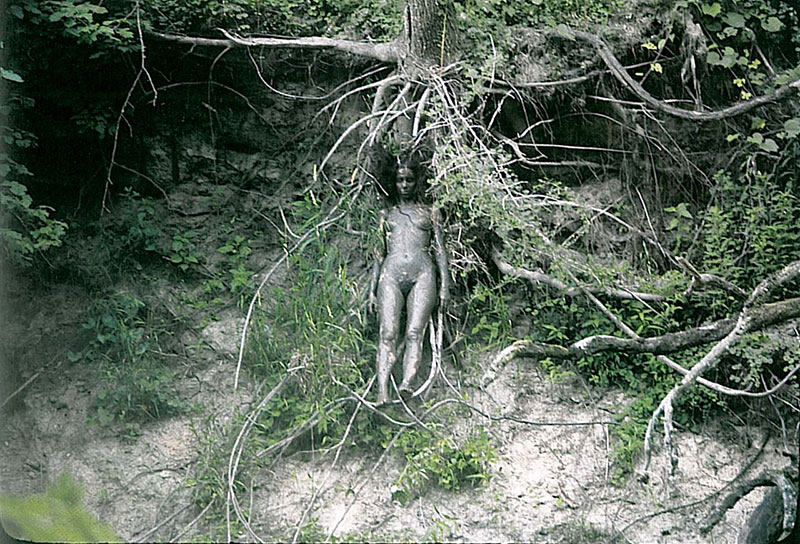
Fué la escritora Jane Blocker la que se preguntó directamente, en 1999, ¿Quién es Ana mendieta?, en su libro Where Is Ana Mendieta?: Identity, Performativity and Exile, un ensayo sobre la obra de la cubana y sobre su vida, en el que asegura que  “la obsesión que Mendieta tenía con la idea del exilio como parte de su identidad estaba relacionada más con uno de los peligros que todos enfrentamos en la sociedad contemporánea, el hecho de ser ‘ciudadanos fronterizos’”. Ese limbo, ese no-ser se evidencia en las series de siluetas en la tierra que la artista realizó en México, en la que su cuerpo desnudo se funde en el barro y en el agua hasta casi desaparecer, cubierto de ramas y flores, en un género creado por ella que se llamó “earth-body”, combinación del Body Art, el Land Art y la Performance.
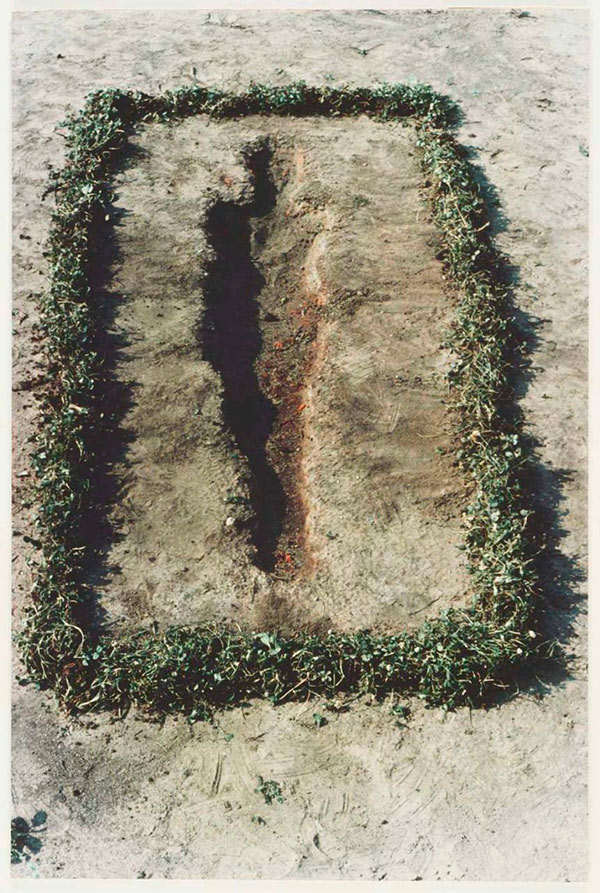
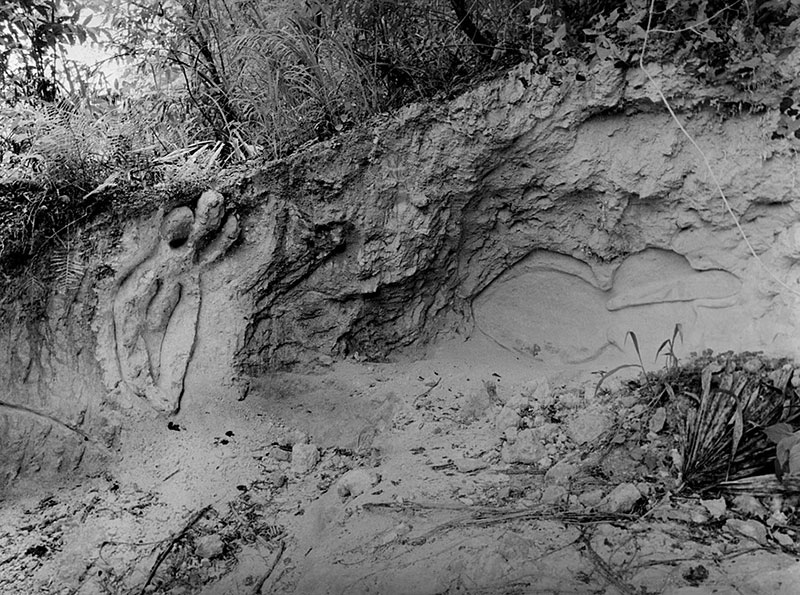


La sangre es otro elemento muy presente en la obra de Mendieta, un elemento que, precísamente, da carnalidad y presencia a los cuerpos, pinta huellas y vestigios, es origen y el muerte. Con la sangre, con el paisaje, con su cuerpo, Mendieta denunciaba la violencia de género en particular y todos los tipos de violencia que se ejercen sobre los individuos a diario: violencia política, violencia verbal, violencia sonora, psicológica, a través de mecanismos socializados, a través de los medios de comunicación, las campañas publicitarias…
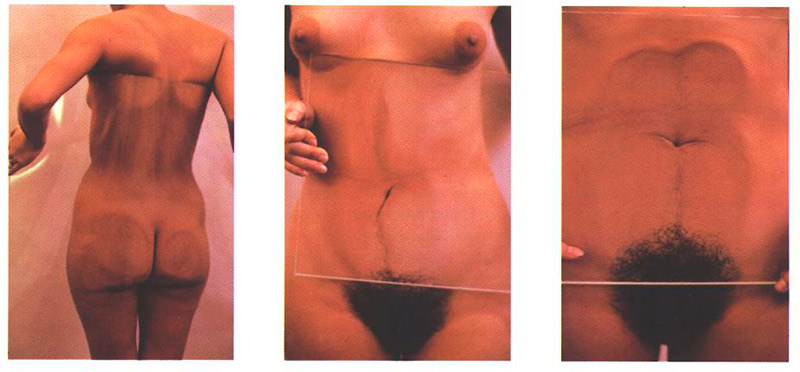


Una obra y una personalidad así es complicado que desaparezca sin más, y de eso se encargan colectivos como las Guerrilla Girls o el Women’s Action Coalition, que en 1992, minutos antes de la inauguración en el Guggenheim Museum de una enorme exposición en la que estaba carl André, reunieron a más de 500 personas que repartían fotocopias de la cara de la cubana mientras gritaban “Where is Ana Mendieta?”


En mayo de 2015, una historia similar ha ocurrido en la exposición de Carl André organizada por el museo Reina Sofía. Ocho mujeres entraron a las salas de la Casa de Velázquez, manchadas de sangre y en silencio hasta que una de ellas arrancó una letanía:


Ana Mendieta (bis)
No te veo aquí (bis)
¿dónde están tus obras? (bis)
¿dónde está tu cuerpo? (bis)
No te veo aquí ni allí ni allí (silencio)
Ana Mendieta (bis)
Tu muerte es un silencio (bis)
Nadie menciona tu nombre (bis)
¿de quién hablan aquí dentro? (Silencio)
Ana Mendita (bis)
Tu última palabra fue no
(todas) NO
Ana Mendieta (bis)
Nosotras aún estamos aquí
Nosotras también
No te vamos a olvidar
Nosotras tampoco
y frente a la injusticia
injusticia
y tu sangre
tu sangre
Usamos nuestros cuerpos en señal de protesta
protesta
y gritamos con tu cuerpo arrojado al vacío
NO. No no no no…


Que se siga uno preguntando siempre: ¿Quién es Ana Mendieta? Que siga la duda quemándonos los dedos. Que siga ese hueco ardiente en la historia de nuestro arte reciente. Que no se apague Mendieta.

https://www.youtube.com/watch?v=XGMWsHnyTf0
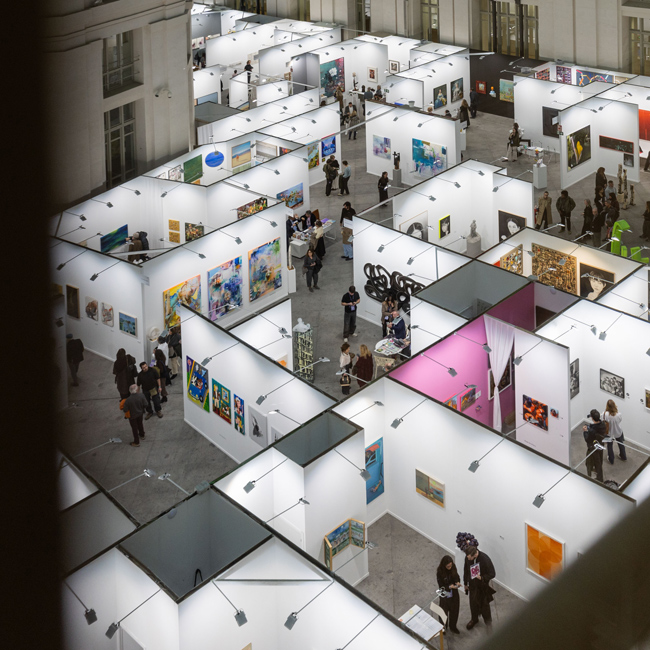
 

ART MADRID '26: 21 YEARS OF CONTEMPORARY ART


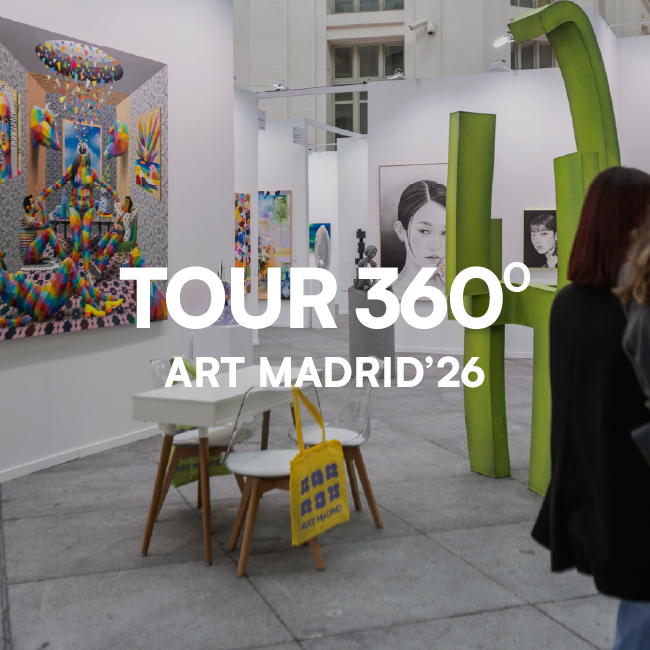
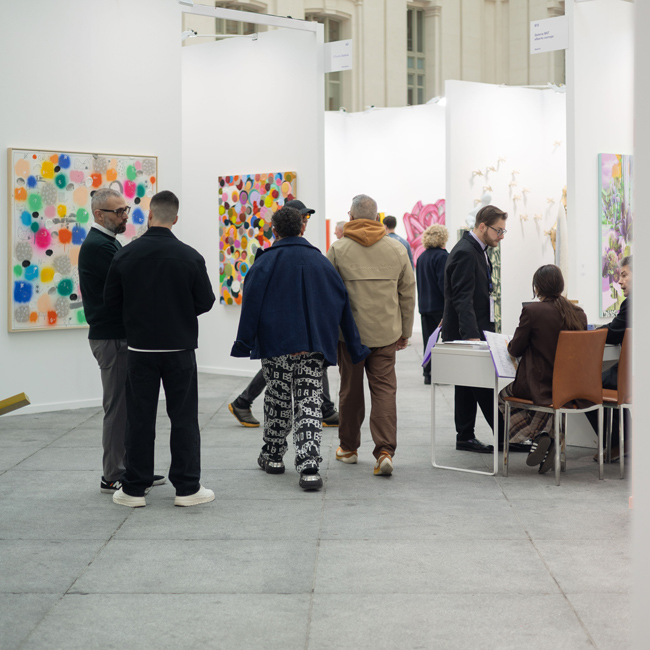
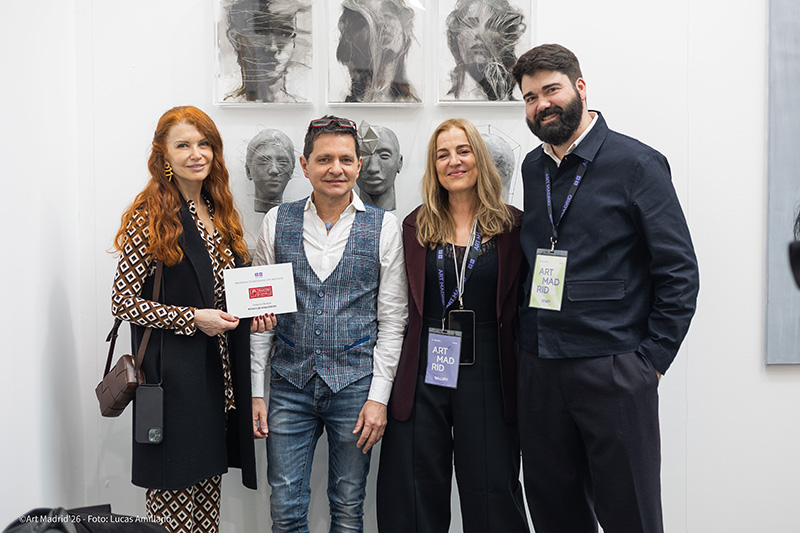
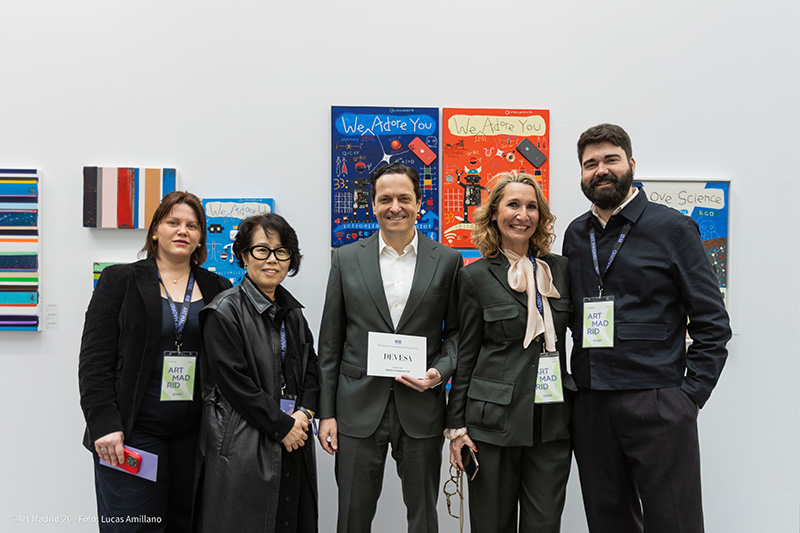
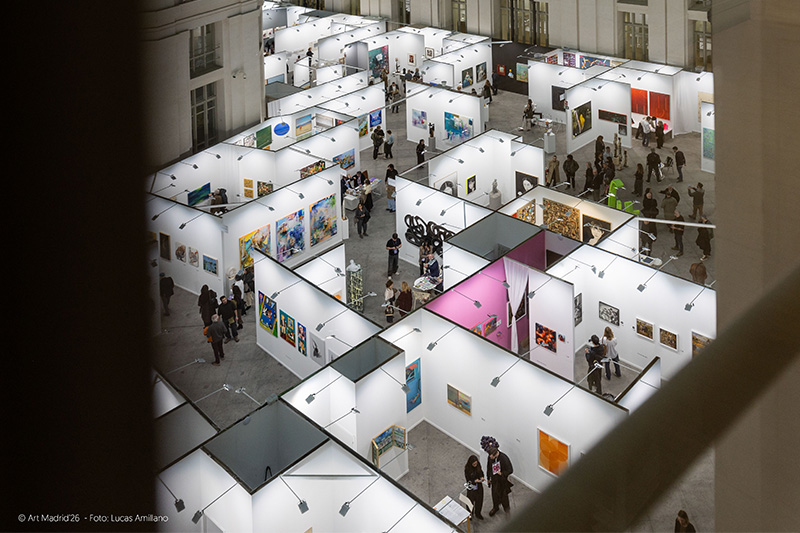
In 2026, Art Madrid will celebrate its 21st edition, further consolidating its position as a leading contemporary art fair in Spain. From 4 to 8 March, the fair will bring together thirty-five national and international galleries at the Galería de Cristal of the Palacio de Cibeles. Returning to its date during Madrid Art Week, Art Madrid reaffirms its pioneering role by expanding the fair calendar and offering an open and enriching dialogue in which diverse artistic proposals coexist.


Throughout its history, Art Madrid has established itself as a leading presence in the contemporary art scene. It is renowned for its commitment to promoting both emerging and established galleries, and for its dedication to making contemporary art accessible to a diverse range of audiences.

Far from being a fair curated under a single curatorial line, Art Madrid promotes diversity in its offering, respecting the identity of each exhibitor and promoting a plural creative ecosystem that reflects the richness and differences of the current art scene.


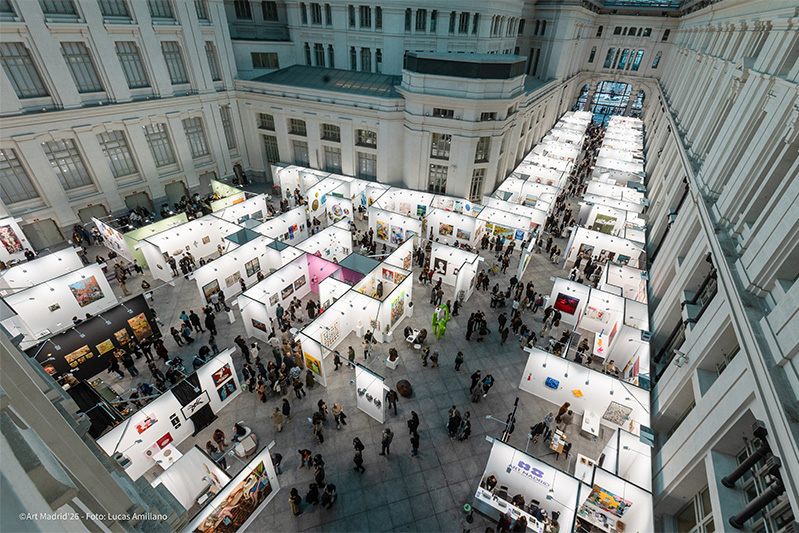
Art Madrid '25. Photo by Lucas Amillano


GALLERY PROGRAM: AN ACTIVE MAP OF CONTEMPORARY CREATION


The Gallery Program is at the heart of Art Madrid’26. For this edition, thirty-five national and international galleries will participate in a space that celebrates experimentation, hybrid languages, and the latest artistic production. The selection of proposals constitutes a representative mosaic of the aesthetics, discourses, and contemporary practices that are shaping the present of art in Europe.

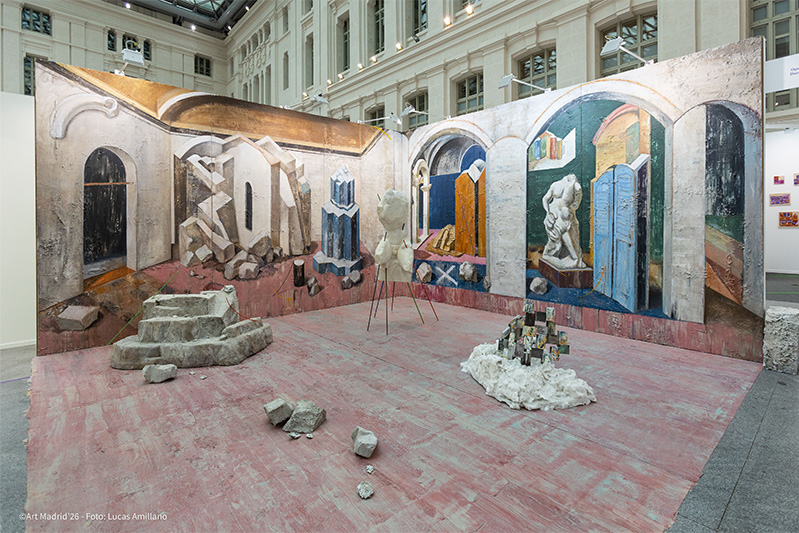
The Galería de Cristal of the Palacio de Cibeles will once again be transformed into a dynamic space where the exhibitions interact with each other, inviting the public to explore visual narratives that show the evolution of contemporary languages. Works that experiment with new media, formal investigations that reformulate traditional techniques, pieces that reflect on the links between technology and humanity, and poetic approaches that explore territory, identity, or memory make up a plural, stimulating journey open to multiple interpretations.

Art Madrid also continues to strive to become a platform for discovery, allowing both professionals and visitors to identify new voices and consolidate relationships with artists who are already emerging as leaders within the contemporary cultural landscape.


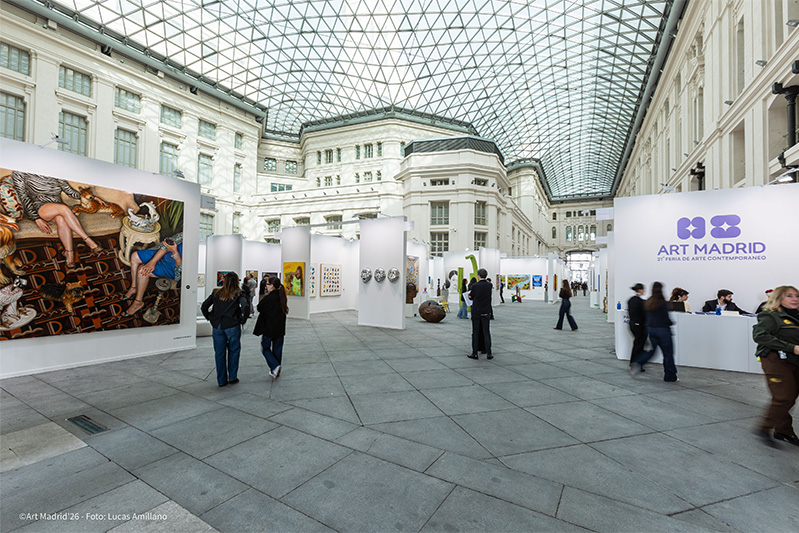
Art Madrid '25. Photo by Lucas Amillano


NATIONAL AND INTERNATIONAL EXHIBITORS

Thirty-five galleries are participating in this edition, twenty-seven of which are returning after finding the fair to be a favourable environment in which to strengthen connections, increase visibility and promote their artists' work on an international scene.

Twenty-six of these are Spanish galleries from various regions of the country: 3 Punts Gallery (Barcelona), Alba Cabrera Gallery (Valencia), Aurora Vigil-Escalera (Gijón), CLC ARTE (Valencia), DDR Art Gallery (Madrid), Est_ArtSpace (Madrid), g • gallery (Barcelona), Galería Arancha Osoro (Oviedo), Galería BAT alberto cornejo (Madrid), Galería Beatriz Pereira (Plasencia), Galería Carmen Terreros (Zaragoza), Galería Espiral (Noja), Galería La Mercería (Valencia), Galería Luisa Pita (Santiago de Compostela), Galería María Aguilar (Cadiz), Metro Gallery (Santiago de Compostela), Rodrigo Juarranz Gallery (Aranda de Duero), Sigüenza Gallery (Sigüenza), Gerhardt Braun Gallery (Palma de Mallorca | Madrid), Inéditad Gallery (Barcelona), Kur Art Gallery (San Sebastián), LAVIO (Murcia | Shanghai), Moret Art (A Coruña), Pigment Gallery (Barcelona), Shiras Galería (Valencia) and Uxval Gochez Gallery (Barcelona). This selection of galleries highlights the importance of the Spanish scene and its contribution to the development of the contemporary cultural ecosystem.


Art Madrid '25. Photo by Lucas Amillano


The nine international galleries participating in this edition are: Banditrazos Gallery (Seoul, South Korea), Collage Habana (Havana, Cuba), Galeria São Mamede (Lisbon, Portugal), Galerie ONE (Paris, France), KANT Gallery (Copenhagen, Denmark | Palma de Mallorca, Spain), Loo & Lou Gallery (Paris, France), Nuno Sacramento Arte Contemporânea (Ílhavo, Portugal), Trema Arte Contemporânea (Lisbon, Portugal) and Yiri Arts (Taipei, Taiwan). Their participation broadens the fair's international reach, promoting creative and conceptual exchange between diverse artistic perspectives.

In addition, eight new galleries have been added to the list of exhibitors:

Banditrazos Gallery (Seoul, South Korea), Est_ArtSpace (Madrid, Spain), g • gallery (Barcelona, Spain), Galería Beatriz Pereira (Plasencia, Spain), Galerie ONE (Paris, France), Galería Sigüenza (Sigüenza, Spain), Gerhardt Braun Gallery (Palma de Mallorca | Madrid, Spain) and KANT Gallery (Copenhagen, Denmark | Palma de Mallorca). These additions reinforce Art Madrid's commitment to continuous renewal and openness to spaces that are exploring new approaches to contemporary art.


Art Madrid '25. Photo by Lucas Amillano


PARALLEL PROGRAM: A REFLECTION ON THE ‘SPECIES’ OF SPACES


One of the great attractions of Art Madrid is its Parallel Program, which this time delves into the notions of: ‘Fragments, relationships, and imaginary distances.’ This approach turns the fair into an expanded space, where art, audience, architecture, and memory converge. Thus, the Parallel Program proposes a critical approach to the container of the event itself. Taking as a reference the reading of Species of Spaces by Georges Perec (Perec, Georges. Species of Spaces. Montesinos, 2004), it adopts a marked interest in the everyday, that which usually goes unnoticed, the infra-ordinary, giving each corner of the venue its own narrative value.

Another of the conceptual references of this edition is based on an analysis of Édouard Glissant's Poetics of Relation (Glissant, Édouard. Poetics of Relation; Prologue by Manuel Rebón. - 1st ed. - Bernal: Universidad Nacional de Quilmes, 2017.), which advocates the coexistence of differences and the importance of non-totalizing links, which are extrapolated to the art system, proposing an understanding of it as a network of exchanges and connections that respect the uniqueness of each cultural practice and actor.

‘Imaginary distances,’ understood as subjective journeys and affective cartographies traced by visitors, thus become the conceptual axis that articulates this program. This perspective transforms the Fair into an experience that goes beyond visual contemplation, turning it into a territory that can be collectively reconstructed, without losing sight of the paths travelled by the individuality of each voice.

In this edition, the Parallel Program encourages visitors to engage with the space and its projects, turning contemplation into an opportunity to question and interact with things that might otherwise go unnoticed in everyday life.


Art Madrid '25. Photo by Lucas Amillano


In the preview and during Art Week, Art Madrid'26 offers a range of experiences that allow the public to get closer to the creative process and practices of the participating artists. Among the returning initiatives are the Interview Program, Curated Walkthroughs, the third edition of Open Booth, dedicated to emerging creation, the presentation of Espacio Nebrija, a university project in collaboration with Nebrija University, alongside the fair’s established Performance Cycle.

In addition, the One Shot Collectors Program and the second edition of the Patronage Program are back. These initiatives seek to strengthen the bond between collectors, artists, and the public, promoting ethical, informed, and responsible practices in collecting and patronage.


Art Madrid '25. Photo by Lucas Amillano


Art Madrid'26 has established itself as a dynamic meeting place, where diverse experiences, discourses, and practices converge. Far from being a fair curated under a single curatorial line, Art Madrid promotes diversity as a structuring principle, respecting the identity of each exhibitor and fostering a plural creative ecosystem. This plurality is not merely formal, but translates into a network of practices, languages, and perspectives that reflects the complexity, richness, and tensions of the contemporary art scene, consolidating the fair as a catalyst for cultural relations, an observatory of emerging trends, and an international reference point for the Spanish art scene.

WELCOME TO ART MADRID'26