ACTION ART, THE NEWEST PROGRAMMING OF ART MADRID
Feb 24, 2020
art madrid
Action art is a varied group of techniques or artistic styles that emphasize the creative act of the artist, the action. The term was created by Allan Kaprow, who pointed out the interrelationship between the artist and the viewer at the moment of the artistic creation.
It can be said that the concept of action art was born in the 1920s with Dadaism and Surrealism, in artistic montages such as collage and assemblage. Among the various forms of expression of action art are happening, performance, environment and installation.
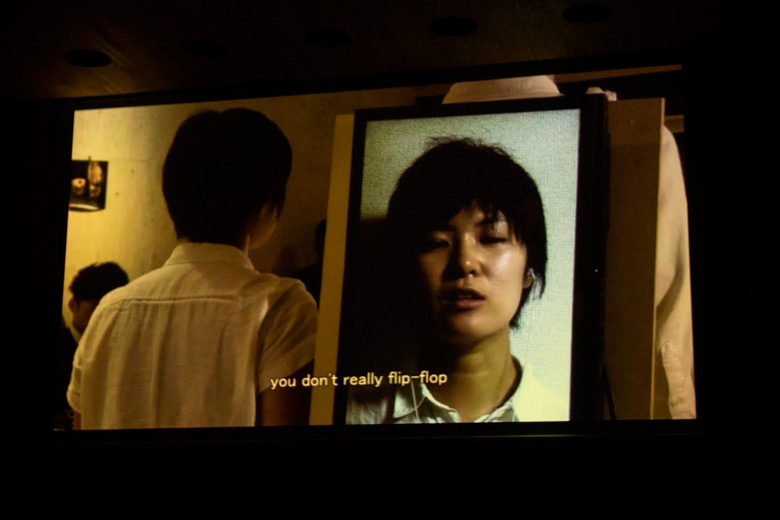
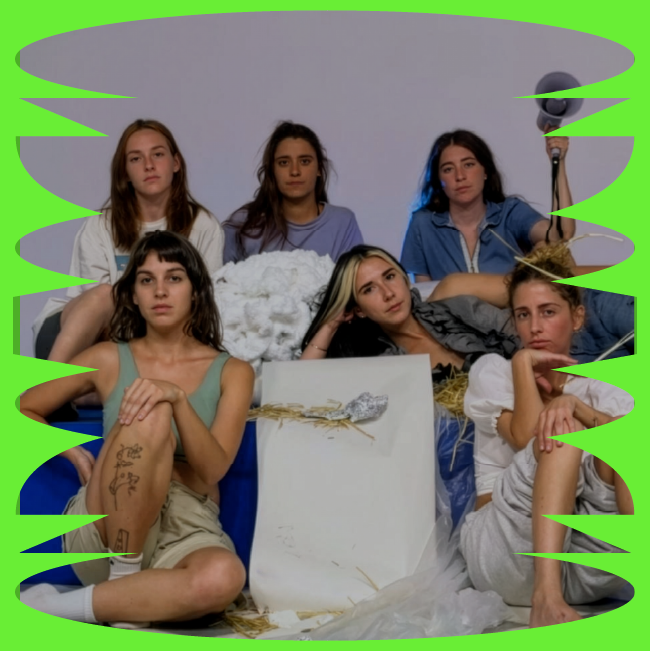
In its most festive edition, this year Art Madrid presents its most innovative commitment with a specific programme dedicated to new media and action art. In this 15th edition we will have a booth at the fair for the realization of presentations and live actions in collaboration with the video art platform PROYECTOR and under the curatorship of its director Mario Gutiérrez Cru.
If you come to Art Madrid, you will be able to enjoy the different parts of the programme throughout the day. From the morning onwards, you will be able to view the best selection of pieces from the most outstanding international video art festivals in the world, with proposals from Portugal, Mexico, Morocco, Colombia, Peru, Argentina, France, Greece and the Netherlands. A selection made by Mario Gutiérrez Cru that will present us with new languages of artistic expression in the field of video creation so that we can compose a general idea of the international artistic paradigm of this area.
Then, every afternoon at 5pm we will attend the presentation and meeting with an outstanding artist to end the day of the fair with a performance at 8pm from Wednesday to Saturday. This program seeks to be an immersive experience in contemporary art and explore new languages linked to technology.
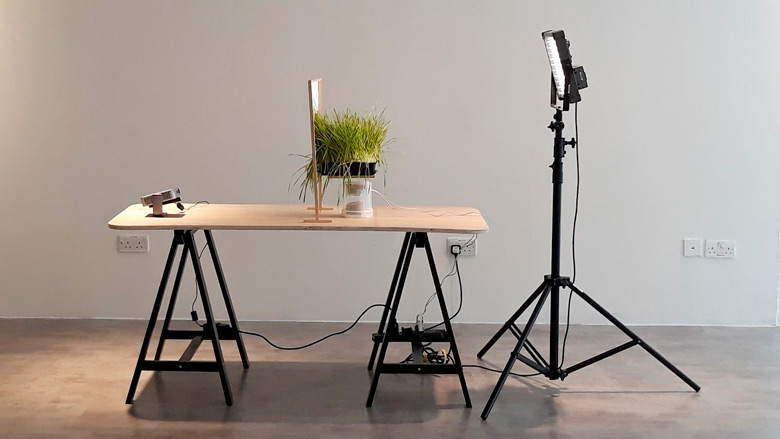
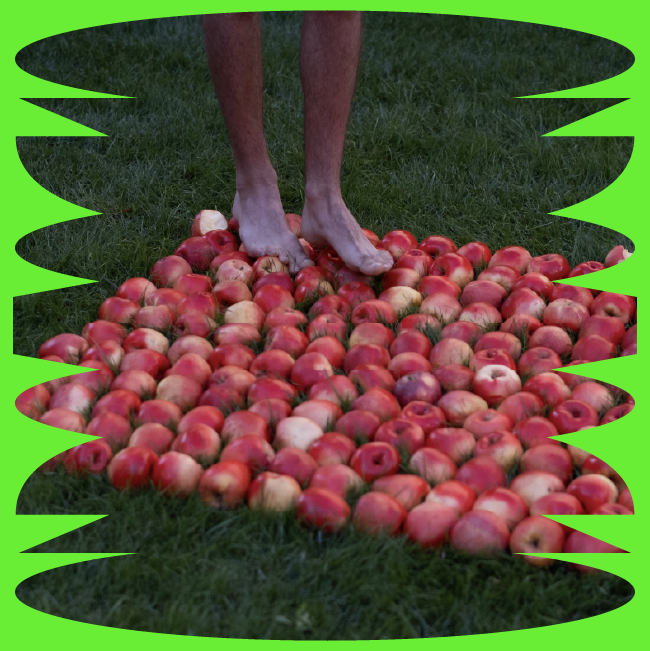
Opening the program on Wednesday 26th we will have Abelardo Gil-Fournier, in the presentation we will be able to contemplate the installation of the work "The Quivering of the Reed" and comment it with its creator in the whole of its trajectory. His work revolves around the hybridization between the real and the sensitive, approached from a perspective in which perception, image and material production are fused in a practice based on research into territorial planning and plant growth. His projects are conceived as material operations proposed for an open space between art, nature and politics.
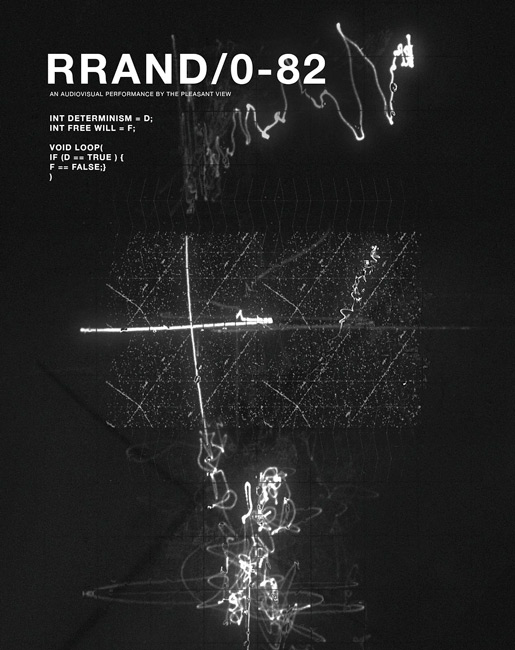
Art Madrid will host at 8pm the performance of Iván Puñal “RRAND 0-82.” The artist Iván Puñal (a.k.a. The Pleasant View) will explore through a live audiovisual performance the concept of "random" and "chaos". Iván Puñal, works with determinism and freedom in his performances questioning how much belongs to the conscious self and how much is a mirage of illusion. To this end, uncontrolled elements will be introduced into the performance using mathematical algorithms, both to generate visual pictures and improvised sound spaces so that the result is "non-repeatable", "uncontrolled" and "non-voluntary". Atonal music within the territory of "musique concretè" or "noise" will accompany the projections, also framing the concept of "all sound is music".
On Thursday 27th, the public will be enjoy an encounter with Fernando Baena, a multidisciplinary artist who cultivates video, photography, installation and performance as means to reach the spectator with greater strength. His works seek to interact by approaching them through the use of common materials, and the use of direct discourses that demonstrate his communicative intention.
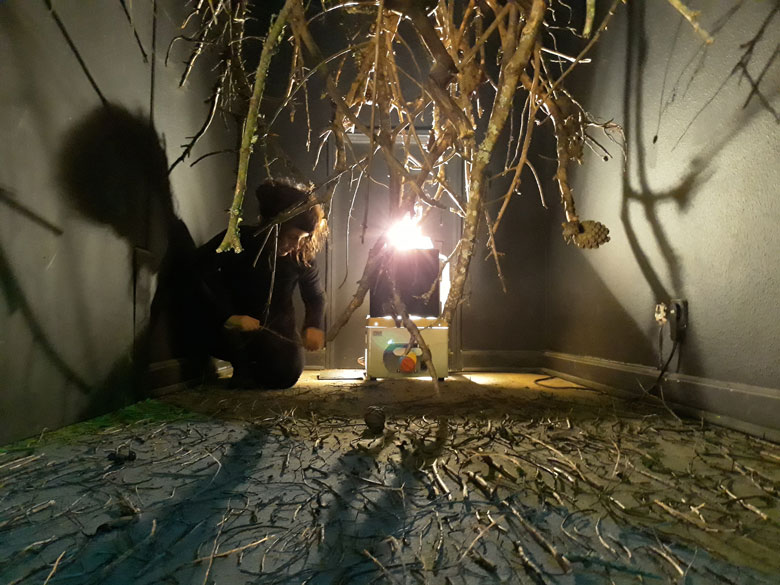
Afterwards, a site-specific participatory action will be carried out for the 'Partidura'. A project by Eunice Artur with the collaboration of Bruno Gonçalves. This project is part of the fascinating and vast panorama of the creation of graphic annotations. The evolution of electronic music requires a new system of notations where, among others, we seek to understand the relationship of new phenomena, such as the relationship between sound and plastic manipulation in performance; unpredictability and error as ways of generating non-linear readings and/or new graphic forms of notation.
On Friday 28th, Mario Santamaría will investigate the phenomenon of the contemporary observer, paying attention to two processes that shape him: the representational practices and the apparatuses of vision and mediation. Mario explores areas such as conflict, memory, virtuality and surveillance through tactics such as appropriation, remake and montage.
Two performers each sing inside the other's mouth. This is how the performance that Arturo Moya and Ruth Abellán will give on Friday 28th begins. The sound resulting from the interaction of the two voices in a single cavity, controls live the water produced by the same performers in a video that is projected during the performance. The same sound also governs the appearance of sounds from water recordings. "Danaides' Barrel", a physical and sound exploration that will leave no one indifferent.
And to finish the program of this edition Art Madrid-PROYECTOR, on Saturday 28th we will have two unmissable activities: on the one hand the meeting with the Argentine artist and curator Maia Navas, Bachelor of Arts and Technology, Bachelor of Psychology and Specialist in Creativity and Innovation, who will explore in a direct conversation with the public all these areas, giving way later to the performance of Olga Diego "The bubble woman show". The girl of plastics. The bubble woman. Outside, the audience interprets the movements of those two pairs of legs under the translucent inflatable. Sharing the air, the emptiness, the fragility…
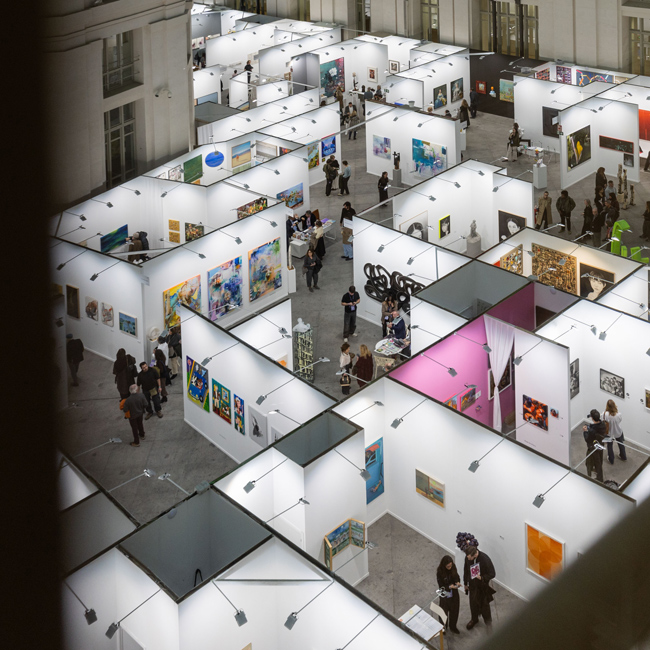
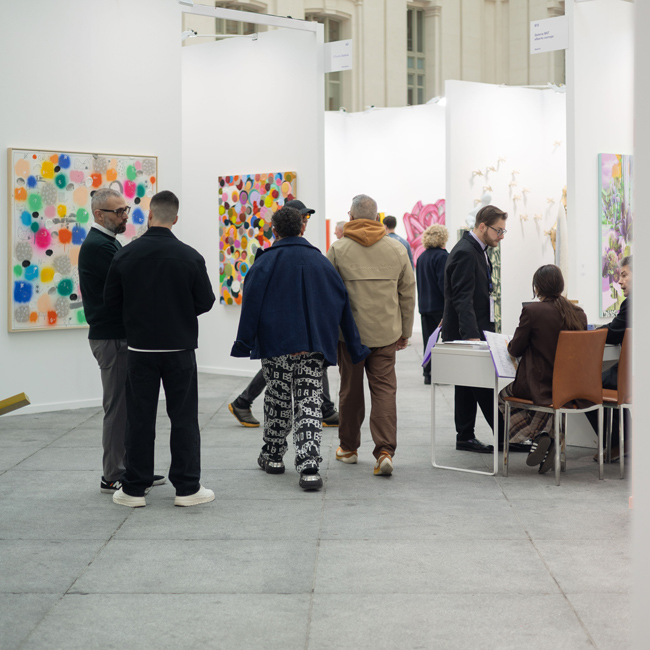
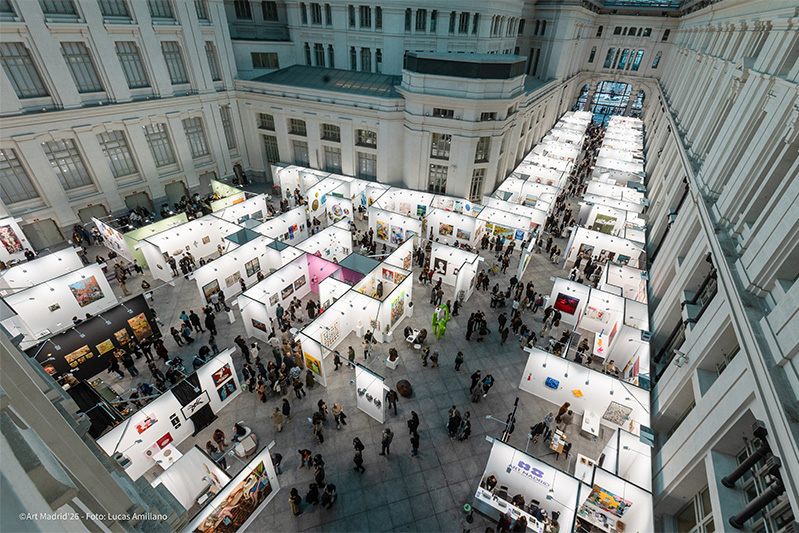
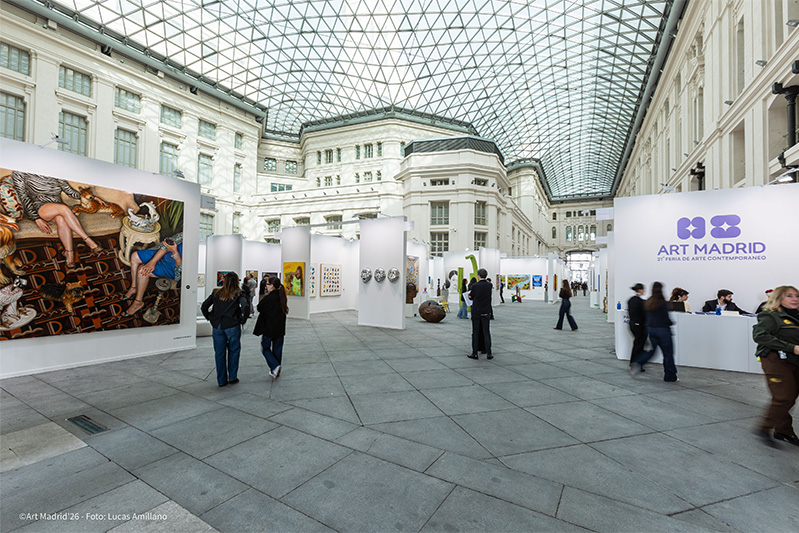
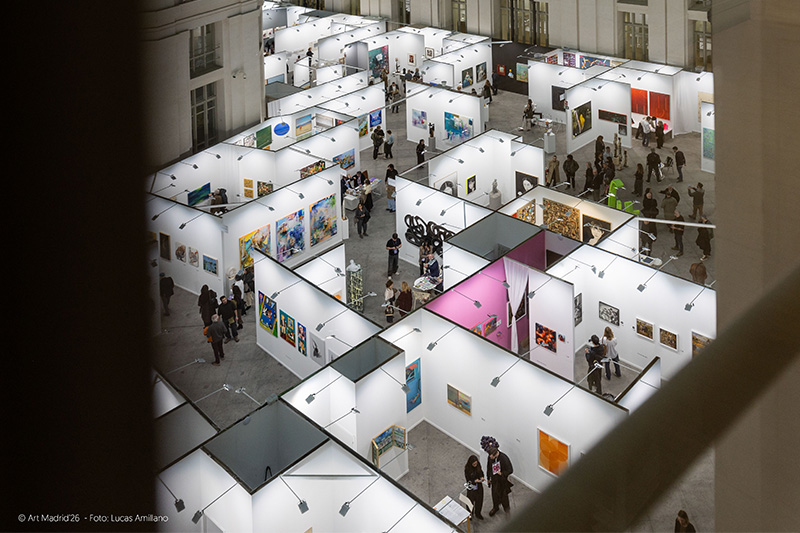
Art Madrid'20 becomes a space for artistic immersion, involving all those who come and let art flood their lives from February 26 to March 1 in the Crystal Gallery of the Palacio de Cibeles.
We are waiting for you!