Art Madrid'26 – CARPETS THAT MELT OR A LOOK TO THE PAST, BY FAIG AHMED

When mastery, imagination and originality go hand in hand, we can only admire a masterpiece. This is the work of the artist Faig Ahmed, who fuses tradition with contemporaneity in his impressive braided carpets, pieces that force us to look carefully and to analyse the message that they transmit to us.
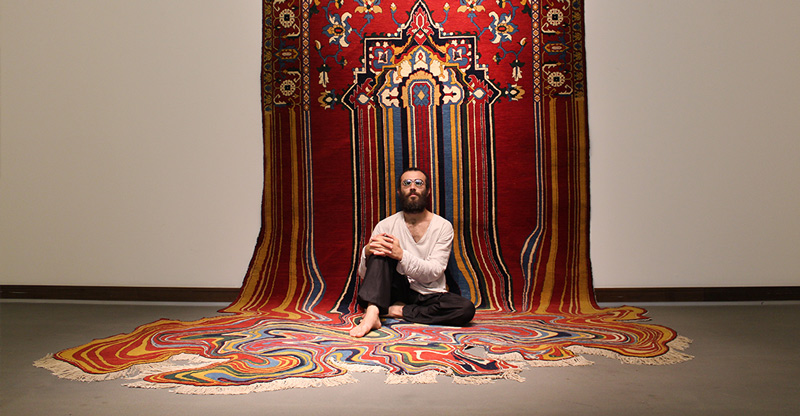
Faig Ahmed portrait with one of his pieces (image by Sarah Benet, on www.animationpagoda.com)

Faig Ahmed (Azerbaijan, 1982) is a tireless creator whose work rescues one of the main cultural signs of this region of the world, famous, like other surrounding countries, for its majestic carpets, a tradition that goes back several millennia ago as a sign of their collective identity to become a world reference. Their hypnotic drawings of symmetrical composition, which sometimes resemble elements seen through a kaleidoscope, unfold in layers woven of bright colours with enormous visual impact.
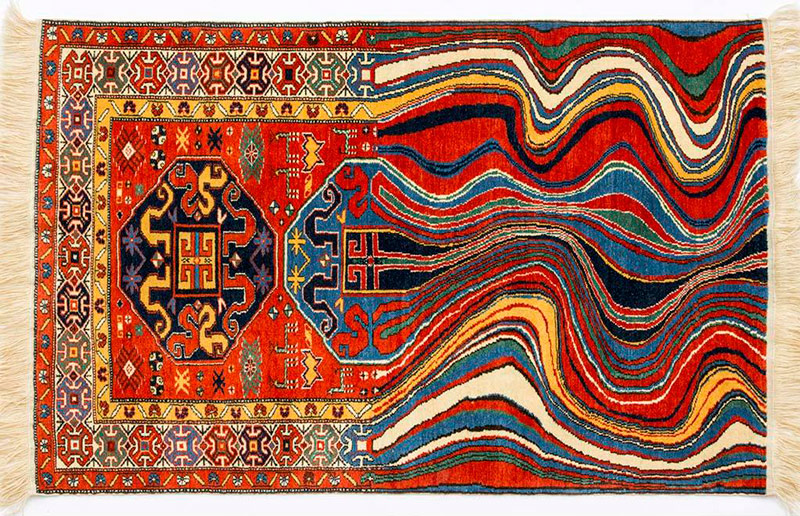
Faig Ahmed, artwork of the series "Liquid" (image from www.animationpagoda.com)

This practice synthesises the entire history of the Persian people until it becomes a cultural symbol that conveys a large knowledge accumulated over the centuries. This task has traditionally been attributed to women, who follow patterns of colour and composition to give the perfect finish we all know. The work of Faig Ahmed is a tribute to this meticulous and invisible work and offer a rereading that has bridges with the past.

The artist graduated in Fine Arts in Baku specialising in sculpture, and, although his production is very diverse, he has become famous for his work with carpets, a type of pieces with which he was presented in the Azerbaijan pavilion of the biennial of Venice in 2007. Today, he is part of important collections and museums around the world.
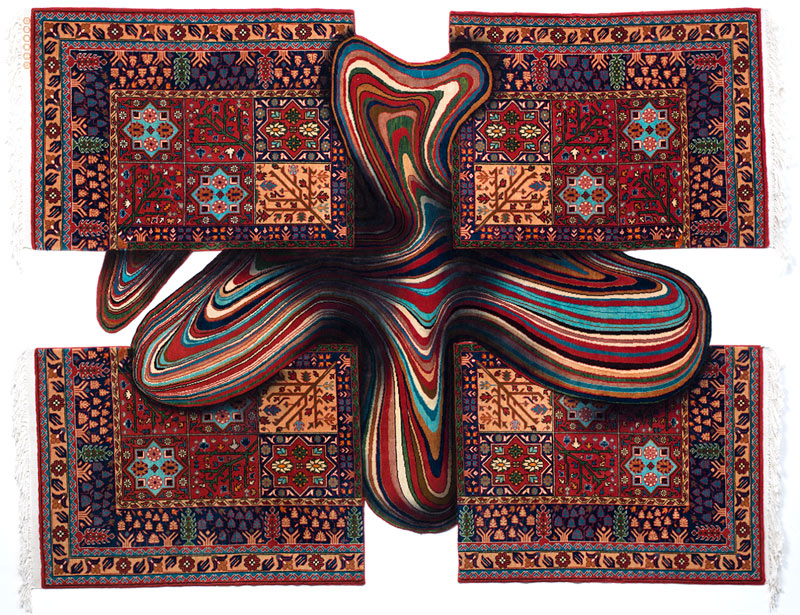
Faig Ahmed, “Secret Garden”, 2017, (image from voltashow.com)

As he explains, the goal is to channel conceptual art, with a strong base of colourist abstraction, through traditional techniques, far from what is usual in the field of visual arts. In his opinion, it is essential to look at the past to find that mystical and spiritual connection that deals with the passage of time and our location at the moment of history. His work raises an open question about what is true and what is not, what should be, what we really see, and how much we owe to our cultural heritage to be where we are today.
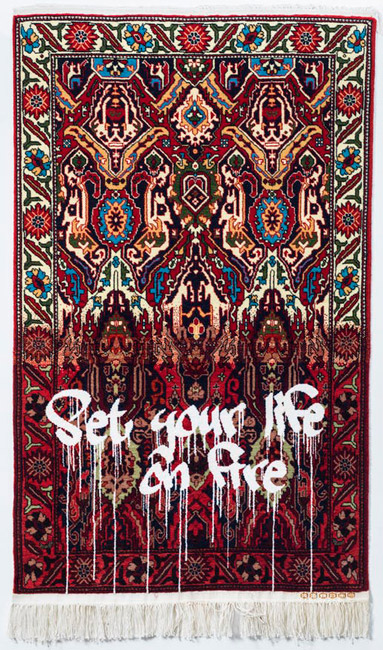
Faig Ahmed, "Set Your Life On Fire" (image from www.inverse.com)

The result is an eclectic work, which mixes disciplines and techniques, in large projects on which he previously works on a computer. A task of decomposition and deconstruction that he carries out with great inspiration to give rise to something completely new and fascinating.
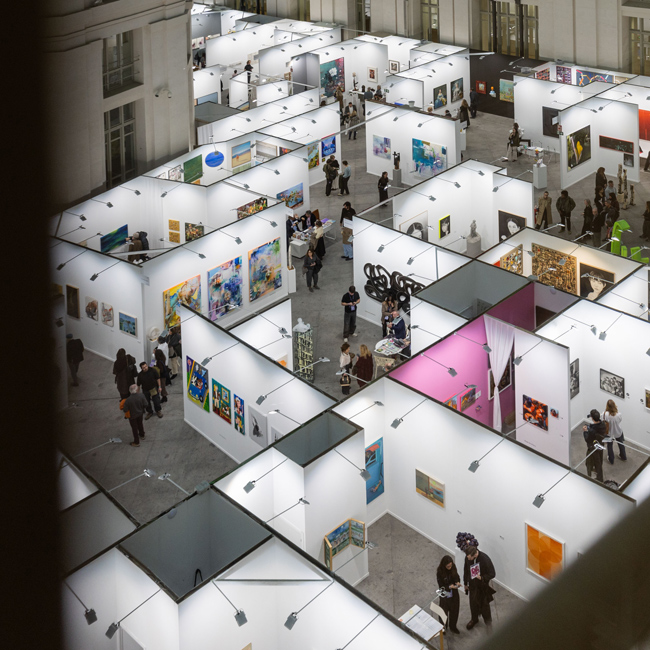
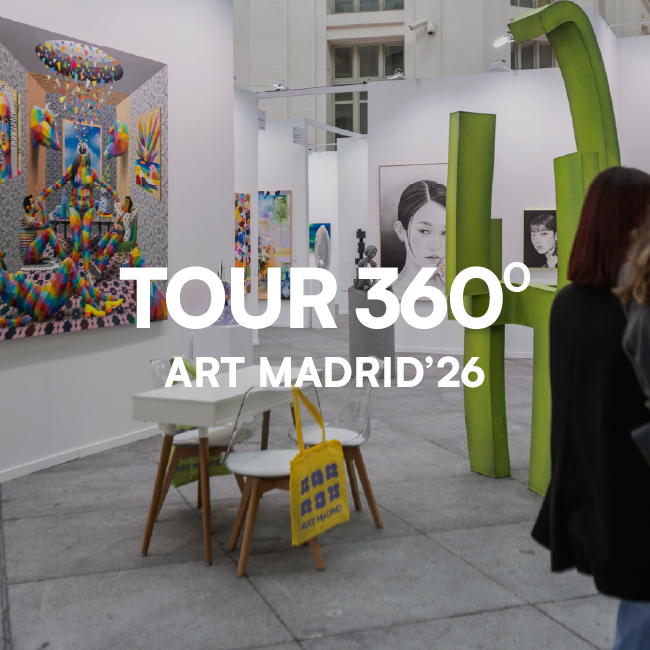


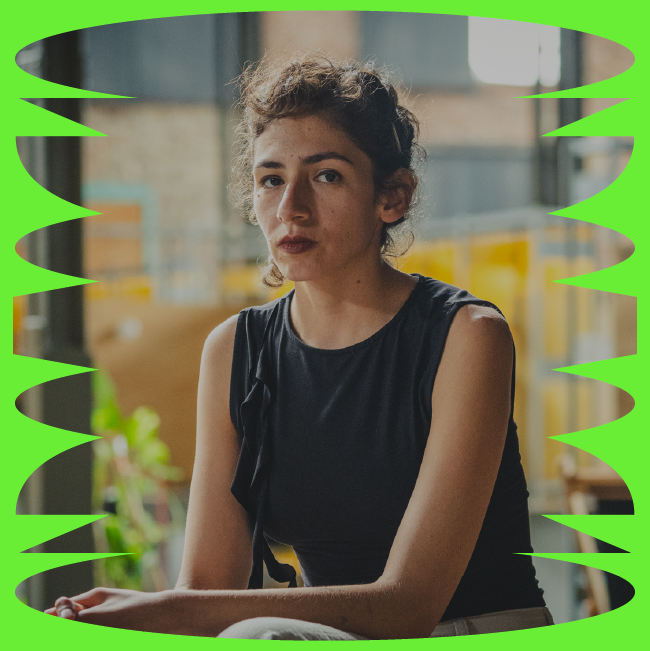
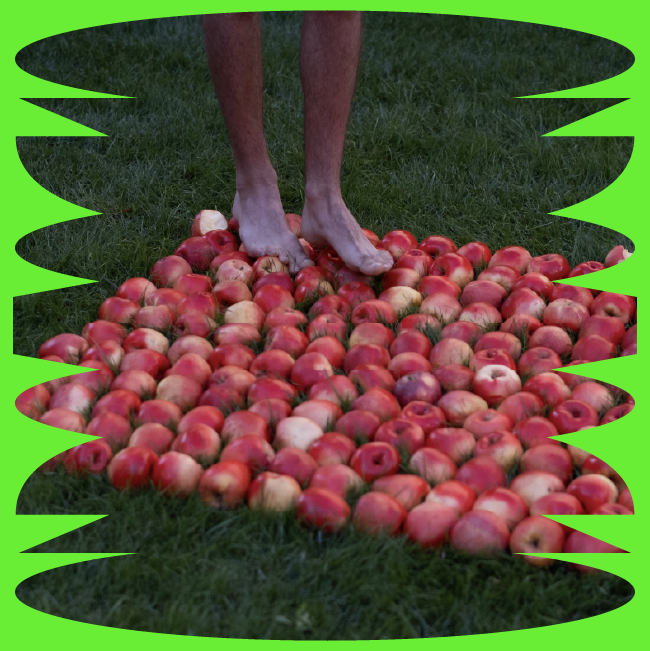
ABIERTO INFINITO. LO QUE EL CUERPO RECUERDA. CICLO DE PERFORMANCE X ART MADRID'26


Art Madrid, committed to creating a discursive platform for artists working within the field of performance and action art, presents Abierto Infinito: lo que el cuerpo recuerda, a proposal inspired by Erving Goffman’s ideas in The Presentation of Self in Everyday Life (Amorrortu Editores, Buenos Aires, 1997).

The project unfolds within a theoretical framework that directly engages with these premises, conceiving social interaction as a stage of carefully modulated performances designed to influence others’ perceptions. Goffman argues that individuals deploy both verbal and involuntary expressions to guide the interpretation of their behavior, sustaining roles and façades that define the situation for those who observe.

The body — the first territory of all representation — precedes both word and learned gesture. Human experience, conscious and unconscious alike, is inscribed within it. Abierto Infinito: lo que el cuerpo recuerda departs from this premise: representation inhabits existence itself, and life, understood as a succession of representations, transforms the body into a space of constant negotiation over who we are. In this passage, boundaries blur; the individual opens toward the collective, and the ephemeral acquires symbolic dimension. By inhabiting this interstice, performance simultaneously reveals the fragility of identity and the strength that emerges from encounter with others.


PERFORMANCE: OFF LINE. JIMENA TERCERO

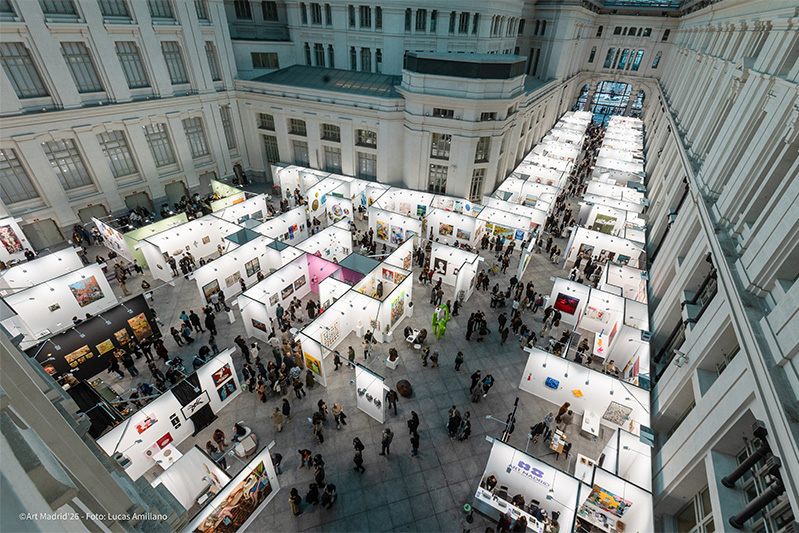
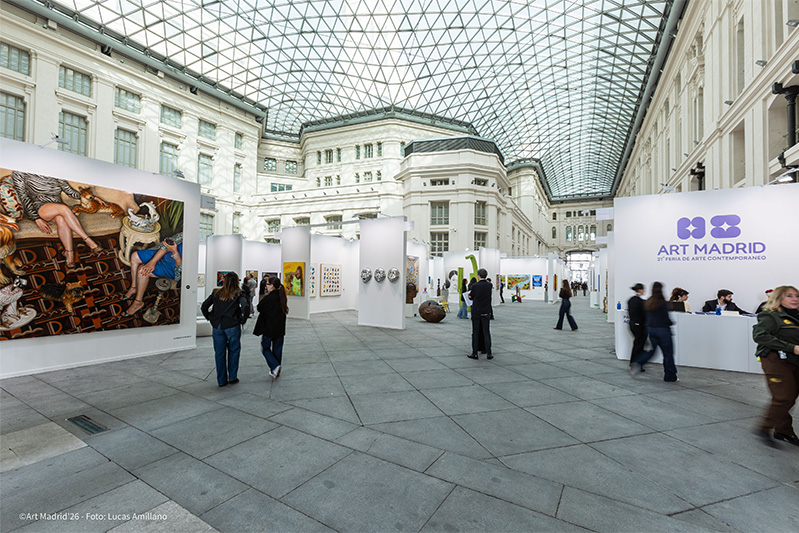
March 7 | 7:00 p.m. Galería de Cristal of the Palacio de Cibeles.


OFF LINE is a performance piece that reflects on the fragility of the body in the digital age. Our relationship with the outside world is mediated by a screen, which distances us further and further from physical contact and interpersonal relationships. Focusing on creating a digital identity causes the body to distance itself from the physical world and lose its memory.

Hyperconnectivity and fragmented attention lead to a more passive physical existence, characterised by reduced spontaneous movement and less direct sensory interaction. This raises fundamental questions: how is the concept of presence redefined when our relationship with the world relies on technological mediation? What will the experience of the body be like in a future where virtuality predominates over the physical? There is a risk of progressive bodily passivity: bodies that remain still, whose activity is determined by devices and whose memory is stored digitally. The fragmentation of physical experience and the primacy of technological representation create a scenario in which, although the body is visible, it is displaced from its original function as an agent of perception and action.

This conceptual framework invites reflection on the impact of digitisation on corporeality, memory and social relationships, and on the vulnerability and inertia experienced by bodies in environments that are increasingly mediated by technology.


ABOUT JIMENA TERCERO

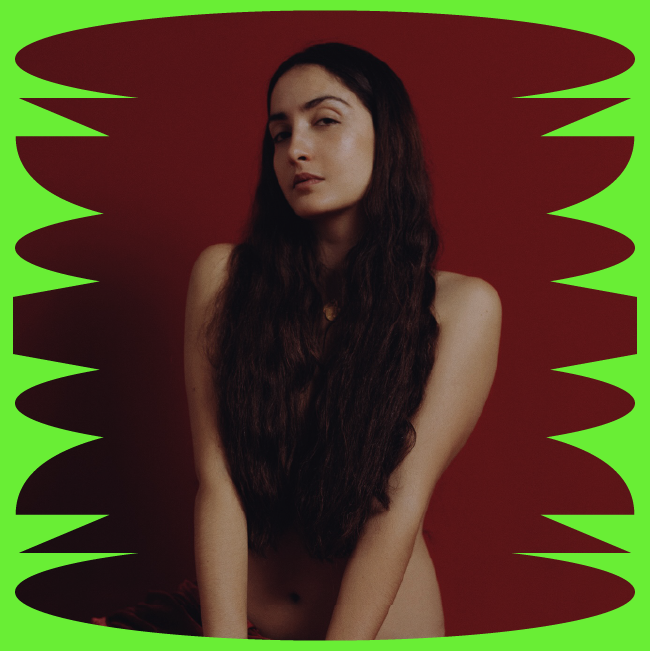
Jimena Tercero (Madrid, 1998) is a multidisciplinary artist whose work explores the boundaries of the female body, identity, and the subconscious. She uses performance, video, and painting to address concepts such as memory, tangibility, and play. Tercero trained in painting with Lola Albín and in analog photography at Cambridge in 2014. She studied audiovisual direction from 2018 to 2020 with renowned figures such as Víctor Erice and the production company El Deseo. She is currently pursuing a Master's degree in Creative Direction at ELISAVA. She completed her performance training at La Juan Gallery. In 2011, she was part of the children's jury at the Isfahan Film Festival in Iran.

Her directed works include Private (2016) and Paranoid (2021), which were exhibited at the Aspa Contemporary Gallery. She has also worked on projects such as Yo, mi, me, conmigo (2023, Teatros del Canal), Inside Voices (2021, Conde Duque with Itziar Okariz), and La última regla (La Juan Gallery). She has directed fashion films for publishers and brands such as Puma, Dior, and Dockers. She has also provided art direction for artists such as Sen Senra and Jorge Drexler. Additionally, she directed the documentary Also Here for ArtforChange–La Caixa. She presented Out of View (Nebula Gallery), EDEN (White Lab Gallery), and Navel Bite (Sinespacio). She participates in residencies such as Medialab with Niño de Elche and Miguel Álvarez Fernández. In 2025, she will be part of the Special Jury of the Asian Film Fest in Barcelona and the International Cultural Museum of Assilah Art Residency in Morocco).