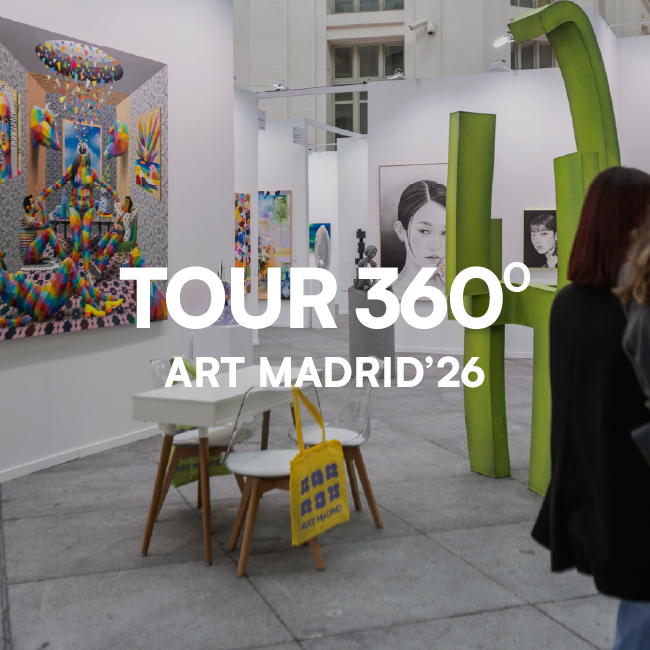
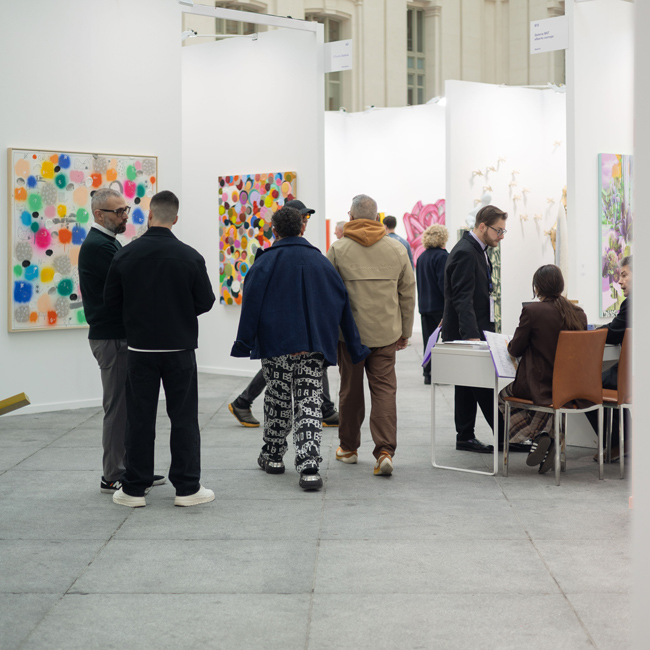
Art Madrid'26 – \"ALL PROCEEDS OF THE WITHOUT REASON\" ANTHOLOGY OF CARMEN CALVO

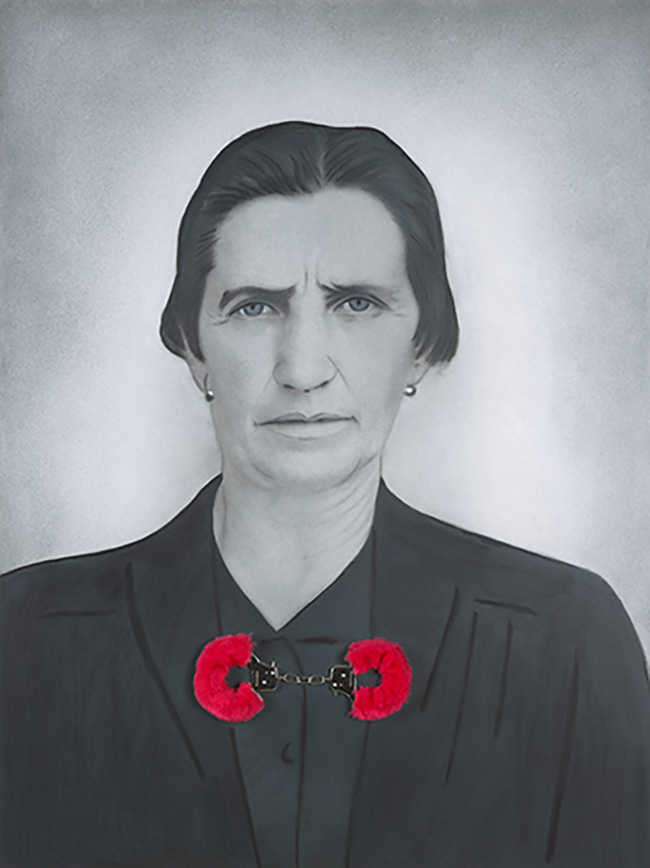
Grave charming passion, 2014 Mixed technique: collage and photography 120 x 90 cm. Collection of the artist © Carmen Calvo, VEGAP Madrid 2016


Carmen Calvo (Valencia, 1950) is a Spanish conceptual artist. Formed at the Fine Arts University of Valencia, she has won such prestigious prizes as the National Fine Arts Award in 2013. Carmen's work reflects her life; her three geographical points have been Madrid, Paris and Valencia. These three cities are present at the different stages of her dossier. To exhibit in the 1980s in the art exhibition "New images from Spain" at The Solomon R. Guggenheim Museum in New York, was her springboard. Since that time his career took off until today, and this places him in the international artistic scene.
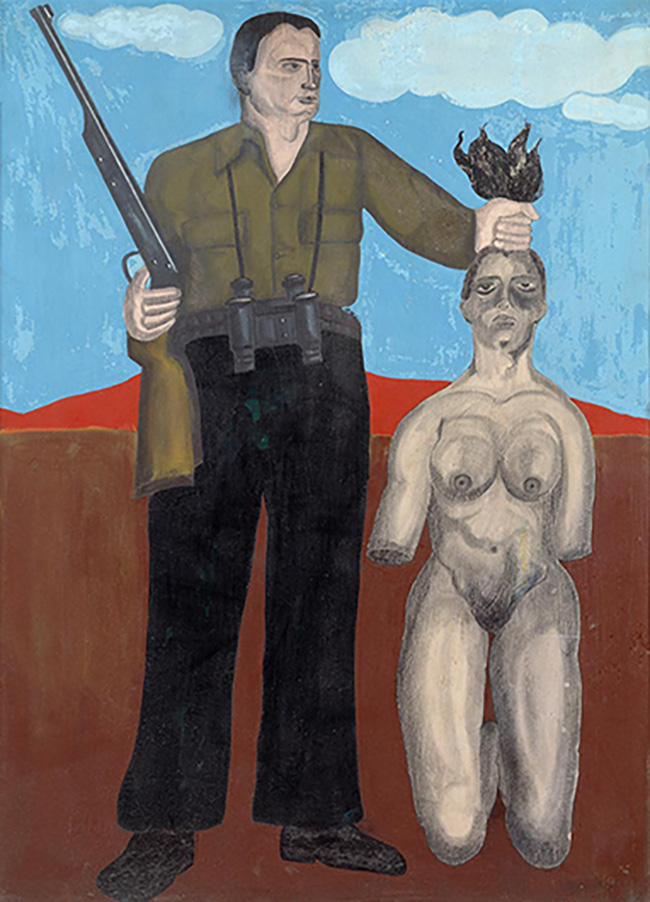


S / T, 1969. Mythical technique: gouache on wooden board 90 x 65 cm. Collection of the artist © Carmen Calvo, VEGAP Madrid 2016


The exhibition recreates a compilation of 77 works from an anthological perspective. The eclectic layout of the room, curated by Alfonso de la Torre, encompasses different disciplines such as painting, sculpture, drawing and installations. The most characteristic of this sample is its chronological and structured organization. Divided into 5 parts, these sections help the viewer to draw a global image of the artistic feeling and to know the artist herself.


The first part, "An archeology of the imaginary", refers to his stay in Paris. We talk about the 80's and the way to represent it is with paintings and elements of sewn clay. This part reminds us of the passion for the archeology of the artist and her relationship with the world of ceramics, since one of her first works was created in her factory.
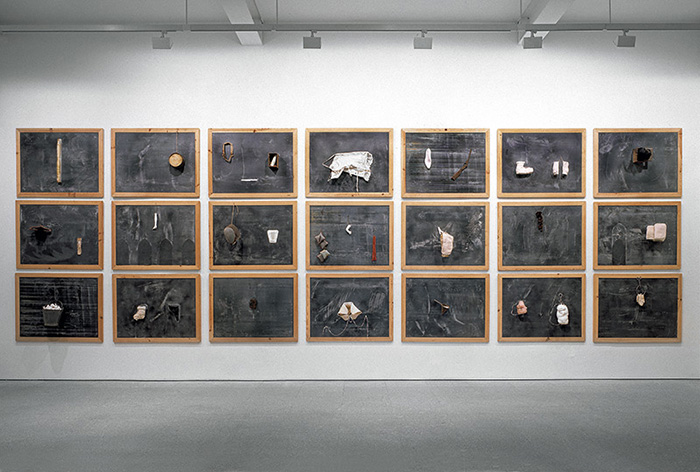


Untitled, 1996-1997. Mixed technique on blackboard. Set of 21 pieces of 100 x 130 cm each. National Museum Collection Reina Sofía Art Center © Carmen Calvo, VEGAP Madrid 2016


The second section, "Ceremony and object", makes a jump forward in time of 10 years. Based on the 90´s, it makes a ceremonial turn towards the relationship between the artist and the object. A clear vestige of how they influence when creating her work and the meaning that she gives them. The third section, "Cannibalism of the images" is directly related to photography, one of the main characteristics of his work. The manipulation of the photos holds no secrets for Carmen, and is one of her trademarks. Since the mid 80´s it is one of the most recurring techniques, to enlarge and alter its original features, a delight for the senses.
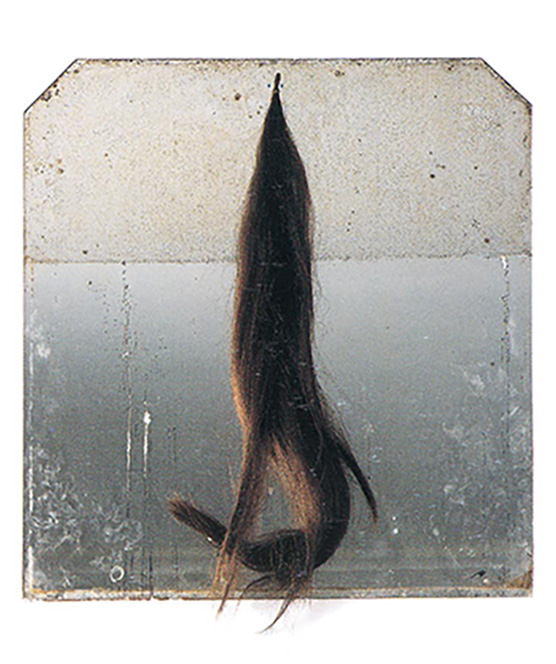


Silence II. I promise you hell, 1995. Collection National Museum Reina Sofía Art Center © Carmen Calvo, VEGAP Madrid 2016


The fourth section, "The hallucinations are innumerable", dedicates his speech to the work on paper, collage and drawing. And in the last chapter but not least, it winks at the multimedia content. This field, well loved by the artist, reveals his love of cinema and music. Two artistic modalities that have always accompanied her. With this last data we can give meaning to all his work. For this reason she has created the work "Et pourlèche la face ronde”. This is the best farewell, for an exhibition full of looks within itself and to spread the delight of the arts.


ART MADRID’26 INTERVIEW PROGRAM. CONVERSATIONS WITH ADONAY BERMÚDEZ


The artistic practice of Chamo San (Barcelona, 1987) revolves around a poetics of attention, in which the seemingly insignificant acquires a singular reflective intensity. His works emerge from a persistent observation of everyday life, understood not as a narrative repertoire but as a field of shared experience. Within this framework, the minimal gesture becomes a form of sensitive knowledge, placing the viewer before scenes that are both recognizable and, at the same time, estranged by their temporal suspension.

The progressive shift toward a more atmospheric painting has allowed the environment to cease functioning as a mere support and become an active agent of meaning. Restrained color ranges and carefully constructed spaces generate a sense of stillness that evokes a pictorial tradition attentive to duration and waiting. The human figure—a constant presence in his work—is presented immersed in contexts that amplify its affective and existential dimension.

The silence permeating these images is not absence but condition; it constitutes a space of resonance in which the time of doing and the time of looking converge. Situated between compositional control and openness to the contingent, Chamo San’s work affirms painting as a territory where planning and accident coexist.


Bathtub. 2018. Ballpoint pen on notebook. 14 x 18 cm.


Many of your works show meticulous attention to the smallest gestures and seemingly trivial moments. What interests you about these micro-choreographies of everyday life?

The seed of my work always comes from the sketches I make from life in small notebooks that I can carry with me at all times. Later, I either transfer them to another format so I can work on them more calmly, or they become the final piece in themselves.

Composition, staging, and perhaps those micro-choreographies are what I allow myself to bring to the scene as an artist. For me, these everyday moments are the most direct and honest way to connect with the audience because—even though they are intimate—they reflect universal experiences.


Feet. 2023. Oil pastel on paper mounted on board. 30 x 30 cm.


In your pieces, the presence of sober tones seems to generate a particular type of atmosphere. How would you describe the way that atmosphere emerges during your work, and what role does it play in the overall construction of the image?

Atmosphere and colour are relatively recent additions to my work. Previously, I focused exclusively on the figures as the central element, and they were often left floating in a kind of void. It was when I realised the need to provide context—especially as I began working more closely from the notes in my notebooks—that I came to understand the importance of the environment for the character.

The human figure will always remain the main element for me, as it is through its representation that I find the greatest enjoyment. However, little by little, I have become interested in exploring what surrounds it. I see the creation of an environment and an atmosphere as essential in order to situate the figures within a more complete and fully constructed scene.


Mamant. 2025. Colored pencils on notebook. 14 x 18 cm.


Are the silences in your works inherited from real experiences, or do they emerge during the painting process?

The silences in my work are inherited from real experiences. When I capture those small moments of everyday life—which is essential for me—I tend to be focused and quiet. At the same time, I also believe that the contemplation of artworks naturally invites this kind of calm. In that sense, for a brief moment, both the artist—throughout the entire creative process—and the viewer, when engaging with the work, can meet in the same state of tranquillity and silence.


The Kiss. 2024. Oil pastel on notebook. 14 x 18 cm.


To what extent do you plan your works and how much space do you leave for the unexpected to happen?

Some of my works are very planned, even excessively so, with lots of sketches. On the other hand, I always have that starting point that appears in my notebooks, and I leave experimentation and the unexpected for the end. Although it's also true that when I've thrown myself into improvisation from the beginning, wonderful things have happened, so now I try to combine those two worlds as organically as possible.


Cinema. 2025. Ballpoint pen and oil pastel on notebook. 14 x 18 cm.


Although your work has shifted towards the pictorial—with an aesthetic closely linked to cinema—echoes of illustration can still be seen in your visual language. Which elements would you say remain, and which have undergone a radical transformation?

For me, illustration has been an intense learning process. I deeply admire artists who have combined commissioned illustration with studio work for galleries, such as Ramón Casas and James Jean. I believe these two worlds can connect on a technical level, but their language and purpose are fundamentally different.

The existence of a unique, original work allows for accidents to occur—things that are very unlikely to happen in illustration. It is this condition of uniqueness, and above all the intention behind it, that makes the two practices radically different.