Art Madrid'26 – ART AND FRESH AIR FROM LEVANTE TO ART MADRID\'17

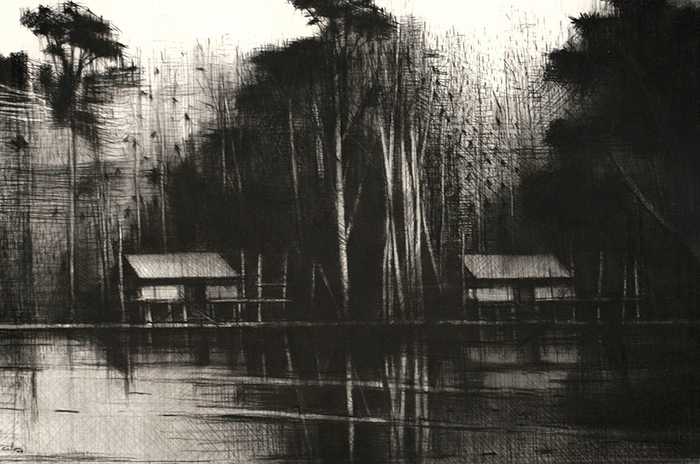
Calo Carratalá. Jungle Study 1. Pencil composed on paper. 122 x 181 cm. 2016


The Alba Cabrera gallery began its activity in 1987, and since then has been holding temporary exhibitions and participating in national and international fairs, with the clear objective of promoting and publicizing the work of its artists. In recent years it has focused mainly on the diffusion and promotion of young values, without neglecting the exhibition of its most consecrated artists. Victoria Santesmases, José Juan Gimeno, Cristina Alabau and Calo Carratalá.


Among the artists that will be exhibiting at the Alba Cabrera gallery stand, the novelty of Art Madrid Cristina Alabau and Calo Carratalá stands out as the first interlacing of the natural and abstract, Mediterranean light takes on the most prominence. While, Carratalá bets on more suffering and neutral works. Two very new bets in this edition.
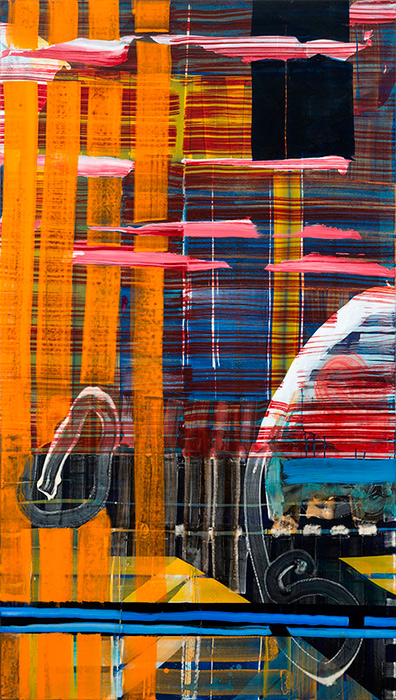


Juan Uslé. Submerged Word. Vinyl, dispersion and pigments on canvas. 198 x 112 cm. 1993


The Benlliure Gallery was founded in 1984 and has been developing its activity towards a quality line in preference to consolidated values, without leaving aside young artists living with the School of Paris, Grupo El Paso, historical avant-gardes, Spanish landscaping Of the 20th century and modern and contemporary artists. They participate in our fair with works by Fernando Zóbel, Rafael Canogar, Esteban Vicente, Juan Uslé and Carmen Calvo.


Carmen calvo, an experienced artist in the field of contemporary conceptualization of the fragment and Juan Uslé who bets on a practically abstract painting with figurative resonances that starts from a specific motive: the maritime and romantic landscape of shipwrecks or mythical voyages. They are two of the strongest proposals of this gallery.
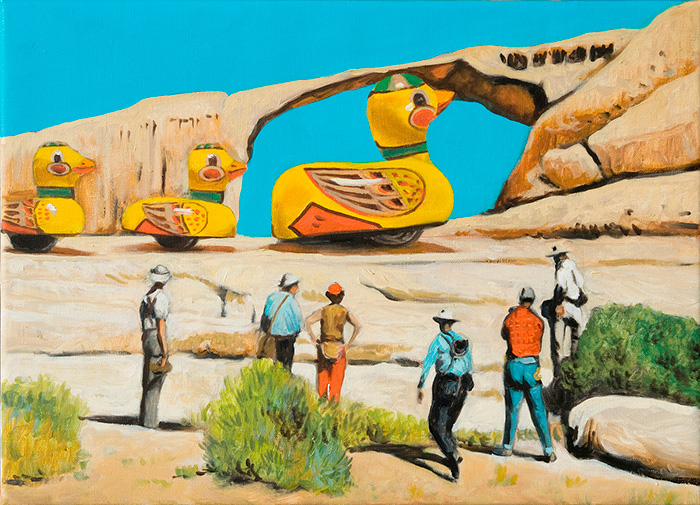


Angel Mateo Charris. The question. Oil on canvas. 75 x 150 cm. 2013


The La Aurora Gallery, in Murcia, opened its doors in 1994 and works with over 350 artists, making a total of 7,000 works of art, eminently original graphic work of some of the great names of art such as Picasso, Dalí, In Art Madrid 17 we can enjoy a proposal made up of the artists Ángel Haro, Ángel Mateo Charris, Gonzalo Sicre, and Marcos Salvador Romera.


Gonzalo Sicre, in particular is one of the most interesting figurative artists in Spain. Together with Ángel Mateo Charris, previously mentioned, Joel Mestre and Dis Berlin, formed the collective The Dock of Levante in the early 90's.
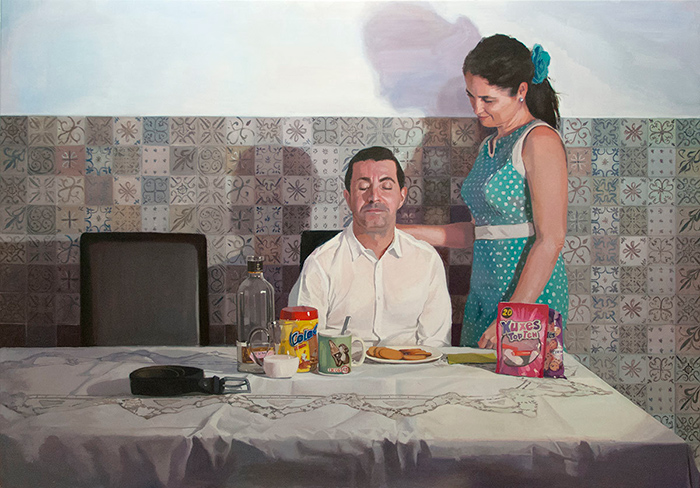


Andrés Ferre. Gynaika II-020. Photography, technique of the artist. 131 x 98.26 cm. 2013


Galería Leúcade, founded in 2013 has wanted to innovate the art world in Murcia and offers diverse styles within contemporary art, cultural activities and workshops with new artists, helping them to make their way in the artistic world. It is a living space in which you can enjoy the art every week in a different way than usual and there are those who have compared it with The Factory, since it is a meeting place for many artists of all disciplines, in addition Of being used as space of creation for some of them. Lucas Brox, Andrés Ferre, Óscar FERRENAVARRO, Celia Reche and Jean Carlos Puerto are the artists with whom they participate in our fair.


One of the main characteristics of the Leúcade gallery is its commitment to local art, since all its artists are from Murcia. Although there is no direct thread between them, eclecticism and variety are strong.
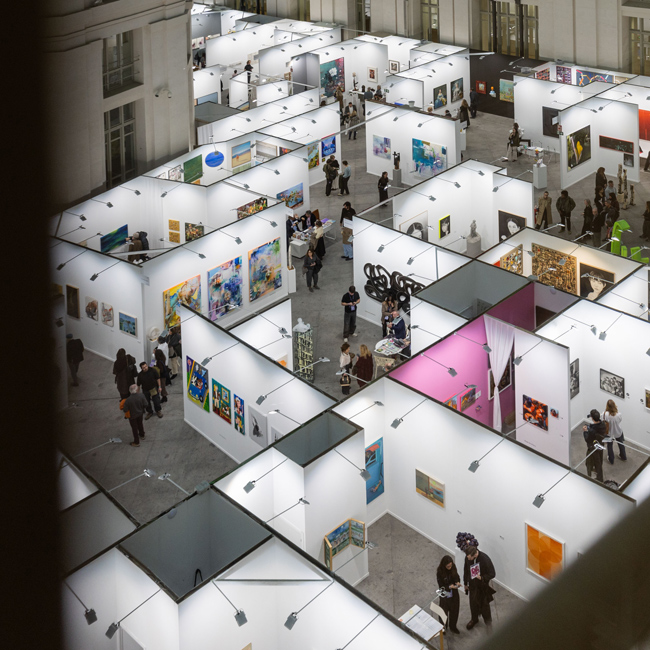


ART MADRID’26 INTERVIEW PROGRAM. CONVERSATIONS WITH ADONAY BERMÚDEZ


The artistic practice of Chamo San (Barcelona, 1987) revolves around a poetics of attention, in which the seemingly insignificant acquires a singular reflective intensity. His works emerge from a persistent observation of everyday life, understood not as a narrative repertoire but as a field of shared experience. Within this framework, the minimal gesture becomes a form of sensitive knowledge, placing the viewer before scenes that are both recognizable and, at the same time, estranged by their temporal suspension.

The progressive shift toward a more atmospheric painting has allowed the environment to cease functioning as a mere support and become an active agent of meaning. Restrained color ranges and carefully constructed spaces generate a sense of stillness that evokes a pictorial tradition attentive to duration and waiting. The human figure—a constant presence in his work—is presented immersed in contexts that amplify its affective and existential dimension.

The silence permeating these images is not absence but condition; it constitutes a space of resonance in which the time of doing and the time of looking converge. Situated between compositional control and openness to the contingent, Chamo San’s work affirms painting as a territory where planning and accident coexist.


Bathtub. 2018. Ballpoint pen on notebook. 14 x 18 cm.


Many of your works show meticulous attention to the smallest gestures and seemingly trivial moments. What interests you about these micro-choreographies of everyday life?

The seed of my work always comes from the sketches I make from life in small notebooks that I can carry with me at all times. Later, I either transfer them to another format so I can work on them more calmly, or they become the final piece in themselves.

Composition, staging, and perhaps those micro-choreographies are what I allow myself to bring to the scene as an artist. For me, these everyday moments are the most direct and honest way to connect with the audience because—even though they are intimate—they reflect universal experiences.


Feet. 2023. Oil pastel on paper mounted on board. 30 x 30 cm.


In your pieces, the presence of sober tones seems to generate a particular type of atmosphere. How would you describe the way that atmosphere emerges during your work, and what role does it play in the overall construction of the image?

Atmosphere and colour are relatively recent additions to my work. Previously, I focused exclusively on the figures as the central element, and they were often left floating in a kind of void. It was when I realised the need to provide context—especially as I began working more closely from the notes in my notebooks—that I came to understand the importance of the environment for the character.

The human figure will always remain the main element for me, as it is through its representation that I find the greatest enjoyment. However, little by little, I have become interested in exploring what surrounds it. I see the creation of an environment and an atmosphere as essential in order to situate the figures within a more complete and fully constructed scene.


Mamant. 2025. Colored pencils on notebook. 14 x 18 cm.


Are the silences in your works inherited from real experiences, or do they emerge during the painting process?

The silences in my work are inherited from real experiences. When I capture those small moments of everyday life—which is essential for me—I tend to be focused and quiet. At the same time, I also believe that the contemplation of artworks naturally invites this kind of calm. In that sense, for a brief moment, both the artist—throughout the entire creative process—and the viewer, when engaging with the work, can meet in the same state of tranquillity and silence.


The Kiss. 2024. Oil pastel on notebook. 14 x 18 cm.


To what extent do you plan your works and how much space do you leave for the unexpected to happen?

Some of my works are very planned, even excessively so, with lots of sketches. On the other hand, I always have that starting point that appears in my notebooks, and I leave experimentation and the unexpected for the end. Although it's also true that when I've thrown myself into improvisation from the beginning, wonderful things have happened, so now I try to combine those two worlds as organically as possible.


Cinema. 2025. Ballpoint pen and oil pastel on notebook. 14 x 18 cm.


Although your work has shifted towards the pictorial—with an aesthetic closely linked to cinema—echoes of illustration can still be seen in your visual language. Which elements would you say remain, and which have undergone a radical transformation?

For me, illustration has been an intense learning process. I deeply admire artists who have combined commissioned illustration with studio work for galleries, such as Ramón Casas and James Jean. I believe these two worlds can connect on a technical level, but their language and purpose are fundamentally different.

The existence of a unique, original work allows for accidents to occur—things that are very unlikely to happen in illustration. It is this condition of uniqueness, and above all the intention behind it, that makes the two practices radically different.