Art Madrid'26 – Los 10 del 10º Aniversario de Art Madrid

Primeras ediciones, obras únicas, piezas nunca vistas en ferias de arte,... hemos seleccionado 10 paradas imprescindibles dentro del recorrido de Art Madrid’15.

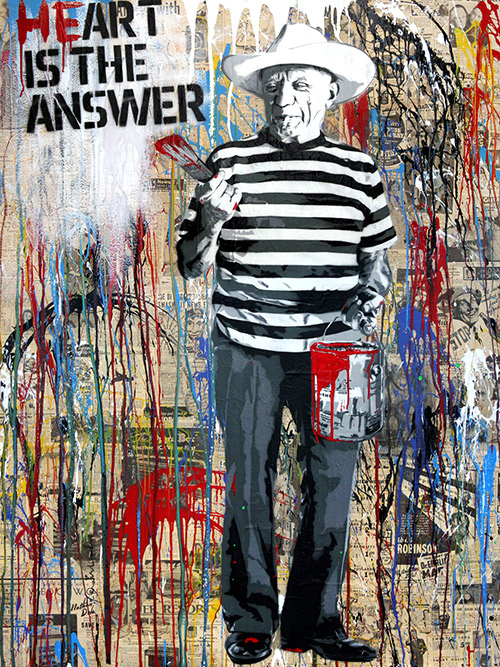
Mr. Brainwash es el pseudónimo del artista callejero de origen francés Thierry Guetta, conocido en todo el mundo tras su aparición en el falso documental “Exit Through the Gift Shop” dirigido por el también artista urbano Banksy y con metraje grabado por el propio Guetta. Su obra Picasso, entre otras, estará colgada en el stand de la galería 3Punts. Es una tela de gran formato, muy trabajada y con un precio que ronda los 40.000€.

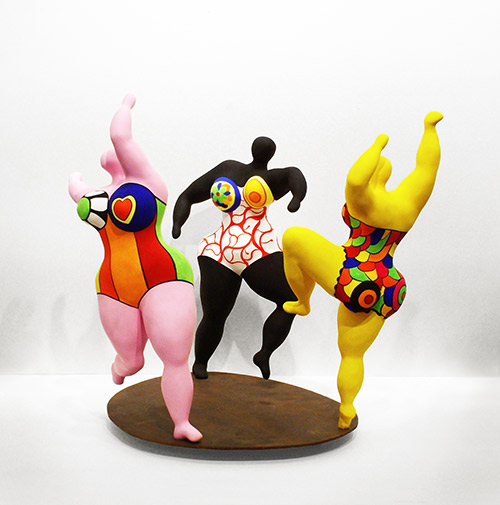
NIki de Saint Phalle. Este es, sin duda, su año con las magníficas exposiciones en el Grand Palais de París y, desde febrero, en el Museo Guggenheim de Bilbao pero es que Niki de Saint Phalle (1930−2000), una de las creadoras más influyentes de la segunda mitad del siglo XX, también estará en Art Madrid con las galerías NH de Colombia (trae la pieza Les Trois Graces de 1994) y con la galería de Barcelona Marc Calzada que trae L’Ange Vase, de 1993, una escultura en resina de poliéster pintada, seriada y firmada por la artista con un precio aproximado de 95.000€.

Jessica Lange (Minnesota, 1947) asegura que aprendió fotografía con el fotógrafo español Paco Grande pero fué en los años 90, cuando Sam Shepard le regala una Leica M6, cuando la actriz decide retomar su actividad como fotógrafa tomando imágenes en su vida cotidiana y en sus viajes por Estados Unidos, Francia, Finlandia, Italia o México, por el que muestra una especial predilección “por sus luces y sus grandes noches”, como ella misma señala. En todos estos países inmortalizó personas y estancias donde "el color era un artificio inútil".


Art Madrid es la primera feria de arte en la que estarán sus fotos, de las series Minnesota y México, gracias a la galería mexicana Hispánica Contemporánea.

Alexander Calder sigue siendo uno de los artistas más innovadores del S.XX y referente para diseñadores, arquitectos y artistas de diversas disciplinas. Con sus móviles (el primero, desarrollado en 1931 y bautizado así por el propio Marcel Duchamp), dotaba por primera vez de movimiento a una obra de arte para para reflejar los efectos cambiantes de la luz y se convirtió en el precursor del arte cinético. Los móviles llevaron a Calder a ocupar puestos principales en la escultura moderna y es precísamente uno de ellos el que os mostramos en Art Madrid:  Black Triangle, una pieza de 1947, firmada, procedente de una colección privada de origen suizo y certificada por la Alexander and Louisa Calder Foundation.

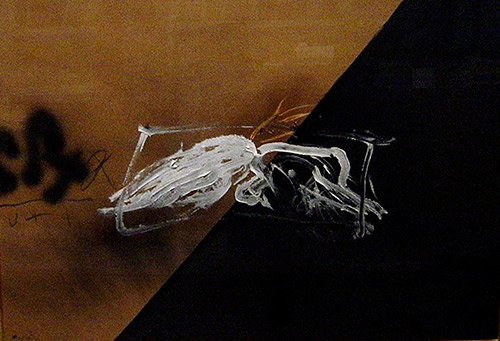
La madrileña galería Kreisler trae una de las piezas más valiosas de la feria este año. Se trata de Divisé en diagonale, de Antoni Tàpies, técnica mixta sobre papel, fechada en 1982, una pieza única de la Colección Kreisler con un precio aproximado de 190.000€.

Las tres últimas obras de Jesús Zurita (Ceuta, 1974), maestro del dibujo, la pintura y la instalación, llegan a Art Madrid recién pintadas gracias a la galería alemana Marc Decoene. Son tres piezas en tinta y acrílico sobre papel Se Odian, Un intenso abandono y Se oye roer, cuyos precios oscilan entre los 2.000 y los 2.800€, y que acompañan a otros trabajos suyos de los años 2012-2014. Zurita logra, como siempre, con suaves trazos en tinta y pincel, capturar y enredar al espectador en sus figuras orgánicas y contorneadas, tan sutiles como perturbadoras.

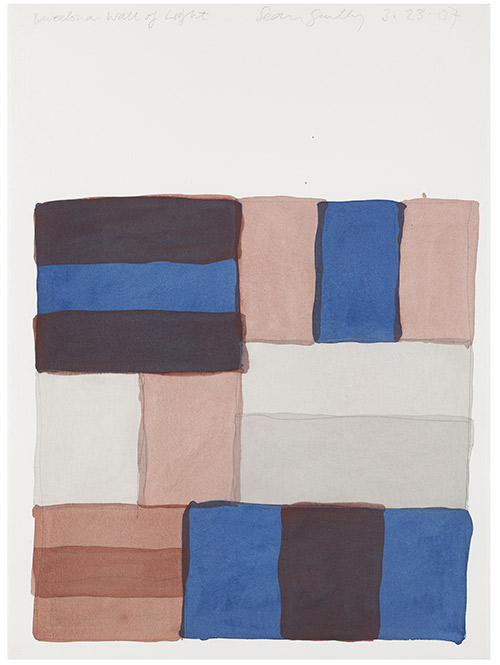
Sean Scully (Dublín, 1945), maestro del color y la simetría, representa hoy el equilibrio entre la energía gestual del Expresionismo Abstracto y la disciplina del Minimalismo Norteamericano. Sus obras, de gran contenido místico y poético expresan, según sus propias palabras, “orden y humanismo porque no necesitamos más caos”. Como si de una pieza de orden dórico -el más simple de los clásicos- se tratara, sobria, equilibrada y simétrica, así se presenta Barcelona. Wall of Light Sean Scully 3.23.07 (2007), la acuarela (firmada y fechada por el artista) que la galería Artur Ramón de Barcelona trae a Art Madrid, una característica pintura de bandas rectangulares verticales y horizontales en gamas armónicas y ligeras, sin adornos ni detalles superfluos y con uns precio aproximado de 50.000€.

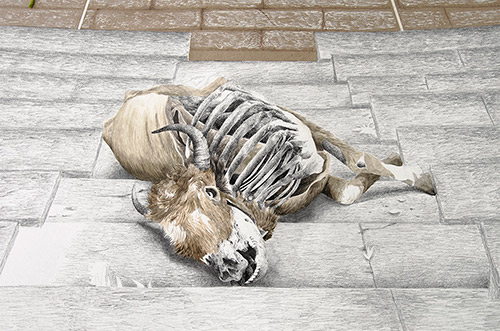
“Pinta como un dibujante y dibuja como un pintor”, es una certeza mantenida por el propio Santiago Talavera (Albacete, 1979) que permite conocer algo mejor su proceso creativo, muy definido por la pureza de las formas. Talavera, según el comisario Carlos Delgado Mayordomo “se consolida con cada exposición como uno de los creadores más fascinantes, poderosos y sutiles de su generación” y en Art Madrid podemos disfrutar, gracias a la galería MOPROO de Shanghay en el programa ONE PROJECT de la feria, de uno de sus últimos trabajos, el monumental Antropocosmos, una suerte de escenario poliédrico cuyo punto de partida es la fotografía que el artista tomó de un antiguo anfiteatro y cuyo resultado es una imagen absolutamente enigmática donde lo real figura invención y viceversa. Un espacio deshabitado, abismal, idílico y perturbador a un tiempo, y que responde a un plan perfectamente acotado por parte del artista.

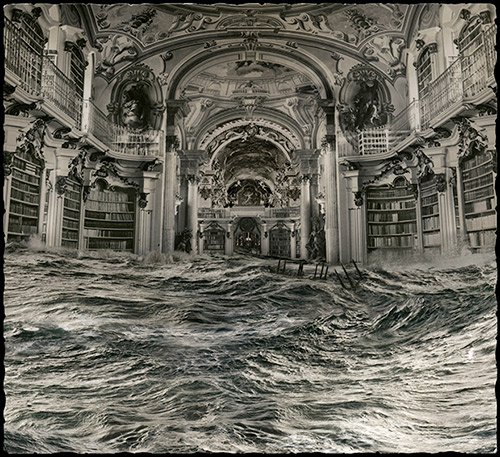
Utilizando fotos encontradas en mercadillos, rastros y librerías de viejo de Berlín, donde reside habitualmente, Pablo Genovés (Madrid, 1959) ha desarrollado tres de sus series más impresionantes: «Precipitados», «Cronología del ruido» y «Antropoceno». En estas series, realizadas entre 2009 y 2014, la naturaleza invade con furia lujosos edificios, representativos del esplendor de Europa, para hablarnos de la melancolía y la fugacidad de las cosas. En Art Madrid, de la mano de la galería asturiana Aurora Vigil Escalera, podemos disfrutar de La Naturaleza de los Dioses (2011-2014), Entre el cielo y la Tierra, Templo del Sol y Del Hielo, de la serie Precipitados y que, como toda ella, gozan de la potencia de una pintura barroca y de la sensibilidad de una obra romántica.

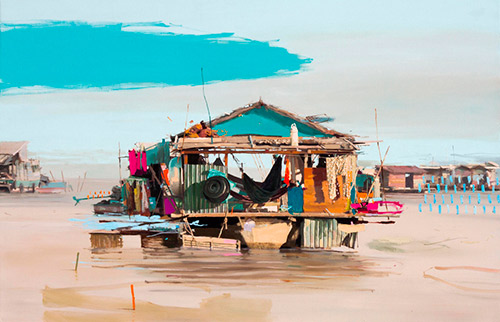
Artista urbano y miembro del colectivo BOAMISTURA, Rubén Martín de Lucas (Madrid, 1977) es ya uno de los artistas revelación de esta temporadapresenta en Art Madrid -con la galería BAT Alberto Cornejo- su trabajo de estudio. Cuadros de gran formato, técnicas mixtas y obra en papel desarrolladas para el proyecto La Aldea Flotante, una serie inspirada en su experiencia como viajero por el sudeste asiático que le llevó a reflexionar sobre el frágil pero implacable equilibrio de las cosas.


ART MADRID '26: 21 YEARS OF CONTEMPORARY ART


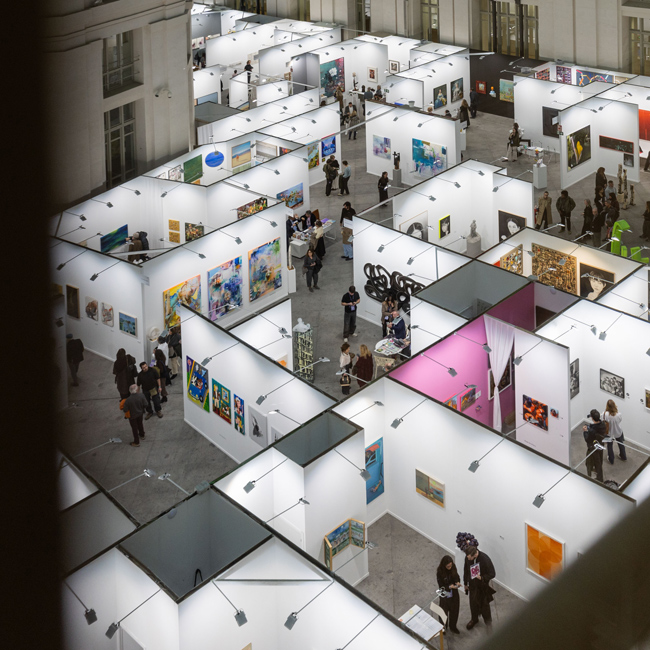
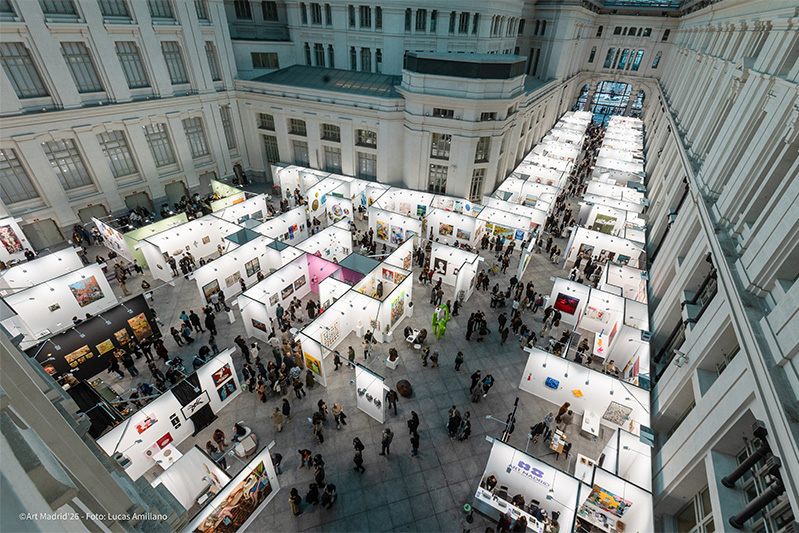
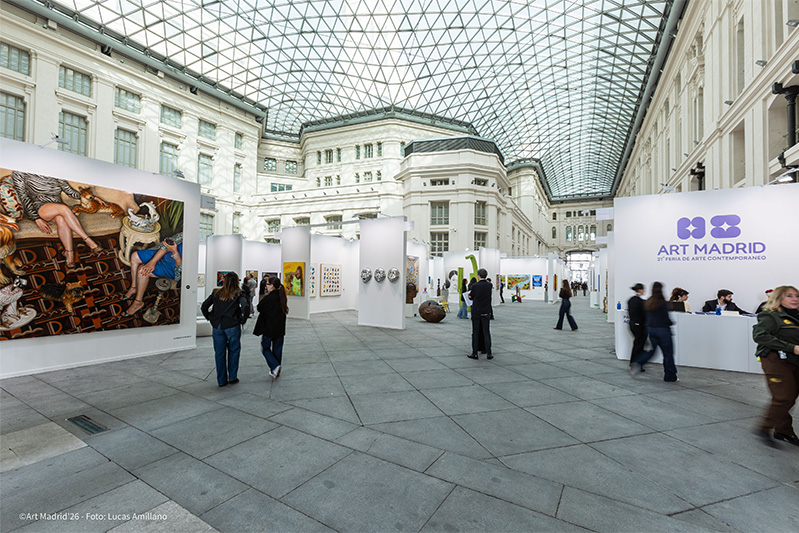
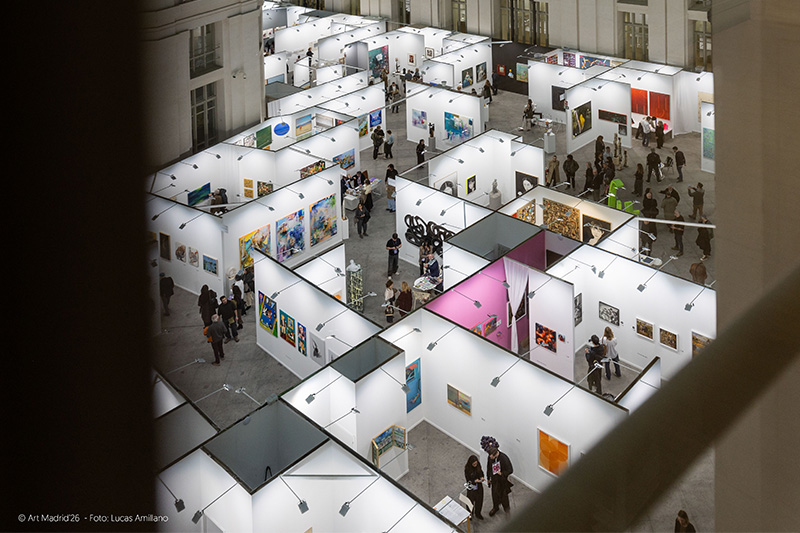
In 2026, Art Madrid will celebrate its 21st edition, further consolidating its position as a leading contemporary art fair in Spain. From 4 to 8 March, the fair will bring together thirty-five national and international galleries at the Galería de Cristal of the Palacio de Cibeles. Returning to its date during Madrid Art Week, Art Madrid reaffirms its pioneering role by expanding the fair calendar and offering an open and enriching dialogue in which diverse artistic proposals coexist.


Throughout its history, Art Madrid has established itself as a leading presence in the contemporary art scene. It is renowned for its commitment to promoting both emerging and established galleries, and for its dedication to making contemporary art accessible to a diverse range of audiences.

Far from being a fair curated under a single curatorial line, Art Madrid promotes diversity in its offering, respecting the identity of each exhibitor and promoting a plural creative ecosystem that reflects the richness and differences of the current art scene.


Art Madrid '25. Photo by Lucas Amillano


GALLERY PROGRAM: AN ACTIVE MAP OF CONTEMPORARY CREATION


The Gallery Program is at the heart of Art Madrid’26. For this edition, thirty-five national and international galleries will participate in a space that celebrates experimentation, hybrid languages, and the latest artistic production. The selection of proposals constitutes a representative mosaic of the aesthetics, discourses, and contemporary practices that are shaping the present of art in Europe.

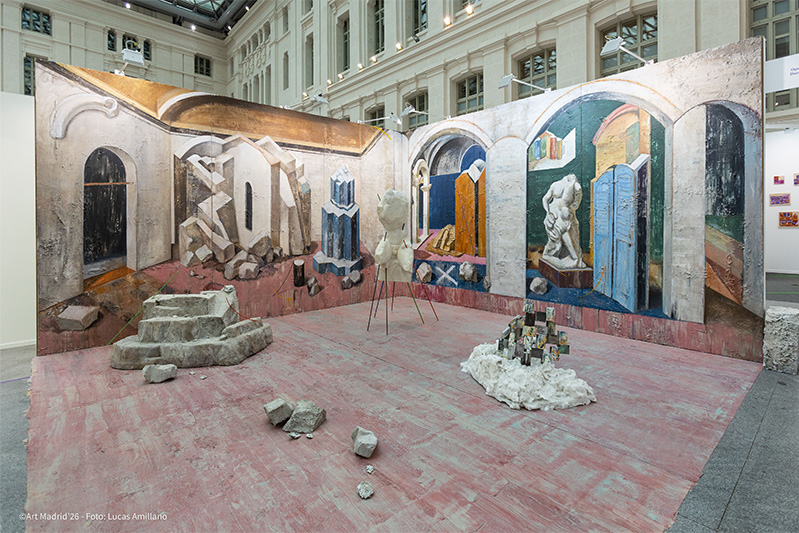
The Galería de Cristal of the Palacio de Cibeles will once again be transformed into a dynamic space where the exhibitions interact with each other, inviting the public to explore visual narratives that show the evolution of contemporary languages. Works that experiment with new media, formal investigations that reformulate traditional techniques, pieces that reflect on the links between technology and humanity, and poetic approaches that explore territory, identity, or memory make up a plural, stimulating journey open to multiple interpretations.

Art Madrid also continues to strive to become a platform for discovery, allowing both professionals and visitors to identify new voices and consolidate relationships with artists who are already emerging as leaders within the contemporary cultural landscape.


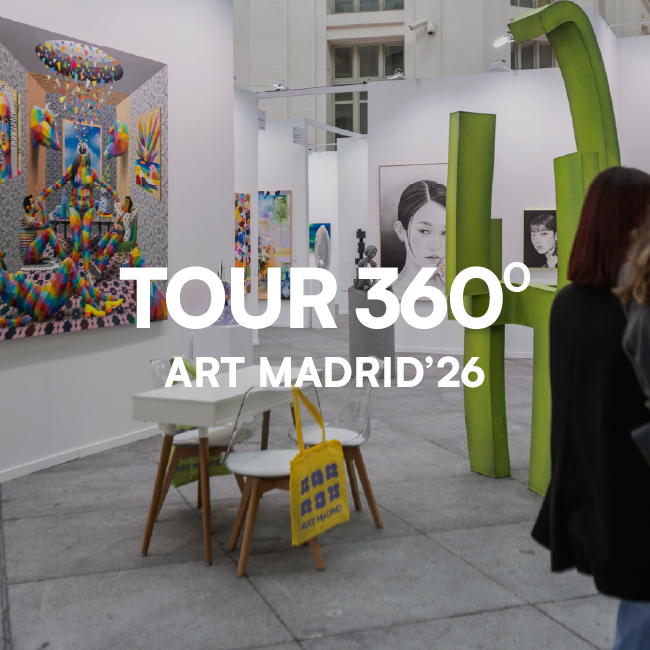
Art Madrid '25. Photo by Lucas Amillano


NATIONAL AND INTERNATIONAL EXHIBITORS

Thirty-five galleries are participating in this edition, twenty-seven of which are returning after finding the fair to be a favourable environment in which to strengthen connections, increase visibility and promote their artists' work on an international scene.

Twenty-six of these are Spanish galleries from various regions of the country: 3 Punts Gallery (Barcelona), Alba Cabrera Gallery (Valencia), Aurora Vigil-Escalera (Gijón), CLC ARTE (Valencia), DDR Art Gallery (Madrid), Est_ArtSpace (Madrid), g • gallery (Barcelona), Galería Arancha Osoro (Oviedo), Galería BAT alberto cornejo (Madrid), Galería Beatriz Pereira (Plasencia), Galería Carmen Terreros (Zaragoza), Galería Espiral (Noja), Galería La Mercería (Valencia), Galería Luisa Pita (Santiago de Compostela), Galería María Aguilar (Cadiz), Metro Gallery (Santiago de Compostela), Rodrigo Juarranz Gallery (Aranda de Duero), Sigüenza Gallery (Sigüenza), Gerhardt Braun Gallery (Palma de Mallorca | Madrid), Inéditad Gallery (Barcelona), Kur Art Gallery (San Sebastián), LAVIO (Murcia | Shanghai), Moret Art (A Coruña), Pigment Gallery (Barcelona), Shiras Galería (Valencia) and Uxval Gochez Gallery (Barcelona). This selection of galleries highlights the importance of the Spanish scene and its contribution to the development of the contemporary cultural ecosystem.


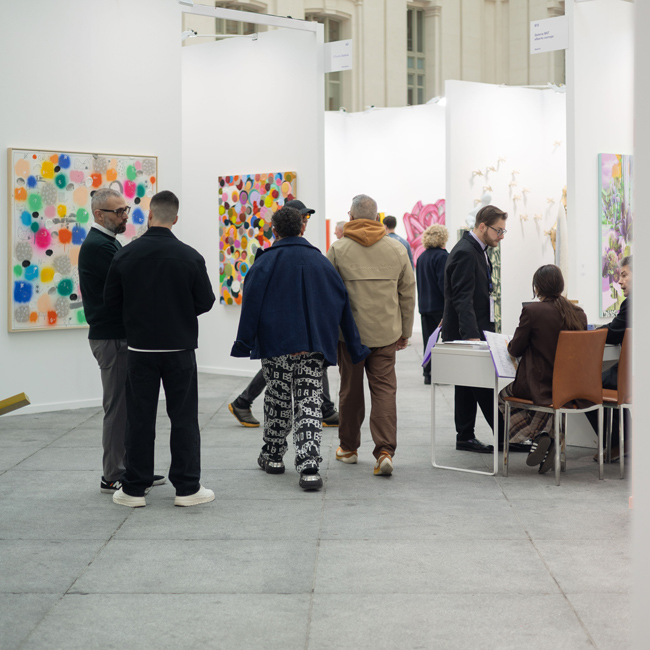
Art Madrid '25. Photo by Lucas Amillano


The nine international galleries participating in this edition are: Banditrazos Gallery (Seoul, South Korea), Collage Habana (Havana, Cuba), Galeria São Mamede (Lisbon, Portugal), Galerie ONE (Paris, France), KANT Gallery (Copenhagen, Denmark | Palma de Mallorca, Spain), Loo & Lou Gallery (Paris, France), Nuno Sacramento Arte Contemporânea (Ílhavo, Portugal), Trema Arte Contemporânea (Lisbon, Portugal) and Yiri Arts (Taipei, Taiwan). Their participation broadens the fair's international reach, promoting creative and conceptual exchange between diverse artistic perspectives.

In addition, eight new galleries have been added to the list of exhibitors:

Banditrazos Gallery (Seoul, South Korea), Est_ArtSpace (Madrid, Spain), g • gallery (Barcelona, Spain), Galería Beatriz Pereira (Plasencia, Spain), Galerie ONE (Paris, France), Galería Sigüenza (Sigüenza, Spain), Gerhardt Braun Gallery (Palma de Mallorca | Madrid, Spain) and KANT Gallery (Copenhagen, Denmark | Palma de Mallorca). These additions reinforce Art Madrid's commitment to continuous renewal and openness to spaces that are exploring new approaches to contemporary art.


Art Madrid '25. Photo by Lucas Amillano


PARALLEL PROGRAM: A REFLECTION ON THE ‘SPECIES’ OF SPACES


One of the great attractions of Art Madrid is its Parallel Program, which this time delves into the notions of: ‘Fragments, relationships, and imaginary distances.’ This approach turns the fair into an expanded space, where art, audience, architecture, and memory converge. Thus, the Parallel Program proposes a critical approach to the container of the event itself. Taking as a reference the reading of Species of Spaces by Georges Perec (Perec, Georges. Species of Spaces. Montesinos, 2004), it adopts a marked interest in the everyday, that which usually goes unnoticed, the infra-ordinary, giving each corner of the venue its own narrative value.

Another of the conceptual references of this edition is based on an analysis of Édouard Glissant's Poetics of Relation (Glissant, Édouard. Poetics of Relation; Prologue by Manuel Rebón. - 1st ed. - Bernal: Universidad Nacional de Quilmes, 2017.), which advocates the coexistence of differences and the importance of non-totalizing links, which are extrapolated to the art system, proposing an understanding of it as a network of exchanges and connections that respect the uniqueness of each cultural practice and actor.

‘Imaginary distances,’ understood as subjective journeys and affective cartographies traced by visitors, thus become the conceptual axis that articulates this program. This perspective transforms the Fair into an experience that goes beyond visual contemplation, turning it into a territory that can be collectively reconstructed, without losing sight of the paths travelled by the individuality of each voice.

In this edition, the Parallel Program encourages visitors to engage with the space and its projects, turning contemplation into an opportunity to question and interact with things that might otherwise go unnoticed in everyday life.


Art Madrid '25. Photo by Lucas Amillano


In the preview and during Art Week, Art Madrid'26 offers a range of experiences that allow the public to get closer to the creative process and practices of the participating artists. Among the returning initiatives are the Interview Program, Curated Walkthroughs, the third edition of Open Booth, dedicated to emerging creation, the presentation of Espacio Nebrija, a university project in collaboration with Nebrija University, alongside the fair’s established Performance Cycle.

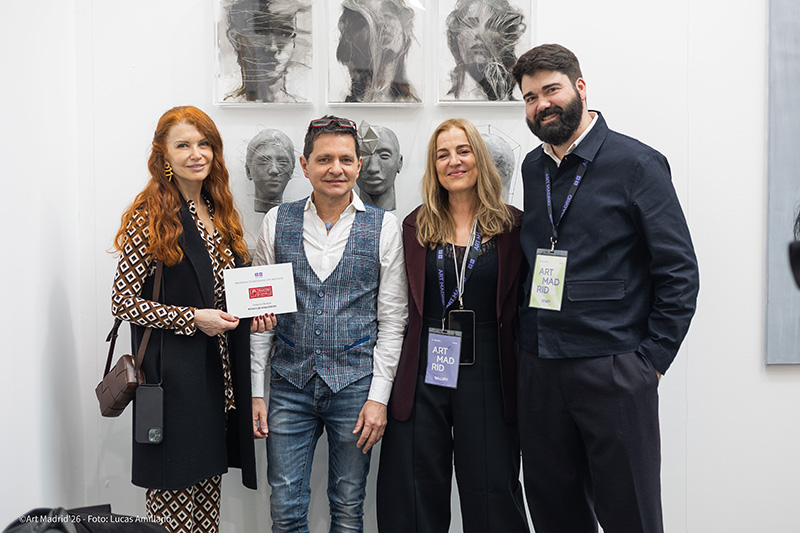
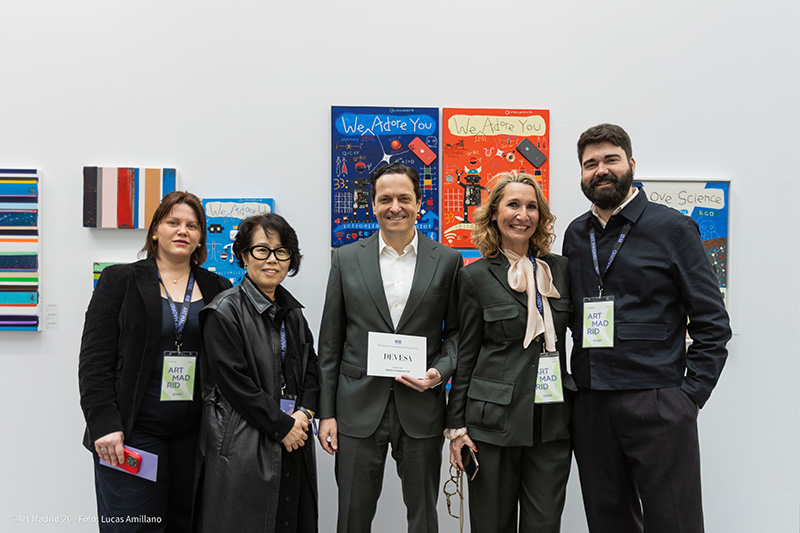
In addition, the One Shot Collectors Program and the second edition of the Patronage Program are back. These initiatives seek to strengthen the bond between collectors, artists, and the public, promoting ethical, informed, and responsible practices in collecting and patronage.


Art Madrid '25. Photo by Lucas Amillano


Art Madrid'26 has established itself as a dynamic meeting place, where diverse experiences, discourses, and practices converge. Far from being a fair curated under a single curatorial line, Art Madrid promotes diversity as a structuring principle, respecting the identity of each exhibitor and fostering a plural creative ecosystem. This plurality is not merely formal, but translates into a network of practices, languages, and perspectives that reflects the complexity, richness, and tensions of the contemporary art scene, consolidating the fair as a catalyst for cultural relations, an observatory of emerging trends, and an international reference point for the Spanish art scene.

WELCOME TO ART MADRID'26