Art Madrid'26 – ARTISTS, WELCOME HOME!

A glimpse of the future: the fair is coming!

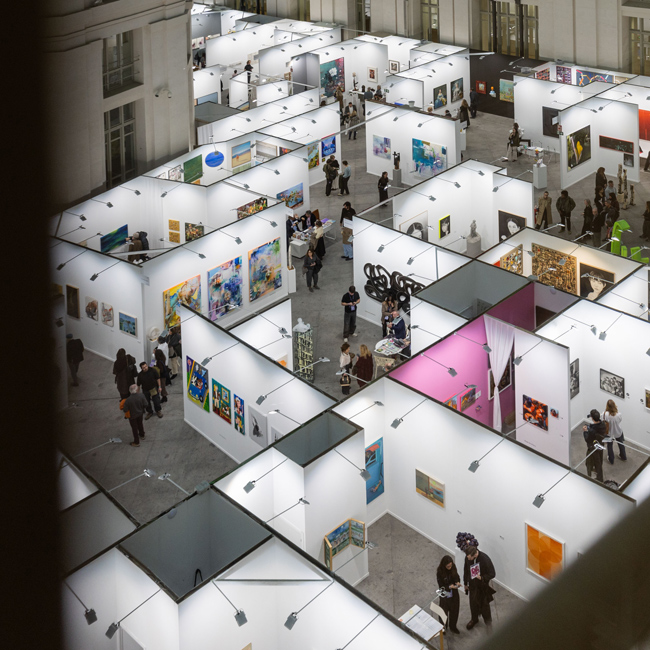
Art Madrid is back and the excitement of the return can be perceived in the posts, stories and tags that have been received over the last few weeks on our social networks, and we love it! It's one of the most exciting parts of this pre-event phase. But the most comforting thing, after a year of work, is to be in front of this great list of artists from all over the world and imagine the surprises they have prepared for the public.
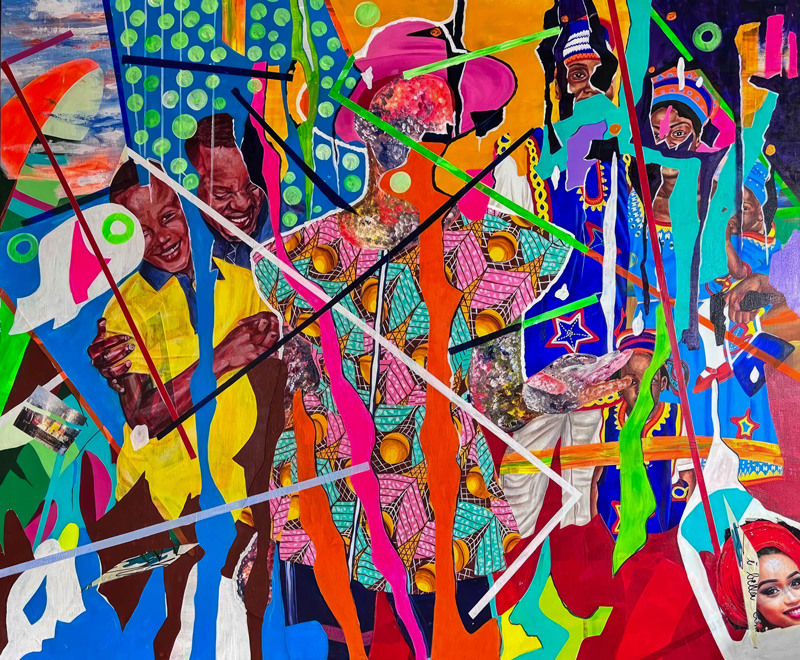
Ajarb Bernard Ategwa. Sweet family. Acrylic on canvas, 200 x 225 cm, 2023.

Artists have been the main protagonists of Art Madrid in each of its editions. Always in a unique, attractive and emotional way, they have been able to narrate their life experiences through images; their messages and statements have touched the sensibilities of the public, which has returned to meet them every year.
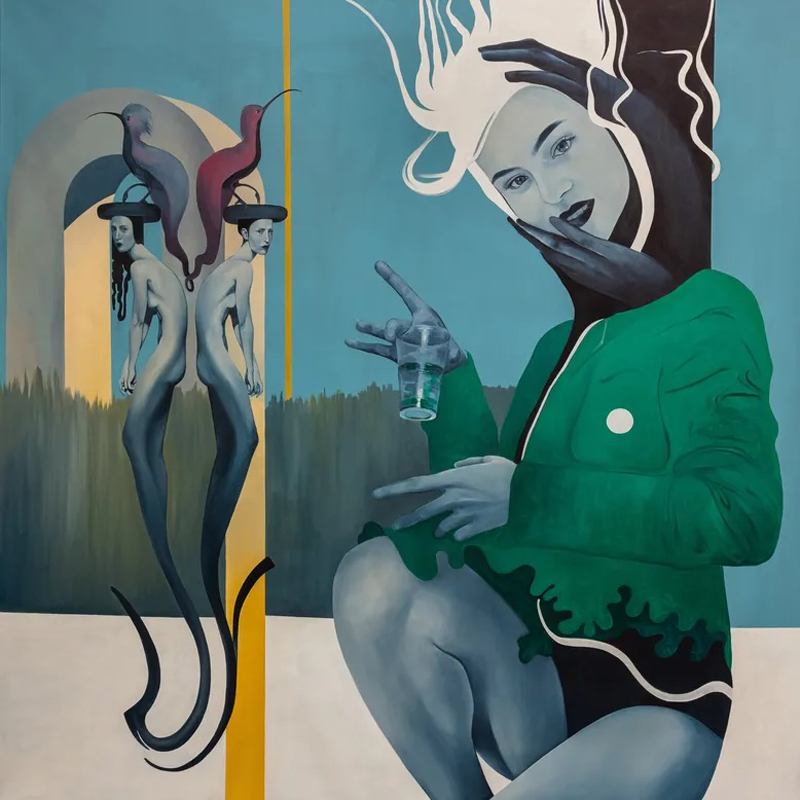
Irina Grechuina. Solaristics Deadlock. Oil on canvas, 200 x 200 cm, 2022.

And the fact is, dear friends, that Art Week has changed its dates and this year 2024 welcomes us between March the 6th and March the 10th; and so, imbued with the frenetic rhythm of change, we also welcome the almost two hundred artists who will accompany us during the 19th edition of Art Madrid.
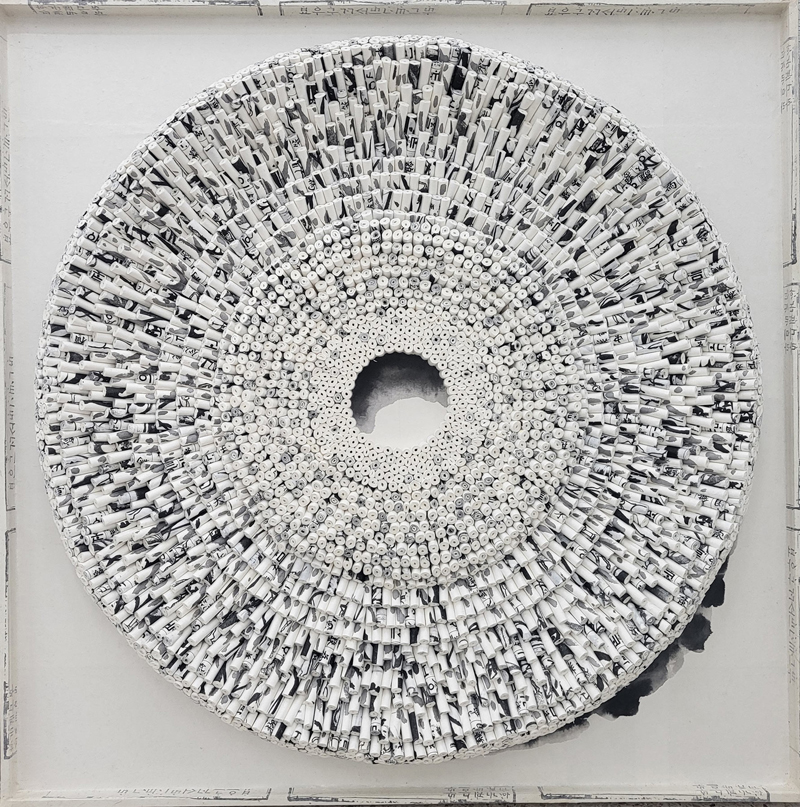
Luchio Lim. Story 1. Mixed media, traditional Korean paper, 92 x 92 cm, 2023.

If we look at the data that this great list of names shows, the artists participating in this edition represent 30 countries from Africa, Asia, Europe and Latin America. This is an important fact, considering that 75% of the exhibitors participating in Art Madrid are national and the others 25% are international galleries. This means that most of the galleries have a diverse and multicultural roster of artists, which means that the presence and coexistence of creators from four continents translates into a heterogeneous exhibition proposal.
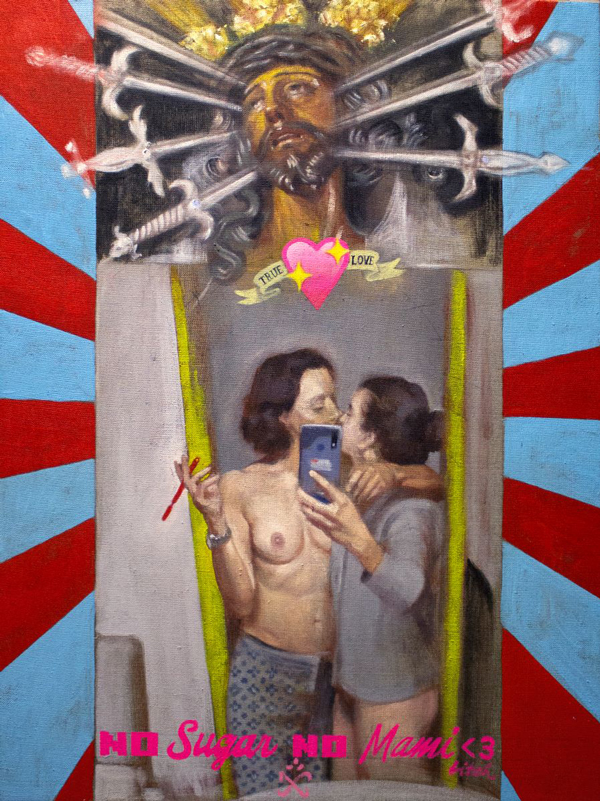
Silvia Flechoso. No sugar, no mommy. Oil on canvas, 73 x 54 x 3 cm, 2023.

And if this information is not enough to attract your attention, wait, here comes the best: most of the artworks you will see in Art Madrid are of recent creation (2023-2024), and the leading manifestations are once again: painting, sculpture and drawing; without losing sight of the surprises that photography and installation have in reserve for you in our next edition. More than half of the artists are participating for the first time, exploring themes such as migration, cultural hybridity, racial and gender issues, sustainability, the deconstruction of traditional forms of representation, the values of art criticism and the art system. Architecture, design, the languages of traditional crafts and digital environments are also universes from which the edition's exhibition proposals have been fed back.
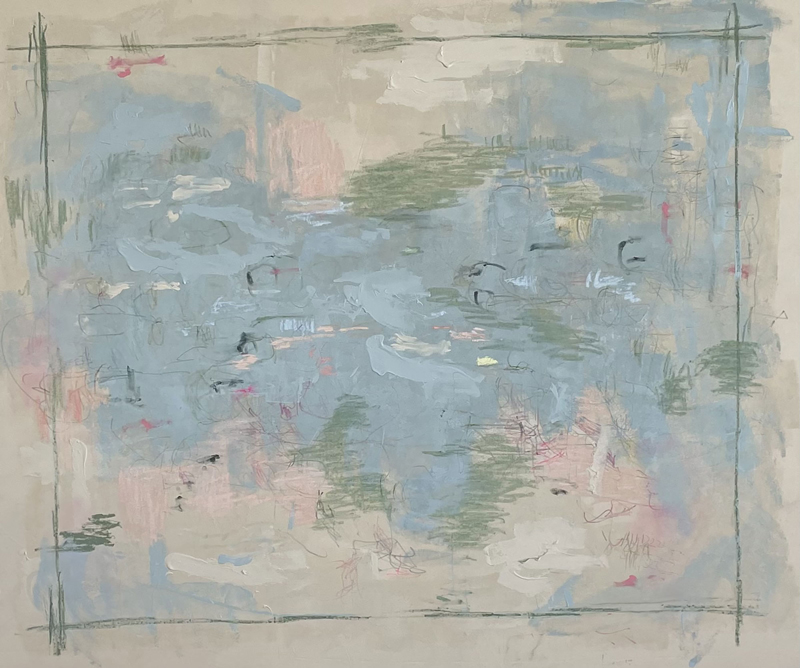
Ana Monsó. All I wanna hear. Acrylics, pastels, pencils, markers, spray on canvas,

Welcoming the artists to Art Madrid'24 will be a reunion that celebrates diversity and innovation, creating a space where the boundaries between different forms of expression are dissolved, giving way to a creative dialog without limits. The works display exceptional technical skill as well as a deep exploration of form, color, and texture. From evocative landscapes to intimate portraits, each stroke, photograph, or three-dimensional form reveals the artists' commitment to their art. They are aesthetically powerful proposals that invite reflection on the nature of art and its relationship to the world around us.
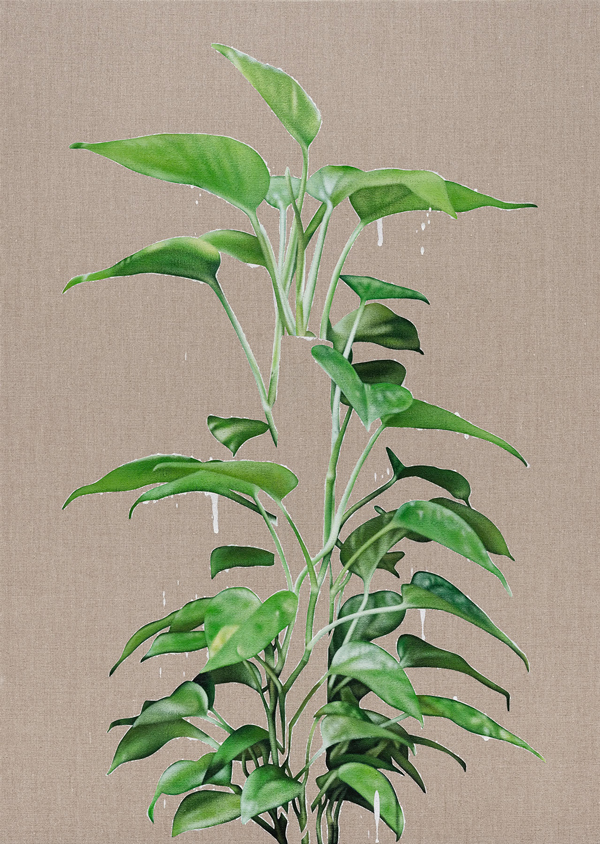
HUANG Shung-Tin Blank 042. Acrylic on linen, 91 x 65 cm, 2023.

We invite you to meet the artists participating in Art Madrid'24



Daniel Barrio. Guest artist of the third edition of OPEN BOOTH. Courtesy of the artist.


DESPIECE. PROTOCOLO DE MUTACIÓN


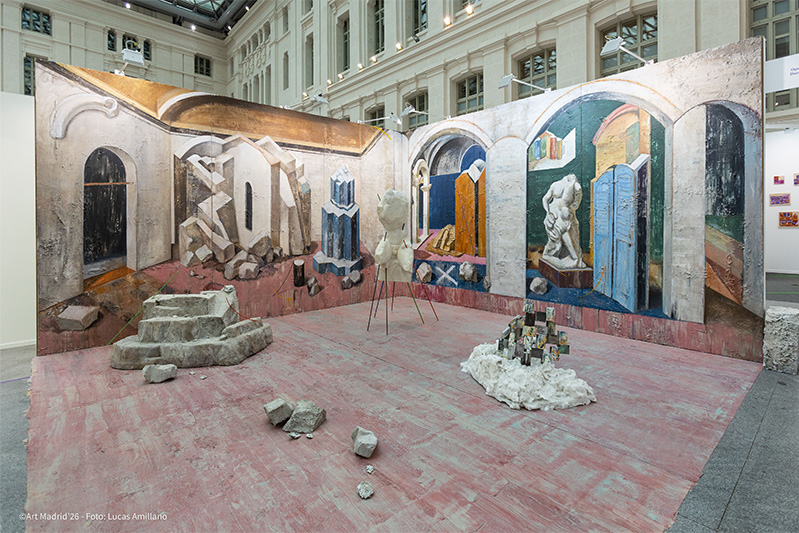
As part of the Art Madrid’26 Parallel Program, we present the third edition of Open Booth, a space conceived as a platform for artistic creation and contemporary experimentation. The initiative focuses on artists who do not yet have representation within the gallery circuit, offering a high-visibility professional context in which new voices can develop their practice, explore forms of engagement with audiences, and consolidate their presence within the current art scene. On this occasion, the project features artist Daniel Barrio (Cuba, 1988), who presents the site-specific work Despiece. Protocolo de mutación.

Daniel Barrio’s practice focuses on painting as a space for experimentation, from which he explores the commodification of social life and the tyranny of media approval. He works with images drawn from the press and other media, intervening in them pictorially to disrupt their original meaning. Through this process, the artist opens up new readings and questions how meaning is produced, approaching painting as a space of realization, therapy, and catharsis.

Despiece. Protocolo de mutación is built from urban remnants, industrial materials, and fragments of history, inviting us to reflect on which memories we inherit, which we consume, and which ones we are capable of creating. Floors, walls, and volumes come together to form a landscape under tension, where the sacred coexists with the everyday, and where cracks matter more than perfection.

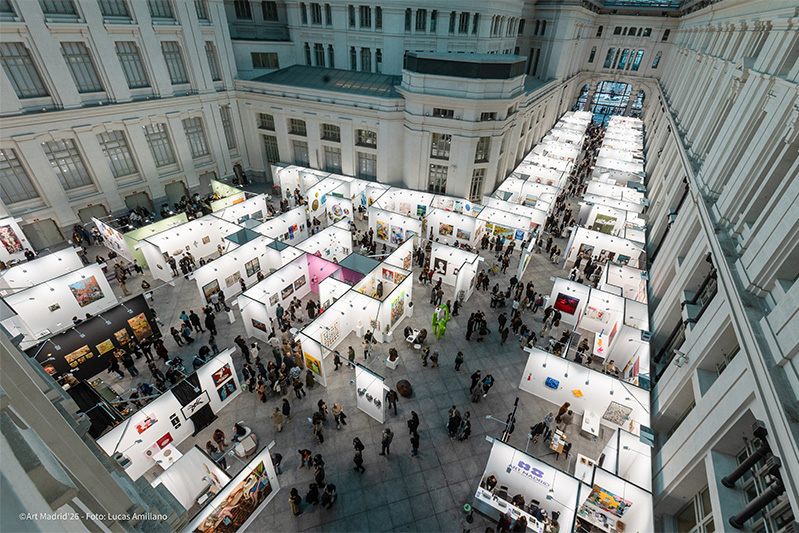
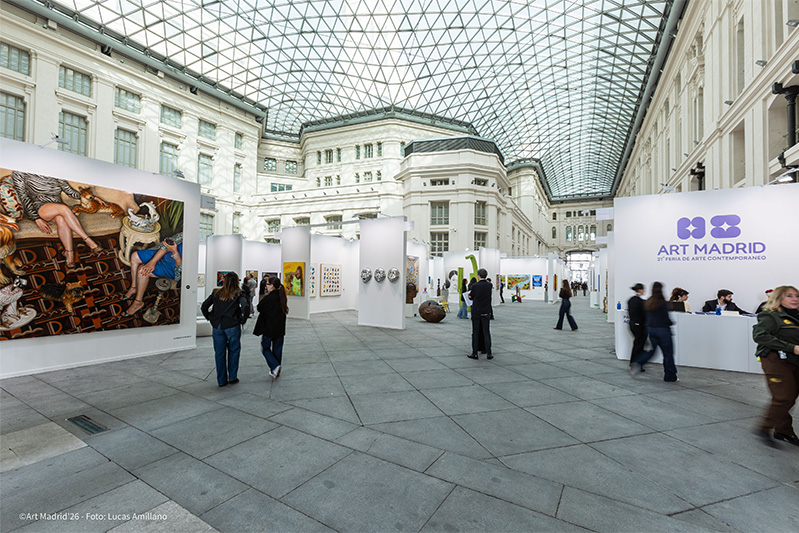
The constant evolution of art calls for ongoing exchange between artists, institutions, and audiences. In its 21st edition, Art Madrid reaffirms its commitment to acting as a catalyst for this dialogue, expanding the traditional boundaries of the art fair context and opening up new possibilities of visibility for emerging practices.


Despiece. Protocolo de mutación emerges from a critical and affective impulse to dismantle, examine, and reassemble what shapes us culturally and personally. The work is conceived as an inseparable whole: an inner landscape that operates as a device of suspicion, where floors, walls, and volumes configure an ecosystem of remnants. It proposes a reading of history not as a linear continuity, but as a system of forces in permanent friction, articulating space as an altered archive—a surface that presents itself as definitive while remaining in constant transformation.


The work takes shape as a landscape constructed from urban waste, where floors, walls, and objects form a unified body made of lime mortar, PVC from theatrical signage, industrial foam, and offering wax. At the core of the project is an L-shaped structure measuring 5 × 3 meters, which reinterprets the fresco technique on reclaimed industrial supports. The mortar is applied wet over continuous working days, without a pursuit of perfection, allowing the material to reveal its own character. Orbiting this structure are architectural fragments: foam blocks that simulate concrete, a 3D-printed and distorted Belvedere torso, and a wax sculptural element embedded with sandpaper used by anonymous workers and artists, preserving the labor of those other bodies.

A white wax sculptural element functions within the installation as a point of sensory concentration that challenges the gaze. Inside it converge the accumulated faith of offering candles and the industrial residues of the studio, recalling that purity and devotion coexist with the materiality of everyday life. The viewer’s experience thus moves beyond the visual: bending down, smelling, and approaching its vulnerability transforms perception into an intimate, embodied act. Embedded within its density are sanding blocks used by artists, artisans, and laborers, recovered from other contexts, where the sandpaper operates as a trace of the effort of other bodies, following a protocol of registration with no autobiographical intent.

Despiece. Protocolo de mutación addresses us directly, asking: which memory do we value—the one we consume, or the one we construct with rigor? The audience leaves behind a purely contemplative position to become part of the system, as the effort of moving matter, documentary rigor, and immersive materiality form a body of resistance against a mediated reality. The project thus takes shape as an inner landscape, where floor, surface, and volume articulate an anatomy of residues. Adulteration operates as an analytical methodology applied to the layers of urban reality, intervening in history through theatrical and street advertising, architectural remnants, and administrative protocols, proposing that art can restore the capacity to build one’s own memory, even if inevitably fragmented.


ABOUT THE ARTIST

DANIEL BARRIO (1988, Cuba)

Daniel Barrio (Cienfuegos, Cuba, 1988) is a visual artist whose practice articulates space through painting, understanding the environment as an altered archive open to critical intervention. He studied at the Academy of Fine Arts of Cienfuegos (2004–2008), specializing in painting, and later at the Madrid Film School (ECAM, 2012–2015), where he studied Art Direction. His methodology integrates visual thinking with scenographic narrative.

His trajectory includes solo exhibitions such as La levedad en lo cotidiano (Galería María Porto, Madrid, 2023), Interiores ajenos (PlusArtis, Madrid, 2022), and Tribud (Navel Art, Madrid, 2019), as well as significant group exhibitions including Space is the Landscape (Estudio Show, Madrid, 2024), Winterlinch (Espacio Valverde Gallery, Madrid, 2024), Hiberia (Galería María Porto, Lisbon, 2023), and the traveling exhibition of the La Rioja Young Art Exhibition (2022).

A member of the Resiliencia Collective, his work does not pursue the production of objects but rather the articulation of pictorial devices that generate protocols of resistance against the flow of disposable images. In a context saturated with immediate data, his practice produces traces and archives what must endure, questioning not the meaning of the work itself but the memory the viewer constructs through interaction—thus reclaiming sovereignty over the gaze and inhabiting ruins as a method for understanding the present.