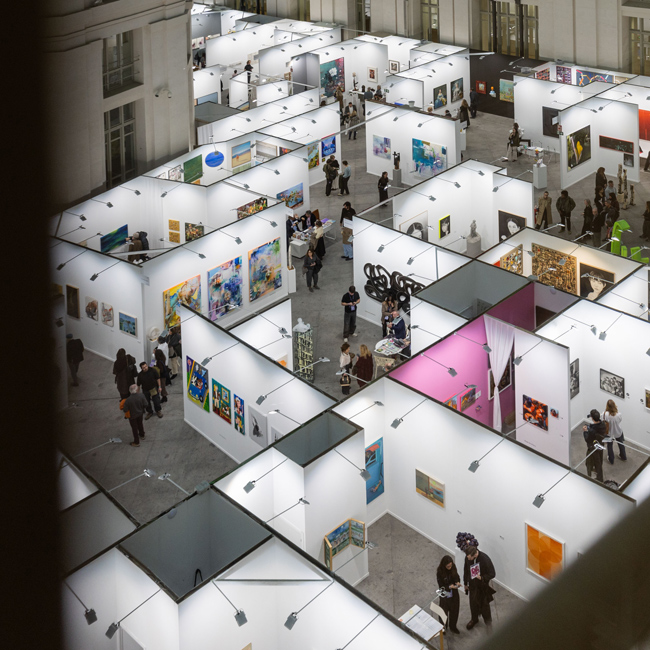
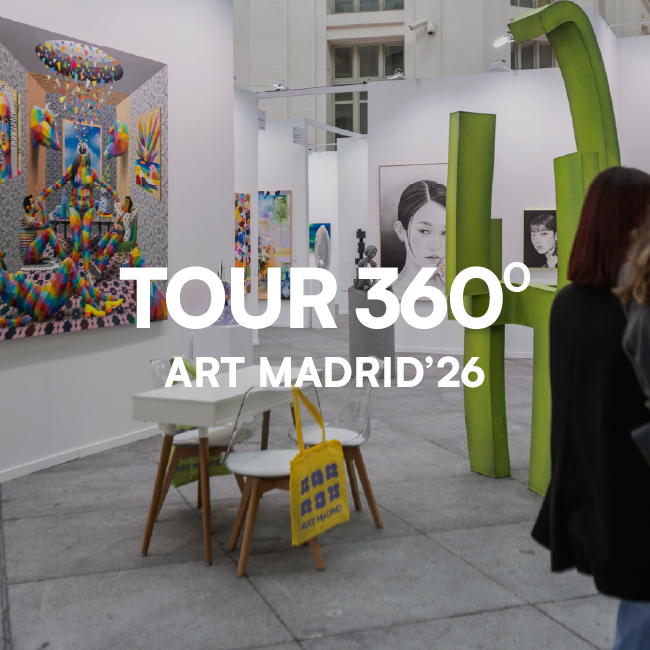
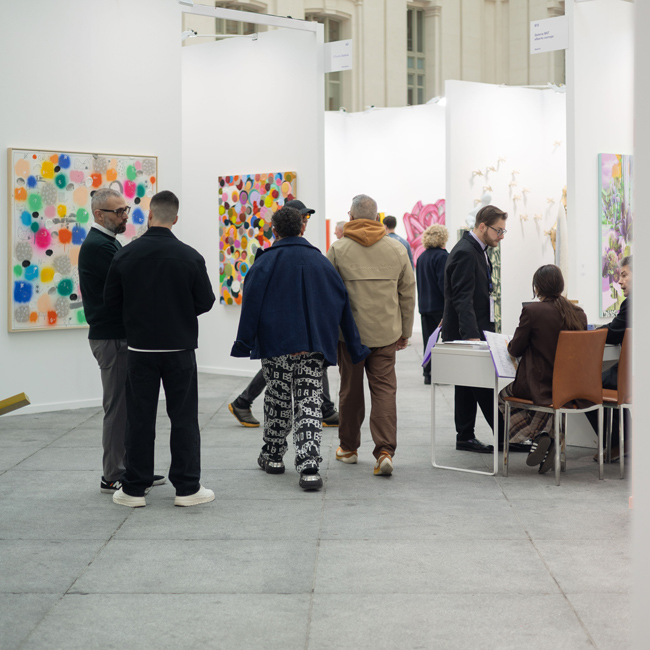
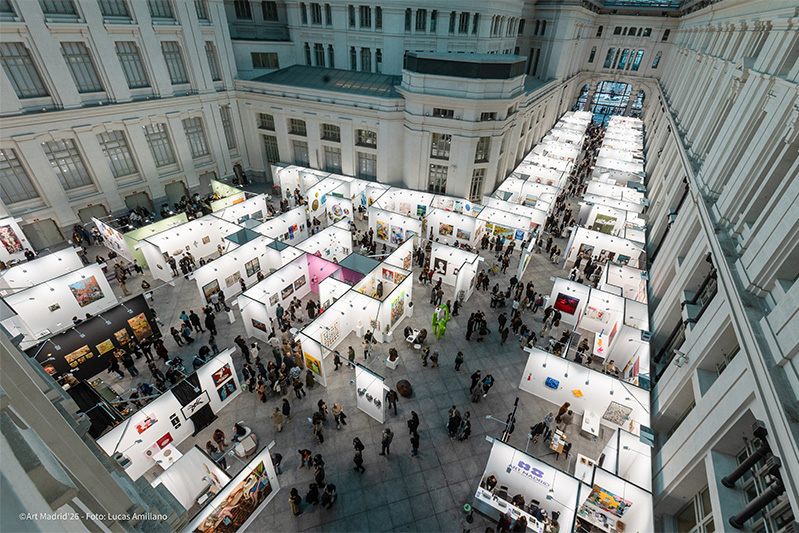
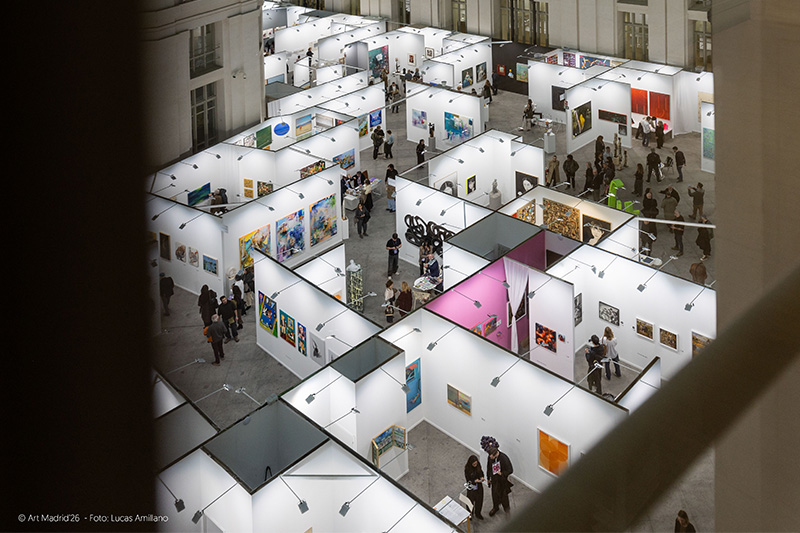
Art Madrid'26 – Fernando Latorre Gallery in Art Madrid\'15

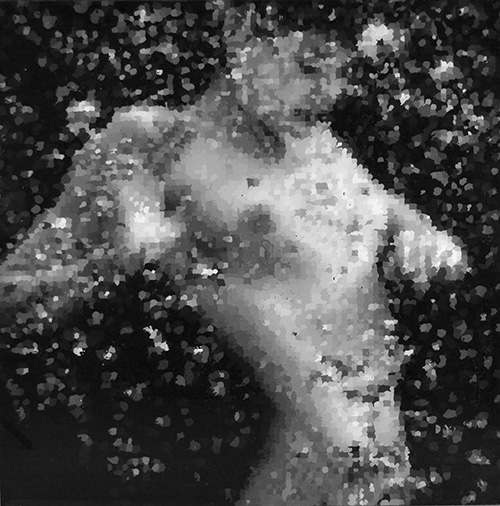
Obra de Fabio Camarotta.


With roots from Zaragoza, Fernando Latorre Gallery was founded in 1991 in this city of Aragon and there he developed an intense labor of promotion of young talents for more than a decade. In 2003 Fernando decided to come to the capital, where he opened a space dedicated to contemporary art in Doctor Fourquet street, central axe of arts neighbourhood of Madrid. A new phase in this trajectory arrives in 2012, when he ventured to open a huge local in Rivas Vaciamadrid, while he keeps his office in Doctor Fourquet. The Rivas's space offers a new surface of 200 m2 completely dedicated to promotion and exhibition of his artists, a clear local whose walls never are empty.


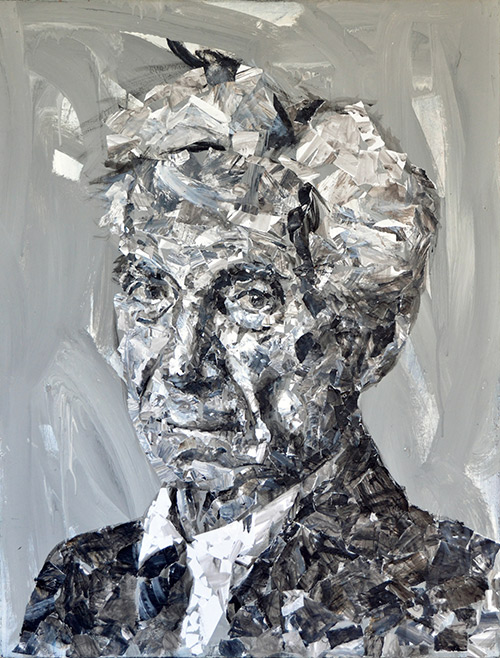
Obra de Daniel Merlin.


Fernando knows how to identify young artists with a promising perspective. Among them we must mention Daniel Merlin, painter of 30 years old that has been recently rewarded with the BMW Award of Painting. He was born in Buenos Aires, where he started his contact with art and his first studies of painting. Then, he moved to the old continent and he studied with the painter Emma Gans in Madrid and he attended the painting and drawing workshop of the Cultural House of San Lorenzo del Escorial, led by the painter Álvaro Sellés. The portraits of this artist, of big dimensions, causes a strong impact of attraction and bewilderment. He uses the technique with a result similar to a big collage, splitting the faces, dividing, as if they were painting tesseras, the features and the expression, but respecting the essence of the portrayed. The neutral background of his pieces helps to strengthen the contrast effect and to stress the importance of the looks and the expressions.


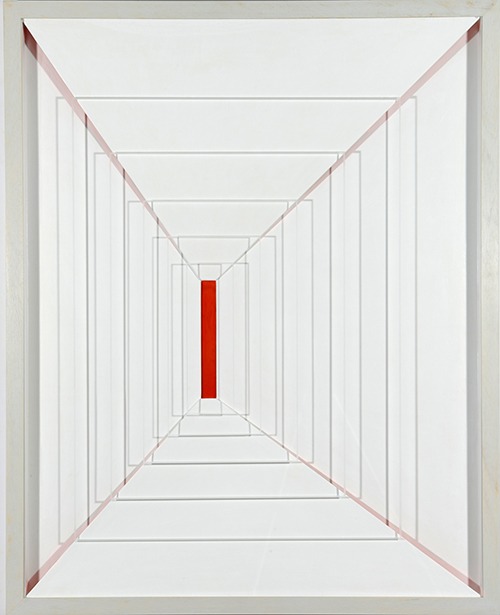
Obra de Eok Seon.


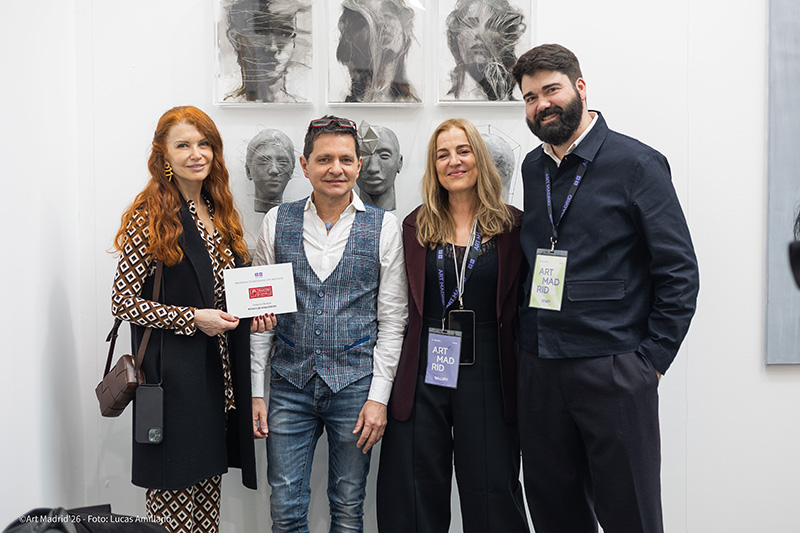
On the other hand, we must make reference to the interesting proposal of the Korean artist Eok Seon who, after being exiled from his birth city, and after a long personal journey searching for emotional and vital stability, he decided to settle definitively in Madrid in 1993. Focused on sculpture and on work with geometry and space, he uses different materials from wood to glass. His work is now placed in numerous public and private collections, like the Fundación Privada Allegro (Madrid), the Fundación Casa Museo “A Solana” (Pontevedra), the Schema Art Museum de Chong Ju (Corea del Sur) and several private collections in Las Vegas and Indianápolis (EE.UU.), among many others.


ABIERTO INFINITO. LO QUE EL CUERPO RECUERDA. CICLO DE PERFORMANCE X ART MADRID'26


Art Madrid, committed to creating a discursive platform for artists working within the field of performance and action art, presents Abierto Infinito: lo que el cuerpo recuerda, a proposal inspired by Erving Goffman’s ideas in The Presentation of Self in Everyday Life (Amorrortu Editores, Buenos Aires, 1997).

The project unfolds within a theoretical framework that directly engages with these premises, conceiving social interaction as a stage of carefully modulated performances designed to influence others’ perceptions. Goffman argues that individuals deploy both verbal and involuntary expressions to guide the interpretation of their behavior, sustaining roles and façades that define the situation for those who observe.

The body — the first territory of all representation — precedes both word and learned gesture. Human experience, conscious and unconscious alike, is inscribed within it. Abierto Infinito: lo que el cuerpo recuerda departs from this premise: representation inhabits existence itself, and life, understood as a succession of representations, transforms the body into a space of constant negotiation over who we are. In this passage, boundaries blur; the individual opens toward the collective, and the ephemeral acquires symbolic dimension. By inhabiting this interstice, performance simultaneously reveals the fragility of identity and the strength that emerges from encounter with others.


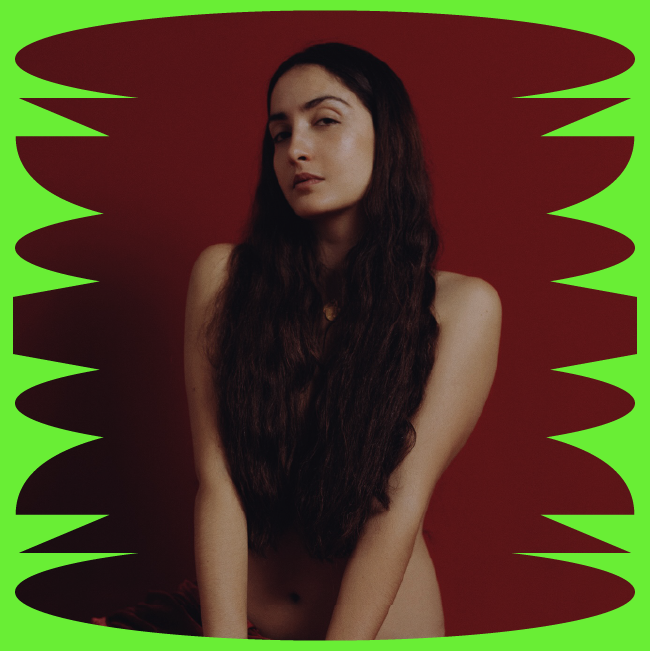
PERFORMANCE: TRAYECTORIA. BY AMANDA GATTI

March 6 | 7:00 PM. Galería de Cristal of the Palacio de Cibeles.


Amanda Gatti. Escaparate. 2023. DT-Espacio. Photograph by Pedro Mendes.


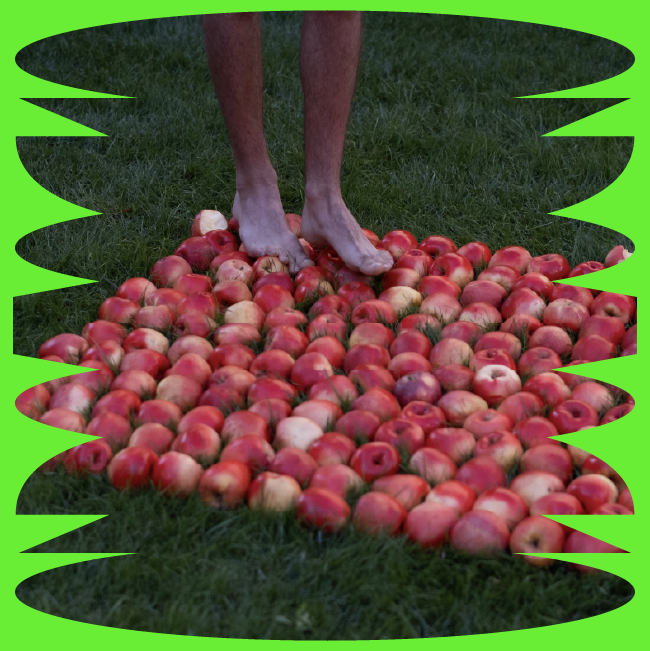
The proposal expands Amanda Gatti’s research initiated in La Plasti Ciudad del Cuerpo — an ongoing series of performance and installation presented since 2023 in spaces such as Fundación Antonio Pérez, Galería Nueva, CRUCE, and the Acción Spring(t)/UCM Congress — where she explores the relationship between her body and objects found in urban space. There, body and materials are articulated through a constant negotiation between functionality, weight, and support, generating temporary architectural compositions.

In Trayectoria, this research shifts toward the act of dragging: a gesture that makes visible the friction between body, objects, and space. The corridor ceases to be a neutrality to be crossed and becomes an operative intermediate zone, where form and content — veil and what is veiled, as Walter Benjamin points out — become confused. The space, saturated with objects turned into a mobile chain, clears and remakes itself with each step. Clearing, for Benjamin, is already an experience of space: each advance sustains this unfinished separation, always oriented toward a destination that may never be reached.


La Plasti Ciudad del Cuerpo #3. Amanda Gatti. Performance documentation. CRUCE 2054 exhibition, Galería CRUCE. Photograph by Pedro Mendes.


Displacement is not limited to material friction: it also becomes a symbolic inscription of that which every life trajectory drags along. The objects — remnants of past uses — function as metaphors for what remains attached to the body even when it no longer serves any function. The performance makes visible the condition of moving forward while carrying heterogeneous weights: material, affective, social. Thus, the gesture of walking linked to these objects turns the route into a writing in motion, where each step simultaneously activates a physical transit and a vital transit. Trayectoria proposes that every life is also a dragging: a continuous recomposing from what we insist on carrying with us.

The action operates objects as verbs: to push, to tense, to trip, to pull. From it emerges an operativity that involves the entire body and exceeds the visual. The image ceases to be representation and becomes gesture: a gesture that founds new spatial forms, that overflows, that produces an ephemeral mode of reappropriation of the corridor.

The trajectory thus becomes an affective map inscribed in the body, a way of merging with the environment by putting past and future, durability and wear, utility and obsolescence into friction. The action returns to public space what was taken from it, but now stripped of function: freed from meaning, freed from commodification, freed to be imagined otherwise.


ABOUT AMANDA GATTI

Amanda Gatti (1996, Porto Alegre, Brazil) is an artist and researcher whose practice unfolds across performance, video, photography, and installation. She explores the intersections of body, object, and space, investigating how we occupy — and are occupied by — the spaces around us. Drawing from experiences of displacement and the observation of domestic and urban environments, her work conceives the body as mediator and archive, transforming found objects, spatial arrangements, and everyday gestures into ephemeral architectures and relational situations.

She studied the Master’s in Scenic Practice and Visual Culture at Museo Reina Sofía/UCLM (Spain, 2023) and the Bachelor’s degree in Audiovisual Production at PUCRS (Brazil, 2018), where she received scholarships such as the Santander Universities grant. In Spain, her work has been presented in institutions and contexts such as Museo Reina Sofía, Fundación Antonio Pérez, Galería Nueva, CRUCE, and Teatro Pradillo, as well as in exhibitions and festivals in Brazil, Germany, Ireland, the United Kingdom, and the United States. She currently resides in Madrid, with secondary bases in Brazil and the United Kingdom.