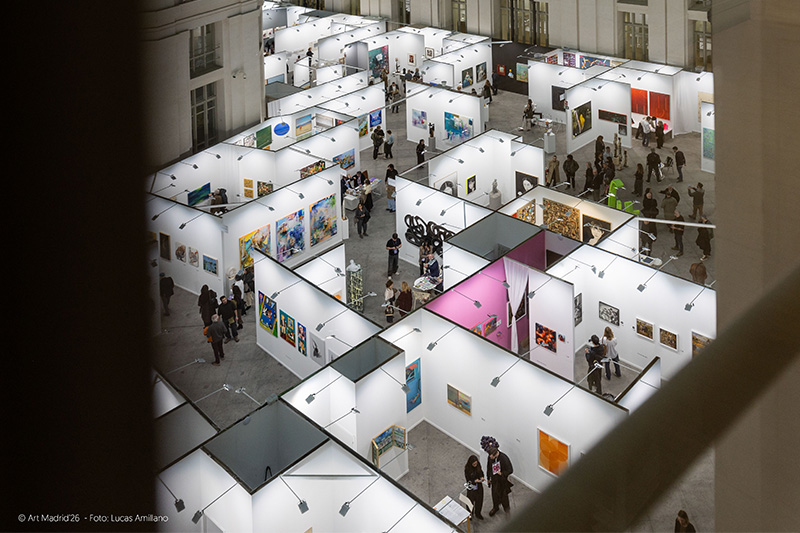
Art Madrid'26 – FIRST STEPS TO INITIATE AN ART COLLECTION

Buying the first work of art always instils respect. A difficult feeling to define that mixes vertigo with adrenaline. But over uncertainty and caution, a pleasurable sense of connection, understanding, and desire prevails. That work that, once seen, stays in the mind, reappears in the memory several times a day and seems to tell you that it is willing to be part of your home, is the perfect candidate to make the decision.
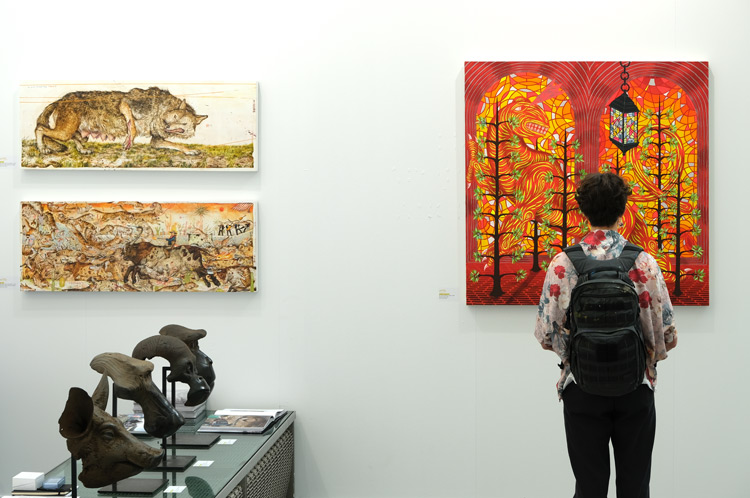
In the first steps, many collectors do point out that one does not start from an established plan, but rather that one acquires pieces based on taste and the connection one feels with them until, after time, they realise that the volume of works that accumulates can be labelled as a "collection". For example, this is how Alicia Aza explains it:

“I was not aware that I was collecting until many years later when a third party named me as a collector and talked about my collection. In 2005, I became aware of what collecting means and decided to articulate a collection with an identity of criteria and formats”.

Marcos Martín Blanco, co-founder, with his wife Elena Rueda, of the MER Collection, shares this same opinion:

“Collecting has been a passion, driven by a visceral state that encourages you to do so. The collection, in terms of acquisitions, has not been particularly complicated because, let's face it: it is easy to buy because they are all beautiful things and you have some clear idea of where you want to go, but at first those preferences were not so clear. It is with the time that a criterion is being formed”.

It is not always this way, of course, but for the buyer who starts out on this path, the personal connection that entails the first piece is essential. There it is the germ of a lasting relationship that is not limited to a simple aesthetic question but is an open window to knowledge, to exploration, to a world that is often unknown to us and awakens our fascination. The seed of that connection is purely sentimental, and it is precisely this impulse that determines the first acquisitions. The first piece is never forgotten.
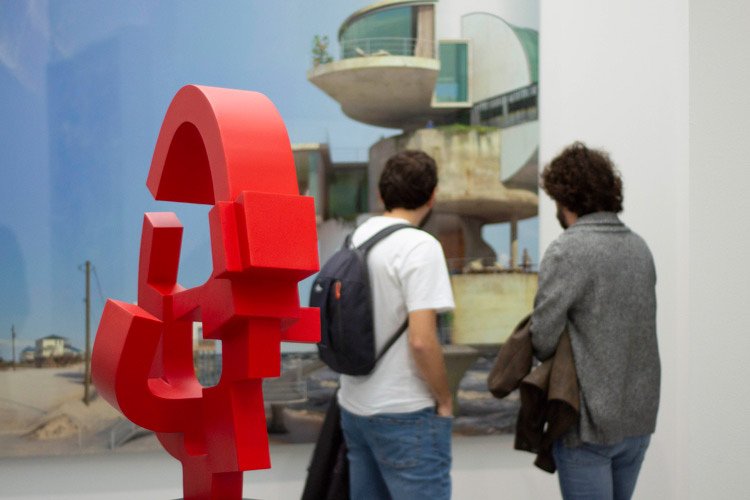
Art Madrid'20, photo by Ana Maqueda

Exceeding the usual recommendations made by advisers and agents, rare is the occasion when the art lover decides to buy by pure investment. These paths usually open later, when the volume of pieces is large enough. In addition, there are those who are a bit against this classic concept of the traditional collector, approached from an eccentric, elitist and little accessible vision. On the contrary, art buyers are, above all, art lovers, sentient beings and permeable to creative stimulus who, at a given moment, decide to deepen the relationship they already have with art to take a piece home.

It is not that hard to overcome that small psychological barrier that turns the visitor into a buyer if one approaches the matter from a more personal and intimate perspective than from social consideration. Small-format works, graphic work or serial photography are of great help for this, whose price range, generally more affordable, allows a closer comparison to the daily basis expenses. In this way, the purchase of art falls within the range of feasible activities and becomes something close and possible.
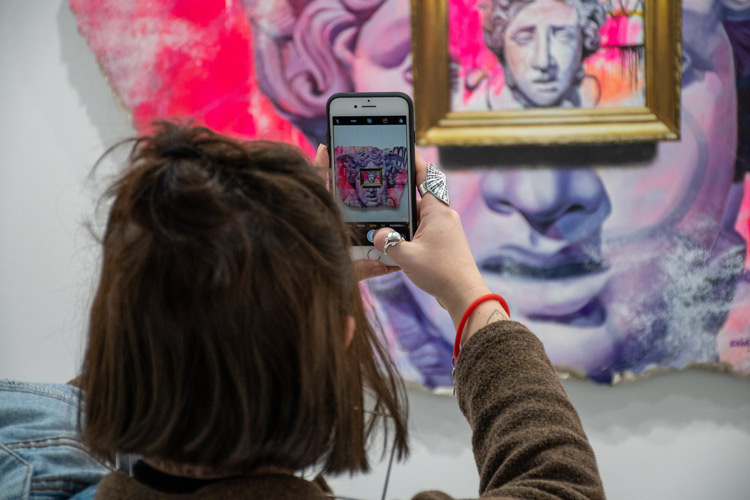
Art Madrid'20, photo by Marc Cisneros

At that moment, a different relationship with art begins, based on pure experience and coexistence with the acquired piece. Perhaps it can be seen as an act of daring, but on many occasions, it is more a matter of necessity and transformation. Collectors also agree that the acquisition of an artwork is an exercise on personal analysis and opening up to a new field of knowledge that was previously alien to us. Alicia Aza explains that the reason she acquired her first piece of video art, by Sergio Prego, is because she did not understand it and because she saw it as a challenge and an opportunity to self-improve. This open window to knowledge creates new connections and bonds with creators, as one of the most fascinating parts of the process. Candela Álvarez Soldevilla explains that

"I think the most interesting thing in the art world is talking to artists. They are people with a special sensitivity to listen and understand.”

And Alicia Aza also says:

"I can share the satisfaction of being able to count on many artists in my circle of close friends today, and that is a long way to go."

Thus, with works that seem acceptable within the horizon of expenses that each one considers affordable, it is easy to find a piece that catches us. Since then, our home also evolves into a space in which art has a permanent place and presence, and there is no doubt that this transforms us inside.
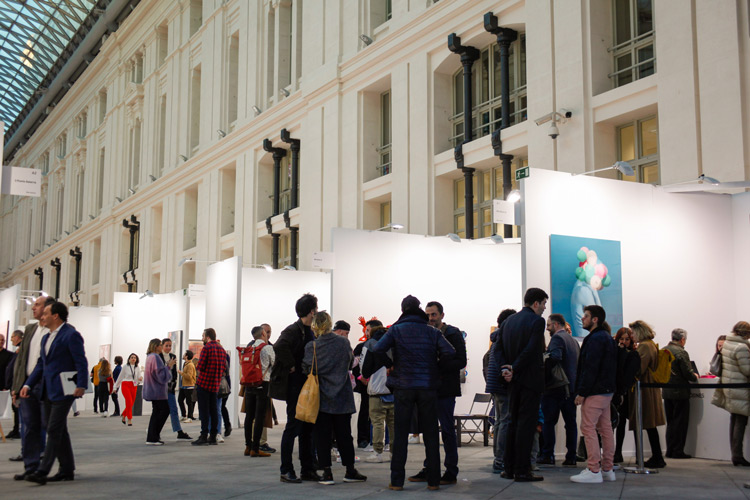
Art Madrid'20, photo by Henar Herguera

Jaime Sordo, owner of Los Bragales collection and founder of the 9915 Contemporary Art Collectors Association, has always defined his relationship with art as a true passion and a vital necessity. For buyers who start on this path, he has the following recommendation:

“It is an essential condition that they feel the need to live with their passion to enjoy the works. Another very important aspect is that before making decisions for purchases, they are informed, so it is necessary to read specialised newspapers and books, visit exhibitions and museums and a lot of contact with galleries, which is an important and very specific source of information of the artists they represent. Finally, the presence in national and international art fairs. All this generates information and training.”

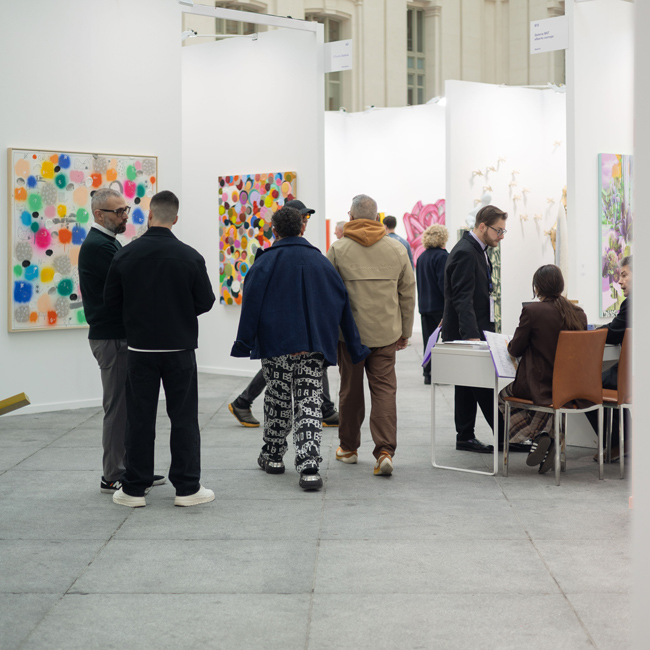
Indeed, fairs have become a good place for discovery because they condense a wide offer and allow diverse and global contact in a concentrated way. For this reason, many new generation buyers start in the context of an event such as Art Madrid, whose closeness and quality constitute a unique opportunity to meet, soak up and feed the passion for art.

(*) quotes taken from various interviews published in public media between 2013 and 2019.
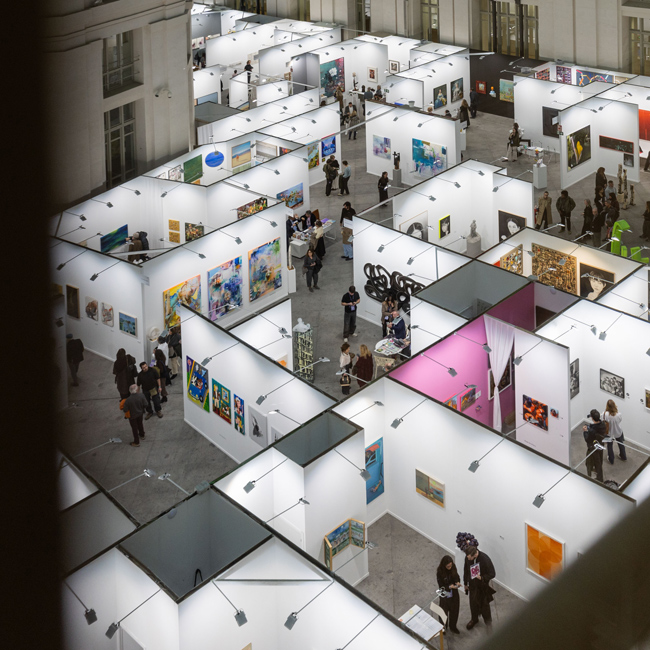
 

ART MADRID '26: 21 YEARS OF CONTEMPORARY ART


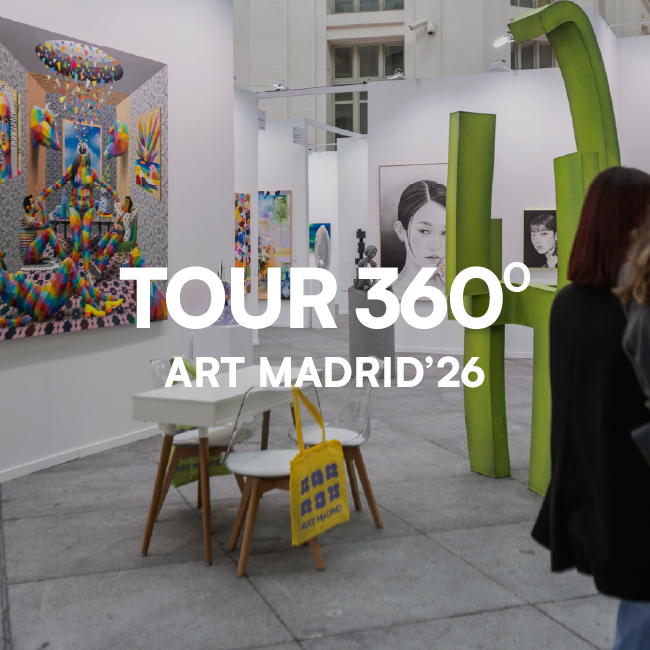
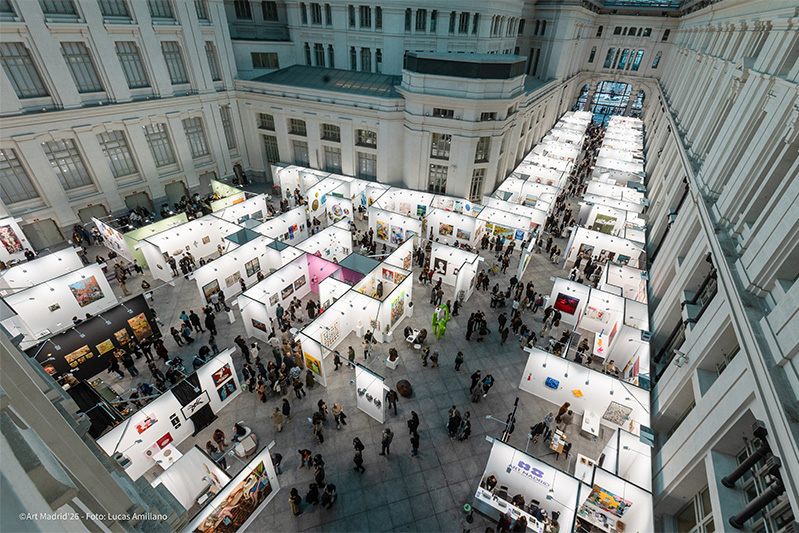
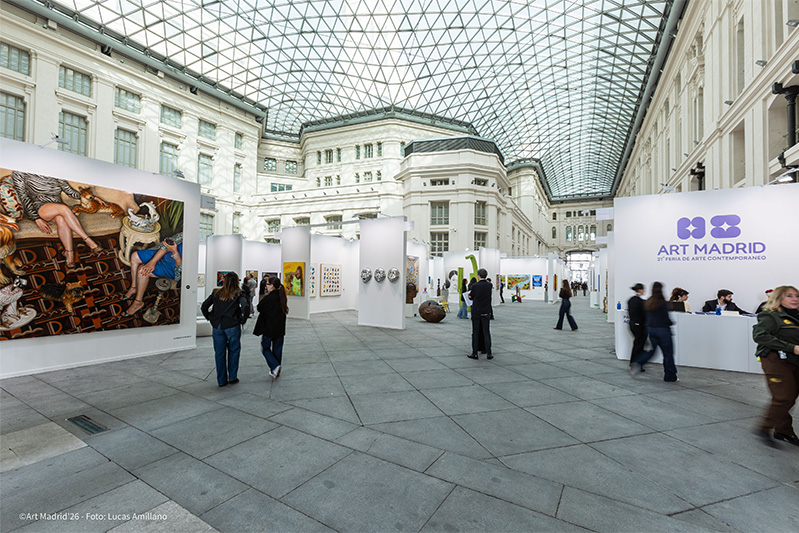
In 2026, Art Madrid will celebrate its 21st edition, further consolidating its position as a leading contemporary art fair in Spain. From 4 to 8 March, the fair will bring together thirty-five national and international galleries at the Galería de Cristal of the Palacio de Cibeles. Returning to its date during Madrid Art Week, Art Madrid reaffirms its pioneering role by expanding the fair calendar and offering an open and enriching dialogue in which diverse artistic proposals coexist.


Throughout its history, Art Madrid has established itself as a leading presence in the contemporary art scene. It is renowned for its commitment to promoting both emerging and established galleries, and for its dedication to making contemporary art accessible to a diverse range of audiences.

Far from being a fair curated under a single curatorial line, Art Madrid promotes diversity in its offering, respecting the identity of each exhibitor and promoting a plural creative ecosystem that reflects the richness and differences of the current art scene.


Art Madrid '25. Photo by Lucas Amillano


GALLERY PROGRAM: AN ACTIVE MAP OF CONTEMPORARY CREATION


The Gallery Program is at the heart of Art Madrid’26. For this edition, thirty-five national and international galleries will participate in a space that celebrates experimentation, hybrid languages, and the latest artistic production. The selection of proposals constitutes a representative mosaic of the aesthetics, discourses, and contemporary practices that are shaping the present of art in Europe.

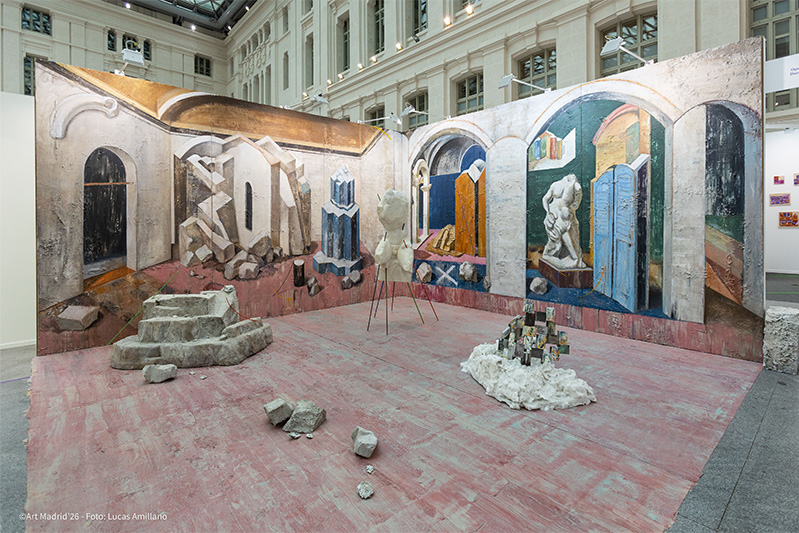
The Galería de Cristal of the Palacio de Cibeles will once again be transformed into a dynamic space where the exhibitions interact with each other, inviting the public to explore visual narratives that show the evolution of contemporary languages. Works that experiment with new media, formal investigations that reformulate traditional techniques, pieces that reflect on the links between technology and humanity, and poetic approaches that explore territory, identity, or memory make up a plural, stimulating journey open to multiple interpretations.

Art Madrid also continues to strive to become a platform for discovery, allowing both professionals and visitors to identify new voices and consolidate relationships with artists who are already emerging as leaders within the contemporary cultural landscape.


Art Madrid '25. Photo by Lucas Amillano


NATIONAL AND INTERNATIONAL EXHIBITORS

Thirty-five galleries are participating in this edition, twenty-seven of which are returning after finding the fair to be a favourable environment in which to strengthen connections, increase visibility and promote their artists' work on an international scene.

Twenty-six of these are Spanish galleries from various regions of the country: 3 Punts Gallery (Barcelona), Alba Cabrera Gallery (Valencia), Aurora Vigil-Escalera (Gijón), CLC ARTE (Valencia), DDR Art Gallery (Madrid), Est_ArtSpace (Madrid), g • gallery (Barcelona), Galería Arancha Osoro (Oviedo), Galería BAT alberto cornejo (Madrid), Galería Beatriz Pereira (Plasencia), Galería Carmen Terreros (Zaragoza), Galería Espiral (Noja), Galería La Mercería (Valencia), Galería Luisa Pita (Santiago de Compostela), Galería María Aguilar (Cadiz), Metro Gallery (Santiago de Compostela), Rodrigo Juarranz Gallery (Aranda de Duero), Sigüenza Gallery (Sigüenza), Gerhardt Braun Gallery (Palma de Mallorca | Madrid), Inéditad Gallery (Barcelona), Kur Art Gallery (San Sebastián), LAVIO (Murcia | Shanghai), Moret Art (A Coruña), Pigment Gallery (Barcelona), Shiras Galería (Valencia) and Uxval Gochez Gallery (Barcelona). This selection of galleries highlights the importance of the Spanish scene and its contribution to the development of the contemporary cultural ecosystem.


Art Madrid '25. Photo by Lucas Amillano


The nine international galleries participating in this edition are: Banditrazos Gallery (Seoul, South Korea), Collage Habana (Havana, Cuba), Galeria São Mamede (Lisbon, Portugal), Galerie ONE (Paris, France), KANT Gallery (Copenhagen, Denmark | Palma de Mallorca, Spain), Loo & Lou Gallery (Paris, France), Nuno Sacramento Arte Contemporânea (Ílhavo, Portugal), Trema Arte Contemporânea (Lisbon, Portugal) and Yiri Arts (Taipei, Taiwan). Their participation broadens the fair's international reach, promoting creative and conceptual exchange between diverse artistic perspectives.

In addition, eight new galleries have been added to the list of exhibitors:

Banditrazos Gallery (Seoul, South Korea), Est_ArtSpace (Madrid, Spain), g • gallery (Barcelona, Spain), Galería Beatriz Pereira (Plasencia, Spain), Galerie ONE (Paris, France), Galería Sigüenza (Sigüenza, Spain), Gerhardt Braun Gallery (Palma de Mallorca | Madrid, Spain) and KANT Gallery (Copenhagen, Denmark | Palma de Mallorca). These additions reinforce Art Madrid's commitment to continuous renewal and openness to spaces that are exploring new approaches to contemporary art.


Art Madrid '25. Photo by Lucas Amillano


PARALLEL PROGRAM: A REFLECTION ON THE ‘SPECIES’ OF SPACES


One of the great attractions of Art Madrid is its Parallel Program, which this time delves into the notions of: ‘Fragments, relationships, and imaginary distances.’ This approach turns the fair into an expanded space, where art, audience, architecture, and memory converge. Thus, the Parallel Program proposes a critical approach to the container of the event itself. Taking as a reference the reading of Species of Spaces by Georges Perec (Perec, Georges. Species of Spaces. Montesinos, 2004), it adopts a marked interest in the everyday, that which usually goes unnoticed, the infra-ordinary, giving each corner of the venue its own narrative value.

Another of the conceptual references of this edition is based on an analysis of Édouard Glissant's Poetics of Relation (Glissant, Édouard. Poetics of Relation; Prologue by Manuel Rebón. - 1st ed. - Bernal: Universidad Nacional de Quilmes, 2017.), which advocates the coexistence of differences and the importance of non-totalizing links, which are extrapolated to the art system, proposing an understanding of it as a network of exchanges and connections that respect the uniqueness of each cultural practice and actor.

‘Imaginary distances,’ understood as subjective journeys and affective cartographies traced by visitors, thus become the conceptual axis that articulates this program. This perspective transforms the Fair into an experience that goes beyond visual contemplation, turning it into a territory that can be collectively reconstructed, without losing sight of the paths travelled by the individuality of each voice.

In this edition, the Parallel Program encourages visitors to engage with the space and its projects, turning contemplation into an opportunity to question and interact with things that might otherwise go unnoticed in everyday life.


Art Madrid '25. Photo by Lucas Amillano


In the preview and during Art Week, Art Madrid'26 offers a range of experiences that allow the public to get closer to the creative process and practices of the participating artists. Among the returning initiatives are the Interview Program, Curated Walkthroughs, the third edition of Open Booth, dedicated to emerging creation, the presentation of Espacio Nebrija, a university project in collaboration with Nebrija University, alongside the fair’s established Performance Cycle.

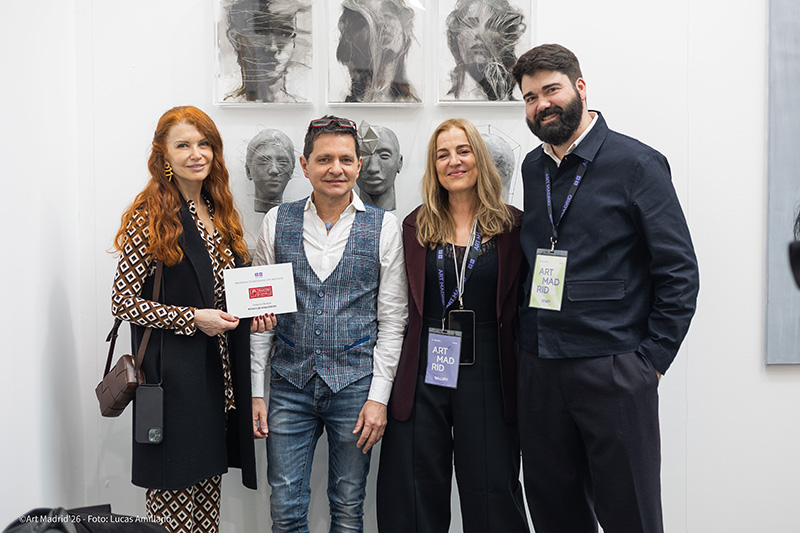
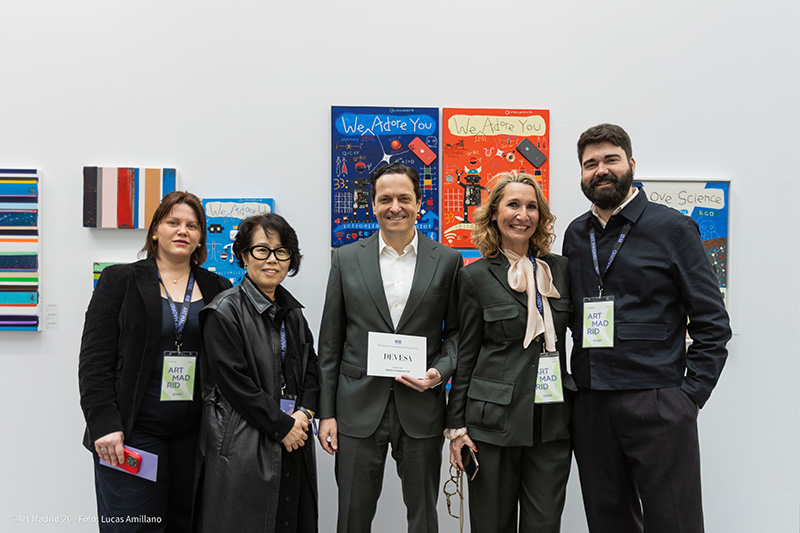
In addition, the One Shot Collectors Program and the second edition of the Patronage Program are back. These initiatives seek to strengthen the bond between collectors, artists, and the public, promoting ethical, informed, and responsible practices in collecting and patronage.


Art Madrid '25. Photo by Lucas Amillano


Art Madrid'26 has established itself as a dynamic meeting place, where diverse experiences, discourses, and practices converge. Far from being a fair curated under a single curatorial line, Art Madrid promotes diversity as a structuring principle, respecting the identity of each exhibitor and fostering a plural creative ecosystem. This plurality is not merely formal, but translates into a network of practices, languages, and perspectives that reflects the complexity, richness, and tensions of the contemporary art scene, consolidating the fair as a catalyst for cultural relations, an observatory of emerging trends, and an international reference point for the Spanish art scene.

WELCOME TO ART MADRID'26