FROM FIGURE TO ABSTRACTION: FREED NARRATIVES
Feb 18, 2019
art madrid
Art Lounge, Aurora Vigil-Escalera and Víctor Lope Arte Contemporáneo Galleries
The future of creation is always to be discovered. Although when studying art we become obsessed with analysing the origins, relationships, links or transformations that characterize works or artists, with the consequent obsession to predict what the next art will bring, the reality is that on many occasions it is more pleasant to discover the stories without preconceived ideas, without frames, in their maximum freedom of expression and in their strictest current time.
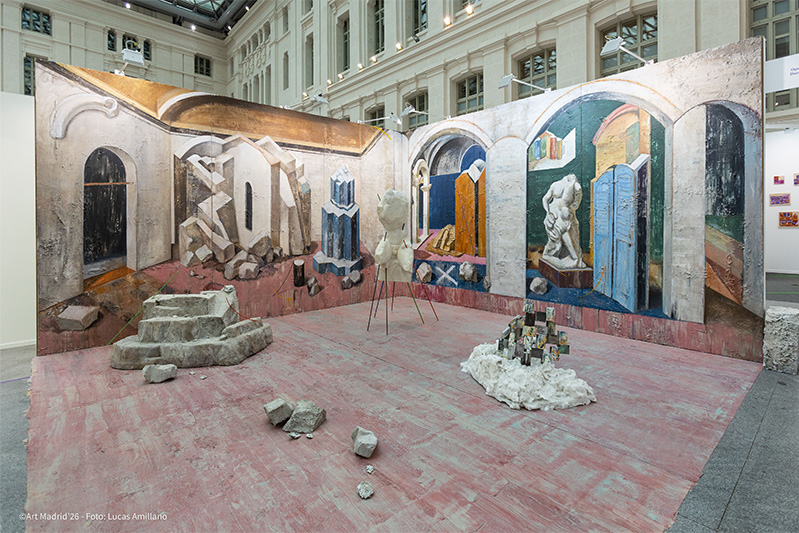
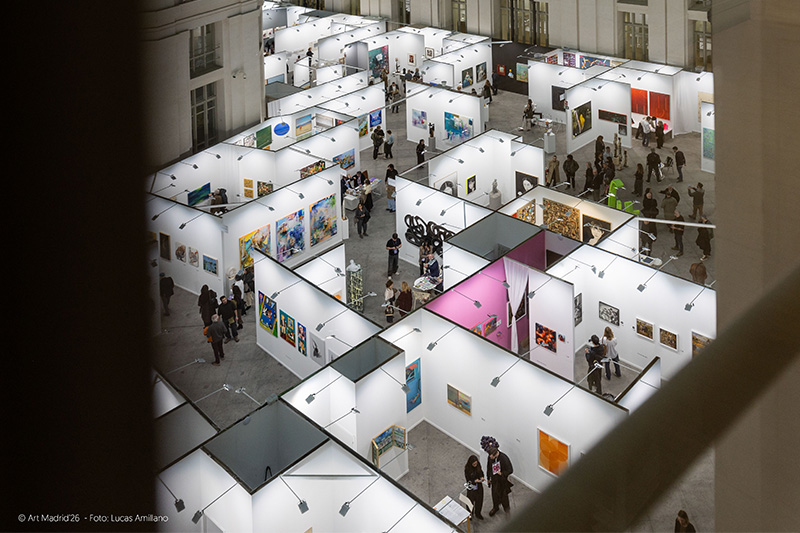
Freed narratives that can exceed these frames, often devised based on oppositions, dichotomies. In this sense, the Art Lounge, Aurora Vigil-Escalera and Víctor Lope Arte Contemporáneo galleries will exhibit a very interesting set of works, in which the abstract and figurative languages appear within balanced and very varied selections.
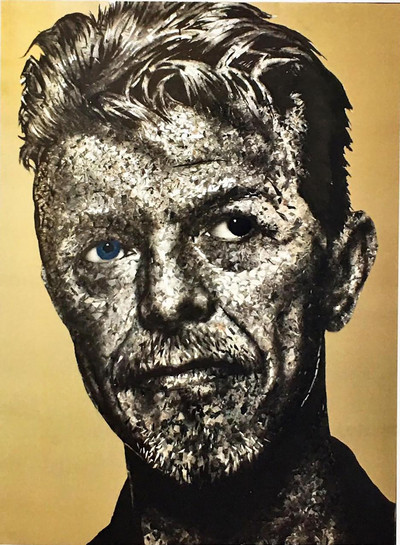
Thus, in the Art Lounge (Lisbon) proposal, you can enjoy the expressionist figuration of the Argentinian Daniel Merlin, as well as his technical domain. The author of portraits of iconic characters of our time, such as John F. Kennedy, Samuel Beckett, David Lynch or Arnold Schwarzenegger, habitual cover protagonists, seems to find their vital metaphor in the hundreds of wallpapers and superimposed glueing technique that the artist employed to compose their faces. Nurturing the portraiture genre through an innovative technique is something that he shares with Vinita Dasgupta, an artist who transports us to a vision of India's complex and unpredictable artistic scene. For Dasgupta, her personal way of painting acquires more volume and nuances using the technique called "rolled canvas technique", through the patient compositional work based on fragments of canvas rolled and painted. Also working throw a very particular technique and language is the Portuguese Joâo Noutel, creating his works from a strong style of graphic design as well as using materials such as porcelain. Like the young Brazilian Caio Bless, more interested in questioning the guidelines imposed in the public space.
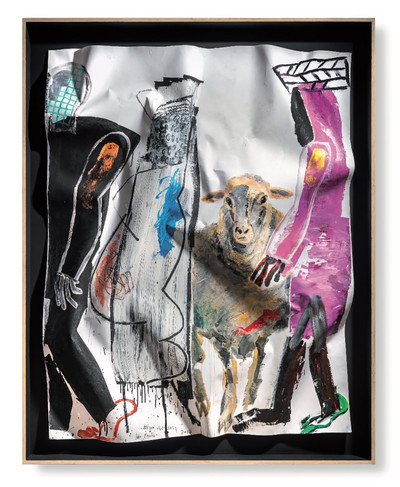
Between figuration and abstraction lies the work of the Valencian Uiso Alemany, one of the founders of the BULT Group. Between the most gestural expressionism and the most critical figuration, and using the flexible Zetex as support material, Alemany is again viscerally breaking the limits of painting in order to introduce us in some intense, personal and somewhat unhinged stories; hermetic and fascinating at the same time. As critic Fernando Castro Flórez explained in a recent exhibition of Alemany, his work is "a chant to painting that, even committing suicide, continues to be alive." Art Lounge will also present a selection of the delicate bronze sculptures from the "Broken People", a series by the South African Dale Hellmann; and some of the last luminous pieces by the Argentinian Ángela Bassano, with which we are invited to enter into those more hidden realities, almost impenetrable, so peculiar to the esoteric.
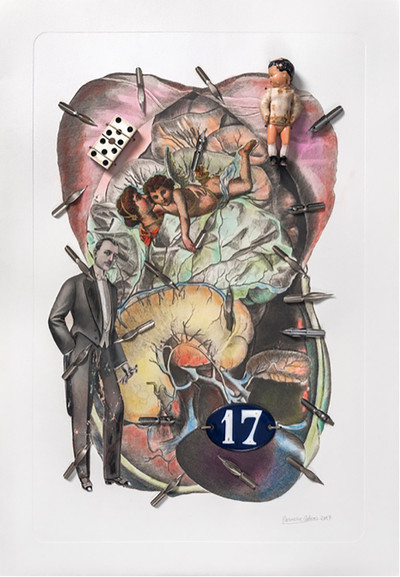
Another of the artists that present Art Lounge is Carmen Calvo from Valencia, the Guest Artist of the eleventh edition of Art Madrid. Calvo, who is one of the most outstanding creators of the national panorama, moves in always hybrid, bordering, and iconic territories. As Alfonso de la Torre points out, great expert on the work of the artist and member of the Art Madrid Committee, her current work continues to expand "that archaeology of the imaginary", on many occasions by means of the cumulative and poetic use of the fragment, of the memory, elevating the object to an epiphany or practicing the cannibalism of images –paraphrasing De la Torre-, in order to compose a sort of "extraterritorial realm, or perhaps an interregnum between heaven and earth, in a radical experience that places us in the presence of finitude itself. In an unknown land". Wonderful sleeplessness.
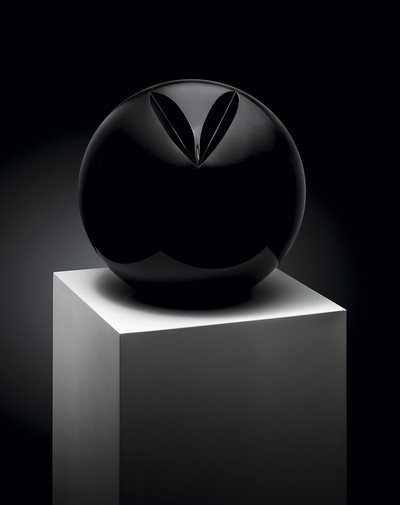
To close its proposal, the gallery includes in its selection the works by the Czech Rudolf Burda: Minimalist and obsessively made glass sculptures. Able to hypnotize from its simplicity, according to the artist, he finds his maximum inspiration in the forms of nature, the microcosm and the macrocosm, "the idea behind all my sculptures is to reduce everything to its most simplistic form and its barest minimum".
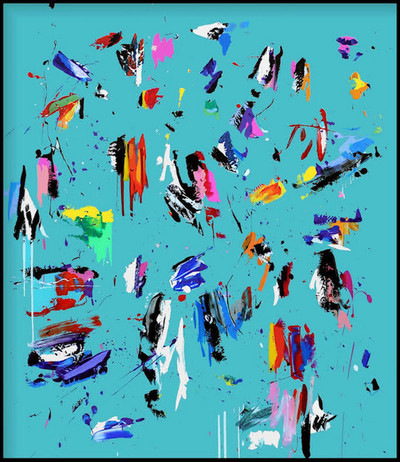
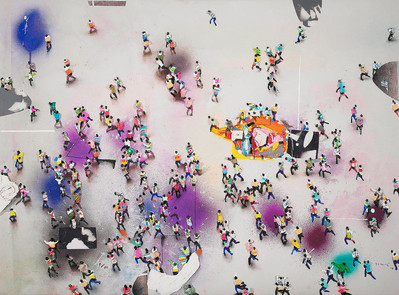
The freed narratives will be spread in a special way in the stand of the gallery directed by Aurora Vigil-Escalera (Gijón). In its wide selection you will be able to appreciate the work of Ismael Lagares, an authentic declaration of free gestures, vertiginous and vibrant; together with the experimental work by Santiago Picatoste, spontaneous explosions of colour sophisticated because of the methacrylate. The most gestural pictorial interventions made by the great artist Juan Genovés may also seem something spontaneous –as we said, also present in Lola & the Unicorn’s booth–, then moved to impressions in Glicée, and where issues like the social behaviour, collectivity and individuality return to being pivotal within their recognized and infinite narratives.
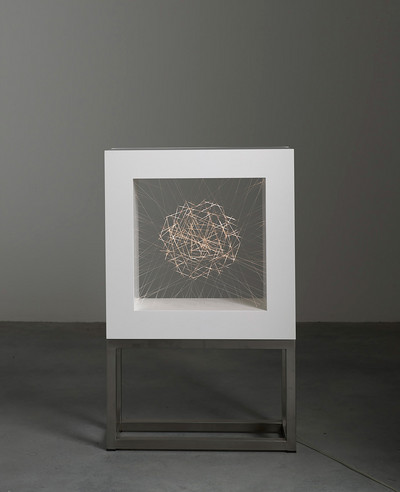
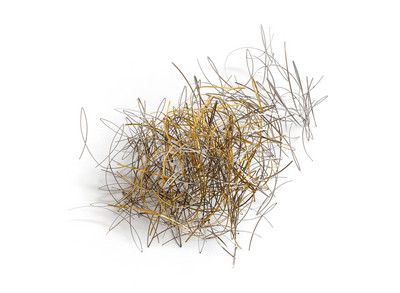
A deep interest in formal purification and light games unite two other artists presented by Vigil-Escalera: Pablo Armesto and his sculptures, as precise as astonishing, made in DMF lacquered, optic fibre and LED power supplies; and David Rodríguez Caballero –whom we will also find at the booth of Marita Segovia–, a specialist in steel and brass work, so delicate and neat that it incites the eye as well as the touch. Also, the widespread of formal and spatial investigation revealed by the sculptures by Herminio (Álvarez) is obvious: pieces that stand out for their precision, balance and harmony, but paradoxically used to reflect on the distribution of the power, tension or instability.
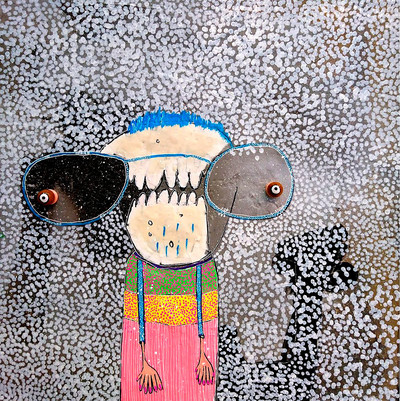
Rafael Macarrón is one of those artists whose work is very difficult to classify. With a strong personal and oneiric character, some of his most recent paintings on aluminium will be presented, thus being able to attend to the ambiguous worlds of this creator, full of disfigured and exaggerated characters, so often obsessed with the multiplicity of fingers. The Asturian Gallery closes its proposal with two more creators: on the one hand, a selection of paintings by Marcela Lobo who, with a Matisse’s reminiscent, introduces us to colourful domestic spaces where objects acquire an unsuspected lightness; and on the other hand, the urban and architectonic painting of Gorka García, continuator of the new realism movement, this artist tends to portray a city or a specific space, usually in a certain state of decrepitude, but giving the feeling of standing before something that in reality is more indeterminate, faraway and even fictitious.
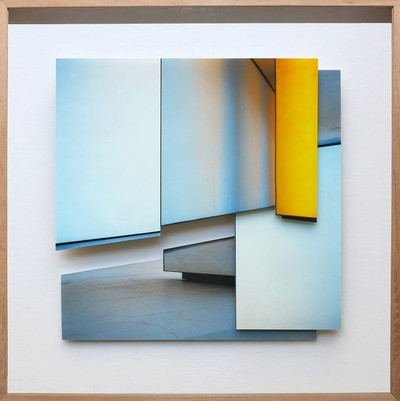
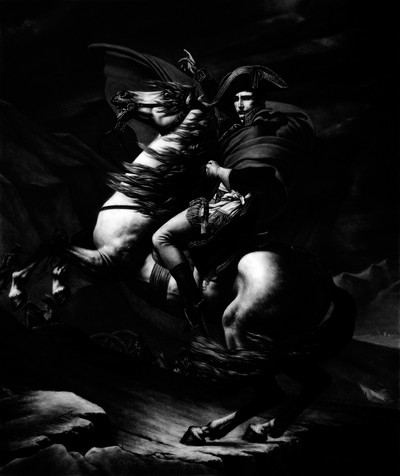
Last but not least, Víctor Lope Arte Contemporáneo gallery (Barcelona) will present the work of four of its artists. The works by Kepa Garraza must be observed very carefully because although at first glance may seem anachronistic, they contain a discourse that refers to a firm declaration of intent; Garraza, in fact, incites us to question the speeches of power, and does this just by appropriating of the iconography and official languages. Patrick Grijalvo is also far beyond the image, an artist who works from photography and photo collage to reflect on the multiplicity of reality. His research focuses on the possibilities of the variable depth of spaces, finally offering beautiful and abstract compositions.
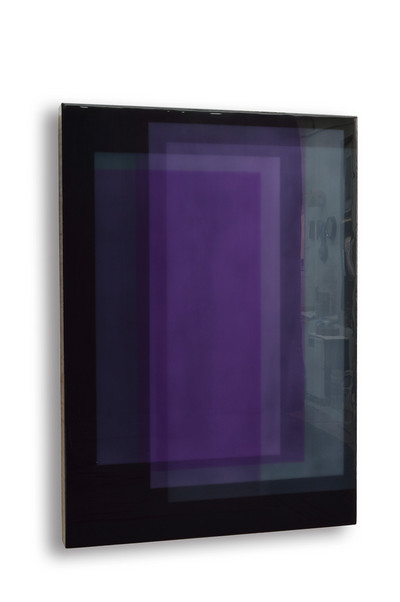
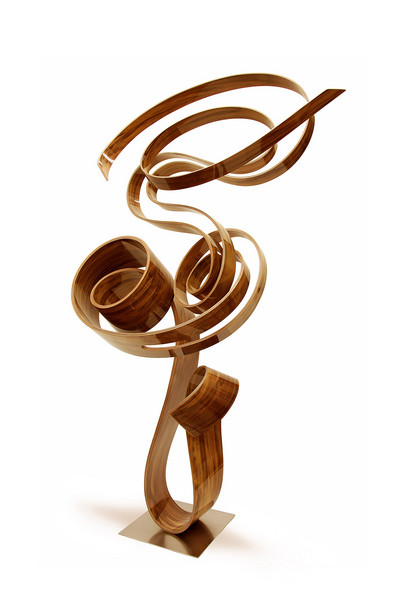
In the most geometric abstraction is where the work by Dirk Salz is located, a work that also plays with depth and requires looking and re-looking to completely achieve understanding. The classic glazes or varnishes are replaced in his pieces by layers of epoxy resin enriched with paint pigments on multiplex plates. Finally, Víctor Lope closes his selection with the "cult of the curve" developed by Jacinto Moros, a creator of which will be exposed some of his amazing sculptures and embossings: voluptuous and winding forms in which to entangle and lose ourselves, so amazing that seem to continue to expand, as if they were vital forms.