Art Madrid'26 – GEOMETRICAL ORDER FOR A VISUAL ANARCHY: YTURRALDE AT THE CEART

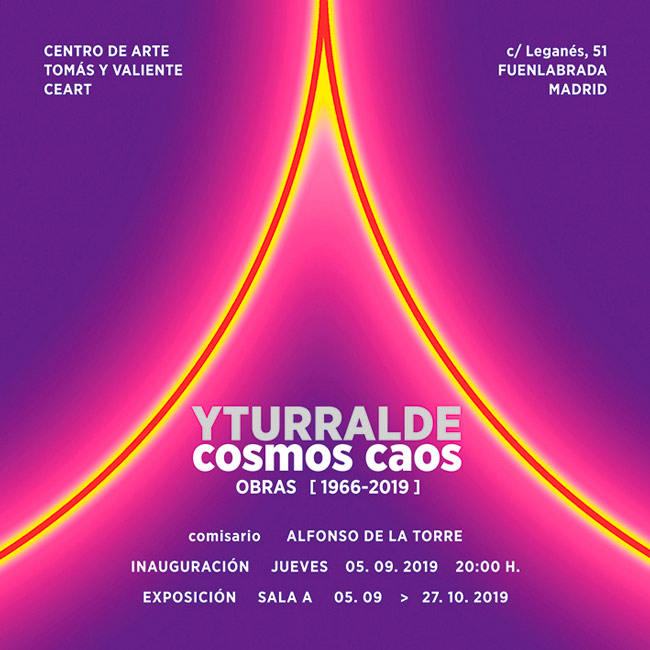
The CEART of Fuenlabrada opens today the exhibition "Yturralde cosmos chaos (obras 1966-2019)" curated by Alfonso de la Torre, which can be visited until October 27th. Yturralde's long career has allowed him to travel through different artistic movements in a manner consistent with his creative impulses and artistic concerns, although never forgetting eclecticism and the fusion of techniques that have always characterised his work.
In his beginnings, focused on the study of geometric abstraction, Yturralde was part of the group “Before Art”. This collective, founded in Valencia at the end of the 60s proposed an approach to art devoid of any subjectivity or feeling. Their proposals resulted in works of scientific basis, with a claim of objectivity, in which there was little room for the artist's interpretations. What is there before art, as an absolute approach? This group had an unquestionable impact within the development of geometric abstraction in our country, following the trail of this movement initiated worldwide during the interwar period.
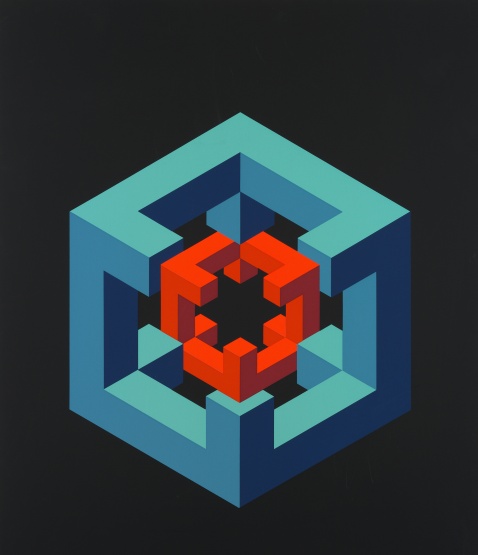
Figura imposible. 1972

These first steps left a mark on Yturralde's work. As it happened to Sempere or Sobrino, also members of the group, geometry has been present in one way or another in his work, opening later to kinetic art with his series of "Impossible Figures." His entry into the Calculation Center of the Madrid University in '68 marks the beginning of his first computer work. This experience allows him to continue his exploration of forms with a methodology that is inspired by mathematical formulation and reveals the author's interest in optical games, chromatic distortion, volumes created by contrast and figures generated from pure geometry.
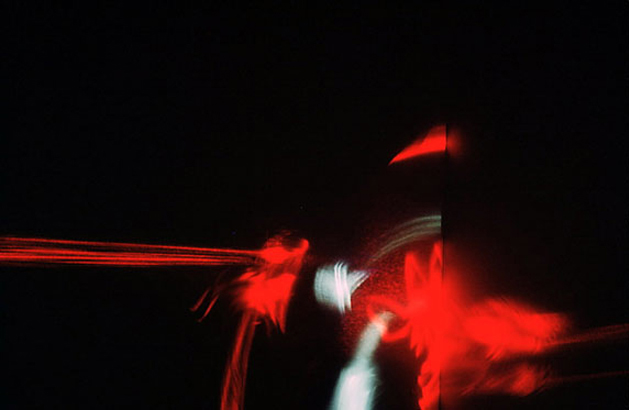
Reflections, tribute to Kepler, 1975-76. Lasers and mix technique

Another significant milestone in his career was his time as a researcher at the Center for Advanced Visual Studies under the MIT (Massachusetts Institute of Technology). In this period he began to experiment with laser light and refraction in faceted bodies, with a project entitled "Four-dimensional structures". The resulting works recover the aura of an abstraction based on recognisable rectilinear forms but add the mystery of the lights and shadows created by chance in unfathomable backgrounds of deep darkness. Yturralde experiments with new methods and techniques to further deepen the study of form.
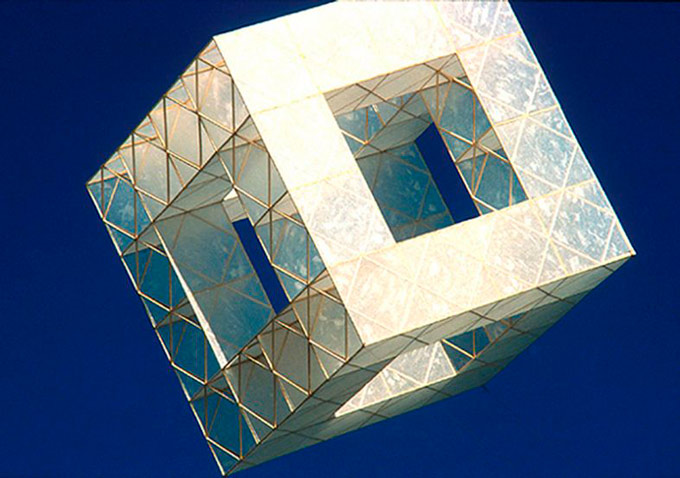
Flying cube

After returning from the United States, his work opens to happening, installations and performances. This creative line coexists with its constant interest in geometry, now approached from another dimension. The forms leave the plane and become three-dimensional figures that cross the blue skies. Thus the "Flying Structures" are born as guided kites from the ground. Polyhedral designs in white, red, yellow... are both a vital event and the result of a constructive test that defies physical laws. This exhibition will include several of these structures never seen before, which will receive the visitor suspended in the space.
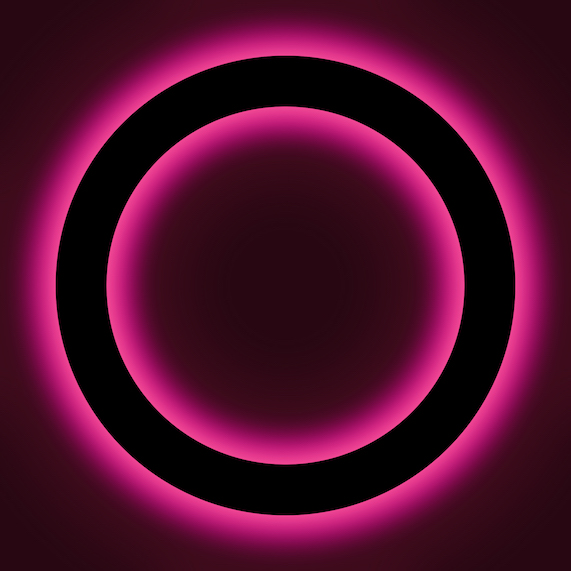
"Dice", 2015. Acrylic on cavas

From the 90s, Yturralde returns to the study of geometry and its relationship with colour. The "Preludes", "Interludes" and "Postludes" are presented as an analysis of chromatic varieties and the ability to generate volumes and contours with slight tone mutations. This painting is of enormous conceptual and formal purity and sometimes plays with that subtle tension between the framing and the unframing, the conscious search for a visual balance that forces the angles to the limit of bearable.

The exhibition is a tribute to this passionate of geometry that has dedicated his production to the study of simple forms and unfolded the high complexity that structures can hold. Besides, it will be the ideal opportunity to know the evolution of his work with a selection of more than 60 pieces, mostly large format, belonging to institutional and private collections that otherwise could not be visited.
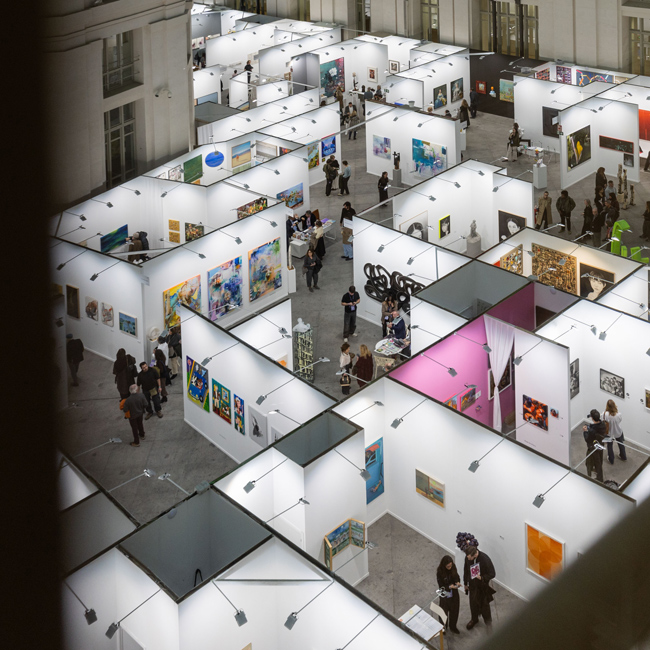


ART MADRID’26 INTERVIEW PROGRAM. CONVERSATIONS WITH ADONAY BERMÚDEZ


The work of Cedric Le Corf (Bühl, Germany, 1985) is situated in a territory of friction, where the archaic impulse of the sacred coexists with a critical sensibility characteristic of contemporary times. His practice is grounded in an anthropological understanding of the origin of art as a foundational gesture: the trace, the mark, the need to inscribe life in the face of the awareness of death.

The artist establishes a complex dialogue with the Spanish Baroque tradition, not through stylistic mimicry, but through the emotional and material intensity that permeates that aesthetic. The theatricality of light, the embodiment of tragedy, and the hybridity of the spiritual and the carnal are translated in his work into a formal exploration, where underlying geometry and embedded matter generate perceptual tension.

In Le Corf’s practice, the threshold between abstraction and figuration is not an opposition but a site of displacement. Spatial construction and color function as emotional tools that destabilize the familiar. An open methodology permeates this process, in which planning coexists with a deliberate loss of control. This allows the work to emerge as a space of silence, withdrawal, and return, where the artist confronts his own interiority.


The Fall. 2025. Oil on canvas.195 × 150 cm.


In your work, a tension can be perceived between devotion and dissidence. How do you negotiate the boundary between the sacred and the profane?

In my work, I feel the need to return to rock art, to the images I carry with me. From the moment prehistoric humans became aware of death, they felt the need to leave a trace—marking a red hand on the cave wall using a stencil, a symbol of vital blood. Paleolithic man, a hunter-gatherer, experienced a mystical feeling in the presence of the animal—a form of spiritual magic and rituals linked to creation. In this way, the cave becomes sacred through the abstract representation of death and life, procreation, the Venus figures… Thus, art is born. In my interpretation, art is sacred by essence, because it reveals humankind as a creator.


Between Dog and Wolf II. 2025. Oil on canvas. 97 × 70 cm.


Traces of the Spanish Baroque tradition can be seen in your work. What do you find in it that remains contemporary today?

Yes, elements of the Spanish Baroque tradition are present in my work. In the history of art, for example, I think of Arab-Andalusian mosaics, in which I find a geometry of forms that feels profoundly contemporary. In Spanish Baroque painting and sculpture, one recurring theme is tragedy: death and the sacred are intensely embodied, whether in religious or profane subjects, in artists such as Zurbarán, Ribera, El Greco, and also Velázquez. I am thinking, for example, of the remarkable equestrian painting of Isabel of France, with its geometry and nuanced portrait that illuminates the painting.

When I think about sculpture, the marvelous polychrome sculptures of Alonso Cano, Juan de Juni, or Pedro de Mena come to mind—works in which green eyes are inlaid, along with ivory teeth, horn fingernails, and eyelashes made of hair. All of this has undoubtedly influenced my sculptural practice, both in its morphological and equestrian dimensions. Personally, in my work I inlay porcelain elements into carved or painted wood.


Between Dog and Wolf I. 2025. Oil on canvas. 97 × 70 cm.


What interests you about that threshold between the recognizable and the abstract?

For me, any representation in painting or sculpture is abstract. What imposes itself is the architectural construction of space, its secret geometry, and the emotion produced by color. It is, in a way, a displacement of the real in order to reach that sensation.


The Anatomical Angel. 2013. Ash wood and porcelain. 90 × 15 × 160 cm.


Your work seems to move between silence, abandonment, and return. What draws you toward these intermediate spaces?

I believe it is by renouncing the imitation of external truth, by refusing to copy it, that I reach truth—whether in painting or in sculpture. It is as if I were looking at myself within my own subject in order to better discover my secret, perhaps.


Justa. 2019. Polychrome oak wood. 240 × 190 × 140 cm.


To what extent do you plan your work, and how much space do you leave for the unexpected—or even for mistakes?

It is true that, on occasions, I completely forget the main idea behind my painting and sculpture. Although I begin a work with very clear ideas—preliminary drawings and sketches, preparatory engravings, and a well-defined intention—I realize that, sometimes, that initial idea gets lost. It is not an accident. In some cases, it has to do with technical difficulties, but nowadays I also accept starting from a very specific idea and, when faced with sculpture, wood, or ceramics, having to work in a different way. I accept that.