LOCAL TALENTS, ART MADRID IS THE FAIR OF ALL
Jan 21, 2018
art madrid
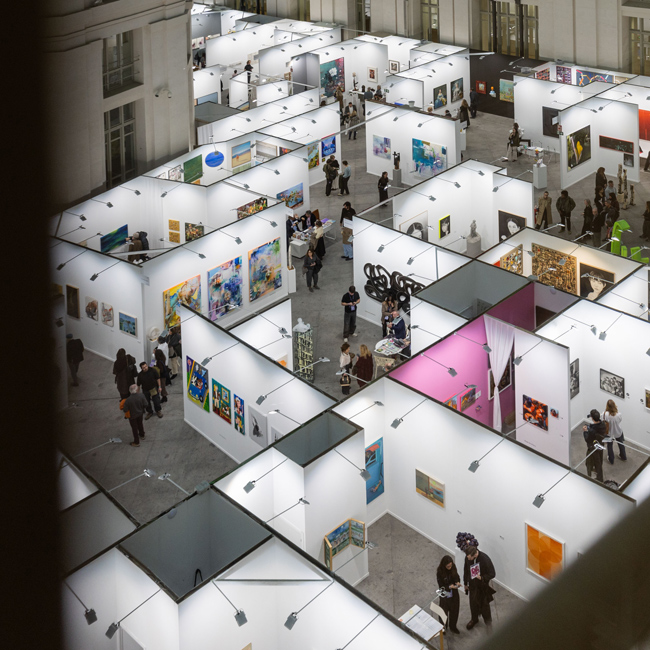
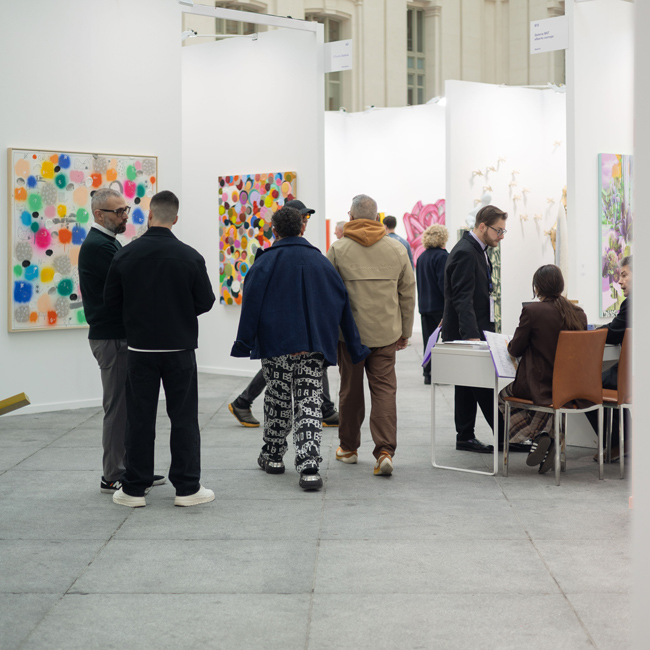
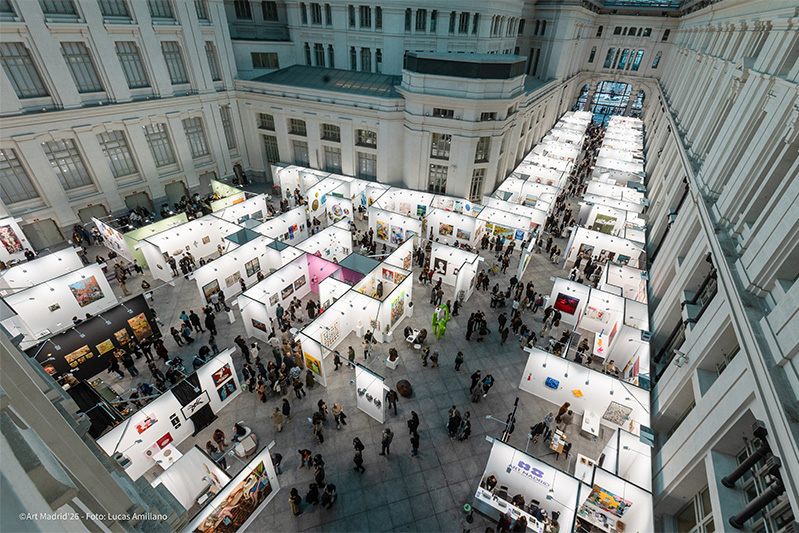
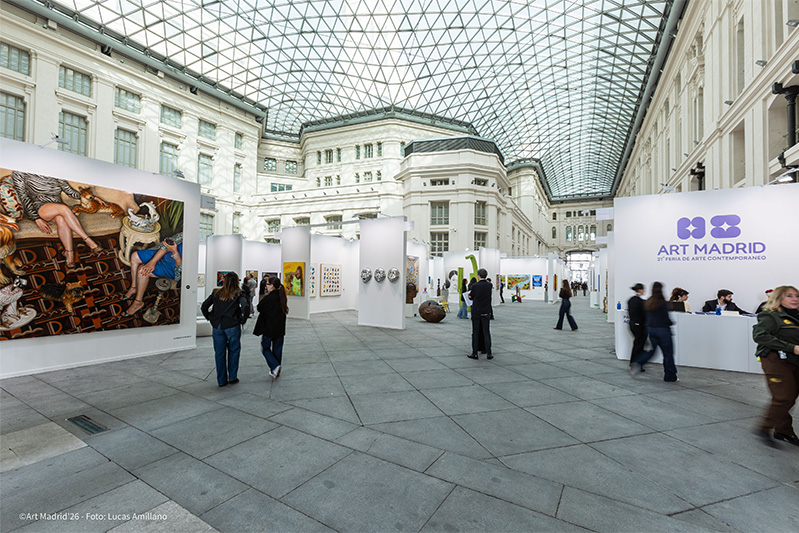
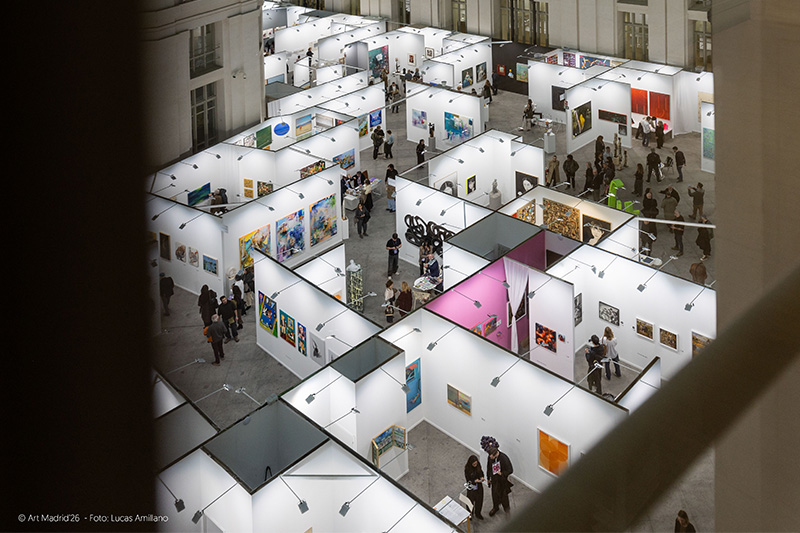
Madrid Art Week is an opportunity to show professionals, enthusiasts and collectors, the variety and quality of contemporary national creation. Art Madrid, in particular, is a meeting point for galleries throughout Spain that are especially committed to local talent.
In the Art Madrid'18 General Program you can find galleries of practically all the regions, from north to south of the Iberian Peninsula, galleries that fulfill two essential functions: to take to their respective cities the influences and the work of artists from other points of Spain and international, and to promote local artists outside their region, taking them to fairs around the world and showing their work to collectors and international public.

The Montenegro Gallery (Vigo, Galicia), founded in 1987 and directed by Victor Rodeiro Montenegro, is specialized in Historical Vanguard and Modern International Art, and represents Spanish and foreign artists but it dedicates part of its program to Galician art. In Art Madrid'18 they participate with two Galician artists, Jorge Barbi and Manolo Paz.
Jorge Barbi studies Philosophy in Santiago de Compostela. His artistic activity can not be easily integrated into any of the trends that have characterized Spanish art in recent decades and he works in a conceptual line, adapting form and content to materials and ideas. His works can be displayed in different kinds of shapes, as an object, a digital photograph, an ink drawing, an installation or an intervention in public space. In spite of the technical diversity with which he elaborates his work, there are, however, elements that are constantly repeated in his works and that unify his long career, such as the passage of time, chance, humor or word games. His work, as plastic as poetic, can be considered a projection of his ideas about the relationship between nature, the cosmos and the human being.
Manolo Paz was slowly entering the world of sculpture, carving wood with his knife. His beginnings were developed by creating collages and various pieces of wood but today his work with stone stands out. The intimate dialogue he establishes with "the lifeless" surprises us in his fully emotional pieces. As says Paz himself, "you must have have faith in the stone", to let "speak for itself". "Give it a stroke, open it in channel, and that the mysteries arise, the energy that takes inside". Between stone and man an agonized relationship is established, a struggle, which is in itself an act of love.
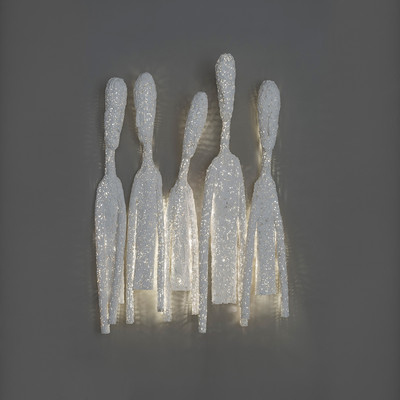
From A Coruña it comes the gallery Luisa Pita, about whom we have already talked before in our piece about Women in Art Madrid, and it is also one of those meeting and promotion spaces committed to the artists of their region. Luisa Pita participates in the fair with the work of 2 Galicians: Arturo Álvarez and Christian Villamide, and the South African Pierre Louis Geldenhuys.
Arturo Álvarez is an artist and designer with great international projection thanks to his conceptual contributions to design lighting. Its pieces, installations and sculptures are designed to provoke emotions and have the human being as protagonist and the light as the guiding thread. Arturo Álvarez explores human relationships and communication between people through the play of light and shadow and the expressiveness of the pieces alone and together. His work has been exhibited in galleries and museums in Spain, London, New York and Tokyo. He has received the "Good Desing Award" or the "Best of Year 2014" from the Interior Design magazine in New York.
Christian Villamide, conceptual and minimalist painter, communicates through various plastic languages, including expanded painting with materials such as wood, aluminum and the use of "light" as a provocative element of suggestive shadows highlighting the beauty of the contour and the poetics of our landscape. In his "paintings", almost uniform surfaces, in gray eroded and neutral tones in which, suddenly, there is a light gap, a nascent element, a new meaning, a dialogue between nature and the industrial landscape, reflecting the fracture that occurs between mankind and Earth.
Pierre Louis is a haute couture designer and textile artist trained academically in clothing, textiles, makeup, decoration, lighting, sound and production disciplines. The artist presents at the fair his light boxes intervened with wild silk, pieces that are part of his cocotological study (meaning coined by the artist) of geometric resolutions through different techniques of textile origami.
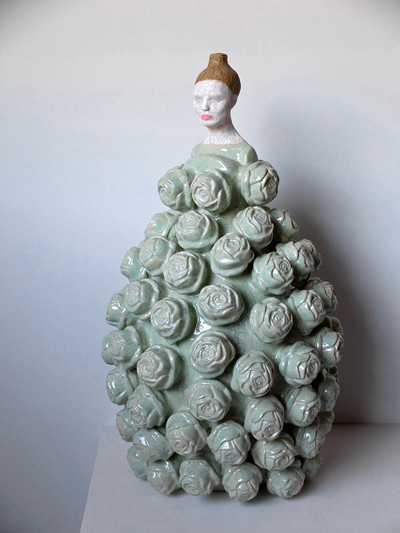
Moret Art, also from A Coruña, and also featured in our article on Women of Art in Art Madrid'18, participates with 4 Galicians: Xurxo Gómez-Chao, Lino Lago, Miguel Piñeiro and Iván Prieto, sculptor and illustrator whose work focuses on the imperfections and rarities of the human being in today's society, transforming them into surrealist characters. Prieto has exhibited individually since 1997 in institutions such as MAC, George Adams Gallery in New York, Bredgade-kunsthandel gallery in Copenhagen. He has also exhibited collectively at ARCO, Pulse Art Fair in Miami or Project Art Fair in Miami. His work is also found in public collections such as the Harvard Business School in Boston or the Flint Institute of Arts, United States.
On the other hand, the painter Miguel Piñeiro works from realism and creates a new concept of still life where objects are "materialized" by layers of pictorial work on surfaces as diverse as methacrylate or wood. Current cult objects replace the classic elements of the still lifes to create compositions in which originality and irony are the keys that bring us closer to this classic genre.
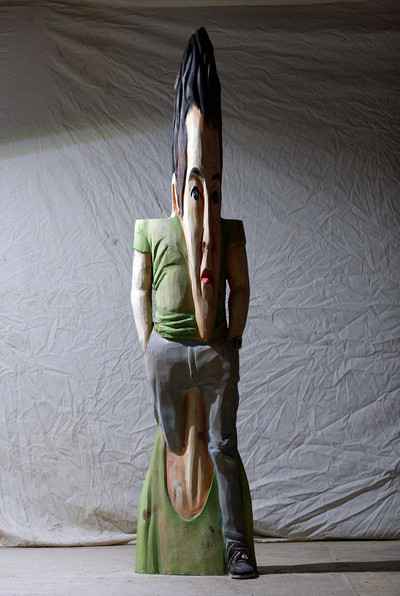
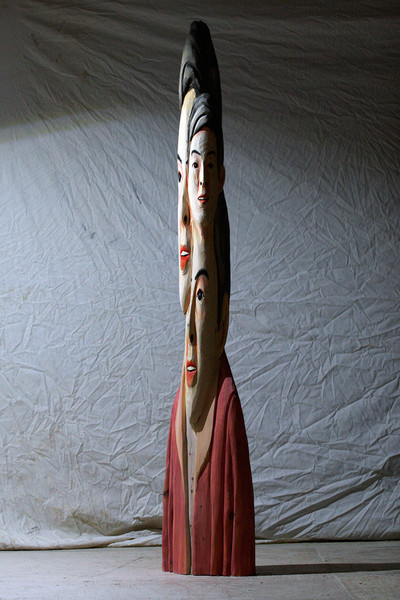
From the gallery Arancha Osoro, from Oviedo, participating in Art Madrid'18 with Nuria Formenti, Jezebel, Kiko Miyares, Luis Parades and Roberto Rodríguez, we highlight the work of the Asturian painter and sculptor (Llanes) Kiko Miyares. Bachelor of Fine Arts from the Public University of the Basque Country, he has accompanied his work with wood sculpture, playing between the automatic and the planned. The characters he represents at first become material to construct new elements using anamorphism, forcing us to focus our attention on the details and expression of the figures that he transmute.
Luis Parades (Parades, Asturias) show us his glass sculptures, "submerged dreams", enigmatic scenes in which the medium necessarily becomes part of the message. Roberto Rodríguez Redondo, from Aviles, is a young artist whose graphic, pictorial and sculptural work, is closely linked to pop and urban art, ull of elements related to design, illustration, fashion or music.
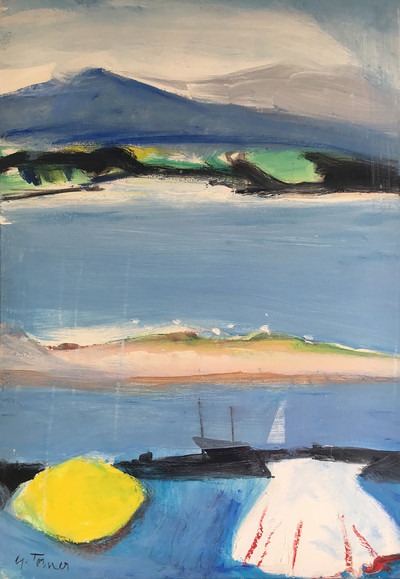
From Noja, Cantabria, comes the Espiral Gallery, directed by Manuel Sáenz-Messía and Ana Laguna. Inaugurated in the western area of the Community of Cantabria in December 2006, Espiral was re-founded in 2013 in its new headquarters, Noja. Dedicated to national and international contemporary art, with innovative artistic proposals and languages, it covers all contemporary art trends, with the presence of artists from Cantabria and from diverse nationalities. Its artists for the fair are Nacho Angulo, Ana Sanchez, Eduardo Vega de Seoane and, one of our outstanding today, Gloria Torner, born in Burgos but grown in Santander, a city whose bay - its haze, its seagulls, its apparent stillness ... - she has dedicated a great part of her work, conected with avant garde figuration, between the expressionism and the naive, with a very personal plastic language. The poet José Hierro would say of her in 1975: "In the end, what happens is that Gloria Torner is a Fauve painter whose paintings have fallen mist, the colors have lost their savage condition to immerse themselves in the silver atmosphere, as anise and water, all their task is to turn reality into memory, into melancholy. "
The MH Art Gallery, in Bilbao, has the double objective of presenting a selection of internationally recognized artists in Bilbao and presenting emerging Basque artists in art spaces (galleries and fairs) from outside the Basque Country. For Art Madrid'18 they have chosen, however, an international and multidisciplinary proposal with the images and collages of Martín Carral, the ink drawings on Korean paper by Joo Eun Bae, the naturalist reflections on paper and writing by Khalid El Bekay and the fragility of the paintings and sculptures by Juanma Reyes.
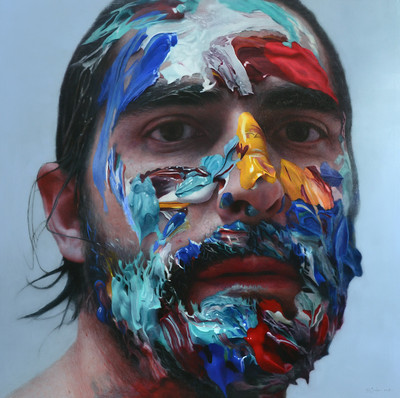
The Jorge Alcolea Gallery, in Madrid, was founded in 1989 as a continuation of the project that its director, Jorge Alcolea, had in Barcelona. Initially he specialized in the discovery and support of young artists, many of whom already have a consolidated career and are the center of the exhibition program of the gallery. The gallery continues today its commitment to emerging art. In Art Madrid'18 they participate with Tatiana Blanqué, Alejandra Caballero, Ceesepe, Mario Pávez, Isabel Ramoneda and Eloy Morales, whose talent, evident in his hyperrealistic self-portraits on a large scale in oil, is unquestionable. A challenge for the eyes. He is often the protagonist of his work, becoming the object and subject of painting, being paint himself: "I am interested in working with reality to express it in terms of painting. My engine is to fix a personal line, where reality and painting coexist in a natural way, always coming to the image through plastic resources, pictorial and non-photographic codes, above all, I think the important thing is to show through the work, your way of seeing things and in what way you show them viewer. On the other hand, also stimulates me the tremendous power of the image and its inexhaustible possibilities".
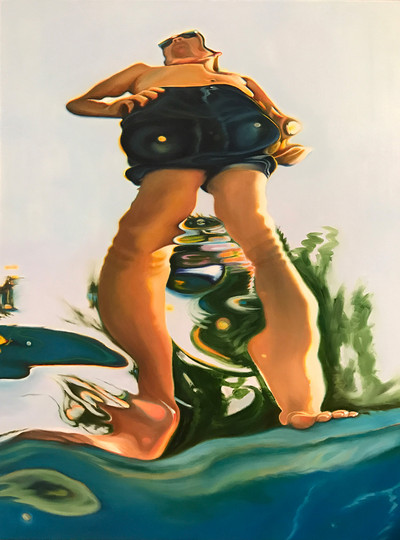
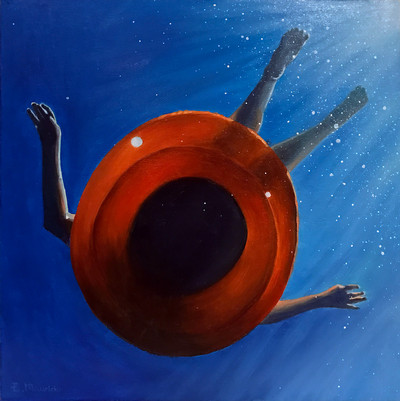
About talent, from Murcia on this occasion, we can speak with Sofía Martínez Hernández, director of the Leucade gallery, a reference space in the heart of the city of Murcia where she promotes the work of, among others, Lucas Brox, Eva Mauricio and Raúl Romero, all Murcian and linked with the new pictorial figuration.
While Eva Mauricio reinterprets the symbology of water, its perpetual change, its mirror facet, its mass, as heavy as invisible, equating the liquid element with ephemeral emotions, memories ... Lucas Brox delves into portraits as if he did In a dark cave, groping, palpating the canvas, leaving traces, marking the canvas with electric colors as illuminating the scene. His language, each day more intense, breaks little by little the barriers between figuration and abstraction.