Art Madrid'26 – Montenegro gallery in Art Madrid\'15

The Montenegro gallery, run by Victor M. Rodeiro, was founded in 1987 under the direction of Victor Rodeiro Montenegro. In the beginning was oriented towards 20th century Galician artist, with an aim to contribute to the dissemination of Galician art, hence its close collaboration retrospectives of artists such as José Frau, Arturo Souto, Sotomayor, Luis Seoane, Anton Lamazares Manuel Pesqueira, Manuel Antonio Fernández Colmeiro and without forgetting the modern and contemporary art, with a special interest in the historical avant-garde.


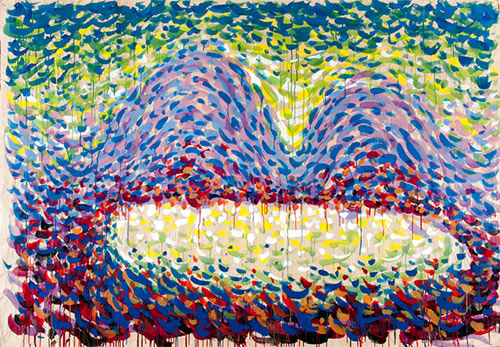
Obra de Adolfo Scholsser.

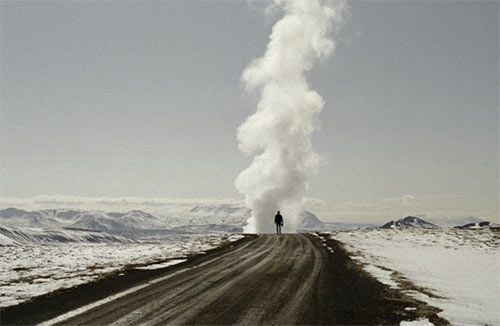
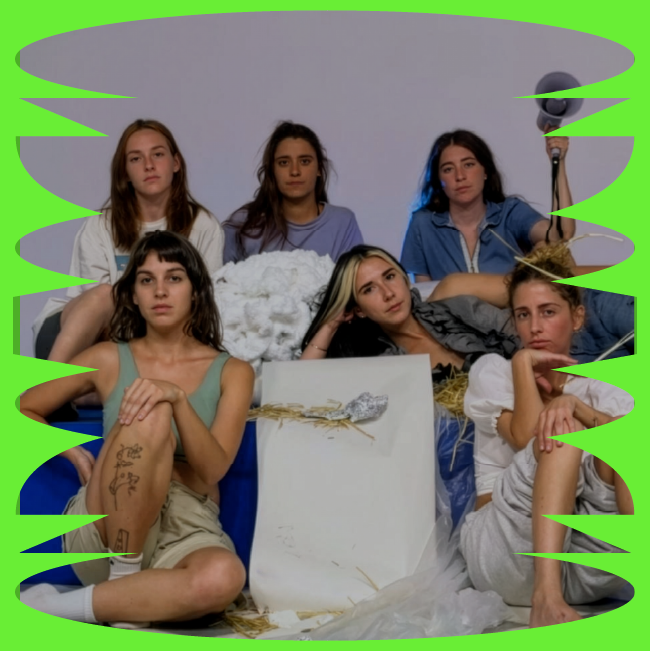
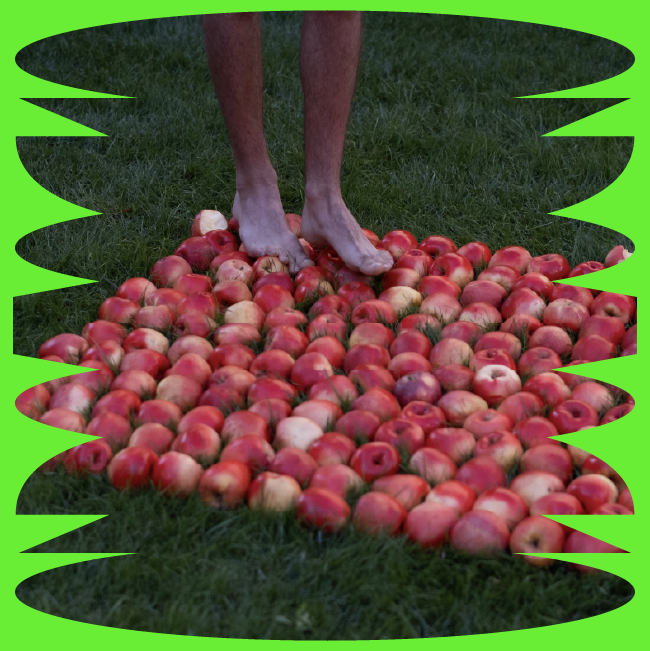
Montenegro's bet is a mixing of avant-garde with young contemporary artists and proposes art works by Bosco Sodi, Joan Miró, Wilfredo Lam, Adolfo Schlosser, AR Penk and young galician photographer Carla Andrade.


Fotografía de Carla Andrade.


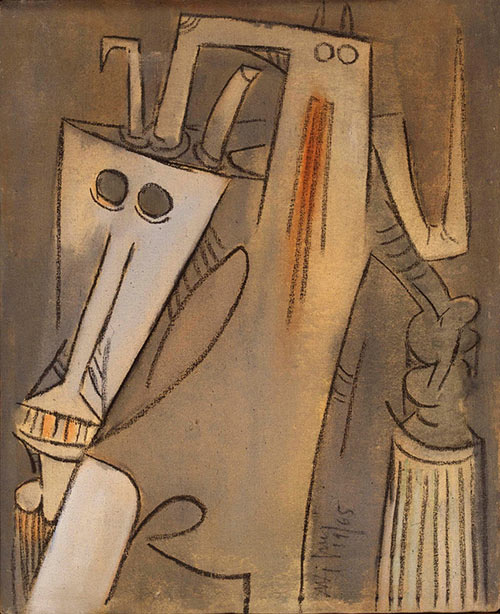
Wilfredo Lam is a  cuban painter, one of the most original exponents of Surrealism in Latin America and creator of a new pictorial language that fuses Afro-Cuban heritage with the latest European avant-garde. He began his art studies at the San Alejandro Academy in Havana, and in 1924 traveled to Spain to study at the Academia de San Fernando in Madrid. After the outbreak of the Spanish Civil War (1936-1939), he moved to Paris (France) where he met the Spanish artist Pablo Picasso, who exerted a strong influence on his early works. In Paris he joins the group with French Surrealist poet André Breton and German artist Max Ernst. In 1941 he returned to Cuba where he began to develop a style of painting that although in close contact with surrealism, adopted elements of Afro-Cuban culture that shape dreamlike biomorphic images of exuberant imagination. His work matured into a more schematic style in almost monochrome tones, constantly searching for his own language of their land.

Obra de Wilfredo Lam.


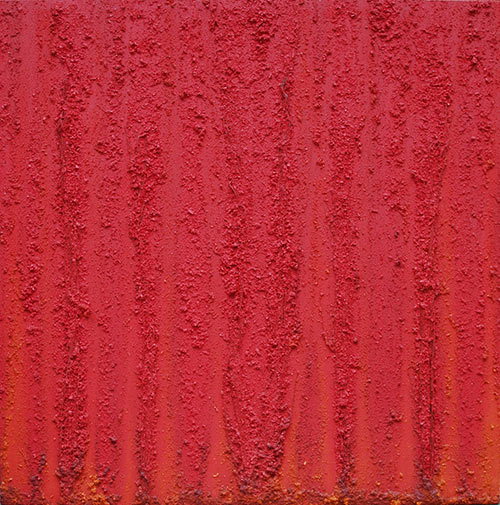
Bosco Sodi Mexican painter who moves between Barcelona, New York and Mexico. Sodi's work achieves a rich pictorial material textures, inspired perhaps in the informality of Tàpies but including excellent color illustrations following the track of the experiences of a strong conceptual character of Kandinsky and Malevich, without losing color planes we refer to the works of Rothko.
Jaume Vidal in the catalog of his exhibition in Barcelona Art gallery Shatevín commented in relation to his work: "... Bosco Sodi continues reflection of those artists of Informel and Abstract Expressionism, deep artists, visionaries, artists that illuminate the underground life of things. "
Obra de Bosco Sodi.


ART MADRID’26 INTERVIEW PROGRAM. CONVERSATIONS WITH ADONAY BERMÚDEZ


The painting of Daniel Bum (Villena, Alicante, 1994) takes shape as a space for subjective elaboration, where the figure emerges not so much as a representational motif but as a vital necessity. The repetition of this frontal, silent character responds to an intimate process: painting becomes a strategy for navigating difficult emotional experiences—an insistent gesture that accompanies and alleviates feelings of loneliness. In this sense, the figure acts as a mediator between the artist and a complex emotional state, linking the practice of painting to a reconnection with childhood and to a vulnerable dimension of the self.

The strong autobiographical dimension of his work coexists with a formal distance that is not the result of conscious planning, but rather functions as a protective mechanism. Visual restraint, an apparent compositional coolness, and an economy of means do not neutralize emotion; instead, they contain it, avoiding the direct exposure of the traumatic. In this way, the tension between affect and restraint becomes a structural feature of his artistic language. Likewise, the naïve and the disturbing coexist in his painting as inseparable poles, reflecting a subjectivity permeated by mystery and unconscious processes. Many images emerge without a clearly defined prior meaning and only reveal themselves over time, when temporal distance allows for the recognition of the emotional states from which they arose.


The Long Night. Oil, acrylic, and charcoal on canvas. 160 × 200 cm. 2024.


The human figure appears frequently in your work: frontal, silent, suspended. What interests you about this presence that seems both affirmative and absent?

I wouldn’t say that anything in particular interests me. I began painting this figure because there were emotions I couldn’t understand and a feeling that was very difficult for me to process. This character emerged during a very complicated moment in my life, and the act of making it—and remaking it, repeating it again and again—meant that, during the process, I didn’t feel quite so alone. At the same time, it kept me fresh and connected me to an inner child who was broken at that moment, helping me get through the experience in a slightly less bitter way.


Santito. Acrylic and oil on canvas. 81 × 65 cm. 2025.


There is a strong affective dimension in your work, but also a calculated distance, a kind of formal coldness. What role does this tension between emotion and restraint play?

I couldn’t say exactly what role that tension plays. My painting is rooted in the autobiographical, in memory, and in situations I have lived through that were quite traumatic for me. Perhaps, as a protective mechanism—to prevent direct access to that vulnerability, or to keep it from becoming harmful—that distance appears unconsciously. It is not something planned or controlled; it simply emerges and remains there.


Night Painter. Acrylic on canvas. 35 × 27 cm. 2025.


Your visual language oscillates between the naïve and the unsettling, the familiar and the strange. How do these tensions coexist for you, and what function do they serve in your visual exploration?

I think it reflects who I am. One could not exist without the other. The naïve could not exist without the unsettling; for me, they necessarily go hand in hand. I am deeply drawn to mystery and to the act of painting things that even I do not fully understand. Many of the expressions or portraits I create emerge from the unconscious; they are not planned. It is only afterwards that I begin to understand them—and almost never immediately. A considerable amount of time always passes before I can recognize how I was feeling at the moment I made them.


Qi. Acrylic on canvas. 81 × 65 cm. 2025.


The formal simplicity of your images does not seem to be a matter of economy, but of concentration. What kind of aesthetic truth do you believe painting can reach when it strips itself of everything superfluous?

I couldn’t say what aesthetic truth lies behind that simplicity. What I do know is that it is something I need in order to feel calm. I feel overwhelmed when there are too many elements in a painting, and I have always been drawn to the minimal—to moments when there is little, when there is almost nothing. I believe that this stripping away allows me to approach painting from a different state: more focused, more silent. I can’t fully explain it, but it is there that I feel able to work with greater clarity.


Crucifixion. Acrylic on canvas. 41 × 33 cm. 2025.


To what extent do you plan your work, and how much space do you leave for the unexpected—or even for mistakes?

I usually feel more comfortable leaving space for the unexpected. I am interested in uncertainty; having everything under control strikes me as rather boring. I have tried it on some occasions, especially when I set out to work on a highly planned series, with fixed sketches that I then wanted to translate into painting, but it was not something I identified with. I felt that a fundamental part of the process disappeared: play—that space in which painting can surprise even myself. For that reason, I do not tend to plan too much, and when I do, it is in a very simple way: a few lines, a plane of color. I prefer everything to happen within the painting itself.