THE NEW ARRIVALS AT ART MADRID
Jan 14, 2018
art madrid
Nine galleries are released in the Art Madrid'18 General Program: 5 from Spain, from Madrid (although one of them is also based in New York), Bilbao and Valencia; and 4 foreigners from Germany, Portugal, Ukraine or Mexico. Art Madrid always takes care of the participation of national galleries and artists but it is also the perfect setting for more and more foreign galleries that trust the fair.
Among the Spanish newcomers we find Fucking Art (Madrid), an alternative space created in 2015, managed by a group of artists, bringing the perspective of the creator to the gallery experience. Fucking Art presents at the fair works by: Atauri, Isabel Alonso Vega, Carlos Regueira and Alfonso Zubiaga, artists whose works leave an unmistakable trail of reflection, search and innovation either through painting, photography, sculpture and objectual art.
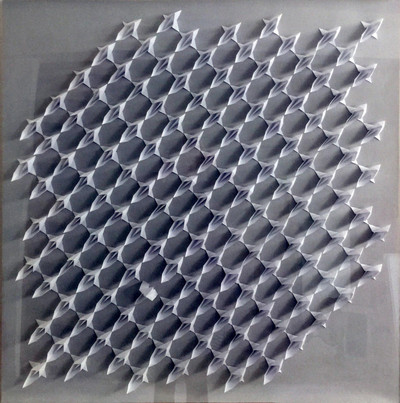
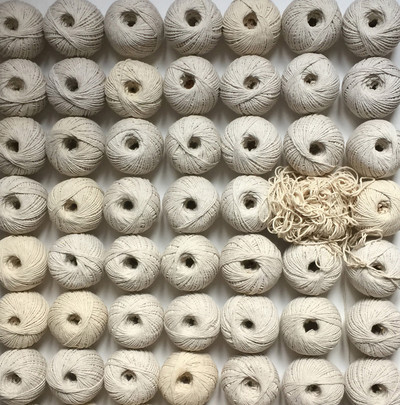
Mª Ángeles Atauri is a graphic designer at the La Nave Gráfica studio where she develops her activity for different projects and also, since 2010, where she develops her artistic production, a kind of poetic objects based on simple and intimate ideas, on universal feelings with which all we identify.
Isabel Alonso Vega is one of the founders of URGEL3, an alternative space in which they exhibit but also they disseminates art outside conventional networks, leading artists from the first creative process to the final state of their work. Vega's works, capsules of methacrylate in which she seems to have captured clouds, powers and geniuses, are between conceptual and sculptural and they speak about the intangible. For his part, Alfonso Zubiaga, training economist and artist by vocation, and Carlos Regueira, who is also a creative and art director in well-known advertising agencies, they propose new ways of doing and seeing photography. If Zubiaga plays with images that are deconstructed to be reconstructed in visual narratives with new meanings of the same reality; Regueira produces a expanded painting to the field of the photo, an hybrid between both techniques.

The Soraya Cartategui Gallery (Madrid-New York), directed by Soraya Cartategui and Bárbara Cartategui, opened its first headquarters in the neighborhood of Chelsea, New York, in 1994, specializing in conceptual art and performances by emerging artists. After four exciting years working with the new talents in the Big Apple, she settled in Madrid to devote herself to his specialty: Dutch and flemish art of the sixteenth and seventeenth century, pioneering the introduction of the Dutch Golden Age in the Spanish market and thus becoming a reference for many collectors. This wide vision of art has made its curatorship is based on the concept of "cross-collecting", the crossing of works of all media and periods to create a personal and intimate dialogue between works and objects. For their first participation in Art Madrid'18 they have chosen the work of Juan Genovés, Reinhard Gorner and Isabelita Valdecasas. Valdecasas, Sevillian painter, has experimented with all the techniques, squeezing their artistic possibilities, began with small works, disparate things, without any concrete order or thread; experimented with oil, watercolor, pens, pastel ... to evolve into a materic abstraction in whose works the artist uses elements found in nearby nature such as moss, sand, earth or tea grounds to create surreal worlds.
A very different proposal comes from the German photographer Reinhard Görner, whose images of architectures and monumental rooms transmit intimacy, depth and mystery at the same time. Görner became interested in architectural photography in 1982 and, with his large-format camera, since 2008 has photographed more than 50 libraries around the world such as Trinity College in Dublin, the Lello Library in Porto or the public library in Stuttgart, among others. His work has been present in numerous solo and group exhibitions in Paris, London and Berlin.
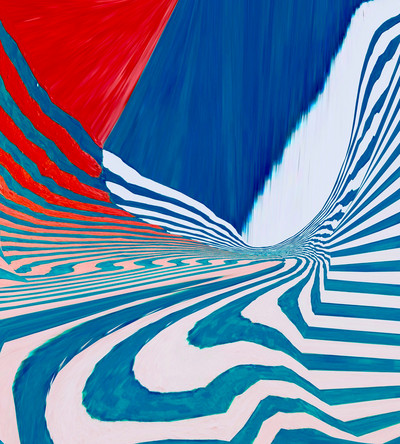
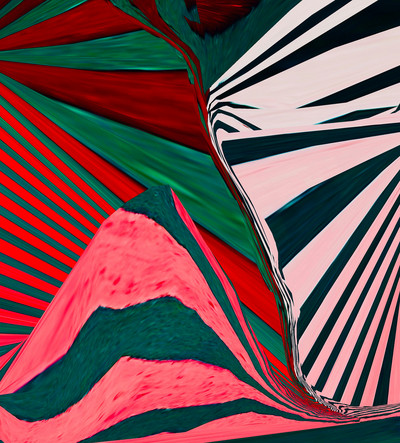
In Madrid there is also Mercedes Roldán Art Gallery (Madrid), a gallery that is involved with its artists from all points of view, advises them to direct their career, provides them with assistance and marketing services. Her involvement with emerging artists is visible in the selection she has made for Art Madrid'18, in which she has: Irene Cruz, photographer and video artist, one of the young artists with the most projection and of whom we have already spoken in this news section; the photographer and filmmaker Alexander Barrios, trained in documentary photography and whose work seeks the simplicity and the genuine nature, architecture, forms ... and the painter Cristina Iturrioz, fundamentally self-taught and whose work is characterized by manipulation and research with the materials and colors to achieve textures. Her artistic beginnings were oriented towards drawing, graphic design and figurative painting, with nature as a motif, with reality as a model, to evolve into a personal abstraction that shapes in multiple formats as painting, photography or sculpture.
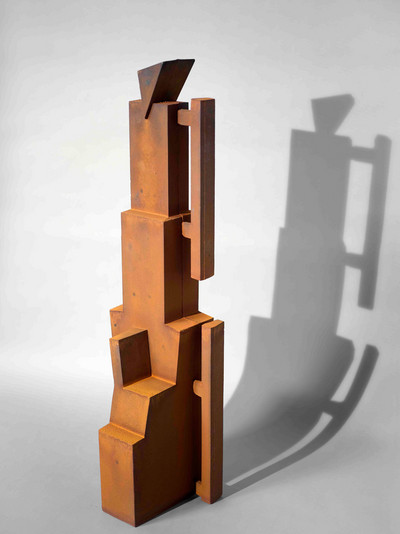
From Valencia, it comes Shiras gallery, directed by Sara Joudi and located in the historic center of the city. Shiras Gallery was born to offer an intergenerational proposal of national art whose speech is complemented by the voice of emerging avant-garde artists, always taking into account both the artistic quality of the projects and their plastic languages. The fundamental pillar of its programming is betting on projects of painting, sculpture, drawing and installation, being a current window towards the most avant-garde contemporary trends. At the Art Madrid fair they participate with Javier Chapa, Miquel Navarro, José Saborit and Horacio Silva.
Among them we would like to highlight the work of Miquel Navarro, one of the outstanding representatives of what is known as New Spanish Sculpture although he began his career as a painter, since 1972 he is exclusively dedicated to sculpture. Tireless, universal and in constant evolution, the idea of beauty for Miquel Navarro is closely linked to his idea of the classics, foundation and point of reference of the avant-garde of the beginning of the century. In 1986 he receives the National Prize of Plastic Arts and the National Prize of the Association of Art Critics ARCO 95, among others. Likewise, he is declared an Academician of the Royal Academy of Fine Arts of San Fernando.
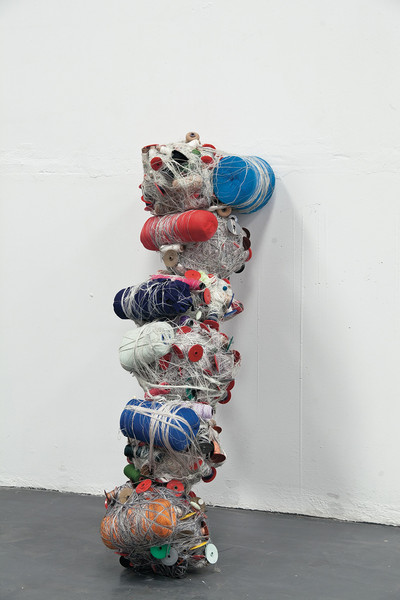
We jump north, to Bilbao, where MH Art Gallery (Bilbao) comes from. This space wants to present to its city and all the Basque Country a selection of artists of international prestige that will complement the current cultural and artistic offer that Bilbao already has, being a benchmark city in Europe for its commitment to art and design / architecture. Its program includes young "emerging" Basque artists with creative talent that the gallery projects in artistic spaces outside of the Basque Country. Its premiere at Art Madrid is done with a powerful international proposal that features the delicate ink drawings and pigments of the Korean female artist Joo Eun Bae; the mixed techniques that mix the oriental and Arab cultures of the Moroccan artist Khalid El Bekay; the collages and urban chaotic scenes of the Cantabrian Martín Carral; and the unclassifiable work of the Malaga-born Juanma Reyes, an eloquent way of capturing the thin line between the living and the dead, between waste and art, between tenderness (his works are woolly, soft, fluffy ...) and brutality (. ..and at the same time they are sharp, dismembered). Its objects, structures that could be sculpted drawings, are objets-trouveés assembled by Reyes to talk about the multiple forms of art.
Among the novelties of Art Madrid we also have 4 foreign galleries: the German Robert Drees of Hanover, Paulo Nunes Contemporary Art of Vila Franca de Xira, Portugal, the Ukrainian gallery Nebo Art Gallery (Kyiv) and the Carbo / Alterna gallery, with venues in Cancun, Mexico and Havana, Cuba. We will talk about all of them in upcoming news and we will highlight some of their most representative artists.