Art Madrid'26 – “NEW CREATIVE IDEAS USING OLD ACRYLIC MEDIA”, LIQUITEX GOES BACK TO ART MADRID

One more year, the well-known and innovative brand of acrylic paintings Liquitex, joins the sponsors of Art Madrid to develop a series of dynamic and participative actions, this time together with the School of Plastic and Design Education Artediez.
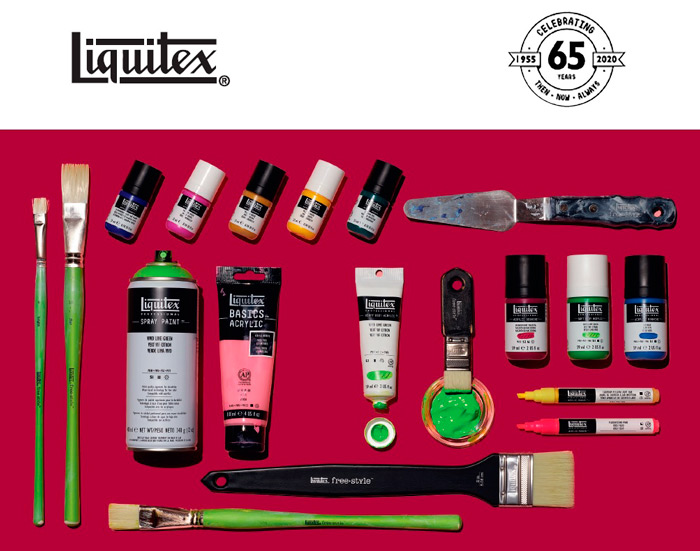
Liquitex is one of the brands collaborating with the program "The Fine Art Collective", through which it establishes synergies with artistic organizations and institutions around the world to support emerging practice through workshops, projects, exhibitions, residencies and student grants. In this edition of Art Madrid, Liquitex will collaborate with Artediez to carry out an educational action, a masterclass to explore the different creative possibilities of acrylic painting, "intermixable" in its different formats and its range of additives (focus on inks, spray, marker and some additives).
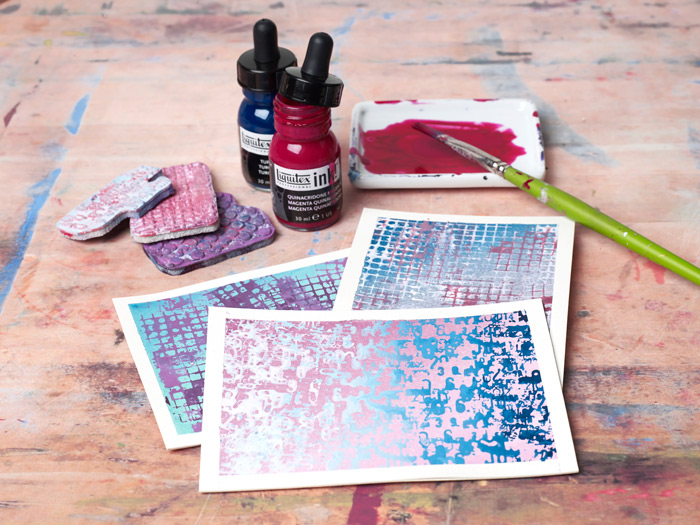
The theoretical-practical workshop: "New acrylic formats, new creative possibilities", will take place on Tuesday 25th February from 17:00 to 19:00h in the Auditorium of the Artediez School and will be given by the Liquitex resident artist Miguel Torrús, using the brand's range of acrylics and additives.


Formulario de inscripción

The Escuela de Artediez is a public centre in Madrid that has a great experience in the teaching of Plastic Arts and Design in all its variants (graphic, interior, industrial and fashion). The school contributes with its teaching method, to the development of a favourable environment for design and artistic activities.
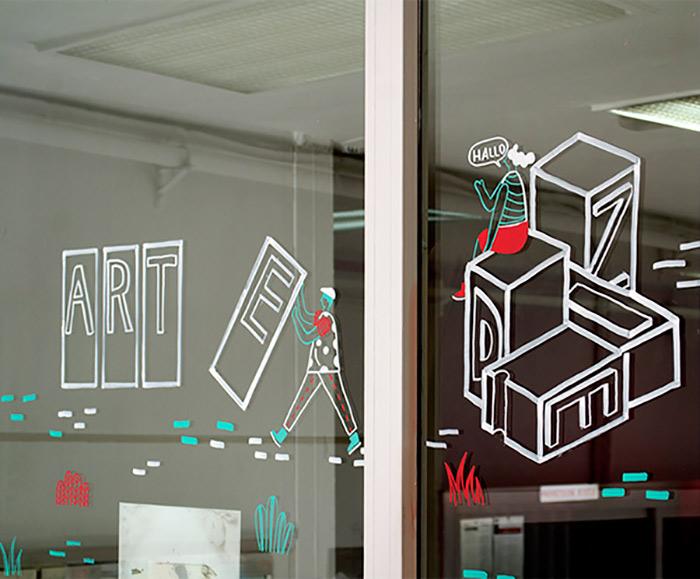
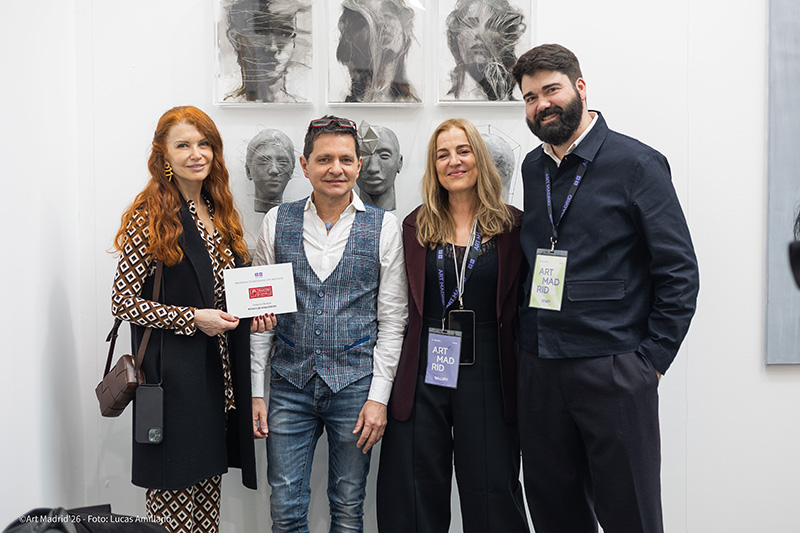
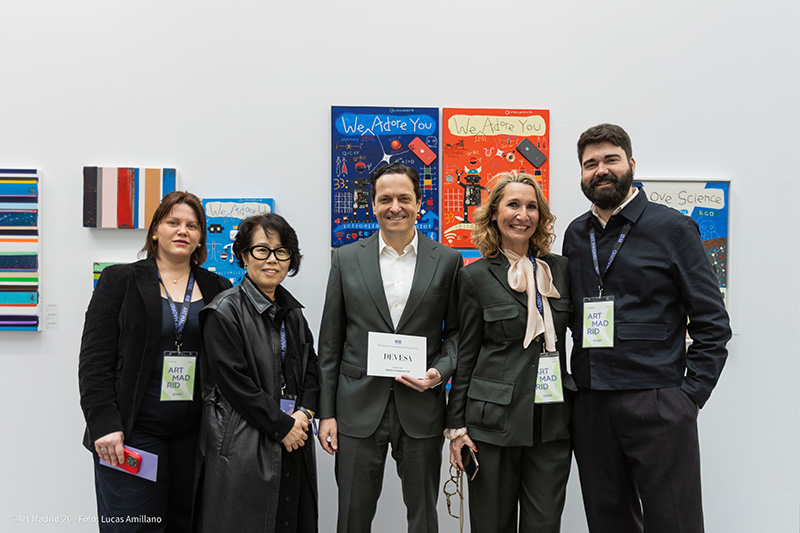
Another action developed by Liquitex is the endowment of a prize in materials valued at 1,500 RRP to one of the participating artists of Art Madrid who uses acrylic painting as the main medium in his creations. The winner will be announced on the last day of the fair (Sunday 1st March) with a function (with a symbolic check), and will be decided between the organisation of Art Madrid and Liquitex.

The company Liquitex has been offering innovations in the field of acrylic painting since 1955. This year it celebrates its 65th birthday defending the same slogan as when it was born: **"create without borders". The creator of the first water-based acrylic paint currently offers a range of intense and vibrant acrylic paints in different formats (thick body, fluid body, inks, acrylic gouache, markers and sprays), acrylic mediums and various accessories. Liquitex products, having the same range of colours in the various formats, can be mixed allowing any artist to experiment with their colour palette without limits.

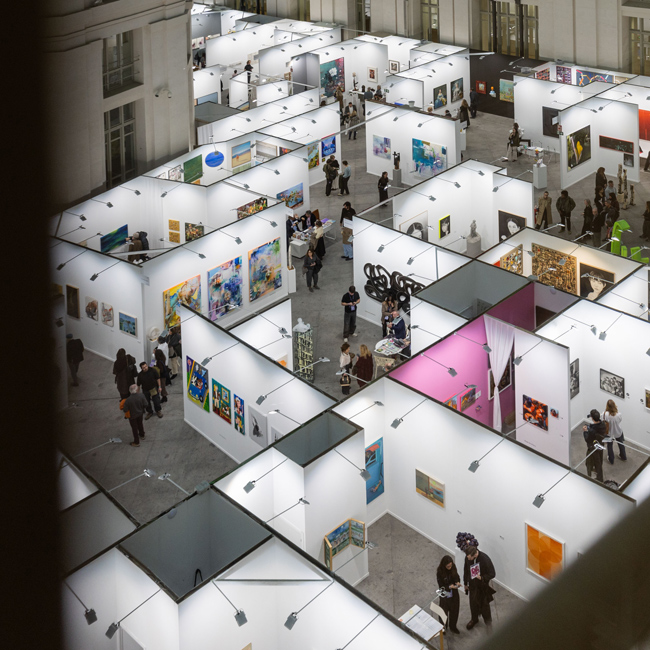


ART MADRID’26 INTERVIEW PROGRAM. CONVERSATIONS WITH ADONAY BERMÚDEZ


The work of Carmen Baena (Benalúa de Guadix, Granada, 1967) is structured as a poetic investigation into the memory of territory and its material translation into forms, textures, and gestures. Her practice stems from a life experience deeply connected to a specific landscape in southern Spain, understood not only as a geographical space but also as an affective and symbolic sedimentation. In this sense, her pieces can be approached from a perspective centered on direct experience: the landscape not as representation, but as a lived trace that emerges through doing.

Baena activates unique dialogue between historically hierarchical materials. Marble, associated with permanence and monumental tradition, coexists with embroidery, a technique linked to domestic knowledge passed down through generations, historically relegated but here reactivated as a fully-fledged artistic language. This coexistence is not presented as confrontation, but as a field of resonances where the solid and the fragile, the enduring and the tactile, interpenetrate. From a perspective attentive to connections, embodied experience, and knowledge constructed from everyday life, thread becomes a tool for sensitive knowledge.

Color, particularly in her textile works, functions as vibrational energy rather than a purely formal attribute. In contrast to the chromatic restraint of marble, embroidery introduces an open temporality in which intuitive gestures and accidents acquire structural value. Thus, the process becomes a space for listening, where the unexpected does not interrupt the work but rather constitutes it. In Carmen Baena’s practice, creating means allowing the territory—both external and internal—to continue transforming itself.


The Garden Blooms X. 2025. Acrylic and embroidery thread on canvas. 50 x 70 cm.


Your works evoke landscapes, reliefs, and topographies. How does the relationship between physical territory and symbolic or emotional territory articulate itself in your practice?

The physical territory where I was born and spent my early childhood has shaped all my work. I was born in a cave in the Guadix region (Granada), home to the largest complex of troglodyte dwellings in Europe.

The landscape there is full of contrasts: alongside the greens of the vega—fruit trees and poplars—you find the reddish ochres of the eroded hills. And facing the white of Sierra Nevada, the white of snow that still lingers in spring, there are also the greens of the wheat fields and cereal plains. Thanks to erosion and the geological layers that have been exposed over time, the area contains a series of strata that preserve extremely important continental geological records.

For this reason, the area has been designated a UNESCO Global Geopark. I spent a happy, very simple childhood in this environment—living closely connected to nature—and that is the territory that surfaces throughout the symbolism of my work.


Circular Horizons XIV. 2023. Acrylic and embroidery thread on canvas. 72 x 72 cm.


You learned embroidery in a family context, and you draw on the landscapes of your childhood. When did you realise that your immediate world—people, gestures, everyday landscapes—was no longer just a memory, but an active driving force in the construction of your artistic language?

I realised that the universe of my childhood was an active driving force in the construction of my artistic language thanks to a friend, after she visited my cave-house. Through her perspective, she made me aware of what I had been doing intuitively up until that point. This happened more than twenty years ago, and since then—even though I’m aware of it—I continue working.

I like working intuitively, and most of the time I only discover what the landscape has been afterwards. What stays with me is the sensation that inspired the piece once I have finished it.


Sea Breeze III. 2025. Acrylic and embroidery thread on canvas. 60 x 80 cm.


Marble carries historical and symbolic weight linked to monumentality, while embroidery is often associated with traditions that have been overlooked or confined to the domestic sphere. How do you negotiate this clash of cultural status in your work?

For years, marble was the material I was most interested in, and the one I used for most of my sculptural work. It wasn’t until 2007–2008 that I felt the need to incorporate embroidery—a technique I had learned as a teenager.

I began experimenting on paper, using stitching to draw landscapes and trees directly connected to the sculptures I was making at the time, and also working on small scraps of different kinds of paper. I explored the technical and visual possibilities of thread, creating small works in which colour, texture, and the thread’s vibration became the protagonists.

Later, I moved on to larger formats on canvas, where I also incorporated acrylic. These two seemingly contradictory practices—marble and embroidery—have coexisted in my studio and my work without any difficulty. Today, embroidery has completely displaced marble.


Between Heaven and Earth III. 2020. Marble and wood. 25 x 14 x 14 cm.


In your marble pieces, white and gold create an almost meditative atmosphere; in contrast, embroidery and acrylic burst into colour, activating gesture and vibration. Is this a conscious choice, or do the materials reveal their own possible colour to you?

With marble, the choice of white and gold is a conscious decision: I want to convey the spiritual atmosphere of the landscape, and the relationship between human beings and nature. By contrast, the explosion of colour in the thread emerged gradually and more intuitively, and only later did I begin to understand and use the possibilities of this material in a more conscious way.


Whisper Between the Lines XIII. 2023. Acrylic and embroidery thread on canvas. 40 x 60 cm.


To what extent do you plan your work, and how much space do you leave for the unexpected—or even for mistakes?

When it comes to making my work, I don’t like to plan too much. With embroidered pieces, I do tests on small scraps of paper—trying out colour and the stitch I’m going to use—and with that I try to visualise the final result in my mind. This way of working leaves plenty of space for things to happen while I work. It allows me to discover, learn, and make use of the unexpected.

For example, in some pieces, while embroidering, tangles can occur because the thread tension isn’t right or the thread is too loose. At first, those tangles might seem like they could ruin the piece, but when I see them, I realise they’re visually very interesting. So later I have consciously reproduced that effect in other works.