Art Madrid'26 – WE ALL CAN BE CREATIVE: A NEW PROPOSAL BY CULTURA INQUIETA FOR ART MADRID'19

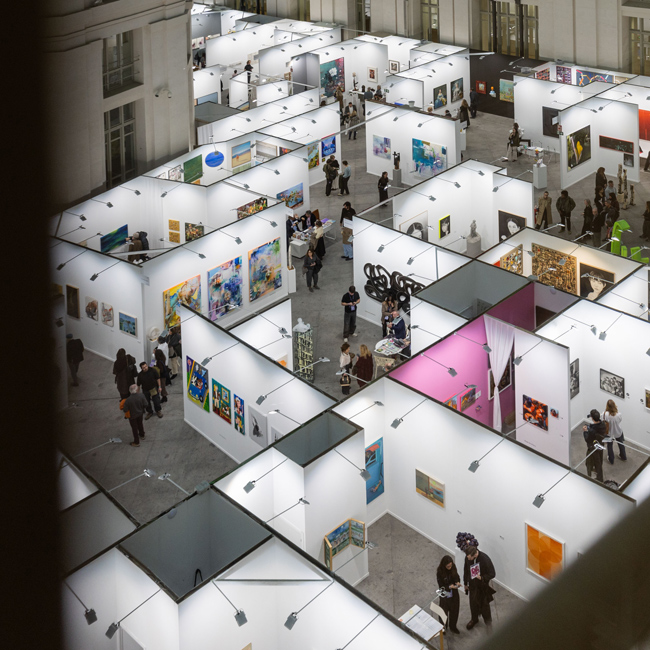
For the third consecutive year, Art Madrid once again is engaged with Cultura Inquieta. Official media partner of this edition, Cultura Inquieta is one of the most interested and involved media in current culture. This year it invites all visitors to take their most creative side into its booth at the fair.

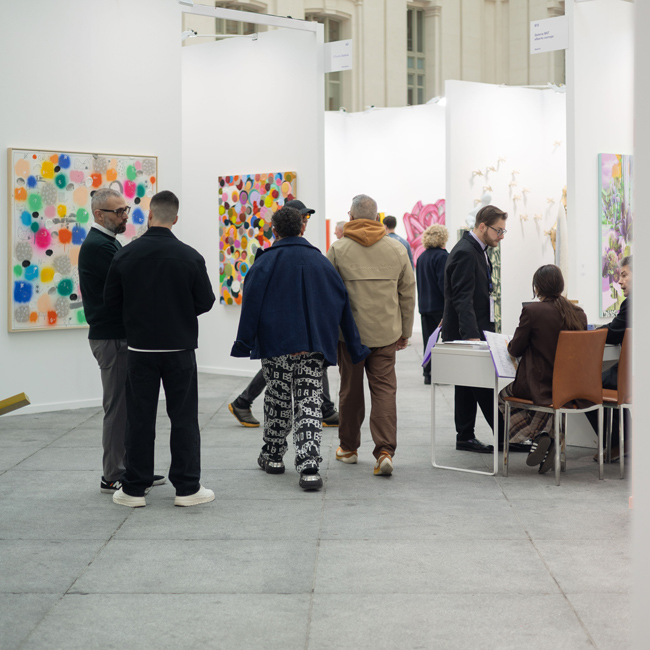
The two walls of the Cultura Inquieta stand began as two blank canvases, ready to welcome all kinds of artistic manifestations and encouraging free expression and creativity without limits. Artists present at the fair as well as visitors of all ages have participated ... In fact, we can all be creative and proof of this is that there is hardly any free space left to intervene in their booth. However, all those who want to be part of these collective murals will surely, with some ingenuity, find some way to leave their mark. In addition, at their booth, you can learn about other projects, such as the creative products they offer from the online store and those they have selected in order for you to see them at Art Madrid: art pills, design and inspiration.
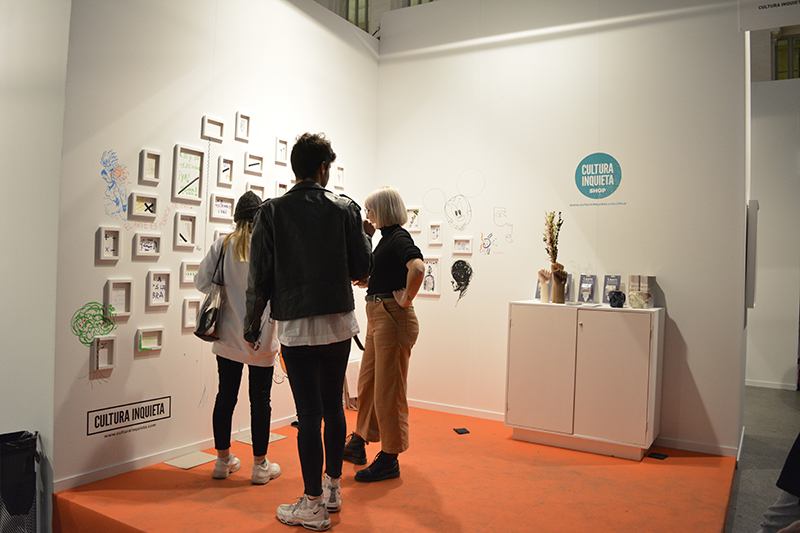
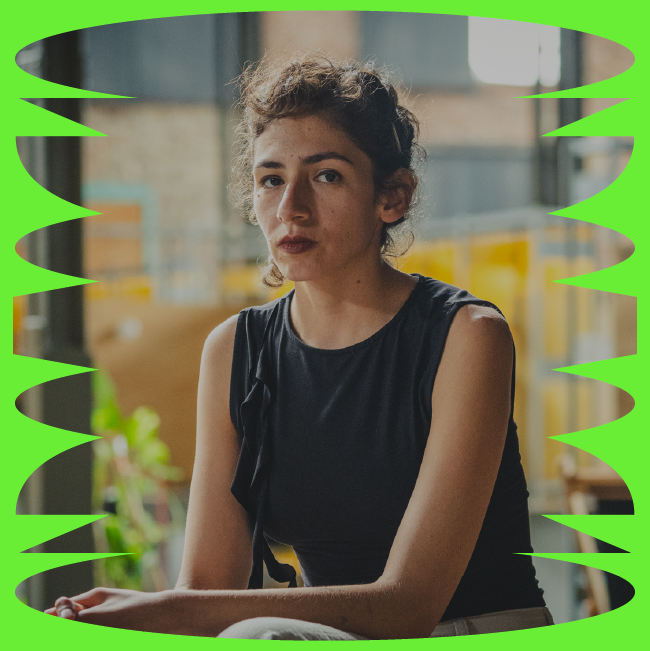
Photo. Melisa Medina.

The Cultura Inquieta team presents "our own space, a couple of square meters where we synthesize our universe to channel, approach and soak up everything that happens. A space, overall for sharing. Sharing time, words and creativity. A place to rest for a few minutes, talk, laugh and reflect "with the ultimate goal" of bringing art to everyone absolutely".

Some of the reasons that motivate this type of proposal are so many that Cultura Inquieta compares them with the own principles of art. Unity or harmony, because, as explained by them, they are integrated, so naturally, that they come to lose sight of the limits imposed by space; variety, because they love having the chance to look out through an infinite window of inspiration, an exercise that they can feed by touring Art Madrid, where they find the production of both emerging artists and consecrated artists, "an almost mystical experience"; or balance, because "we are aware that life is what happens between 0 and 100 years, so we try to look with the eyes of children, and to children we try to give wings so that they can paint, dream, and believe in a much better future through art".
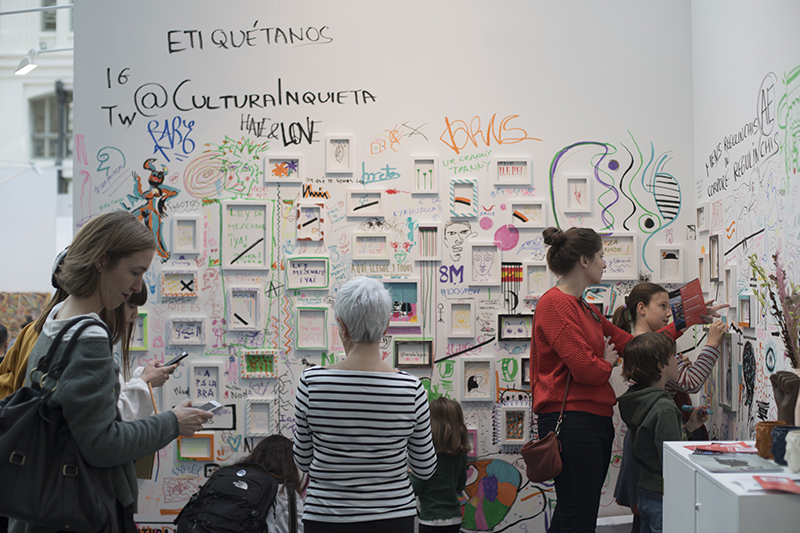
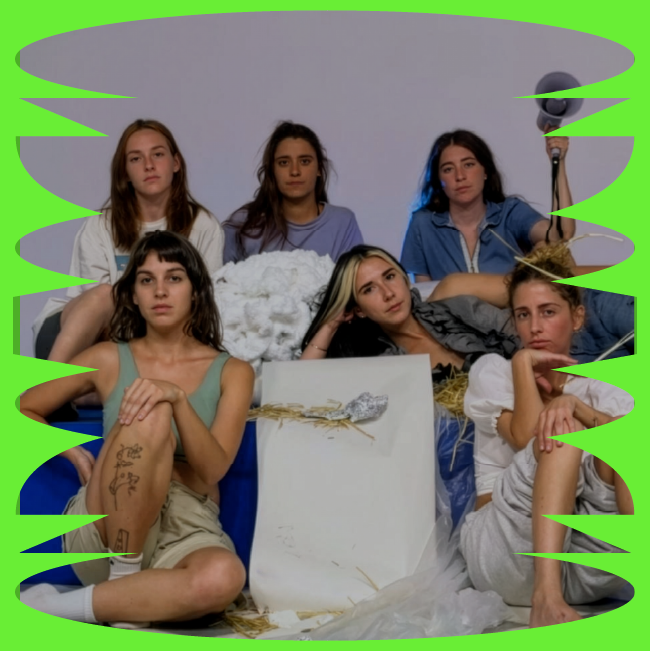
Photo. Miguel Mazuelo Álvarez.

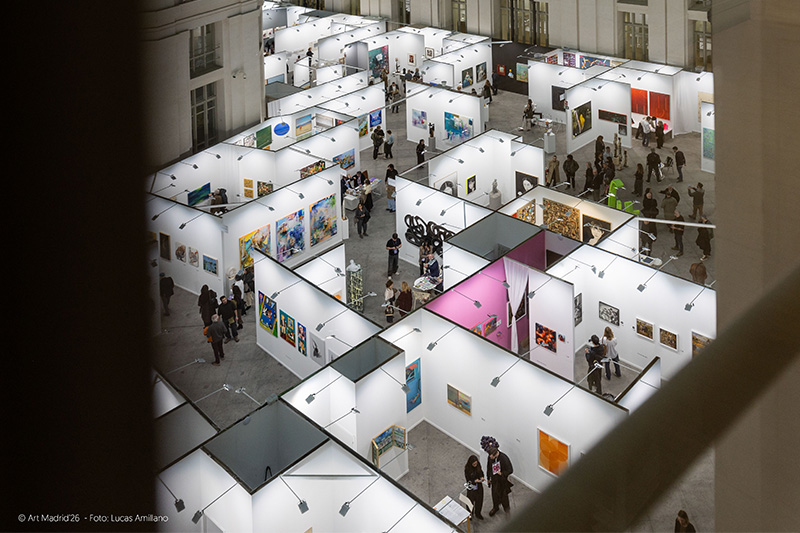
Other reasons that support its proposal for the fair are related to contrast because, like Art Madrid, they enjoy the polyhedral side of things; proportion, because "we can not stop looking up towards the wonderful glass vault that surrounds everything. At the works, at the artists, at you, at us too, and then, is when the proportions of beauty escape us"; the emphasis and the enthusiasm of participating in a fair with which they share so many values and aspirations; and finally, for movement, for that "effervescent flow of people, ideas, concepts and messages that we share with artists, gallerists, visitors, friends ... during these five days".

Like Art Madrid, Cultura Inquieta has among its main objectives the spreading of the quality the current creation has, specialized in the promotion of young talent. Art, culture, trends, photography, trends or lifestyle; Cultura Inquieta is one of the most consulted and reputed digital portals worldwide. It is also the organizer of one of the major Spanish music festival, one of the most important annual events on the Madrid agenda, which this year celebrates its tenth edition beginning at end of June. From Art Madrid we encourage you to participate in the simple but so inclusive and exciting proposal of Cultura Inquieta: dare to express your creativity.


ART MADRID’26 INTERVIEW PROGRAM. CONVERSATIONS WITH ADONAY BERMÚDEZ


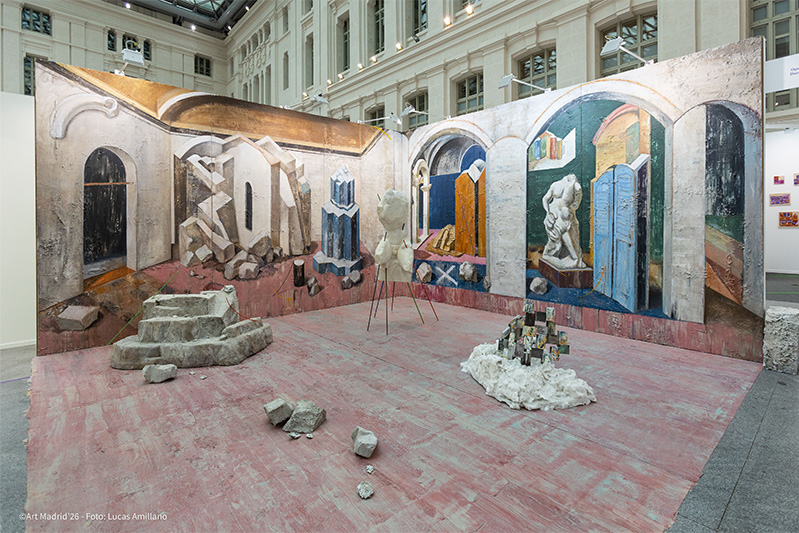
The work of Cedric Le Corf (Bühl, Germany, 1985) is situated in a territory of friction, where the archaic impulse of the sacred coexists with a critical sensibility characteristic of contemporary times. His practice is grounded in an anthropological understanding of the origin of art as a foundational gesture: the trace, the mark, the need to inscribe life in the face of the awareness of death.

The artist establishes a complex dialogue with the Spanish Baroque tradition, not through stylistic mimicry, but through the emotional and material intensity that permeates that aesthetic. The theatricality of light, the embodiment of tragedy, and the hybridity of the spiritual and the carnal are translated in his work into a formal exploration, where underlying geometry and embedded matter generate perceptual tension.

In Le Corf’s practice, the threshold between abstraction and figuration is not an opposition but a site of displacement. Spatial construction and color function as emotional tools that destabilize the familiar. An open methodology permeates this process, in which planning coexists with a deliberate loss of control. This allows the work to emerge as a space of silence, withdrawal, and return, where the artist confronts his own interiority.


The Fall. 2025. Oil on canvas.195 × 150 cm.


In your work, a tension can be perceived between devotion and dissidence. How do you negotiate the boundary between the sacred and the profane?

In my work, I feel the need to return to rock art, to the images I carry with me. From the moment prehistoric humans became aware of death, they felt the need to leave a trace—marking a red hand on the cave wall using a stencil, a symbol of vital blood. Paleolithic man, a hunter-gatherer, experienced a mystical feeling in the presence of the animal—a form of spiritual magic and rituals linked to creation. In this way, the cave becomes sacred through the abstract representation of death and life, procreation, the Venus figures… Thus, art is born. In my interpretation, art is sacred by essence, because it reveals humankind as a creator.


Between Dog and Wolf II. 2025. Oil on canvas. 97 × 70 cm.


Traces of the Spanish Baroque tradition can be seen in your work. What do you find in it that remains contemporary today?

Yes, elements of the Spanish Baroque tradition are present in my work. In the history of art, for example, I think of Arab-Andalusian mosaics, in which I find a geometry of forms that feels profoundly contemporary. In Spanish Baroque painting and sculpture, one recurring theme is tragedy: death and the sacred are intensely embodied, whether in religious or profane subjects, in artists such as Zurbarán, Ribera, El Greco, and also Velázquez. I am thinking, for example, of the remarkable equestrian painting of Isabel of France, with its geometry and nuanced portrait that illuminates the painting.

When I think about sculpture, the marvelous polychrome sculptures of Alonso Cano, Juan de Juni, or Pedro de Mena come to mind—works in which green eyes are inlaid, along with ivory teeth, horn fingernails, and eyelashes made of hair. All of this has undoubtedly influenced my sculptural practice, both in its morphological and equestrian dimensions. Personally, in my work I inlay porcelain elements into carved or painted wood.


Between Dog and Wolf I. 2025. Oil on canvas. 97 × 70 cm.


What interests you about that threshold between the recognizable and the abstract?

For me, any representation in painting or sculpture is abstract. What imposes itself is the architectural construction of space, its secret geometry, and the emotion produced by color. It is, in a way, a displacement of the real in order to reach that sensation.


The Anatomical Angel. 2013. Ash wood and porcelain. 90 × 15 × 160 cm.


Your work seems to move between silence, abandonment, and return. What draws you toward these intermediate spaces?

I believe it is by renouncing the imitation of external truth, by refusing to copy it, that I reach truth—whether in painting or in sculpture. It is as if I were looking at myself within my own subject in order to better discover my secret, perhaps.


Justa. 2019. Polychrome oak wood. 240 × 190 × 140 cm.


To what extent do you plan your work, and how much space do you leave for the unexpected—or even for mistakes?

It is true that, on occasions, I completely forget the main idea behind my painting and sculpture. Although I begin a work with very clear ideas—preliminary drawings and sketches, preparatory engravings, and a well-defined intention—I realize that, sometimes, that initial idea gets lost. It is not an accident. In some cases, it has to do with technical difficulties, but nowadays I also accept starting from a very specific idea and, when faced with sculpture, wood, or ceramics, having to work in a different way. I accept that.