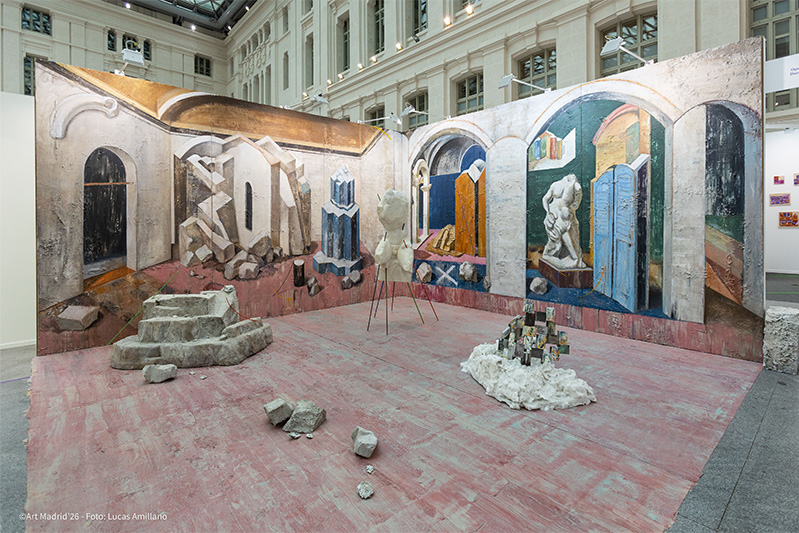
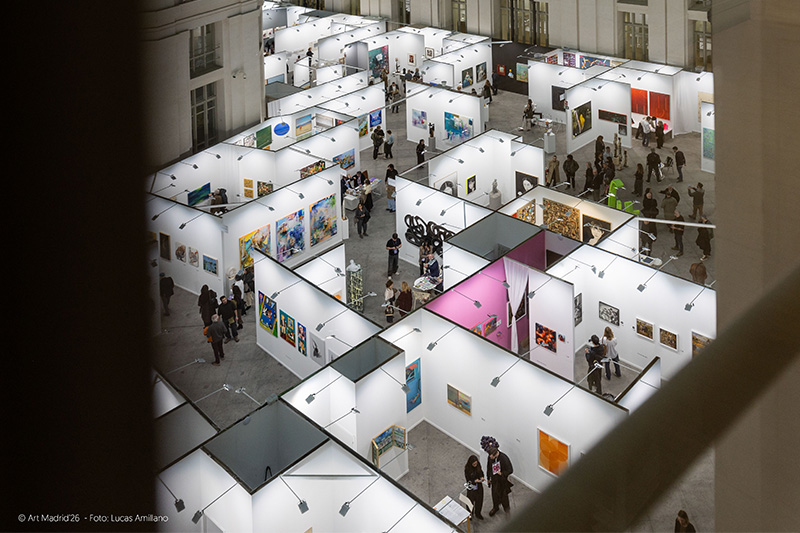
Art Madrid'26 – OPEN BOOTH X LIQUITEX: A GATHERING OF VERY IMPORTANT PEOPLE

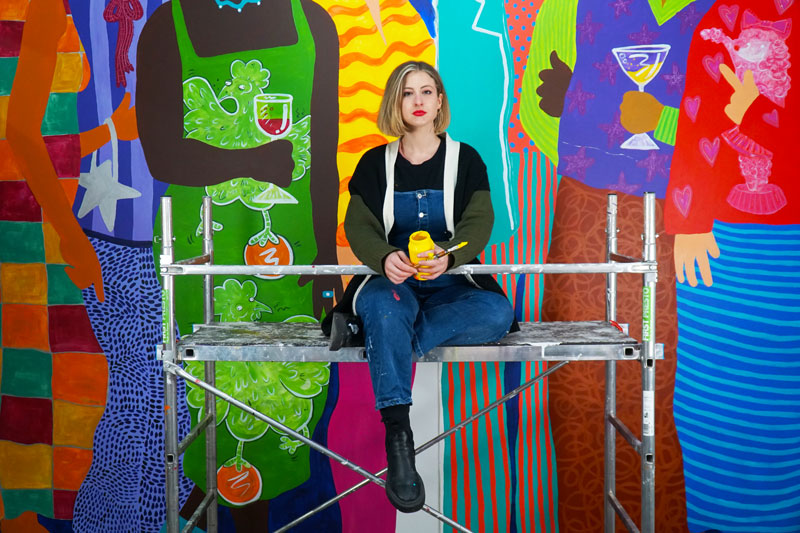
Marina Tellme. Guest artist at OPEN BOOTH X LIQUITEX. Courtesy of the artist.

OPEN BOOTH X LIQUITEX

"REUNIÓN DE GENTE IMPORTANTÍSIMA"

BY MARINA TELLME


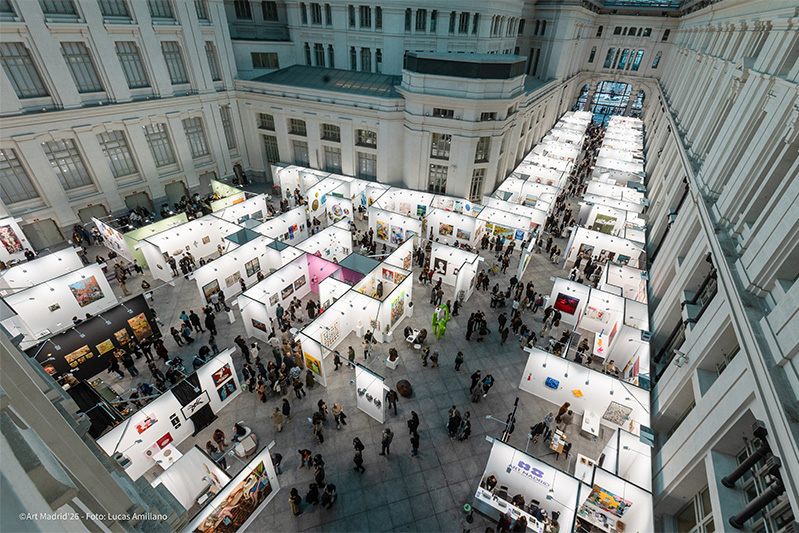
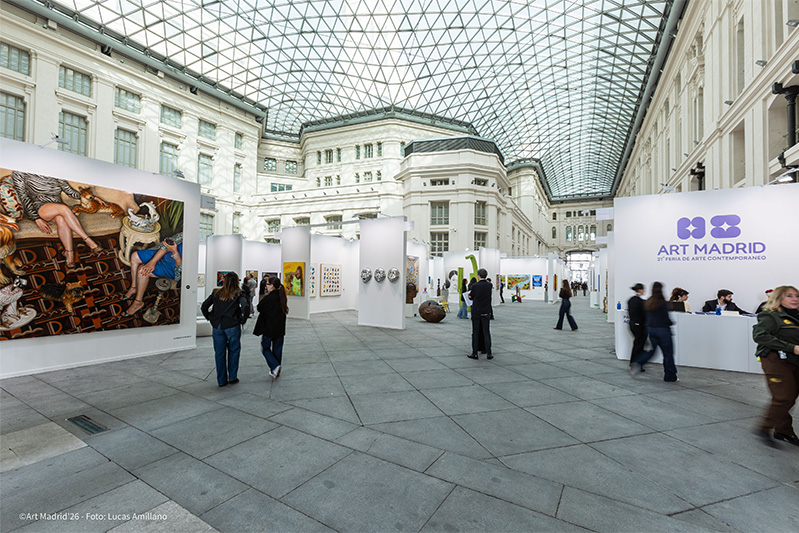
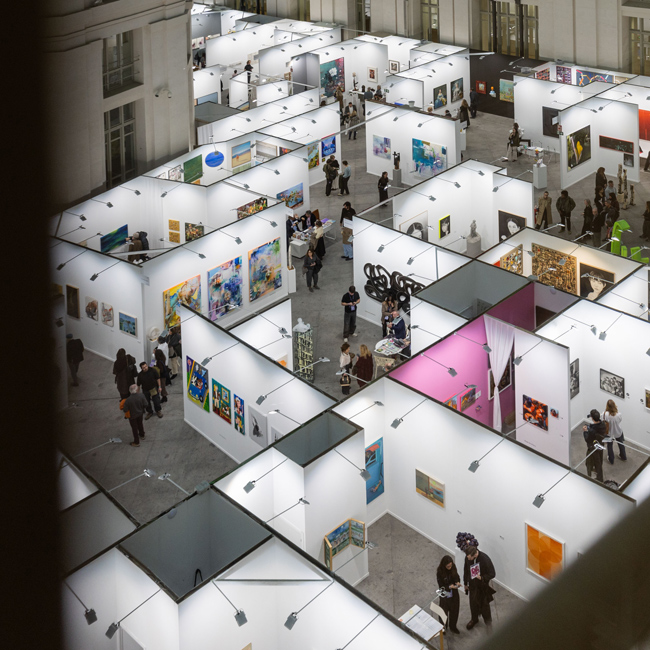
Art Madrid'24 returns to the Art Week and celebrates its 19th edition. From March 6 to 10, 2024, the Crystal Gallery of the Cibeles Palace will become the epicenter where the most innovative and current artistic trends of the national and international scene will gather. To celebrate its 19th edition, Art Madrid presents a General Galleries Program and a renewed Parallel Program. Both proposals are aimed at enriching the presence of an event that has already surpassed its satellite season, consolidating itself in each edition as a reference appointment in the agendas of the general and specialized public.

In this edition, Art Madrid presents exclusively the OPEN BOOTH X LIQUITEX. A section that opens with the installation: "Reunión de gente importantísima" by the artist Marina Tellme.

OPEN BOOTH X LIQUITEX thus becomes a sort of fleeting home that distinguishes and makes our event a place to stay for a few days. A meeting of very important people is a work that will certainly generate synergies with the public, expanding its sense as an intelligently critical work and serving as a space for reflection, in a close and multipurpose event like Art Madrid.

Artistic practices that are born of collaboration, that promote the generation of work spaces and dialogue between the different agents in the sector, are essential to promote a turn of the screw in the transformation and renovation of the cultural fabric. The constant evolution of art demands a continuous dialogue between artists, galleries and audiences. In our 19th edition, we intend to be catalysts for this dialogue, transcending traditional boundaries and embracing new artistic expressions. We firmly believe in the capacity of art to influence society, and we want to be agents of change by facilitating the convergence of diverse artistic languages in this new edition.
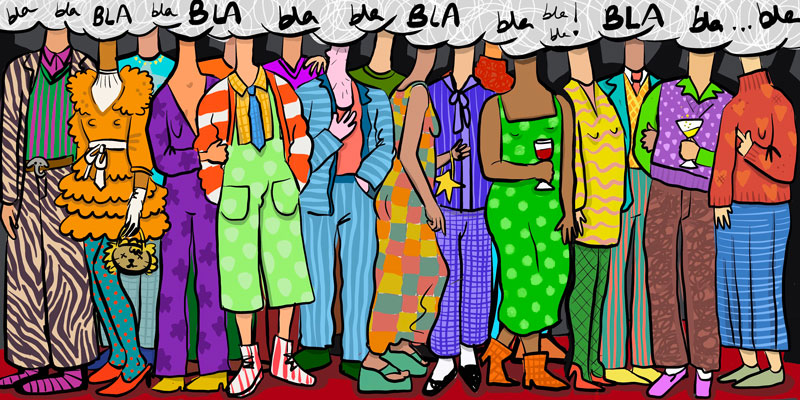
"Reunión de dente importantísima". Marina Tellme. Project for Art Madrid. 2024.

The site specific "Reunión de gente importantísima", conceived especially for Art Madrid, proposes a subversive view of the context of social relations established in the art world. With a touch of humor, a naive aesthetic and an intentionality that could seem candid, the work represents a meeting of people in a VIP area as a satire or comic strip.
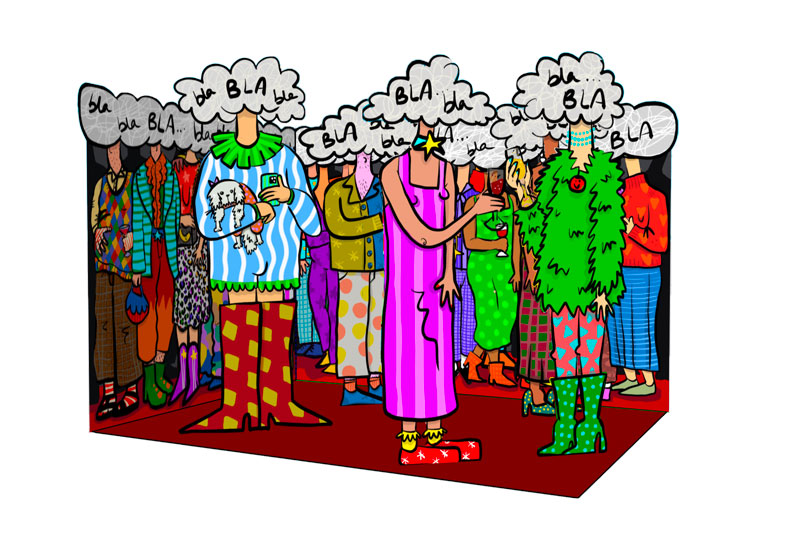
"Reunión de dente importantísima". Marina Tellme. Project for Art Madrid. 2024.

Surrounded by a red velvet cordon, where any spectator can enter and live this experience, the characters enjoy their hedonistic posture, differentiating themselves from the rest by the mere fact of belonging to a select club of chosen ones. However, to the surprise of the privileged, we have all been invited to this meeting of very important people. As you pass by, you will feel as if you were entering a forest, you will discover a peculiar multitude of oversized characters, fashionistas, cool people, chic, art geeks, who talk ad nauseam about apparently crucial issues - for the salvation of the planet - but we do not understand a single word.
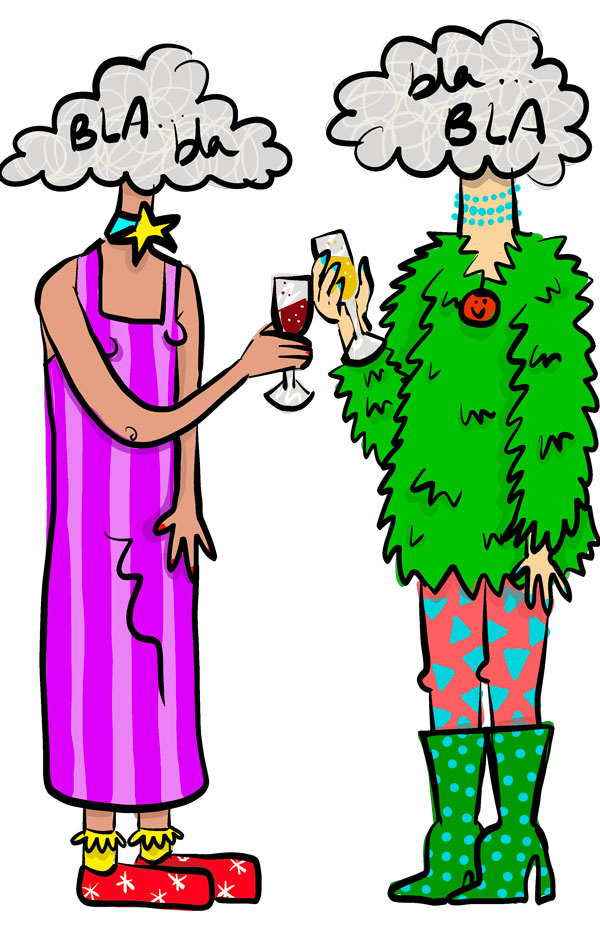
"Reunión de dente importantísima". Marina Tellme. Project for Art Madrid. The Chin Chin Bitches. 2024.

One more edition of Art Madrid joins Liquitex to strengthen their mutual commitment to contemporary creation. The world's leading brand in professional acrylics is the sponsor of the new OPEN BOOTH X LIQUITEX (Stand D2), which will host the artist Marina Tellme.
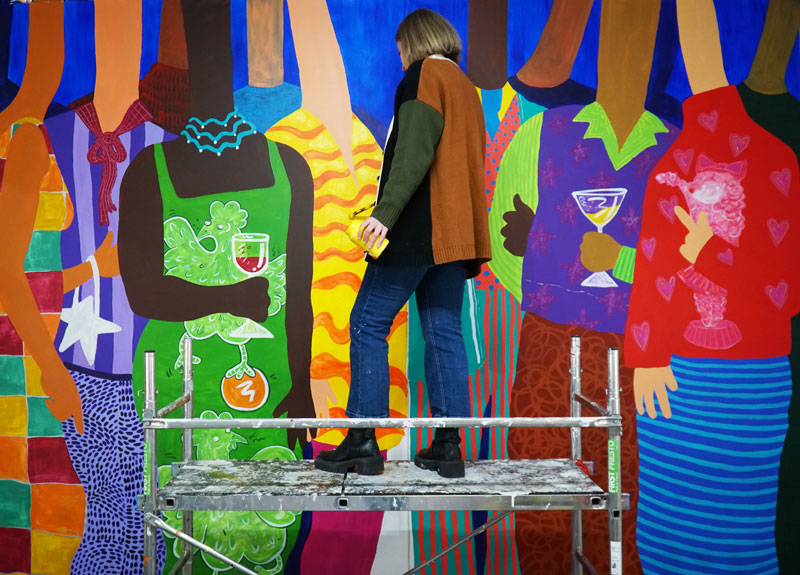
Marina Tellme in her studio. Courtesy of the artist. 2024.

ABOUT THE ARTIST

MARINA TELLME, 1995, Almería.

Graduated in Fine Arts at the Alonso Cano Faculty (Granada), Master in Film Directing at TAI and qualified as a voice-over actress at EDM (Madrid). Her work has been exhibited at Humboldt University (Berlin), García Lorca Art Center (Granada), Bless Hotel (Madrid), Instituto de la Mujer de Almería, selected in the Art Sur Festival of Art in Action (Córdoba) or Femujer de Santo Domingo (Dominican Republic), among others. Her work is the result of her passion for telling stories. Her paintings, sculptures and installations represent (as if it were a frame of an animated film) a scenery with characters and circumstances, mostly comic and naive style, but with room for social criticism; showing generational concerns such as the difficulties of access to decent work or housing, the figure of women in the art world and numerous burdens that appear in our lives when we grow up: such as anxiety, impostor syndrome or social phobia.

ART MADRID’26 INTERVIEW PROGRAM. CONVERSATIONS WITH ADONAY BERMÚDEZ


The work of Cedric Le Corf (Bühl, Germany, 1985) is situated in a territory of friction, where the archaic impulse of the sacred coexists with a critical sensibility characteristic of contemporary times. His practice is grounded in an anthropological understanding of the origin of art as a foundational gesture: the trace, the mark, the need to inscribe life in the face of the awareness of death.

The artist establishes a complex dialogue with the Spanish Baroque tradition, not through stylistic mimicry, but through the emotional and material intensity that permeates that aesthetic. The theatricality of light, the embodiment of tragedy, and the hybridity of the spiritual and the carnal are translated in his work into a formal exploration, where underlying geometry and embedded matter generate perceptual tension.

In Le Corf’s practice, the threshold between abstraction and figuration is not an opposition but a site of displacement. Spatial construction and color function as emotional tools that destabilize the familiar. An open methodology permeates this process, in which planning coexists with a deliberate loss of control. This allows the work to emerge as a space of silence, withdrawal, and return, where the artist confronts his own interiority.


The Fall. 2025. Oil on canvas.195 × 150 cm.


In your work, a tension can be perceived between devotion and dissidence. How do you negotiate the boundary between the sacred and the profane?

In my work, I feel the need to return to rock art, to the images I carry with me. From the moment prehistoric humans became aware of death, they felt the need to leave a trace—marking a red hand on the cave wall using a stencil, a symbol of vital blood. Paleolithic man, a hunter-gatherer, experienced a mystical feeling in the presence of the animal—a form of spiritual magic and rituals linked to creation. In this way, the cave becomes sacred through the abstract representation of death and life, procreation, the Venus figures… Thus, art is born. In my interpretation, art is sacred by essence, because it reveals humankind as a creator.


Between Dog and Wolf II. 2025. Oil on canvas. 97 × 70 cm.


Traces of the Spanish Baroque tradition can be seen in your work. What do you find in it that remains contemporary today?

Yes, elements of the Spanish Baroque tradition are present in my work. In the history of art, for example, I think of Arab-Andalusian mosaics, in which I find a geometry of forms that feels profoundly contemporary. In Spanish Baroque painting and sculpture, one recurring theme is tragedy: death and the sacred are intensely embodied, whether in religious or profane subjects, in artists such as Zurbarán, Ribera, El Greco, and also Velázquez. I am thinking, for example, of the remarkable equestrian painting of Isabel of France, with its geometry and nuanced portrait that illuminates the painting.

When I think about sculpture, the marvelous polychrome sculptures of Alonso Cano, Juan de Juni, or Pedro de Mena come to mind—works in which green eyes are inlaid, along with ivory teeth, horn fingernails, and eyelashes made of hair. All of this has undoubtedly influenced my sculptural practice, both in its morphological and equestrian dimensions. Personally, in my work I inlay porcelain elements into carved or painted wood.


Between Dog and Wolf I. 2025. Oil on canvas. 97 × 70 cm.


What interests you about that threshold between the recognizable and the abstract?

For me, any representation in painting or sculpture is abstract. What imposes itself is the architectural construction of space, its secret geometry, and the emotion produced by color. It is, in a way, a displacement of the real in order to reach that sensation.


The Anatomical Angel. 2013. Ash wood and porcelain. 90 × 15 × 160 cm.


Your work seems to move between silence, abandonment, and return. What draws you toward these intermediate spaces?

I believe it is by renouncing the imitation of external truth, by refusing to copy it, that I reach truth—whether in painting or in sculpture. It is as if I were looking at myself within my own subject in order to better discover my secret, perhaps.


Justa. 2019. Polychrome oak wood. 240 × 190 × 140 cm.


To what extent do you plan your work, and how much space do you leave for the unexpected—or even for mistakes?

It is true that, on occasions, I completely forget the main idea behind my painting and sculpture. Although I begin a work with very clear ideas—preliminary drawings and sketches, preparatory engravings, and a well-defined intention—I realize that, sometimes, that initial idea gets lost. It is not an accident. In some cases, it has to do with technical difficulties, but nowadays I also accept starting from a very specific idea and, when faced with sculpture, wood, or ceramics, having to work in a different way. I accept that.