Art Madrid'26 – PHILIPPE HALSMAN THE PHOTOGRAPHER OF THE STARS

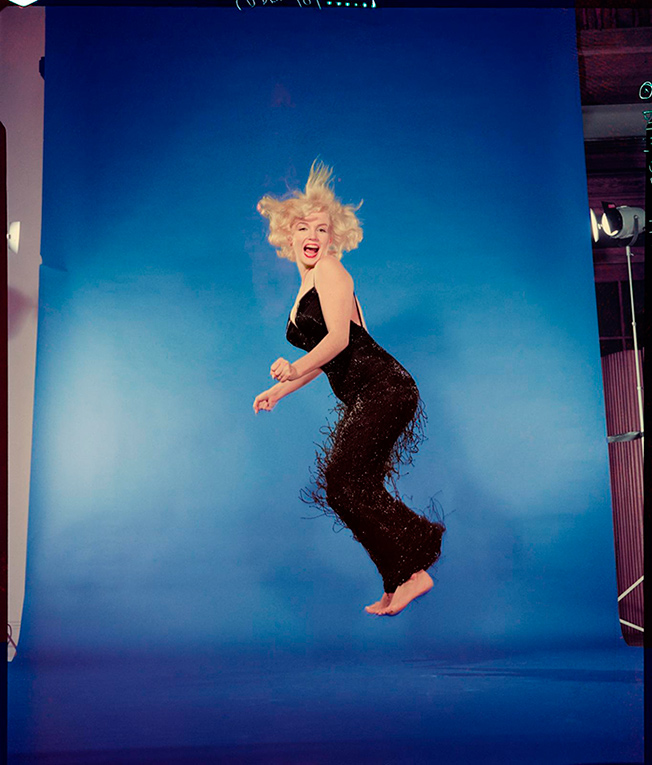
Marilyn Monroe with Philippe Halsman


Philippe Halsman (1906-1979) Born in Latvia, he had a very tragic life. He was accused of Parricide and later imprisoned for his Jewish religion. They were difficult times for the creative ones, and Halsman managed to emigrate to Paris. With the help of Albert Einstein he got a ticket to move to the United States, the land of opportunity. The photographer managed to make room in the American art scene and consolidated as "photographer of the stars" for portraying Marilyn Monroe, Alfred Hitchcock or Audrey Hepburn.
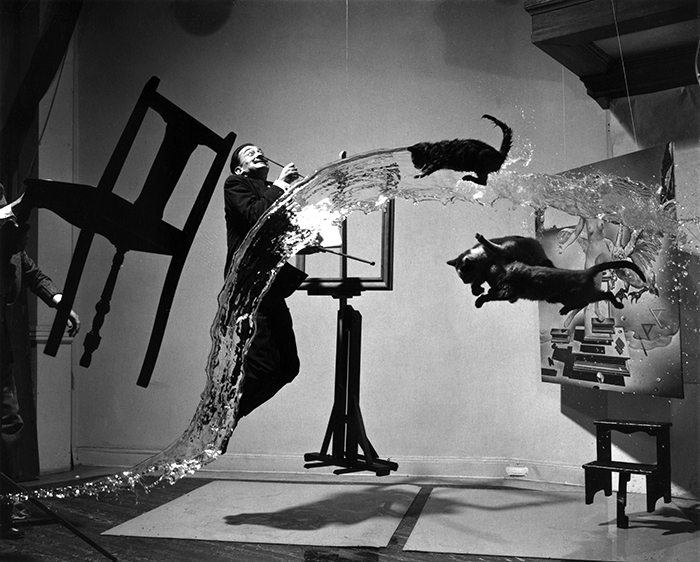


Dalí atomicus, 1948. By Philippe Halsman


This electrical engineer turned to photography, was a great defender of this artistic technique. It suffered the arrival of the mass media, but it knew to maintain and to continue climbing in its race. Thanks to his imagination and his ability to speak in public he opened an unexplored path in the field of photography. Philippe Halsman was a landmark in postwar photography. Thanks to his family, the Caixaforum Madrid presents an exhibition full of historical sights.
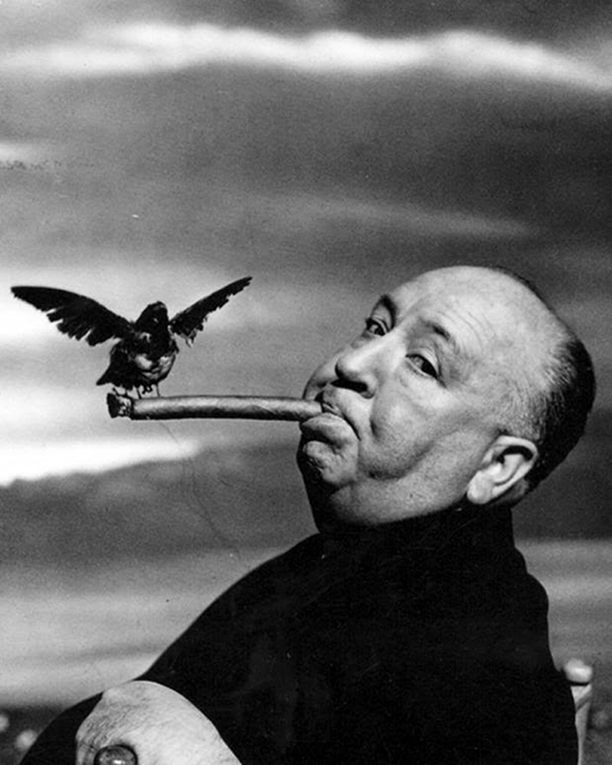


Alfred Hitchcock. By Philippe Halsman


For the first time it has been accessed its private archives and it has been possible to pose this wonderful presentation divided into four sections. The first, an introduction dedicated to your stay in Paris. A compilation of his early work that shows how the photographer already pointed ways. The other three parts, reflect the period in which he lived in the United States. Each one of them, are a mirror of all the restlessness of the artist. The protagonists are his portraits of well-known personalities. Finally, the impressive repertoire that made with the eccentric artist Salvador Dalí.
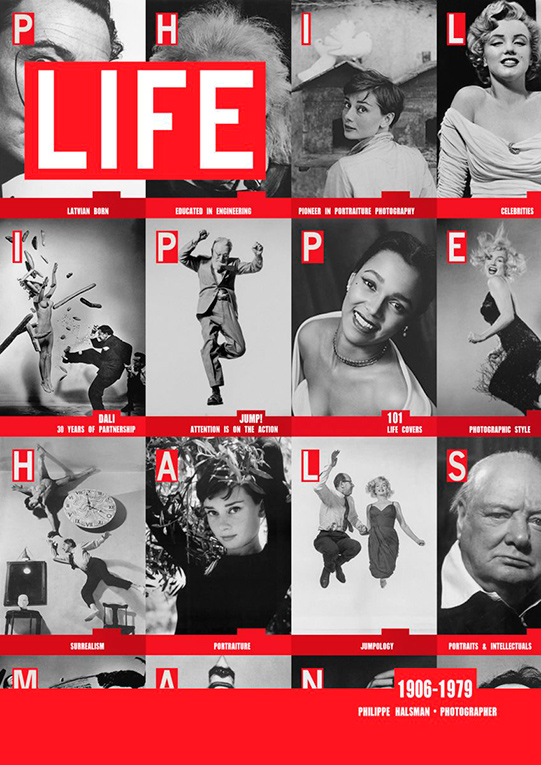


Covers of Life magazine. By Philippe Halsman


An exhibition for lovers of photography, portrait, myths and pop culture. His photographs like him, awaken in the curious observer the taste for detail and naturalness. Thanks to Halsman, photography gave a twist to the way we look and interpret. The exhibition, surprise me! Will be active until March 26. An opportunity to see more than 300 reproductions of one of the most important photographers of S.XX.
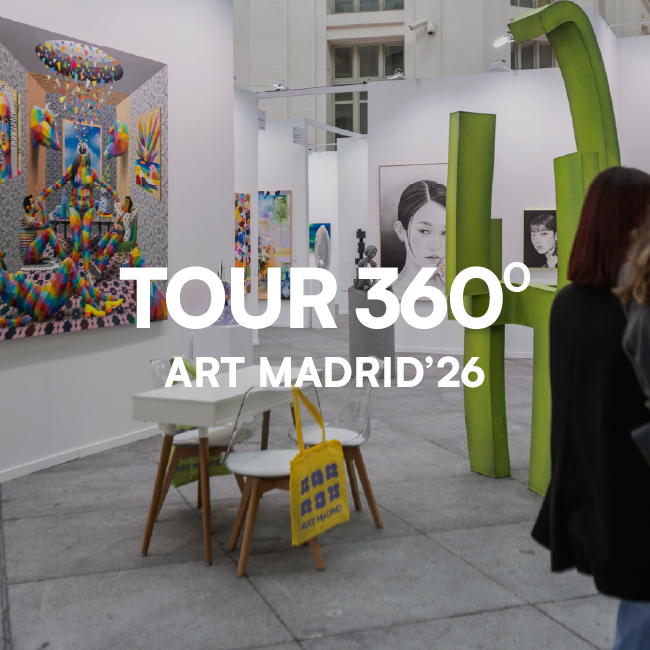
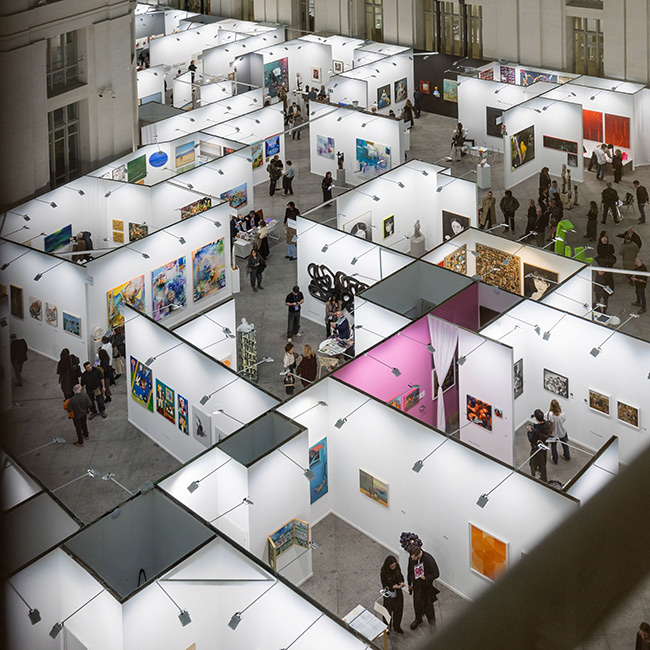


ART MADRID’26 INTERVIEW PROGRAM. CONVERSATIONS WITH ADONAY BERMÚDEZ


The work of Iyán Castaño (Oviedo, 1996) is situated within a genealogy of contemporary art that interrogates the tension between the ephemeral and the permanent, placing artistic practice on a threshold where nature, time, and perception converge. His research begins with an apparently minor geomorphological phenomenon—the traces left in the sand by the action of the tides—and transforms it into a poetic device for sensitive observation of the landscape. The temporal restriction imposed by low tide functions not only as a technical constraint but also as a conceptual structure that organizes the creative process and aligns it with an ethic of radical attention and presence.

Far from approaching the landscape as a mere backdrop or stage, Castaño recognizes in the maritime environment a generative system that precedes all human intervention. The sea, wind, and light produce autonomous records that he translates pictorially, shifting authorship toward a practice of listening and mediation.

The territory—initially asturian and progressively extended to other geographical contexts—functions as a material archive and situated memory. Each work becomes an unrepeatable index of a specific place and moment, revealing the fragility of natural cycles without resorting to explicit rhetoric of denunciation. In this way, Iyán Castaño’s painting operates as an active pause, a gesture of suspension that allows us to experience the world’s constant transformation from a sensitive and reflective proximity.


Open waters. 14-04-24. Expanded graphic on canvas. 2024. Detail.


In your practice, you work under the time constraint imposed by low tide. How does this temporal limit shape your creative process?

Low tide profoundly conditions my working method, but it does not function merely as a time limit; rather, it is the axis around which the entire project is structured. There is a prior phase in which I study meteorological conditions and the possible climatic variations of a specific day; based on this, I know whether I will be able to work and with which materials.

Once on the beach, during low tide, I have a very limited window—sometimes barely two hours or even less—in which I must move through the space searching for existing traces. If I find one, I intervene in it; if not, I must move on to another beach. After the intervention, I have to remove it quickly before the sea returns and erases every trace. In a way, these works transform the ripples of sand—those forms that are essentially ephemeral—into something permanent.


Where the sea is born. 15-09-25. Expanded graphic on canvas. 40 x 60 cm. Rodiles Beach, Asturias. 2025.


How does the meteorological and maritime environment—the unpredictability of the sea, wind, light, and tide—become a co-author of your pieces?

I do not consider the environment a co-author in the traditional sense, but rather the true author of the traces I work with. I am interested in understanding nature as a great creator: through tides, waves, wind, and light, the sand generates forms that are in constant regeneration. In order to create my works, the sea must first have created its own.

From there, using acrylics, oils, waxes, or sprays, I attempt to translate into the work my sensations and emotions in front of the sea at that specific moment. Whether it is winter or summer, cloudy or sunny, a small cove or an expansive beach, all of these context conditions result and become imprinted in the work.


Sand Ripples. 07-04-21. Expanded graphic on canvas. 189 x 140 cm. Niembro Estuary. Asturias. 2021.


Your work is closely tied to the Asturian territory—beaches, coastal forests, the cove of La Cóndia. What role do place, topography, local identity, and geographic memory play in your practice?

Place is everything in my project. Asturias was the point of departure and the territory where my gaze was formed. I have been working along this line for seven years, and over time I have come to understand that each trace is inseparable from the specific site and the exact day on which it is produced.

From there, I felt the need to expand the map and begin working in other territories. So far, I have developed works in Senegal, Ecuador, the Galápagos Islands, Indonesia, and elsewhere—and in each case, the result is completely different. The sea that bathes those coasts, the arrangement of the rocks, the morphology of the beach, or even the animals that inhabit it generate unique traces, impossible to reproduce elsewhere. This specificity of territory—its topography and geographic memory—is inscribed in each work in a singular, inseparable, and unrepeatable way.


Mangata. 05-11-25. Expanded graphic on canvas. 190 x 130 cm. Sorraos Beach. Llanes. 2025.


To what extent are climate change, rising sea levels, altered tidal cycles, or coastal erosion present—or potentially present—as an underlying reflection in your work?

My work does not originate from an ecological intention or a direct form of protest. If there is a reflection on the environment, it emerges indirectly, by bringing people closer to the landscape, inviting them to observe attentively and to develop a more empathetic relationship with the environment they inhabit. Beaches are in constant transformation, but I do not seek to fix the landscape; rather, I attempt to convey the experience of being in front of it. In this sense, each work is like a small sea that one can take home.


Tree of Life. 19-02-25. Expanded graphic on canvas. 50 x 70 cm. El Puntal Beach. Asturias. 2025.


To what extent do you plan your work, and how much space do you leave for the unexpected—or even for mistakes?

In my work there is very little planning in terms of the final result, but there is a very precise preliminary planning. Before going to the beach, I monitor the time of low tide, wave height, wind, and weather conditions; based on this, I decide which beach to go to. Even so, when I arrive, I still do not know what work I am going to make. It is there that I determine which material to use, which color to apply, and where the intervention will take place. Many times, the environment simply does not allow work on that day, and chance becomes an essential element of these works. Error, in turn, becomes a new possibility if one learns how to work with it.