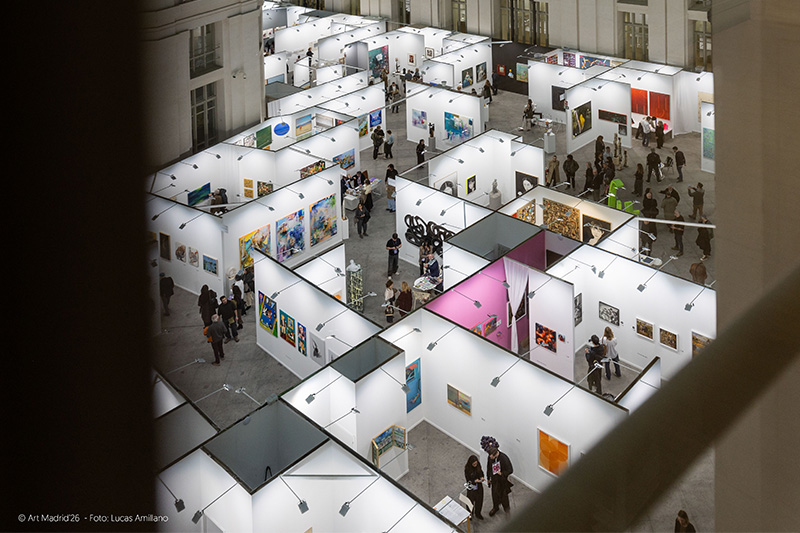
Art Madrid'26 – PORTUGAL, BROTHERS IN ARTS

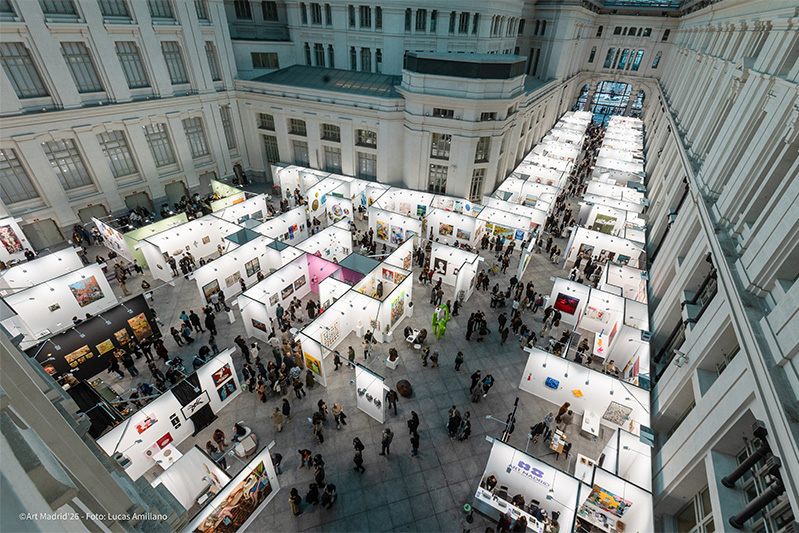
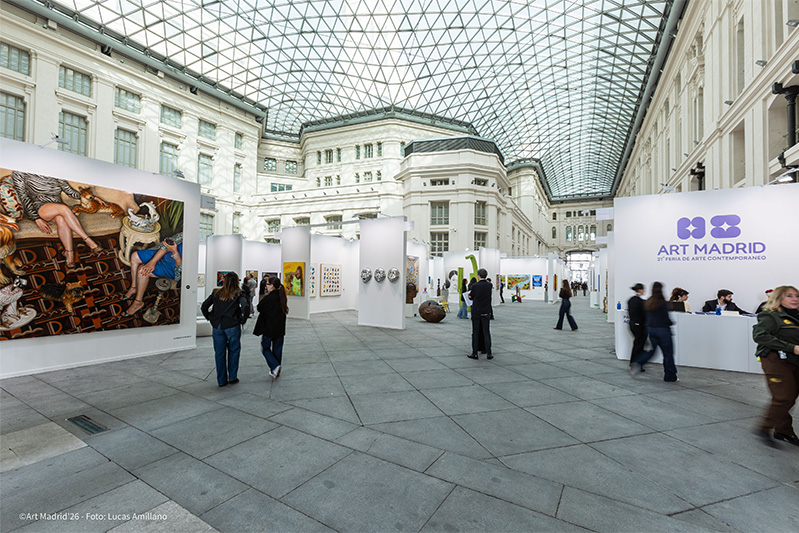
It is impossible to be nearer, physically and symbolically. Portuguese artists and professionals can consider Art Madrid "their fair". On this occasion, the Art Lounge and Arte Periférica galleries, both from Lisbon, and Paulo Nunes Arte Contemporânea, from Vila Franca de Xira, participate in the General Program of the fair. The Nuno Sacramento gallery is part of ONE PROJECT program.
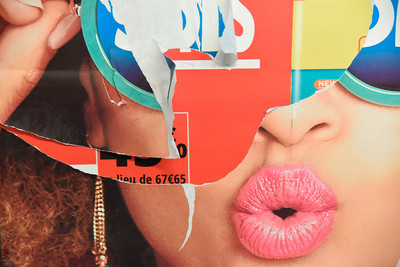
João Santos

Sin título, 2017

Plexiphoto

100 x 70cm

Art Lounge, under the direction of Sofía Tenreiro Da Cruz, intends to disseminate the work of international artists recognized for the quality of their work. Convinced of the importance of cultural exchange, the gallery tries to show in Portugal foreign artists still little known in the country and, in a second phase, aims to promote the internationalization of contemporary national plastic arts. The Art Lounge proposal for Art Madrid'18 is multiple: Uiso Alemany, Carmen Calvo, Fabio Camarotta, Fernando Coelho, Vinita Dasgupta, Daniel Merlin, Brice Munier, João Noutel and Florian Raiss.

Carmen Calvo, “Alegría es uno de sus adornos más vulgares”, técnica mixta, collage y fotografía.

The work of Carmen Calvo always deserves a break. National Prize of Plastic Arts 2013, Calvo is a reference in the contemporary conceptualization of the fragment. Her work has an essence of finding and reminiscence and materials such as cement, marble, glass, clay, plaster and a long etcetera are part of her compositions that have been renewed over the decades in an evolution that led her to represent Spain in the Pavilion of the Venice Biennial of 1997 with Joan Brossa. Next to her, the colorful and almost childlike forms of Brice Mounier, the materic portraits of Daniel Merlin or the social art of Vinita Dasgupta that wants the viewer feels and participates in her images, in the process of discovery, the synthesis of personal feelings, the color that inspires her and the technique used.
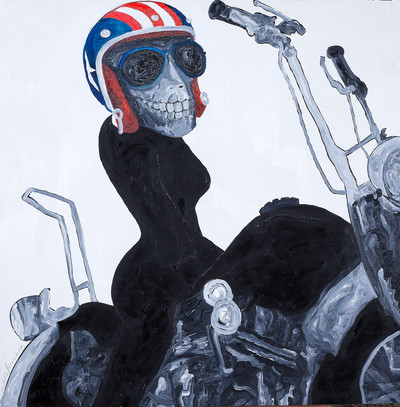
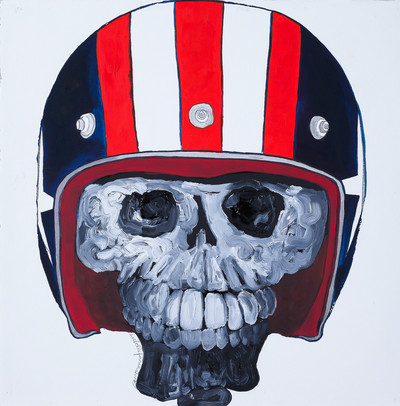
Isabelle Faria

Purity-Finally time had come IV, 2017

Oil on canvas

80 x 80cm

Isabelle Faria

Purity-Finally time had come VI, 2017

Oil on canvas

40 x 40cm

Also in Lisbon, Arte Periférica has been promoting international contemporary art in the city for 25 years. Directed by Anabela Antunes and Pedro Reigadas also bet on an ambitious collective formed by the artists Isabel Sabino, Isabelle Faria, Jessica Burrinha, Moses Duarte and Sylvie Lei.

We highlight here the contrast between the work of the French Isabelle Faria, graduated in Fine Arts, Painting, Drawing and Video at the Central School Saint Martins in London in 2003 and focused in a style of drawing and painting very expressive, fast, almost gestural and full of acid humor to represent the tormented part of the human being: his vices, his fears, his sins... In contrast with the work of the Asian abstract painter Sylvie Lei who, with an almost ethereal palette and inspired by the effects of neon light and the screens produce paintings that deal with the problematic nature of virtual reality in the contemporary social context and its way of changing our space-time.
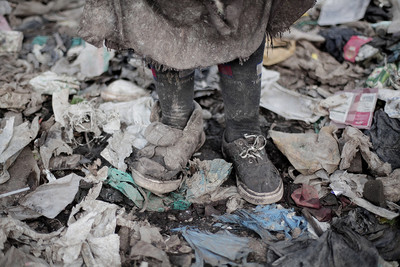
Mário Macilau

Sem Título, 2017

Mixed media on canvas

80 x 120cm

The Galería Paulo Nunes Arte Contemporânea, located in the historic center of Vila Franca de Xira, returns to Art Madrid. Founded in December 2010, its main objective is the dissemination of consolidated and emerging artists, national and international, in all disciplines. Not only do they organize their own exhibitions and take their artists to fairs all over the world, but they also give advice to collectors. One of its bets is to close alliances with other international galleries to promote their artists looking for an exchange between the creators and their works. Rui Dias Monteiro, Mário Macilau, Gilvan Nunes, Ana Pais Oliveira and Manuel Patinha are the creators chosen by them to premiere at the Madrid Art Week.

The work of the African Mário Macilau, documentary photographer who also experiments with painting, aims to make visible the social conditions in his country and the African continent. He began in the world of photography in 2003, but it was not until 2007 when he devoted himself professionally and has already participated in international exhibitions such as the Biennial of African Photography of Bamako 2011, the BESTphoto 2011 of Portugal, the VI Edition of the Chobi Mela Photo Festival of Bangladesh 2011, the Photospring of Beijing 2011 or the Lakes Photo I and II edition. In addition, he is a member of the committee of artists and curators of the photography festival organized by the Goethe Institute in Africa. We also highlight the work of Rui Dias Monteiro, photographer and poet who mixes these disciplines creating images with great conceptual content, graphic ideas that he intervenes with pure painting on photographic paper to create unique pieces.

The Nuno Sacramento Gallery, based in Aveiro (Portugal), participates in the ONE PROJECT program with a solo-show by Bernardo Media, but we will talk about this in detail later.
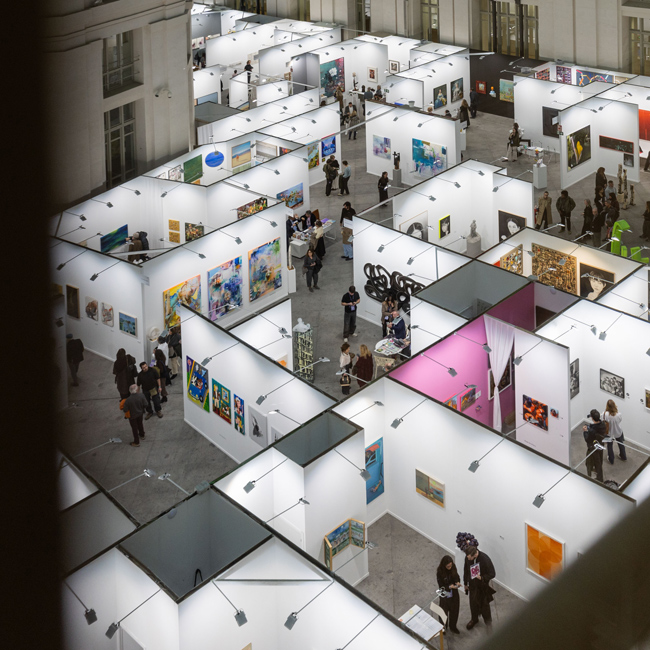
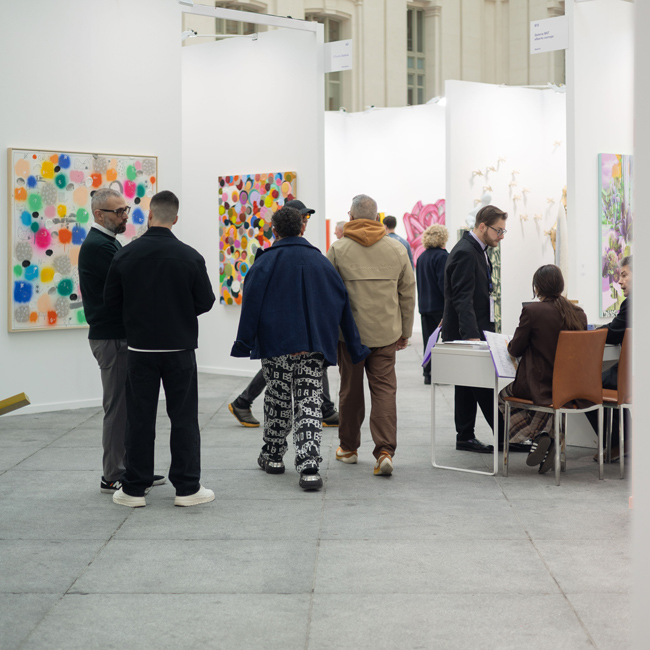
ART MADRID’26 INTERVIEW PROGRAM. CONVERSATIONS WITH ADONAY BERMÚDEZ


The work of Carmen Baena (Benalúa de Guadix, Granada, 1967) is structured as a poetic investigation into the memory of territory and its material translation into forms, textures, and gestures. Her practice stems from a life experience deeply connected to a specific landscape in southern Spain, understood not only as a geographical space but also as an affective and symbolic sedimentation. In this sense, her pieces can be approached from a perspective centered on direct experience: the landscape not as representation, but as a lived trace that emerges through doing.

Baena activates unique dialogue between historically hierarchical materials. Marble, associated with permanence and monumental tradition, coexists with embroidery, a technique linked to domestic knowledge passed down through generations, historically relegated but here reactivated as a fully-fledged artistic language. This coexistence is not presented as confrontation, but as a field of resonances where the solid and the fragile, the enduring and the tactile, interpenetrate. From a perspective attentive to connections, embodied experience, and knowledge constructed from everyday life, thread becomes a tool for sensitive knowledge.

Color, particularly in her textile works, functions as vibrational energy rather than a purely formal attribute. In contrast to the chromatic restraint of marble, embroidery introduces an open temporality in which intuitive gestures and accidents acquire structural value. Thus, the process becomes a space for listening, where the unexpected does not interrupt the work but rather constitutes it. In Carmen Baena’s practice, creating means allowing the territory—both external and internal—to continue transforming itself.


The Garden Blooms X. 2025. Acrylic and embroidery thread on canvas. 50 x 70 cm.


Your works evoke landscapes, reliefs, and topographies. How does the relationship between physical territory and symbolic or emotional territory articulate itself in your practice?

The physical territory where I was born and spent my early childhood has shaped all my work. I was born in a cave in the Guadix region (Granada), home to the largest complex of troglodyte dwellings in Europe.

The landscape there is full of contrasts: alongside the greens of the vega—fruit trees and poplars—you find the reddish ochres of the eroded hills. And facing the white of Sierra Nevada, the white of snow that still lingers in spring, there are also the greens of the wheat fields and cereal plains. Thanks to erosion and the geological layers that have been exposed over time, the area contains a series of strata that preserve extremely important continental geological records.

For this reason, the area has been designated a UNESCO Global Geopark. I spent a happy, very simple childhood in this environment—living closely connected to nature—and that is the territory that surfaces throughout the symbolism of my work.


Circular Horizons XIV. 2023. Acrylic and embroidery thread on canvas. 72 x 72 cm.


You learned embroidery in a family context, and you draw on the landscapes of your childhood. When did you realise that your immediate world—people, gestures, everyday landscapes—was no longer just a memory, but an active driving force in the construction of your artistic language?

I realised that the universe of my childhood was an active driving force in the construction of my artistic language thanks to a friend, after she visited my cave-house. Through her perspective, she made me aware of what I had been doing intuitively up until that point. This happened more than twenty years ago, and since then—even though I’m aware of it—I continue working.

I like working intuitively, and most of the time I only discover what the landscape has been afterwards. What stays with me is the sensation that inspired the piece once I have finished it.


Sea Breeze III. 2025. Acrylic and embroidery thread on canvas. 60 x 80 cm.


Marble carries historical and symbolic weight linked to monumentality, while embroidery is often associated with traditions that have been overlooked or confined to the domestic sphere. How do you negotiate this clash of cultural status in your work?

For years, marble was the material I was most interested in, and the one I used for most of my sculptural work. It wasn’t until 2007–2008 that I felt the need to incorporate embroidery—a technique I had learned as a teenager.

I began experimenting on paper, using stitching to draw landscapes and trees directly connected to the sculptures I was making at the time, and also working on small scraps of different kinds of paper. I explored the technical and visual possibilities of thread, creating small works in which colour, texture, and the thread’s vibration became the protagonists.

Later, I moved on to larger formats on canvas, where I also incorporated acrylic. These two seemingly contradictory practices—marble and embroidery—have coexisted in my studio and my work without any difficulty. Today, embroidery has completely displaced marble.


Between Heaven and Earth III. 2020. Marble and wood. 25 x 14 x 14 cm.


In your marble pieces, white and gold create an almost meditative atmosphere; in contrast, embroidery and acrylic burst into colour, activating gesture and vibration. Is this a conscious choice, or do the materials reveal their own possible colour to you?

With marble, the choice of white and gold is a conscious decision: I want to convey the spiritual atmosphere of the landscape, and the relationship between human beings and nature. By contrast, the explosion of colour in the thread emerged gradually and more intuitively, and only later did I begin to understand and use the possibilities of this material in a more conscious way.


Whisper Between the Lines XIII. 2023. Acrylic and embroidery thread on canvas. 40 x 60 cm.


To what extent do you plan your work, and how much space do you leave for the unexpected—or even for mistakes?

When it comes to making my work, I don’t like to plan too much. With embroidered pieces, I do tests on small scraps of paper—trying out colour and the stitch I’m going to use—and with that I try to visualise the final result in my mind. This way of working leaves plenty of space for things to happen while I work. It allows me to discover, learn, and make use of the unexpected.

For example, in some pieces, while embroidering, tangles can occur because the thread tension isn’t right or the thread is too loose. At first, those tangles might seem like they could ruin the piece, but when I see them, I realise they’re visually very interesting. So later I have consciously reproduced that effect in other works.