Art Madrid'26 – SPECIFIC IMAGES FOR ELUSIVE TIMES

Paulo Nunes-Arte Contemporânea, Bea Villamarín, Cornión y Montsequi galleries


Stopping, taking some time and being surprised. It seems a triviality but, either by imperatives or obligations, commitments or frustrated desires and, above all, by that epidemic of the 21st century that is the lack of time, usually, we do not calmly appreciate the things that surround us. This common situation especially affects the contemplation of art, which is also perverted in this heterogeneous era of frivolous cultural tourism, "biennalism", blockbusters and surreptitious advertising.
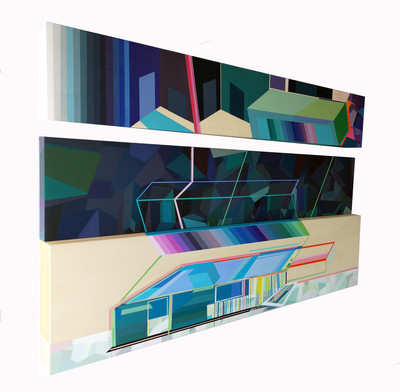
Ana Pais Oliveira

Ar livre #8, 2018

Técnica mixta sobre tela y contraplacado marítimo

135 x 200cm

In the proposal that the Paulo Nunes-Contemporary Art (Vila Franca de Xira) Gallery presents, fictions and realities are equally emphasized. On the one hand, the nostalgic sculptures by Manuel Patinha and paintings by Ana Pais Oliveira, these last ones seducing us into the indeterminate scenarios of abstract forms, particularly strange and seductive. At first glance, the spaces imagined by the artist are icy, cold, but through a deeper observation, you can also reach a greater sense of warmth. Everything depends on what it transmits to each viewer.
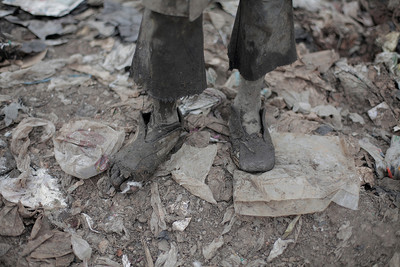
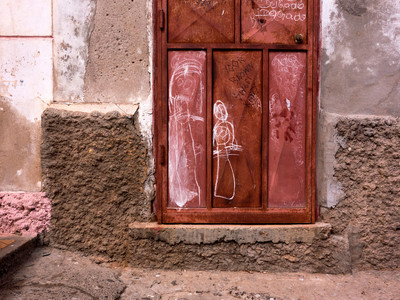
Mário Macilau

Sem título 1, 2017

Hahnemühle paper

80 x 120cm

Rui Dias Monteiro

Nas paredes e no chão, 2015

Photography

15 x 20cm

On the other hand, specific realities are expressed in this gallery’s booth with the work by Mário Macilau, an autochthonous photographer from Maputo (Mozambique) whose objective is to make the sociopolitical situation of his country visible. A perfect and necessary example within the debate of Otherness, because "the Other" can, must and knows how to represent itself. Beautiful and classic work in black and white that tells us about the current circumstances of millions of people, something that we sense or see from a comfortable distance but that we really do not know. Another reality is that reflected by the also photographer Rui Dias Monteiro, more interested in the detail, the fragment, in the intuitive. Any stone in the middle of the road can initiate or end a story, and surely the literary side of this artist is what explains that his gaze stops in these motives.
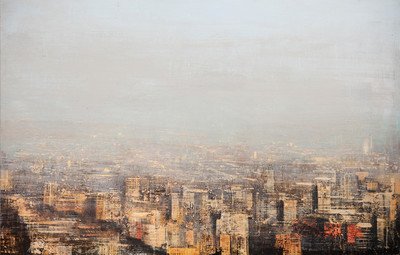
Alejandro Quincoces

Polluted cityscape, 2018

Oil on board

125 x 195cm

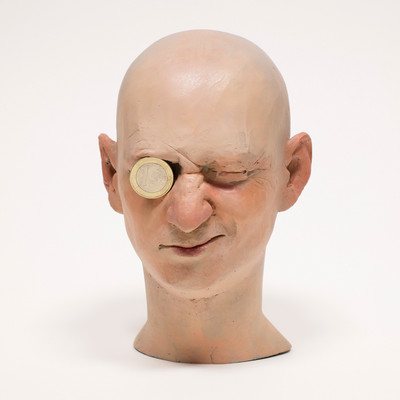
Carlos Tárdez

Tasador, 2017

Polychrome resin

10 x 10cm

Another type of especially narrative realism is the one cultivated by Alejandro Quincoces, an artist presented by the Bea Villamarín (Gijón) gallery. His work, which is located in the mysteriously natural and urban settings, is usually characterized by being very cinematographic, usually melancholic and even catastrophic; even in their broader urban views, dystopian future worlds are predicted, but not because of this are impossible. The world of another of the artists, Carlos Tárdez, is explicitly more critical; everything that his small format sculptures in polychrome resin have, becomes enormous in its provocative forms and satirical messages. Perhaps it is precisely the size what gives his works the greatest impact, both visually and emotionally.
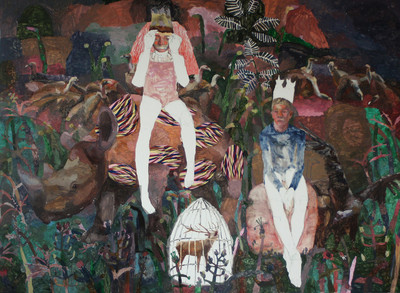
Mònica Subidé

Los hijos del rey bufón y sus buitres, 2018

Oil, pencil and collage on wood

80 x 110cm

At the Villamarín's booth, you can also enjoy the work of Mònica Subidé, as rich in artistic references as in its taste for the oneiric story, both enigmatic and seductive -traits that can be appreciated twice as the artist also will be represented in the Yiri Arts space. Narratives much more hermetic are those the works by Patricia Escutia offer, a sort of palimpsests composed of notes, traces, indecipherable calligraphies that show the negation of language, the difficulties we have in our communication; abstract writing for an elusive time. Framed in abstraction is the work by Candela Muniozguren, an artist of whom the gallery will present a selection of her characteristic geometric sculpture of anchors.
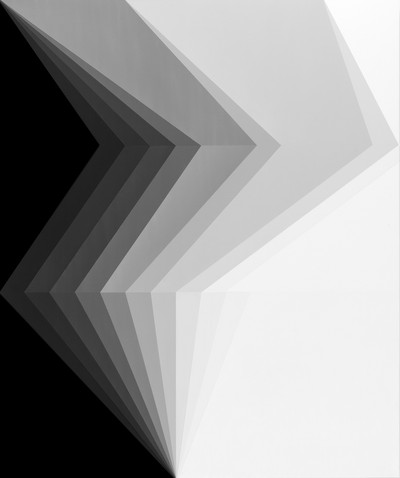
Javier Victorero

En el jardín VIII, 2018

Acrylic on canvas

180 x 150cm

Also, the proposal of the Cornión (Gijón) gallery includes a solid bet for the most abstract geometric work: done by Javier Victorero. From an intense knowledge of compositional harmony and balance, the artist plays with straight lines and colour properties, in some cases intimately connecting with the creation of great geometric artists such as Eusebio Sempere. Similarly, the investigation of the materials characteristics is something he shares with the sculptor Amancio (González), more interested, though, in a kind of figurative abstraction.
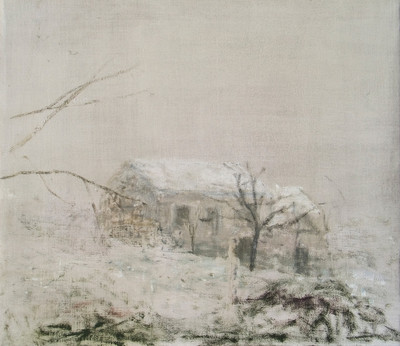
Miguel Galano

Nieve en el Monticu, 2018

Oil on linen

46 x 53cm

Cornión closes its selection for Art Madrid with the painting, "atemporal and true", by Miguel Galano: a chant to the Asturian land, full of nostalgia and the most honest simplicity. These solitary and calm scenarios, invite to shelter or empathy; they are places in which we can clearly stop our accelerated vital rhythm and contemplate them from a more serene way of life.
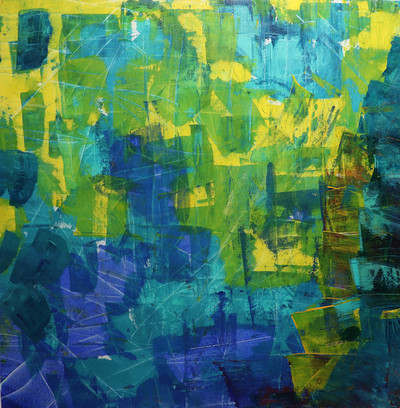
Horacio Fernández Munizaga

Placeres, 2018

Acrylic on canvas

92 x 92cm

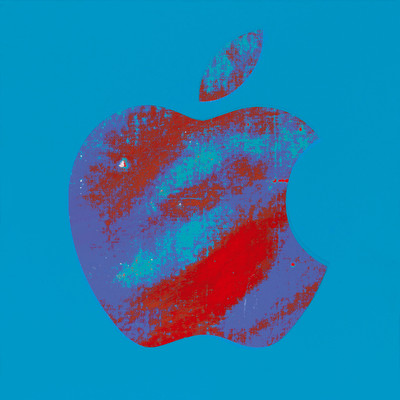
Rodrigo Nevsky

Apple fondo azul, 2018

Acrylic on canvas

30 x 30cm

In the Montsequi Art Gallery's (Madrid) booth there will also be a place for contemplation, especially through the bronze and iron sculpture by Mireia Serra, whose characters, as the gallerists point out, "show the beauty and the mystery of small moments full of emotions and feelings of the journey of life: women taking their time to decide at a crossroads of their lives, men enjoying their moments of relaxation, small pleasures, moments to pause... ". "Placeres" (2018), "Fuente Paraíso" (2018) or "Fuego" (2018) are some of the abstractions, vitalistic and mostly naturalistic, that Montsequi will present from the artist Horacio Fernández Munizaga. Along with his work, a selection by Rodrigo Nevsky these paintings, more aligned with contemporaneity, the kind full of marketing and icons such as the giant Apple, and that Nevsky works with a language that includes abstraction and figuration.

Let's take a moment, let's go into the specific stories and emotions proposed by the artists and then decide with more conscience whether they convince us or not. Let us rest from the weight of everyday life.
 

ART MADRID '26: 21 YEARS OF CONTEMPORARY ART


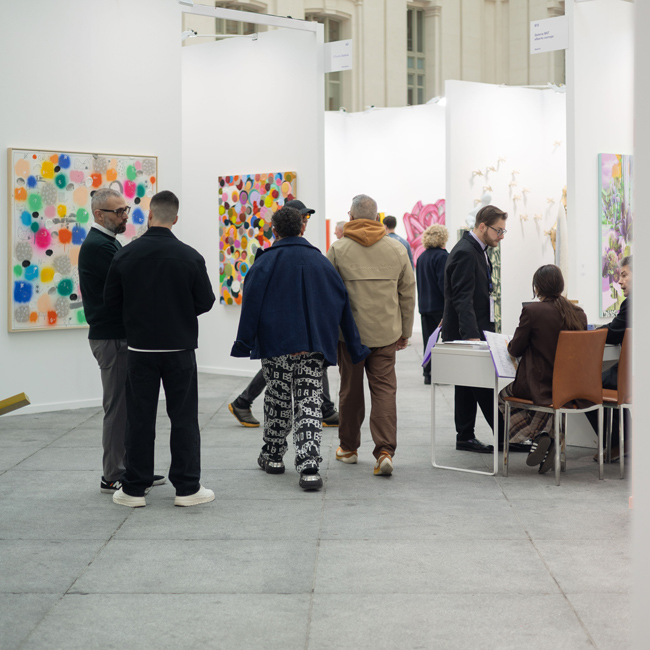
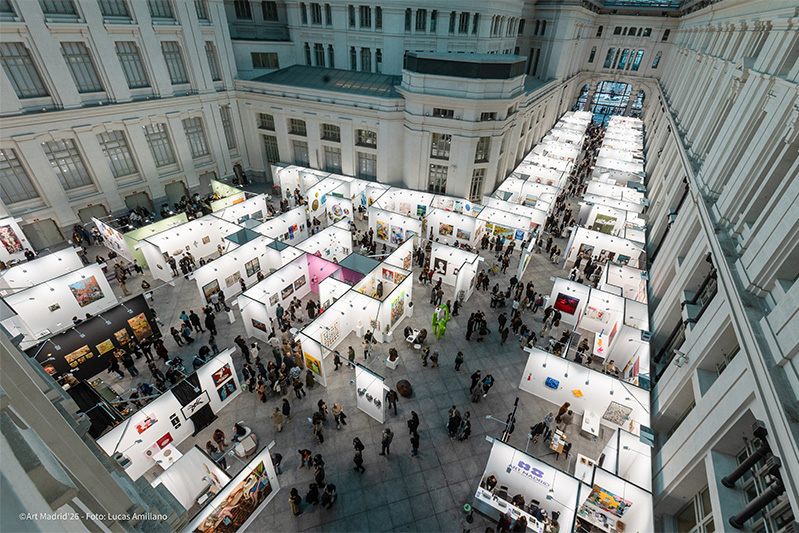
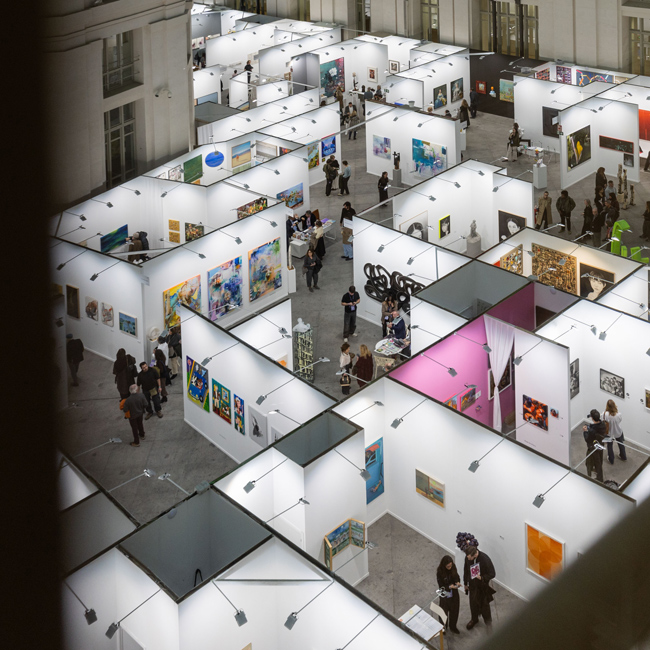
In 2026, Art Madrid will celebrate its 21st edition, further consolidating its position as a leading contemporary art fair in Spain. From 4 to 8 March, the fair will bring together thirty-five national and international galleries at the Galería de Cristal of the Palacio de Cibeles. Returning to its date during Madrid Art Week, Art Madrid reaffirms its pioneering role by expanding the fair calendar and offering an open and enriching dialogue in which diverse artistic proposals coexist.


Throughout its history, Art Madrid has established itself as a leading presence in the contemporary art scene. It is renowned for its commitment to promoting both emerging and established galleries, and for its dedication to making contemporary art accessible to a diverse range of audiences.

Far from being a fair curated under a single curatorial line, Art Madrid promotes diversity in its offering, respecting the identity of each exhibitor and promoting a plural creative ecosystem that reflects the richness and differences of the current art scene.


Art Madrid '25. Photo by Lucas Amillano


GALLERY PROGRAM: AN ACTIVE MAP OF CONTEMPORARY CREATION


The Gallery Program is at the heart of Art Madrid’26. For this edition, thirty-five national and international galleries will participate in a space that celebrates experimentation, hybrid languages, and the latest artistic production. The selection of proposals constitutes a representative mosaic of the aesthetics, discourses, and contemporary practices that are shaping the present of art in Europe.

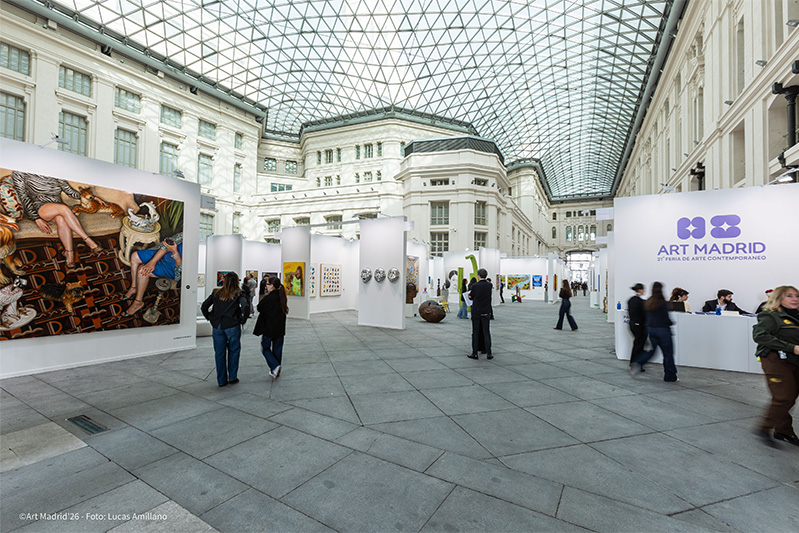
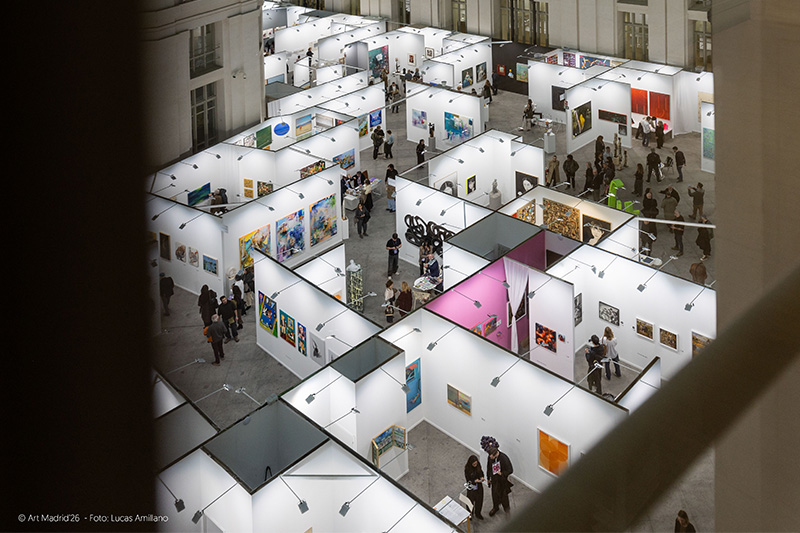
The Galería de Cristal of the Palacio de Cibeles will once again be transformed into a dynamic space where the exhibitions interact with each other, inviting the public to explore visual narratives that show the evolution of contemporary languages. Works that experiment with new media, formal investigations that reformulate traditional techniques, pieces that reflect on the links between technology and humanity, and poetic approaches that explore territory, identity, or memory make up a plural, stimulating journey open to multiple interpretations.

Art Madrid also continues to strive to become a platform for discovery, allowing both professionals and visitors to identify new voices and consolidate relationships with artists who are already emerging as leaders within the contemporary cultural landscape.


Art Madrid '25. Photo by Lucas Amillano


NATIONAL AND INTERNATIONAL EXHIBITORS

Thirty-five galleries are participating in this edition, twenty-seven of which are returning after finding the fair to be a favourable environment in which to strengthen connections, increase visibility and promote their artists' work on an international scene.

Twenty-six of these are Spanish galleries from various regions of the country: 3 Punts Gallery (Barcelona), Alba Cabrera Gallery (Valencia), Aurora Vigil-Escalera (Gijón), CLC ARTE (Valencia), DDR Art Gallery (Madrid), Est_ArtSpace (Madrid), g • gallery (Barcelona), Galería Arancha Osoro (Oviedo), Galería BAT alberto cornejo (Madrid), Galería Beatriz Pereira (Plasencia), Galería Carmen Terreros (Zaragoza), Galería Espiral (Noja), Galería La Mercería (Valencia), Galería Luisa Pita (Santiago de Compostela), Galería María Aguilar (Cadiz), Metro Gallery (Santiago de Compostela), Rodrigo Juarranz Gallery (Aranda de Duero), Sigüenza Gallery (Sigüenza), Gerhardt Braun Gallery (Palma de Mallorca | Madrid), Inéditad Gallery (Barcelona), Kur Art Gallery (San Sebastián), LAVIO (Murcia | Shanghai), Moret Art (A Coruña), Pigment Gallery (Barcelona), Shiras Galería (Valencia) and Uxval Gochez Gallery (Barcelona). This selection of galleries highlights the importance of the Spanish scene and its contribution to the development of the contemporary cultural ecosystem.


Art Madrid '25. Photo by Lucas Amillano


The nine international galleries participating in this edition are: Banditrazos Gallery (Seoul, South Korea), Collage Habana (Havana, Cuba), Galeria São Mamede (Lisbon, Portugal), Galerie ONE (Paris, France), KANT Gallery (Copenhagen, Denmark | Palma de Mallorca, Spain), Loo & Lou Gallery (Paris, France), Nuno Sacramento Arte Contemporânea (Ílhavo, Portugal), Trema Arte Contemporânea (Lisbon, Portugal) and Yiri Arts (Taipei, Taiwan). Their participation broadens the fair's international reach, promoting creative and conceptual exchange between diverse artistic perspectives.

In addition, eight new galleries have been added to the list of exhibitors:

Banditrazos Gallery (Seoul, South Korea), Est_ArtSpace (Madrid, Spain), g • gallery (Barcelona, Spain), Galería Beatriz Pereira (Plasencia, Spain), Galerie ONE (Paris, France), Galería Sigüenza (Sigüenza, Spain), Gerhardt Braun Gallery (Palma de Mallorca | Madrid, Spain) and KANT Gallery (Copenhagen, Denmark | Palma de Mallorca). These additions reinforce Art Madrid's commitment to continuous renewal and openness to spaces that are exploring new approaches to contemporary art.


Art Madrid '25. Photo by Lucas Amillano


PARALLEL PROGRAM: A REFLECTION ON THE ‘SPECIES’ OF SPACES


One of the great attractions of Art Madrid is its Parallel Program, which this time delves into the notions of: ‘Fragments, relationships, and imaginary distances.’ This approach turns the fair into an expanded space, where art, audience, architecture, and memory converge. Thus, the Parallel Program proposes a critical approach to the container of the event itself. Taking as a reference the reading of Species of Spaces by Georges Perec (Perec, Georges. Species of Spaces. Montesinos, 2004), it adopts a marked interest in the everyday, that which usually goes unnoticed, the infra-ordinary, giving each corner of the venue its own narrative value.

Another of the conceptual references of this edition is based on an analysis of Édouard Glissant's Poetics of Relation (Glissant, Édouard. Poetics of Relation; Prologue by Manuel Rebón. - 1st ed. - Bernal: Universidad Nacional de Quilmes, 2017.), which advocates the coexistence of differences and the importance of non-totalizing links, which are extrapolated to the art system, proposing an understanding of it as a network of exchanges and connections that respect the uniqueness of each cultural practice and actor.

‘Imaginary distances,’ understood as subjective journeys and affective cartographies traced by visitors, thus become the conceptual axis that articulates this program. This perspective transforms the Fair into an experience that goes beyond visual contemplation, turning it into a territory that can be collectively reconstructed, without losing sight of the paths travelled by the individuality of each voice.

In this edition, the Parallel Program encourages visitors to engage with the space and its projects, turning contemplation into an opportunity to question and interact with things that might otherwise go unnoticed in everyday life.


Art Madrid '25. Photo by Lucas Amillano


In the preview and during Art Week, Art Madrid'26 offers a range of experiences that allow the public to get closer to the creative process and practices of the participating artists. Among the returning initiatives are the Interview Program, Curated Walkthroughs, the third edition of Open Booth, dedicated to emerging creation, the presentation of Espacio Nebrija, a university project in collaboration with Nebrija University, alongside the fair’s established Performance Cycle.

In addition, the One Shot Collectors Program and the second edition of the Patronage Program are back. These initiatives seek to strengthen the bond between collectors, artists, and the public, promoting ethical, informed, and responsible practices in collecting and patronage.


Art Madrid '25. Photo by Lucas Amillano


Art Madrid'26 has established itself as a dynamic meeting place, where diverse experiences, discourses, and practices converge. Far from being a fair curated under a single curatorial line, Art Madrid promotes diversity as a structuring principle, respecting the identity of each exhibitor and fostering a plural creative ecosystem. This plurality is not merely formal, but translates into a network of practices, languages, and perspectives that reflects the complexity, richness, and tensions of the contemporary art scene, consolidating the fair as a catalyst for cultural relations, an observatory of emerging trends, and an international reference point for the Spanish art scene.

WELCOME TO ART MADRID'26