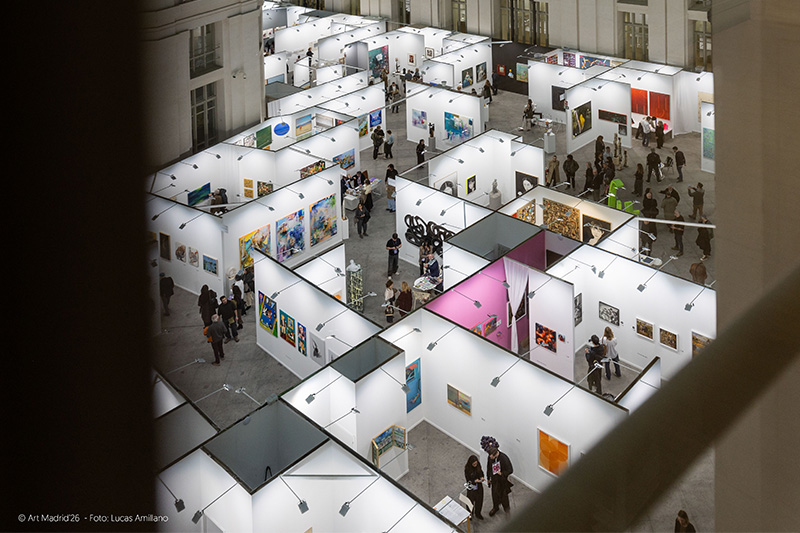
Art Madrid'26 – The invisible poetry between art and design

A common link between art and design is the creation of forms and expressions. If, on the one hand, art asks us questions, challenges us and encourages us to question all knowledge, design strives to offer us solutions to improve our daily lives, appealing to the functionality and usefulness of objects and materials that make our daily lives more comfortable.The boundaries that separate art from design are often very thin, but we are not really interested in talking about boundaries, on the contrary. Functionality and subjectivity can go hand in hand to build beautiful, delicate and sharp objects in their reflective expression. There is no doubt that, when art and design meet, they generate a strong link between creativity and material, becoming a useful tool to dissect the senses.

Perhaps artistic creation finds its referent in design, if we add a third element to this feedback from both sources: sustainability. The artists we present below work with the recovery of materials and their transformation into aesthetic objects. The conscience at work in the pieces of Idoia Cuesta (Donostia, 1969). Represented by the Arancha Osoro Gallery; Luz Moreno Pinart (Madrid, 1989). Represented by the CLC ARTE gallery; Lúcia David (Portugal, 1966). Represented by Trema Contemporary Art Gallery; and Cova Orgaz (Bilbao, 1983), represented by Bea Villamarín Gallery, is the result of the synthesis between tradition and innovation. They have in common, among other things, the intuitive and handmade production, the respect for resources and the time of creation. Their works are the result of a desire to slow down the pace of life through traditional methods that speak of their origins. And through these processes, each in its own way, they invite us to ask ourselves: How do we understand the time, the matter and the space in which we live?
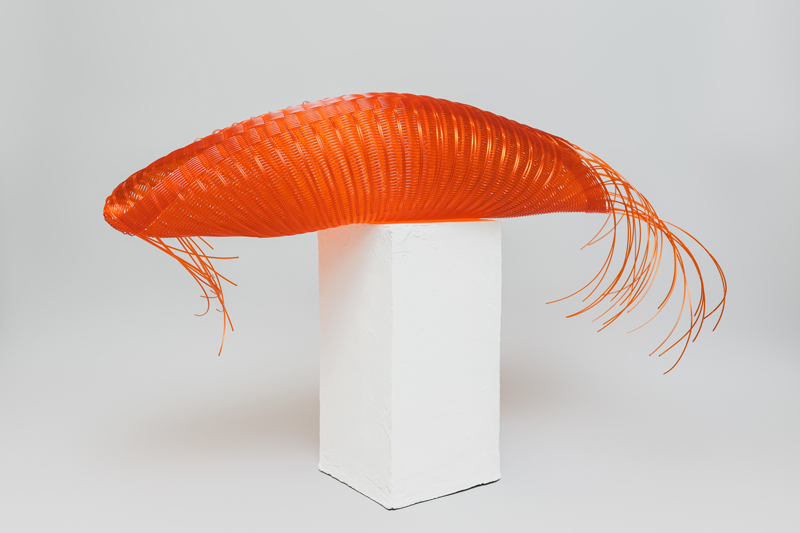
Idoia Cuesta. Abyssal. Fishing line. Variable dimensions, 2023.

Idoia Cuesta is an artist who combines the processes of basket weaving and textile art. She uses artisanal techniques and organic materials to create pieces that reflect the identity of the raw material, and her working methodology is mainly inspired by rural environments and respect for the environment. The fibers that give corporeality to her pieces are insufflated with a healing vocation and the desire to build a personal story about the utility of the work of art in any context. In her sculptures are perceptible minimalist personality and sensory comfort, characteristics that result from the alchemy that generates the relationship between basketry and textile, and that goes beyond the simply contemplative to question how much humanity resides in the complexity of the material.
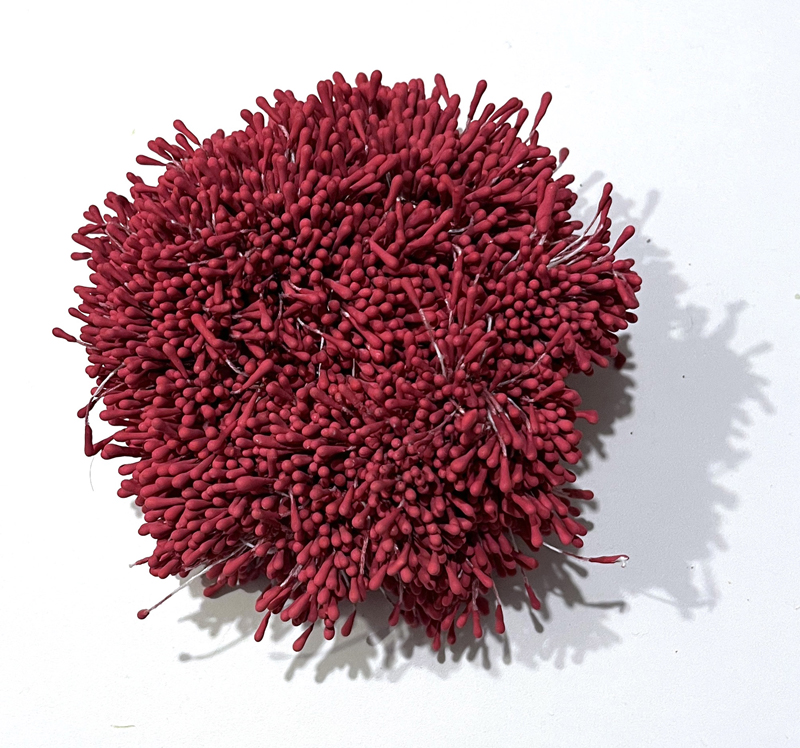
Luz Moreno Pinart. Momo hajimete saku. Papier, platre, 11x7x7cm. 2023.

Luz Moreno Pinart specializes in design, scenography and textile fibers. Her works have a strong sculptural character. The volume created by the fine strands of knotted paper transforms each piece into a kind of net that connects the emotional with the vitality of the elements. This is the impression that her woven works evoke when, in front of them, we recall the curious metaphor that everything in life happens? Our existence takes place in moments that we cherish, and the fragility of memories rests on each woven knot. In her installations, the color red - in its variable values - is a metaphor for the intensity with which the artist has lived each moment. Her works are experiments that have evolved - as a deliberate archaeology of the most deeply rooted domestic elements - projecting into the future a visual production that hybridizes the codes of design, art and craftsmanship in search of an
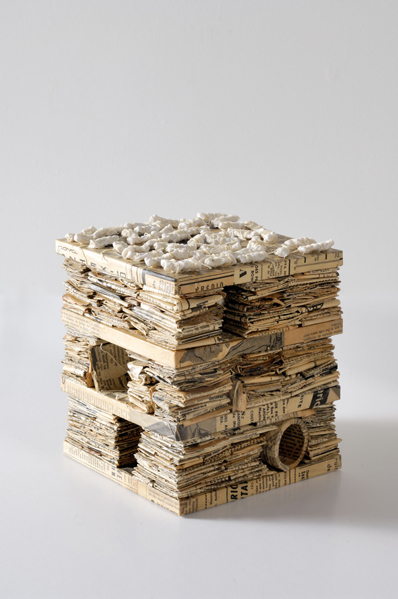
Lúcia David. Babel Tower. Mdf board, glue, newspapers, fabric, plastic, wire,15x15x18 cm, 2023.

Lúcia David works with performance, installation and sculpture, with a particular interest in artist's books and the textuality of the artwork. She integrates collage and stitching techniques in her creations. In her works, the artist tells the story of the women's condition, and in this journey, she recalls the collective history of the status of women in her native country. The paper, the effervescent pulp of letters and the second levels outline the sides of a needle that is both piercing and healing, with which the artist creates, writes, embroiders and perforates. All these actions in this order and with the impulse to rescue the traditions that the matriarchs of each family have handed down to generations and generations of daughters. In general, her work exalts the imperfection, the rudeness and the simplicity of the actions that take place in domestic spaces and that, over the years, have been transferred to public life. Silence takes the objects related to domestic activities into her hands, but in an attempt to raise the tone of those silent whispers, the artist pours on paper all the contained value that her predecessors also left her as an heritage.
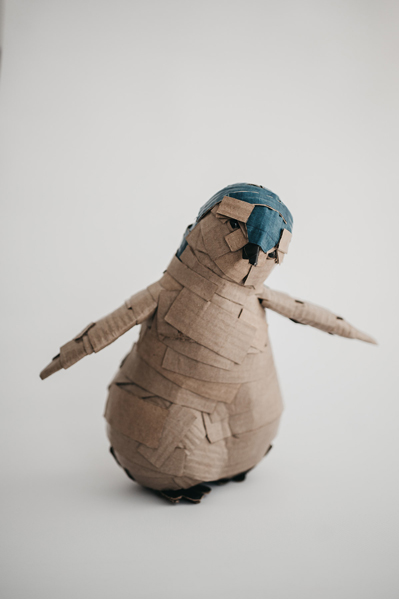
Cova Orgaz. Blue pigeon. Polychrome cardboard nº 3, 29x33x20 cm, 2023.

Cova Orgaz has redefined creation in a risky and courageous way by using cardboard as the main material for her sculptures. Challenging its ephemeral character and difficult conservation, the artist has broken the rules to show that cardboard can be as appreciated in sculptural production as any other element. Her ability to master and be carried away by cardboard has been achieved through trial and error, but without giving up. As a result of her fruitful efforts, today she surprises us with a repertoire of endearing figurative sculptures of striking realism. There are some hands in the world that correct, others that censor and some that model in desire what, after so much work, becomes reality. In this way, Cova Orgaz's cardboard sculptures, as if they were about to come to life, elevate the material into a category as valuable as that of bronze, marble or wood. Her persistence has shown that true artistic skill goes beyond conventional materials, redefining new possibilities that can define a path for sustainable creation.
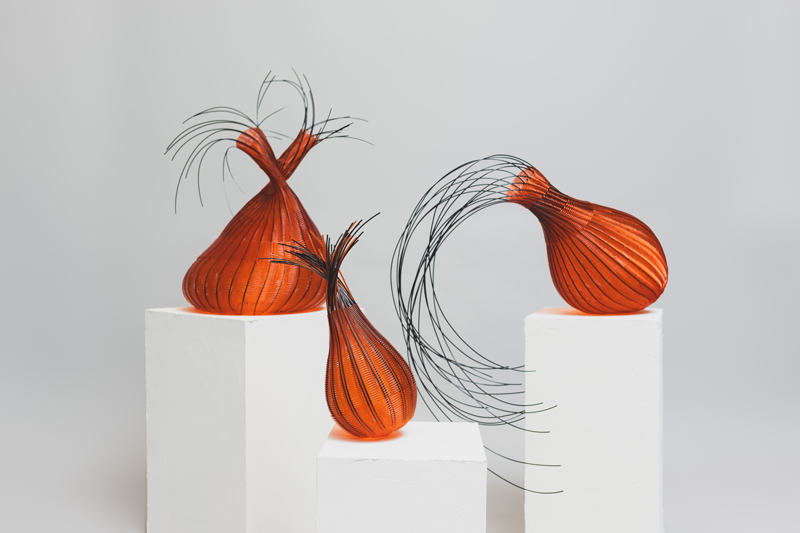
Idoia Cuesta. Abyssal. Fishing line. Variable dimensions, 2023.

In addition to fusing tradition and contemporaneity, these artists also emphasize the usefulness of virtue in creating works that position themselves in the face of certain gender issues, preserving domestic duties, questioning the established, and the value of seeing creation as a conscious practice committed to society. They have gone beyond the aesthetic, creating sensory experiences, interwoven stories, reunions with the collective memory and an obvious connection with the essence of life and nature. And the result is here: Works that, in addition to being beautiful in form, are powerful in the content they translate; they establish - with their own invisible poetics - a balance that is necessary to fulfill the task of walking on a fine line, where aesthetics and the utility of the object coexist in perfect harmony.
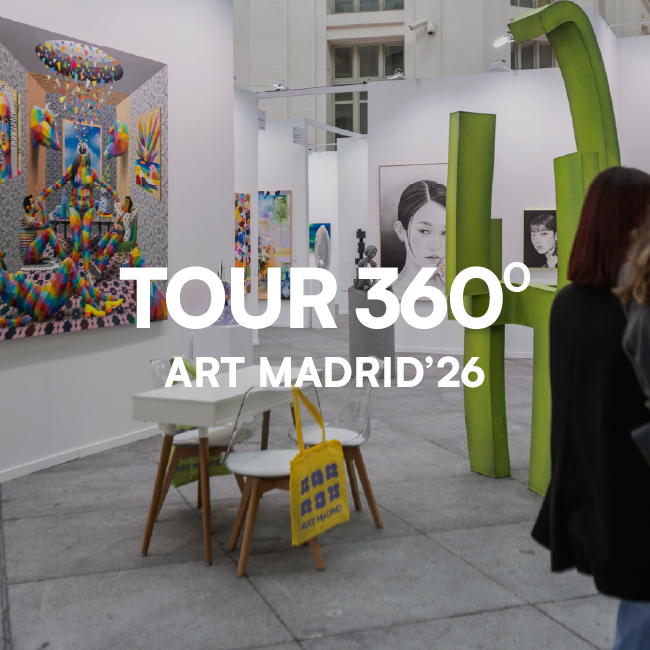
ART MADRID '26: 21 YEARS OF CONTEMPORARY ART


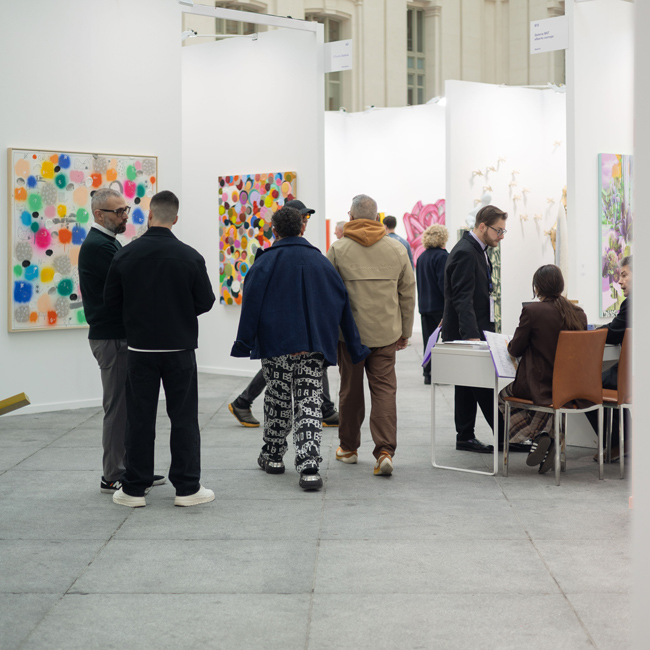
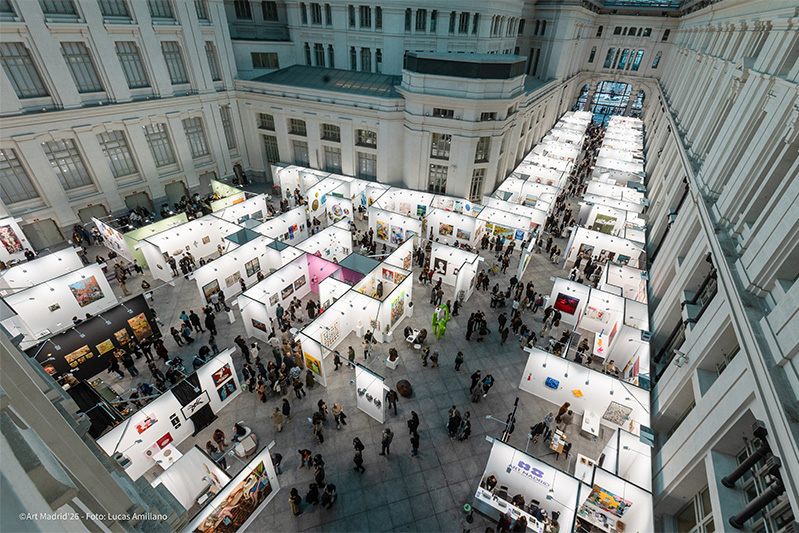
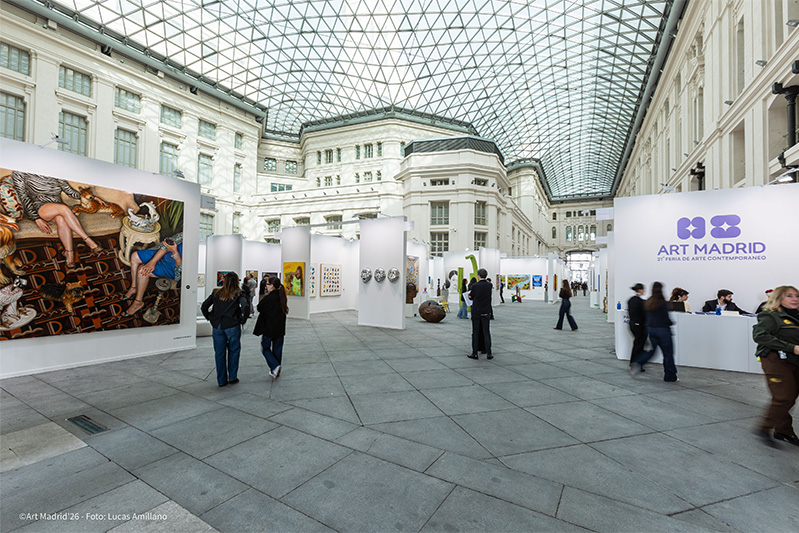
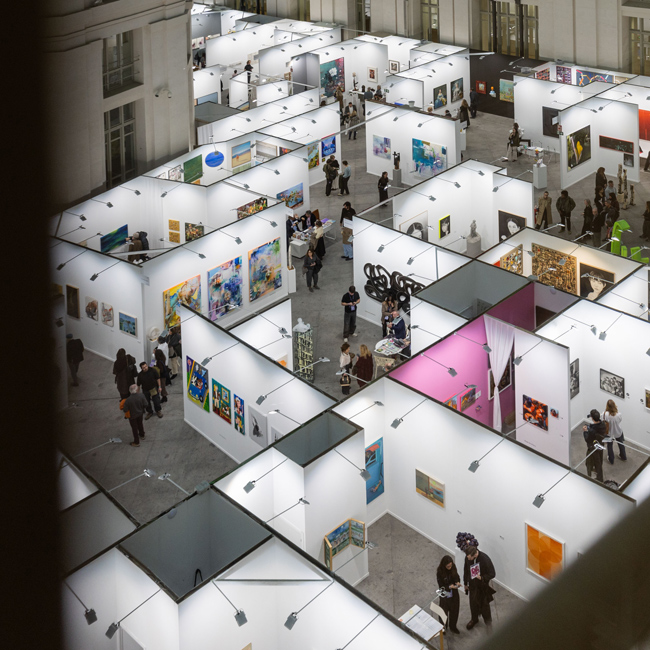
In 2026, Art Madrid will celebrate its 21st edition, further consolidating its position as a leading contemporary art fair in Spain. From 4 to 8 March, the fair will bring together thirty-five national and international galleries at the Galería de Cristal of the Palacio de Cibeles. Returning to its date during Madrid Art Week, Art Madrid reaffirms its pioneering role by expanding the fair calendar and offering an open and enriching dialogue in which diverse artistic proposals coexist.


Throughout its history, Art Madrid has established itself as a leading presence in the contemporary art scene. It is renowned for its commitment to promoting both emerging and established galleries, and for its dedication to making contemporary art accessible to a diverse range of audiences.

Far from being a fair curated under a single curatorial line, Art Madrid promotes diversity in its offering, respecting the identity of each exhibitor and promoting a plural creative ecosystem that reflects the richness and differences of the current art scene.


Art Madrid '25. Photo by Lucas Amillano


GALLERY PROGRAM: AN ACTIVE MAP OF CONTEMPORARY CREATION


The Gallery Program is at the heart of Art Madrid’26. For this edition, thirty-five national and international galleries will participate in a space that celebrates experimentation, hybrid languages, and the latest artistic production. The selection of proposals constitutes a representative mosaic of the aesthetics, discourses, and contemporary practices that are shaping the present of art in Europe.

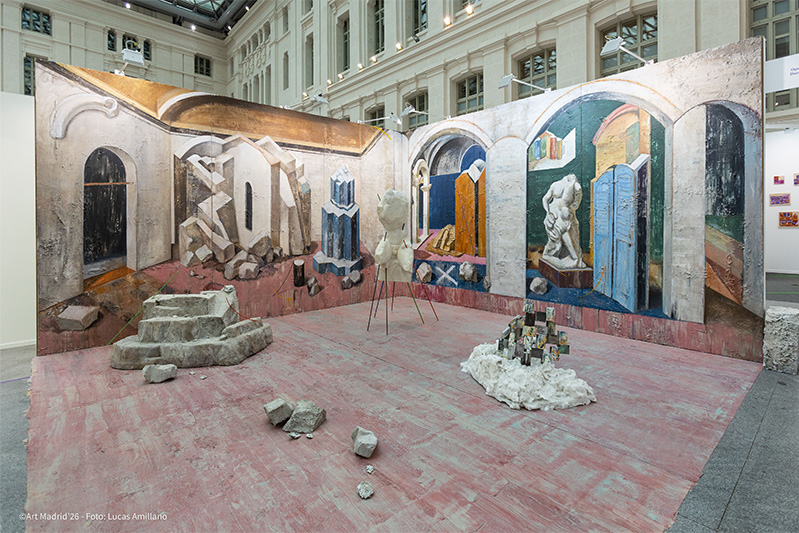
The Galería de Cristal of the Palacio de Cibeles will once again be transformed into a dynamic space where the exhibitions interact with each other, inviting the public to explore visual narratives that show the evolution of contemporary languages. Works that experiment with new media, formal investigations that reformulate traditional techniques, pieces that reflect on the links between technology and humanity, and poetic approaches that explore territory, identity, or memory make up a plural, stimulating journey open to multiple interpretations.

Art Madrid also continues to strive to become a platform for discovery, allowing both professionals and visitors to identify new voices and consolidate relationships with artists who are already emerging as leaders within the contemporary cultural landscape.


Art Madrid '25. Photo by Lucas Amillano


NATIONAL AND INTERNATIONAL EXHIBITORS

Thirty-five galleries are participating in this edition, twenty-seven of which are returning after finding the fair to be a favourable environment in which to strengthen connections, increase visibility and promote their artists' work on an international scene.

Twenty-six of these are Spanish galleries from various regions of the country: 3 Punts Gallery (Barcelona), Alba Cabrera Gallery (Valencia), Aurora Vigil-Escalera (Gijón), CLC ARTE (Valencia), DDR Art Gallery (Madrid), Est_ArtSpace (Madrid), g • gallery (Barcelona), Galería Arancha Osoro (Oviedo), Galería BAT alberto cornejo (Madrid), Galería Beatriz Pereira (Plasencia), Galería Carmen Terreros (Zaragoza), Galería Espiral (Noja), Galería La Mercería (Valencia), Galería Luisa Pita (Santiago de Compostela), Galería María Aguilar (Cadiz), Metro Gallery (Santiago de Compostela), Rodrigo Juarranz Gallery (Aranda de Duero), Sigüenza Gallery (Sigüenza), Gerhardt Braun Gallery (Palma de Mallorca | Madrid), Inéditad Gallery (Barcelona), Kur Art Gallery (San Sebastián), LAVIO (Murcia | Shanghai), Moret Art (A Coruña), Pigment Gallery (Barcelona), Shiras Galería (Valencia) and Uxval Gochez Gallery (Barcelona). This selection of galleries highlights the importance of the Spanish scene and its contribution to the development of the contemporary cultural ecosystem.


Art Madrid '25. Photo by Lucas Amillano


The nine international galleries participating in this edition are: Banditrazos Gallery (Seoul, South Korea), Collage Habana (Havana, Cuba), Galeria São Mamede (Lisbon, Portugal), Galerie ONE (Paris, France), KANT Gallery (Copenhagen, Denmark | Palma de Mallorca, Spain), Loo & Lou Gallery (Paris, France), Nuno Sacramento Arte Contemporânea (Ílhavo, Portugal), Trema Arte Contemporânea (Lisbon, Portugal) and Yiri Arts (Taipei, Taiwan). Their participation broadens the fair's international reach, promoting creative and conceptual exchange between diverse artistic perspectives.

In addition, eight new galleries have been added to the list of exhibitors:

Banditrazos Gallery (Seoul, South Korea), Est_ArtSpace (Madrid, Spain), g • gallery (Barcelona, Spain), Galería Beatriz Pereira (Plasencia, Spain), Galerie ONE (Paris, France), Galería Sigüenza (Sigüenza, Spain), Gerhardt Braun Gallery (Palma de Mallorca | Madrid, Spain) and KANT Gallery (Copenhagen, Denmark | Palma de Mallorca). These additions reinforce Art Madrid's commitment to continuous renewal and openness to spaces that are exploring new approaches to contemporary art.


Art Madrid '25. Photo by Lucas Amillano


PARALLEL PROGRAM: A REFLECTION ON THE ‘SPECIES’ OF SPACES


One of the great attractions of Art Madrid is its Parallel Program, which this time delves into the notions of: ‘Fragments, relationships, and imaginary distances.’ This approach turns the fair into an expanded space, where art, audience, architecture, and memory converge. Thus, the Parallel Program proposes a critical approach to the container of the event itself. Taking as a reference the reading of Species of Spaces by Georges Perec (Perec, Georges. Species of Spaces. Montesinos, 2004), it adopts a marked interest in the everyday, that which usually goes unnoticed, the infra-ordinary, giving each corner of the venue its own narrative value.

Another of the conceptual references of this edition is based on an analysis of Édouard Glissant's Poetics of Relation (Glissant, Édouard. Poetics of Relation; Prologue by Manuel Rebón. - 1st ed. - Bernal: Universidad Nacional de Quilmes, 2017.), which advocates the coexistence of differences and the importance of non-totalizing links, which are extrapolated to the art system, proposing an understanding of it as a network of exchanges and connections that respect the uniqueness of each cultural practice and actor.

‘Imaginary distances,’ understood as subjective journeys and affective cartographies traced by visitors, thus become the conceptual axis that articulates this program. This perspective transforms the Fair into an experience that goes beyond visual contemplation, turning it into a territory that can be collectively reconstructed, without losing sight of the paths travelled by the individuality of each voice.

In this edition, the Parallel Program encourages visitors to engage with the space and its projects, turning contemplation into an opportunity to question and interact with things that might otherwise go unnoticed in everyday life.


Art Madrid '25. Photo by Lucas Amillano


In the preview and during Art Week, Art Madrid'26 offers a range of experiences that allow the public to get closer to the creative process and practices of the participating artists. Among the returning initiatives are the Interview Program, Curated Walkthroughs, the third edition of Open Booth, dedicated to emerging creation, the presentation of Espacio Nebrija, a university project in collaboration with Nebrija University, alongside the fair’s established Performance Cycle.

In addition, the One Shot Collectors Program and the second edition of the Patronage Program are back. These initiatives seek to strengthen the bond between collectors, artists, and the public, promoting ethical, informed, and responsible practices in collecting and patronage.


Art Madrid '25. Photo by Lucas Amillano


Art Madrid'26 has established itself as a dynamic meeting place, where diverse experiences, discourses, and practices converge. Far from being a fair curated under a single curatorial line, Art Madrid promotes diversity as a structuring principle, respecting the identity of each exhibitor and fostering a plural creative ecosystem. This plurality is not merely formal, but translates into a network of practices, languages, and perspectives that reflects the complexity, richness, and tensions of the contemporary art scene, consolidating the fair as a catalyst for cultural relations, an observatory of emerging trends, and an international reference point for the Spanish art scene.

WELCOME TO ART MADRID'26