VIDEO CYCLE: CARTOGRAPHIES OF PERCEPTION
Feb 14, 2025
art madrid
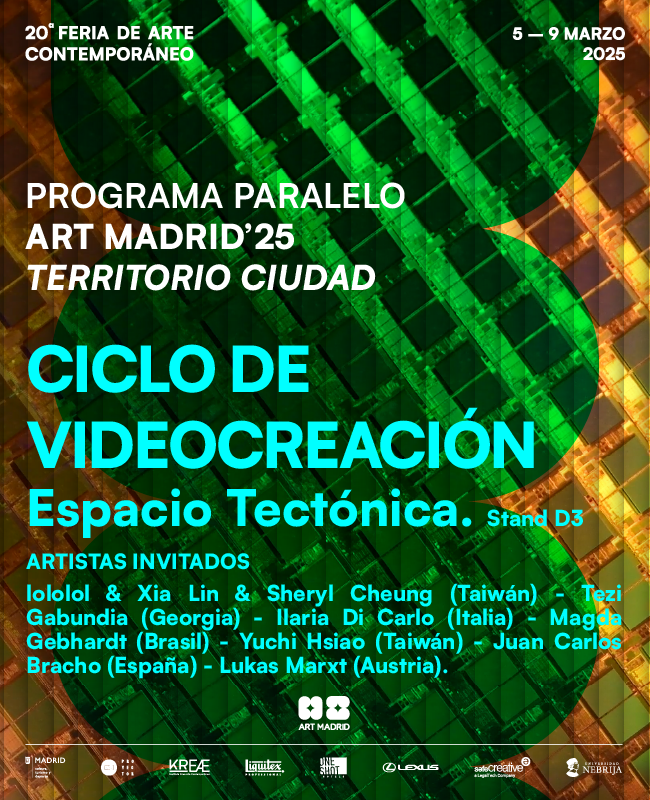
PARALLEL PROGRAM CITY TERRITORY. ART MADRID'25
VIDEO CYCLE: CARTOGRAPHIES OF PERCEPTION
In its 20th edition, Art Madrid dedicates its Parallel Program to the exploration of the relationship between man, architecture, city and landscape. Under the title Cartographies of Perception, this section, curated by PROYECTOR's Moving Image platform, presents a selection of international video art works that address these interactions from a contemporary and critical perspective. PROYECTOR, a reference platform for the moving image, invites us to participate in an experience in which time, space and perception converge on the screen.
The collection presented this year proposes a reflection on the relationship between man and his environment, on the boundaries between the real and the imaginary, and on the tensions between the natural and the constructed. As quoted by the critic John Berger: "Art is a way of seeing, a constant discovery". The selected works are not only vehicles of plastic beauty, but also invitations to discover new ways of observing, questioning, and possessing a representation of the world..
In this conceptual journey, The Divine Way by Ilaria Di Carlo evokes the labyrinthine descent inspired by the Divine Comedy, where the stairs mutate into metaphors of psychological and architectural transit.
Imitación a la vida by Juan Carlos Bracho, on the other hand, uses a monumental mirror to explore the landscape as a reflection and the image as a bottomless pit, questioning our perception of our surroundings.
In the arid desert of the dry lake El Mirage, Lukas Marxt inscribes a spiral with a vehicle in his work Circular Inscription, paying homage to Land Art while questioning the human imprint on the landscape.
Magda Gebhardt's performance Atlas carries the symbolic weight of the world as she constructs and destroys landscapes that defy notions of time and space, exposing the artifice inherent in the image.
The introspective journey of Yuchi Hsiao in Somewhere I Belong to Be uses toy cars moving across her face to symbolize a personal transition, while lololol's Wafer Bearer Deep Rain explores the relationship between technology and everyday life in Taiwan, the epicenter of global semiconductor production.
Finally, Breaking News: The Flooding of the Louvre by Tezi Gabunia offers a disturbing vision of the flooded museum, anticipating the impact of climate change on cultural heritage.
Each work in this selection offers poetic and philosophical views of life and invites collectors to own a piece of this conceptual journey. By acquiring these works, they become custodians of stories and visions that reflect and challenge our understanding of the contemporary world.
ABOUT THE ARTWORKS AND ARTISTS
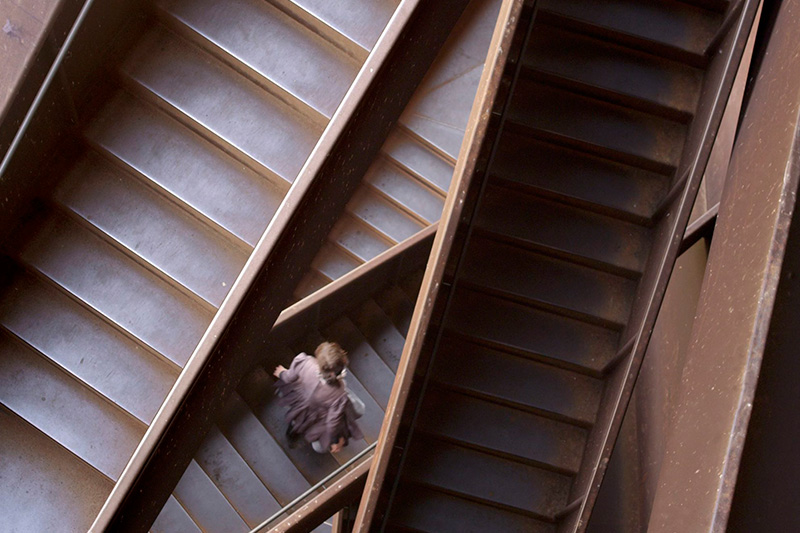
The Divine Way. 15:00. 2018. 2K color
The Divine Way, inspired by Dante's Divine Comedy, accompanies the protagonist on a labyrinthine descent through an endless series of staircases. Each step reveals an architectural and psychological mutation, transforming the landscape into a visual and emotional trap. Winner of dozens of international awards, this work is a monumental journey into the unknown.
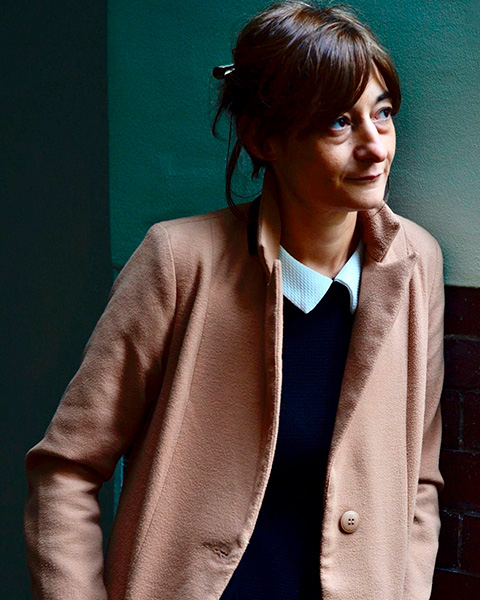
llaria Di Carlo
Ilaria Di Carlo (Lazio, 1981) is a visual artist whose practice combines film, scenography, installation and performing arts. Trained at the Academy of Fine Arts in Rome and with a master's degree in scenography from Central Saint Martin's College in London, she also studied digital film production in Berlin. His work explores travel, identity and their relationship to landscape and architecture, using a visual aesthetic inspired by scenography. His short films have been awarded and exhibited internationally, including his outstanding work The Divine Way. Based in Berlin, she continues to work as a set designer, director and actress in experimental theater projects.
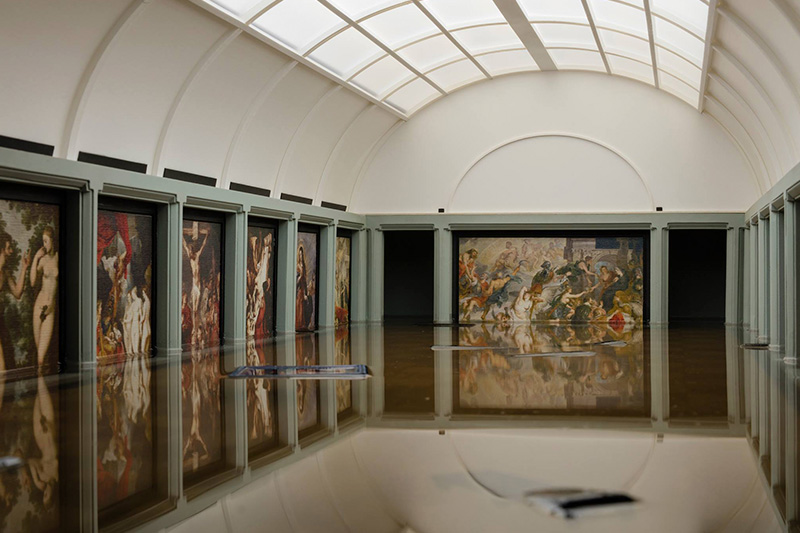
Breaking News: The Flooding of the Louvre. 3:02. 2018-20. 2K color
The flooding of the Louvre Museum speaks about news culture and our fluctuating perception of disasters as seen through the media. The scale of the disaster is often difficult to assess from news coverage. In the work “Breaking News”, the flood slowly enters the room of the Louvre, allowing the viewer to gradually witness the destruction of the interior. It brings the viewer shockingly close to what has not happened but easily could have; the viewer sees the before-and-after effect in a highly visualized manner, which is as convincing and threatening as it is fake. The artwork presents a scoop—a situation where information, as a spectacle, surpasses the terrifying nature of catastrophe and where the real event is abolished. Is information a new type of reality? Is it possible to truly cover real events? These issues arise during the encounter between two situations: the destruction of art artifacts and the spectacular nature of this process.
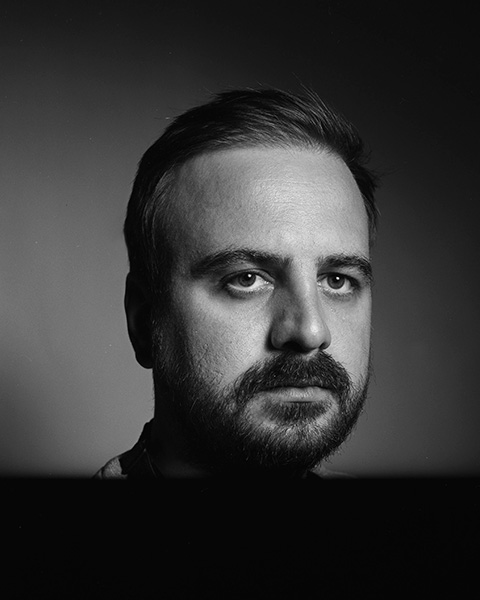
Tezi Gabunia
Tezi Gabunia (Tbilisi, 1987) is an artist and architect who graduated from Tbilisi University and is known for her systematic approach to exploring cultural manipulation through various media. Winner of the 2016 Tsinandali Visual Arts Award for her project Put your Head into Gallery, her work has been exhibited internationally in cities such as Batumi, Vienna, Krakow, and New York. Highlights include participation in the Story as a Woven Carpet collective in Berlin and presentation in the Focus section of the 2020 Armory Show.
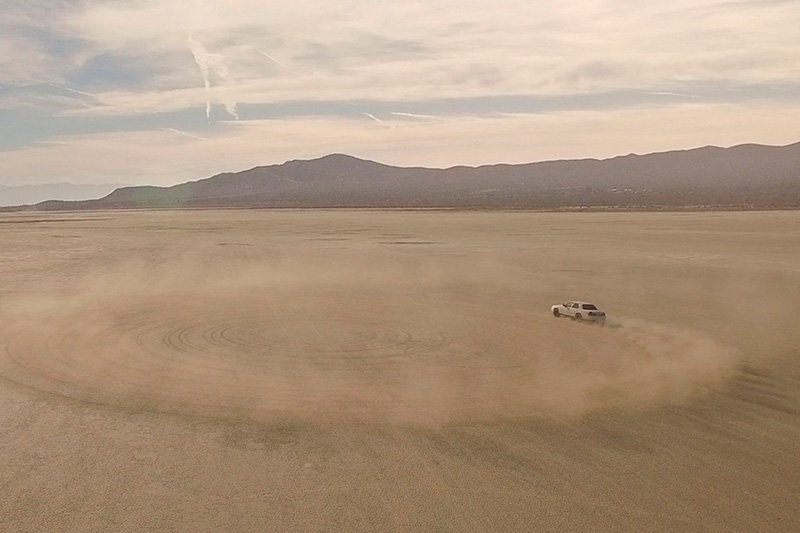
Circular Inscription. 6:50. 2016. 2K color
In the desert landscape of dry lake El Mirage, a car circles incessantly, leaving indelible marks on the surface. The work is both an homage to 1960s Land Art and a reflection on human intervention in the landscape. The marks on the ground evoke works such as Smithson's Spiral Jetty, translating the monumentality of the land into the space of video art.
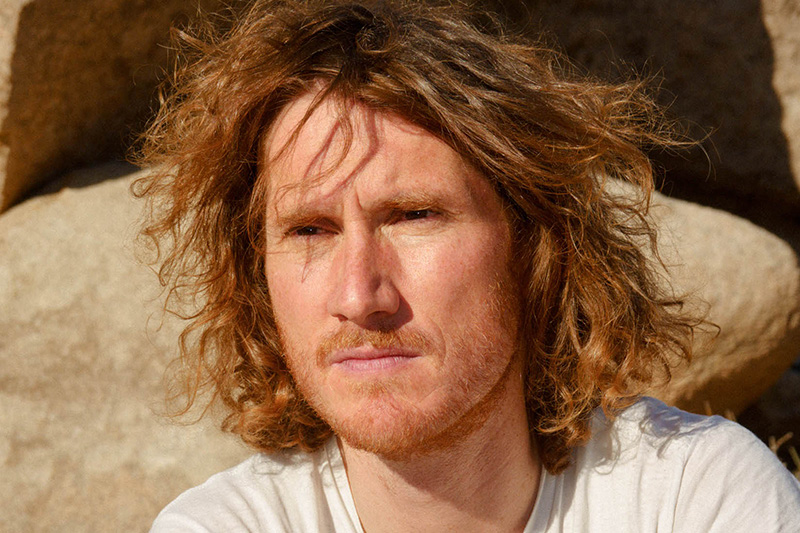
Lukas Marxt
Lukas Marxt (Austria, 1983) is an artist and filmmaker who explores the interaction between human and geological existence as well as the impact of humans on nature. Trained in geography and environmental sciences, he completed his audiovisual studies in Linz and holds a master's degree in fine arts from the University of Cologne. His work, which has been exhibited in museums such as the Torrance Art Museum and the Biennale of Painting in Belgium, combines visual art and film. His films have been screened at festivals such as the Berlinale, Locarno and Gijón, where he was awarded the Principality of Asturias Prize. Since 2017, he has been researching the ecological dynamics of the Salton Sea in California.
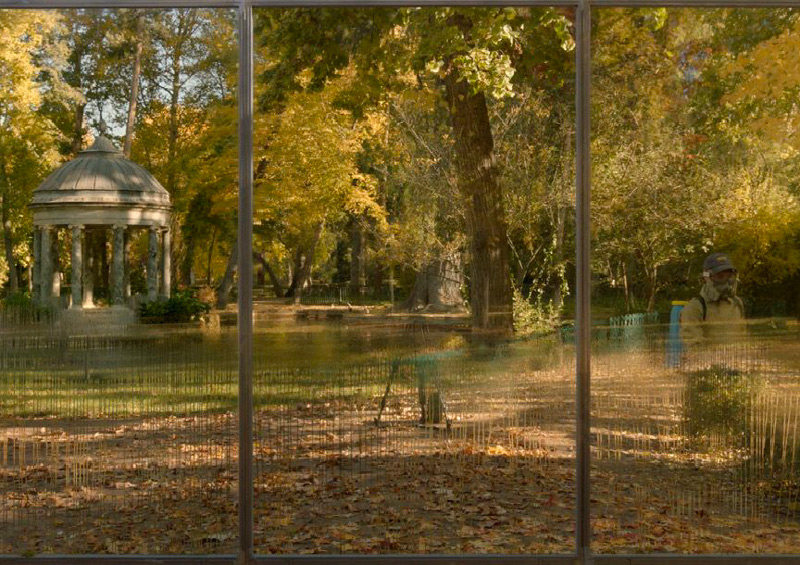
Imitation of Life. Juan Carlos Bracho. 20:46 2017 HD color.
A large-format mirror and the act of erasing its surface become a performative meditation on image, landscape, and perception. Bracho confronts the viewer with the illusory nature of images, questioning whether we are critical thinkers or merely hypnotized consumers. This single-shot narrative reveals a world where the image transforms into a plastic and mutable entity.
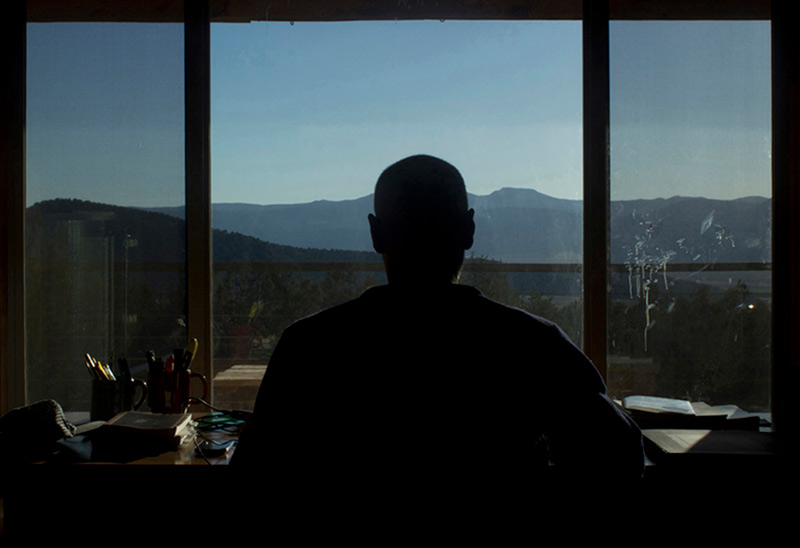
Juan Carlos Bracho
Juan Carlos Bracho (Cádiz, 1970) explores space, drawing as a cartographic tool, and the circularity of contemporary creativity. His work is based on small, repetitive gestures that generate powerful sensory images, transforming apparent monotony into evocative scenographies. Through systematic actions and minimal graphic elements, he reflects on the consolidation of images, landscape as symbolic transformation, and aesthetic experience as catharsis. His practice encompasses video, photography, installation, performance, sculpture, and drawing, with projects that continuously interact, creating a narrative of parallel mirrors and infinite escapes.
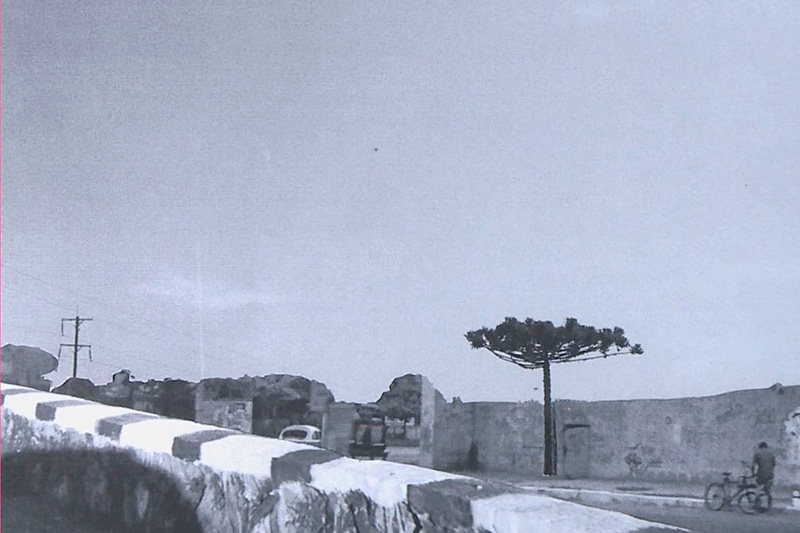
Atlas. 6:12. 2012. HD B/N
Like the mythological Titan, Gebhardt bears the weight of the world in a continuous process of creating and destroying landscapes. The performance redefines notions of time and space, exposes the artifice of both landscape and image, and positions the viewer as the central axis from which perception is structured.
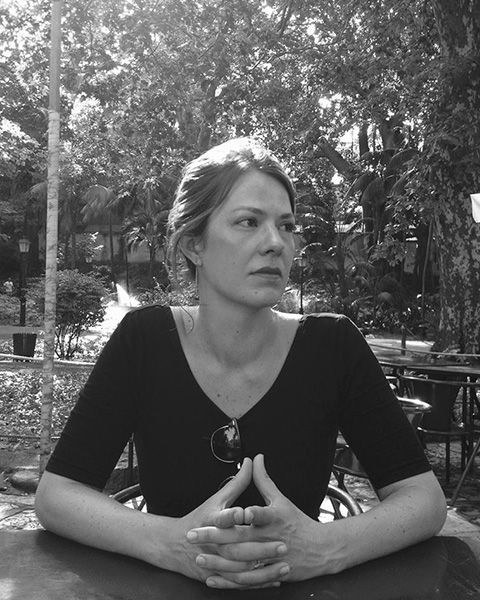
Magda Gebhardt
Magda Gebhardt (Porto Alegre, 1981). She graduated from the Ecole Nationale Supérieure des Beaux-Arts (ENSBA) in Lyon. She is a painter and professor at the Ecole Nationale Supérieure D'architecture in Paris-Malaquais, where she currently lives and works.
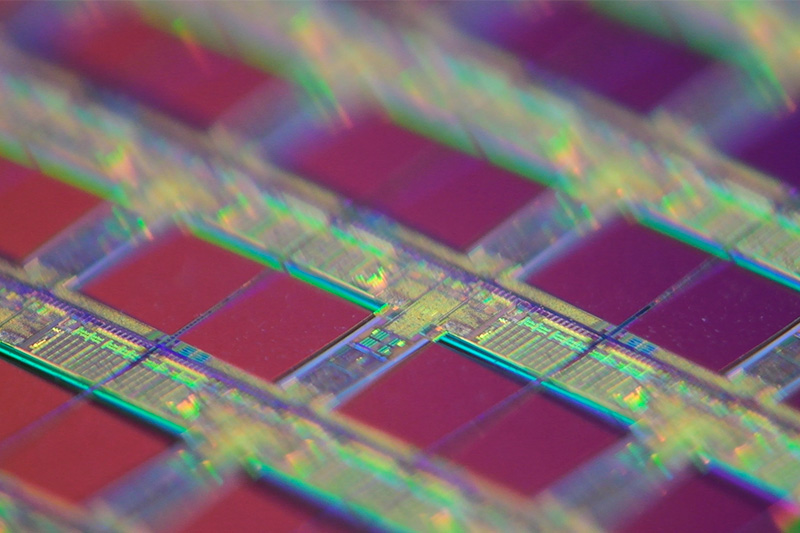
Wafer Bearer Deep Rain. 12:00. 2022. 4K color
Exploring the interaction between technology and everyday life, this work analyzes the natural and industrial phenomena of Taiwan as the epicenter of global semiconductor production. Through a multi-narrative video, it establishes a poetic and critical relationship between technical objects and human beings.
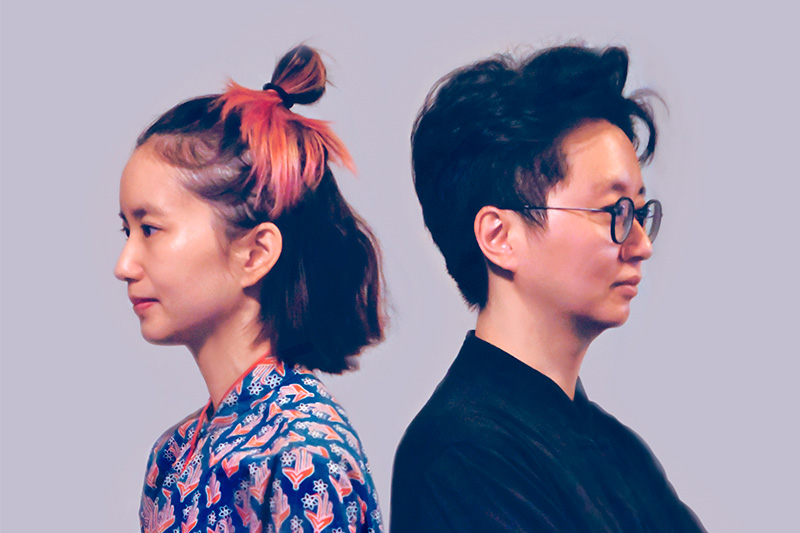
lololol (Xia Lin y Sheryl Cheung)
Founded in 2013 by Xia Lin and Sheryl Cheung, lolololol is a Taiwanese art collective that explores how emotions and body politics are shaped by technological cultures, martial arts, and ontological materialism. Their approach combines Asian philosophy and mind-body practices as alternative ways of investigating the interaction between humans and technology. In 2020 they founded Future Tao, an artistic platform for collective collaborations. Their projects have been presented at prestigious festivals and museums such as Berwick Film and Media Arts Festival (UK), Taipei Arts Festival, Times Museum (China) and Liquid Architecture (Australia).
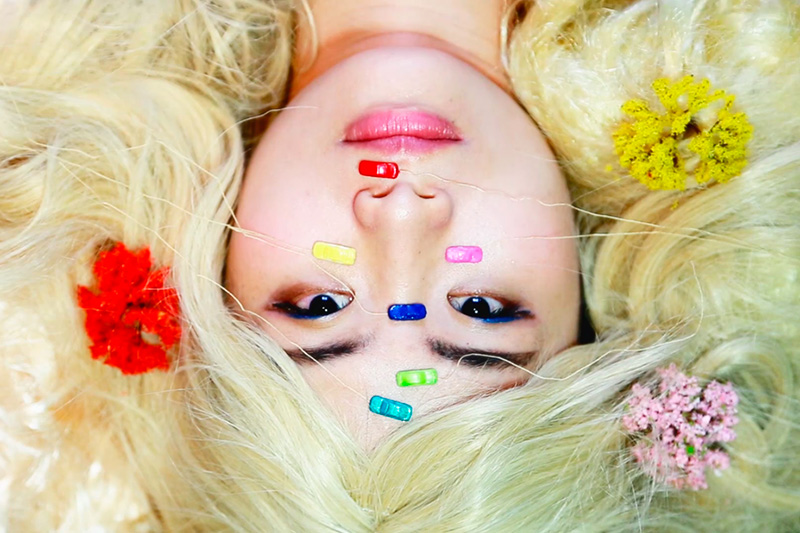
Somewhere I belong to be. 3:31. 2017
This work explores emotional release through a slow, symbolic gesture. A toy car runs across the artist's face as his hands reach out of the frame, reflecting the act of letting go of what is holding him back. The tension between retention and transformation is materialised in the subtle tugging of the car on his hair. The action becomes a visual metaphor for letting go of the past and embarking on a new path.
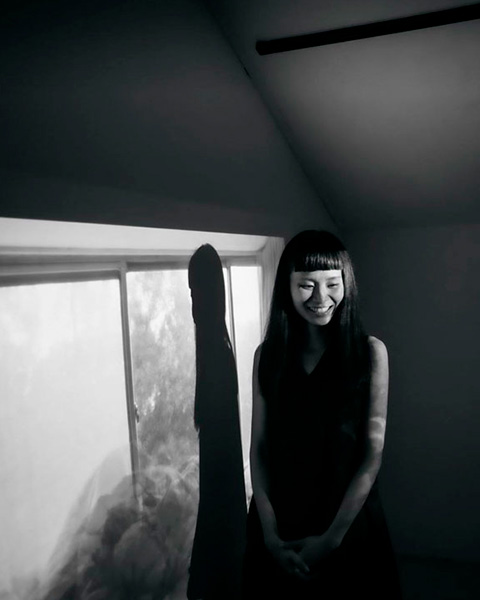
Yuchi Hsiao
Yuchi Hsiao (Kaohsiung, 1986) is an artist specialising in video art and installation, with a Master's degree in New Media Art from the National Taipei University of the Arts. Her work explores the relationship between the individual and her environment, focusing on the unusual events of everyday life and projecting intimate emotions from personal spaces such as her bedroom. Hsiao combines textiles and second-hand clothing with video works to expand reflections on the mind and everyday life. His work has been exhibited internationally in France, Bulgaria, Macau and at the Nakanojo Biennale in Japan.
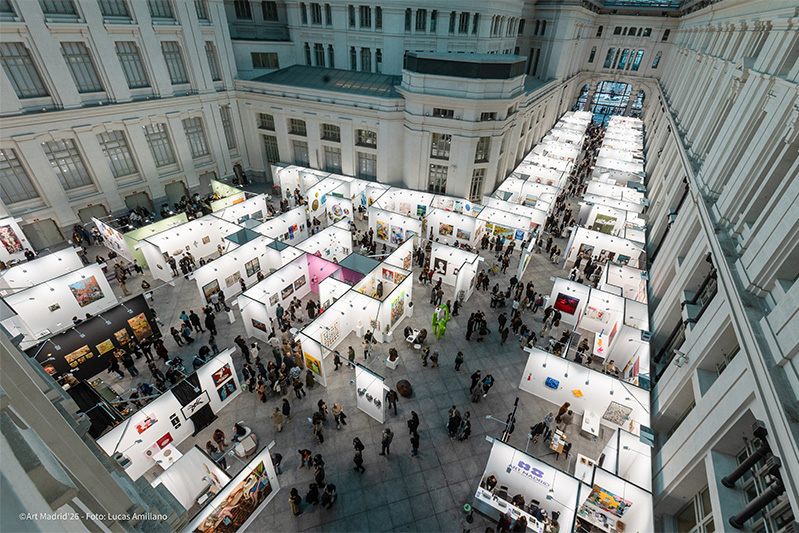
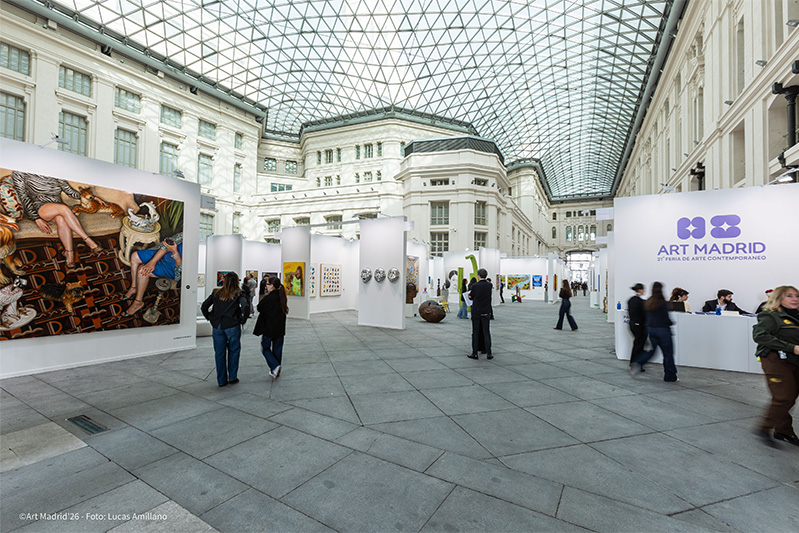
The Video Cycle Cartographies of Perception will be shown in the Espacio Tectónica (stand D2) during the week of the fair. The cycle, curated by PROYECTOR's Moving Image platform, deals with migration and the relationship between peripheries and urban centres, examining the city as a complex organism, at once a labyrinth and a Tower of Babel. Through video, the artists reflect on the role of the individual in the transformation of architectural space and the dynamics of feedback in an interconnected world, inviting viewers to expand their perception of the spaces they inhabit. In this dialogue between image and territory, Cartographies of Perception maps other fragmented realities and opens up a space for questioning and critical sensitivity, where the gaze becomes the first step towards a new understanding of our surroundings.