Art Madrid'26 – WE ANALYZE THE EVOLUTION OF ART MADRID

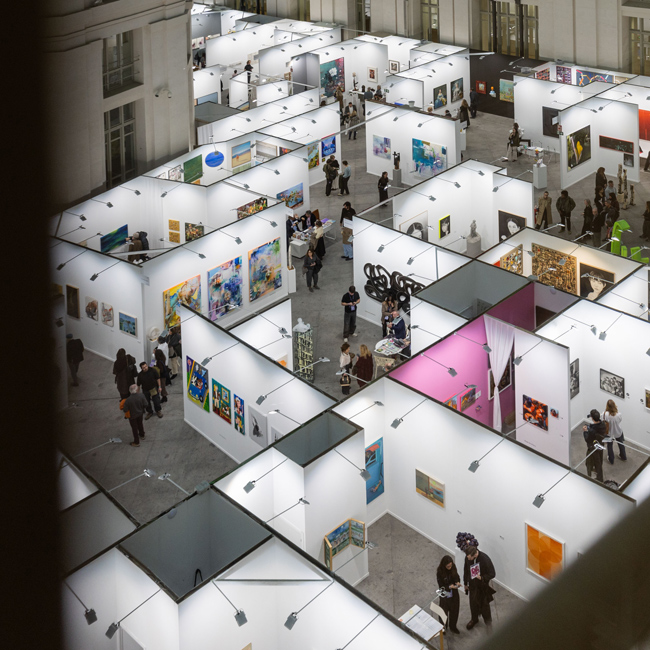
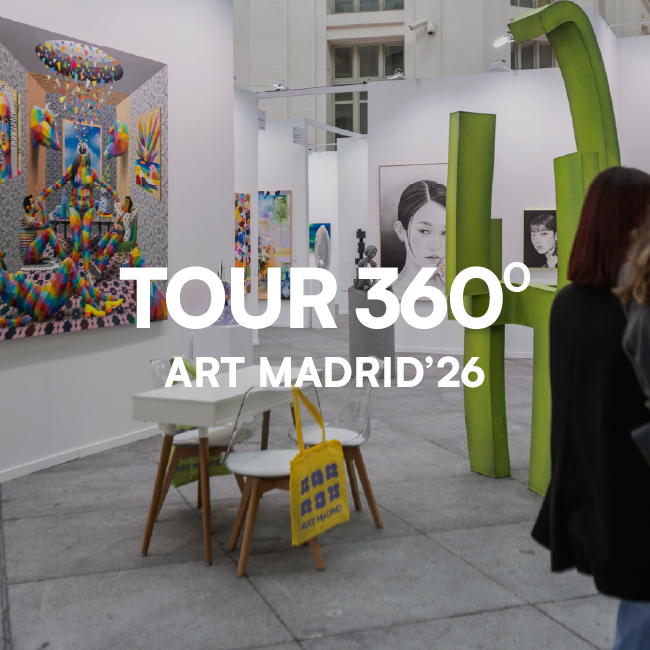
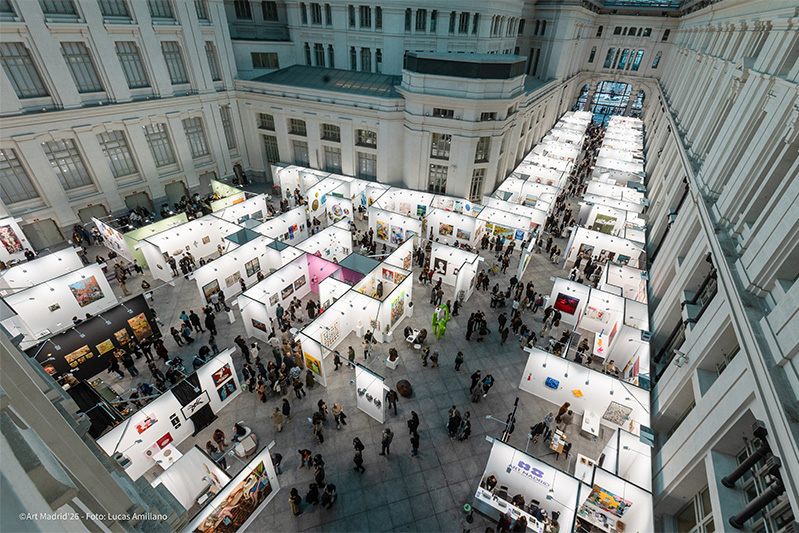
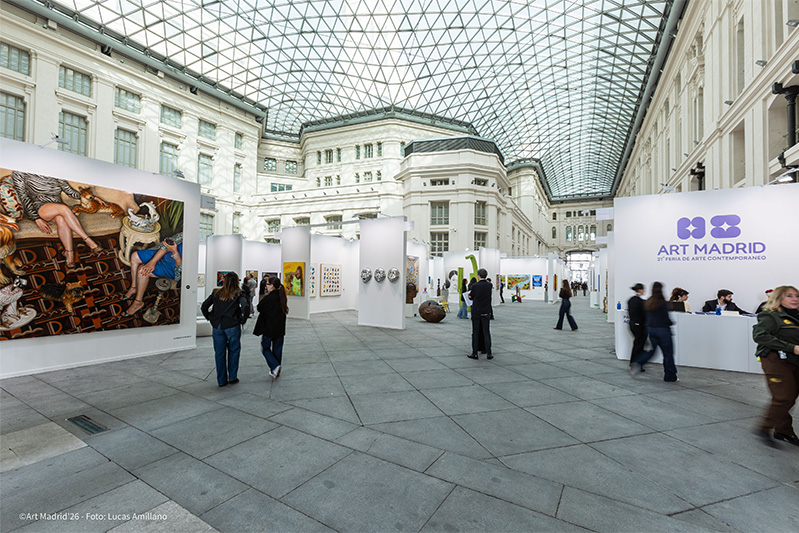
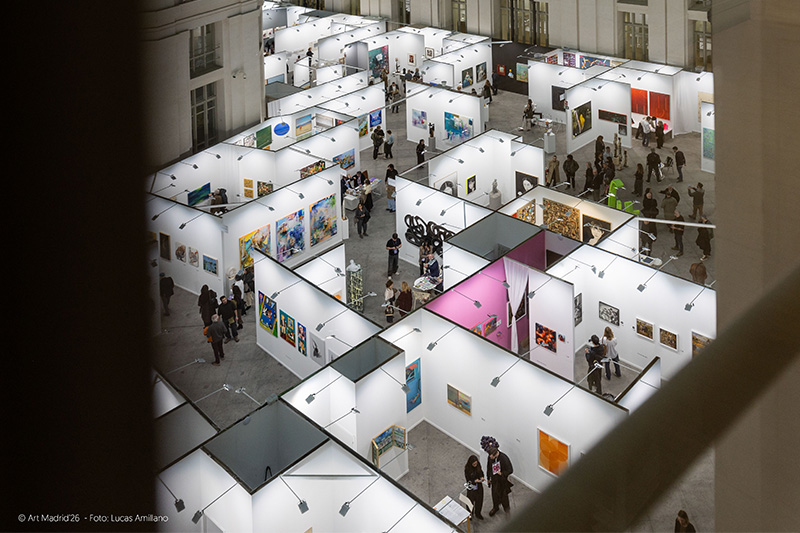
Art Madrid celebrates this year its 15th anniversary with an edition that stands out for its dynamism and its festive character. With a unique proposal we celebrate years making a review and analysis of the evolution and development of the fair in recent editions. Expert personalities such as Carlos Delgado, curator and art critic, the artist Dionisio González, the gallery owner Aurora Vigil or the critic and curator Fernando Gómez de la Cuesta accompany us on this journey.

RLM

Avatar soldado, 2016

Tela sobre fibra de vidrio y resina

100 x 30cm

Andrés Planas

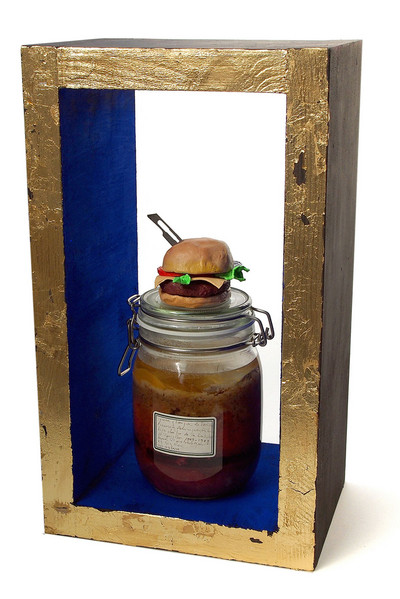
BigMac, 2015

Técnica mixta madera, plástico, pigmentos, pan de oro y restos biológicos humanos

40 x 23cm

One of the biggest commitments of the fair has been to help position and project the work of the artists in the art market. According to the curator and art critic Carlos Delgado, "Art Madrid covers and gives space to many artists who have achieved a visibility that otherwise they could not have. Both through the One Project program and the general program, Art Madrid has maintained and strengthened its commitment to supporting young artists and emerging creators who are in the process of consolidating their careers. The artist Dionisio González states that he has always seen this fair as an excellent showcase in which the works of the most outstanding artists of the current national and international scene have been displayed, so being part of the fair this year is gratifying.


Dionisio González

Inter-Acciones 12, 2019

Impresión digital en papel de algodón sobre dibond y enmarcado en madera lacada en blanco

55 x 55cm

Dionisio González

Inter-Acciones 22, 2019

Impresión digital en papel de algodón sobre dibond y enmarcado en madera lacada en blanco

55 x 55cm

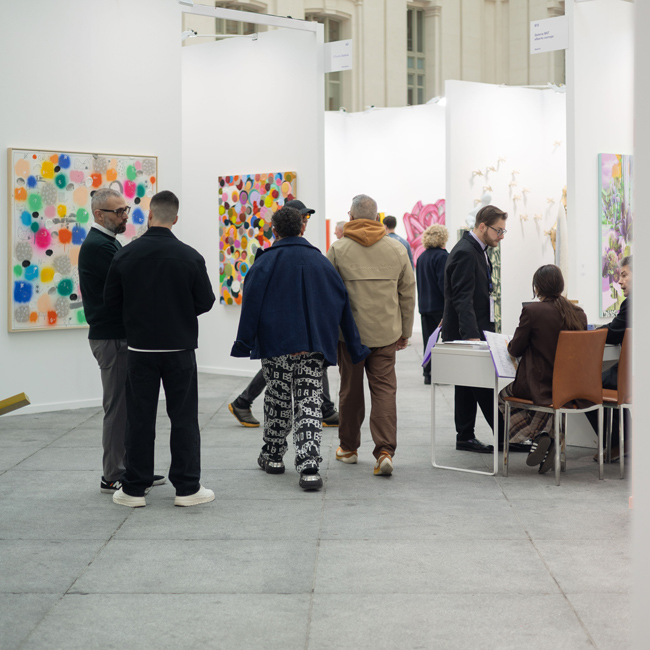
Art Madrid's commitment to emerging creators also allows for the acquisition of works within a wide economic spectrum as varied prices can be found. In the words of Carlos Delgado, "Art Madrid is the ideal place to start collecting, as there are small and medium formats, graphic works..." The galleries participating in Art Madrid have an optimal price range to find high quality proposals at an affordable price, a perfect setting to start collecting with works by young artists who have not yet established themselves.

Likewise, support for emerging and mid-career creators requires galleries that bet on these artists. Some of these, like Aurora Vigil who has been in the art world for 35 years, are an essential element in the shaping of the art scene since, as she herself states, "the gallery owner is not only the person who sells works of art, his role is something else, he has to project the artists he believes in, he has to assume the task of disseminating their work".
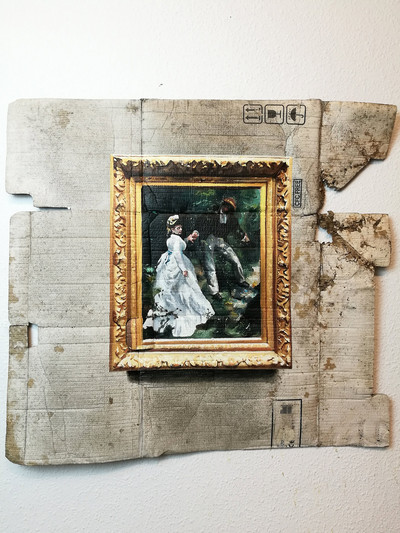
Julio Anaya

Francisco de Goya - Vuelo de Brujas, 2019

Acrílico sobre cartón

100 x 75cm

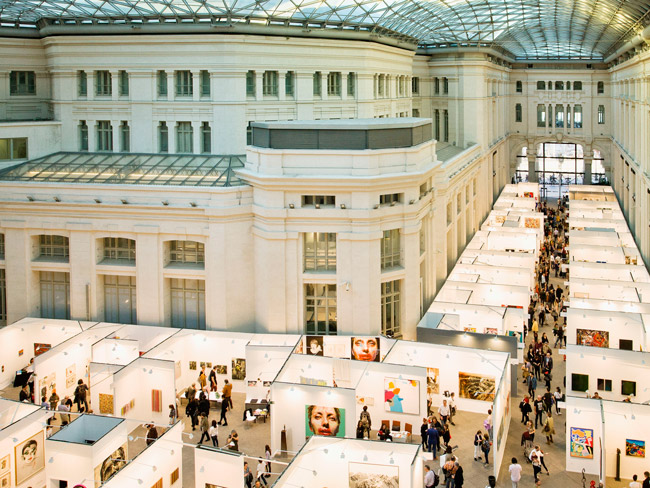
Although Art Madrid maintains its preponderance in the usual disciplines such as painting and sculpture, it has been embracing new proposals that define contemporary art in all its lines. On the one hand, the inclusion of a dedicated program that includes video art and action art, which until now was only part of the parallel program and this year has its own stand at the fair. On the other hand, the curatorial program One Project has been consolidating its place as one of the fundamental pillars of Art Madrid. Fernando Gómez de la Cuesta, curator of One Project, states that it is necessary to maintain programs like this one where transgressive, minority proposals can be observed, with a component of friction towards the environment, questioning fashions and trends. This edition under the title of "Salvajes. La cage aux fauves", One Project reaffirms and strengthens this area as a place of confrontation and artistic subversion.
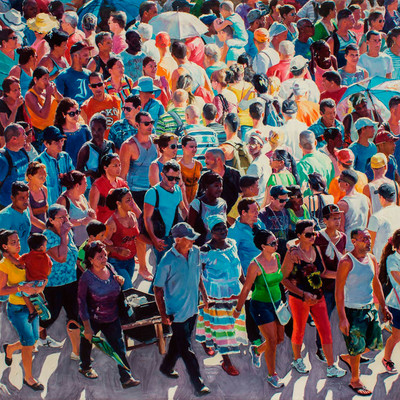
Imanol Villota

It has also been a "clear success the elimination of the second market" to confirm the positioning of Art Madrid as a contemporary art fair, since according to Delgado the fair becomes an absolute expression of the most contemporary scene that seeks direct contact with current art and allows a mapping of what is happening in art today. Artists such as Dionisio González emphasize the open, dynamic and avant-garde character of the fair, as well as the attendance of a varied public that allows bringing contemporary art closer to a more heterogeneous public without, of course, leaving aside the exhibition function for the collectors that come from various corners of the world to attend this unavoidable appointment with art.

This marked internationality is transversal to the fair since in the last editions Art Madrid has 40% of international galleries in its general program. Countries such as South Africa, Taiwan, Cuba or Ecuador are part of the proposal presented by Art Madrid year after year, generating a greater artistic diversity taking into account the socio-cultural influence of each country.
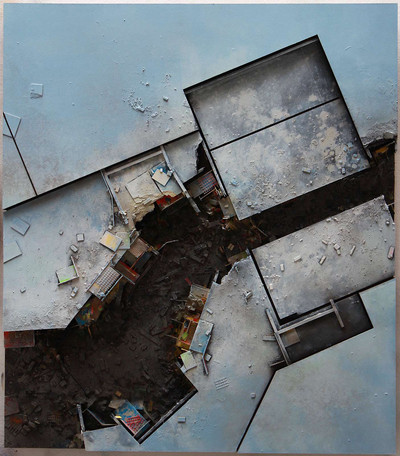
Alejandro Gómez Cangas

Brecha No. 2, 2019

Oil on canvas

140 x 140cm

Hendrik Czakainski

3ER1, 2018

Cartón y pintura sobre MDF

86 x 75cm


The circle as critical device and the marker as contemporary catalyst


POSCA, the Japanese brand of water-based paint markers, has established itself since the 1980s as a central instrument within contemporary artistic practices associated with urban art, illustration, graphic design, and interdisciplinary experimentation. Its opaque, highly pigmented, fast-drying formula—compatible with surfaces as diverse as paper, wood, metal, glass, and textiles—has enabled a technical expansion that extends beyond the traditional studio, engaging public space, objects, and installation practices alike.


In this context, POSCA operates as more than a working tool; it functions as a material infrastructure for contemporary creation. It is a technical device that enables immediacy of gesture without sacrificing chromatic density or formal precision. Its versatility has contributed to the democratization of languages historically associated with painting, fostering a more horizontal circulation between professional and amateur practices.

This expanded dimension of the medium finds a particularly compelling conceptual framework in The Rolling Collection, a traveling exhibition curated by ADDA Gallery. The project proposes a collective investigation of the circular format, understood not merely as a formal container but as a symbolic structure and a field of spatial tension.


Historically, the circle has operated as a figure of totality, continuity, and return. Within the framework of The Rolling Collection, the circular format shifts away from its classical symbolic charge toward an experimental dimension, becoming a support that challenges the hegemonic rectangular frontality of the Western pictorial tradition. The absence of angles demands a reconsideration of composition, balance, and directional flow.

Rather than functioning as a simple formal constraint, this condition generates a specific economy of visual decisions. The curved edge intensifies the relationship between center and periphery, dissolves internal hierarchies, and activates both centrifugal and centripetal dynamics. The resulting body of work interrogates the very processes through which images are constructed.


Following its 2025 tour through Barcelona, Ibiza, Paris, London, and Tokyo, a selection of the exhibition is presented at Art Madrid, reinforcing its international scope and its adaptability to diverse cultural contexts. The proposal for Art Madrid’26 brings together artists whose practices unfold at the intersection of urban art, contemporary illustration, and hybrid methodologies: Honet, Yu Maeda, Nicolas Villamizar, Fafi, Yoshi, and Cachetejack.

While their visual languages vary—ranging from graphic and narrative approaches to chromatic explorations charged with gestural intensity—the curatorial framework establishes a shared axis: a free, experimental, and distinctly color-driven attitude. In this sense, color functions as a conceptual structure that articulates the works while simultaneously connecting them to the specific materiality of POSCA.


The marker’s inherent chromatic vibrancy engages in dialogue with the formal assertiveness of the circle, generating surfaces in which saturation and contrast take center stage. The tool thus becomes embedded within the exhibition discourse, operating as a coherent extension of the participating artists’ aesthetic vocabularies.

One of the project’s most significant dimensions is the active incorporation of the public. Within the exhibition space—activated by POSCA during Art Madrid’26—visitors will be invited to intervene on circular supports installed on the wall using POSCA markers, thereby symbolically integrating themselves into The Rolling Collection during its presentation in Madrid.


This strategy introduces a relational dimension that destabilizes the notion of the closed artwork. Authorship becomes decentralized, and the exhibition space transforms into a dynamic surface for the accumulation of gestures. From a theoretical standpoint, the project may be understood as aligning with participatory practices that, without compromising formal coherence, open the artistic dispositif to contingency and multiplicity.

The selection of POSCA as the instrument for this collective intervention is deliberate. Its ease of use, line control, and compatibility with multiple surfaces ensure an accessible experience without diminishing the visual potency of the outcome. In this way, the marker operates as a mediator between professional practice and spontaneous experimentation, dissolving technical hierarchies.


The title itself, The Rolling Collection, suggests a collection in motion—unfixed to a single space or definitive configuration. Its itinerant nature, combined with the incorporation of local interventions, transforms the project into an organism in continuous evolution. Within this framework, POSCA positions itself as a material catalyst for a transnational creative community. Long associated with urban scenes and emerging practices, the brand reinforces its identity as an ally of open, experimental, and collaborative processes.

POSCA x The Rolling Collection should not be understood merely as a collaboration between a company and a curatorial initiative; rather, it constitutes a strategic convergence of tool, discourse, and community. The project proposes a reflection on format, the global circulation of contemporary art, and the expansion of authorship, while POSCA provides the technical infrastructure that makes both individual works and collective experience possible.