Art Madrid'26 – WHAT WILL BE NEW IN THE PARALLEL PROGRAM?

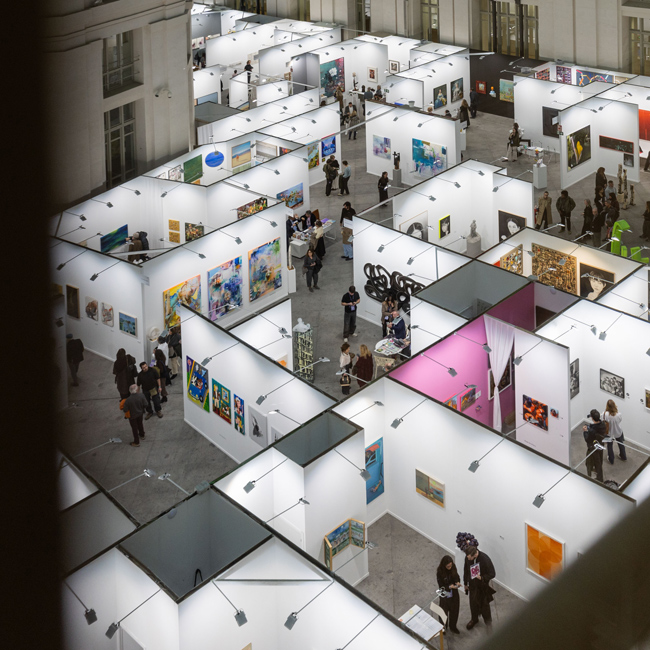
In its 19th edition, Art Madrid will present a general Program of Galleries composed of thirty-six national and international exhibitors and a renewed Parallel Program. About the last one, we will tell you all the details we have prepared for our next encounter with contemporary art.

The main goal of the Parallel Program of Art Madrid'24 is to support emerging artists. We consider it fundamental to give our support and recognition to new generations of artists, offering our event as a space from which to insert and show their projects within the circuit of the contemporary art market. We have chosen a line of work that focuses on new artistic productions and creators at the beginning of their professional careers.
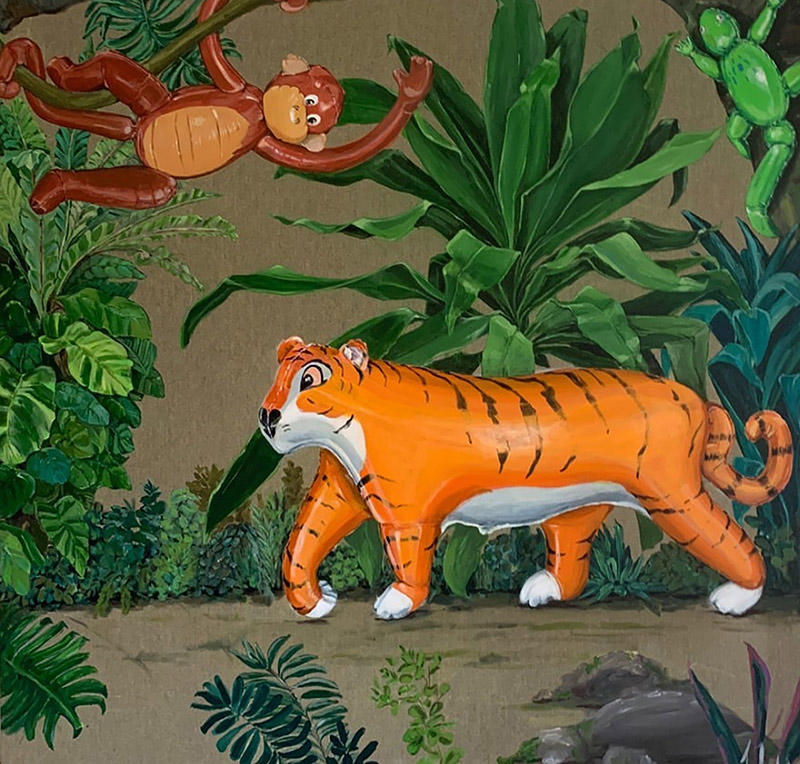
Sofía Cristina Jiménez. Naturaleza Plástica IIi: El Tigre Y El Mono. Acrílico sobre lino, 100 x 100 x 4 cm, 2021.

Have you ever wondered how the artistic diversity of a city can be captured in an event as ephemeral and dynamic as an art fair? As a reference event in the cultural sector, we see it as our responsibility to explore the different ways of giving a voice to artists, gallerists, curators, collectors and professionals in the cultural sector, proposing a multiplicity of ideas brought together under the premise of being the most important meeting of contemporary art in Madrid. Reception and sensoriality as cognitive experiences inseparable from the artistic object; criticism as an exegesis of its time and context; the ephemeral work of art and performance are some of the themes we will be exploring in our 19th edition.


The Art Madrid'24 Parallel Program celebrates the meeting of diversity of tendencies, creativity, provocative art and the exposure of new voices within the art scene; and recognizes the importance of creating inclusive platforms that promote the visibility and recognition of artists who represent the promise of the future. With this initiative, Art Madrid confirms its commitment to the accessibility and closeness of contemporary art to all audiences, promotes institutional collaboration as a necessary practice in the art scene, and renews its presence as an important event, this time with a curated, reflective and up-to-date edition.
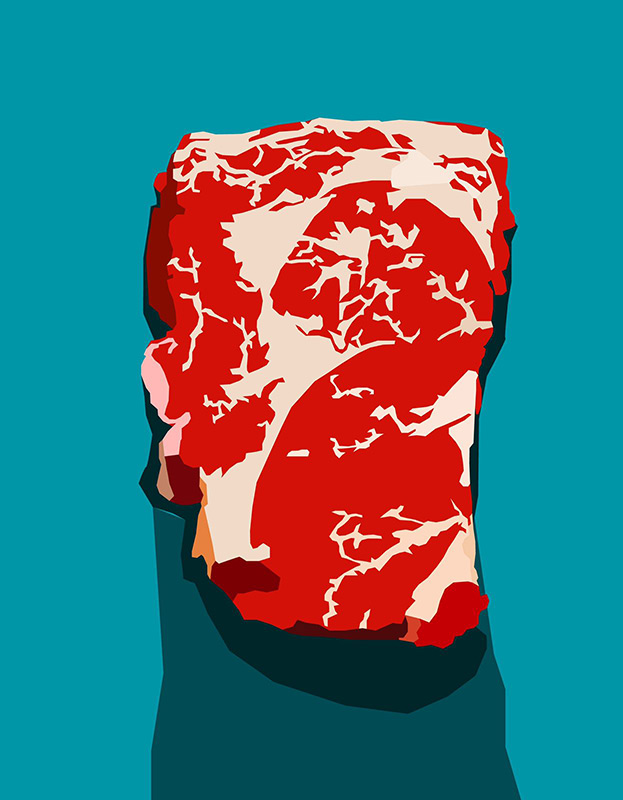
Ryaskartstyle. Meatblue. Acrílico sobre lienzo, 150 x 200 cm, 2022.

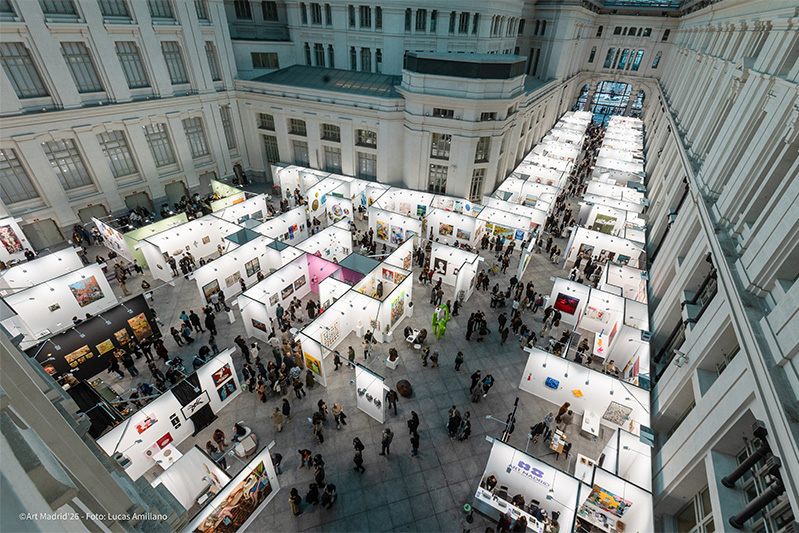
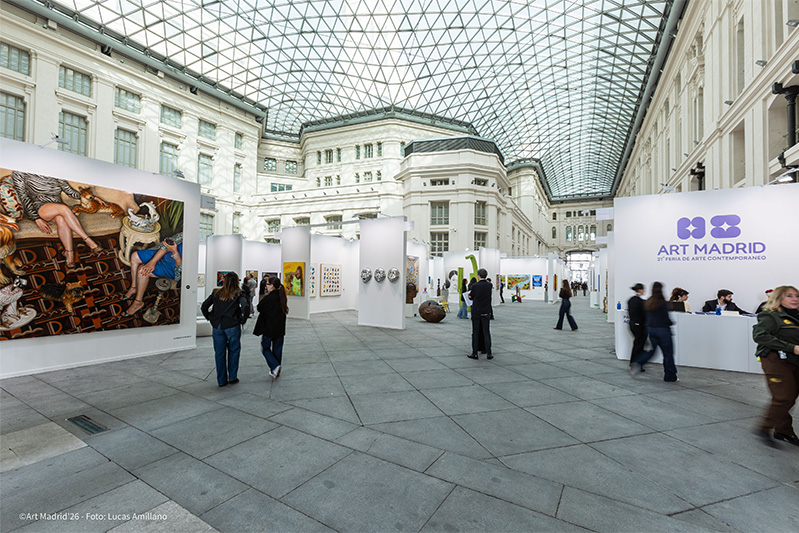
The Parallel Program of Art Madrid'24 includes an agenda of activities that will take place in the pre-fair's prelude and during the days the fair is celebrated at the Galería de Cristal del Palacio de Cibeles, including: Art and Word: Conversations with Carlos del Amor ; OPEN BOOTH with guest artist: Marina Tellme; Intercessions X Tara For Women ; Lectures. Curated itineraries ; La Quedada. Studio Visits Art Madrid'24 and the Collectors Program: One Shot Collectors.
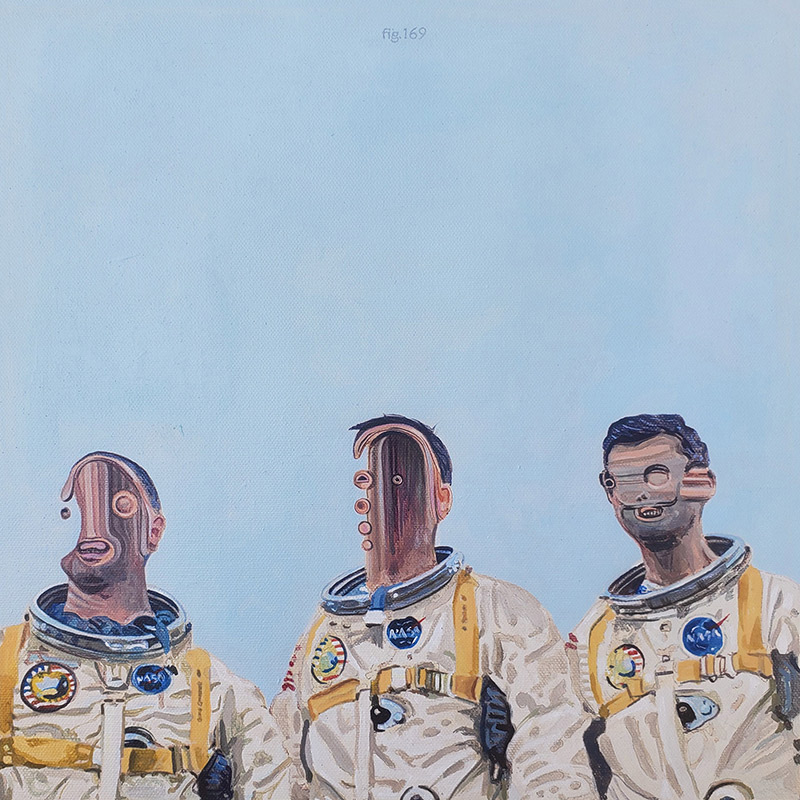
Jorge Luis Rodríguez Marrero. Fig. 169. Apolo 1. Óleo sobre lienzo, 30 x 30 cm, 2021.

ART AND WORD.
Conversations with Carlos del Amor

With his sensitive approach to the infinite worlds of creativity, Carlos del Amor reveals the artistic universe of ten creators participating in the 19th edition of Art Madrid. With this initiative, Art Madrid extends and reinforces its interest in bringing contemporary art closer to the public, this time through the voice of the artists who will accompany us during the most important week of Spanish contemporary art.


Invited artists:

Richard Garcia. Galería BAT; Francesca Poza. Alba Cabrera Gallery; Nacho Zubelzu. Metro Gallery; Alejandro Monge. 3 Punts Gallery; Suncityboy. Dr. Robot Gallery; Juan Miguel Quiñones García. Pigment Gallery; Manu Iranzo. CLC Art; Evans Mbugua. OOA Gallery; Daniel Schweitzer. Shiras Gallery and Carla Effa. Kleur Gallery.
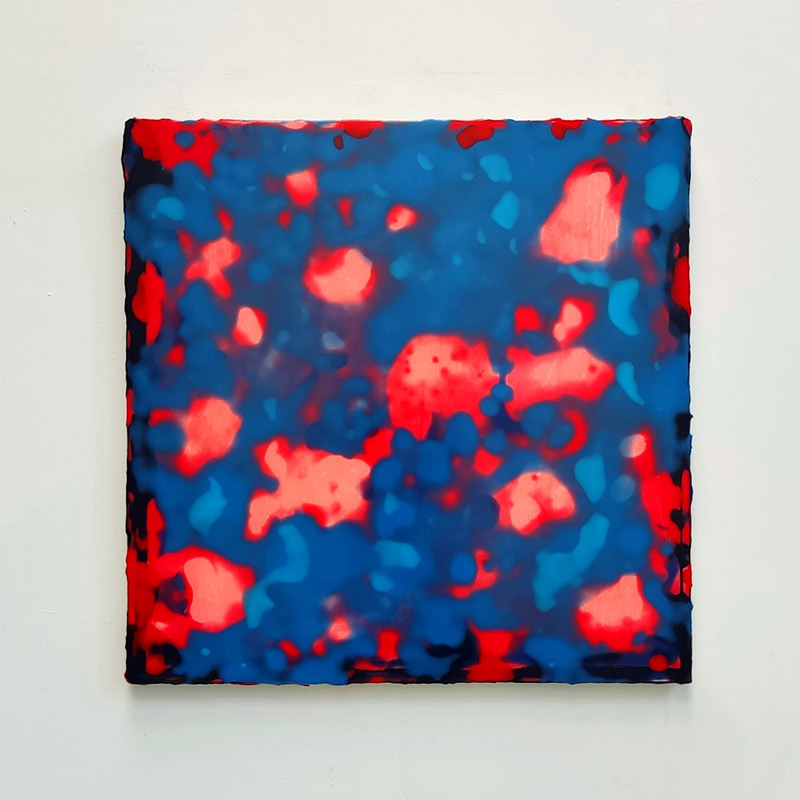
Paco Dalmau. Evolution 90 III. Acrílico y resina sobre tela en tabla de madera,90 x 90 cm, 2023.

OPEN BOOTH

Art Madrid'24 exclusively presents Open Booth , a curated project with the Spanish artist Marina Tellme and her installation Reunion of Very Important People . The Open Booth is an open space in which an emerging artist can intervene; it is also an expanded place that presents a creator in the context of the fair and accompanies her in her "debut" in the Madrid art market circuit. With the intervention of the white cube, we offer the possibility of being part of the 19th edition of Art Madrid to an artist who does not have a gallery representation, and yet, we build a transparent section that embraces the values of our event, this time with the aim of creating a platform for the presentation and promotion of artists who have not yet been "discovered" in all their magnitude.
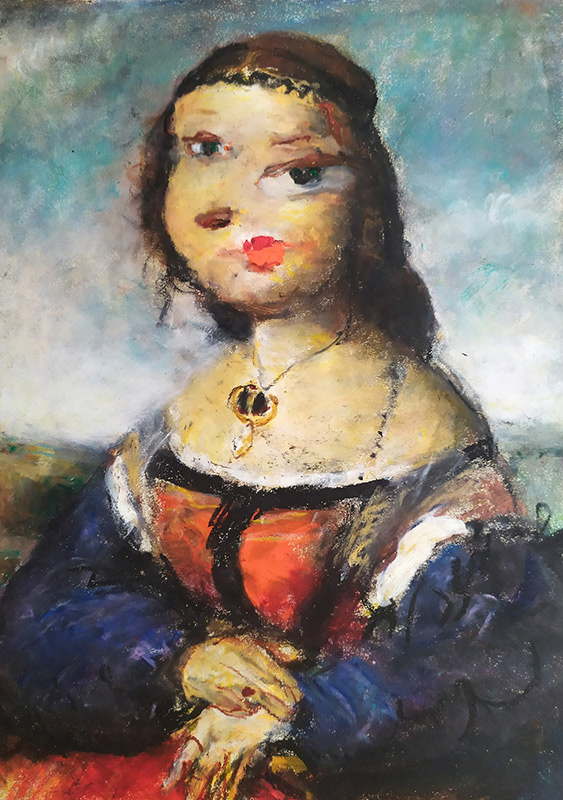
Iván Quesada. Rafael, la muda, retrato de mujer. Pastel al óleo, 40 x 30 cm, 2017.

Intercessions.
Performance program X Tara For Women

*Intercession: Action and effect of interceding for the good of others.

Intercessions is a performance program organized with the support of the Tara For Women foundation that presents the work of four artists: Estel Boada, Teresa Búa, Sara Domínguez and Mónica Egido , whose practices reflect on our times. At the same time it proposes a clear view of the symbolic relationship between people and their context, using the body as a repository of affections. The works presented by the artists will transform the exhibition space into an activating instrument for a provocative and necessary dialogue in the context of Art Madrid'24.


Invited artists:

Estel Boada, Sara Domínguez, Mónica Egido and Teresa Búa.
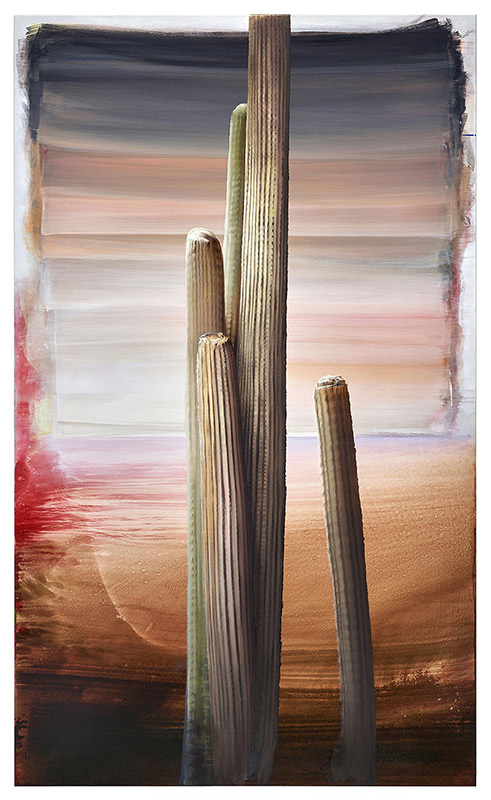
Rut Massó. Guatiza. Óleo, tinta y acrílico sobre lienzo, 200 x 120 cm, 2022

Lectures.
Curated itineraries

Lectures. Curated itineraries is a cultural mediation project designed to bring the public closer to the works on display in the galleries that make up the General Program of Art Madrid'24. For this occasion, we have invited cultural promoter Eugenia Tenenbaum and curator Óscar Manrique. Through the tours curated by both of them, the public will experience the fair through a selection of works that respond to diverse perspectives and encourage an approach to the exhibition proposals of the edition.
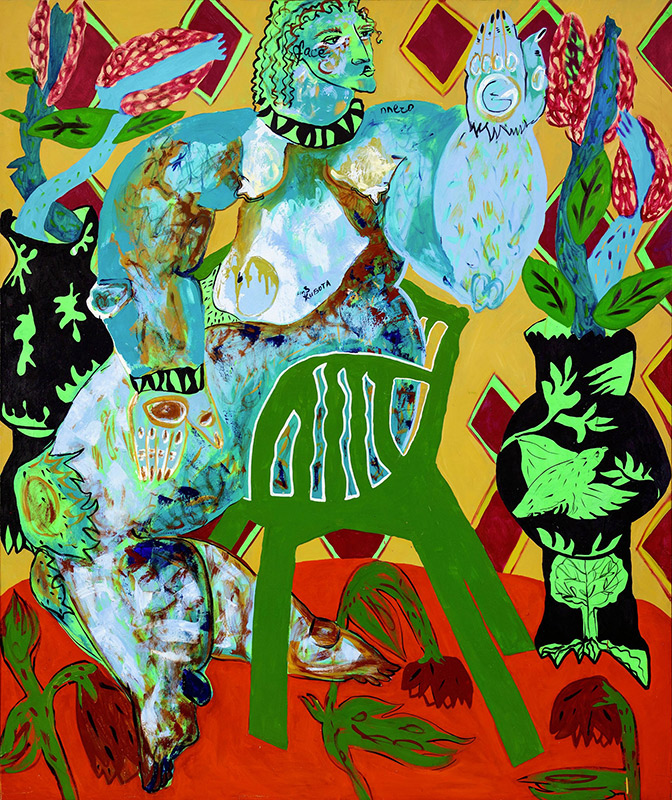
Natalia Romanciuc. Belly. Óleo sobre lienzo, 180 x 150 cm, 2023.

La Quedada.
Circuit of studies Art Madrid'24

In order to anticipate what Art Madrid'24 will be like, we have organized a series of visits to the studios of some of the artists who will participate in the edition. Have you ever wondered what an artist's workspace is like? Have you ever thought about where an artist produces his or her work, for example, when preparing to participate in an art fair? Maybe you've ever wondered what the daily life of a visual artist is like. To try to answer these questions, we have organized #LaQuedada, an initiative of Art Madrid to bring you closer to the surprising and sometimes romanticized world in which visual artists live.

In the first edition of #LaQuedada we will have the opportunity to visit the studios of:

  • Carlos Tárdez (Represented in Art Madrid by Bea Villamarín)
  • Lara Padilla (Represented in Art Madrid by 3 Punts Galería)
  • Richard García (Represented in Art Madrid by Galería BAT)
  • Elena Gual (Represented in Art Madrid by Galería Arma)
  • Marina Tellme (Represented at the Open Booth as part of the Art Madrid Parallel Program)
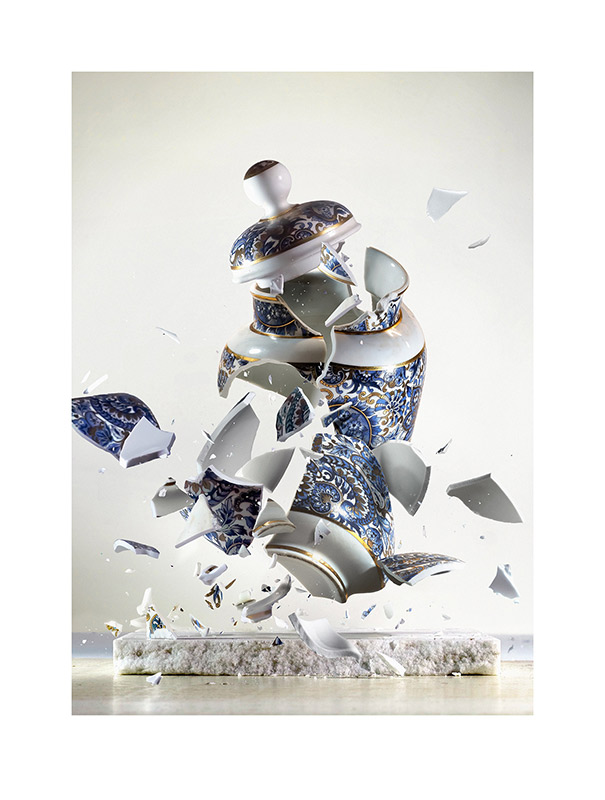
Xurxo Gómez-Chao. Arquivo NºIV, Fotografía, Glecleé, Papel Algodón Hahnemuhle 300gr, 130 x 100 cm, 2023.

One Shot Collectors Program

The Collectors Program is integrated into the fair with the commitment to continue building bridges to bring contemporary art closer to the public and to promote collecting on a national and international level. This initiative is aimed at both contemporary art professionals and art lovers who are considering starting a collection. Under the guidance of Ana Suárez Gisbert, art advisor and appraisal expert, Art Madrid offers a free advisory service to the interested public on the acquisition of works of art.
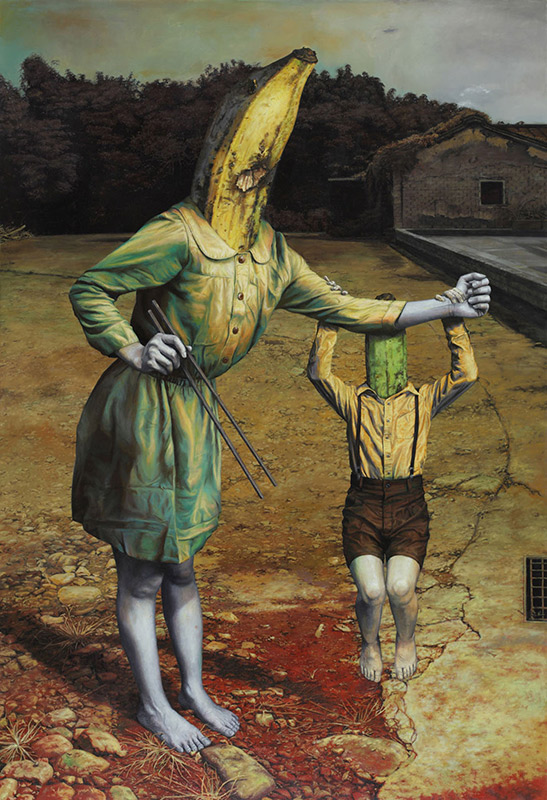
LIN Shih-Yung. Under Shuiyuan-2. Acrílico sobre lienzo, 194 x 130 cm, 2023.

The value of each of the proposals conceived to celebrate the 19th edition of Art Madrid resides in the collaboration and involvement of the people and institutions that make possible the continuity of our event. The Parallel Program of Art Madrid'24 celebrates contemporary art, the presence of new and loyal galleries, and positions itself as an event that is close, accessible and open to the synergies that make possible its commitment to the future of contemporary artistic practices.
ART MADRID’26 INTERVIEW PROGRAM. CONVERSATIONS WITH ADONAY BERMÚDEZ


The pictorial work of Sergio Rocafort (Valencia, 1995) is articulated as a field of questioning rather than a system of closed visual statements. His paintings do not seek to close off meaning, but rather to activate an open perceptual experience, in which the viewer participates in a critical exercise of reconsidering the ways of seeing, interpreting, and conceiving painting in the present. The image thus presents itself as an unstable territory, where perception constantly oscillates between the visible and the imagined, and meaning is constructed in a provisional and shared manner.

One of the structural axes of his work is the tension between scale and intimacy. The format functions as a relational device, alternating physical immersion with concentrated attention, generating an expository rhythm that prompts the viewer to move around, approach, and withdraw. This spatial dynamic engages with a painting situated on the threshold between figuration and abstraction, sustaining a reflection on painting as both window and physical object, while emphasizing its material and spatial condition.

Rocafort’s creative process is also grounded in a dialectic between intuition and control. Far from a romantic notion of chance, the unexpected is understood as guided pictorial thinking, in which every decision—even those that appear accidental—responds to a critical awareness of the act of painting and a progressive refinement of the means of expression.


Untitled. 2024. Oil on panel, 30 x 45 cm..


Questioning seems to inhabit your painting. What kind of questions do you want your work to pose to the viewer?

Generally, my intention is for the work to provoke more questions than answers. Ultimately, I believe my work refers to shared spaces that nevertheless remain open to interpretation. I think that this interplay of questions—questions that arise for me as an artist in the studio—is interesting when it is later transferred to the viewer in the exhibition space. These questions usually concern the way we look, the way we interpret, and the way we conceive painting. It is a constant game between what we see and what we imagine.


Untitled. 2025. Oil on linen. 32.5 × 22.5 cm.


Your works seem to constantly stretch scale, moving from the intimate to the immersive. How do you decide what format each investigation requires?

I believe the main reason I choose one format or another depends on the exhibition installation. Beyond how each individual work functions, I think it is the overall vision that completes the project and gives it coherence and meaning. In many cases, these contrasts arise because a small work encourages an intimate approach, while a large work can have a stronger impact. Ultimately, this play of tensions causes the viewer to move closer, step back, and generates an interesting dialogue within the exhibition space itself.

In my case, I tend to work quite a lot with large formats because of the impact they produce. I believe there is a kind of translation that takes place—one that extends to the tools themselves—and this allows for greater expressiveness and a stronger impact on the viewer.


Untitled. 2015. Graphite on paper. 80 x 65 cm.


Critics often highlight your attention to proportion and detail. How do these concepts operate in a painting that resists figuration?

I do not think my painting resists figuration; rather, it constantly plays at its edges. Most of my references are figurative, but I seek to continually tension the relationship between volume and classical notions of pictorial construction, without losing the idea of the painting as a window—or rather, as an object. This relationship between painting-as-window and painting-as-physical-object is fundamental in my work; both aspects share common ground.

The result would be very different if one of these elements were set aside. But the game is not only formal: it is about generating ambiguity, creating a point at which the viewer must complete the work. I believe this operates both in hyperrealist figuration and in geometric abstraction, which is what I have been working on recently.

Abstraction allows me to detach completely from the image. In fact, I do not work with photographs or a predefined imaginary; instead, I generate my own notion of volume and space without relying on a prior model. Ultimately, even if I do not start from a figurative reference, this freedom coexists with the basic principles of painting. Neo Rauch, for example, does not need a maquette or a photograph, and I believe that same freedom is present in my work without abandoning those fundamental notions of painting.


Untitled. 2025. Oil on linen. 32.5 x 22.5 cm.


In your relationship with black, contrast, and chromatic vibration, how do you decide when a chromatic tension should be restrained or emphasized?

I think something similar happens here to what occurs with formats—it largely depends on the exhibition space. A painting can be small yet possess great chromatic force and a high level of contrast; even if it alludes to intimacy, it can generate a strong visual impact. In a larger format, the opposite may occur: low contrast or subtle nuances may function better. Everything depends on the relationship established between the works in the exhibition space and on how we want to bring the viewer closer or push them back in order to generate visual tension. In my work, synthesis, clarity, and the depth offered by color and material have always been present. I increasingly try to limit my resources so that the work functions with the bare minimum. Lately, for example, I have been drawing a great deal and working almost entirely with monochromatic ranges, because within that simplicity I believe many nuances can be explored and revealed—transparencies, density, contrast. This is, in essence, the chromatic game in my work.


To what extent do you plan your work, and how much space do you leave for the unexpected—or even for mistakes?

I have always thought that I leave a great deal of room for error and chance, but lately I believe less in that version of the creative process. I think there is always a reflection and a guiding hand behind these “accidents.” I do try to allow unforeseen things to happen, but what emerges I would call intuition rather than chance, and I try to embrace it and guide it. This is, essentially, my way of understanding painting.

As for how I manage the timing of my projects, toward the end of this year I have a solo exhibition planned at Shiras Gallery, which will be a good moment to consolidate the works I have been developing and their visual impact. Recently, I have also been focusing on Art Madrid, which is approaching, and I am seeking for the exhibited works to have a cohesion, coherence, and clarity that some earlier works lacked. This time, the luminosity and saturation present in parts of my work shine more than ever, and I trust that the gallery will achieve a very successful exhibition installation at the fair.