Art Madrid'26 – YOROKOBU CELEBRATES ITS 10 YEARS WITH ART MADRID'20

Yorokobu magazine has just celebrated 10 years of serving creativity and its best stories. As Mar Abad, the magazine's founding partner, explains, «the most rewarding thing has been finding so much talent that I had yet to discover and observe how these people have become established creators».
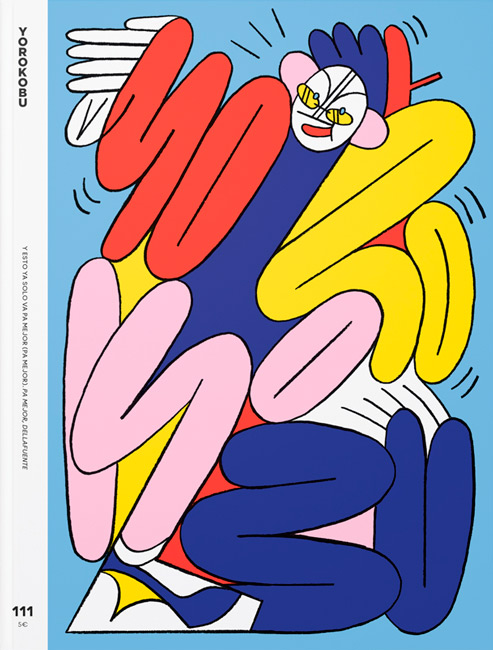
Carmen Reina, “Cabeza casposa, poco piojosa”, obra seleccionada para la portada de Yorokobu 2019-20

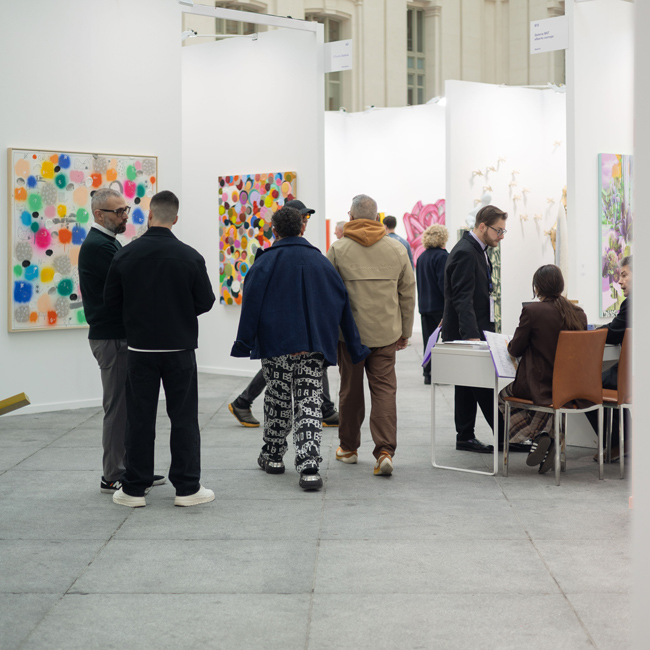
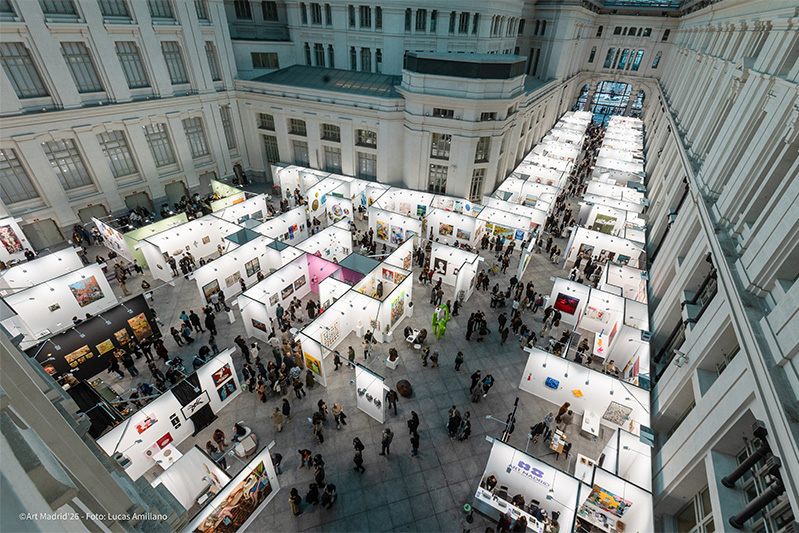
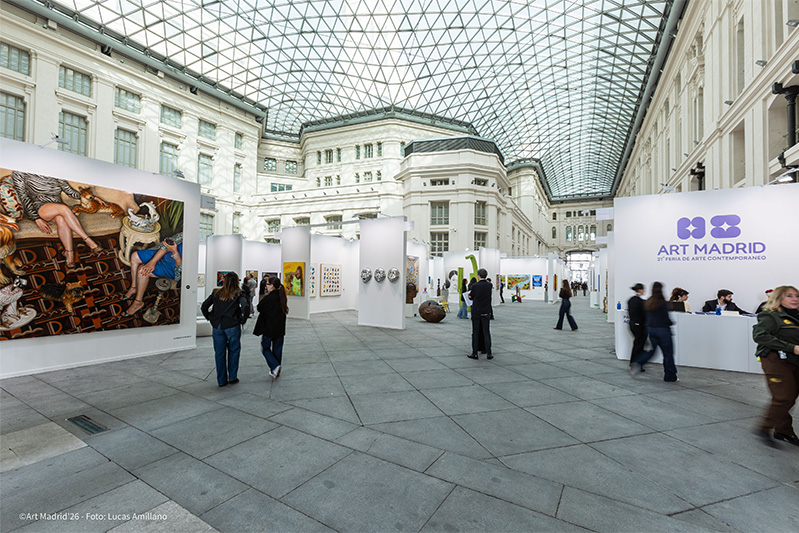
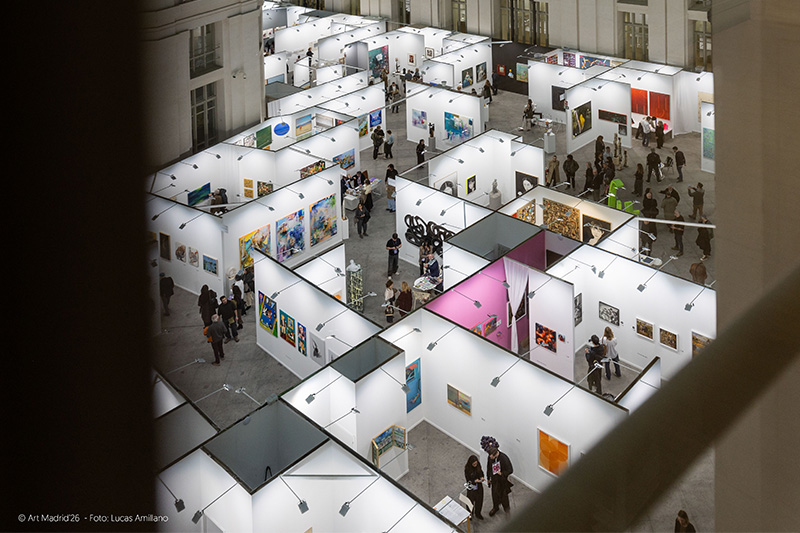
This year, Art Madrid is joining forces with Yorokobu to welcome a group of illustrators and creators who are faithful to the genuine style of this medium which, with a decade under its belt, has managed to carve out a path for itself in the publishing sector, always maintaining the freshness, originality and a small irreverent touch that so characterise its publications. This twinning is also a double celebration, 10 years for Yorokobu and 15 years for Art Madrid, an occasion that deserves to be shared with the public at the height of Art Week in the capital.

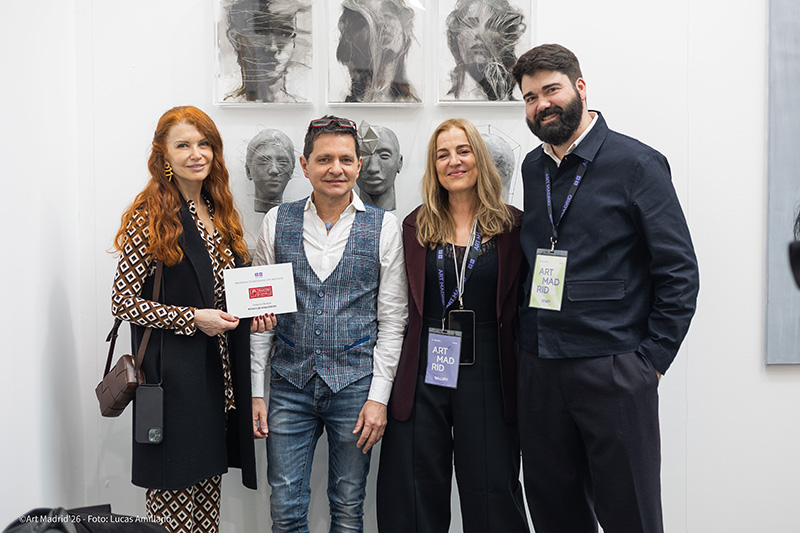
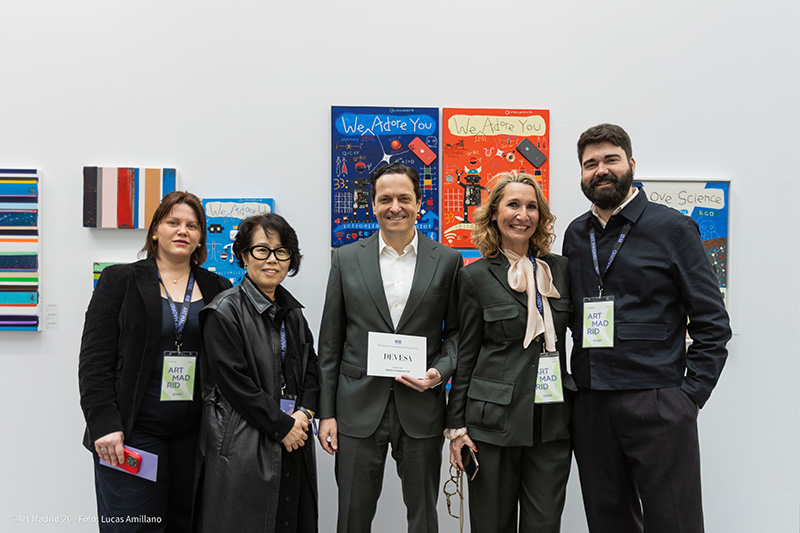
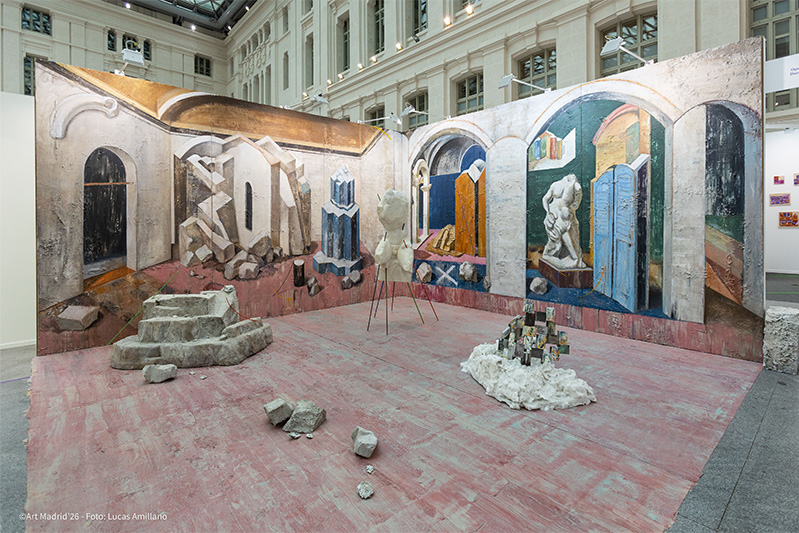
The booth that Yorokobu will have in Art Madrid is a small tribute to the trajectory of the medium, based on the discovery of potential talents, since the two selected artists were and are collaborators of the magazine: Juan Díaz-Faes and Buba Viedma.
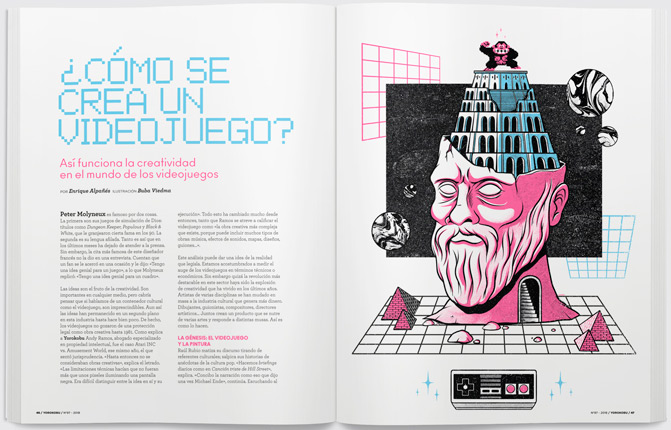
Ilustración de Buba Viedma, 2018

The Asturian Juan Díaz-Faes will present his project Black Faes, the result of an artistic residency promoted by the SOLO Collection within its lines of patronage for visual artists. With the support of SOLO, this creator makes his work available to the public for the first time.

In Black Faes, the artist transfers his classic patterns to pieces which black is the main colour, created with the intention of being shared and enjoyed in domestic spaces.
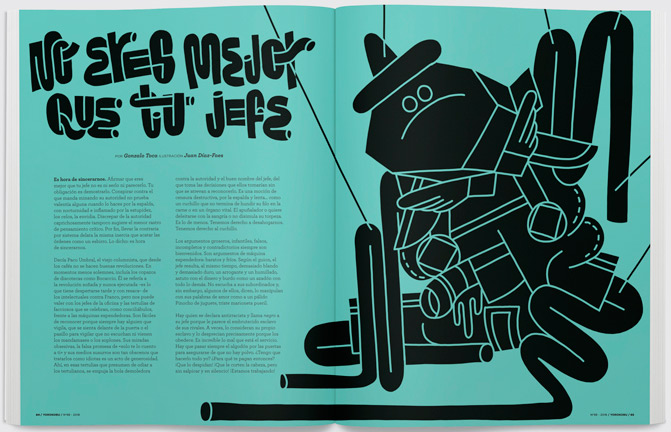
Ilustración de Juan Díaz-Faes, 2018

Each piece has its name and its own history. Tuchelin, Bogey, F.Devillers, Blakinete,Mayan or BlackBoin are part of the gang of geometrical pieces that, thanks to the incorporation of Talavera ceramics, recovered books, woods or canvases, take shape and propose a different story depending on where we look at them from.

The second proposal from Yorokobu comes through Buba Viedma. The illustrations presented by the Madrilenian come subsequently to the series The rabbit and the snake.

Viedma continued investigating in his work about The Symbol and the archetypes of his dreams, about his own and collective unconscious, looking for the way to bring these symbols and their meanings to the new times, but, as he himself explains, "always freaking out about the right thing".


- - - - -

JUAN DÍAZ-FAES
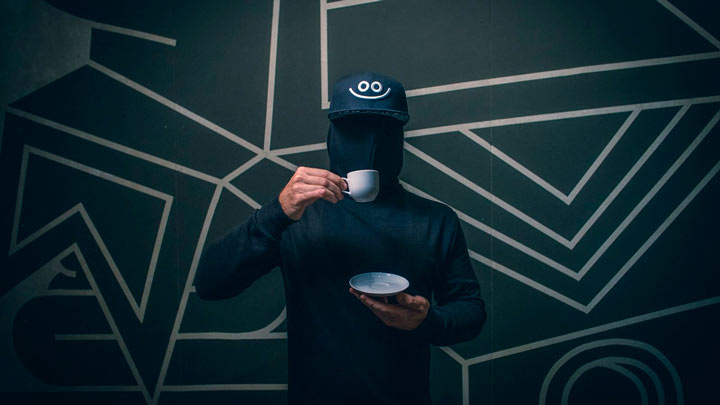
Retrado de Díaz-Faes

Diaz-Faes draws, eats and laughs in equal parts. And if he's quiet, he gets bored. One of Yorokobu's leading illustrators, this Asturian artist, who has developed his career between illustration and muralism, is the author of 10 books and has collaborated with media such as GQ, El País or Ling, among others. He has also worked on campaigns for brands such as San Miguel, Nickelodeon, Ford and Vodafone.


- - - - -

BUBA VIEDMA
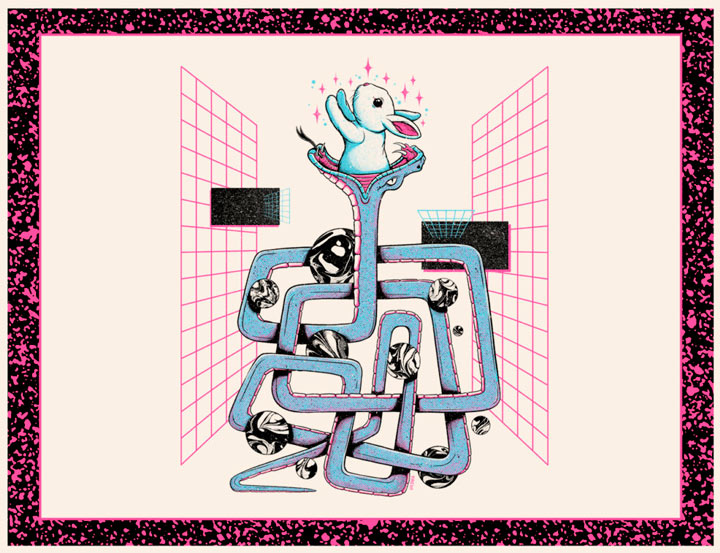
Buba Viedma, "El conejo y la serpiente"

Buba Viedma is an illustrator and graphic designer born in Madrid. He grew up in a neighbourhood where going out into the street after sunset meant going home barefoot, so it was much more practical to stay at home watching cartoons, reading and, of course, drawing.

He had a long mili of printers, studios and advertising agencies. At the same time, he carried out freelance orders for small clients under the umbrella of Mentecalamar Studio. At the beginning of 2014 he decided to bet on the studio and work on his own.

He is a regular contributor to Yorokobu magazine, with whose collaborations he has won two ÑH awards and one APIM prize.

In his free time he cleans his house, does the laundry, cooks and fights against evil, although for the latter he does not have much time left.

Yorokobu will be at stand D6 in Art Madrid'20
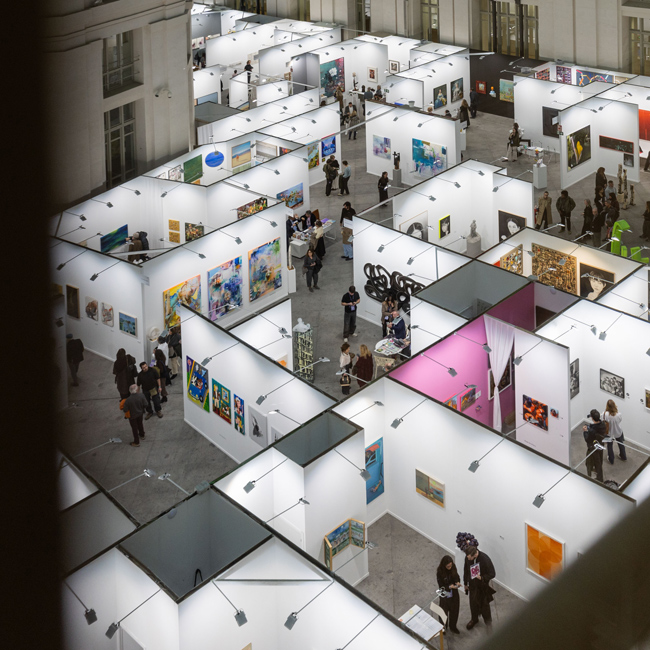


ART MADRID’26 INTERVIEW PROGRAM. CONVERSATIONS WITH ADONAY BERMÚDEZ


The painting of Daniel Bum (Villena, Alicante, 1994) takes shape as a space for subjective elaboration, where the figure emerges not so much as a representational motif but as a vital necessity. The repetition of this frontal, silent character responds to an intimate process: painting becomes a strategy for navigating difficult emotional experiences—an insistent gesture that accompanies and alleviates feelings of loneliness. In this sense, the figure acts as a mediator between the artist and a complex emotional state, linking the practice of painting to a reconnection with childhood and to a vulnerable dimension of the self.

The strong autobiographical dimension of his work coexists with a formal distance that is not the result of conscious planning, but rather functions as a protective mechanism. Visual restraint, an apparent compositional coolness, and an economy of means do not neutralize emotion; instead, they contain it, avoiding the direct exposure of the traumatic. In this way, the tension between affect and restraint becomes a structural feature of his artistic language. Likewise, the naïve and the disturbing coexist in his painting as inseparable poles, reflecting a subjectivity permeated by mystery and unconscious processes. Many images emerge without a clearly defined prior meaning and only reveal themselves over time, when temporal distance allows for the recognition of the emotional states from which they arose.


The Long Night. Oil, acrylic, and charcoal on canvas. 160 × 200 cm. 2024.


The human figure appears frequently in your work: frontal, silent, suspended. What interests you about this presence that seems both affirmative and absent?

I wouldn’t say that anything in particular interests me. I began painting this figure because there were emotions I couldn’t understand and a feeling that was very difficult for me to process. This character emerged during a very complicated moment in my life, and the act of making it—and remaking it, repeating it again and again—meant that, during the process, I didn’t feel quite so alone. At the same time, it kept me fresh and connected me to an inner child who was broken at that moment, helping me get through the experience in a slightly less bitter way.


Santito. Acrylic and oil on canvas. 81 × 65 cm. 2025.


There is a strong affective dimension in your work, but also a calculated distance, a kind of formal coldness. What role does this tension between emotion and restraint play?

I couldn’t say exactly what role that tension plays. My painting is rooted in the autobiographical, in memory, and in situations I have lived through that were quite traumatic for me. Perhaps, as a protective mechanism—to prevent direct access to that vulnerability, or to keep it from becoming harmful—that distance appears unconsciously. It is not something planned or controlled; it simply emerges and remains there.


Night Painter. Acrylic on canvas. 35 × 27 cm. 2025.


Your visual language oscillates between the naïve and the unsettling, the familiar and the strange. How do these tensions coexist for you, and what function do they serve in your visual exploration?

I think it reflects who I am. One could not exist without the other. The naïve could not exist without the unsettling; for me, they necessarily go hand in hand. I am deeply drawn to mystery and to the act of painting things that even I do not fully understand. Many of the expressions or portraits I create emerge from the unconscious; they are not planned. It is only afterwards that I begin to understand them—and almost never immediately. A considerable amount of time always passes before I can recognize how I was feeling at the moment I made them.


Qi. Acrylic on canvas. 81 × 65 cm. 2025.


The formal simplicity of your images does not seem to be a matter of economy, but of concentration. What kind of aesthetic truth do you believe painting can reach when it strips itself of everything superfluous?

I couldn’t say what aesthetic truth lies behind that simplicity. What I do know is that it is something I need in order to feel calm. I feel overwhelmed when there are too many elements in a painting, and I have always been drawn to the minimal—to moments when there is little, when there is almost nothing. I believe that this stripping away allows me to approach painting from a different state: more focused, more silent. I can’t fully explain it, but it is there that I feel able to work with greater clarity.


Crucifixion. Acrylic on canvas. 41 × 33 cm. 2025.


To what extent do you plan your work, and how much space do you leave for the unexpected—or even for mistakes?

I usually feel more comfortable leaving space for the unexpected. I am interested in uncertainty; having everything under control strikes me as rather boring. I have tried it on some occasions, especially when I set out to work on a highly planned series, with fixed sketches that I then wanted to translate into painting, but it was not something I identified with. I felt that a fundamental part of the process disappeared: play—that space in which painting can surprise even myself. For that reason, I do not tend to plan too much, and when I do, it is in a very simple way: a few lines, a plane of color. I prefer everything to happen within the painting itself.