Art Madrid'26 – EVERYTHING IS READY FOR THE 14TH EDITION OF ART MADRID!

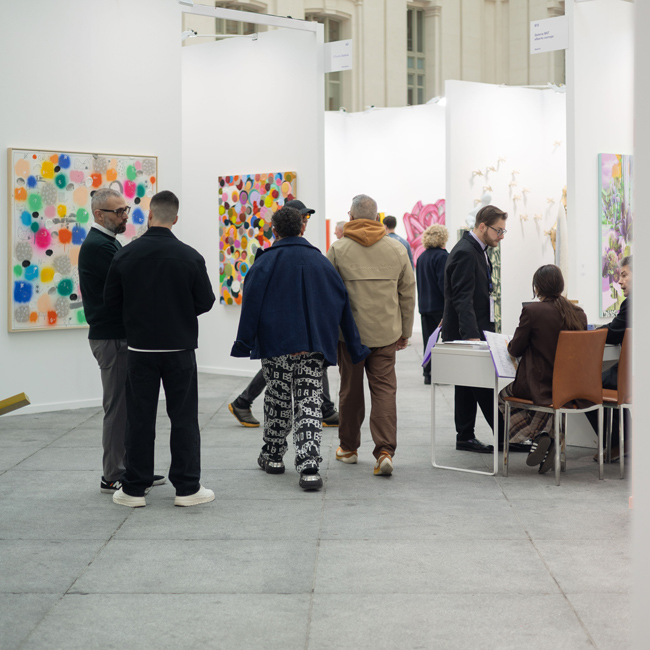
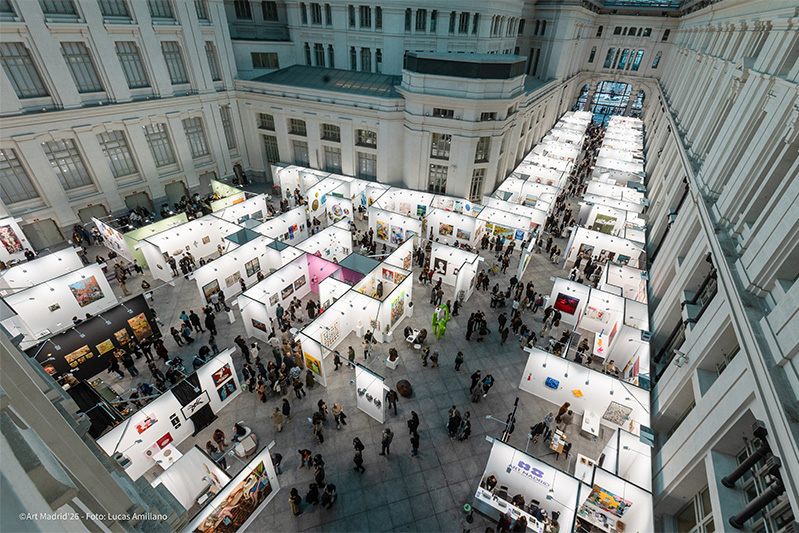
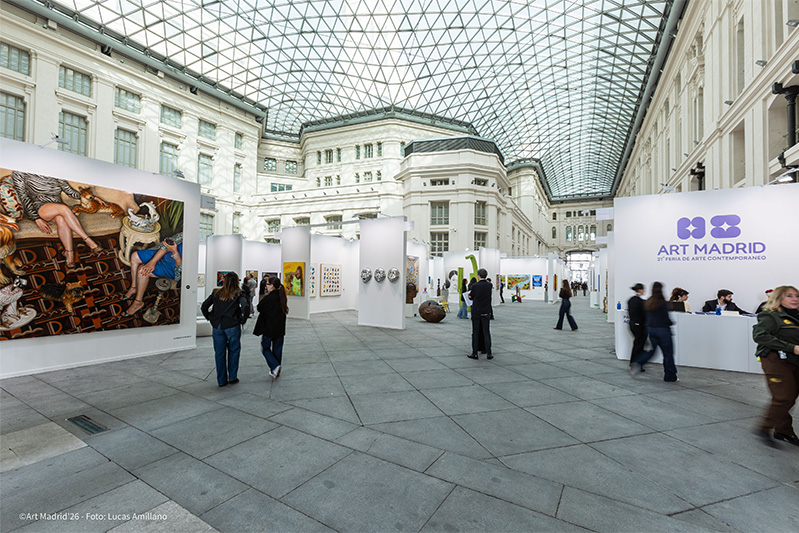
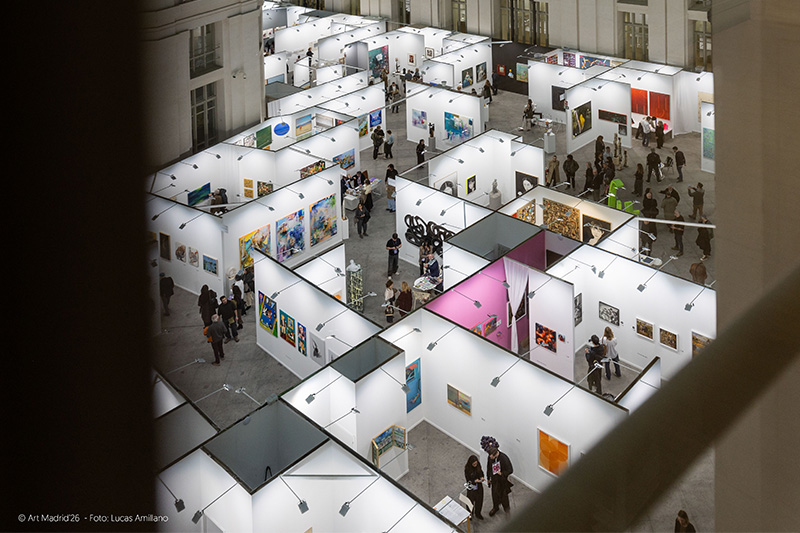
Everything is ready for celebrating Art Madrid'19! All is prepared for the inauguration of the 14th edition: painting, sculpture, photography, video art, performance or more hybrid arts; the most international edition is coming!
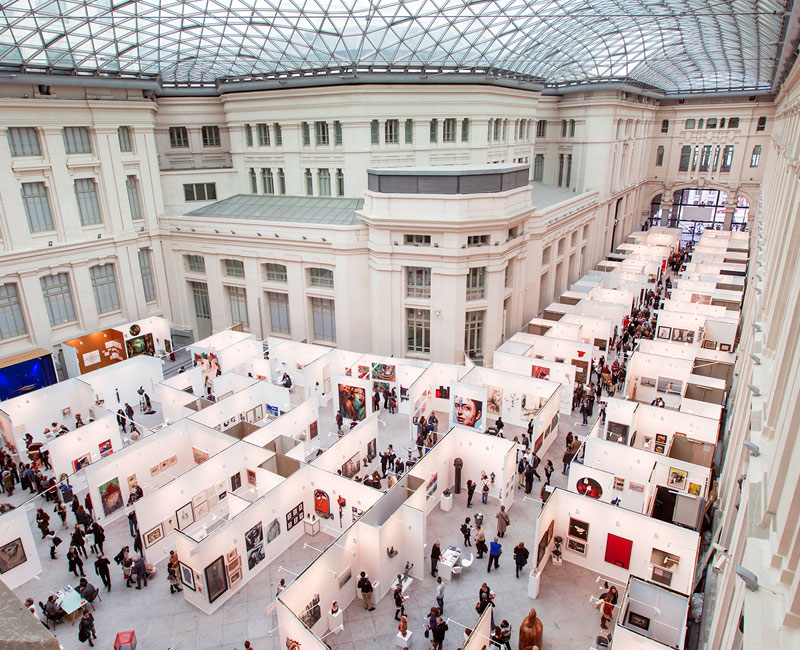
This year, the wide and varied proposal of Art Madrid stands out for the remarkable international character. In this sense, Art Madrid presents a unique perspective of the South American art scene, highlighting certain proposals such as the collective O-Art Project, Collage Habana, Zielinsky or Kreisler. Also, the South African and French-African tendencies are singularly represented this year, with artists from different origins and selections such as the Oda Gallery or Norty galleries will present.
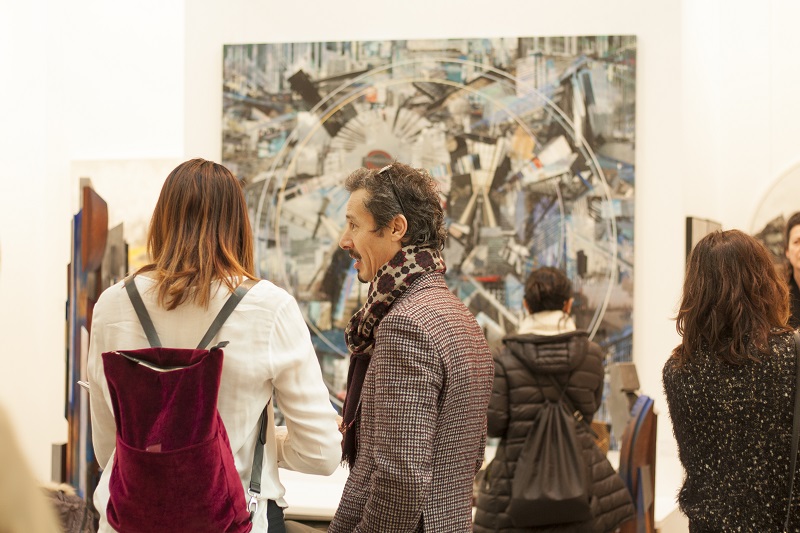
Photo: Ester Arteaga.

Some countries especially represented through their artists are Germany, Portugal, France, the United States or Taiwan. New visions that the audience can discover in São Mamede, Schmalfuss, Robert Dress, Paulo Nunes, Barrou Planquart, Hispánica o Yiri Arts’ booths. Other galleries’ proposals are very international, such as the Art Lounge, the MH Art Gallery, 3 punts or the BAT Alberto Cornejo Gallery. The selections by Marita Segovia, Lola & the Unicorn, Montsequi o Víctor Lope galleries stand out as well.
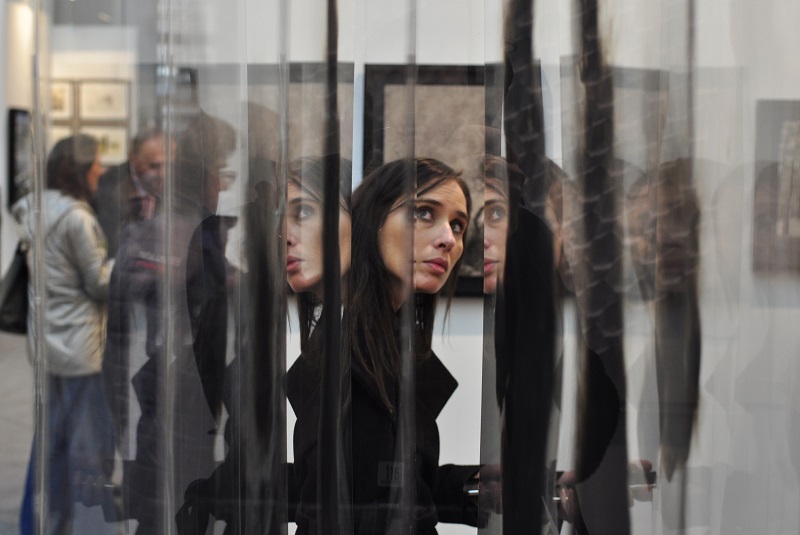
Photo: Miguel Ángel Satue.

As always, the national creation is one of the strong points of the fair, showcasing an exceptional overview of current Spanish art, as shown by Miquel Alzueta, Rodrigo Juarranz, Aurora Vigil-Escalera, Espiral, Fucking Art, Luisa Pita, Arancha Osoro, Moret Art, Alba Cabrera, Bea Villamarín, Shiras, Cornión, Jorge Alcolea or Kur Art proposals.
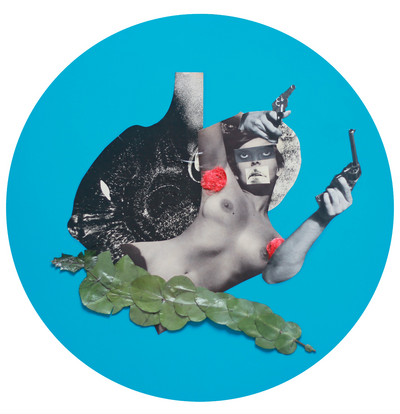
Manuela Eichner

Pistoeira, 2018

Collage on wood

50 x 50cm

Once again Art Madrid presents the ONE PROJECT program, conceived to support and promote young artists whose careers are in an initial or intermediate state. The project takes place in a curated proposal within the fair in which the works of the creators are presented in a solo show format while maintaining a unitary vision. This year, one of the great updates of the program is the incorporation of Nerea Ubieto, art critic and curator who presents a new proposal led only by female artists. This choice, as stated by Ubieto, is based “on the eagerness to level an unstable balance in which female participation in art fairs is still today unfair”.
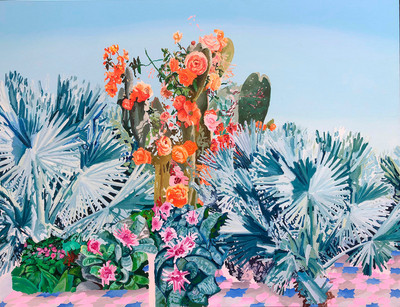
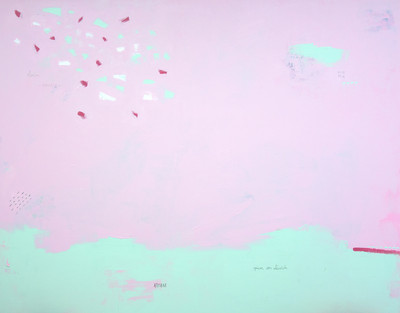
Alejandra Atarés

Palmeras Azules, 2018

Oil and acrylic on linen

114 x 146cm

Virginia Rivas

Atisbar, 2018

Acrylic and graphite on canvas

146 x 114cm

Under the title "Ficciones, máscaras y paisajes: el color como telón de fondo", 7 artists feature specific proposals for the fair in which the international presence stands out again. As the curator explains, the works invite us to build our own universes, because "through creation, we can get rid of the burdens that slow down the development of society, dissolve stereotypes, invent new ones, own what we want to change and, effectively, transform it. No limits are worth having, just more or less believable masks; only colour with a more or less positive charge”.

The authors of the interventions and works presented are Rūta Vadlugaitė (represented by Contour Art Gallery, Vilna), Virginia Rivas (DDR Art Gallery, Madrid), Mara Caffarone (Granada Gallery, Comuna), Nuria Mora (About Art, Lugo), Sofía Echeverri (Flux Zone, Ciudad de México), Manuela Eichner (RV Cultura e Arte, Salvador) y Alejandra Atarés (Víctor Lope Arte Contemporáneo, Barcelona).
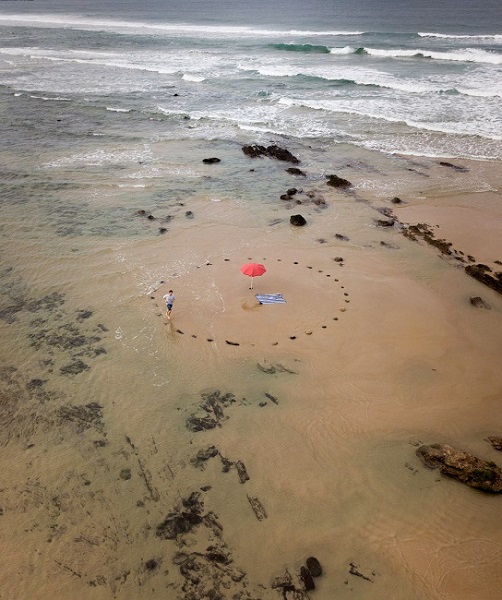
Rubén Martín de Lucas, "República # 12" image, 2019.

Another of the great news of this edition is related to the Guest Artist, Rubén Martín de Lucas, a multidisciplinary creator who, after his step as co-founder of the collective Boa Mistura, continued his solo career with a line of work on the relationship between the individual and the territory. Martín de Lucas features new works from the “Repúblicas Mínimas” series, within the celebrated “Stupid Borders” project: an exciting work to reflect on the geopolitical borders and the sense of ownership under a look both critical and poetic. This series will be presented in a new outstanding format at Art Madrid.
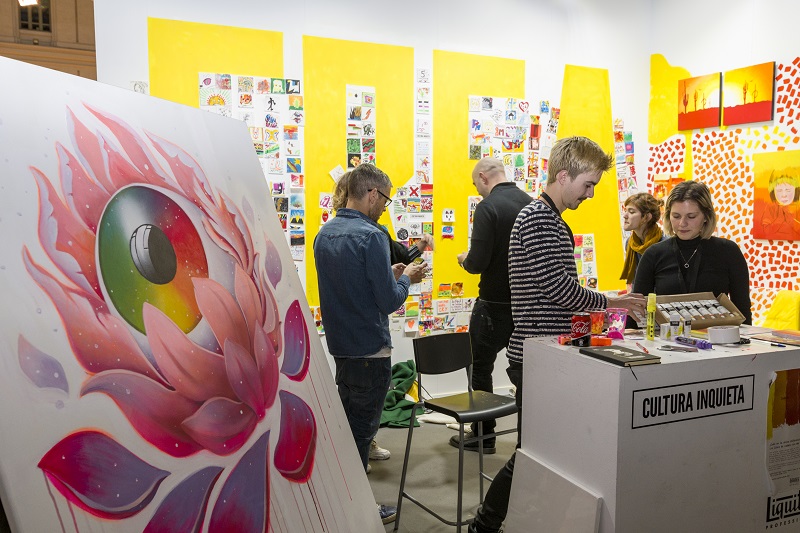
Foto. Perucha.

Also, Art Madrid'19 visitors will be surprised by the different participatory actions that they will discover at the booth of Cultura Inquieta, official media partner of this edition. Also, you can take a break, enjoy a craft beer and comment on everything seen at the fair, in the space that Cervezas La Virgen will have in the Lounge area. For their part, at the VEGAP spot they will be able to see the extensive work carried out by this organisation: from the management in Spain of the Intellectual Property rights of the visual creators, representing more than 150,000 artists from 46 countries, to the development of projects such as the VEGAP Image Bank, the "Proposals" annual contest or the "Art and Law" Publishing Collection.

In short, Art Madrid'19 is once again a great opportunity to approach an excellent panorama of the contemporary creation, with a wide and varied proposal that stands out for its increasingly international character and its permanent commitment to young creators and forms of newest creation. Don’t miss the new edition of Art Madrid, the most friendly art fair that includes everyone!
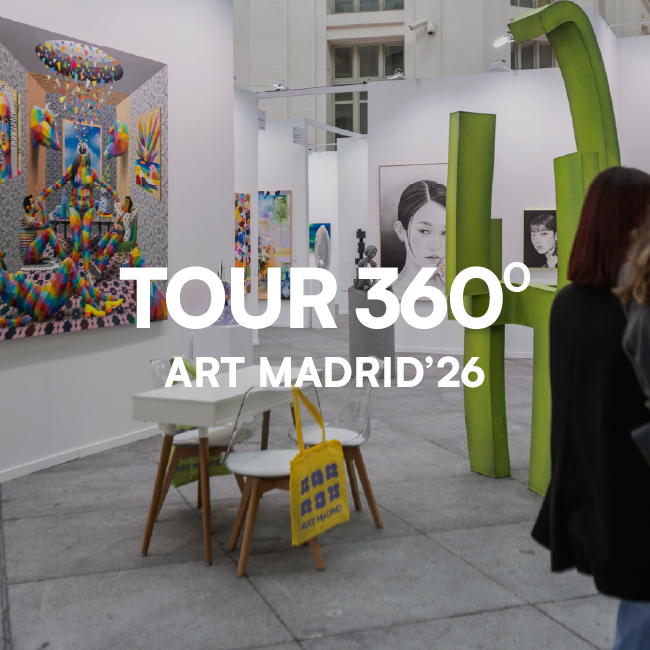


ART MADRID’26 INTERVIEW PROGRAM. CONVERSATIONS WITH ADONAY BERMÚDEZ


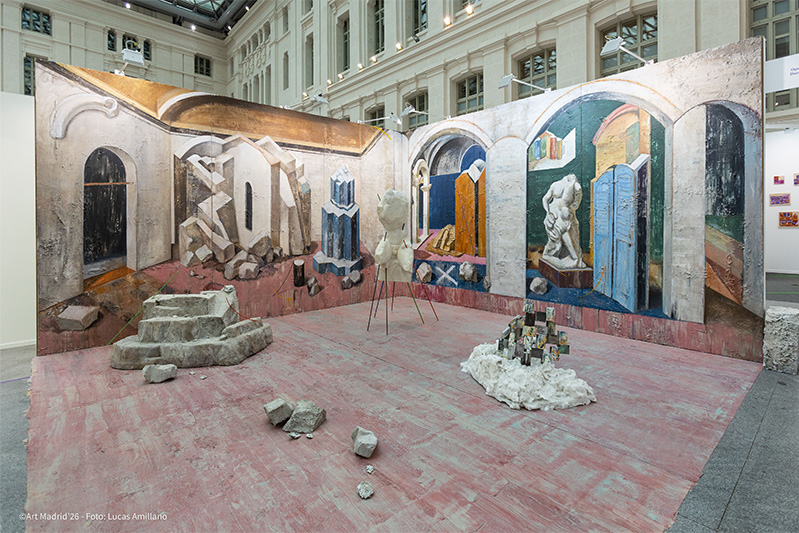
The work of Cedric Le Corf (Bühl, Germany, 1985) is situated in a territory of friction, where the archaic impulse of the sacred coexists with a critical sensibility characteristic of contemporary times. His practice is grounded in an anthropological understanding of the origin of art as a foundational gesture: the trace, the mark, the need to inscribe life in the face of the awareness of death.

The artist establishes a complex dialogue with the Spanish Baroque tradition, not through stylistic mimicry, but through the emotional and material intensity that permeates that aesthetic. The theatricality of light, the embodiment of tragedy, and the hybridity of the spiritual and the carnal are translated in his work into a formal exploration, where underlying geometry and embedded matter generate perceptual tension.

In Le Corf’s practice, the threshold between abstraction and figuration is not an opposition but a site of displacement. Spatial construction and color function as emotional tools that destabilize the familiar. An open methodology permeates this process, in which planning coexists with a deliberate loss of control. This allows the work to emerge as a space of silence, withdrawal, and return, where the artist confronts his own interiority.


The Fall. 2025. Oil on canvas.195 × 150 cm.


In your work, a tension can be perceived between devotion and dissidence. How do you negotiate the boundary between the sacred and the profane?

In my work, I feel the need to return to rock art, to the images I carry with me. From the moment prehistoric humans became aware of death, they felt the need to leave a trace—marking a red hand on the cave wall using a stencil, a symbol of vital blood. Paleolithic man, a hunter-gatherer, experienced a mystical feeling in the presence of the animal—a form of spiritual magic and rituals linked to creation. In this way, the cave becomes sacred through the abstract representation of death and life, procreation, the Venus figures… Thus, art is born. In my interpretation, art is sacred by essence, because it reveals humankind as a creator.


Between Dog and Wolf II. 2025. Oil on canvas. 97 × 70 cm.


Traces of the Spanish Baroque tradition can be seen in your work. What do you find in it that remains contemporary today?

Yes, elements of the Spanish Baroque tradition are present in my work. In the history of art, for example, I think of Arab-Andalusian mosaics, in which I find a geometry of forms that feels profoundly contemporary. In Spanish Baroque painting and sculpture, one recurring theme is tragedy: death and the sacred are intensely embodied, whether in religious or profane subjects, in artists such as Zurbarán, Ribera, El Greco, and also Velázquez. I am thinking, for example, of the remarkable equestrian painting of Isabel of France, with its geometry and nuanced portrait that illuminates the painting.

When I think about sculpture, the marvelous polychrome sculptures of Alonso Cano, Juan de Juni, or Pedro de Mena come to mind—works in which green eyes are inlaid, along with ivory teeth, horn fingernails, and eyelashes made of hair. All of this has undoubtedly influenced my sculptural practice, both in its morphological and equestrian dimensions. Personally, in my work I inlay porcelain elements into carved or painted wood.


Between Dog and Wolf I. 2025. Oil on canvas. 97 × 70 cm.


What interests you about that threshold between the recognizable and the abstract?

For me, any representation in painting or sculpture is abstract. What imposes itself is the architectural construction of space, its secret geometry, and the emotion produced by color. It is, in a way, a displacement of the real in order to reach that sensation.


The Anatomical Angel. 2013. Ash wood and porcelain. 90 × 15 × 160 cm.


Your work seems to move between silence, abandonment, and return. What draws you toward these intermediate spaces?

I believe it is by renouncing the imitation of external truth, by refusing to copy it, that I reach truth—whether in painting or in sculpture. It is as if I were looking at myself within my own subject in order to better discover my secret, perhaps.


Justa. 2019. Polychrome oak wood. 240 × 190 × 140 cm.


To what extent do you plan your work, and how much space do you leave for the unexpected—or even for mistakes?

It is true that, on occasions, I completely forget the main idea behind my painting and sculpture. Although I begin a work with very clear ideas—preliminary drawings and sketches, preparatory engravings, and a well-defined intention—I realize that, sometimes, that initial idea gets lost. It is not an accident. In some cases, it has to do with technical difficulties, but nowadays I also accept starting from a very specific idea and, when faced with sculpture, wood, or ceramics, having to work in a different way. I accept that.