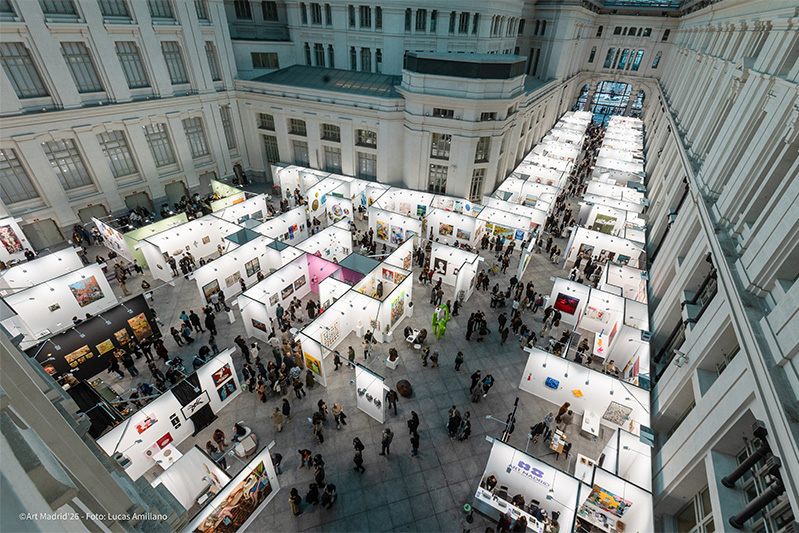
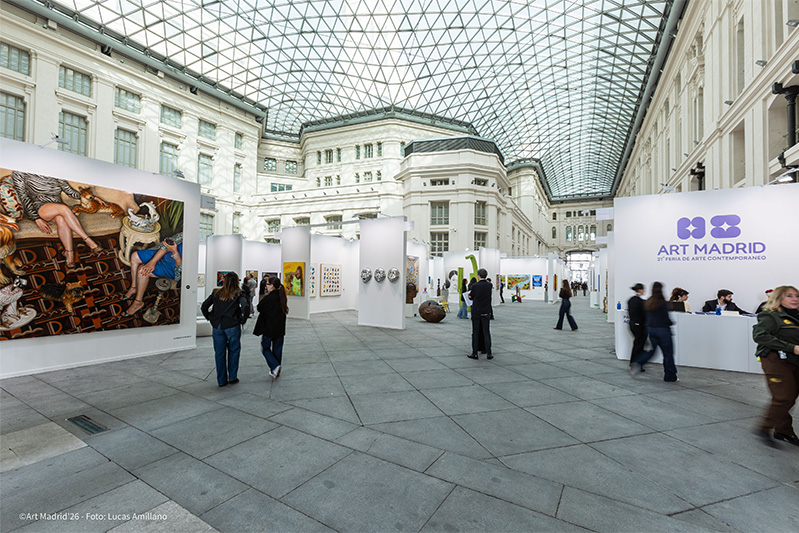
FOREIGN GALLERIES TRUST MORE AND MORE IN ART MADRID
Jan 16, 2018
art madrid
Although the main desire of Art Madrid is the promotion of Spanish contemporary art, it is true that the fair has become the favorite setting for many foreign galleries to show their proposals. And they come from Germany, France, China, Mexico or Ukraine. To all of them, thanks for the trust.
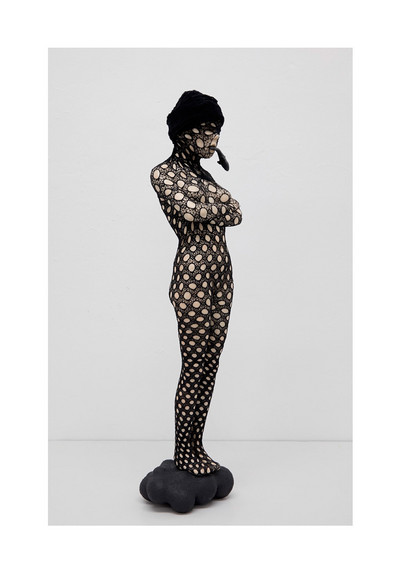
The Schmalfuss gallery (Berlin, Germany) is one of the veterans of Art Madrid, a fair in which it has already participated eight times. Originally founded in Marburg in 1998 and with a second location in Berlin since 2011, it is directed by Michael W. Schmalfuß and Liane von Plessen who have brought to our fair the influences of northern Europe linked to its most characteristic lines, realism, figurative painting and sculpture. Schmalfuss gallery represents artists whose work, through individual expression, is an example of the artistic transition from the 20th to the 21st century, building bridges towards the future. In Art Madrid'18 they participate with the work of Oliver Czarnetta, Jürgen Paas, Willi Siber, Luzia Simons and Veronika Veit.
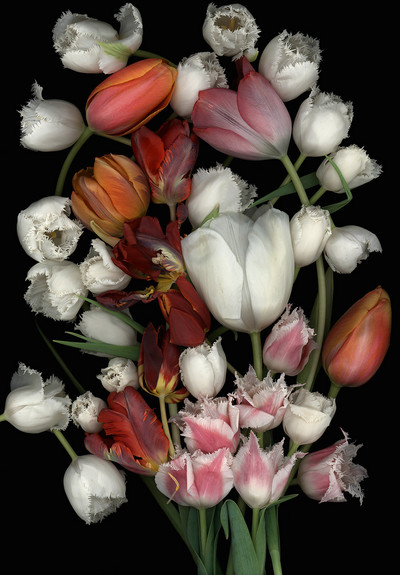
We highlight among them Luzia Simons, dedicated to the construction of images through photography and video as well as performance and installations. More than a decade ago she began to use the scanner as a working tool and she developed her own mode of production with which she achieved the representation of the object with a lot of detail and sharpness, almost getting to dissect the poetics of the forms.
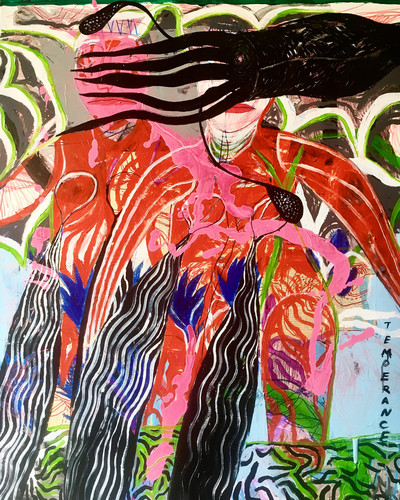
Another of the galleries that works on Art Madrid for years is the Parisian Norty (Carrières-sur-Seine, France), directed by Dominique Guerin. And it is a very pleasant surprise because his style, heartbreaking and raw, has always been one of the most risky at the fair and, nevertheless, it has seduced collectors, being one of the obligatory stops for connoisseurs. The Norty gallery was founded in 2013 and represents emerging artists, mainly painters, selected for their committed and risky work, dedicating itself enthusiastically to its international projection. Norty promotes a new vision about the art world, proposing Expressionism and Art Brut as a new artistic line. On this occasion they present the recent work of Rusudan Khizanishvili, L'homme Jaune, Adlane Samet, Carmen Selma and Pierre Sgamma.
On other occasions we have highlighted the work of the Spanish Carmen Selma, so this time we will talk about another woman, Rusudan Khizanishvil, a young artist who works in Tbilisi, capital of Georgia. With influences from great artists such as Gauguin and Cézanne, the work of Khizanishvili visibly recognizes the history of painting and the works of the great masters. Her brilliant use of color, combined with a palpable and sensual handling of oil painting, demonstrates her enormous pictorial maturity. "The canvas - explains the artist- is a way of escape or connection with the world of my imagination. I see the canvas as a door. I create interdimensional portals in my painting, and I use the image of animals as a symbolic key between cultures, nations and identities. My animals are a reflection of past life to the present."
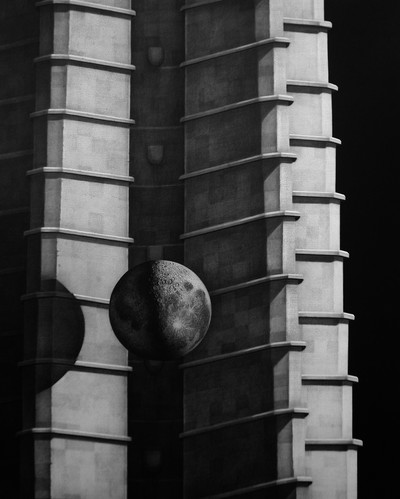
From Cuba, the Collage Habana Gallery (Havana, Cuba) visits us for the 8th year. Directed by Eduardo Pupo Laffita, Collage Habana is the gallery that leads the promotion and commercialization of the Visual Arts within the Cuban Fund of Cultural Assets. Through the network of galleries that operate under its direction, it brings together a diverse group of creators, from national awards such as Manuel Mendive and Roberto Fabelo, to novel artists who win each year the Post-it contest, designed for emerging creators. In this sense, they are responsible for the diffusion of the aesthetic plurality of Cuban art.
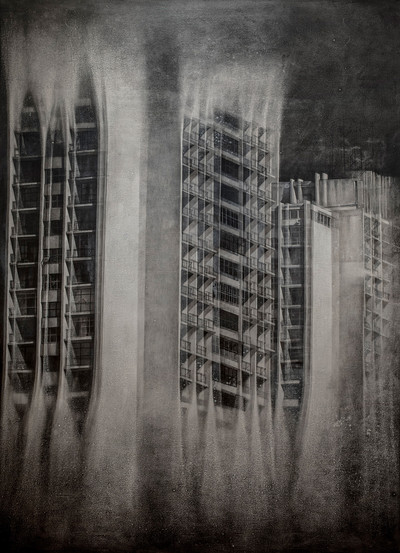
For this edition of Art Madrid the gallery has decided to bet on the work of three young artists: Roldán Lauzán Eiras, Andy Llanes Bultó and Daniel R. Collazo. Their works share technical skill in the treatment of drawing and painting, and even though they are different from each other, they coexist harmonically in the same space. We stayed this time with the spectacular charcoals of Daniel Rodríguez Collazo, city and country landscapes, unstructured as a kaleidoscope in grayscale.
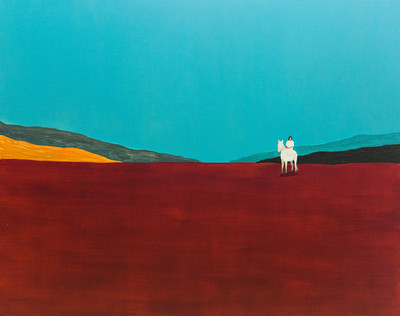
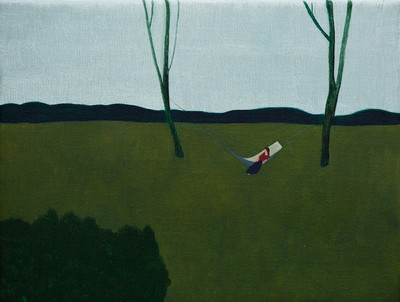
Yiri Arts (Taipei, Taiwan), with Orton Huang as director, was founded in 2014 with the spirit of creating a "Museum of everyday art" for art to enter and enrich the lives of people. Through curating, exhibitions, publications and attendance at international art fairs, the gallery presents inspiring works full of vitality. They have 3 locations but, in addition, it has four multidisciplinary venues in Taipei that combine art, books and gastronomy. At Art Madrid, they participate with the work of Taiwanese artist Lai Wei-Yu and one of our favorite artists, the Catalan Guim Tió Zarraluki.
Guim treats human beings with humor, irony and a strong degree of provocation, reflection of a society full of taboos and subjected to the visual tyranny of television, advertising and of course, fashion magazines. From his intervened portraits, stained and veiled, he now moves to almost empty landscapes, huge plains of pure color in which the human figure is a milestone due to its absolute presence and concomitant fragility.
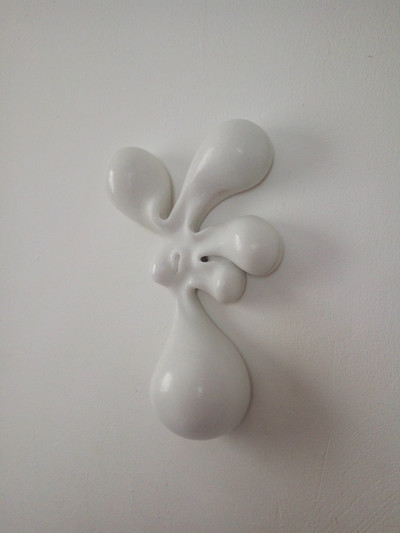
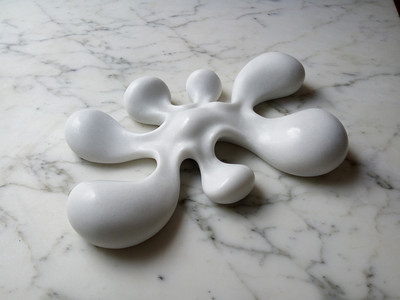
This group of galleries are joined this year witn newcomers such as the German gallery Robert Drees (Hannover), currently the most important contemporary art gallery in the state capital of North Germany. Robert Dress is located in an impressive industrial space of more than 300 square meters and its program is oriented towards artists already established in the international art market and emerging talents, to which they dedicate collective exhibitions that connect classical media such as painting and sculpture with photography, video and installation art. In Art Madrid'18 they present works by Sabine Dehnel, Mikael Fagerlund, Jürgen Jansen, Pepa Salas Vilar and Venske & Spänle.
To the Spanish Pepa Salas, to her almost monochromatic scenes, apparently innocent between realism and surreal fiction, we have already referred to on other occasions (outstanding projects of Art Madrid'18) so we will now highlight Venske & Spänle, artists duo formed by Julia Venske and Gregor Spänle, known for their Smörfs, sculptures made of marble capable of transmitting movement and life. The material adopts light shapes and appears malleable and soft, light and fluid. Venske and Spänle have held numerous solo and group exhibitions in Germany, Spain, the United States and Denmark.
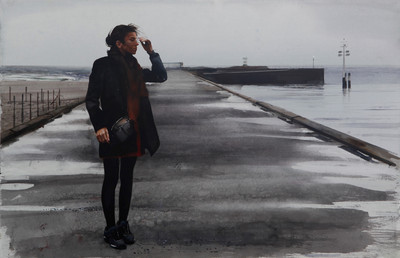
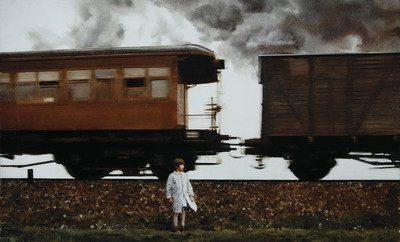
Nebo Art Gallery, from Kyiv, Ukraine, is directed by Valeriia Ivanova and represents artists from Ukraine, Russia, Belarus, Georgia, the Czech Republic, the Netherlands and the United States. It has become a platform for independent projects in two branches, NEBO BOOKLAB PUBLISHING, a publisher specialized in fiction for children, poetry collections and books on art; and NEBO ART SCHOOL, an educational project that brings together painting classes, workshops and excursions in various areas of art. It is one of the most personal proposals of this year's fair, with the painter Andrei Zadorine and his almost photographic paintings in homage to the Spanish filmaker Victor Erice, an exotic and poetic combination.
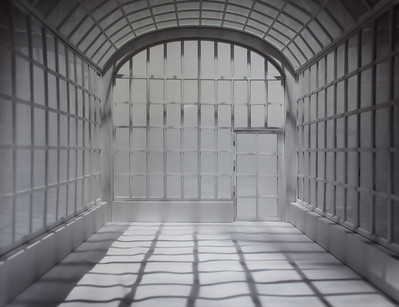
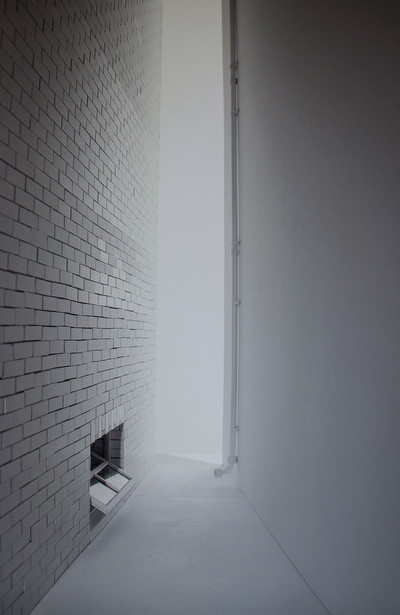
With venues in Cancun (Mexico) and in Havana (Cuba), Alterna Studio gallery is oriented to the support, dissemination and promotion of recently graduated Cuban emerging artists. In Art Madrid we will see the proposal of Carla Maria Bellido de Luna, Linet Sánchez and Yoxi Velázquez, 3 women whose work in different disciplines (photography, sculpture, installation ...) is characterized by the power of their images and their questioning of the status quo. In her painting, Carla María Bellido reflects on concepts such as subjectivity, truthfulness or imagination and wonders what builds us and what precedes us as creators. Yoxi Velázquez uses resin in his human and animal figures to generate questions about injustice, cruelty or abuse. Some of her art pieces for Art Madrid are a collaboration with the artist David Madruga. Linet Sánchez, on the other hand, presents empty and rarefied spaces, models where human presence is felt but not visualized and where only loneliness, isolation and introspection inhabit.
We will dedicate a separate chapter to the galleries that have come from Portugal, to which we have been paying special attention in Art Madrid for years. In Art Madrid'18 we will count on visit the Art Lounge and Art Peripheral galleries, both in Lisbon, and Paulo Nunes Arte Contemporânea, in Vila Franca de Xira. Within the One Project Program, Art Madrid will have the participation of the Portuguese gallery Nuno Sacramento, of Ílhavo, who participates for the second consecutive year in the fair. The foreign representation ends up with the Brazilian RV Cultura e Arte, of Rio de Janeiro and Pantocrator Gallery, based in Suzhou, China.