Art Madrid'26 – NEW HORIZONS: GALLERIES BEYOND EUROPE

Yiri Arts, Oda Gallery, Collage Habana, O-Art Project y Lola & Unicorn Galleries

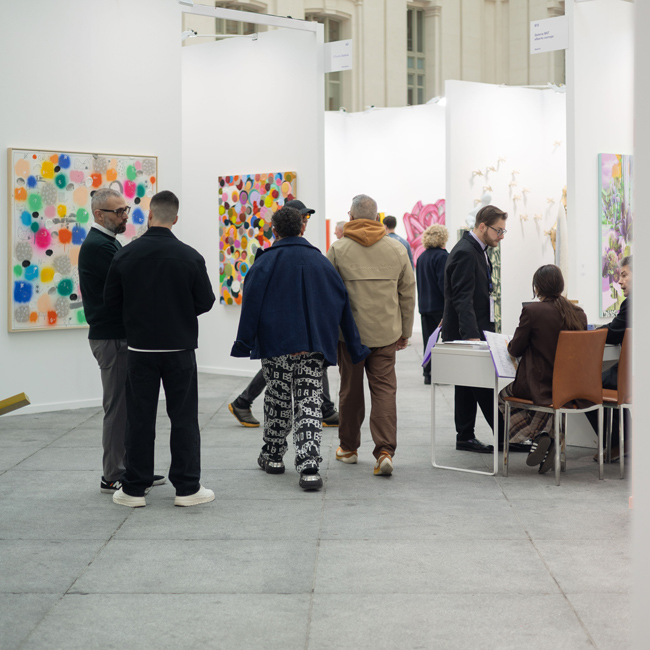
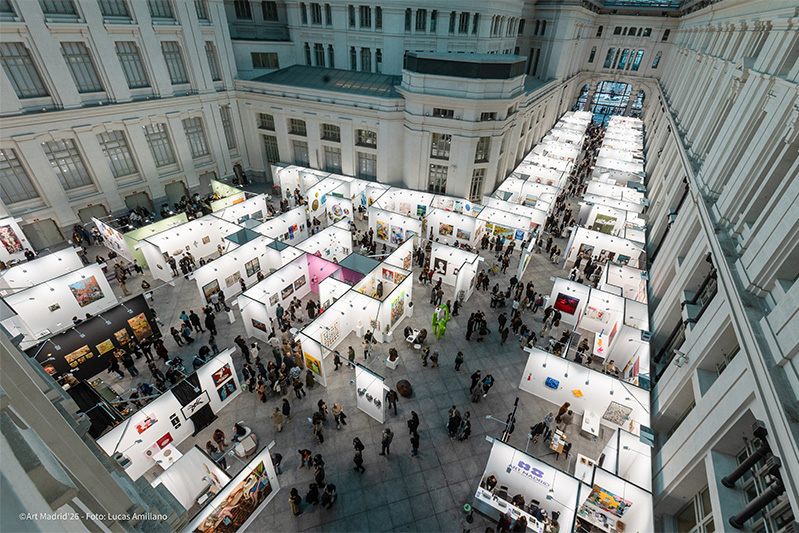
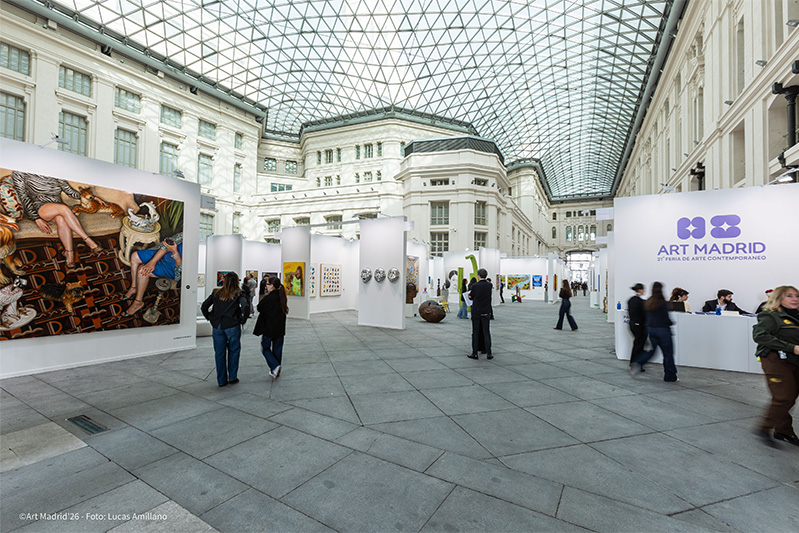
  The fourteenth edition of Art Madrid stands out for its marked international character. Actually, the origin of the participating galleries cross oceans and go far beyond the European continent. Among the foreign participating galleries from the General Program, stand out the Taiwanese Yiri Arts (Taipei), the South African ODA Gallery (Franschhoek), the Cuban Collage Havana (Havana), the Peruvian artistic collective O-Art Project (Lima) and the North American Lola & Unicorn (New York). Galleries also beyond Europe are some of the ones that partake the One Project program: Flux Zone (Mexico City, Mexico), Granada Gallery (Comuna, Argentina) and RV Cultura e Arte (Salvador, Brazil).
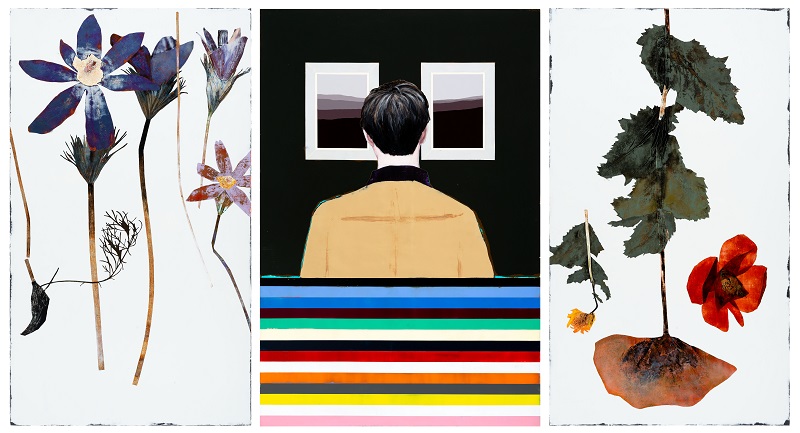
Chen Yun, "The past is like the dust on the plants I collected before", acrylic on canvas, 2018. Yiri Arts.

From Taiwan, they come the proposals of Yiri Arts, works as intimate as vitalist. Chen Yun, the most mysterious of the three artists presented, features some of his latest paintings: compositions organised in a format of diptychs or triptychs in which the states of the inner worlds are revealed. Both human figures, most of them in meditative attitudes, as well as the symbols or the objects that accompany them, reflect veiled narratives. In these stories, it is expressed much more without telling everything because you can feel the inherent tension that underlies in titles such as “Companion. Smeared faces comforting one another, leaning upon each other” (2017) or “The past is like the dust on the plants I collected before” (2018).
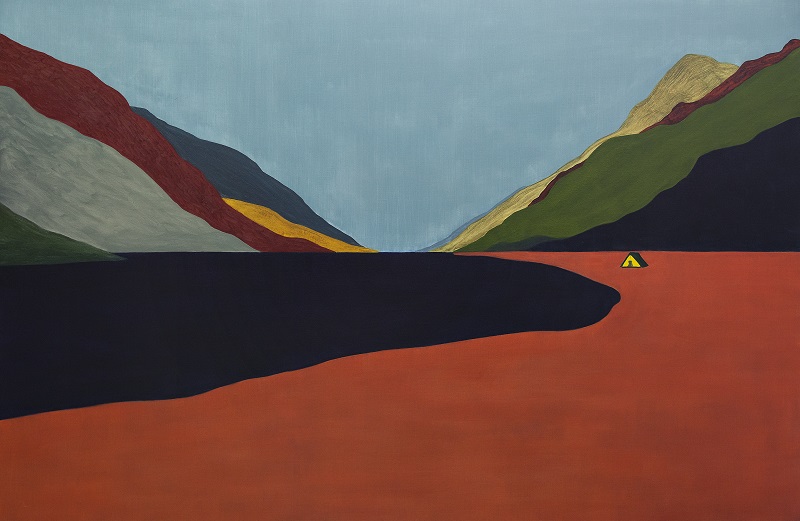
Guim Tió Zarraluki, "Campament", oil on linen, 2018. Yiri Arts.

On the other hand, the most extreme tensions are completely explicit in the works by Lai Wei-Yu, as shown his furious and monstrous figures entwined in eager fights. The contrast reappears in these works through the introduction of vivid and almost playful colours, especially in works like "The Fight" (2018) or "My Family" (2018), where a kind of confetti hides the traces of violence. Yiri closes his proposal for Art Madrid with works by Guim Tió Zarraluki: paintings of large stains of spot colours that offer us a place to stop to reflect; a new space where we can be able to cleanse our corrupted vision by the visual tyranny imposed by the mass media.
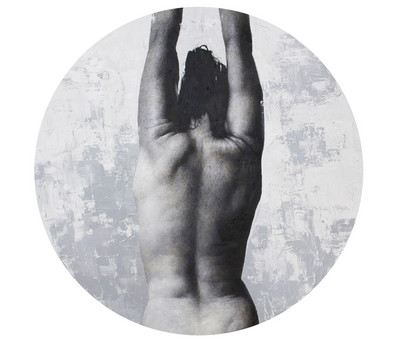
Andy Llanes Bultó

Serie Cuerpo Celeste (II), 2018

Oil on canvas

150 x 150cm

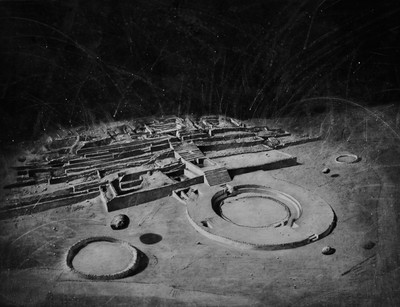
Daniel R. Collazo

De la serie 'Ciudades infinitas', 2018

Charcoal on canvas

100 x 130cm

The proposals of the Collage Habana’s artists stand out for their mastery of pictorial techniques and drawing over colour. It is enough to contemplate the round-format-painting that articulates the series "Celestial Body" or "Levitaciones" (2018) of Andy Llanes Bultó, intimate exercises of anatomy; the charcoal drawings of infinite cities, always exponential, always dystopian, of Daniel R. Collazo; the female, provocative and idealised portraits of Roldán Lauzán Eiras; or the more mature, hybrid investigations of Ernesto Rancaño, games of lights and shadows, dreams and nightmares, which leave a sense of suspicion when contemplating its details.
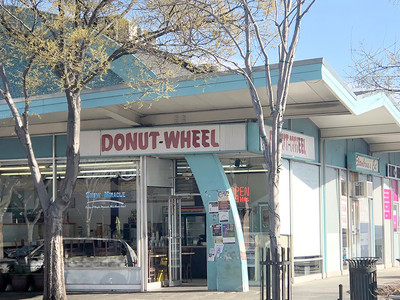
Alessandra Rebagliati

Donut Wheel, 2018

Photography

20 x 70cm

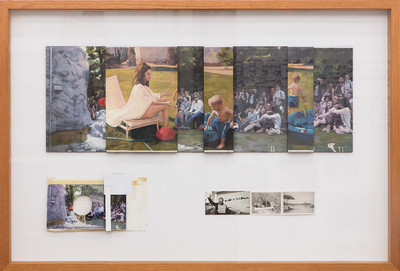
Rocío Gómez

Extrañamiento, 2017

Óleo, collage y foto sobre cartulina

75 x 110cm

In this edition, the interesting Peruvian collective O-Art Project participates for the first time, a project lead by Alessandra Rebagliati, Jessica Schneider, Carolina Bazo and Gianna Pollarolo. The four artists have been carrying out projects for more than two decades. They aim to make visible the different practices and discourses that exist in the Peruvian art scene, managing to transcend and spreading "its roots from a globalised and contemporary perspective". Together with three other artists, they present in Art Madrid a suggestive selection of works, with very different imaginaries and concerns but under a collective vision. The works of these artists stand out for their hybrid and vindictive character, as seen in the works Carolina Bazo or Alessandra Rebagliati, focused on the reconfiguration of the stereotypes associated with women or the power exerted by the patriarchy and capitalist logic in our daily work.
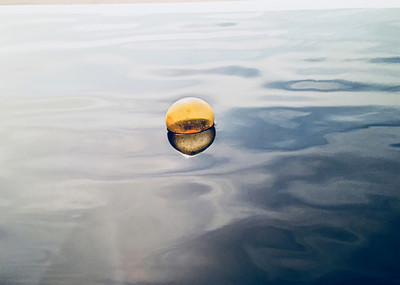
Jessica Schneider

Yellow Capsule, 2017

Photography

35 x 45cm

We will also see the installations of metallic fibres and the transparencies of Cristina Colichón; the attractive works of Jessica Schneider, with her mysterious capsules adrift; or the photographic distortions of Jacques Custer. On the other hand, Gianna Pollarolo works around concepts such as energy, mysticism or the origins of the collective imagination; while Rocío Gómez is more interested in semiotic issues, as shown by the use of multi-vision in her impressive audiovisual works or the enigmatic stagings of painting, collage and photography, as we see in "Extrañamiento" (2017).
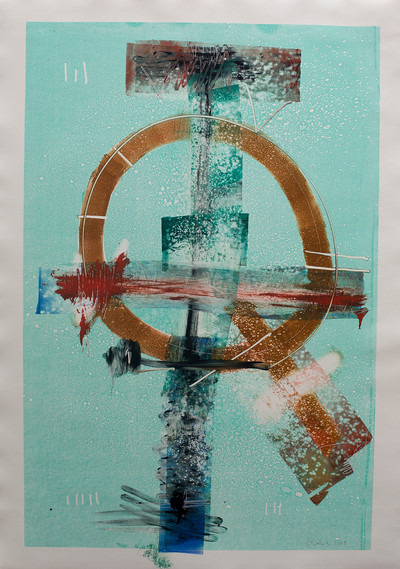
Samson Mnisi

Untitled, 2018

Oil on paper

107 x 78cm

Layziehound Coka

Bring Back The Power, 2018

Mixed media on canvas

250 x 200cm

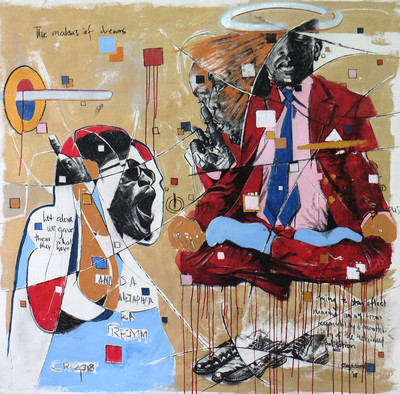
Also for the first time, ODA Gallery participates in Art Madrid, a proposal that will allow us to enter a unique artistic scene of the African continent. We must highlight the oils on paper by Samson Mnisi (Lesotho), a creator whose language of patterns, lines, symbols and colours is as personal as inspiring; the reviews, and updates, of the local shapes and icons made by Jean-Baptiste Djeka (Ivory Coast), in which he combines painting, collage and photo-assembling; and the most critical readings of the sociopolitical state of the African citizen provided by Layziehound Coka (South Africa). ODA Gallery will also present the most traditional and magical paintings of Silas Adelanke Adeoye (Nigeria), geometric figures, flat and colourful, whose masks can lead us to the fascination that so many artists of the Avant-guards felt for the ancient African art.
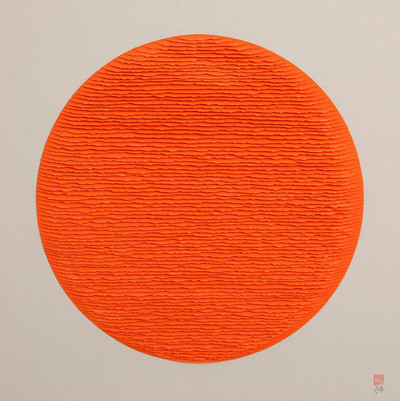
Fernando Daza

Círculo naranja, 2018

Paper torn by hand and glued on fabric

80 x 80cm

Finally, from the heart of New York, comes the wide selection of Lola & the Unicorn. In his space, one can enjoy the abstract explorations of three artists: Bosco Sodi, a great connoisseur of Mexican muralism, whose paintings reflect the connections between the qualities of matter, textures and their echoes in spirituality; and the latest works by the Sevillians Isabelita Valdecasas and Fernando Daza, more material and textural in the paintings of the first one, more geometric and subtle in the fabrics of the latter.
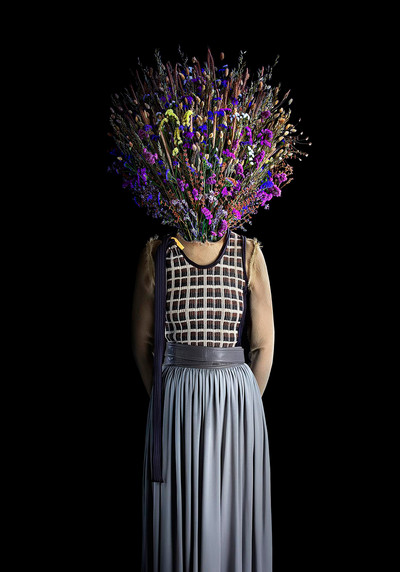
Miguel Vallinas

Raiz 37, 2015

Photography

100 x 70cm

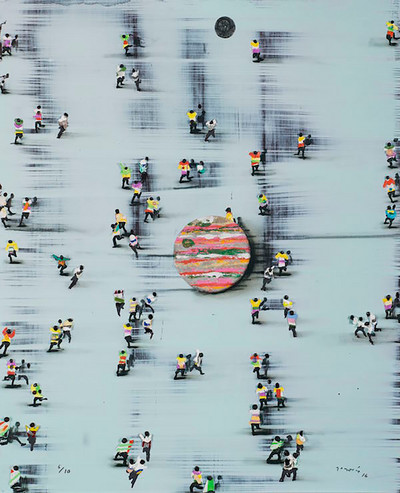
Juan Genovés

Analogía, 2016

Giclee on Hahnemühle paper

74 x 55.5cm

The gallery will also exhibit recent works by one of the great Spanish painters, Juan Genovés - also present in the Aurora Vigil Escalera space. From his characteristic figurative style, so close to the most gestural expressionist abstraction, and using his usual zenith perspectives, one can enjoy the endless crowd scenes which obsess the indefatigable painter that much. In addition, the selection of Lola & Unicorn will include the photographs of Miguel Vallinas, portraits with a marked surrealist character in which he reflects on contemporary identity: "what man wants to be, what he thinks he is, what others think of him and what we really are."
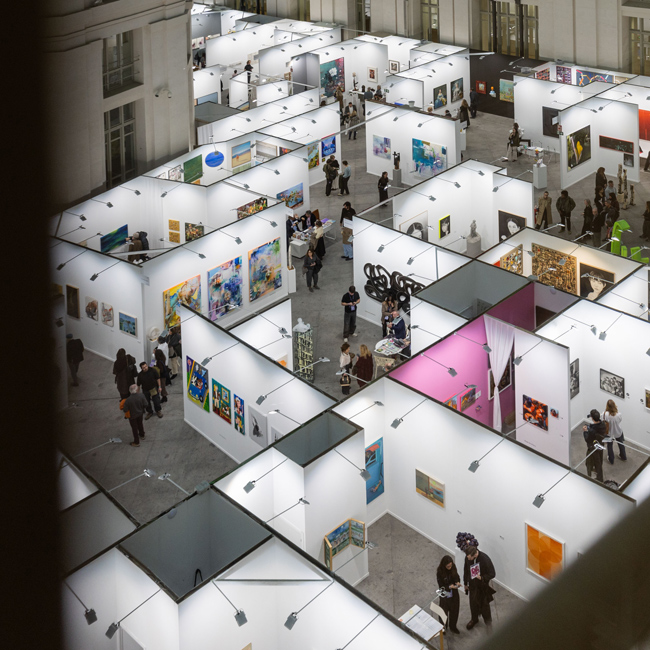
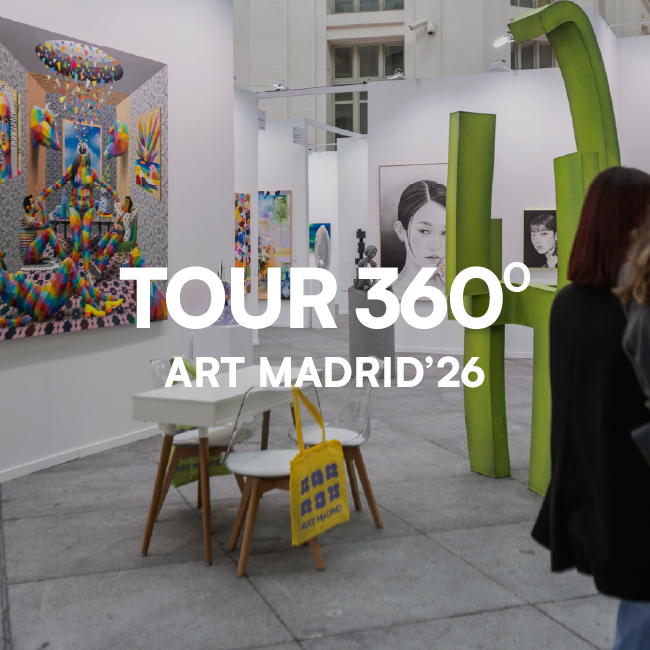
 

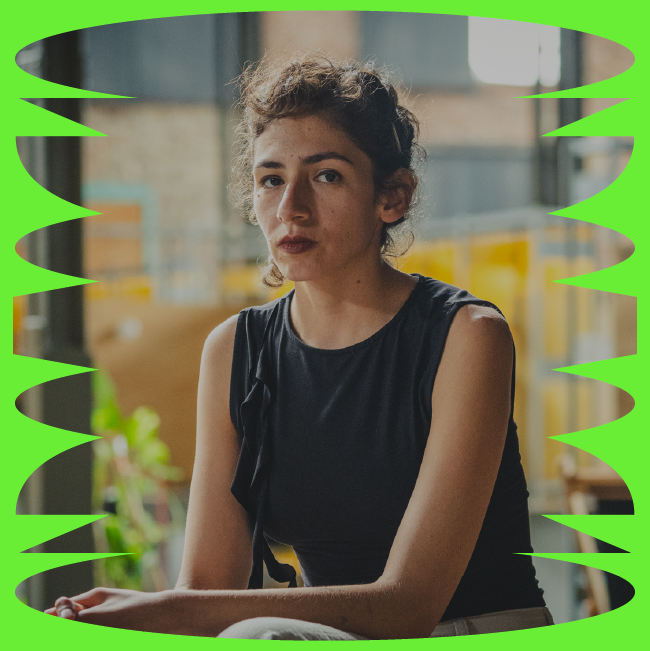
Daniel Barrio. Guest artist of the third edition of OPEN BOOTH. Courtesy of the artist.


DESPIECE. PROTOCOLO DE MUTACIÓN


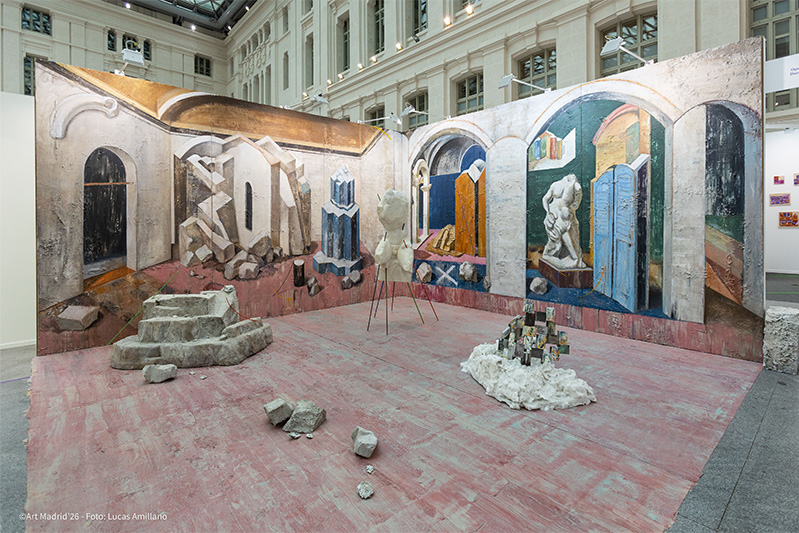
As part of the Art Madrid’26 Parallel Program, we present the third edition of Open Booth, a space conceived as a platform for artistic creation and contemporary experimentation. The initiative focuses on artists who do not yet have representation within the gallery circuit, offering a high-visibility professional context in which new voices can develop their practice, explore forms of engagement with audiences, and consolidate their presence within the current art scene. On this occasion, the project features artist Daniel Barrio (Cuba, 1988), who presents the site-specific work Despiece. Protocolo de mutación.

Daniel Barrio’s practice focuses on painting as a space for experimentation, from which he explores the commodification of social life and the tyranny of media approval. He works with images drawn from the press and other media, intervening in them pictorially to disrupt their original meaning. Through this process, the artist opens up new readings and questions how meaning is produced, approaching painting as a space of realization, therapy, and catharsis.

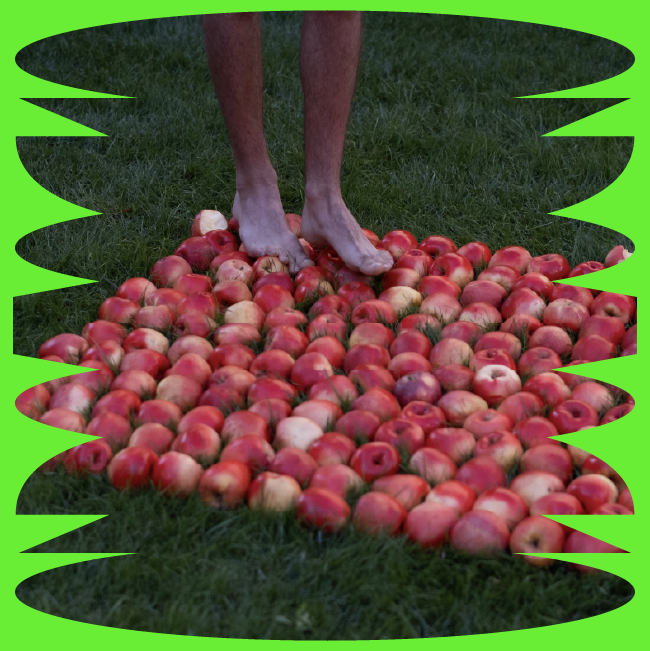
Despiece. Protocolo de mutación is built from urban remnants, industrial materials, and fragments of history, inviting us to reflect on which memories we inherit, which we consume, and which ones we are capable of creating. Floors, walls, and volumes come together to form a landscape under tension, where the sacred coexists with the everyday, and where cracks matter more than perfection.

The constant evolution of art calls for ongoing exchange between artists, institutions, and audiences. In its 21st edition, Art Madrid reaffirms its commitment to acting as a catalyst for this dialogue, expanding the traditional boundaries of the art fair context and opening up new possibilities of visibility for emerging practices.


Despiece. Protocolo de mutación emerges from a critical and affective impulse to dismantle, examine, and reassemble what shapes us culturally and personally. The work is conceived as an inseparable whole: an inner landscape that operates as a device of suspicion, where floors, walls, and volumes configure an ecosystem of remnants. It proposes a reading of history not as a linear continuity, but as a system of forces in permanent friction, articulating space as an altered archive—a surface that presents itself as definitive while remaining in constant transformation.


The work takes shape as a landscape constructed from urban waste, where floors, walls, and objects form a unified body made of lime mortar, PVC from theatrical signage, industrial foam, and offering wax. At the core of the project is an L-shaped structure measuring 5 × 3 meters, which reinterprets the fresco technique on reclaimed industrial supports. The mortar is applied wet over continuous working days, without a pursuit of perfection, allowing the material to reveal its own character. Orbiting this structure are architectural fragments: foam blocks that simulate concrete, a 3D-printed and distorted Belvedere torso, and a wax sculptural element embedded with sandpaper used by anonymous workers and artists, preserving the labor of those other bodies.

A white wax sculptural element functions within the installation as a point of sensory concentration that challenges the gaze. Inside it converge the accumulated faith of offering candles and the industrial residues of the studio, recalling that purity and devotion coexist with the materiality of everyday life. The viewer’s experience thus moves beyond the visual: bending down, smelling, and approaching its vulnerability transforms perception into an intimate, embodied act. Embedded within its density are sanding blocks used by artists, artisans, and laborers, recovered from other contexts, where the sandpaper operates as a trace of the effort of other bodies, following a protocol of registration with no autobiographical intent.

Despiece. Protocolo de mutación addresses us directly, asking: which memory do we value—the one we consume, or the one we construct with rigor? The audience leaves behind a purely contemplative position to become part of the system, as the effort of moving matter, documentary rigor, and immersive materiality form a body of resistance against a mediated reality. The project thus takes shape as an inner landscape, where floor, surface, and volume articulate an anatomy of residues. Adulteration operates as an analytical methodology applied to the layers of urban reality, intervening in history through theatrical and street advertising, architectural remnants, and administrative protocols, proposing that art can restore the capacity to build one’s own memory, even if inevitably fragmented.


ABOUT THE ARTIST

DANIEL BARRIO (1988, Cuba)

Daniel Barrio (Cienfuegos, Cuba, 1988) is a visual artist whose practice articulates space through painting, understanding the environment as an altered archive open to critical intervention. He studied at the Academy of Fine Arts of Cienfuegos (2004–2008), specializing in painting, and later at the Madrid Film School (ECAM, 2012–2015), where he studied Art Direction. His methodology integrates visual thinking with scenographic narrative.

His trajectory includes solo exhibitions such as La levedad en lo cotidiano (Galería María Porto, Madrid, 2023), Interiores ajenos (PlusArtis, Madrid, 2022), and Tribud (Navel Art, Madrid, 2019), as well as significant group exhibitions including Space is the Landscape (Estudio Show, Madrid, 2024), Winterlinch (Espacio Valverde Gallery, Madrid, 2024), Hiberia (Galería María Porto, Lisbon, 2023), and the traveling exhibition of the La Rioja Young Art Exhibition (2022).

A member of the Resiliencia Collective, his work does not pursue the production of objects but rather the articulation of pictorial devices that generate protocols of resistance against the flow of disposable images. In a context saturated with immediate data, his practice produces traces and archives what must endure, questioning not the meaning of the work itself but the memory the viewer constructs through interaction—thus reclaiming sovereignty over the gaze and inhabiting ruins as a method for understanding the present.