Art Madrid'26 – ONE PROJECT PROGRAM, A DIALOGUE, A PAUSE, A REFLECTION

The One Project Program, curated for the fifth consecutive year by Carlos Delgado Mayordomo, has become a true showcase for new talent. These are the 8 projects of the 13th edition of the fair.
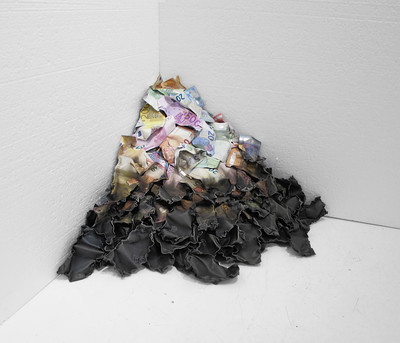
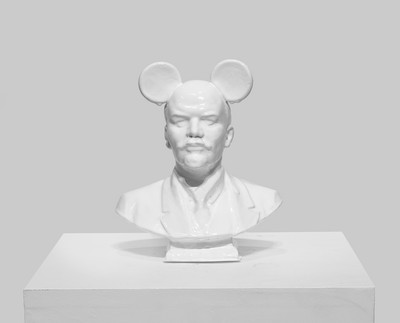
Alejandro Monge

The European Dream 2, 2017

Polychrome galvanized steel

42 x 52cm

Alejandro Monge

Mickey L. Mouse (Age from 2 to 99), 2015

Polyurethane resin

19 x 10cm

Alejandro Monge, Candela Muniozguren, Antonyo Marest, Carlos Nicanor, Bernardo Medina, Jugo Kurihara, Aina Albo Puigserver and Vânia Medeiros are the 8 artists selected by the independent curator Carlos Delgado Mayordomo to form the One Project Program at Art Madrid'18, a program designed on young and mid-career artists with specific projects developed for their exhibition at the fair.

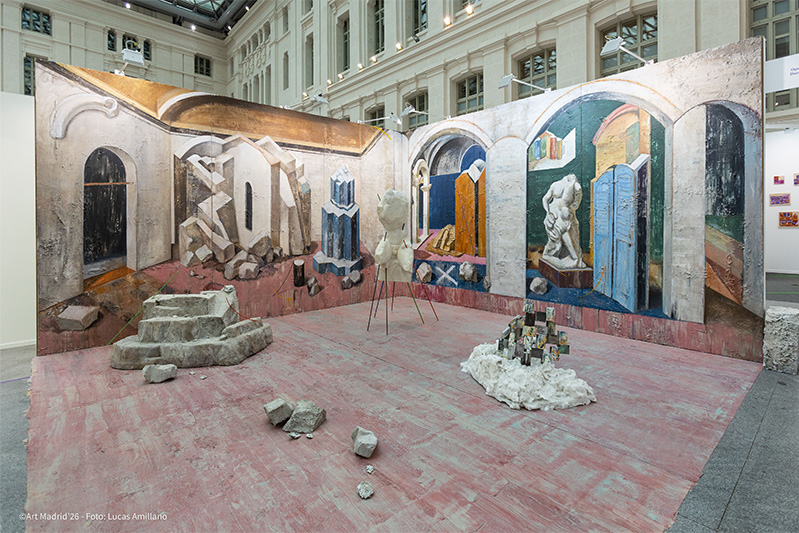
In One Project, 8 artists design a specific proposal for an individual stand, these 8 projects, with a resounding and coherent entity, they dialogue guided by the hand of the curator. The objective is to captivate the public, allowing them a break within the commercial context of the art fair. "One Project has served to establish a dynamic, open and polivocal relationship with those visitors interested in establishing a more deliberate and reflective view within such an overwhelming and oversaturated context of information as it is a contemporary art fair", explains Carlos Delgado Mayordomo.
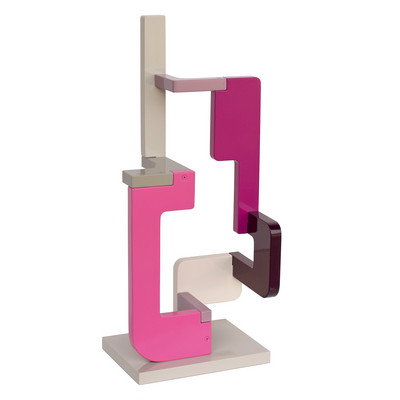
Candela Muniozguren

Pink Up 01, 2016

Lacquered steel

55 x 28cm

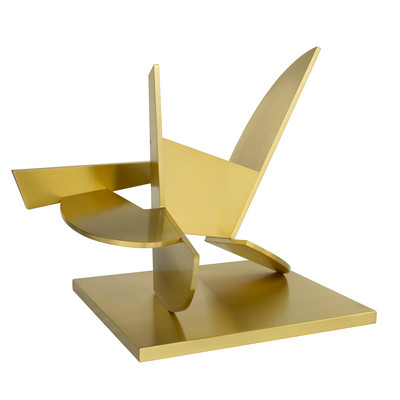
Candela Muniozguren

Shenbazuru 01, 2017

Brass

42 x 52cm

In the edition of Art Madrid'18, One Project is made up of the following projects:

Alejandro Monge (Zaragoza, 1988) with 3 Punts Galeria (Barcelona). Endowed with a solid plastic formation and interested in the complex channels of figuration in the current creation, the recent research of Alejandro Monge seeks to investigate the economic contradictions of our present. Conformed as a series and grouped under the title "European Dream", its latest proposal is organized around the conceptualization of money as an index that modulates our understanding of the world in a context mediated by the financial crisis of 2008.

Candela Muniozguren (Madrid, 1986) with Bea Villamarín (Gijón). The sculptural work of this artist poses an intimate communication between her creative developments, where minimalist forms dominate, and the multiplicity of chromatic effects.
Antonyo Marest

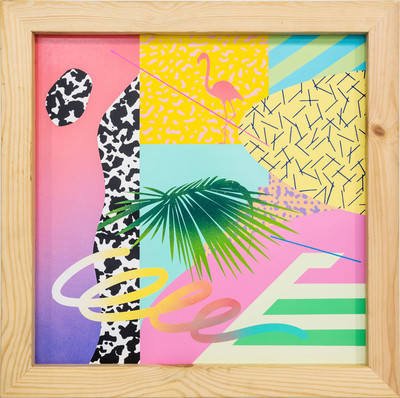
Hugonnard, 2018

Spray enamel on wood

60 x 60cm

Antonyo Marest

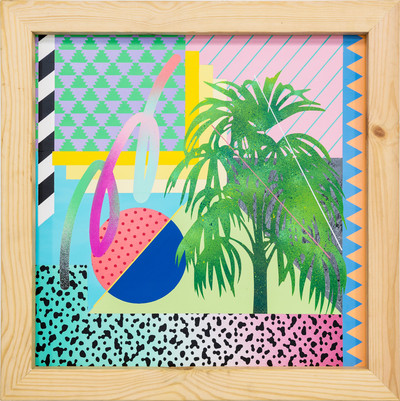
Euclid, 2018

Spray enamel on wood

60 x 60cm

Antonyo Marest (Alicante, 1987) with Diwap Gallery (Seville). The jumps of scale, the exit of the interior of a museum to the clarity of the streets, the urban style shared with the public in the form of painting, sculpture and photography. Marest has geometry as a symbol of personal growth and positivism about architecture, line, plane and color. From Seville, DIWAP Gallery works immersed in the most current contemporary art, with the aim of approaching a demanding public and always in constant search for new contributions to the local and national art scene. With a special inclination towards young and urban art, DIWAP Gallery has been defined by the representation of its artists and their works. In short, DIWAP invests in the investigation of new lines of contemporary works and new forms of curatorial projects, preferably linked to mural art and installation.
Carlos Nicanor

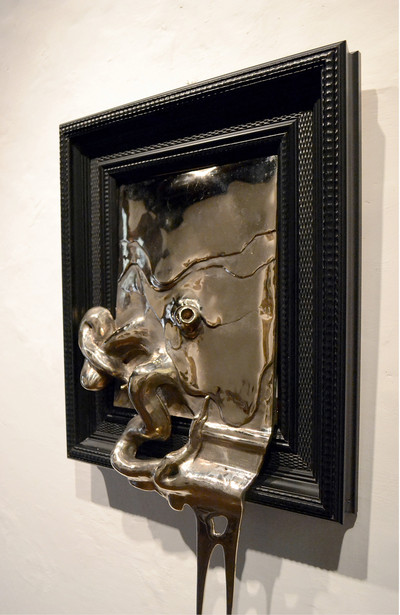
Marina mimética, 2017

Bronze

67 x 35cm

Carlos Nicanor (Las Palmas de Gran Canaria, 1974) with Artizar gallery (La Laguna, Tenerife). Brossanian sculptor, his creativity aspires to create works that are at the same time caustic alteration of the object and its meaning. The sculptural intensity of Nicanor is poetic in nature.

In 1989, in the center of the city of San Cristóbal de La Laguna, on the island of Tenerife, the Artizar art gallery began its journey, with the main objective of making known and establishing a meeting point for art in the Canary Islands. A wide range of artists from the islands has passed through its walls, from paintings of the XVIII, XIX and XX centuries, contemporary painters of recognized national and international prestige and, of course, young artists who have grown up with the gallery.
Bernardo Medina

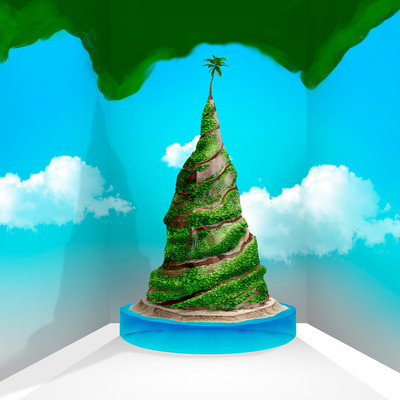
Isla de Todos, 2017

Fiberglass

182 x 76cm

Bernardo Medina (San Juan, Puerto Rico, 1965) with Nuno Sacramento (Ílhavo, Portugal). Distinguished by his ability to integrate objects found in his travels, to create beautiful and strong abstract pieces, the artistic development of Bernardo Medina has been the result of a long process of study and experimentation from the everyday to be projected in paintings and sculptures with a strong visual poetics

The Nuno Sacramento Gallery has been active since 2003 with the opening of its first gallery in the city of Aveiro, Portugal. In 2009 he moved to the nearby city of Ilhavo, to a space specially designed for a gallery of contemporary art, where it remains until now. It annually develops around six solo and three collective exhibitions, in the disciplines of painting, sculpture, photography, installation and video.
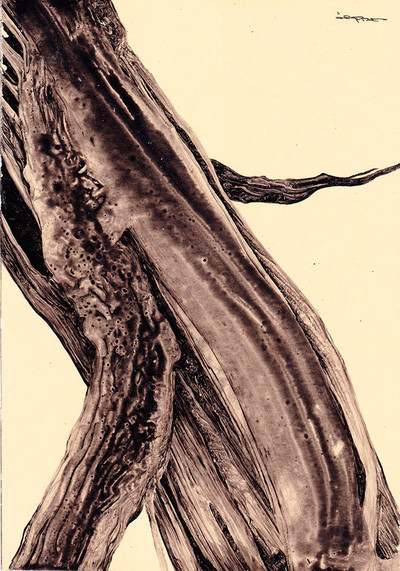
Jugo Kurihara

Sin título 3, 2017

Japanese ink on glossy paper

24 x 18cm

Jugo Kurihara (Japan, 1977) with Pantocrator Gallery (Suzhou, China). In his works, he combines Asian and European artistic languages and successfully converts it into his own expression: images of a disturbing beauty, capable of referring unpublished worlds, of tracing complex writings and, above all, of mobilizing the spectator in front of a flowing painting that always seem to be about to stabilize in a specific iconography.

Pantocrator Gallery is a project for the dissemination and production of contemporary art by emerging international artists in any of its disciplines. Pantocrator Gallery, as a nomadic project that is, has its physical headquarters in the Chinese city of Suzhou, but it has visited cities such as Barcelona, ​​Berlin or Shanghai in which they continue to work eventually. Pantocrator Gallery works as a cultural bridge between Asia and the West.
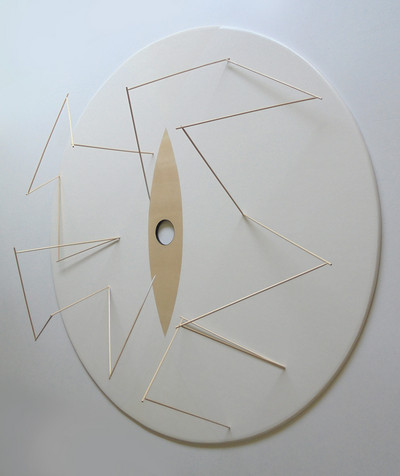
Aina Albo Puigserver

Dubte, 2016

Wood, plywood and lacquer

109 x 109cm

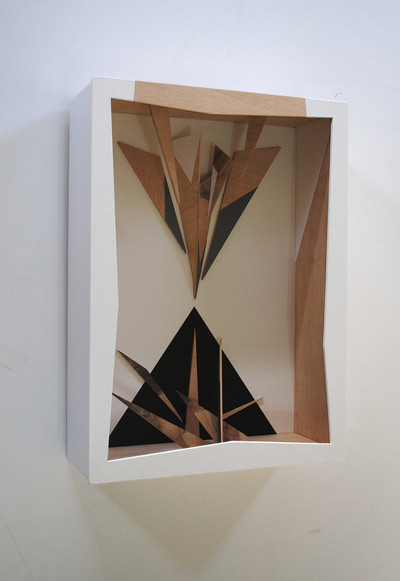
Aina Albo Puigserver

Desolació, 2016

Mixed media

53 x 39cm

Aina Albo Puigserver (Palma de Mallorca, 1982) with Pep Llabrés Art Contemporani (Palma de Mallorca). Experiences that go beyond the senses, Aina Albo investigates and approaches her emotions and sensations to understand them better, giving them shape and color in an attempt to turn the abstract into concrete.

Pep Llabrés, after a long journey in the sector, opened his own space in April 2015, and since then focuses his activity in the field of contemporary art, giving visibility to young values with new languages of expression, without forgetting the contribution to the art world of artists with more experience, both national and international.

Vânia Medeiros (Salvador de Bahía, Brazil, 1984) with the RV Cultura e Arte gallery (Salvador de Bahía, Brazil). Visual artist and editor whose work deals with human and emotional maps and creates subjective cartographies and ways of graphically expressing the experiences of a traveling body in the city.
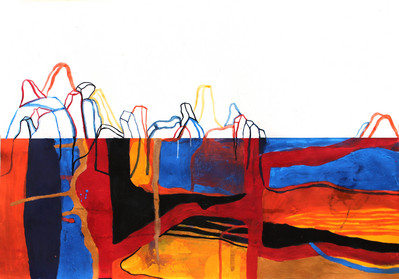
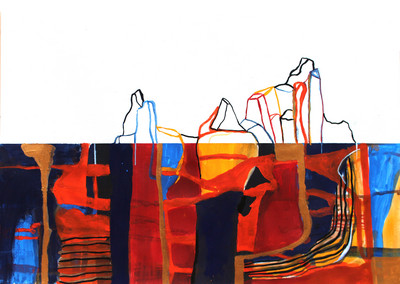
Vânia Medeiros

Intuição, 2016

Pigments on paper

42 x 60cm

Vânia Medeiros

Intuição, 2016

Pigments on paper

42 x 60cm

RV Cultura e Arte is a contemporary art gallery based in Salvador de Bahia focused on works on paper (drawing, painting, collage and printing processes) and emerging Brazilian artists. Inaugurated in 2008 by Larissa Martina and Ilan Iglesias, RV Cultura e Arte carries out a diverse annual program offering at least four exhibitions as well as workshops, talks, guided visits and viewings that foster a closer relationship with the local community, collectors and curators . Since 2011, RV Cultura e Arte has also developed an editorial project with artist books and graphic novels.

A mixed and international selection, different perspectives and starting points that find, in One Project, common frequencies in which to dialogue and share a handful of concepts. However, as Delgado Mayordomo explains, "these lines work only as a tool box to think about the work of artists without denying the relevance of other constructions".
ART MADRID '26: 21 YEARS OF CONTEMPORARY ART


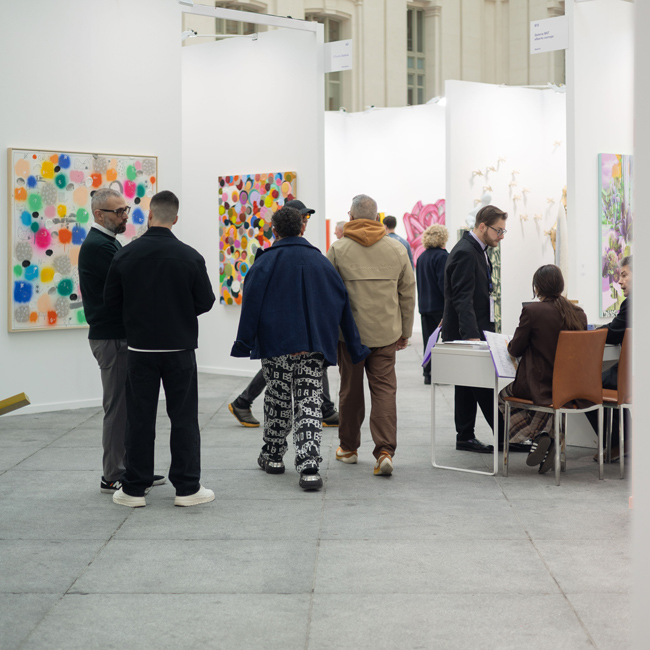
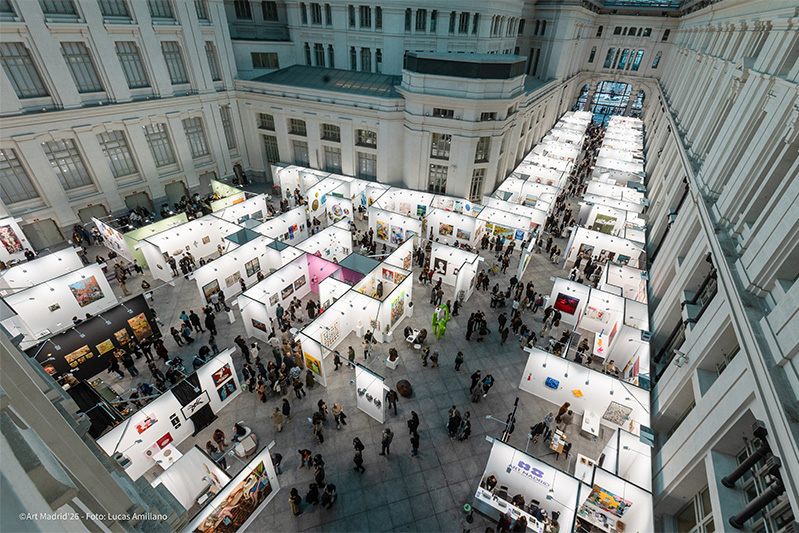
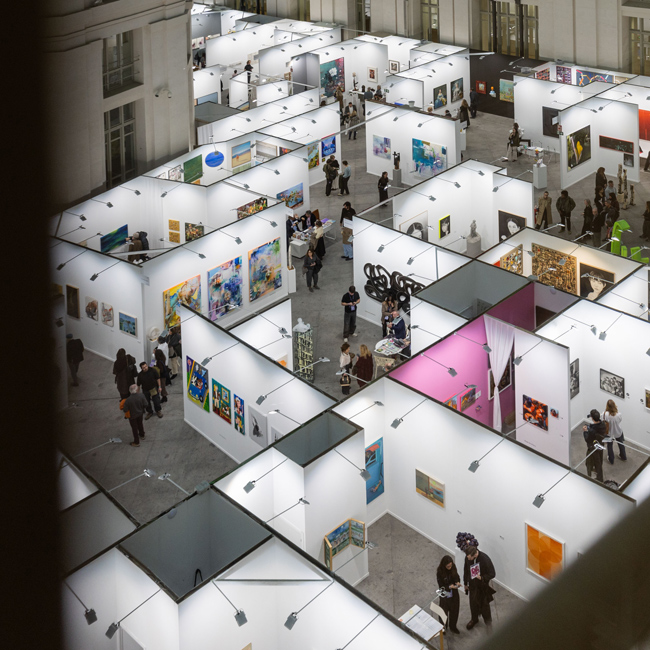
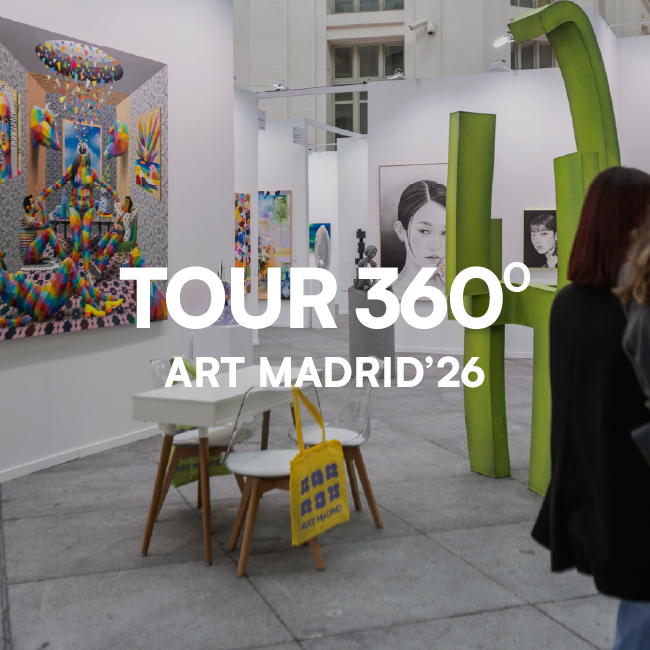
In 2026, Art Madrid will celebrate its 21st edition, further consolidating its position as a leading contemporary art fair in Spain. From 4 to 8 March, the fair will bring together thirty-five national and international galleries at the Galería de Cristal of the Palacio de Cibeles. Returning to its date during Madrid Art Week, Art Madrid reaffirms its pioneering role by expanding the fair calendar and offering an open and enriching dialogue in which diverse artistic proposals coexist.


Throughout its history, Art Madrid has established itself as a leading presence in the contemporary art scene. It is renowned for its commitment to promoting both emerging and established galleries, and for its dedication to making contemporary art accessible to a diverse range of audiences.

Far from being a fair curated under a single curatorial line, Art Madrid promotes diversity in its offering, respecting the identity of each exhibitor and promoting a plural creative ecosystem that reflects the richness and differences of the current art scene.


Art Madrid '25. Photo by Lucas Amillano


GALLERY PROGRAM: AN ACTIVE MAP OF CONTEMPORARY CREATION


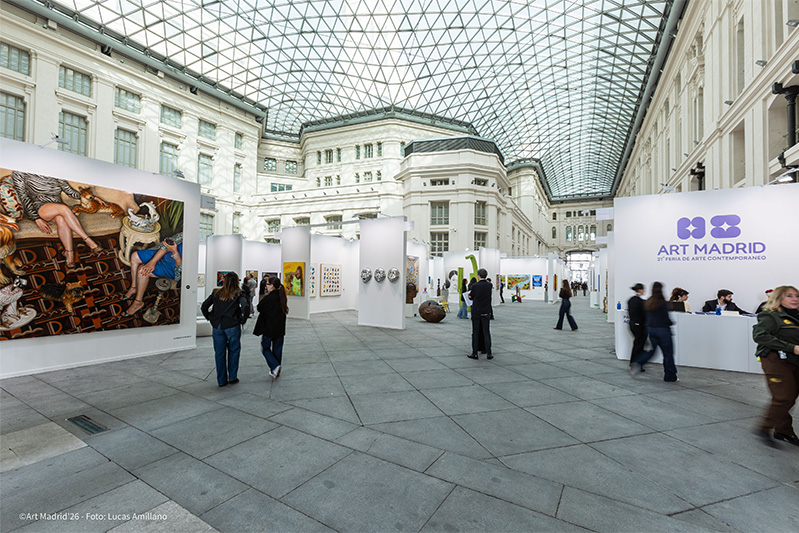
The Gallery Program is at the heart of Art Madrid’26. For this edition, thirty-five national and international galleries will participate in a space that celebrates experimentation, hybrid languages, and the latest artistic production. The selection of proposals constitutes a representative mosaic of the aesthetics, discourses, and contemporary practices that are shaping the present of art in Europe.

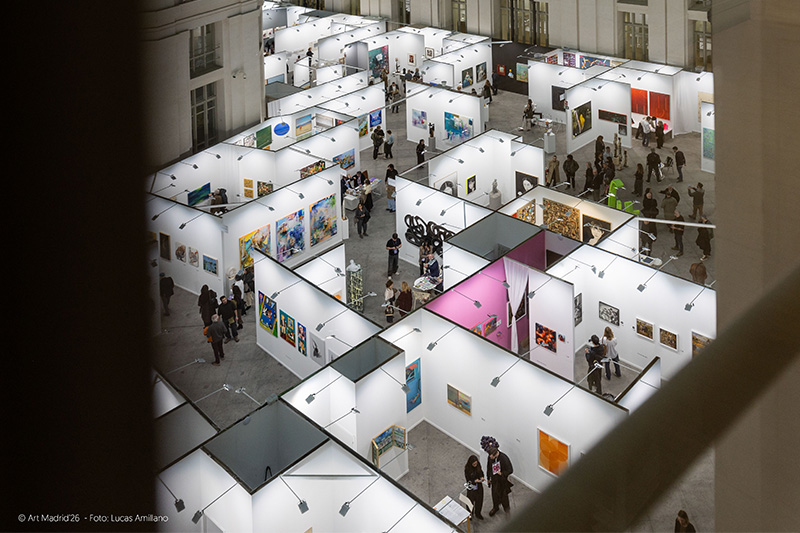
The Galería de Cristal of the Palacio de Cibeles will once again be transformed into a dynamic space where the exhibitions interact with each other, inviting the public to explore visual narratives that show the evolution of contemporary languages. Works that experiment with new media, formal investigations that reformulate traditional techniques, pieces that reflect on the links between technology and humanity, and poetic approaches that explore territory, identity, or memory make up a plural, stimulating journey open to multiple interpretations.

Art Madrid also continues to strive to become a platform for discovery, allowing both professionals and visitors to identify new voices and consolidate relationships with artists who are already emerging as leaders within the contemporary cultural landscape.


Art Madrid '25. Photo by Lucas Amillano


NATIONAL AND INTERNATIONAL EXHIBITORS

Thirty-five galleries are participating in this edition, twenty-seven of which are returning after finding the fair to be a favourable environment in which to strengthen connections, increase visibility and promote their artists' work on an international scene.

Twenty-six of these are Spanish galleries from various regions of the country: 3 Punts Gallery (Barcelona), Alba Cabrera Gallery (Valencia), Aurora Vigil-Escalera (Gijón), CLC ARTE (Valencia), DDR Art Gallery (Madrid), Est_ArtSpace (Madrid), g • gallery (Barcelona), Galería Arancha Osoro (Oviedo), Galería BAT alberto cornejo (Madrid), Galería Beatriz Pereira (Plasencia), Galería Carmen Terreros (Zaragoza), Galería Espiral (Noja), Galería La Mercería (Valencia), Galería Luisa Pita (Santiago de Compostela), Galería María Aguilar (Cadiz), Metro Gallery (Santiago de Compostela), Rodrigo Juarranz Gallery (Aranda de Duero), Sigüenza Gallery (Sigüenza), Gerhardt Braun Gallery (Palma de Mallorca | Madrid), Inéditad Gallery (Barcelona), Kur Art Gallery (San Sebastián), LAVIO (Murcia | Shanghai), Moret Art (A Coruña), Pigment Gallery (Barcelona), Shiras Galería (Valencia) and Uxval Gochez Gallery (Barcelona). This selection of galleries highlights the importance of the Spanish scene and its contribution to the development of the contemporary cultural ecosystem.


Art Madrid '25. Photo by Lucas Amillano


The nine international galleries participating in this edition are: Banditrazos Gallery (Seoul, South Korea), Collage Habana (Havana, Cuba), Galeria São Mamede (Lisbon, Portugal), Galerie ONE (Paris, France), KANT Gallery (Copenhagen, Denmark | Palma de Mallorca, Spain), Loo & Lou Gallery (Paris, France), Nuno Sacramento Arte Contemporânea (Ílhavo, Portugal), Trema Arte Contemporânea (Lisbon, Portugal) and Yiri Arts (Taipei, Taiwan). Their participation broadens the fair's international reach, promoting creative and conceptual exchange between diverse artistic perspectives.

In addition, eight new galleries have been added to the list of exhibitors:

Banditrazos Gallery (Seoul, South Korea), Est_ArtSpace (Madrid, Spain), g • gallery (Barcelona, Spain), Galería Beatriz Pereira (Plasencia, Spain), Galerie ONE (Paris, France), Galería Sigüenza (Sigüenza, Spain), Gerhardt Braun Gallery (Palma de Mallorca | Madrid, Spain) and KANT Gallery (Copenhagen, Denmark | Palma de Mallorca). These additions reinforce Art Madrid's commitment to continuous renewal and openness to spaces that are exploring new approaches to contemporary art.


Art Madrid '25. Photo by Lucas Amillano


PARALLEL PROGRAM: A REFLECTION ON THE ‘SPECIES’ OF SPACES


One of the great attractions of Art Madrid is its Parallel Program, which this time delves into the notions of: ‘Fragments, relationships, and imaginary distances.’ This approach turns the fair into an expanded space, where art, audience, architecture, and memory converge. Thus, the Parallel Program proposes a critical approach to the container of the event itself. Taking as a reference the reading of Species of Spaces by Georges Perec (Perec, Georges. Species of Spaces. Montesinos, 2004), it adopts a marked interest in the everyday, that which usually goes unnoticed, the infra-ordinary, giving each corner of the venue its own narrative value.

Another of the conceptual references of this edition is based on an analysis of Édouard Glissant's Poetics of Relation (Glissant, Édouard. Poetics of Relation; Prologue by Manuel Rebón. - 1st ed. - Bernal: Universidad Nacional de Quilmes, 2017.), which advocates the coexistence of differences and the importance of non-totalizing links, which are extrapolated to the art system, proposing an understanding of it as a network of exchanges and connections that respect the uniqueness of each cultural practice and actor.

‘Imaginary distances,’ understood as subjective journeys and affective cartographies traced by visitors, thus become the conceptual axis that articulates this program. This perspective transforms the Fair into an experience that goes beyond visual contemplation, turning it into a territory that can be collectively reconstructed, without losing sight of the paths travelled by the individuality of each voice.

In this edition, the Parallel Program encourages visitors to engage with the space and its projects, turning contemplation into an opportunity to question and interact with things that might otherwise go unnoticed in everyday life.


Art Madrid '25. Photo by Lucas Amillano


In the preview and during Art Week, Art Madrid'26 offers a range of experiences that allow the public to get closer to the creative process and practices of the participating artists. Among the returning initiatives are the Interview Program, Curated Walkthroughs, the third edition of Open Booth, dedicated to emerging creation, the presentation of Espacio Nebrija, a university project in collaboration with Nebrija University, alongside the fair’s established Performance Cycle.

In addition, the One Shot Collectors Program and the second edition of the Patronage Program are back. These initiatives seek to strengthen the bond between collectors, artists, and the public, promoting ethical, informed, and responsible practices in collecting and patronage.


Art Madrid '25. Photo by Lucas Amillano


Art Madrid'26 has established itself as a dynamic meeting place, where diverse experiences, discourses, and practices converge. Far from being a fair curated under a single curatorial line, Art Madrid promotes diversity as a structuring principle, respecting the identity of each exhibitor and fostering a plural creative ecosystem. This plurality is not merely formal, but translates into a network of practices, languages, and perspectives that reflects the complexity, richness, and tensions of the contemporary art scene, consolidating the fair as a catalyst for cultural relations, an observatory of emerging trends, and an international reference point for the Spanish art scene.

WELCOME TO ART MADRID'26