Delivery term:
Certificate of authenticate: Signed by the gallery seller
Purchasing process: 100% security

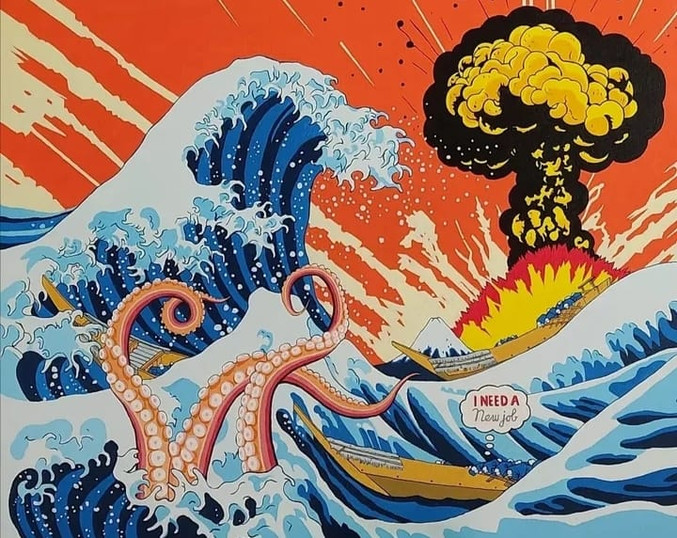
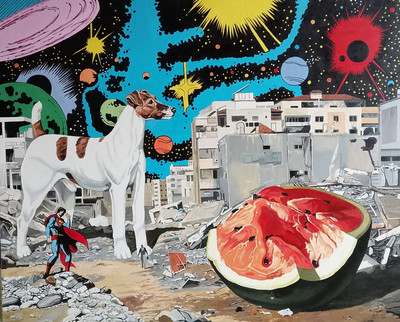
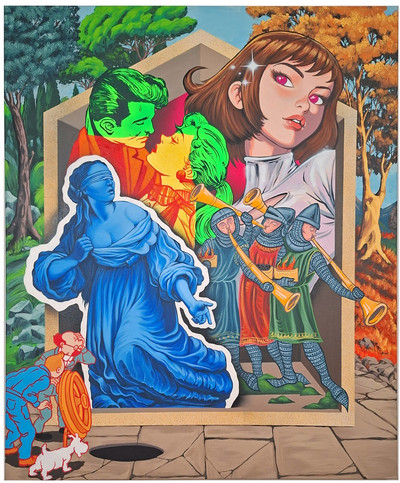
Acrilico sobre lienzo
81 x 100 cm
Delivery term:
Certificate of authenticate: Signed by the gallery seller
Purchasing process: 100% security
This artwork is available and will be delivered after the confirmation of your order. The transport includes the insurance for the value of the piece with full coverage of any incident.
You can pay by credit card, debit card or bank transference. The payment is completely secure and confidential, all the purchasing processes in Art Madrid MARKET are protected by a security protocol under an encrypted SSL certificate and 3DSecure by Visa and MasterCard.
You have 14 days to find the perfect place for your artwork. If you change your mind, you can return it and we will reimburse the price you paid. You will only have to bear the shipping costs of the return.

Madrid, 1964
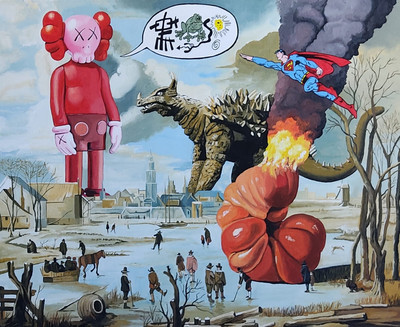
Since the late 1980s, Óscar Seco (Madrid, 1964) has developed his work through the appropriation of images drawn from various contexts: artistic tradition, posters, cinema, comics, and design. He has also incorporated literary references, particularly texts that delve into the fantastical to establish a critical boundary with reality, from Borges to Philip K. Dick. The integration of external images and the unexpected collision of narratives serve as the primary tools in shaping his discourse. In addition to an extensive body of pictorial work, Seco has created an unclassifiable body of videographic production, closely tied to the cinematic resources of B-movie science fiction. Some of his audiovisual works were filmed within his models, which constitute one of the most fascinating aspects of his practice: three-dimensional diorama-like structures that reconstruct spaces marked by collapse, remnants, and destruction.
Óscar Seco's work confronts us with the beauty of what has been relegated and challenges narratives that take the obvious for granted, stopping their inquiries precisely where the core of the problem lies. The most fitting answers may lie forgotten in the backroom of high culture, in the shared memories of our childhood, or in the flipside of the utopian narratives of modernity.
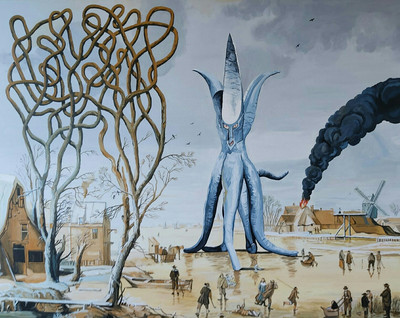
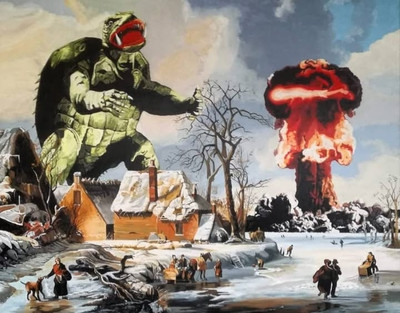
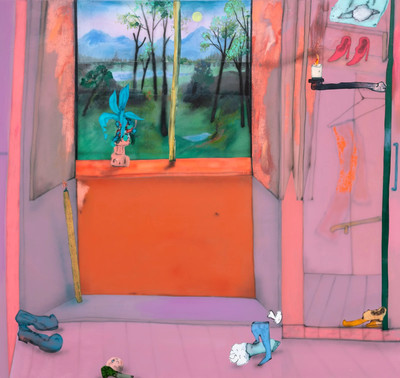
Acrílico, tinta, pastel al óleo, pastel y papel sobre lienzo
170 x 180 cm
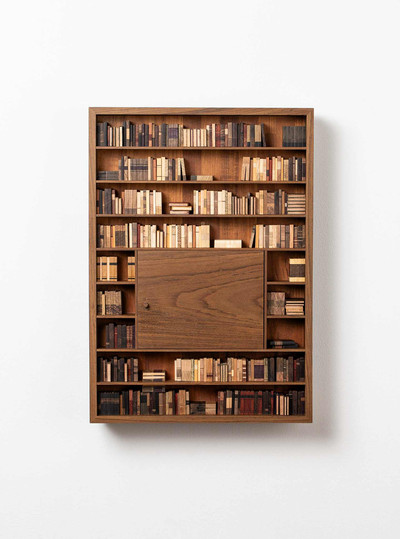
Various types of wood, metal, gear, motor
43.1 x 30.6 x 9.5 cm
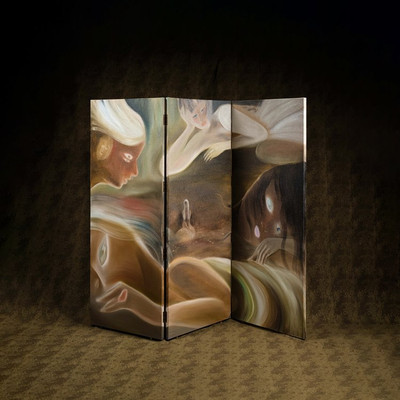
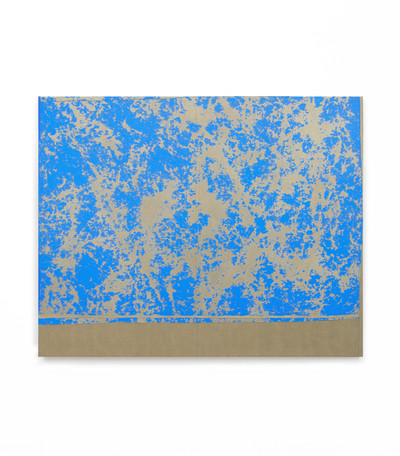
Polvo de cemento en suspensión, lluvia, sol, viento, polen de tomillo y romero sobre acrílico en tela de algodón natural cosida, expuesta sobre suelo de arcilla calcáreo durante cuatro meses
130 x 162 cm