Art Madrid'26 – ONE PROJECT REDEFINES ITS PROPOSAL UNDER THE TITLE OF “SALVAJES. LA CAGE AUX FAUVES”

The One Project program brings in this edition a risky bet: investigate and question the forms and concepts that dominate the art market. Fashions, trends, the imposition of globalization, the mainstream... All of them are elements that make up the flows, institutions and legitimizing actions of professional artistic development.

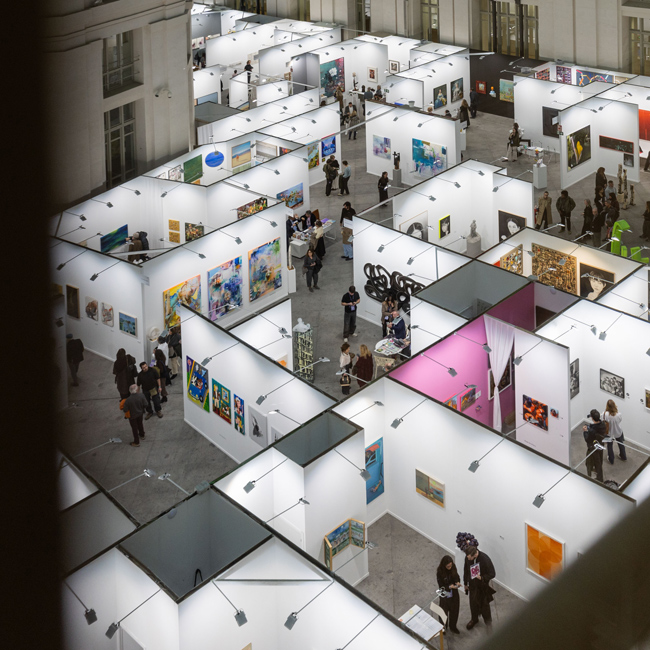
One Project has evolved since its creation. This is a transversal proposal that in last years step up its position as one of the fundamental pillars of the fair. Art Madrid wanted to go one step further to celebrate its 15th edition and expand and transform it into a space for dialogue and confrontation that includes a greater number of participating artists working from a different perspective to understand contemporary creation.
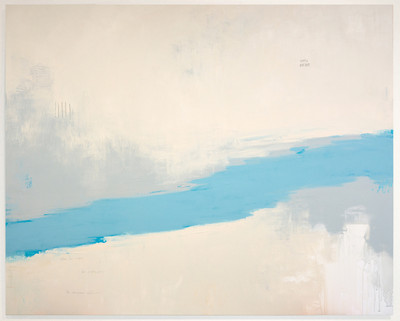
Julio Anaya

Edouard Vuillard - Jarrón de flores, 2019

Acrílico sobre cartón

56 x 57cm

Virginia Rivas

Sentir, 2018

Acrylic and graphite on canvas

162 x 130cm

One of the great innovations of One Project is the incorporation of the critic and curator Fernando Gómez de la Cuesta that under the enigmatic title of "Salvajes. La cage aux fauves" presents a selection of 9 artists who will exhibit their work in a differentiated space of symbiosis, stimulation, contact and friction.

Fernando Gómez de la Cuesta makes his proposal classic starting dichotomy that existed between the great official salons and those creators who subverted the state of the question, either from their convoluted participation in them or by generating new alternative devices such as independent or des refusés salons.
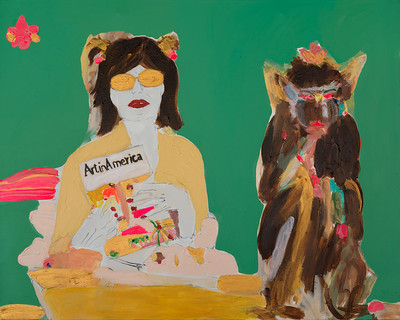
Alona Harpaz

Art in America, 2019

Acrilico, spray y colores industriales sobre lienzo

70 x 100cm

In spite of dynamics of the art market to which a contemporary art fair is subject, Art Madrid is committed to have a space for research and reflection to give visibility to artists who are on the way of creation autonomously and personally without responding directly to the majority guidelines. Artists who travel through their own, unusual spaces and who resist being part of the globalisation.

From the visible questioning made by Julio Anaya of classical painting to the investigation of colour and his perception according to the emotional, social and political state that Virginia Rivas performs. Also through the collection and reconstruction that Roberto López creates to make us visible the consumerism and mega-production to which we are exposed without pause for digestion.
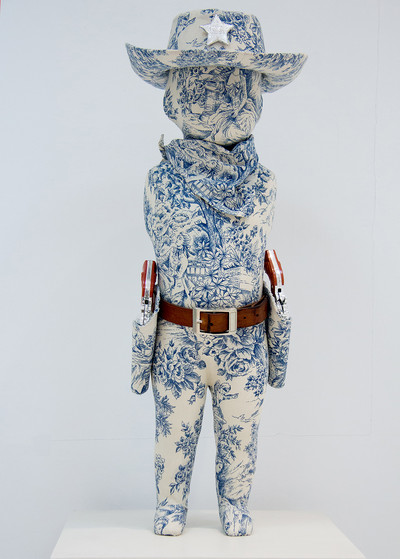
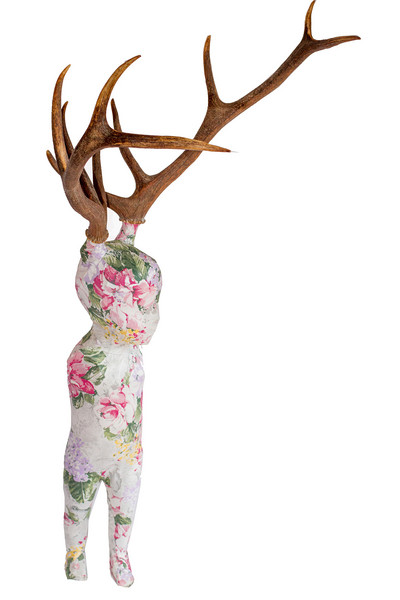
RLM

Avatar Cowboy, 2017

Tela sobre fibra de vidrio y resina

150 x 30cm

RLM

Avatar El Elegido, 2016

Tela sobre fibra de vidrio y resina

150 x 30cm

The artists of One Project generate this analogy with the classic halls that now travel from academics and stand on trends that create apparent success guidelines without depth discursive.

Itineraries that run out of the usual and conventional without leaving indifferent as to the work of Andrés Planas where converges primitive art, especially Africans, with sex, with excesses, with taboos, with violence and with death, with religion and against the church, against repressive teaching.
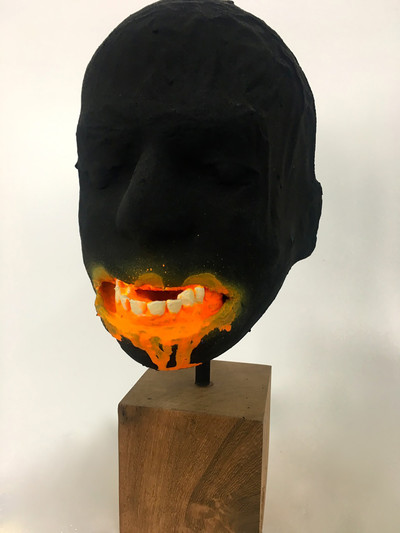
Andrés Planas

Los 12 Apóstoles, 2019

Mixed media

35 x 15cm

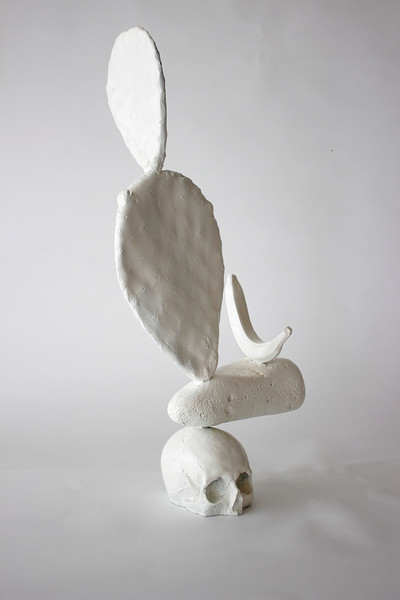
The audience can observe a creation-destruction dialogue, with respect but without fear, with irreverence, without formality to give space to resistance. Transgress beauty as the artist Alona Harpaz or transit in magical spaces between nature and the human through the sculpture of Nicolás Laiz Placeres.
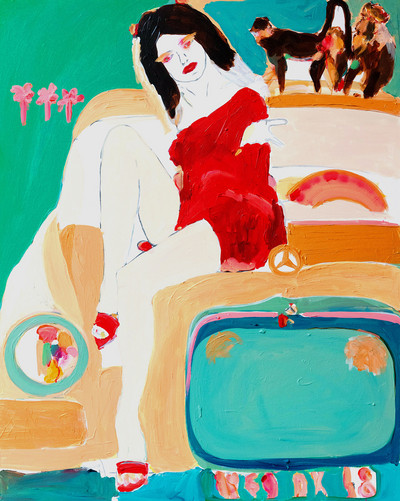
Alona Harpaz

Betty Blue, 2019

Acrílico y spray sobre lienzo

100 x 80cm

Nicolás Laiz

Política Natural I, 2018

Resina, fibra de vidrio, aridos y pintura doble componente

80 x 30cm

Art is a place of meeting and life, the magic of creation is deposited in a calm look of the environment as Santiago Palenzuela do with his spatula or by focusing on the current way of life between superficiality and imposture, between the psychic and the genuine as Juan Carlos Batista does with his images.
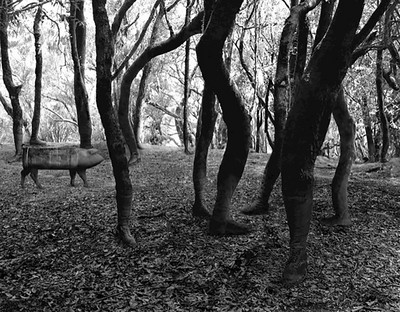
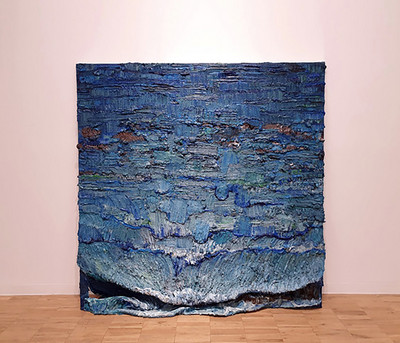
Juan Carlos Batista

Psicopaisaje II, 2015

Impresión digital en papel de algodón

60 x 77cm

Santiago Palenzuela

Ola, 2019

Oil on canvas

200 x 200cm

One Project is a program where there is also space for the fusion between classical art and urban art like the duo PichiAvo creating a new conceptual language handy for a heterogeneous audience.
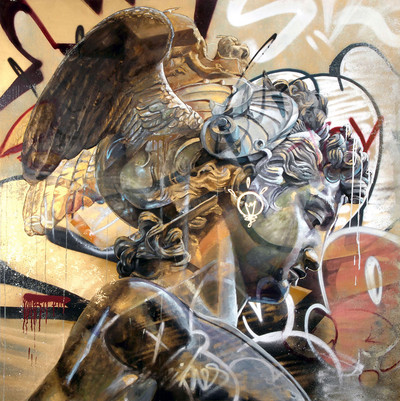
PichiAvo

Orphical Hymn III to Nike, 2019

Mixed media on canvas

120 x 90cm


ART MADRID’26 INTERVIEW PROGRAM. CONVERSATIONS WITH ADONAY BERMÚDEZ


The practice of the collective DIMASLA (Diana + Álvaro) is situated at a fertile intersection between contemporary art, ecological thinking, and a philosophy of experience that shifts the emphasis from production to attention. Faced with the visual and material acceleration of the present, their work does not propose a head-on opposition, but rather a sensitive reconciliation with time, understood as lived duration rather than as a measure. The work thus emerges as an exercise in slowing down, a pedagogy of perception where contemplating and listening become modes of knowledge.

In the work of DIMASLA (Diana + Álvaro), the territory does not function as a framework but rather as an agent. The landscape actively participates in the process, establishing a dialogical relationship reminiscent of certain eco-critical currents, in which subjectivity is decentralized and recognized as part of a broader framework. This openness implies an ethic of exposure, which is defined as the act of exposing oneself to the climate, the elements, and the unpredictable, and this means accepting vulnerability as an epistemological condition.

The materials—fabrics, pigments, and footprints—serve as surfaces for temporary inscriptions and memories, bearing the marks of time. The initial planning is conceived as an open hypothesis, allowing chance and error to act as productive forces. In this way, the artistic practice of DIMASLA (Diana + Álvaro) articulates a poetics of care and being-with, where creating is, above all, a profound way of feeling and understanding nature.


In a historical moment marked by speed and the overproduction of images, your work seems to champion slowness and listening as forms of resistance. Could it be said that your practice proposes a way of relearning time through aesthetic experience?

Diana: Yes, but more than resistance or vindication, I would speak of reconciliation—of love. It may appear slow, but it is deliberation; it is reflection. Filling time with contemplation or listening is a way of feeling. Aesthetic experience leads us along a path of reflection on what lies outside us and what lies within.


The territory does not appear in your work as a backdrop or a setting, but as an interlocutor. How do you negotiate that conversation between the artist’s will and the voice of the place, when the landscape itself participates in the creative process?

Álvaro: For us, the landscape is like a life partner or a close friend, and naturally this intimate relationship extends into our practice. We go to visit it, to be with it, to co-create together. We engage in a dialogue that goes beyond aesthetics—conversations filled with action, contemplation, understanding, and respect.

Ultimately, in a way, the landscape expresses itself through the material. We respect all the questions it poses, while at the same time valuing what unsettles us, what shapes us, and what stimulates us within this relationship.


The Conquest of the Rabbits I & II. 2021. Process.


In your approach, one senses an ethic of exposure: exposing oneself to the environment, to the weather, to others, to the unpredictable. To what extent is this vulnerability also a form of knowledge?

Diana: For us, this vulnerability teaches us a great deal—above all, humility. When we are out there and feel the cold, the rain, or the sun, we become aware of how small and insignificant we are in comparison to the grandeur and power of nature.

So yes, we understand vulnerability as a profound source of knowledge—one that helps us, among many other things, to let go of our ego and to understand that we are only a small part of a far more complex web.


Sometimes mountains cry too. 2021. Limestone rockfall, sun, rain, wind, pine resin on acrylic on natural cotton canvas, exposed on a blanket of esparto grass and limestone for two months.. 195 cm x 130 cm x 3 cm.


Your works often emerge from prolonged processes of exposure to the environment. Could it be said that the material—the fabrics, the pigments, the traces of the environment—acts as a memory that time writes on you as much as you write on it?

Álvaro: This is a topic for a long conversation, sitting on a rock—it would be very stimulating. But if experiences shape people’s inner lives and define who we are in the present moment, then I would say yes, especially in that sense.

Leaving our comfort zone has led us to learn from the perseverance of plants and the geological calm of mountains. Through this process, we have reconciled ourselves with time, with the environment, with nature, with ourselves, and even with our own practice. Just as fabrics hold the memory of a place, we have relearned how to pay attention and how to understand. Ultimately, it is a way of deepening our capacity to feel.


The fox and his tricks. 2022. Detail.


To what extent do you plan your work, and how much space do you leave for the unexpected—or even for mistakes?

Diana: Our planning is limited to an initial hypothesis. We choose the materials, colours, places, and sometimes even the specific location, but we leave as much room as possible for the unexpected to occur. In the end, that is what it is really about: allowing nature to speak and life to unfold. For us, both the unexpected and mistakes are part of the world’s complexity, and within that complexity we find a form of natural beauty.